
[Veneers for Protruding Teeth] Solving Protruding Teeth Without Braces? A Difficult Case in a Woman in Her 50s — 4-Year Follow-Up Revealed
Hello. I'm Park Jonguk, board-certified specialist in conservative dentistry and head director of Apgujeong Dream Dental Clinic.
While writing my veneer textbook, I dealt with countless esthetic treatment cases,
but among them, veneers for "protruding teeth" are a high-difficulty treatment that demands a hundred times more caution.
My philosophy is firm. In cases like this, orthodontic treatment is always the top priority.
But because of personal circumstances or time constraints,
some patients come to us already having decided on veneers. When that happens, what a dentist has to do is
minimize the amount of reduction and restore esthetics without side effects, using a design built on years of know-how.
Today, through a 4-year long-term follow-up of protruding-tooth veneers for a woman in her 50s,
I'll show you why an expert's attention to detail matters so much.
1. Case Study: A Woman in Her 50s' Urgent Decision and Dilemma
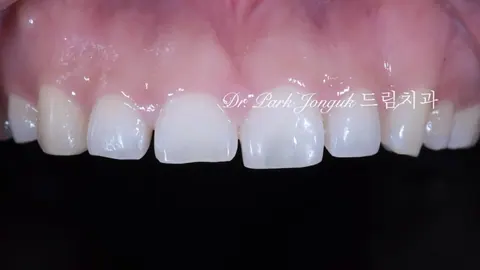
[Photos 1, 2] Before treatment (front and side view)
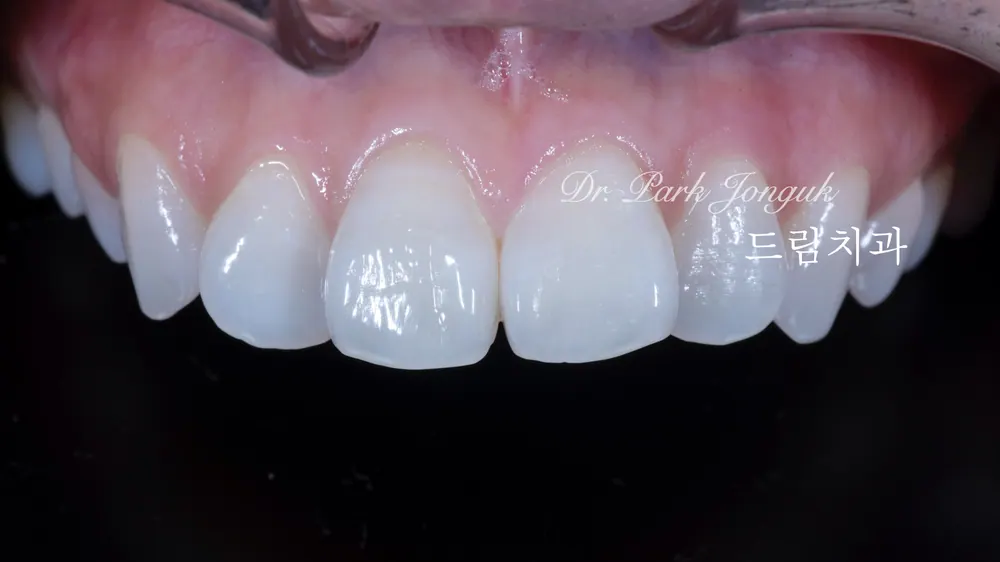
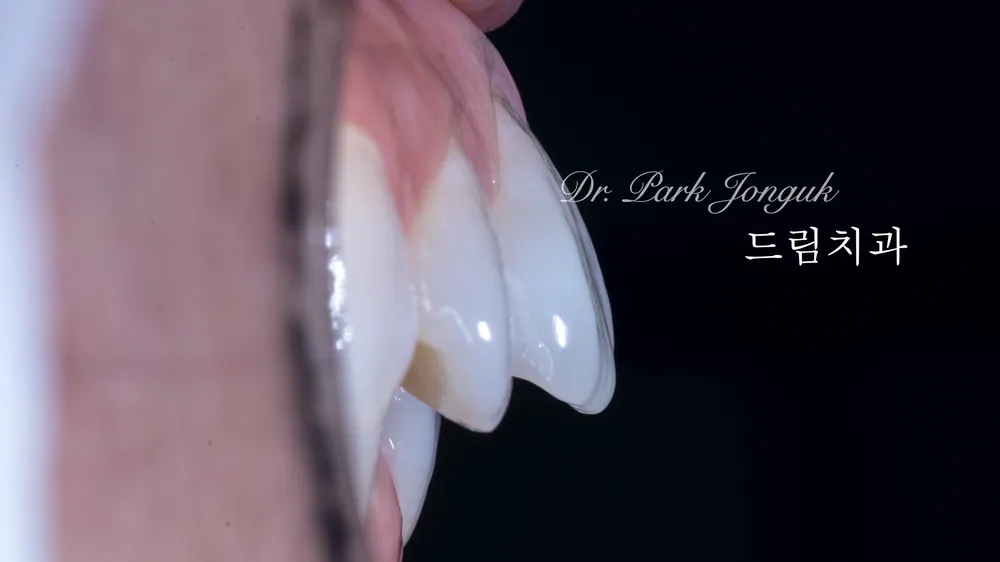
This patient was a woman in her 50s whose two front teeth (central incisors) protruded considerably compared to her other teeth.
The other teeth were relatively set back, which made the protrusion stand out even more.
Difficulty factors:
Degree of protrusion: since only two teeth were protruding, their axial inclination was significantly off.
Patient age: she was in her 50s, and the gum health in her posterior (molar) region wasn't perfect, so aggressive orthodontics could have placed a long-term burden on her gum health.
Time constraint: because of personal circumstances, she couldn't wait out an orthodontic treatment period and wanted a quick solution.
We respected the patient's decision and focused on achieving the treatment goal without side effects.
2. Starting a High-Difficulty Veneer Case: Designing the Reduction
[Photo 3] Precision diagnostic process
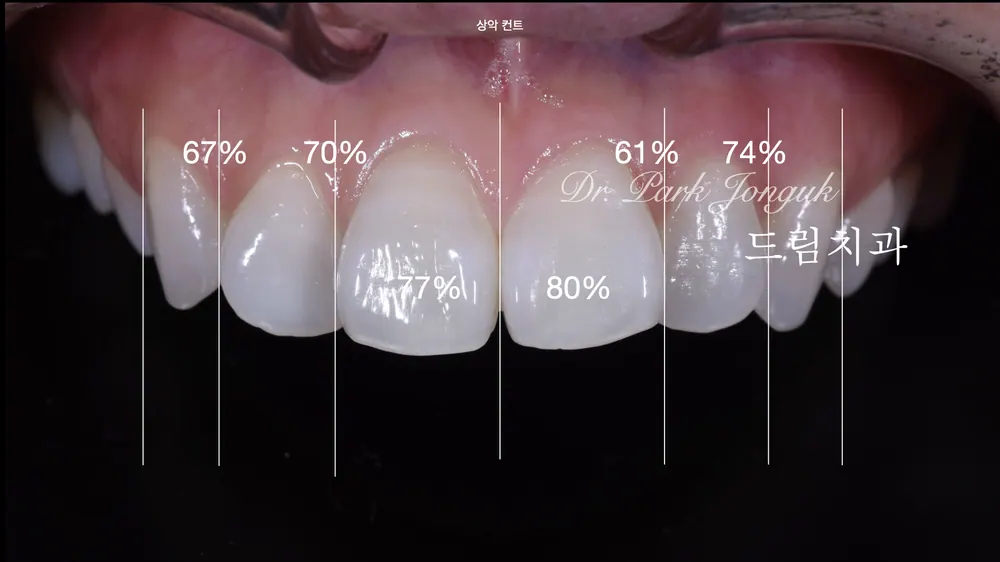
Veneers for protruding teeth have a different diagnostic process than regular veneers.
Checking the relationship with the face: we first check how much protrusion needs to be resolved for harmony with the facial side profile.
Measuring tooth proportion and axis: we determine how far inward the protruding teeth need to move, and the minimum amount of reduction needed.
In this process, the amount of tooth reduction (preparation) is decided entirely down to 0.1mm.
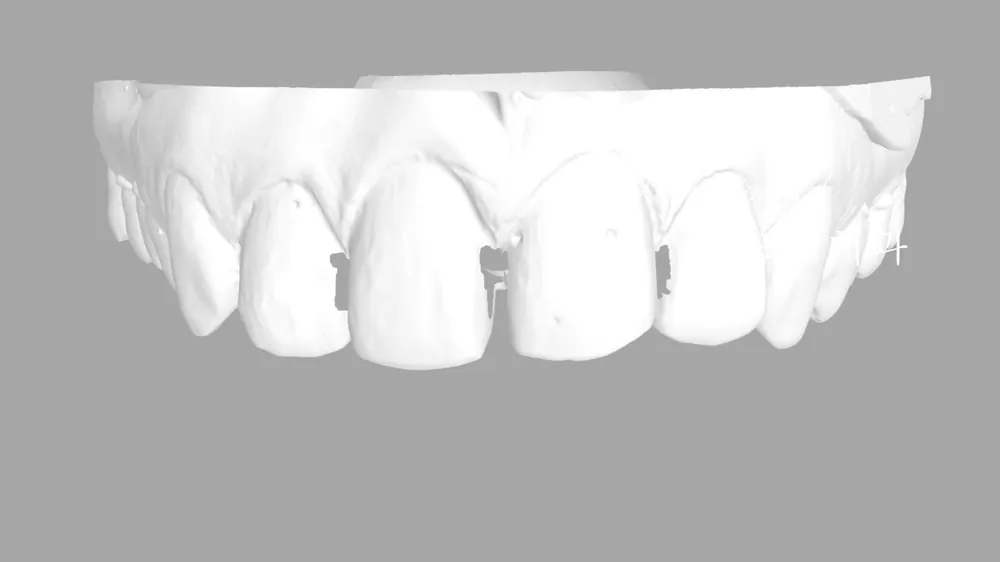
[Photos 4, 5] Expected reduction and precision wax-up diagnosis
![[Veneers for Protruding Teeth] Solving Protruding Teeth Without Braces? A Difficult Case in a Woman in Her 50s — 4-Year Follow-Up Revealed — photo 5](/column-media/224094075985/05.webp)
We checked what the expected tooth reduction would look like, and based on that result, fabricated the wax-up as the final blueprint.
The wax-up is both a "design blueprint" and a "promise of treatment" before the procedure.
3. The Key to Success: Selective Reduction and Micro-Design Strategy
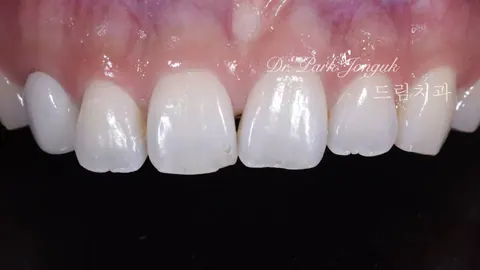
[Photo 6] After the actual tooth reduction
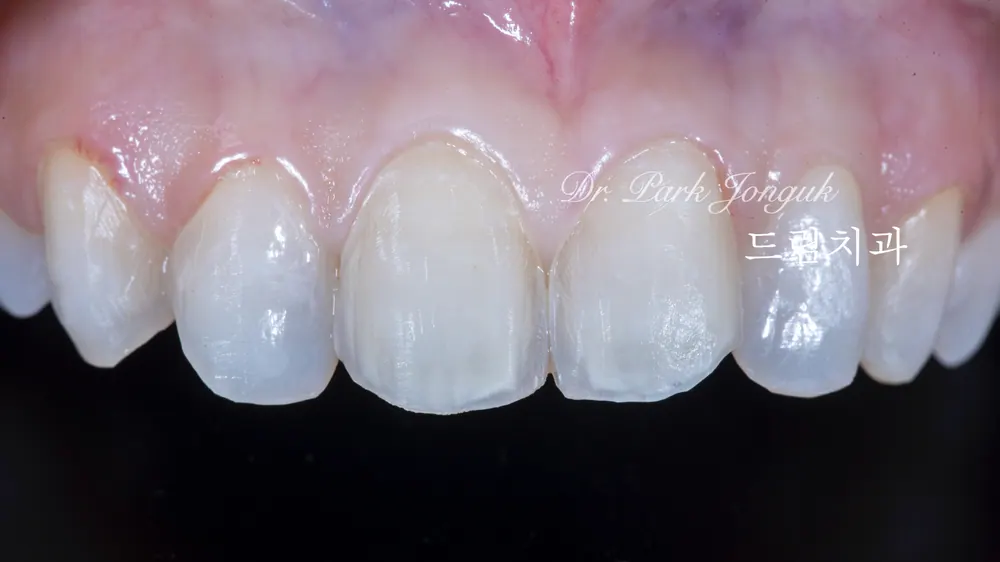
This is exactly the core strategy where years of know-how come together.
The two central teeth: we reduced them only as much as planned, so they could move inward to match the degree of protrusion.
The lateral incisors (the teeth beside them): we barely reduced these at all.
Design intent: we designed the protruding central incisors to move inward, while the lateral incisors were designed to sit relatively slightly forward,
giving the protruding axis a visual effect as if it had been rotated into place.
This is an advanced design strategy meant to avoid the side effects of forcefully pushing the entire tooth inward.
4. Verification After Four Years: Long-Term Success Without Side Effects
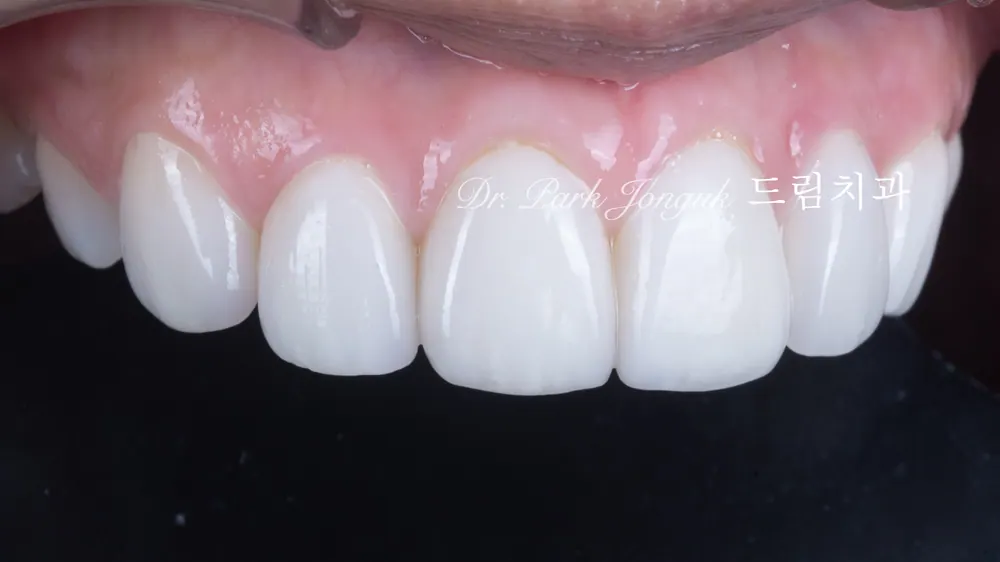
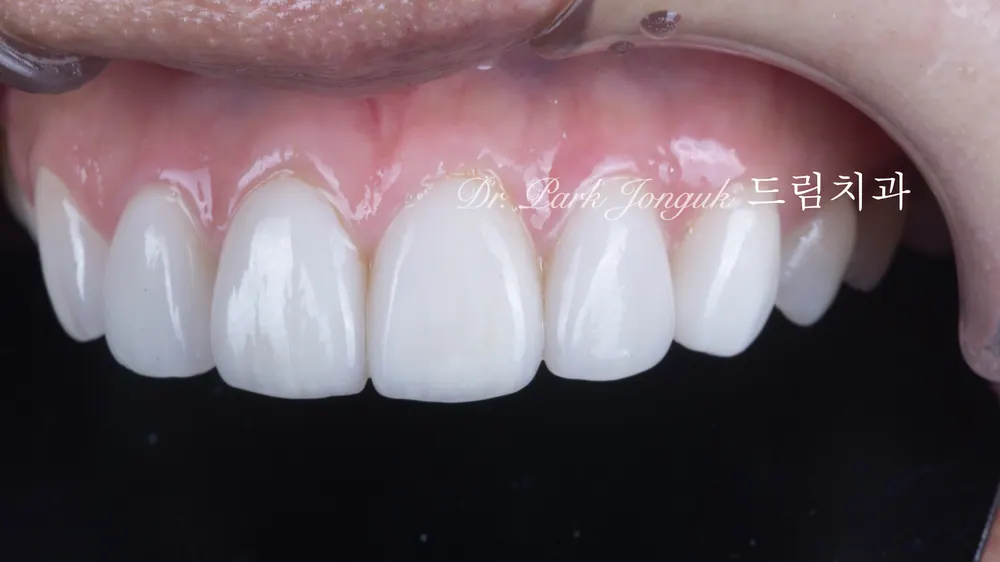
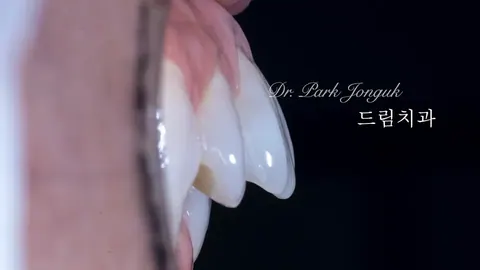
[Photos 7, 8, 9, 10] Four years after treatment (front and side view)
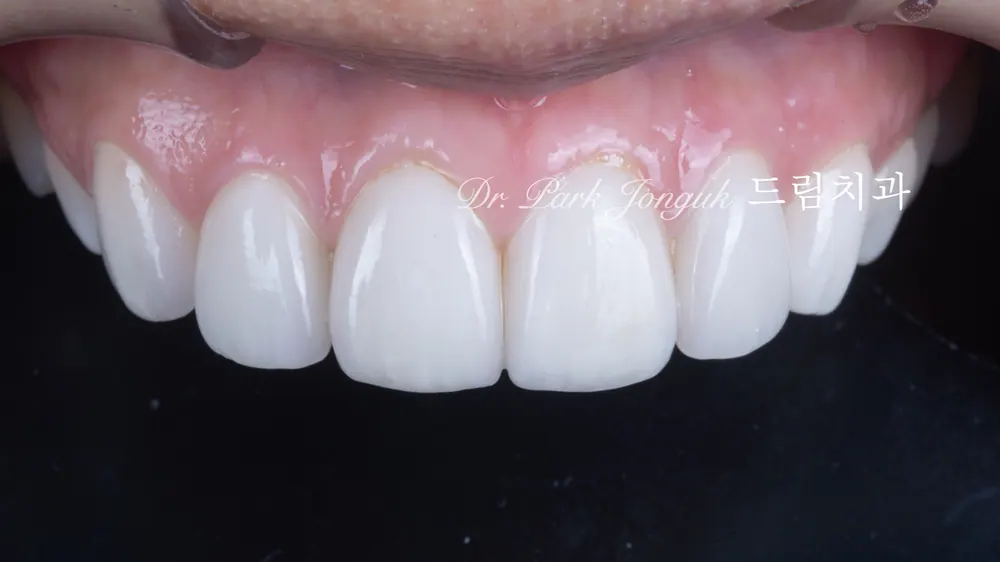
This is how it looks now, four years later. The patient has been using her veneers with no discomfort or side effects at all.
There's no sign whatsoever of the sensitivity or nerve problems that commonly occur with veneers for protruding teeth.
Side-view comparison (Photo 8): rather than forcing the protrusion inward, we gently repositioned the tooth's axis
and achieved a natural improvement through harmony with the surrounding teeth.
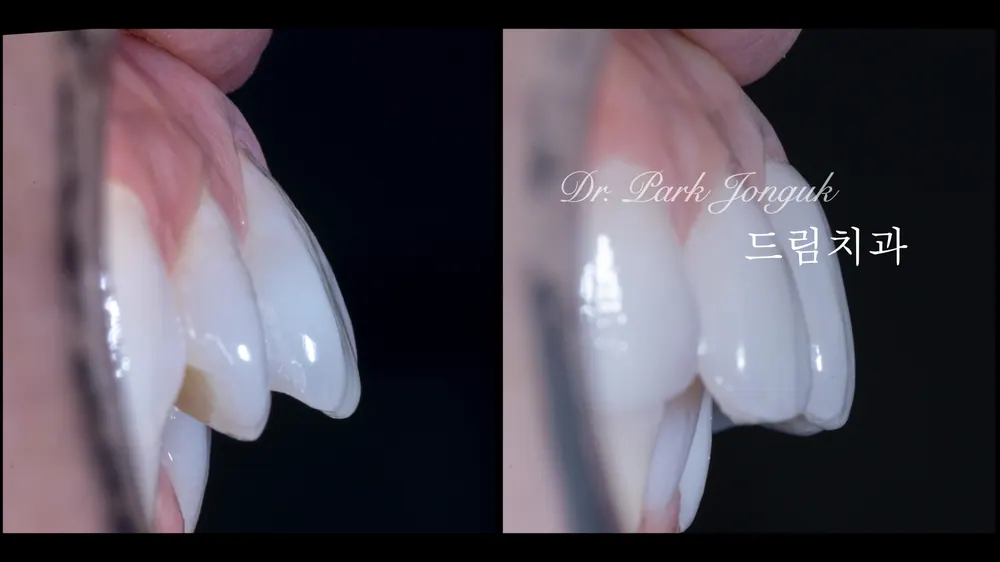
This is a long-term result that proves, for veneers on protruding teeth,
just how important minimal reduction — not excessive reduction — and a three-dimensional design are.
5. Conclusion: The More Difficult the Case, the More an Expert's Choices Matter
Veneers for protruding teeth are, of course, about achieving an esthetic result,
but they're also an area that demands the utmost caution for the sake of long-term tooth health.
Co-treatment with orthodontics, or orthodontics first, is the guiding principle.
If veneers are unavoidably chosen, you need to find a specialist with the detailed design skill to rotate the tooth's axis visually, along with precise minimal-reduction know-how.
As a conservative-dentistry specialist with 20 years of experience, Apgujeong Dream Dental Clinic
promises esthetic treatment of the highest quality, always putting the patient's long-term tooth longevity first — especially in difficult cases.
Related articles
💡 Top 5 Q&A on Veneers for Protruding Teeth
Q1. If I get veneers for protruding teeth, is there a high risk of sensitivity or nerve death?
A. It's true that the risk increases somewhat, since more reduction can be needed for a protruding tooth. But a skilled specialist calculates the minimum reduction precisely, staying within a range that doesn't damage the nerve, which significantly lowers the risk of side effects.
Q2. Can teeth protrude again after veneers for a protruding mouth?
A. Since veneers themselves aren't a treatment that fixes tooth position, if the procedure was done without orthodontics, there's some possibility the alignment could shift again over time. However, once the tissue around the teeth stabilizes, it generally stays without major change long term.
Q3. Is veneer treatment possible even in your 50s?
A. Yes, it is. Gum health matters more than age. If the gums are healthy, the procedure is possible regardless of age; if gum health isn't good, gum treatment needs to come first.
Q4. How much can veneers improve a protruding mouth?
A. Veneers can visually correct the shape and axis of the teeth to soften the feeling of protrusion, but they can't produce the effect of orthodontics or surgery that actually retracts the jawbone itself. It's important to confirm the esthetic improvement in advance with a wax-up.
Q5. How long does treatment take?
A. From diagnosis to final bonding, it usually takes about 2-3 weeks. (However, if gum treatment needs to come first, the period can be longer.)
This article is a clinical note written by Dr. Park Jonguk of Dream Dental Clinic, Gangnam; the original was published on his blog. The photographs shown are real cases he treated. Results vary with each patient’s condition, and every procedure carries the possibility of individual variation and side effects.
Quick Consult
Request a Callback
Leave your number and we will call you back during clinic hours.
Request Received
We will contact you during clinic hours. For urgent matters, please call +82-2-3448-0028.