
Teeth Still Crooked Even After Orthodontic Treatment: Can Veneers Fix It?
Hello, I am Park Jonguk, director of Dream Dental Clinic in Apgujeong.
Today I'd like to talk about veneers after orthodontic treatment, something many patients struggle with.
"Even after braces, my teeth still look crooked."
"I had orthodontic treatment, but the shape of my teeth still isn't pretty."
There are many patients who remain unsatisfied even after orthodontic treatment.
Why do teeth still look crooked even after orthodontic treatment?
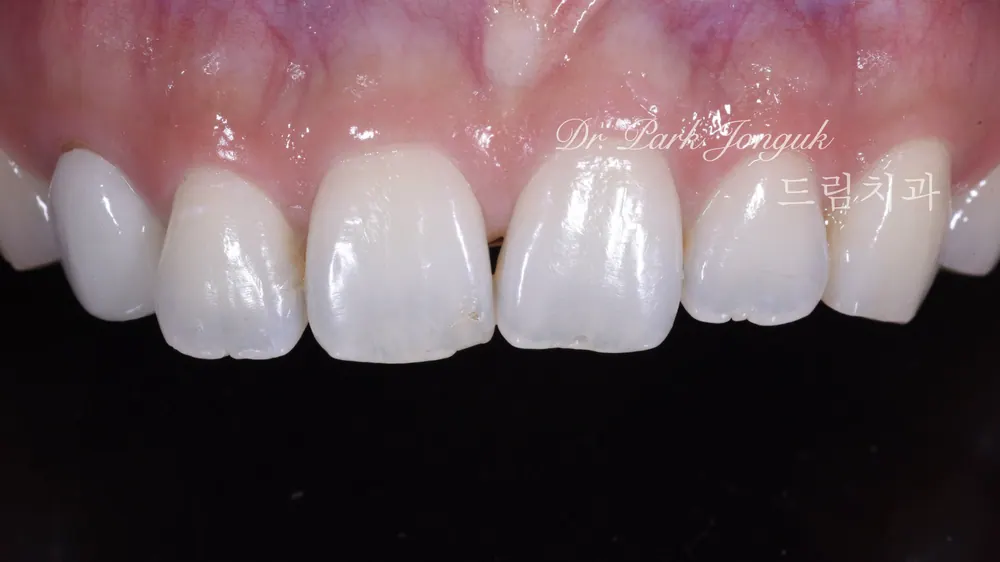
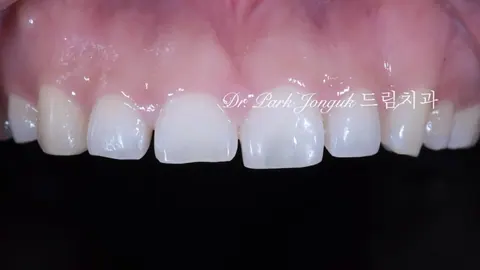
Photo 1 shows the teeth at the initial visit.
Orthodontic treatment had been done, but
The patient had already undergone orthodontic treatment.
The alignment had been somewhat straightened.
But problems remained.
Three problems
First, the alignment wasn't completely even.
There were slightly crooked spots here and there.
Orthodontics had cleaned up most of it, but it wasn't perfect.
Second, the tooth axes were tilted.
The teeth weren't standing straight — they leaned at an angle.
Just from this photo, you can tell they're tilted.
Third, the shape of the teeth wasn't attractive.
The tooth shapes themselves were irregular.
The sizes were all different too.
An even more serious problem: a tilted occlusal plane
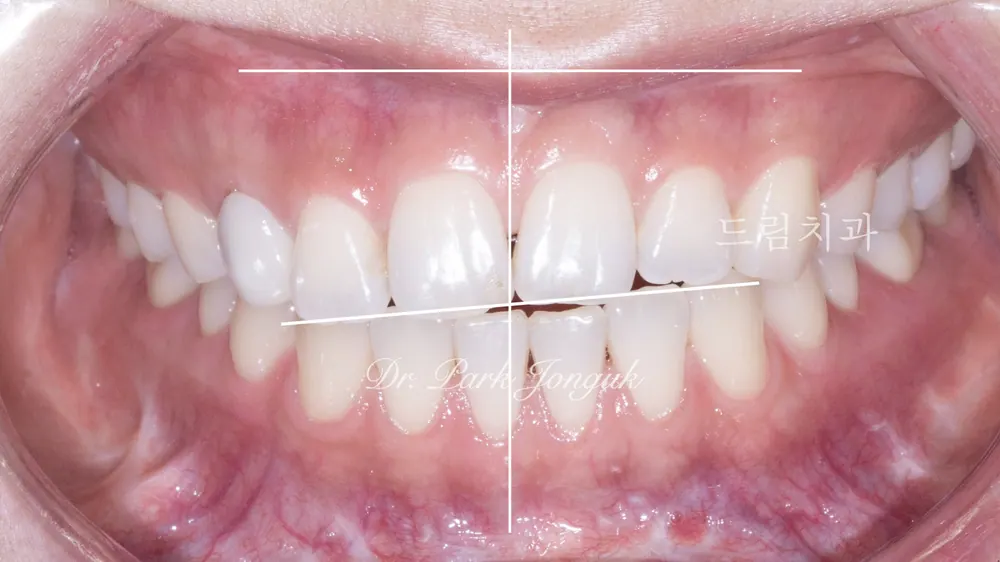
Take a look at photo 2.
We marked the tilt of the face with a line.
The occlusal plane was tilted
What is the occlusal plane?
It's an imaginary plane that connects the tips of the teeth.
This plane needs to be level for a natural look.
You can see that the occlusal plane was tilted.
One side was higher and the other lower.
It looked asymmetrical when smiling.
Why does this happen?
It's a limitation of orthodontic treatment.
Orthodontics can move the position of the teeth, but it can't change their shape or size.
Fine adjustment of the tooth axis can also be difficult.
When the tooth axis is tilted, it's very tricky
When the axis of a tooth is tilted, solving it with veneers is very challenging.
Why is it so tricky?
If a tooth stands straight, you just bond the veneer onto the front surface.
But what if the tooth is tilted?
One side has to be reduced a lot, and the other side only a little.
The amount of reduction is uneven.
The thickness of the veneer ends up uneven too.
A precise plan is essential
A case like this fails without an accurate diagnosis and a meticulous plan.
"Let's just wing it" won't work.
A difference of 1mm is what separates success from failure.
Establishing a precise treatment plan
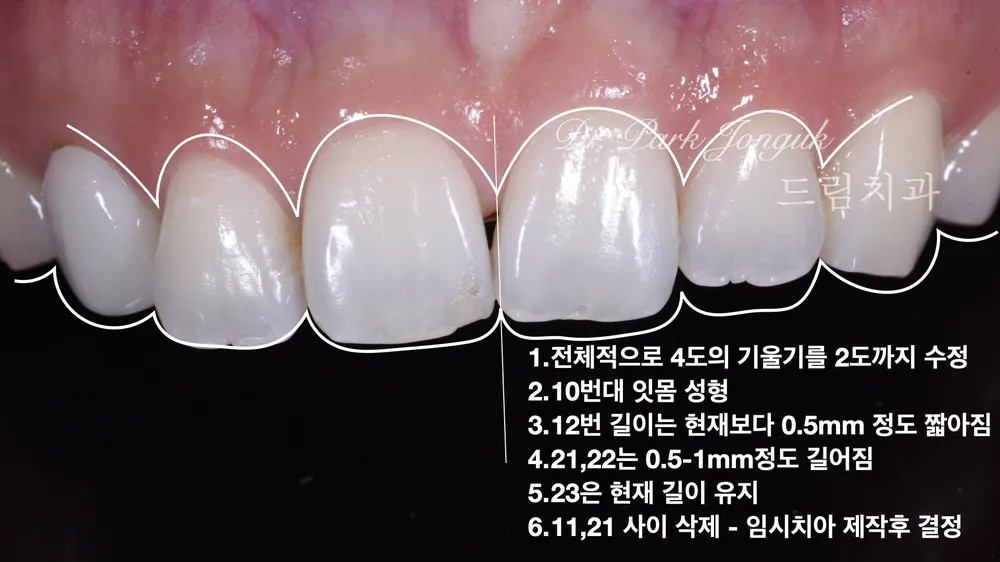
Photo 3 shows the treatment plan that was worked out.
Digital analysis
A treatment plan is drawn up, and the amount of tooth reduction needed to achieve it is calculated.
It's different for each individual tooth.
One tooth, 0.3mm.
Another tooth, 0.7mm.
It varies depending on the direction of the tilt.
Setting the goal
Correct the tooth axis.
Make the occlusal plane level.
Bring the tooth sizes into harmony.
Make the tooth shape beautiful.
Everything is calculated.
Simulation using a plaster model
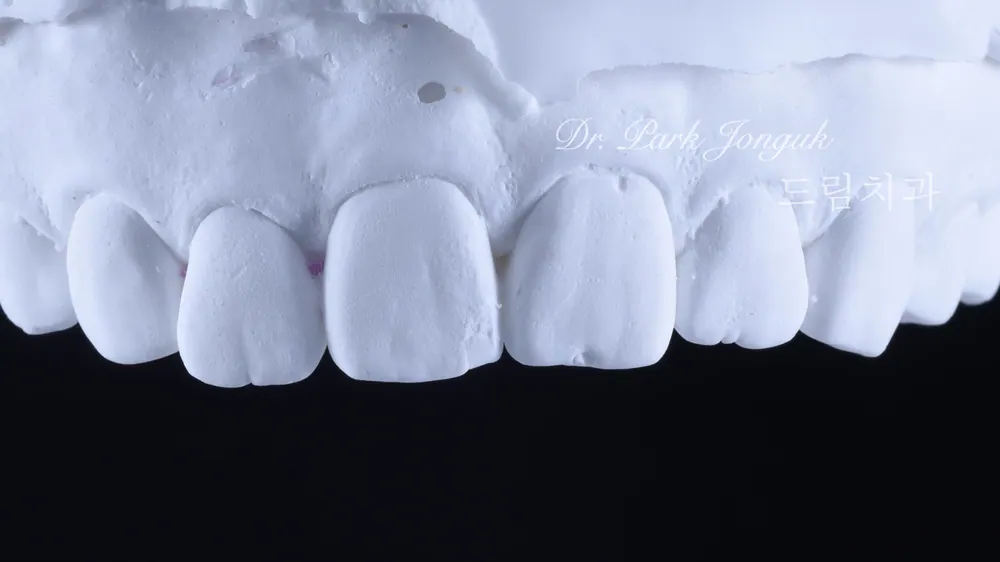
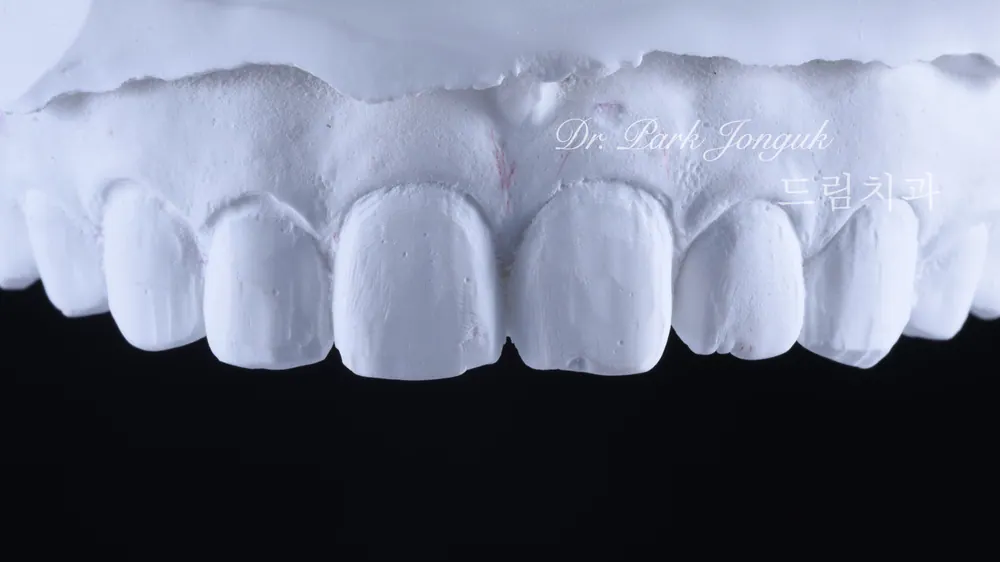
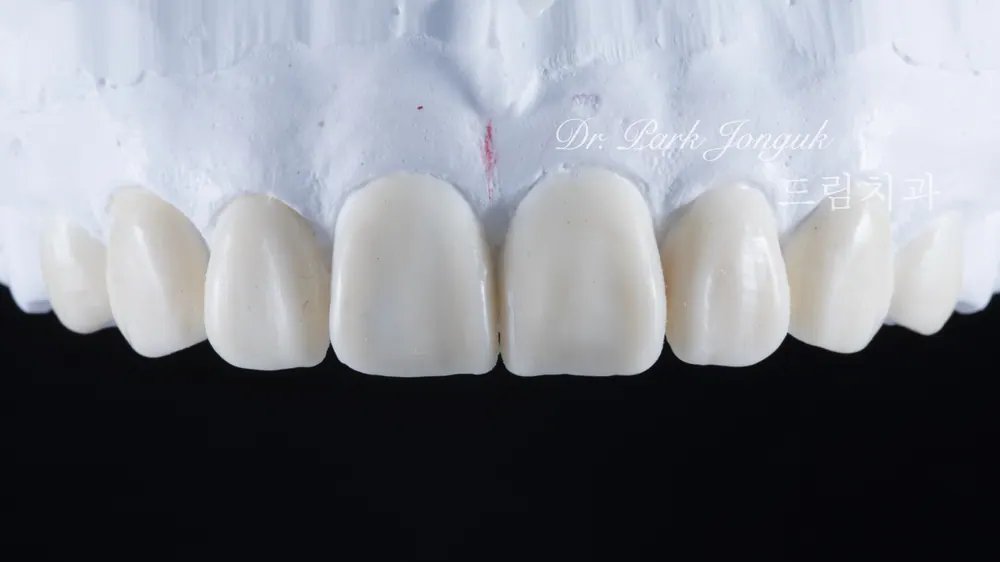
Photos 4, 5, and 6 show the step-by-step process.
Photo 4: A plaster model of the current state
This is a model that faithfully reproduces the patient's current tooth condition.
The tilted tooth axis is clearly visible.
The irregular tooth shape is visible.
Photo 5: After tooth reduction
This is a model with the teeth reduced exactly as planned.
The amount of reduction differs for each tooth.
It was adjusted to match the degree of tilt.
This is the result of the precise planning.
Photo 6: After the wax-up
This is a model that shows the final treatment result in advance.
The tooth axis has been corrected.
The occlusal plane has become level.
The tooth size and shape are in harmony.
This is what the result will be.
We show it to the patient in advance and get approval.
Precise tooth preparation, exactly as planned
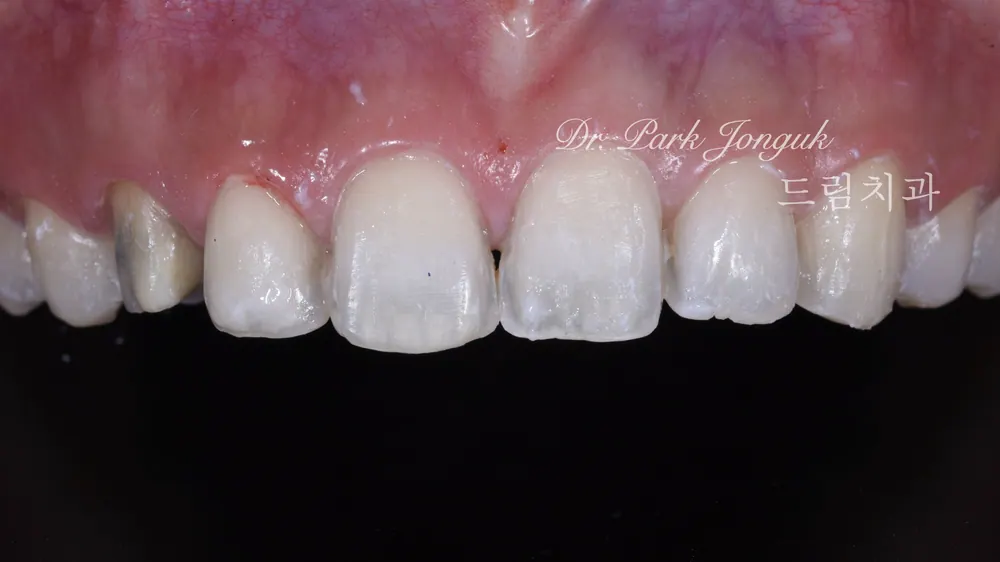
Photo 7 shows the teeth reduced according to plan.
Using a guide
A silicone guide made from the plaster model is used.
The planned amount of reduction is followed exactly.
It doesn't deviate by even 1mm.
Using a microscope
The entire process is carried out under a microscope.
It's checked at a 0.1mm scale.
It's shaped smoothly and precisely.
Correcting the tilted tooth axis
The amount of reduction differs for each tooth.
More is reduced on the side opposite the direction of the tilt.
This prepares the axis to be corrected with the veneer.
A remarkable change: after treatment
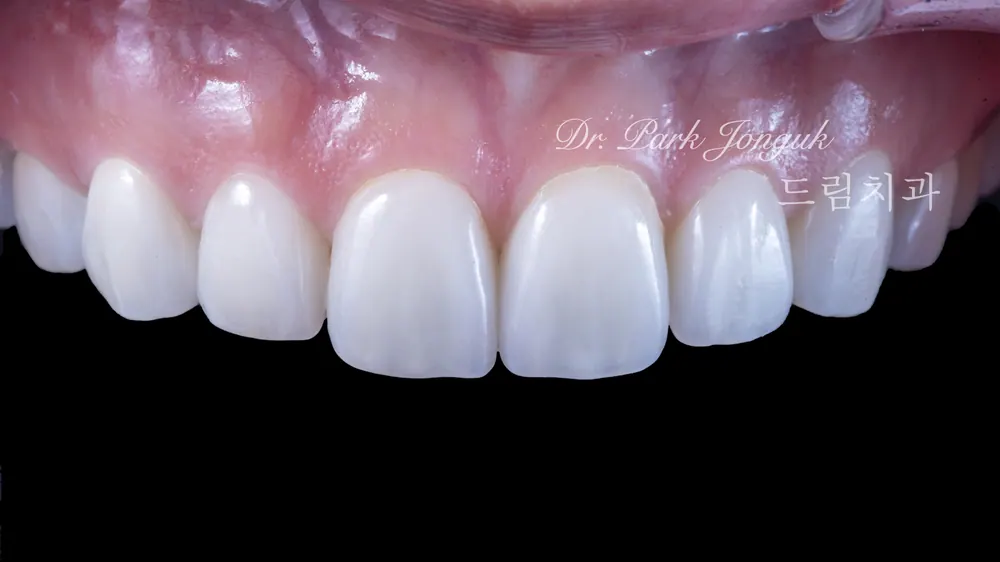
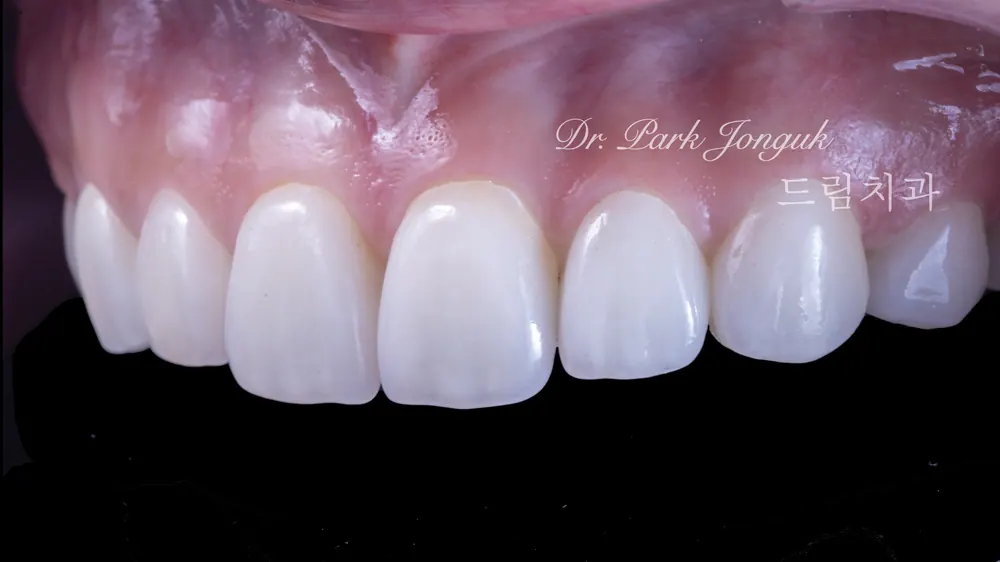
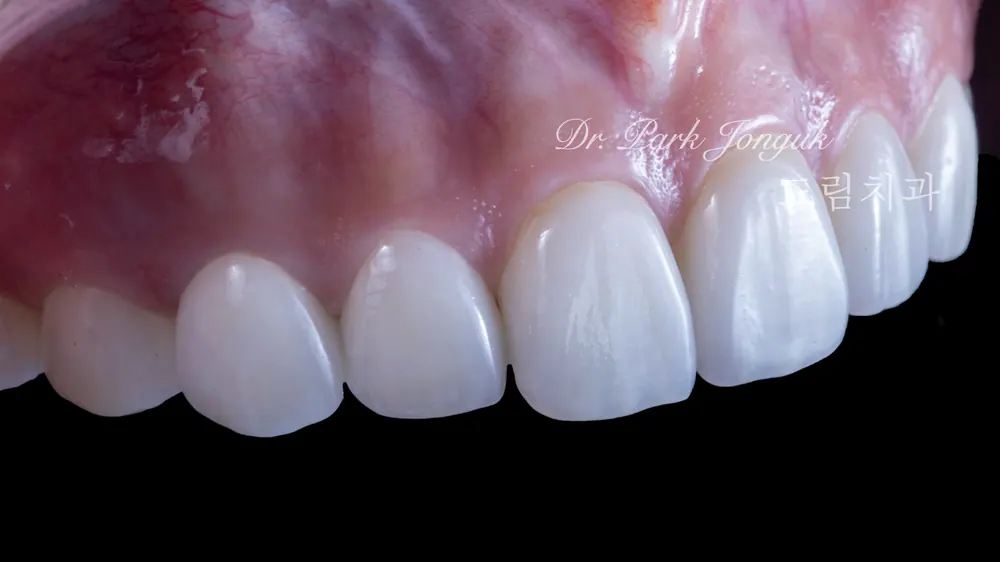
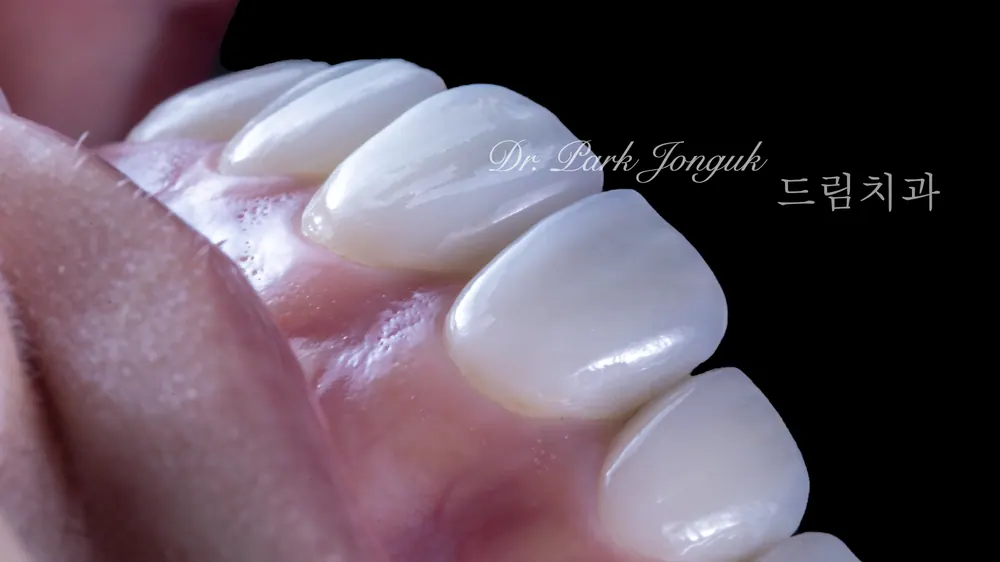
Photos 8, 9, 10, and 11 show the appearance after treatment.
It looks completely different.
The tooth axis has been corrected
The teeth that had been tilted are now standing straight.
The angle looks natural.
It's harmonious.
The occlusal plane has become level
The problem of one side being higher and the other lower has been resolved.
It's even, like a horizontal line.
The smile is symmetrical.
The tooth shape is beautiful
The once-irregular shapes have been neatened.
The sizes are in harmony.
There's a natural sense of dimension.
Color and translucency
There's translucency, just like a natural tooth.
The color gradient is beautiful.
No one can tell they're veneers.
A smile completed
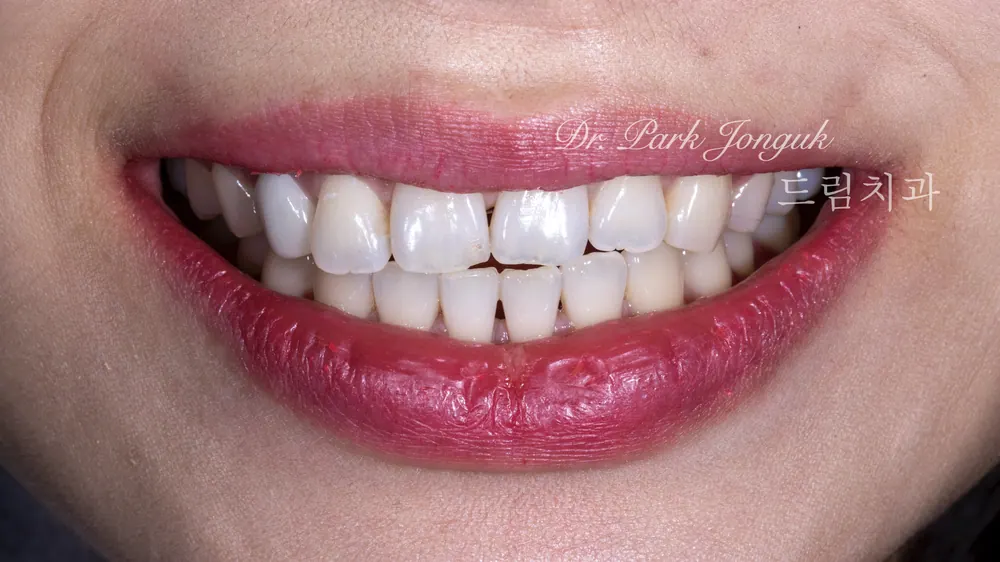
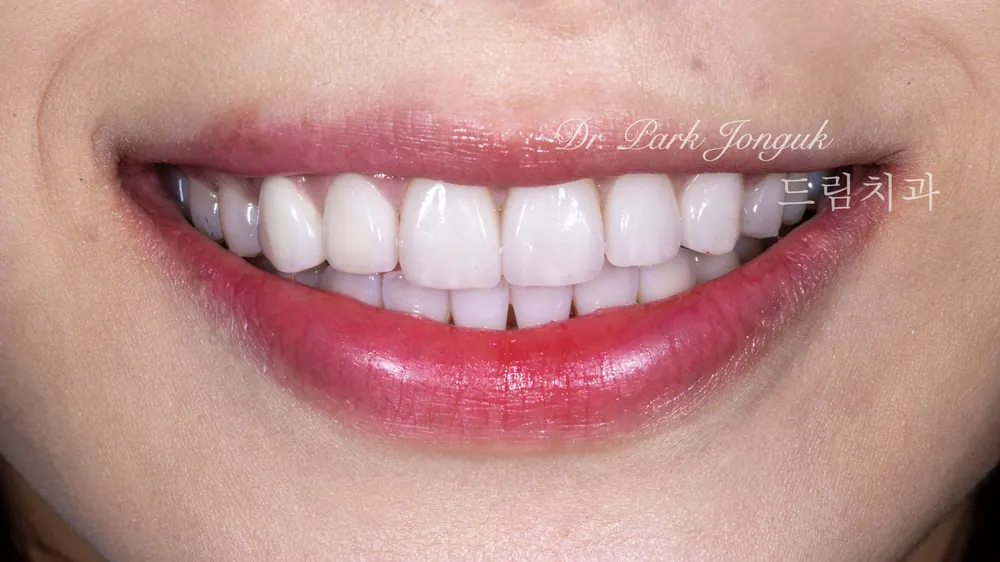
Photos 12 and 13 show the smile before and after treatment.
It's completely improved.
Smile before treatment
It looked somewhat unsteady.
The teeth looked uneven.
She looked lacking in confidence.
Smile after treatment
It's bright and beautiful.
It's symmetrical and harmonious.
It's full of confidence.
She looks like a completely different person.
If you're still unsatisfied even after orthodontic treatment
Do you have concerns like these?
"I had braces, but my teeth still look crooked."
It can be solved.
"I had braces, but the shape of my teeth isn't pretty."
It can be completed with veneers.
"My tooth axis is tilted."
It's tricky, but possible with a precise plan.
"Do I need to redo orthodontic treatment?"
Not necessarily. Veneers can be more effective.
The advantages of veneers after orthodontic treatment
Fast: redoing orthodontics takes 1–2 years, veneers take 2–3 weeks.
Precise: the shape, size, and even color of the teeth can all be adjusted.
Effective: it solves tooth-axis and shape problems that orthodontics alone can't.
Beautiful: a natural, aesthetic result.
But not just anyone can do it
When the tooth axis is tilted, veneers are very challenging to do well.
Essential requirements
Precise diagnosis: accurately calculating the amount of reduction through digital analysis.
Meticulous planning: simulating with a plaster model and drawing up a plan.
Accurate tooth preparation: using a guide and a microscope.
A skilled dental technician: fabricating precise veneers.
Extensive experience: having handled numerous difficult cases.
Dream Dental Clinic's 20 years of experience
Dream Dental Clinic in Apgujeong has performed a great deal of veneer treatment after orthodontic treatment.
Tilted tooth axes, irregular occlusal planes, complex cases.
We've treated them all successfully.
Precise diagnosis, meticulous planning, accurate execution.
This is our strength.
Don't give up, even after orthodontic treatment
Still unsatisfied even after orthodontic treatment?
Please don't give up.
It can be completed with veneers
Even if the tooth axis is tilted.
Even if the occlusal plane is tilted.
Even if the tooth shape is irregular.
All of it can be solved.
It's tricky, but it's possible
It's not easy.
It requires a precise plan and skilled technique.
But it's possible.
A completely different smile
Before and after treatment.
It gets completely better.
Confidence follows.
Quality of life changes.
Come in for a consultation
If your teeth still look crooked even after orthodontic treatment.
If you had orthodontic treatment but the shape of your teeth still isn't pretty.
If your tooth axis is tilted.
Don't give up — come in for a consultation.
We'll find a solution through precise diagnosis.
We'll create a successful result through meticulous planning.
Complete the process with veneers after orthodontic treatment.
Frequently Asked Questions (Q&A)
Q1. Is a veneer necessary even after orthodontic treatment?
A. Yes, in some cases it is. Orthodontics is a treatment that moves the position of the teeth, but it's difficult for it to perfectly control the shape, size, and fine angle of the tooth axis. In particular, when the tooth axis is tilted, the occlusal plane is asymmetrical, or the tooth shape is irregular, orthodontics alone can't solve it. In cases like this, finishing with veneers can achieve a far more beautiful result.
Q2. Is a veneer really possible when the tooth axis is tilted?
A. It's possible, but very challenging. The amount of reduction for each tooth has to be accurately calculated through precise digital analysis, simulated with a plaster model, and the tooth has to be precisely prepared using a guide and a microscope. Since the amount of reduction differs from tooth to tooth and has to be adjusted according to the direction of the tilt, extensive experience and skilled technique are required. Dr. Park Jonguk of Dream Dental Clinic in Apgujeong has treated many such difficult cases over 20 years.
Q3. Which is better — redoing orthodontic treatment, or veneers?
A. It depends on the situation, but for problems like a tilted tooth axis, tooth shape, or an asymmetrical occlusal plane, veneers tend to be more effective. Redoing orthodontic treatment takes more than 1–2 years, and it can't change the shape or size of the teeth. Veneers, on the other hand, can adjust the position, axis, shape, size, and color of the teeth all at once, in just 2–3 weeks. After a precise diagnosis, we'll discuss with you which method is optimal.
This article was written based on the actual clinical experience of Dr. Park Jonguk, director of Dream Dental Clinic in Apgujeong. He has practiced aesthetic dentistry for 20 years and has treated many difficult cases, such as veneers after orthodontic treatment. He has published Korea's first veneer textbook.

This article is a clinical note written by Dr. Park Jonguk of Dream Dental Clinic, Gangnam; the original was published on his blog. The photographs shown are real cases he treated. Results vary with each patient’s condition, and every procedure carries the possibility of individual variation and side effects.
![[Veneers for Protruding Teeth] Solving Protruding Teeth Without Braces? A Difficult Case in a Woman in Her 50s — 4-Year Follow-Up Revealed](/column-media/224094075985/thumb.webp)
Quick Consult
Request a Callback
Leave your number and we will call you back during clinic hours.
Request Received
We will contact you during clinic hours. For urgent matters, please call +82-2-3448-0028.