
Retreating an Old PFM Crown with a Zirconia Crown
Hello. I'm Park Jonguk, director of Dream Dental Clinic.
Today's topic is the retreatment of an old PFM crown.
PFM refers to a type of crown where tooth-colored ceramic is bonded
onto a metal base — and before the ceramic called zirconia came along,
it was the method most widely used for tooth-colored esthetic treatment.
Because there's metal on the inside,
the tooth color tends to look dull and opaque,
and it has the drawback of making the area near the gum look dark.
There was also a method called PFG, where gold rather than ordinary metal was used on the inside,
and while this method is somewhat better for the tooth and more esthetic,
as the price of gold has kept rising,
it's a method that's almost never used anymore.
These days, ceramics called zirconia or e.max are mainly used,
with no metal at all,
for an all-ceramic crown that is entirely tooth-colored.
Because the whole thing is ceramic, it's also called an all-ceramic crown.
It's far more esthetic,
and since it can be bonded directly to the tooth, it holds up better too.
With the metal-containing method,
since it can't be bonded to the tooth,
a single crown alone felt like the bond would be weak and it would come off soon,
so multiple teeth were sometimes splinted together.
Unless it's a bridge because a tooth is missing,
splinting teeth together like this whenever possible
isn't good for tooth or gum health.
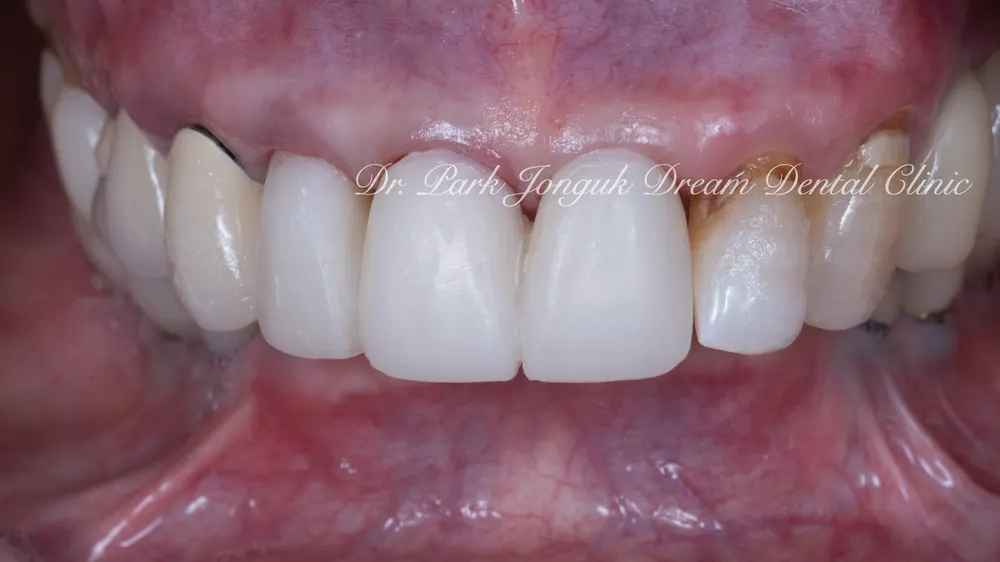
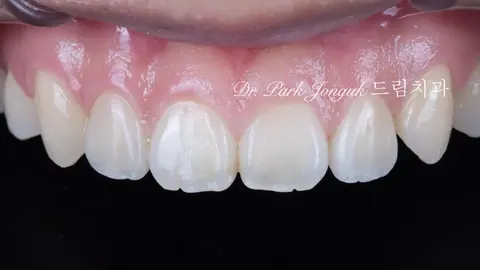
In this case, several front teeth had been
splinted together with PFM crowns.
Decay had developed on the inside,
and inflammation had returned to a tooth that had already had root canal treatment,
so along with treating the decay,
we decided to retreat the root canal as well.
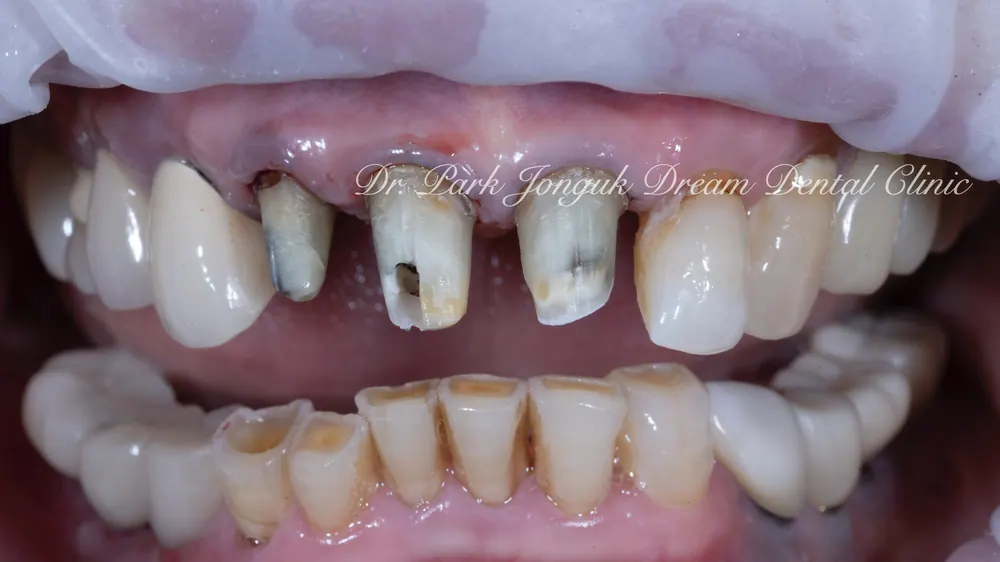
This is the state after removing just the three splinted teeth.
The material at the root-canal-treated site had come loose,
decay had developed near the gum,
and there was discoloration as well.
We made temporary teeth to use during the root canal treatment period,
and proceeded with both the root canal treatment and the decay treatment.
Redoing root canal treatment is difficult and doesn't have a high success rate,
so it has to be done with great care.
Since it usually can't be finished in a short time,
the temporary teeth sometimes have to be worn for quite a while.
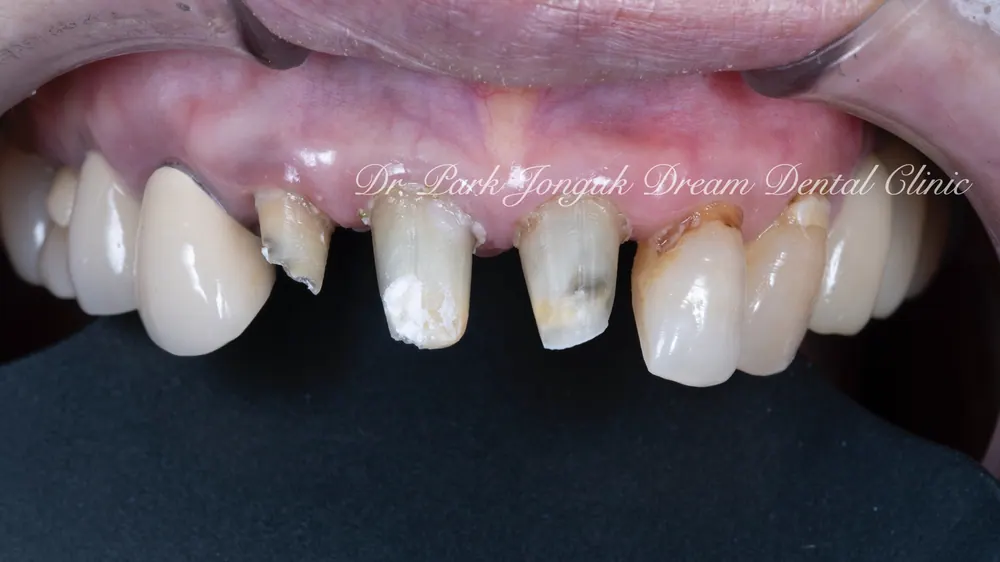
During the root canal retreatment process, we also check on the gums.
The gum shape needs to be finished so it looks good too.
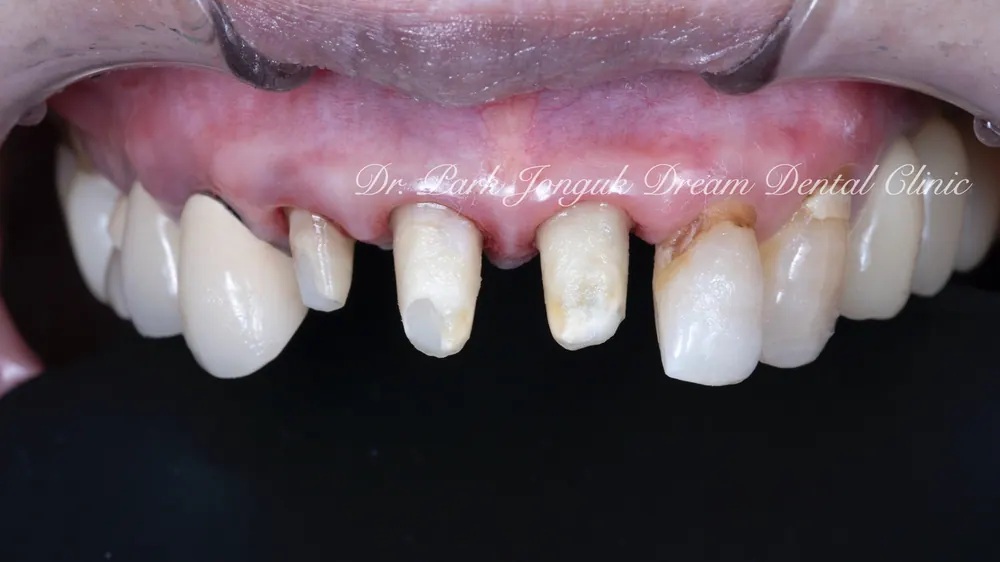
After finishing the root canal retreatment,
we removed the discoloration
and whitened the teeth at the same time.
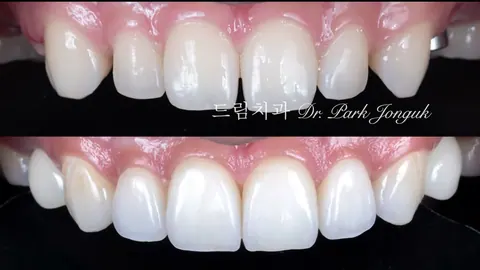
The discoloration disappeared, and the teeth, which had been dark, became noticeably brighter.
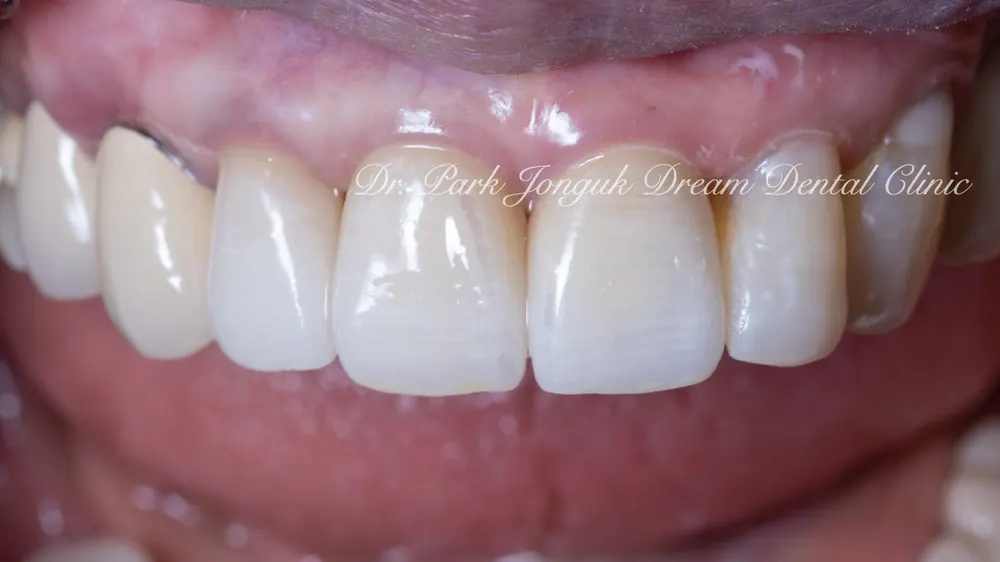
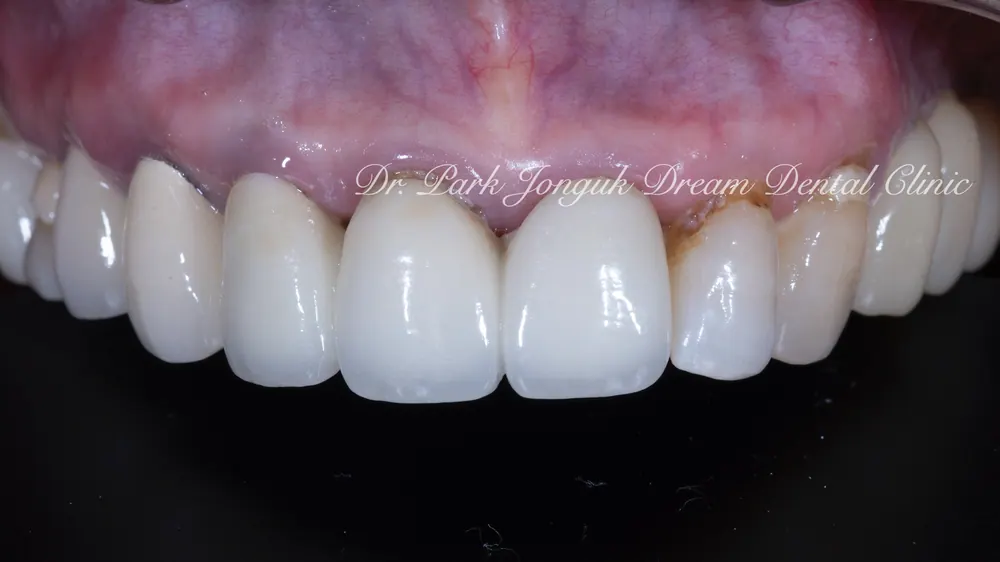
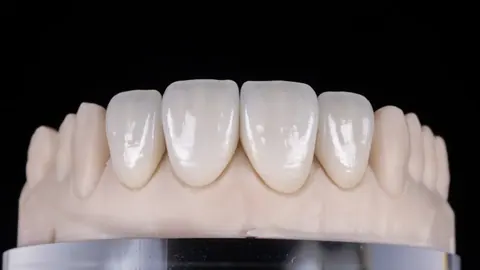
We finished with zirconia crowns.
We gave them the same varied characterization as natural teeth,
so even though they're ceramic, they look like natural teeth.
Zirconia is the strongest of the ceramics,
but it has a somewhat duller look,
so when choosing the crown material, we take into account the patient's age and the color and translucency of the surrounding teeth,
and select the material accordingly.
When there's no discoloration at all, a more translucent material like e.max can be used instead.
In this case, whitening did brighten the tooth color,
but since there was a chance it could discolor again over time,
we went with a zirconia all-ceramic crown for the retreatment.
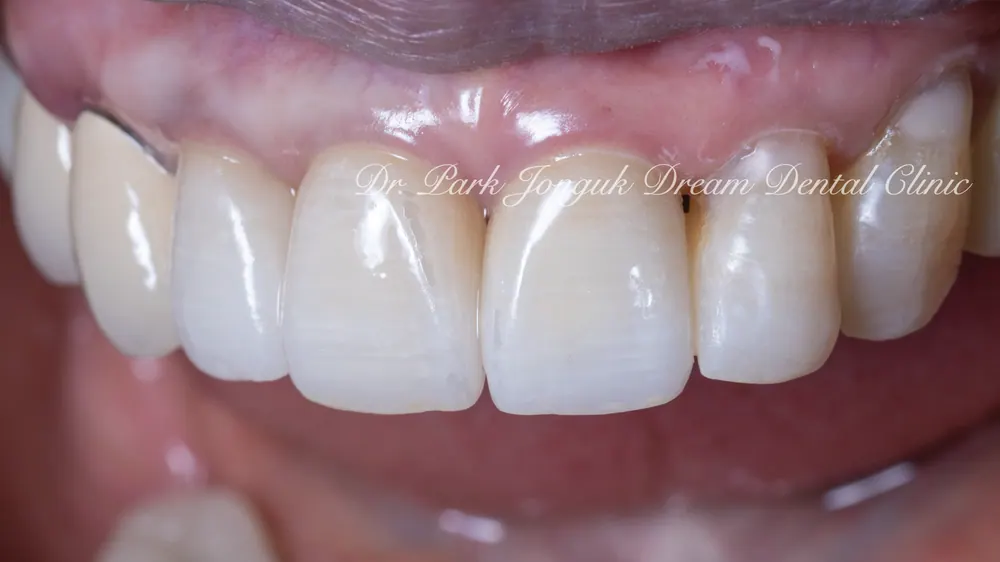
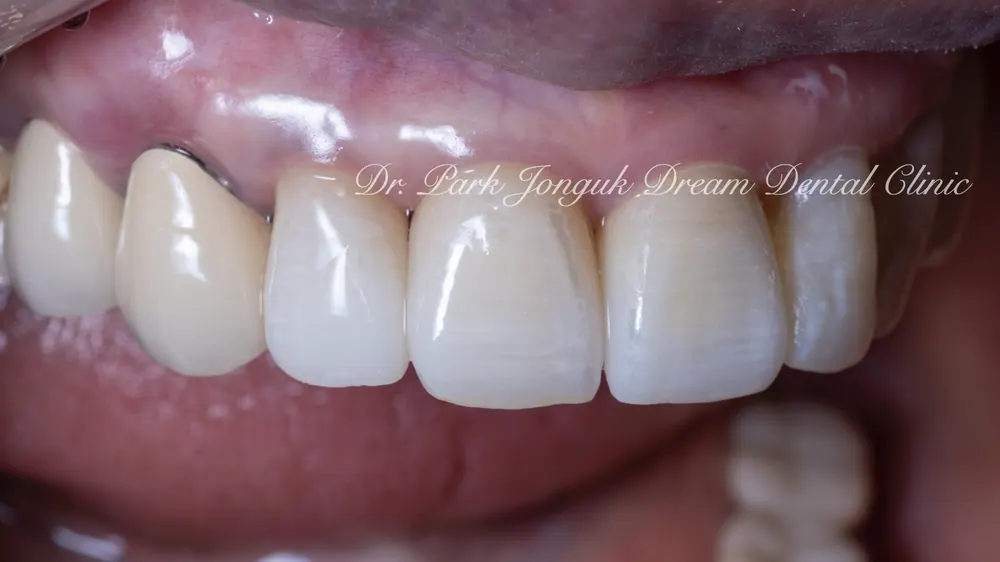
With a feel similar to natural teeth,
the treatment was finished beautifully.
Since 2006, Dream Dental Clinic
This article is a clinical note written by Dr. Park Jonguk of Dream Dental Clinic, Gangnam; the original was published on his blog. The photographs shown are real cases he treated. Results vary with each patient’s condition, and every procedure carries the possibility of individual variation and side effects.
Quick Consult
Request a Callback
Leave your number and we will call you back during clinic hours.
Request Received
We will contact you during clinic hours. For urgent matters, please call +82-2-3448-0028.