
Gum Discoloration: Redoing an Old Crown That Turned the Gum Dark
Hello, I'm Park Jonguk, director of Dream Dental Clinic.
Looking at patients who had their front teeth treated a long time ago,
you sometimes see the gums have turned dark or bluish.
There are two reasons the gum color changes.
The first is when the tooth has had root canal treatment.
After root canal treatment, the tooth gradually darkens,
and the root area darkens as well,
so that color shows through the gum bone and gum tissue.
In people with thin gum tissue over the front teeth, this shows through even more severely.
The other case is when a crown made using the PFM method was used.
This is an older style of crown
that looks tooth-colored on the outside but has metal inside.
The metal shows through the gum, making it look dark — that's this case.
In this case, as long as the tooth itself isn't discolored,
redoing the crown as an all-ceramic crown made entirely of ceramic
will make the dark discoloration disappear.
The problem is a tooth discolored by root canal treatment,
which can sometimes be brightened with whitening and similar methods,
but in some cases the tooth color doesn't brighten,
and when there's a metal post inside the tooth,
whitening isn't possible at all,
and discoloration at the root of the tooth can't be brightened with whitening.
When the discoloration can't be resolved this way,
we use temporary teeth to reshape the gum
and treat it in a way that covers the discoloration as much as possible.
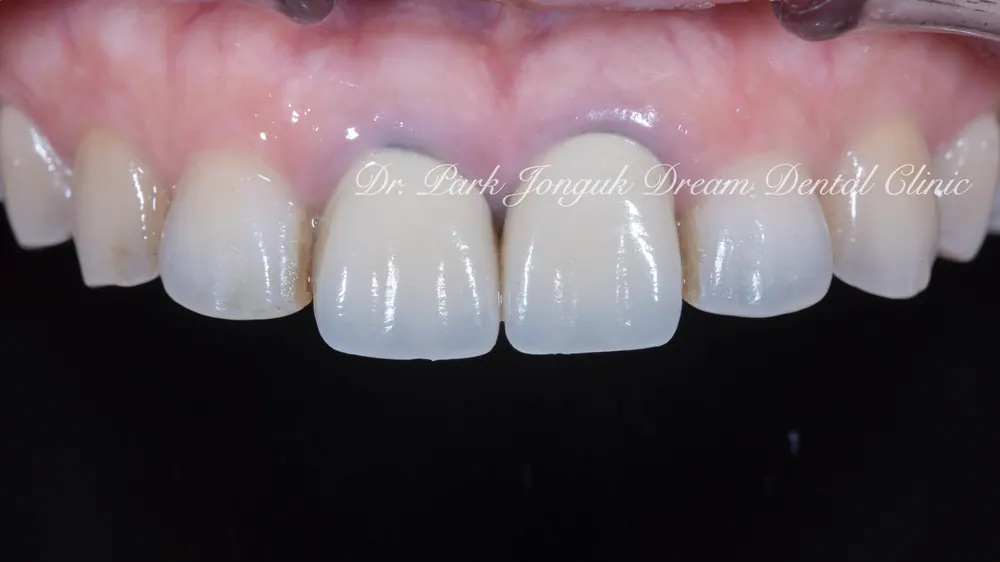
This is a case where gum discoloration is visible.
The gum height differed between the two front teeth,
and the gums had turned dark.
Both crowns were all-ceramic zirconia crowns.
We proceed with a diagnosis for treatment.
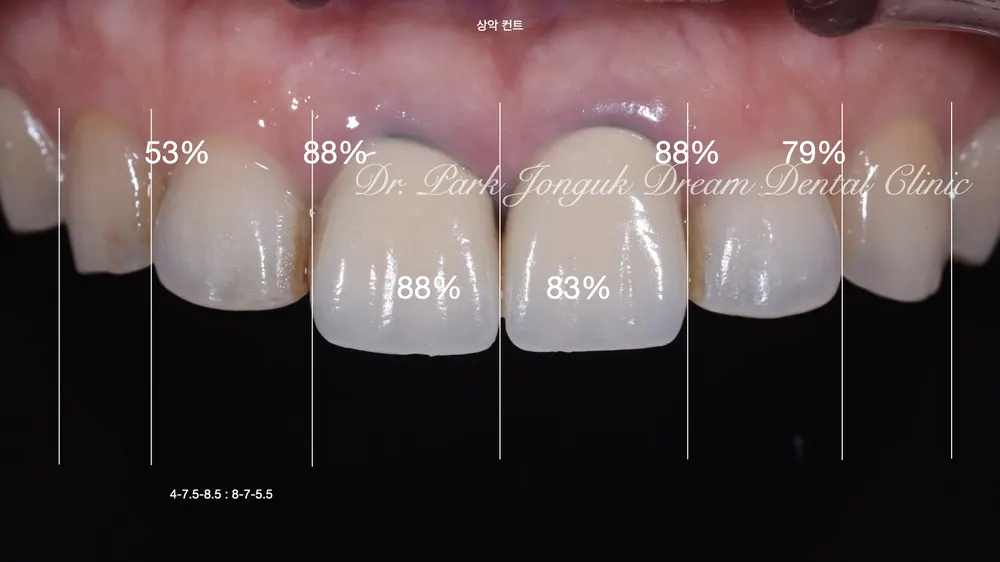
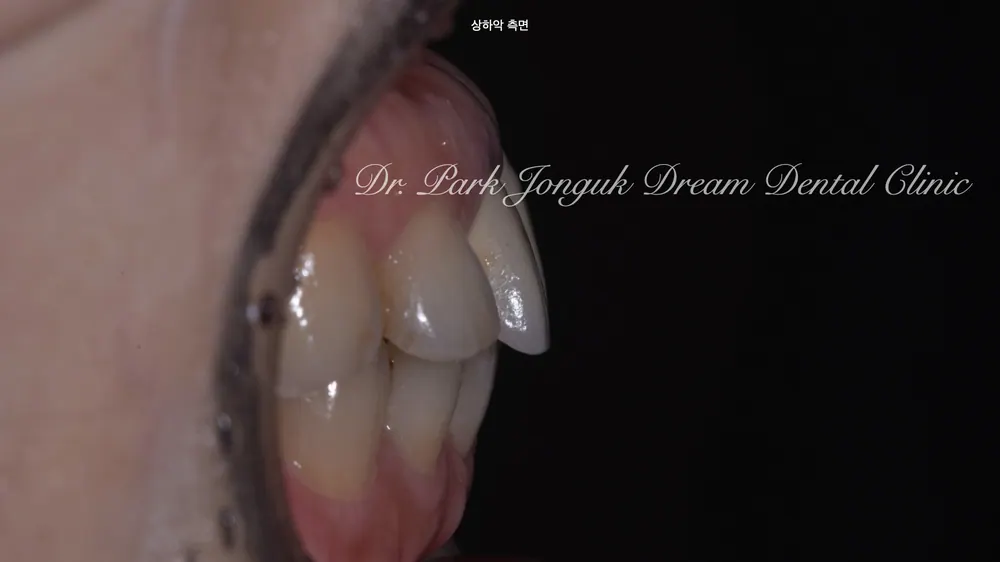
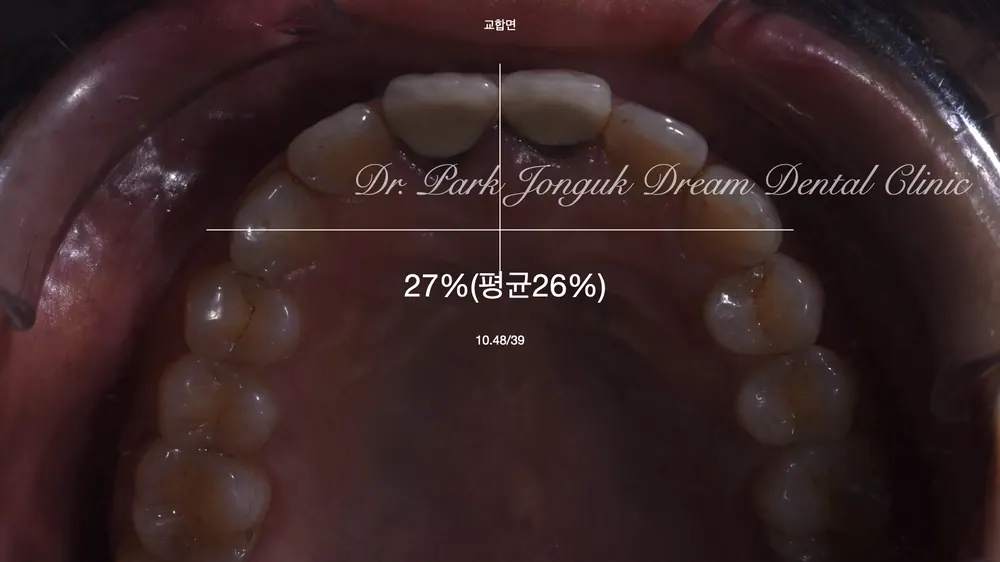
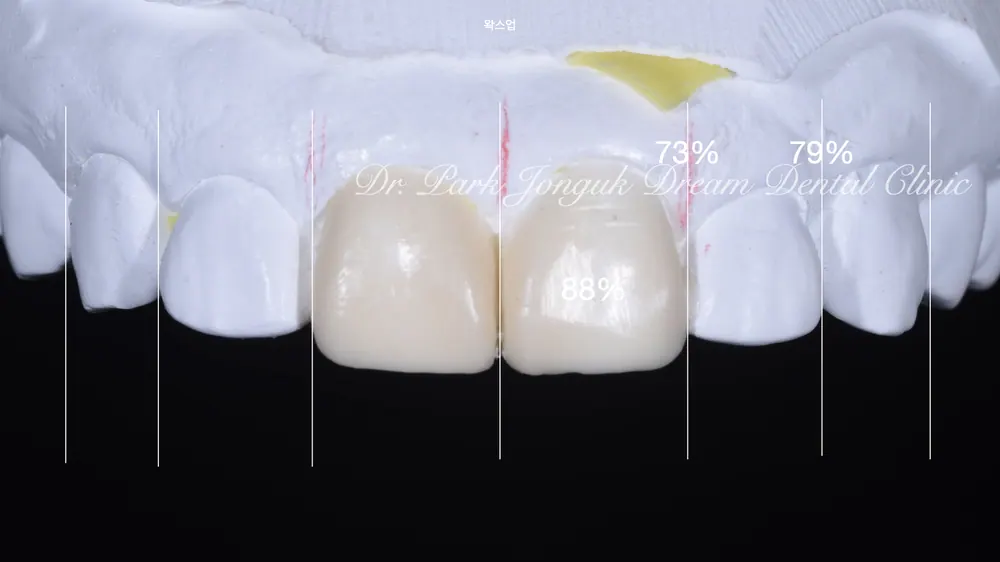
There won't be a major change to the shape of the teeth,
but using precise temporary teeth,
we plan to change the shape of the gum, so a precise wax-up is needed.
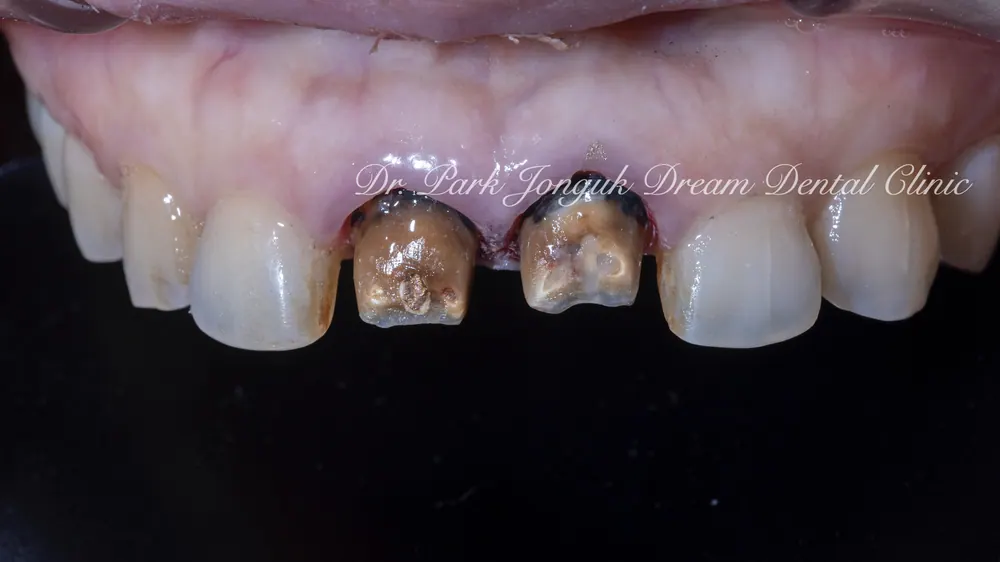
This is the appearance after the crowns were removed.
The tooth structure was severely damaged,
which made for a somewhat difficult situation.
In particular, the discoloration of the tooth beneath the gumline
was nearly black, and trying to resolve this kind of root discoloration
through whitening could cause a range of side effects,
so we decided not to attempt it.
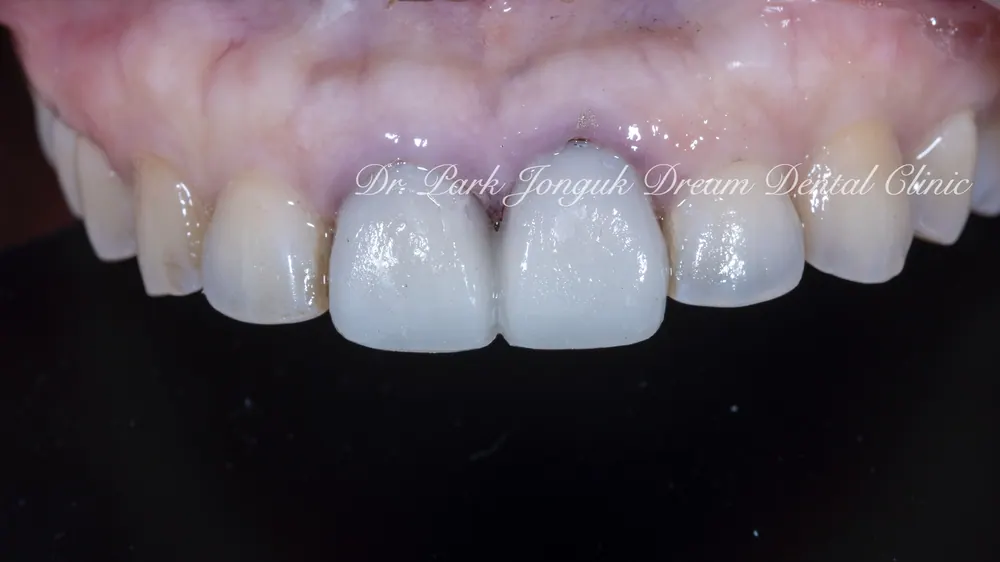
First, we made temporary teeth matching the current shape,
then took an impression and remade precise temporary teeth.
At this point, to resolve the asymmetry in the gum shape,
the shape of the temporary teeth has to be carefully controlled.
In particular, on the side where the gum was higher, we allowed room for the gum to recede,
and on the side where it was lower, we allowed it room to rise a little,
so as to bring the gums into symmetry.
While doing this,
we need to make careful, precise adjustments
so that inflammation doesn't develop even if the ceramic extends deep beneath the gumline.
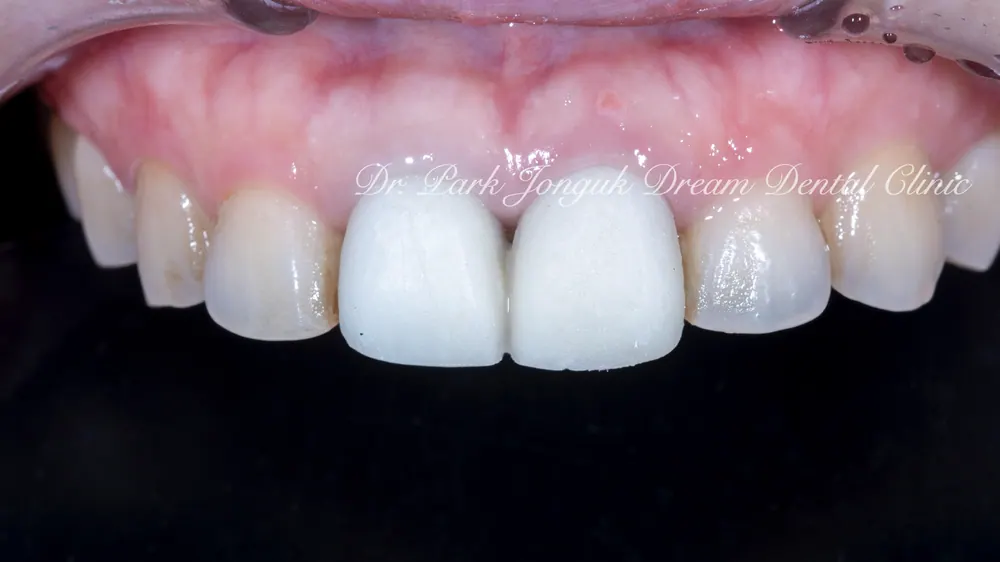
After using the newly made temporary teeth for about 1-2 weeks,
you can see the gum shape has become more symmetrical,
and the gum color has improved quite a bit too.
At this point, we take an impression and finish with the ceramic restoration.
A case like this, with discoloration, can't be rushed through treatment.
Taking the time to go slowly produces a better result.
The temporary teeth play a particularly important role,
and sometimes we remake the temporary teeth two or three times or more.
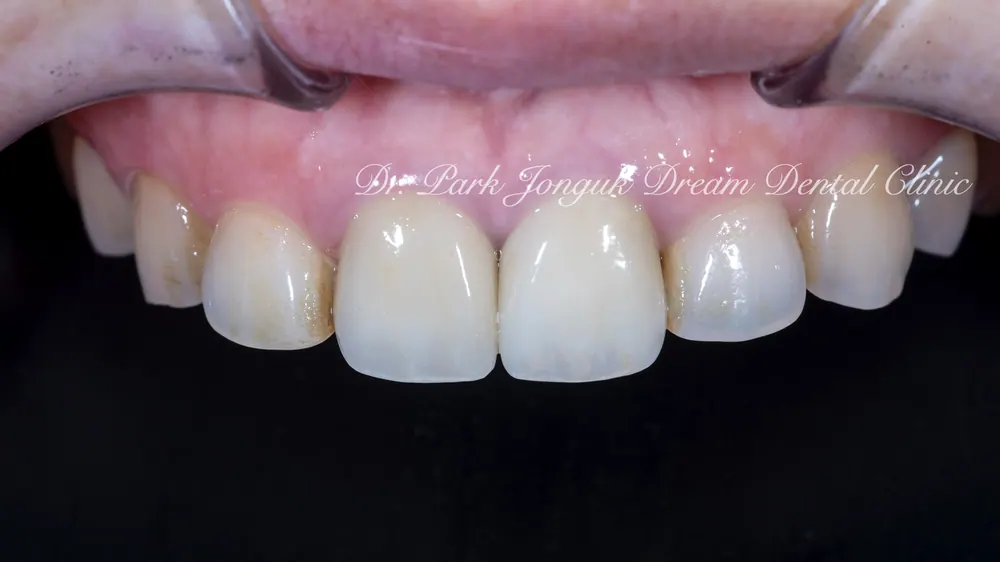
It was finished looking natural, like this.
Compared even to the natural teeth right next to it,
the treatment turned out looking even more natural, and the patient was very satisfied.
Since 2006, Dream Dental Clinic
This article is a clinical note written by Dr. Park Jonguk of Dream Dental Clinic, Gangnam; the original was published on his blog. The photographs shown are real cases he treated. Results vary with each patient’s condition, and every procedure carries the possibility of individual variation and side effects.
Quick Consult
Request a Callback
Leave your number and we will call you back during clinic hours.
Request Received
We will contact you during clinic hours. For urgent matters, please call +82-2-3448-0028.