
Cheongdam-dong Veneers: Crown Retreatment and Veneers for Discolored Teeth
Hello, I'm Park Jonguk, director of Dream Dental Clinic.
Retreating old crowns or Cheongdam-dong veneers
is mostly done for aesthetic reasons,
so it's important to clearly identify what needs improving in the current condition
and proceed with treatment accordingly.
In other words, diagnosing the current condition is very important,
and the direction of treatment must be decided based on that diagnosis.
When a tooth suffers trauma,
discoloration often follows.
The nerve canal inside the tooth, reacting to the trauma,
can become obliterated, causing the tooth to lose its translucency,
or the blood flow stops and the tissue hardens,
which can result in tooth discoloration.
In such cases, depending on whether the nerve is alive or dead,
we adjust the amount of tooth reduction appropriately
so that the discoloration can be covered,
and proceed with Cheongdam-dong veneer treatment.
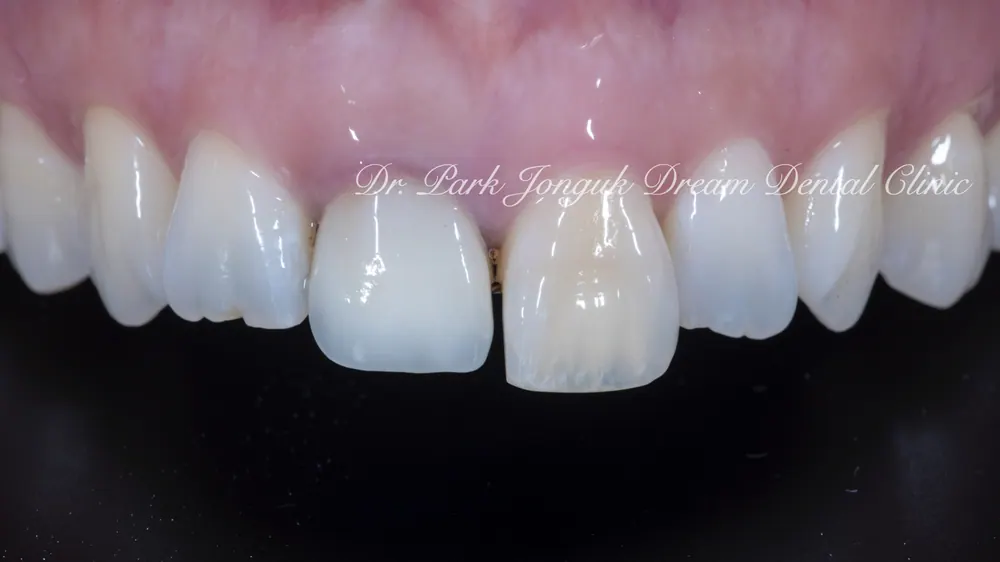
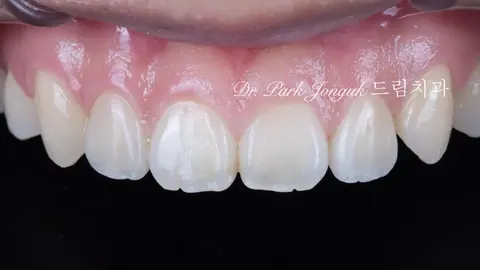
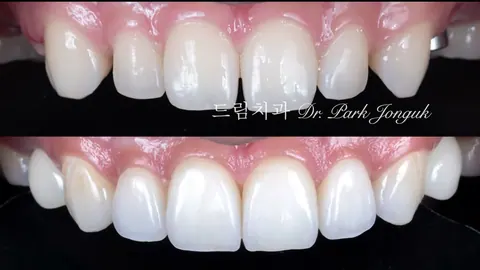
This patient had both an old crown and trauma-related discoloration.
The other teeth were also poorly aligned and poorly shaped.
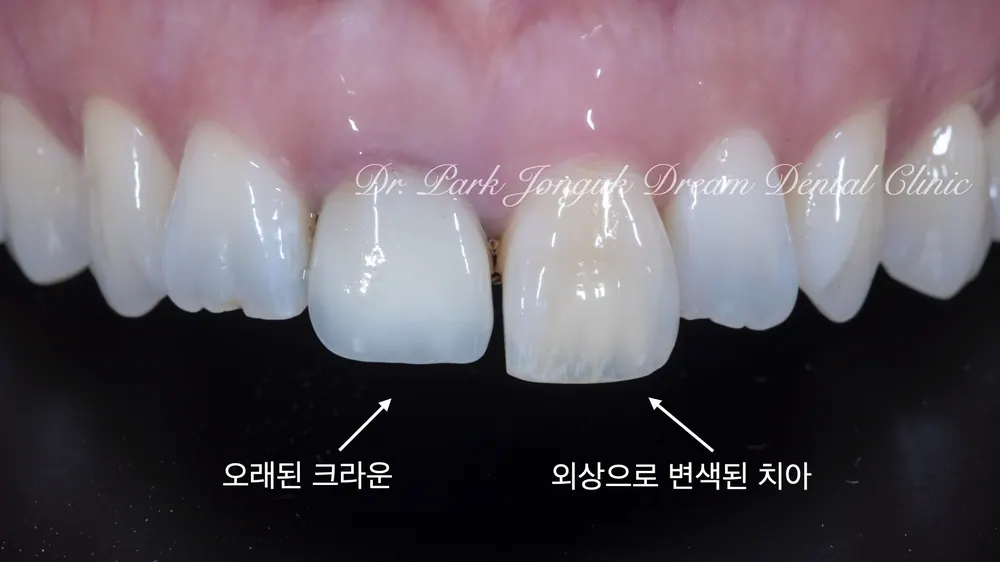
The difference in gum height, the degree of discoloration, the size of the teeth,
and many other factors had to be considered.
We also had to plan in advance how much to reduce each tooth,
and when treating discoloration with Cheongdam-dong veneers,
the color has to be covered with thin ceramic,
so there's a minimum amount of reduction that's unavoidable.
On top of that, after the trauma the tooth had become ankylosed to the bone,
so just that one tooth was sitting in an odd position.
Since the treatment also had to correct the alignment,
we planned accordingly.
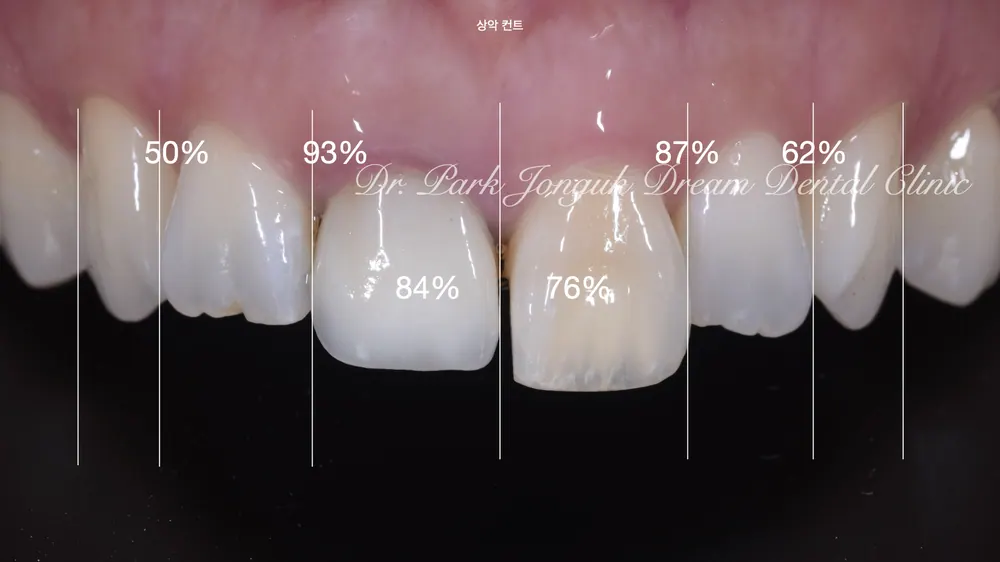
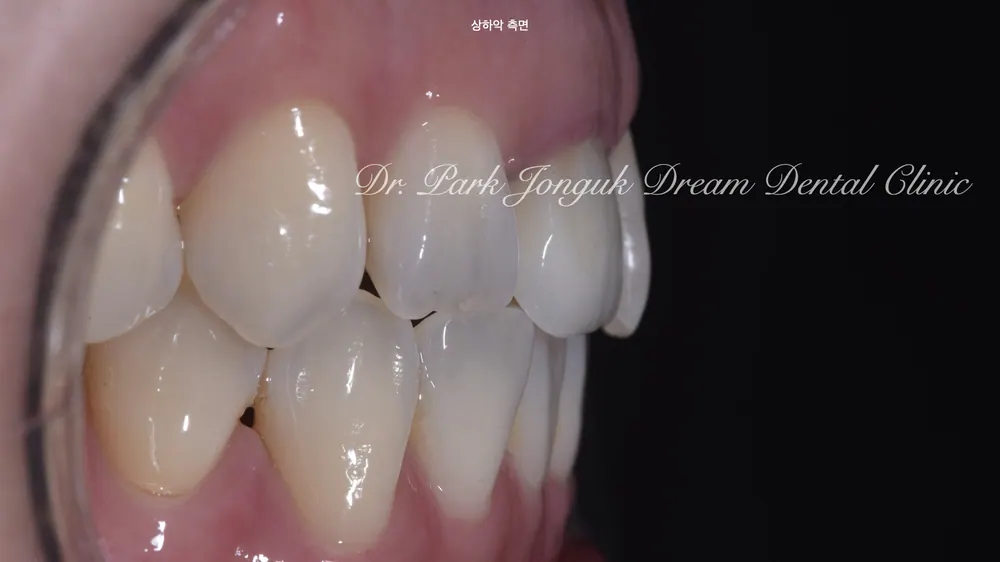
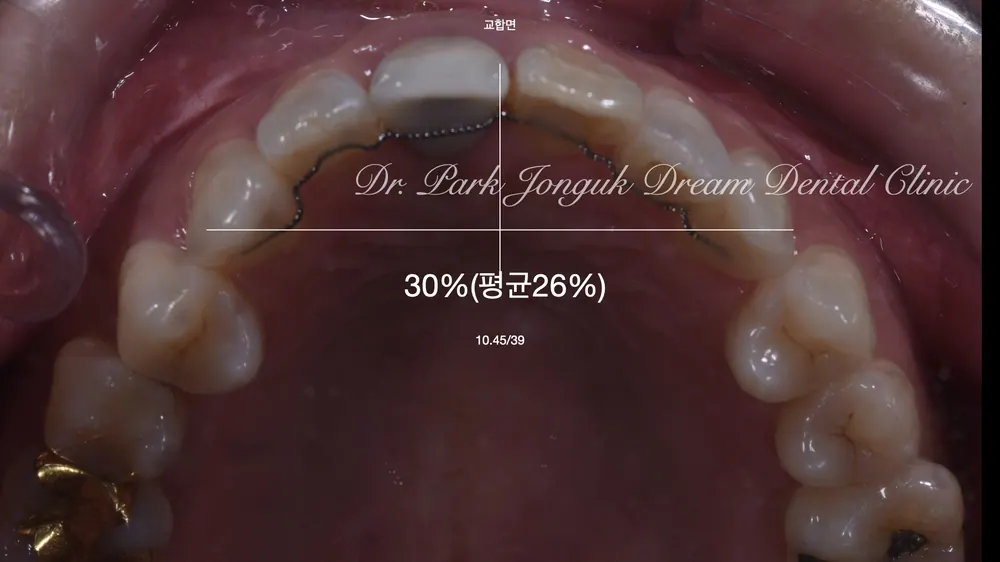
We carried out various measurements for the treatment.
Considering not just the teeth but the shape of the dental arch as well,
we need to set the overall treatment plan.
The most important thing in Cheongdam-dong veneer treatment is
deciding how much tooth reduction is needed,
and that process is exactly the precise wax-up diagnosis.
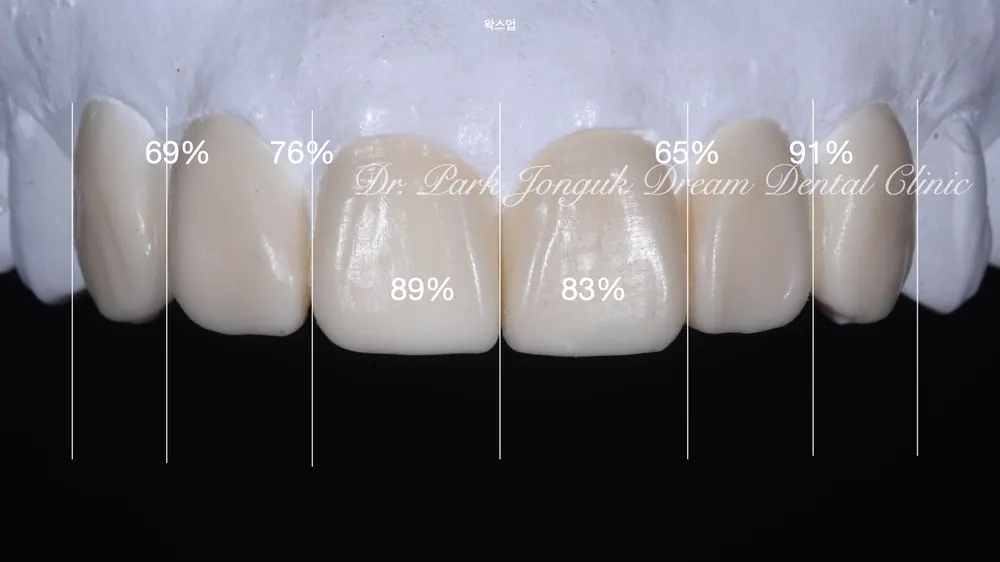
Considering both the size and proportion of the teeth,
since this tooth had a high chance of ankylosis after the trauma, we decided
not to perform gum contouring.
As a result, the two front teeth do look a little short.
Still, we proceeded while balancing the overall look as much as possible.
For the discolored tooth in particular, we had to decide between a crown and veneers.
The degree of discoloration is what matters most here.
If the discoloration is severe after the tooth is reduced, we go with a crown;
if the discoloration turns out to be less than expected after reduction,
we decided to treat it with Cheongdam-dong veneers.
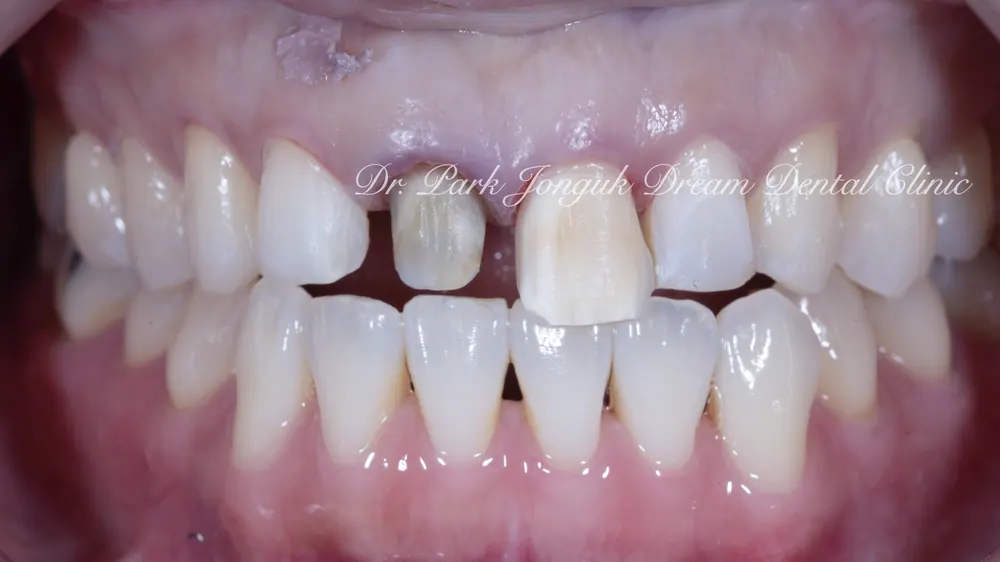
After removing the crown,
we proceeded with veneer-level reduction on the discolored tooth in order to cover the discoloration.
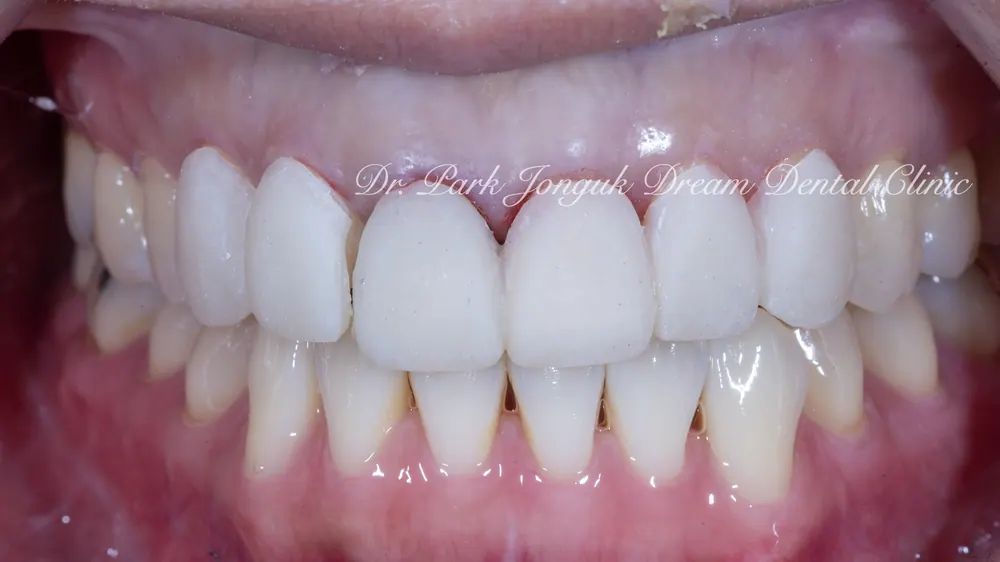
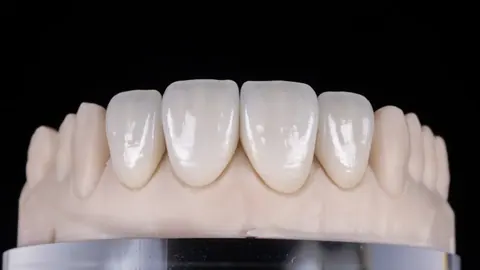
Using temporary teeth,
we checked the overall shape of the teeth
and also checked whether the discoloration would be covered after the veneers.
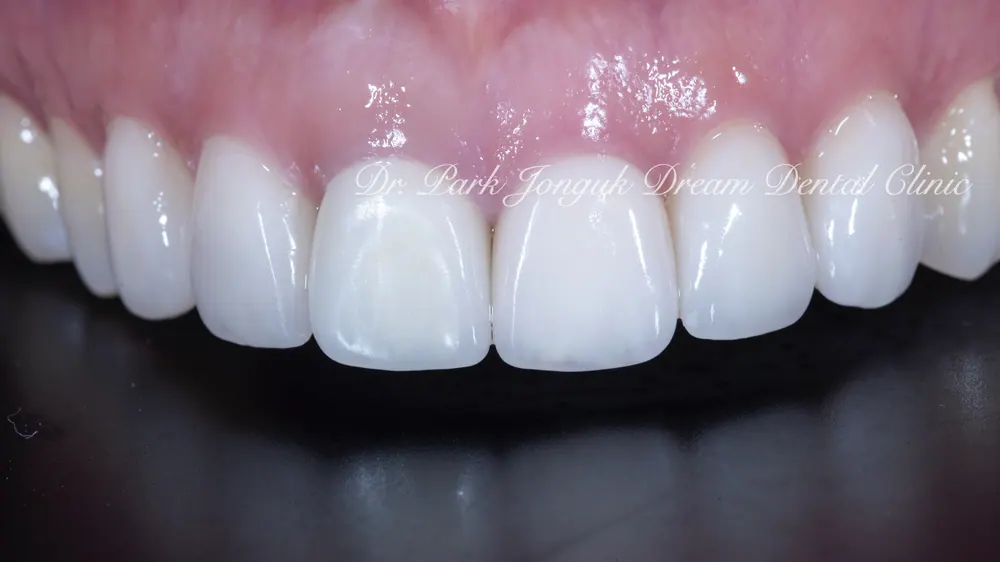
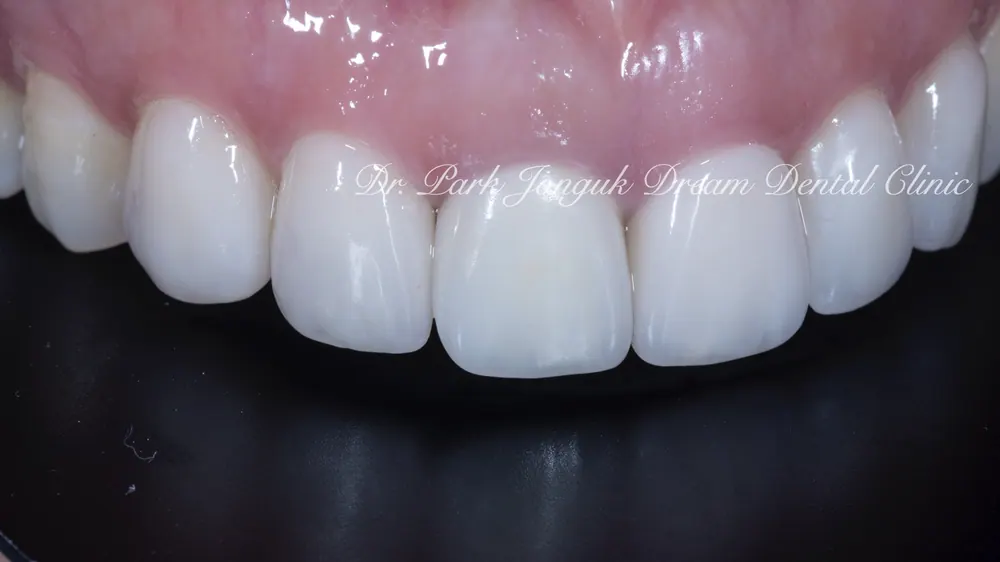
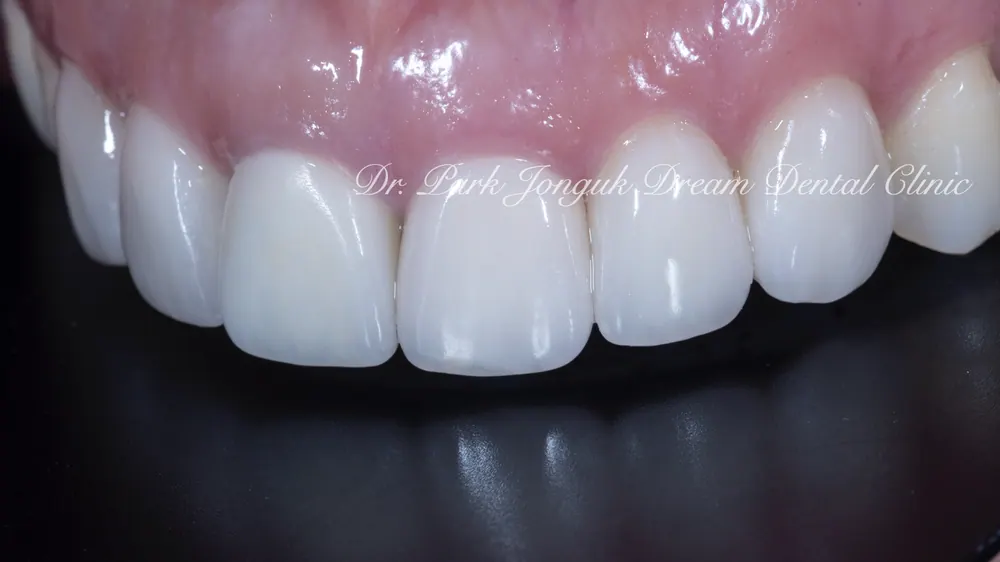
The treatment was completed with a crown and veneers.
Matching the color between a crown and veneers is generally a very tricky process.
When there's also discoloration like in this case,
it becomes an even harder process.
That's why, in many cases where a crown is involved,
even though it means more tooth reduction,
some clinics treat everything with crowns instead.
In my case, because of potential side effects and other issues down the road,
I always use veneers whenever they're a viable option.
Since 2006, Dream Dental Clinic
This article is a clinical note written by Dr. Park Jonguk of Dream Dental Clinic, Gangnam; the original was published on his blog. The photographs shown are real cases he treated. Results vary with each patient’s condition, and every procedure carries the possibility of individual variation and side effects.
Quick Consult
Request a Callback
Leave your number and we will call you back during clinic hours.
Request Received
We will contact you during clinic hours. For urgent matters, please call +82-2-3448-0028.