
Retreatment of Old All-Ceramic Crowns and Bridges
Hello, I'm Park Jonguk, director of Dream Dental Clinic.
Looking at old crown treatments,
a common feature is that several teeth are often splinted together.
A bridge that crowns and connects the teeth around a missing tooth
is a treatment method
where connection is unavoidable because a tooth is missing, but
when there is no missing tooth,
a bridge that connects teeth together
is rarely done unless there's a special reason.
In some cases, when too much food gets trapped between the molars,
it's occasionally done for that reason, but I personally don't treat patients that way.
Of course, there is splinting treatment done when the gums are in very poor condition,
but that's a very special case,
and generally, when there's no such problem, connecting the teeth together for treatment
isn't particularly good.
The same applies to front teeth,
and this often causes significant aesthetic problems.
Let's take a look at the retreatment
of all-ceramic crowns on teeth that had been splinted together like this.
It would be nice if the tooth reduction were as minimal as with front-tooth veneers,
but since the tooth was already reduced, there's no undoing it.
We have to do our best from the current state to achieve both function and aesthetics.
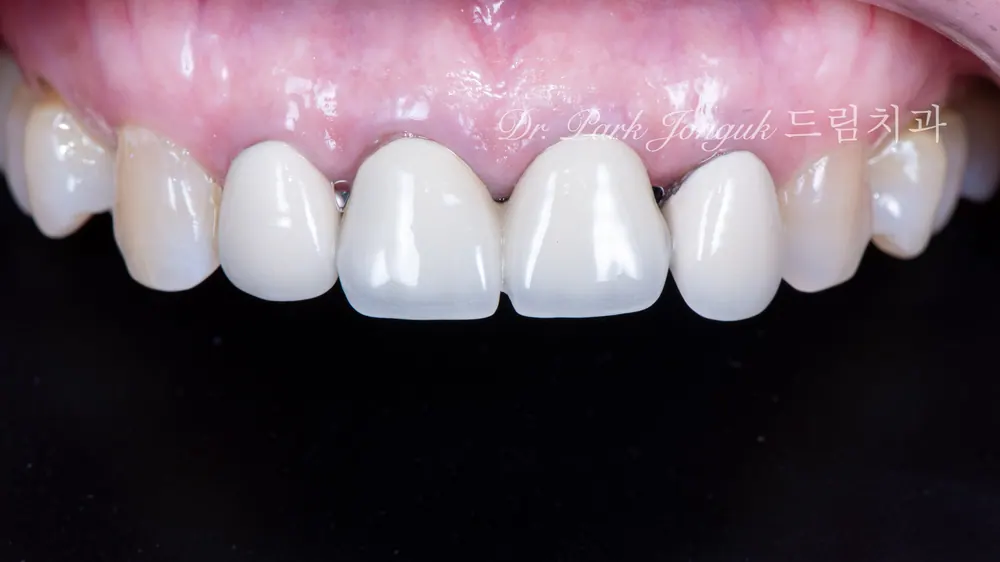
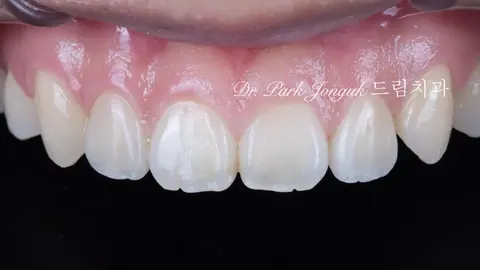
Four teeth had crowns.
Two of the front teeth among them were splinted together.
The treatment was old,
and many aesthetic problems had developed,
so we decided to retreat them.
The teeth had become far too small,
so to figure out how to treat them for the best result,
we carried out a precision wax-up diagnosis.
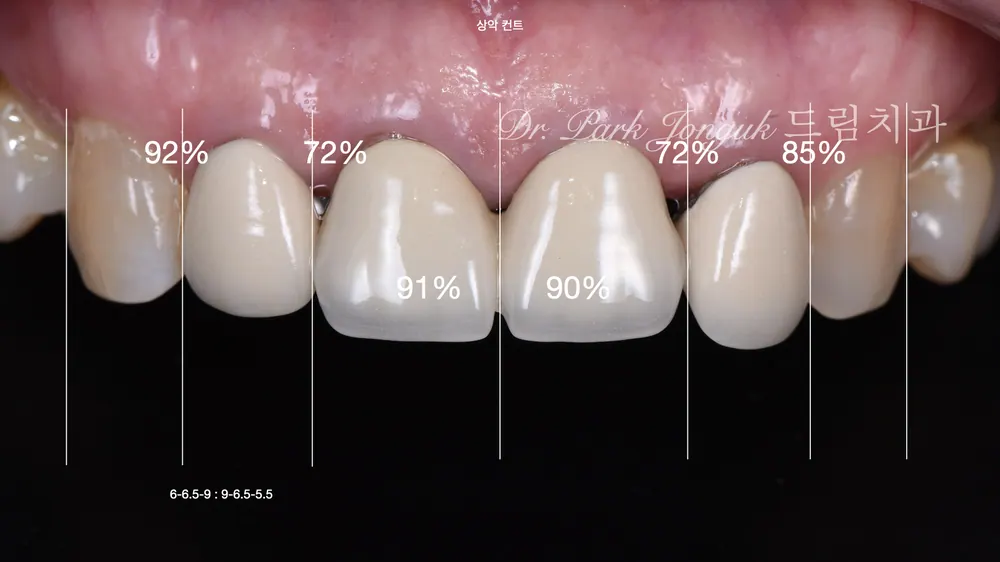
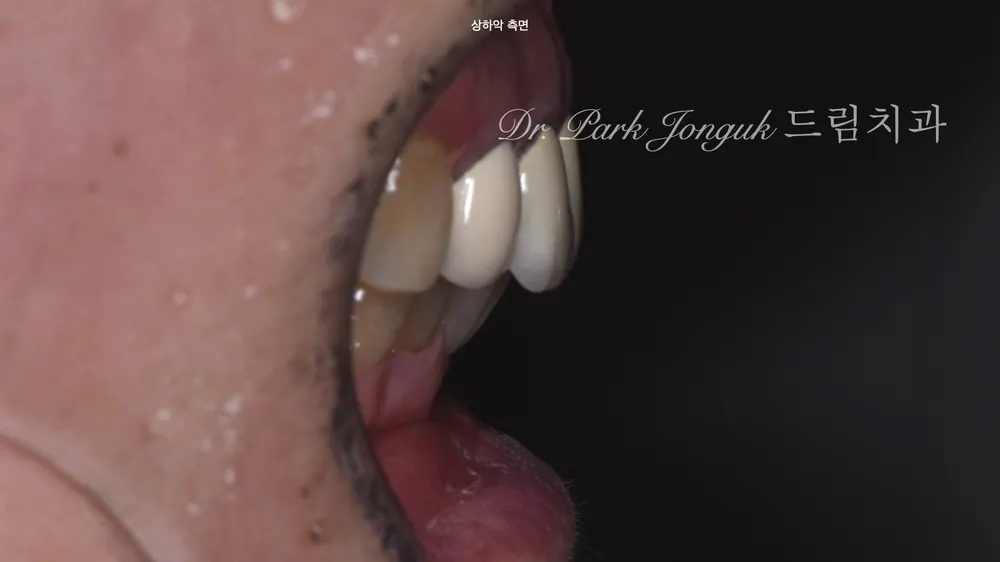
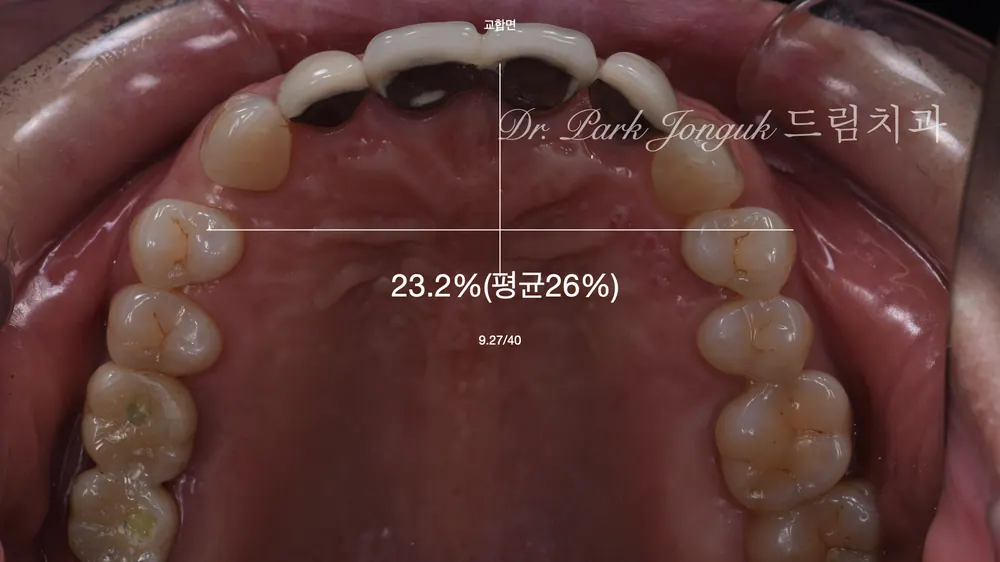
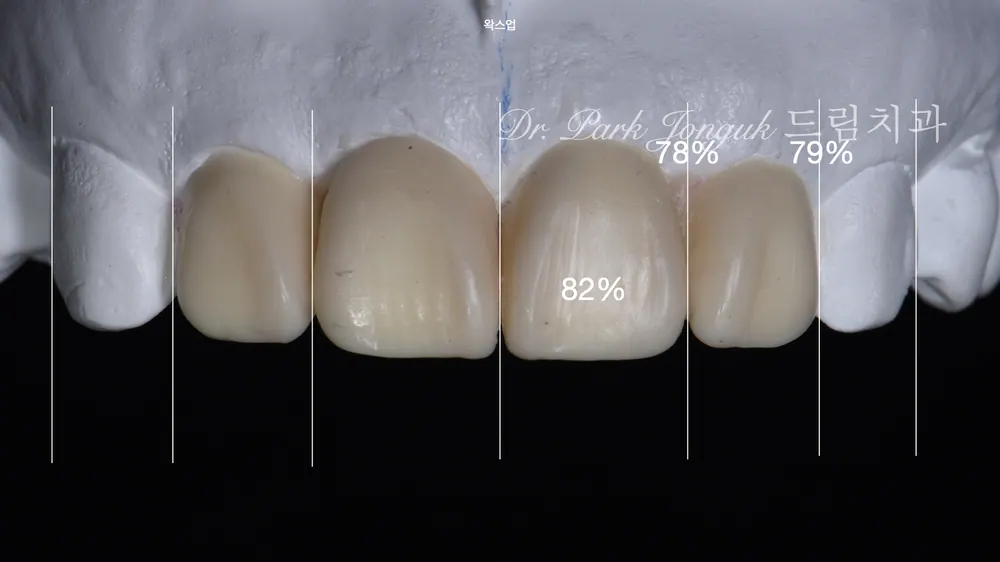
We measured the current tooth proportions
and previewed what the proportions would be after treatment.
The width-to-height ratio of a tooth is very important.
Typically, height is set as 100 and we measure what percentage the width comes out to.
On average it's around 80.
Before treatment, it was about 90%,
which means the teeth were quite short.
The teeth were also somewhat large, but improving the proportion
has the effect of making them look smaller.
After precisely measuring how to adjust this proportion,
we began treatment.
This process is the same as with front-tooth veneers.
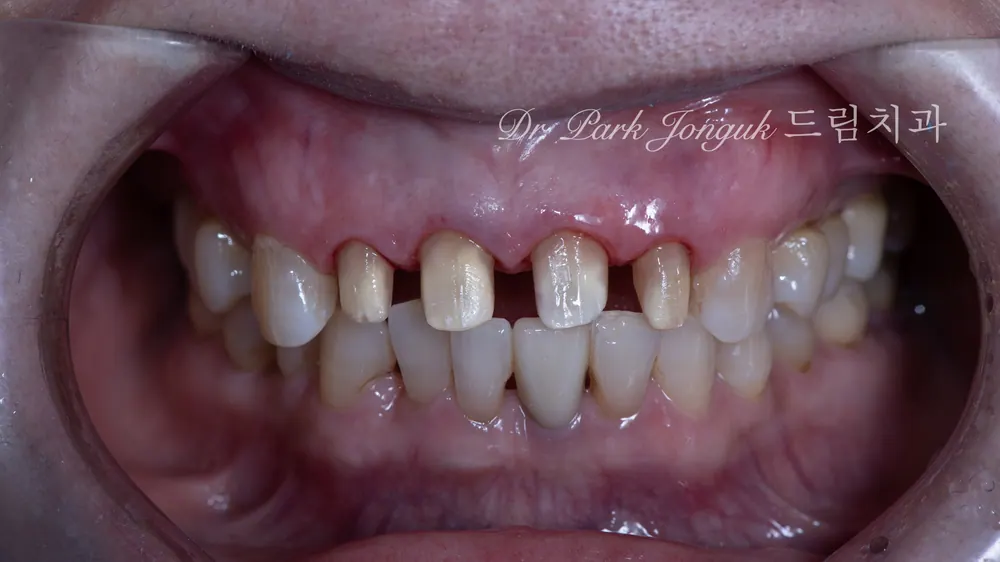
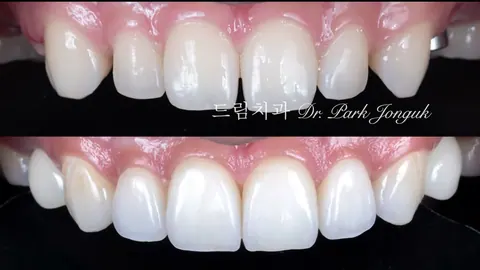
When an old crown is removed,
the tooth underneath has often been reduced excessively.
This tends to be more common the older the treatment is.
In the past, it wasn't possible to make a tooth-colored crown with ceramic alone,
so metal had to be placed on the inside with a tooth-colored layer over it,
which required a lot of thickness.
These days, with the all-ceramic crown method,
it's uncommon to need to reduce the tooth as much as shown in the photo above.
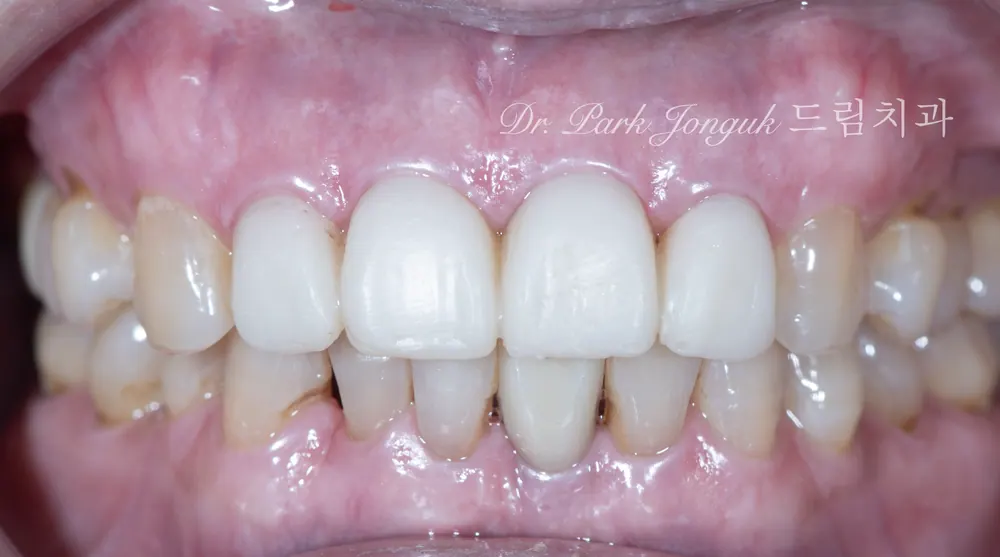
Using temporary crowns,
we let the gums heal and first check the tooth shape.
Using temporary crowns for a certain period to confirm there's no problem with the gums is a very important step.
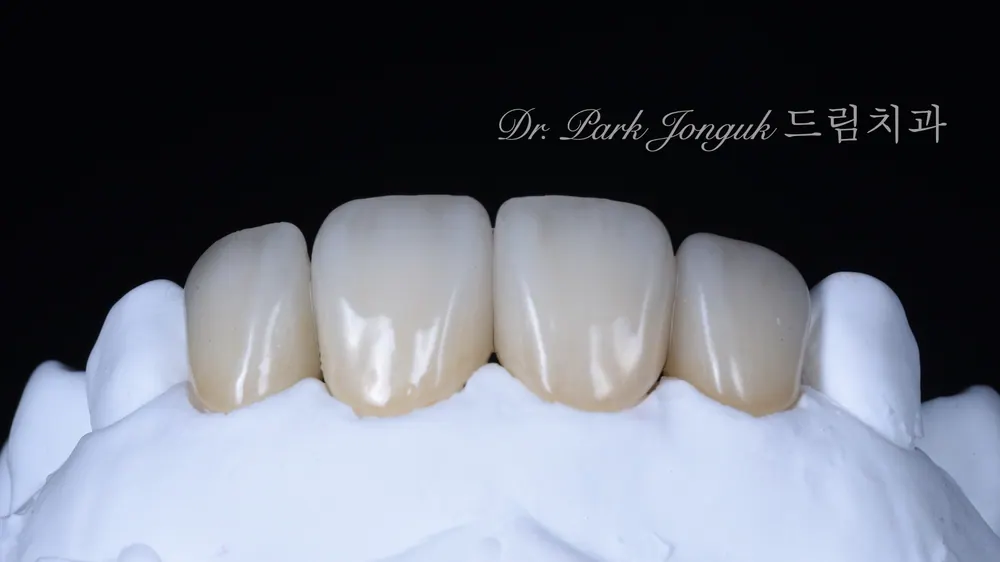
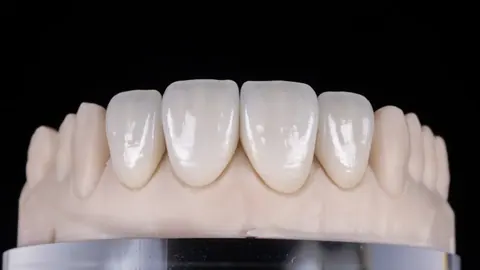
The four crowns are made separately, each out of ceramic.
Each individual tooth needs to be able to move with its own natural physiological motion,
and being made so that floss can pass between the teeth for gum care
has far more advantages than having them splinted together.
As I mentioned earlier, there's no reason to splint them together unless the situation truly calls for it.
If you look at the teeth, a natural translucency is expressed at the tips,
and near the gums, a yellow stain was applied
to create a tooth shape and color appropriate for the patient's age.
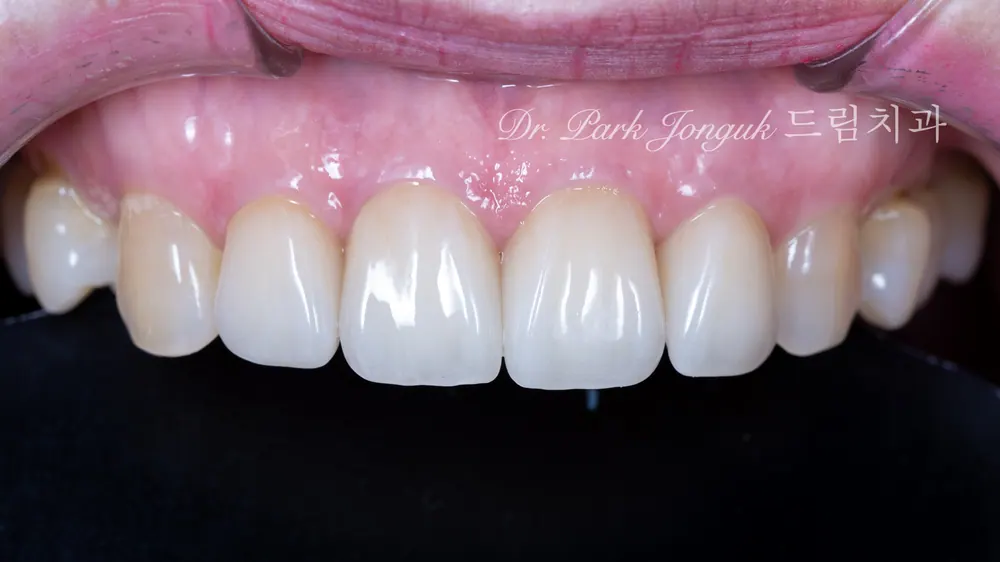
The all-ceramic crown treatment is complete.
The shape of the teeth is natural and beautiful.
They blend well with the natural teeth,
and the finish is well harmonized with the gums too.
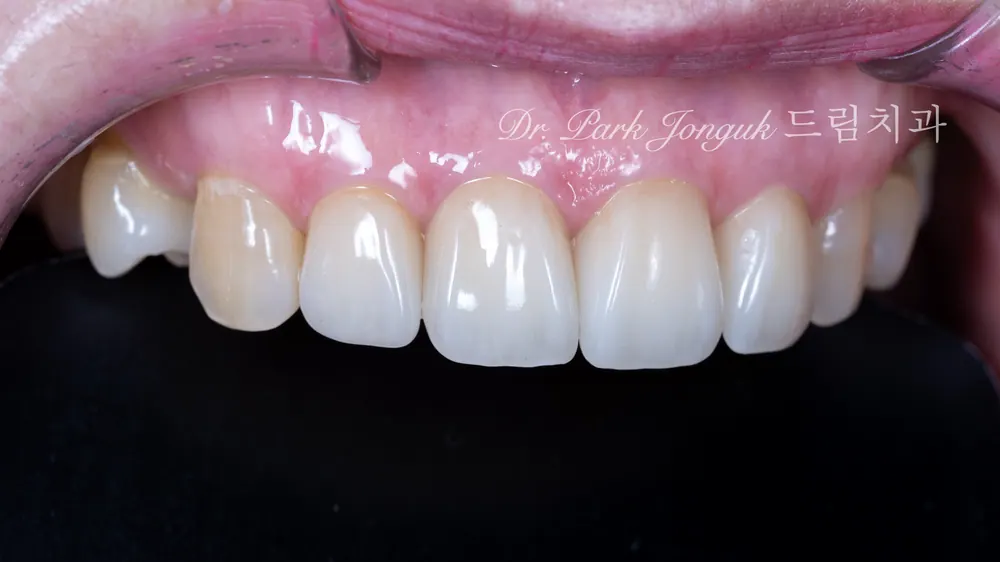
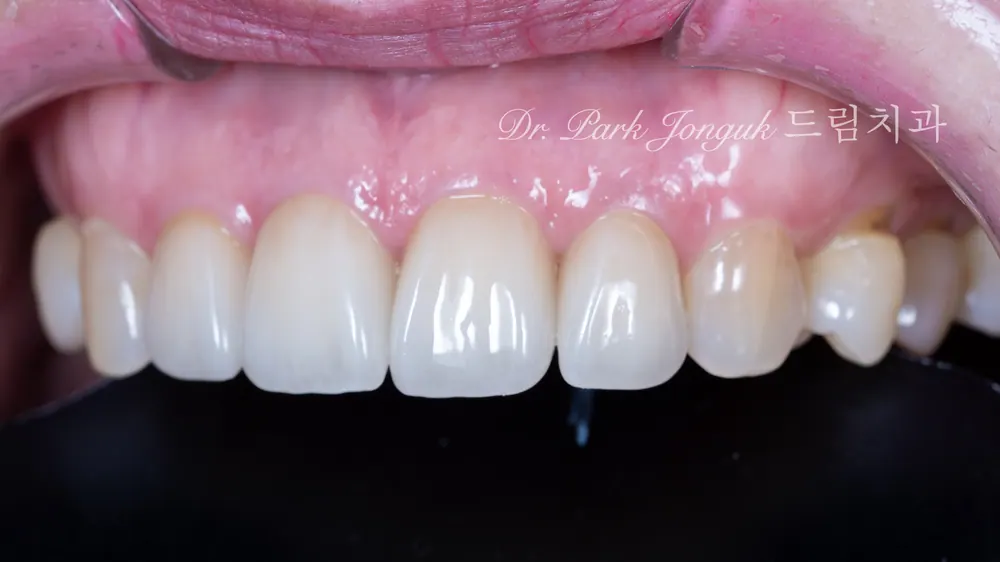
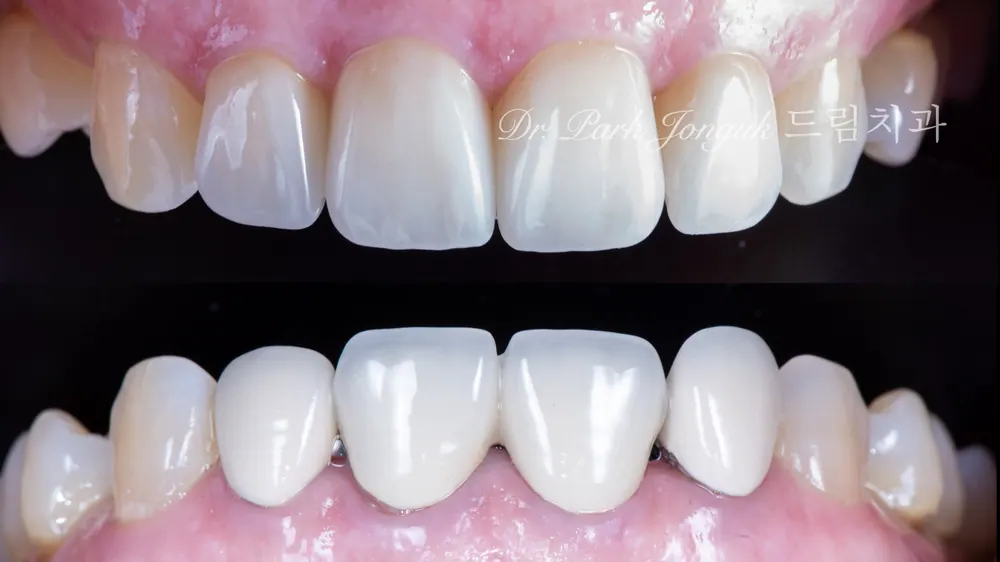
Natural beauty
Since 2006, Dream Dental Clinic
This article is a clinical note written by Dr. Park Jonguk of Dream Dental Clinic, Gangnam; the original was published on his blog. The photographs shown are real cases he treated. Results vary with each patient’s condition, and every procedure carries the possibility of individual variation and side effects.
Quick Consult
Request a Callback
Leave your number and we will call you back during clinic hours.
Request Received
We will contact you during clinic hours. For urgent matters, please call +82-2-3448-0028.