
How No-Prep Veneers Reduce Side Effects and Extend Lifespan
Sometimes teeth are small, discolored, slightly chipped in places,
or have some subtle esthetic issue.
Teeth should shine even more when smiling brightly,
but instead people end up unable to smile freely.
An open, confident smile requires many different elements,
and beautiful teeth are always what completes it.
The problem is that veneers require reducing the tooth to some degree.
A tooth is made up of two kinds of tissue: enamel and dentin.
Enamel covers the outermost part of the tooth, and dentin lies inside it.
In the front teeth, the thickness of the enamel varies quite a bit depending on the area,
ranging from about 0.2mm to 1mm.
The current methods for bonding resin or veneers onto teeth
are designed to bond most strongly to enamel.
Bonding to dentin has improved a great deal recently and is quite strong now,
but it still doesn't match bonding to enamel.
That's why preserving as much enamel as possible
is extremely important for a veneer's lifespan.
What's more, the more enamel that remains,
the less likely tooth sensitivity is to appear,
so the main side effects of veneers — sensitivity, fracture, debonding, and most other problems —
are almost never seen when the enamel is preserved as much as possible,
which is why minimizing the amount of reduction matters so much.
The veneer that reduces the least amount of tooth
is precisely the no-prep veneer,
so in a case where it's possible, no-prep is the most advantageous form of veneer.
The problem is that not every case can be done without reduction,
so carefully screening whether a case is suitable or not is extremely important.
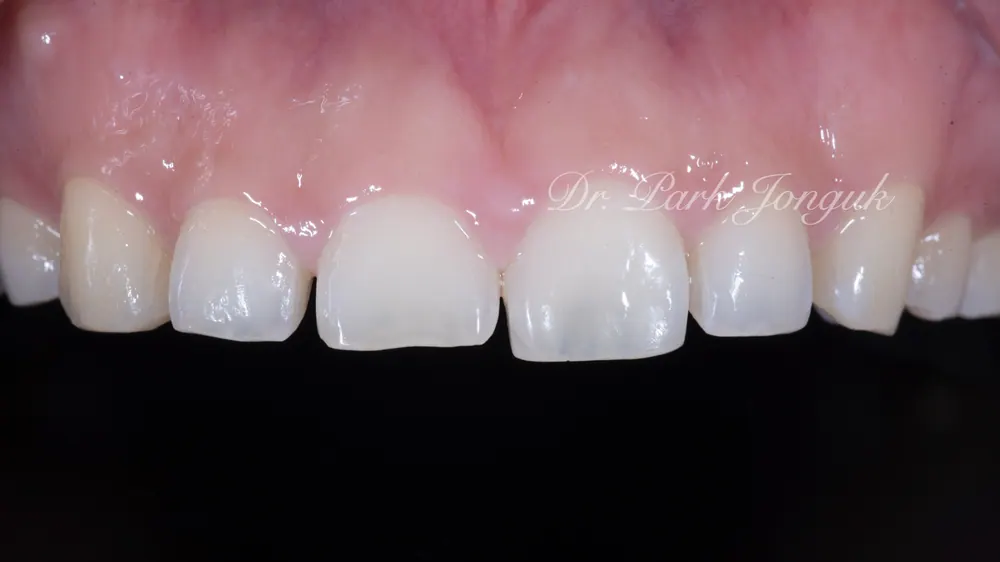
The three foremost conditions for no-prep veneers are:
the teeth need to be small,
the teeth must not be protruding,
and the alignment needs to be good —
those are the conditions.
In addition to these, there's a condition that's not essential but does help — having space between the teeth —
which brings the total to four conditions for no-prep veneers.
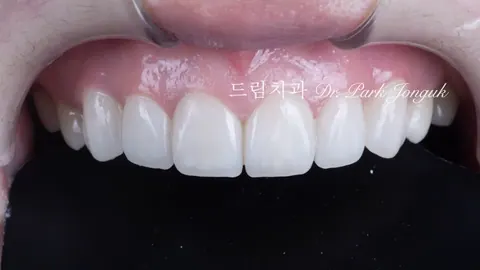
Looking at the case above, the teeth are small, the alignment is good, there's no protrusion at all, and there's even space between the teeth.
This can be considered a quite optimized situation for no-prep veneers.
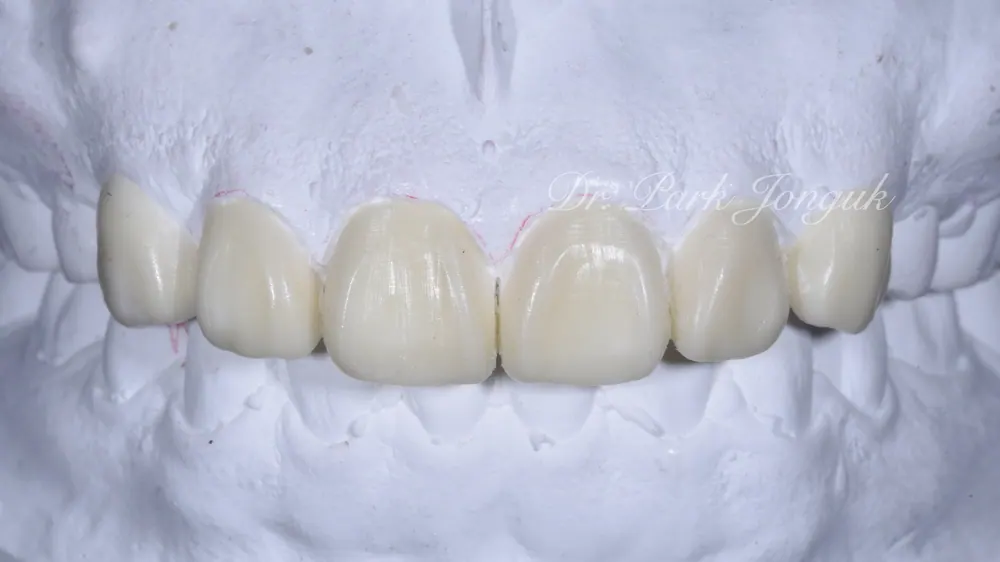
First, we use a wax-up to plan how the treatment will proceed.
Reaching this wax-up requires a fairly wide range of diagnostic steps.
The treatment plan is set by considering everything from the face, to the position of the alveolar bone seen on X-rays, to the gum condition and how the gums might change.
This diagnostic process is extremely important whether it's a no-prep or a reduction-based veneer.
In some ways, it can be the most important step in the entire treatment process.
I've been continuously lecturing on this diagnostic process for several years now.
I'm working to help more dentists diagnose using a more standardized method.
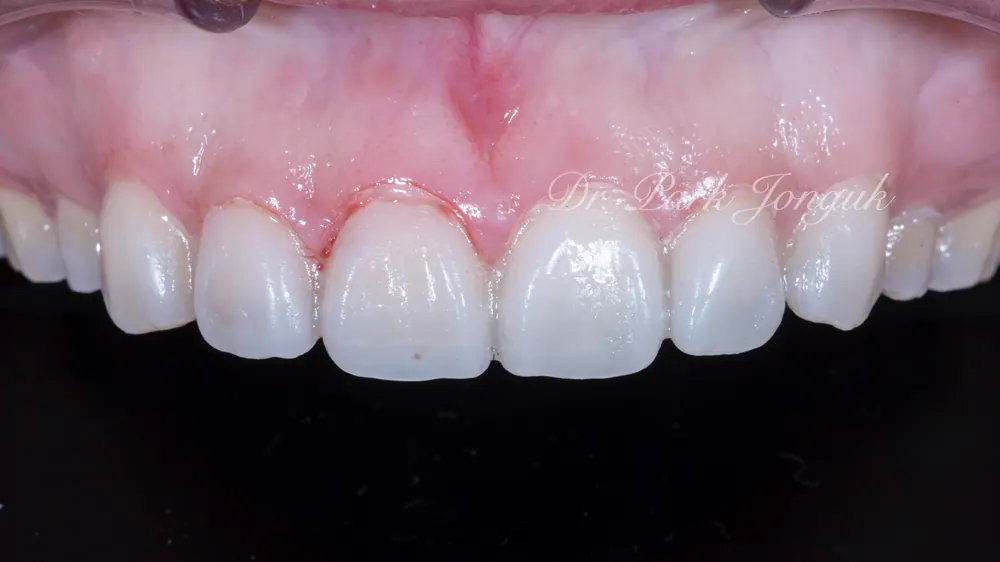
Through this process, we make the temporary teeth in advance and consult on what shape they'll take.
Since it's a no-prep veneer, we make the temporary teeth directly out of resin, without any reduction at all.
Here, we look at the overall size, volume, and the degree and proportion of any protrusion.
After consulting on whether to make it larger or smaller, we take the impression for fabricating the no-prep veneers.
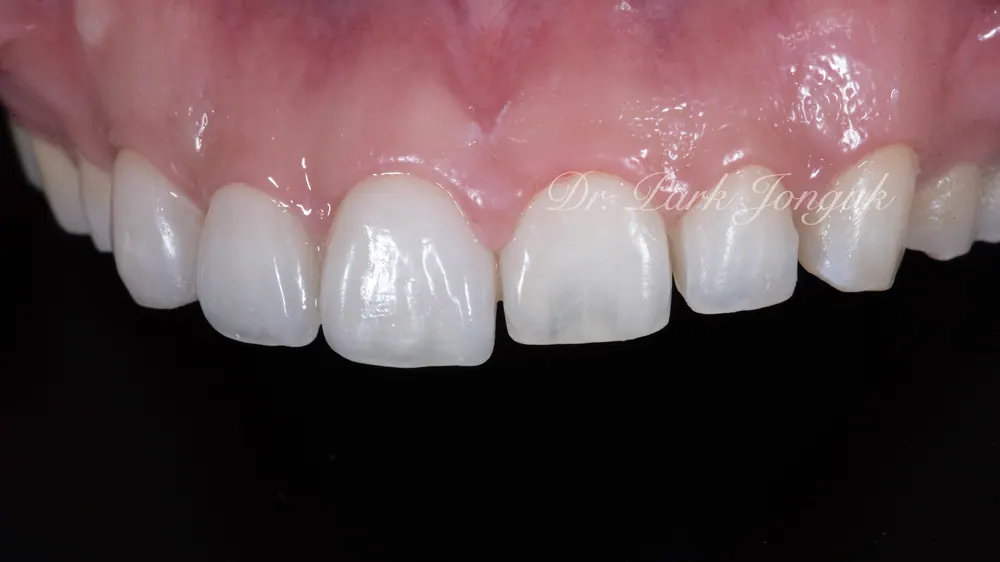
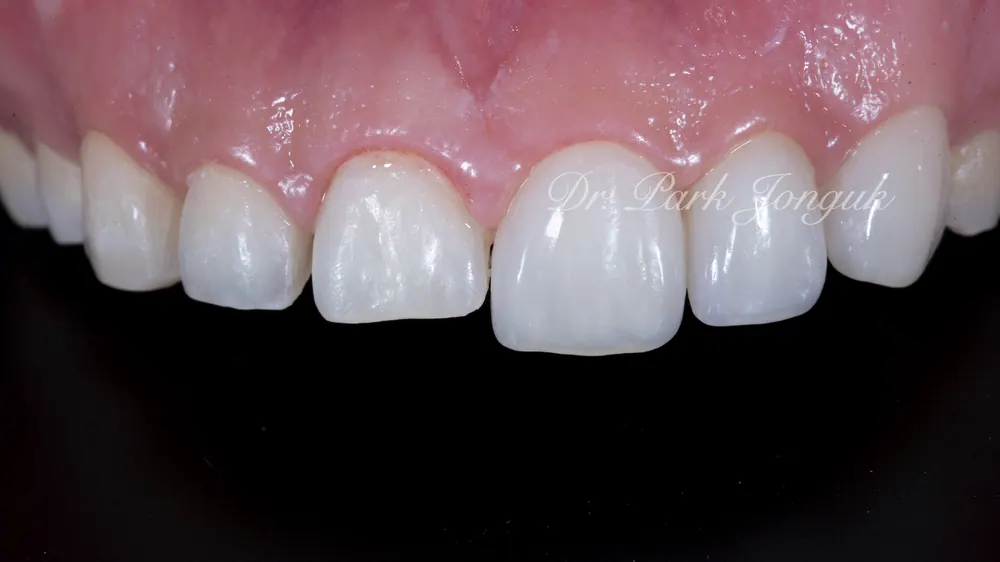
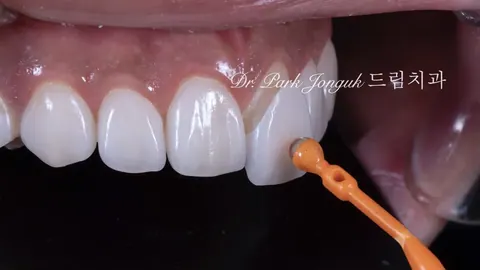
We placed one veneer on each side, one at a time.
You can see that it becomes a bit larger than the original tooth.
As mentioned earlier, if the original tooth is too large, doing it as no-prep
can make the tooth end up too big,
which is why small teeth are one of the essential conditions for no-prep veneers.
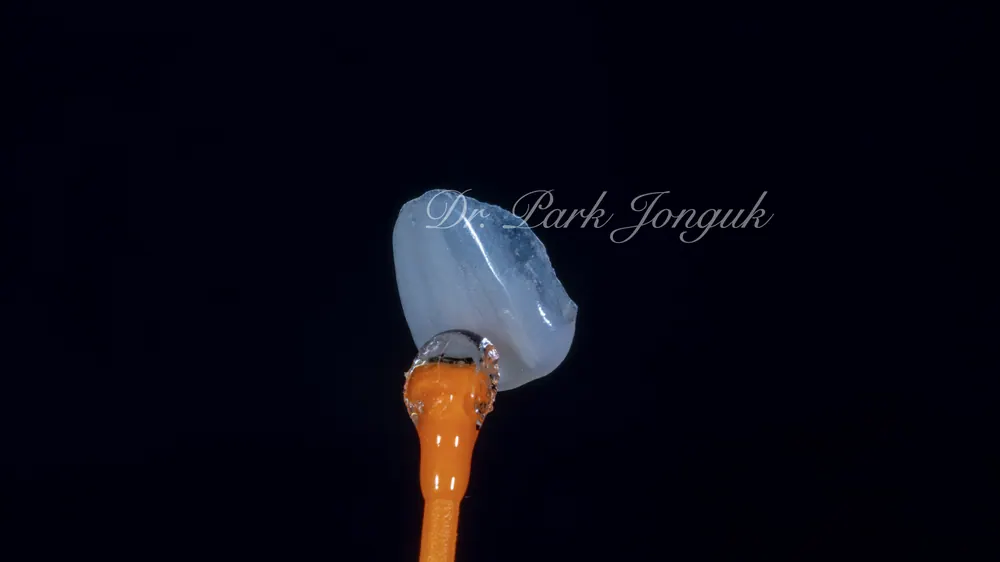
The ceramic thickness varies depending on the area.
The part that sits between the teeth, or where it meets the gum, is extremely thin.
It's a thickness that the one-day method simply cannot match.
You could call it an advantage unique to the handmade method.
That's why it's difficult to fabricate no-prep veneers with the one-day method.
One-day ceramic milling requires the ceramic to be above a certain thickness to be fabricated at all,
so an extremely thin veneer is difficult to produce that way.
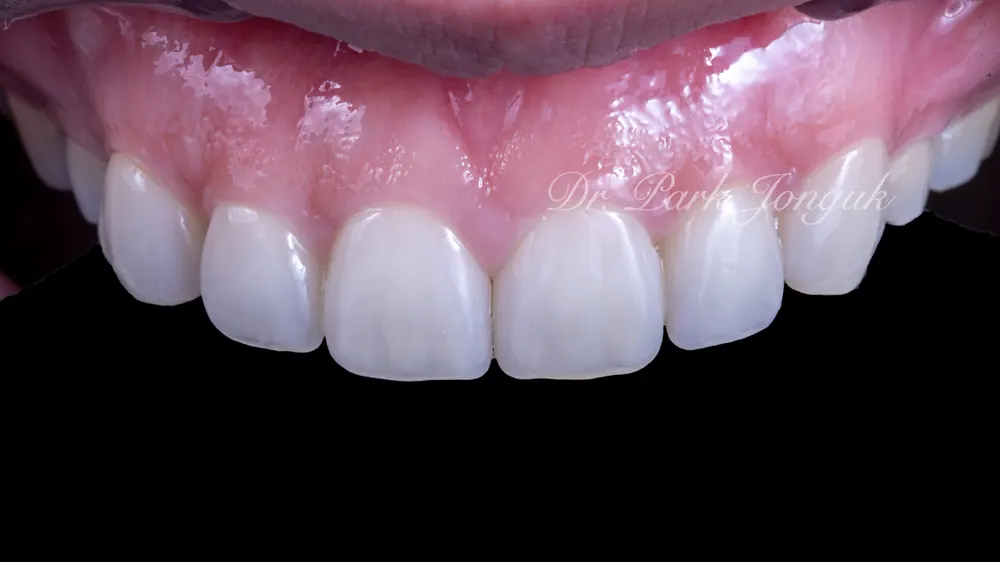
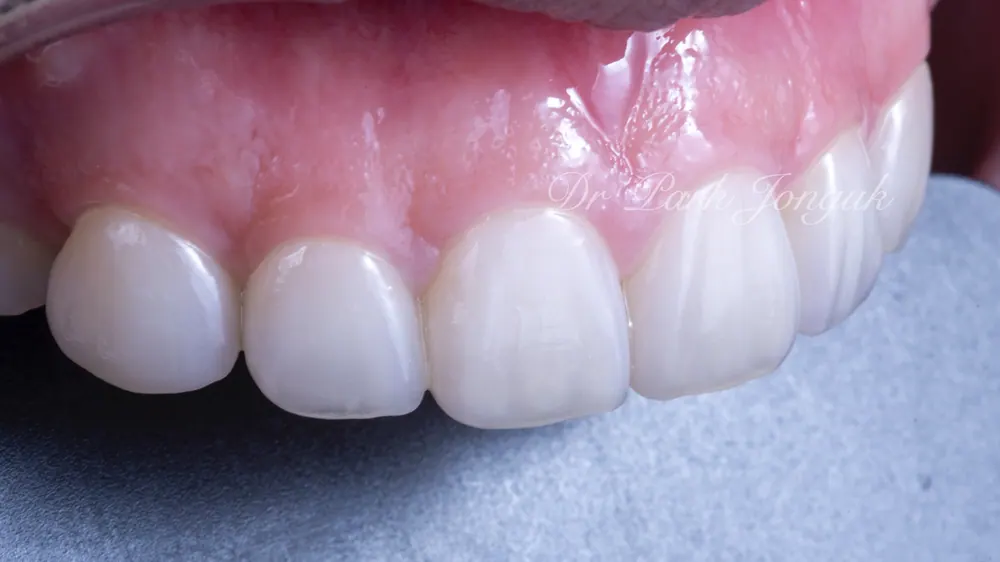
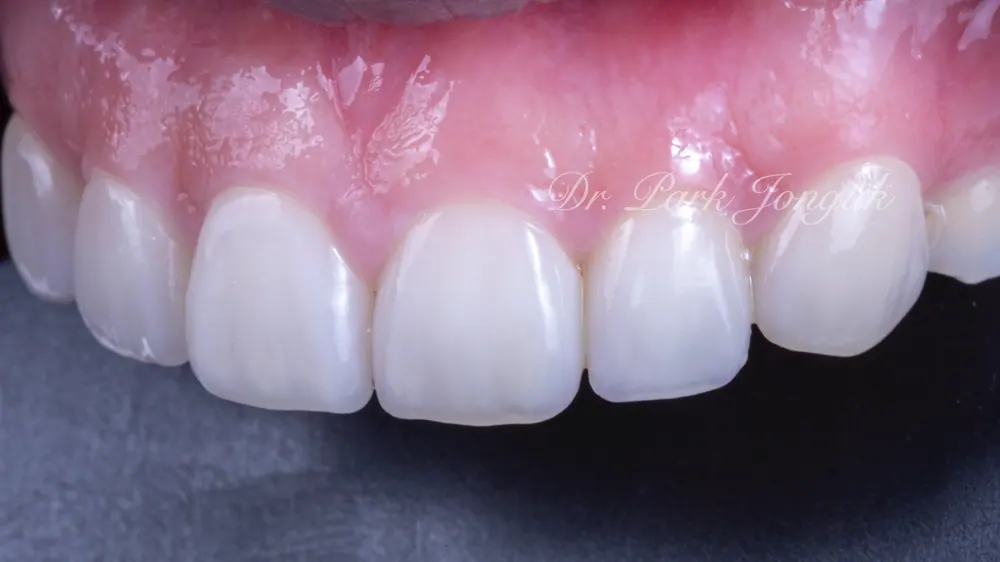
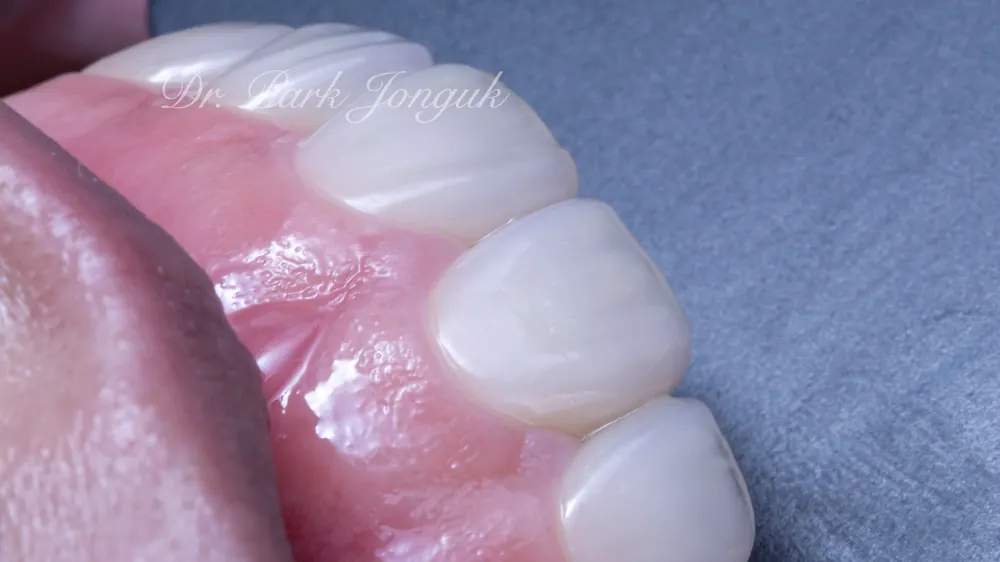
Because the ceramic in no-prep veneers is so thin,
in many cases it ends up finished as a single-shade, white, opaque piece.
Expressing the shape, color, and translucency of a natural tooth all at once on ceramic that thin is no easy task.
This is precisely the part that's impossible without years of experience.
Making a veneer in some artificial way is something anyone can do.
Making it feel like the most beautiful natural tooth is an entirely different level of work.
Since 2006, Dream Dental Clinic
This article is a clinical note written by Dr. Park Jonguk of Dream Dental Clinic, Gangnam; the original was published on his blog. The photographs shown are real cases he treated. Results vary with each patient’s condition, and every procedure carries the possibility of individual variation and side effects.
Quick Consult
Request a Callback
Leave your number and we will call you back during clinic hours.
Request Received
We will contact you during clinic hours. For urgent matters, please call +82-2-3448-0028.