
A Case of All-Ceramic Crown Retreatment Due to Gum Inflammation
Among the various side effects of front-tooth cosmetic dentistry — veneers and all-ceramic crowns —
gum inflammation is probably the most overlooked, yet also the most common.
Once inflammation appears, dental treatment and antibiotics can bring it down fairly easily, but
if it keeps recurring, there may be a problem with the treatment itself.
Whether it's an all-ceramic crown or veneers, when gum inflammation keeps recurring around it,
unless it's simply because the patient's brushing is really quite poor,
it's very often due to the treatment concept and the design of the ceramic itself.
If we think about the situations that can cause gum inflammation,
1) The patient really isn't brushing well.
2) The tooth was reduced too deep, so the ceramic irritates the gum.
3) There's an error in how the ceramic was made, so it irritates the gum.
4) Leftover bonding cement remains.
For cases 1 and 4, there are ways to resolve the inflammation,
but for cases 2 and 3, if the inflammation doesn't clear up, retreatment may be necessary.
In my experience, poor brushing is by far the most common cause.
In most cases, after brushing instruction and 1-2 weeks, the inflammation clears up.
But if it doesn't improve no matter how much brushing instruction and gum cleaning are done, all-ceramic crown retreatment is needed.
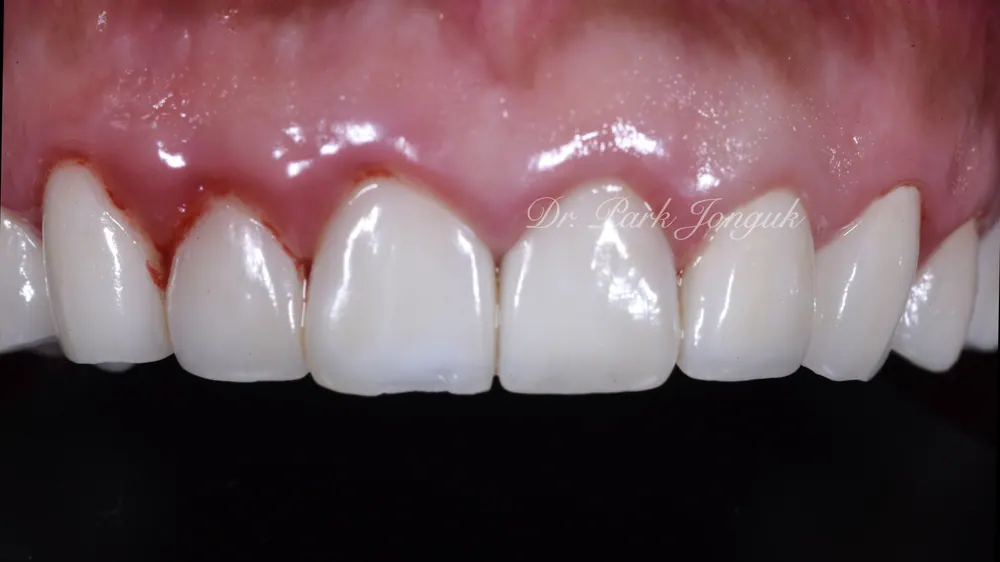
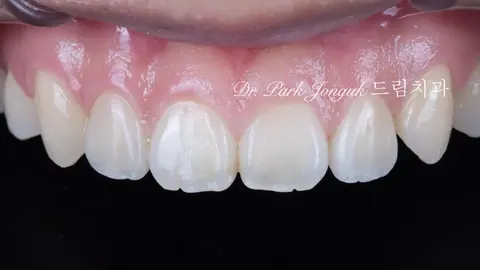
The patient came in with severe gum inflammation.
Most of the teeth had already been treated with all-ceramic crowns.
She said the inflammation kept coming back no matter how much she brushed or how often she got scaling.
First, we explained her brushing technique to her in detail.
After scaling, she brushed as instructed for a week, and we checked again.
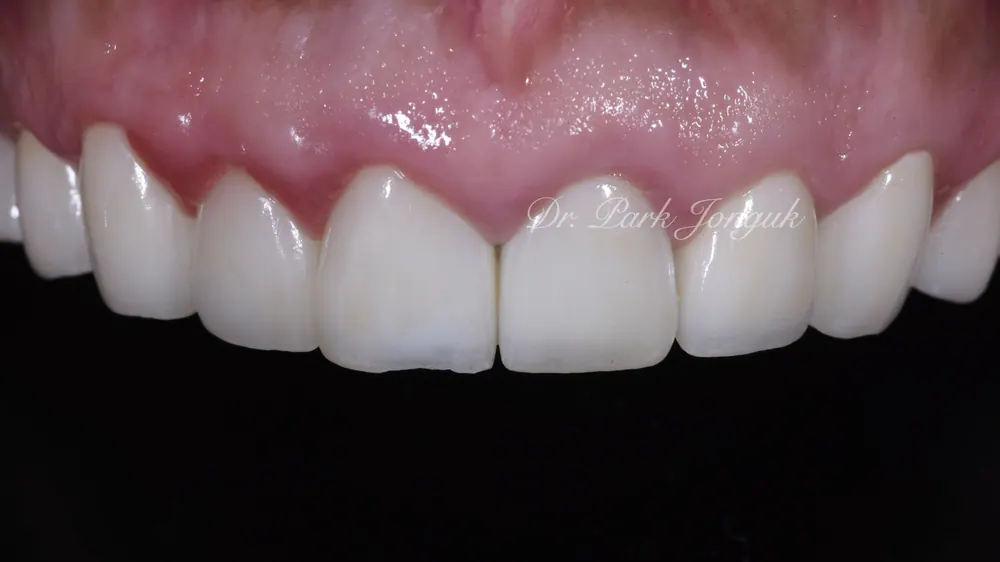
The inflammation had decreased somewhat but hadn't fully resolved.
Because of the long-standing, recurring inflammation, she wanted to have the all-ceramic crowns retreated.
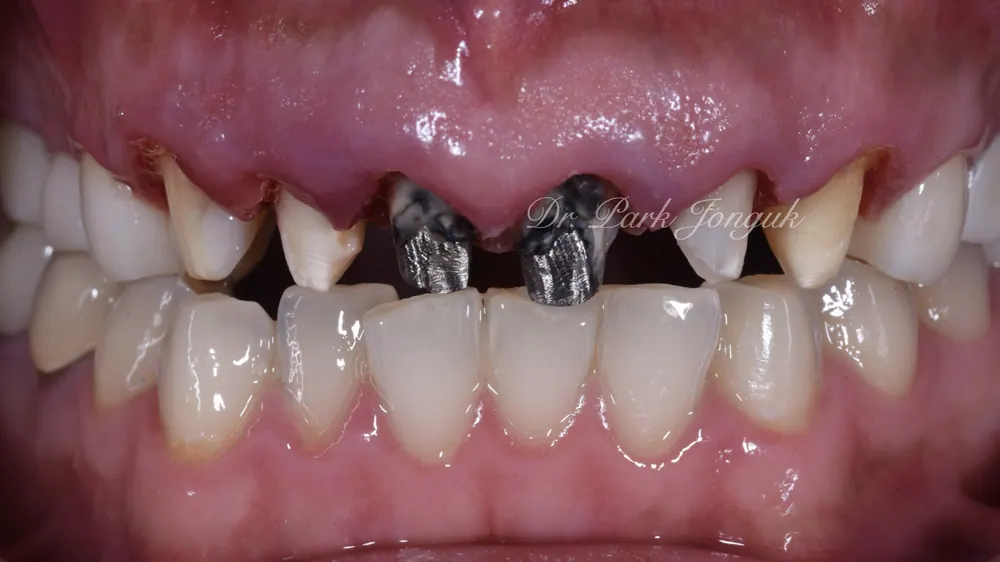
Once we removed the crowns...
the teeth had been reduced far too much, and the reduction extended too deep under the gumline,
so it was almost inevitable that inflammation would occur.
When teeth are too short and gum contouring plus an all-ceramic crown or veneer is done to lengthen them,
the trimmed gum very often grows back and covers the margin again,
and this happens a lot in cosmetic dentistry that lengthens short teeth this way.
In these cases, you shouldn't try to rush the treatment.
You need to take enough time and use temporary teeth to gradually reduce the inflammation.
If there's enough time, it's best to live with precisely made temporary teeth for 1-2 months.
But in most cases, that's not realistic given the time constraints.
So the temporary teeth need to be made as precisely as possible right from the start.
They should be designed to reduce gum inflammation rather than just for looks.
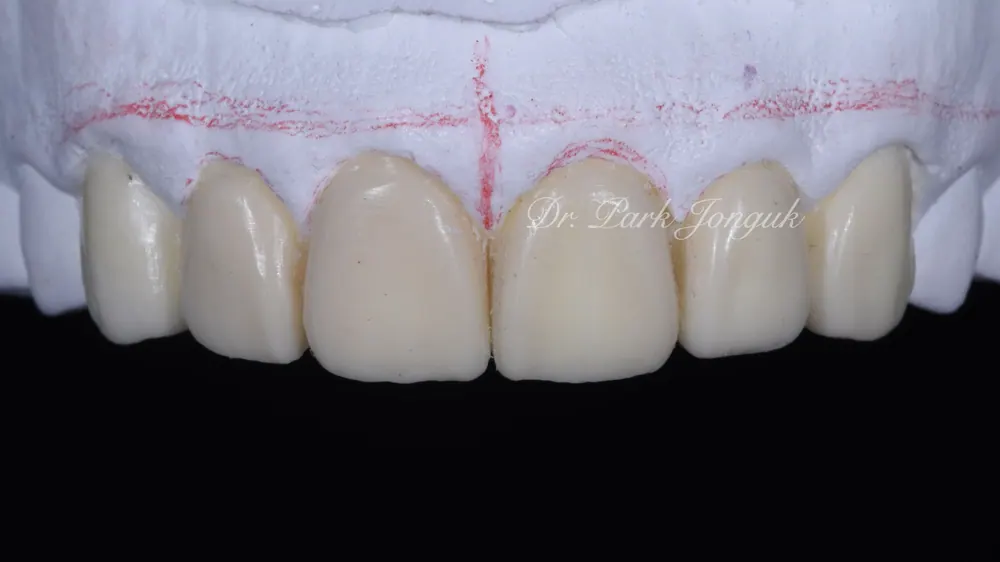
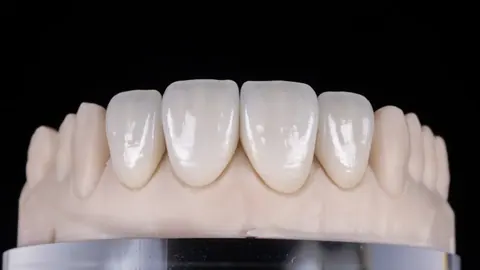
We perform a wax-up in order to make the temporary teeth.
This process lets us gauge the tooth shape and treatment direction in advance.
The temporary teeth are then made exactly to this shape.
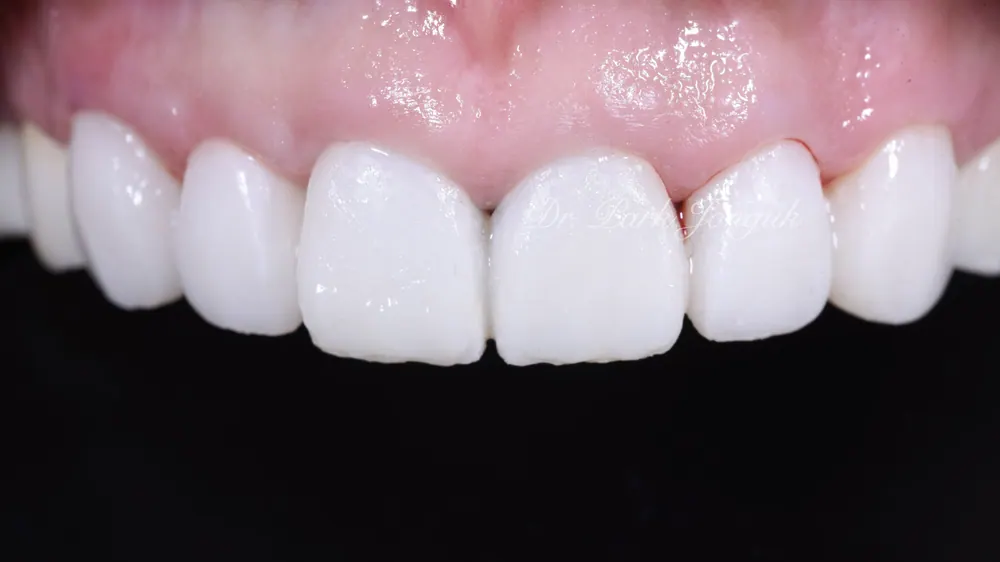
During the period the temporary teeth are worn, we adjust various surfaces to gradually reduce the inflammation.
Then, usually after 2-4 weeks, we take another impression and begin fabricating the ceramic for the all-ceramic crown retreatment.
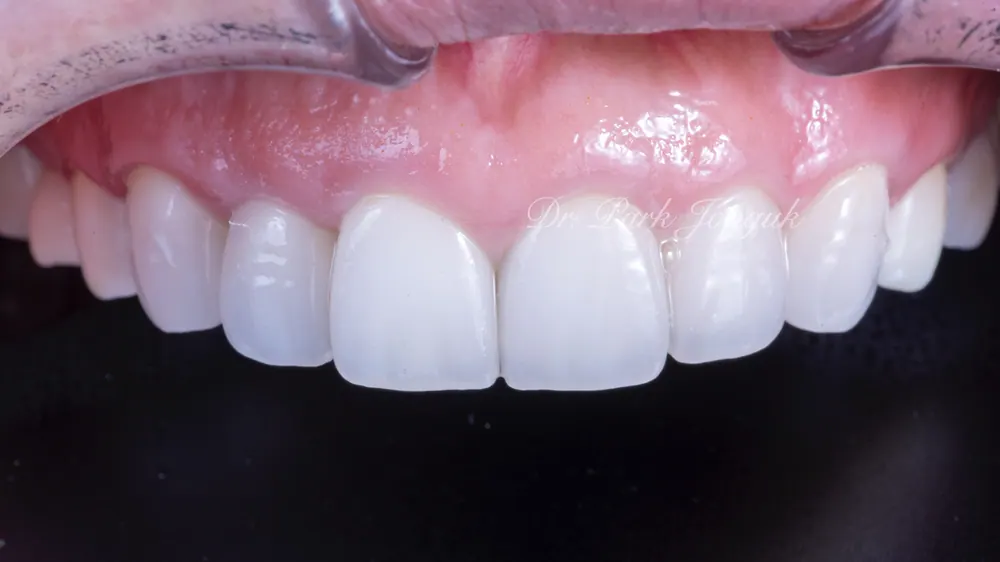
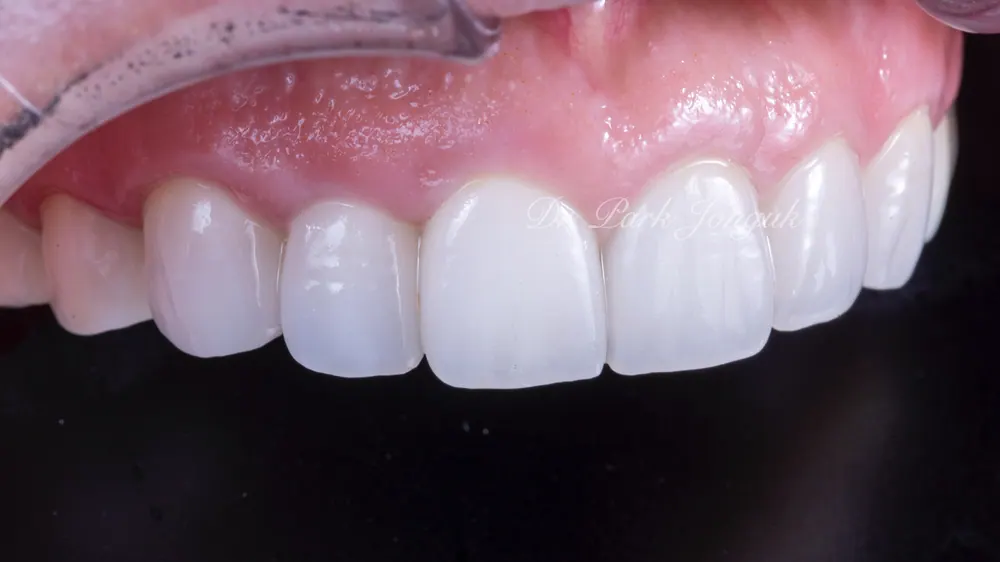
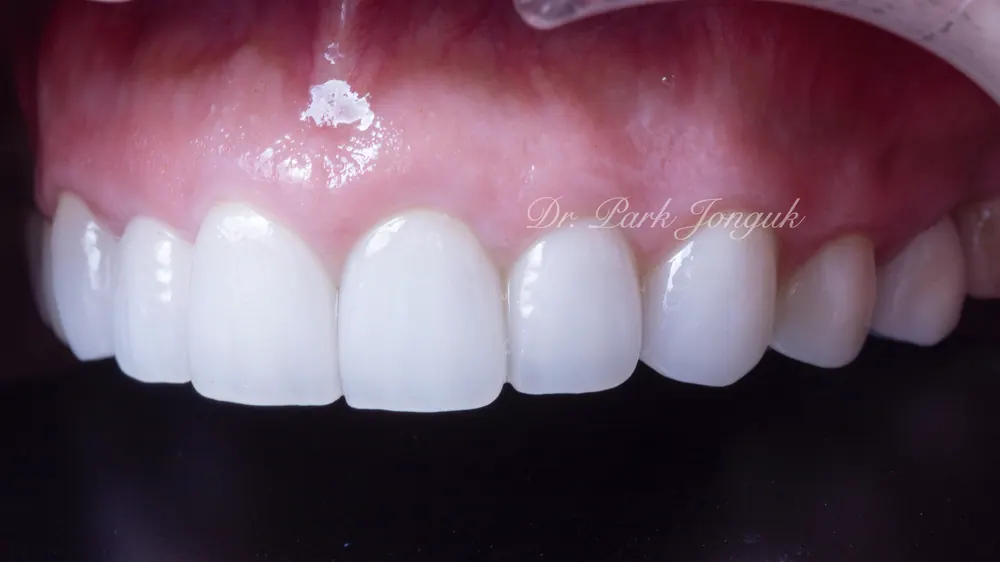
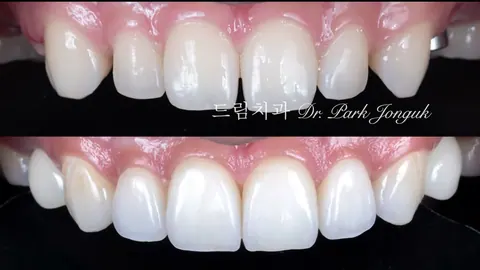
This is a follow-up photo after the all-ceramic crown retreatment.
You can see that the gums have healed to be perfectly clean.
Even when a tooth has been reduced significantly and the ceramic extends deep under the gum,
if the all-ceramic crown or veneer is designed correctly,
gum inflammation can be prevented.
The most important thing is not to reduce the tooth too much in the first place, but
if the treatment has already been done, then retreating it carefully
so that inflammation doesn't occur is what matters.
Since 2006, Dream Dental Clinic.
This article is a clinical note written by Dr. Park Jonguk of Dream Dental Clinic, Gangnam; the original was published on his blog. The photographs shown are real cases he treated. Results vary with each patient’s condition, and every procedure carries the possibility of individual variation and side effects.
Quick Consult
Request a Callback
Leave your number and we will call you back during clinic hours.
Request Received
We will contact you during clinic hours. For urgent matters, please call +82-2-3448-0028.