
A Dramatic Yet Natural Veneer Smile Makeover
Having straight, healthy teeth is truly a blessing.
Occasionally there are teeth called malformed teeth.
These are teeth that are much larger or smaller than normal, or have a distinctly unusual shape.
The process of turning a tooth like this into a normal tooth shape is called cosmetic dentistry.
Of course, treating a tooth that already falls within a normal range to make it even prettier is also cosmetic dentistry.
Just as cosmetic surgery on the eyes or nose means improving on a normal or average shape to make it prettier,
cosmetic dentistry is also about improving teeth into a prettier shape.
Let's look at a case to explain
how issues like malformed or missing front teeth can be effectively corrected.
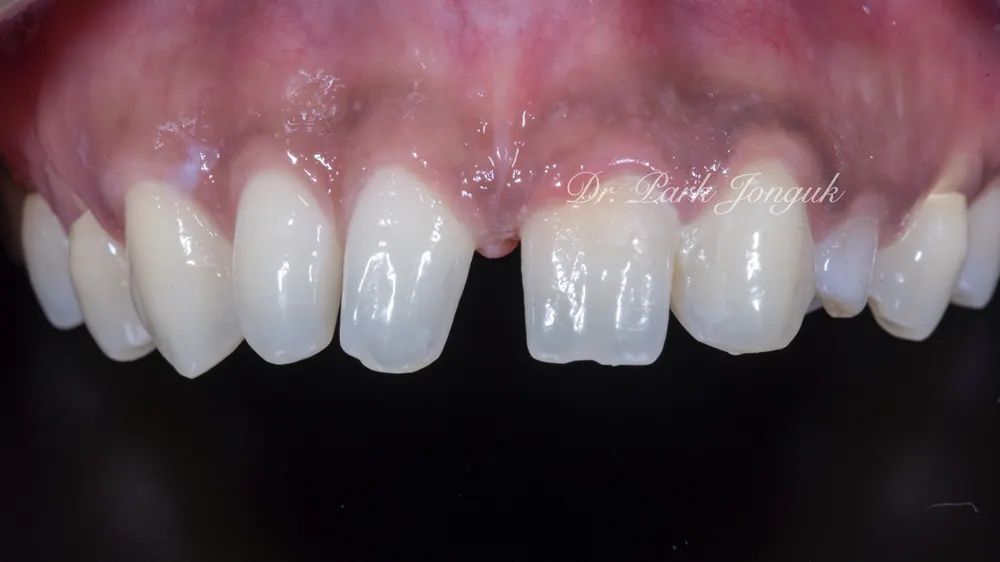
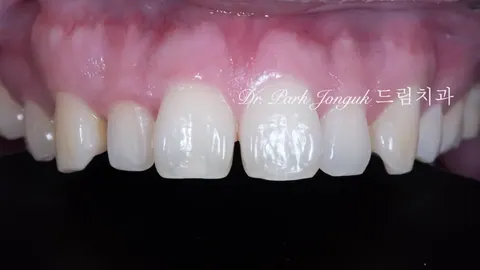
This case involved a variety of structural problems with the teeth.
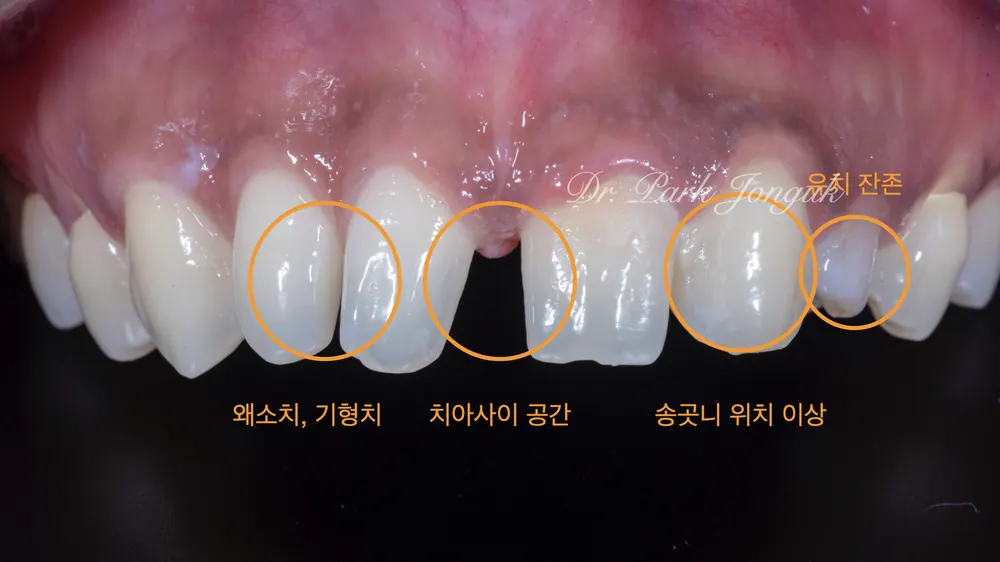
First, the front teeth had structural problems overall.
There was a mix of a peg lateral — a tooth smaller than usual —
and a malformed tooth that differed significantly from a typical shape.
You can see that the canine had drifted quite far from where it should normally sit.
In the spot where the canine should have been, a baby tooth remained.
In this kind of case, the lateral incisor that should sit next to the front tooth was congenitally absent,
so the baby canine had remained in place, and the permanent canine had erupted into the position of the lateral incisor instead.
Because the teeth were small, spaces had also opened up between them.
This kind of case can't be treated with orthodontics,
so cosmetic dental treatment was the only option.
Since the canine was also part of the cosmetic treatment,
rather than placing an implant where the baby tooth was removed,
a bridge approach was judged to be esthetically better.
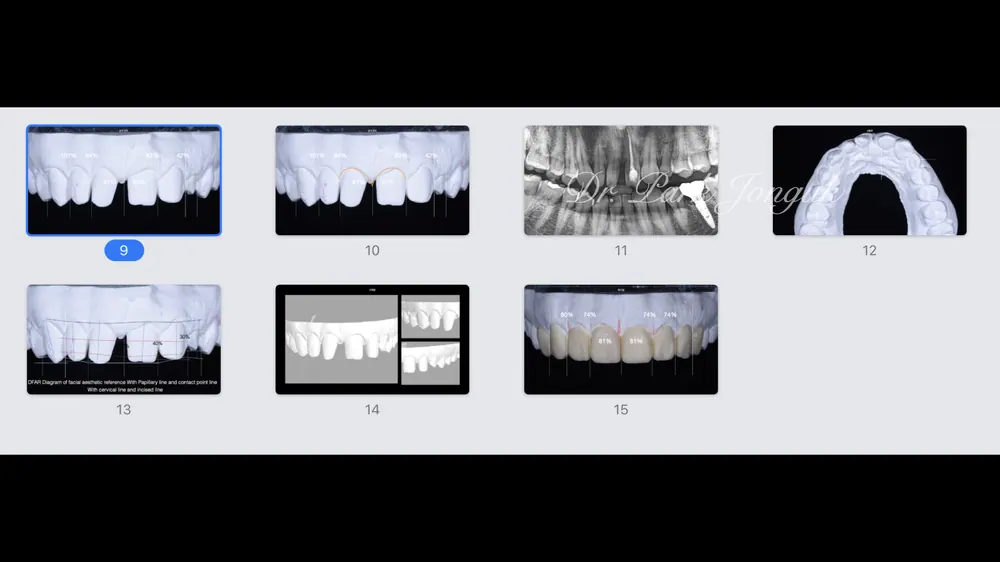
Before proceeding with the veneer-based cosmetic treatment,
we drew up a detailed treatment plan.
What matters most to consider here is
whether the proportions can end up normal after treatment,
whether we can properly shape the canine
into the form of a lateral incisor — the tooth that should originally be in that position —
whether the space where the baby tooth was removed, in terms of both space and gum shape,
can properly accommodate the shape of the canine,
and whether we can minimize tooth reduction
while still achieving the best possible result.
These are among the factors to weigh.
The treatment plan is set after considering all of these factors together.
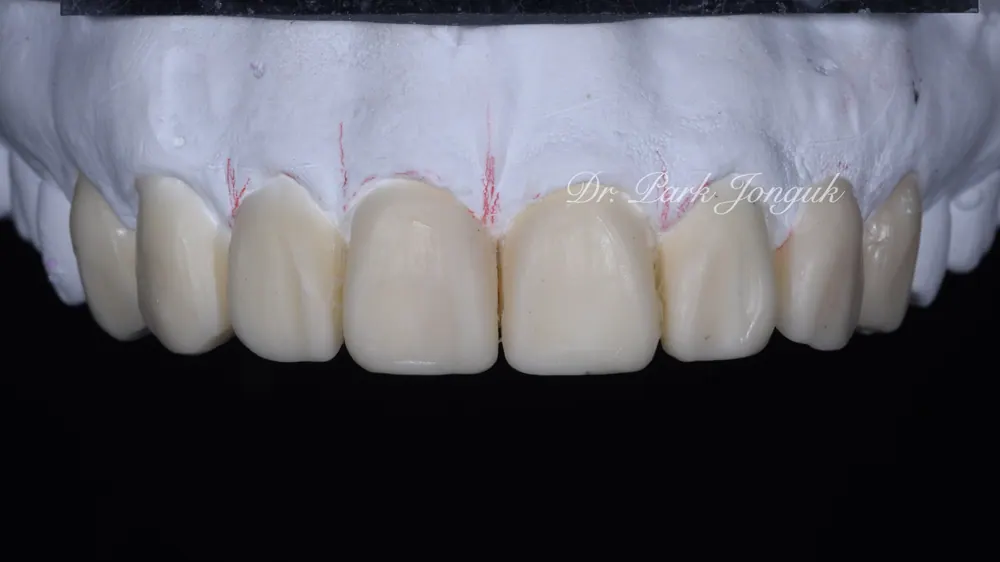
We shape the teeth in wax,
and this shape is also used later when making the temporary teeth.
Since this involves extracting the baby tooth,
temporary teeth are worn for about a month
until the gum and bone at the extraction site stabilize.
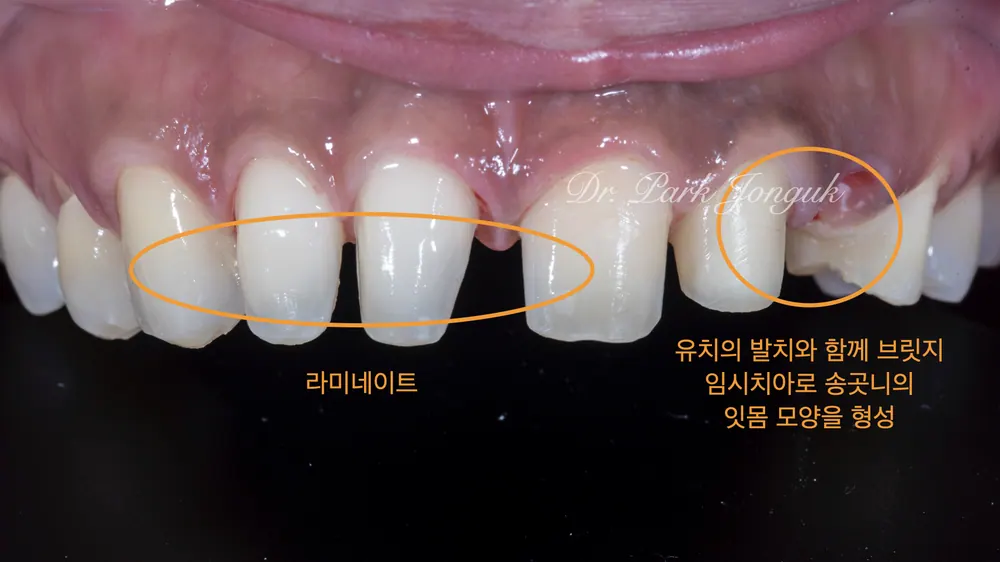
Tooth reduction is carried out according to the plan.
Since the entire plan for which tooth to reduce and by how much has already been set when the treatment plan is drawn up,
treatment proceeds exactly according to that plan.
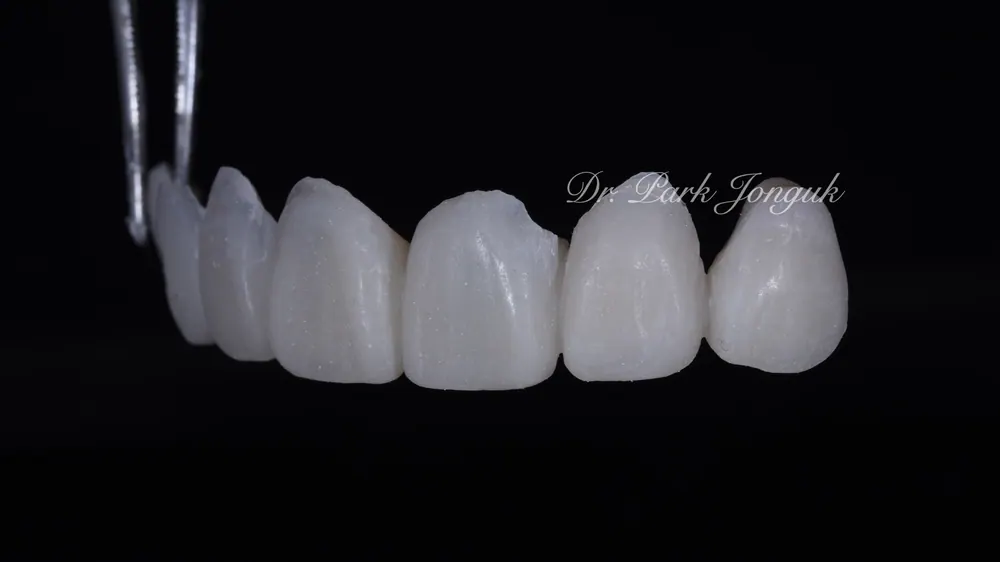
Precisely crafted temporary teeth are then made.
In particular, since the baby tooth has been extracted and that spot needs to be shaped into the form of a canine,
the gum has to be guided into shape,
so this part requires special attention.
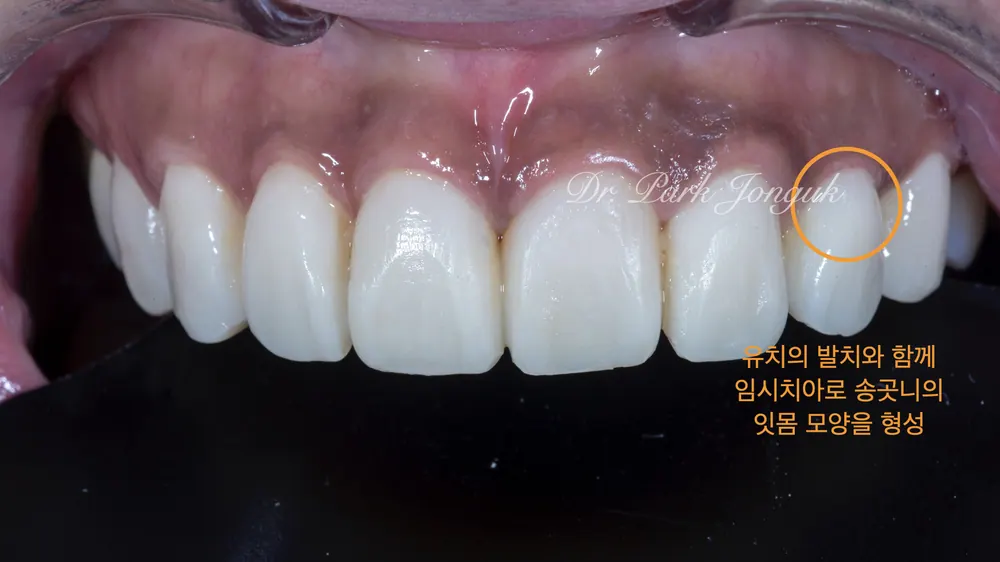
The temporary teeth press against the gum to naturally form its shape.
Even though there's no tooth in that position yet, as if the tooth were rising up from within the gum itself,
the shape has to be established from the very start, or the veneer-based cosmetic result won't come out natural.
The patient wears the temporary teeth for about a month like this.
The temporary teeth shape the overall gum contour
and also bring the shape and proportion of the teeth into the desired form.
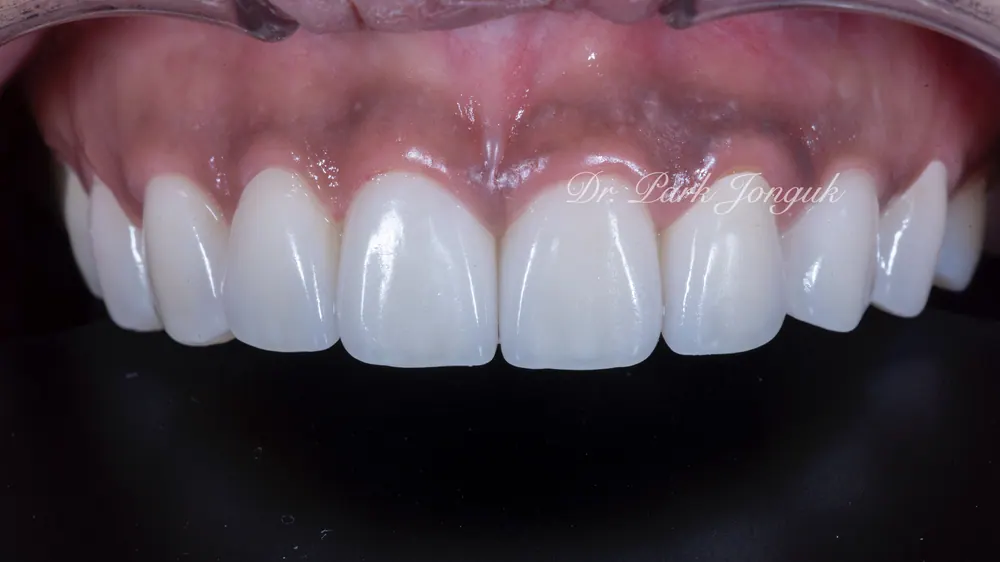
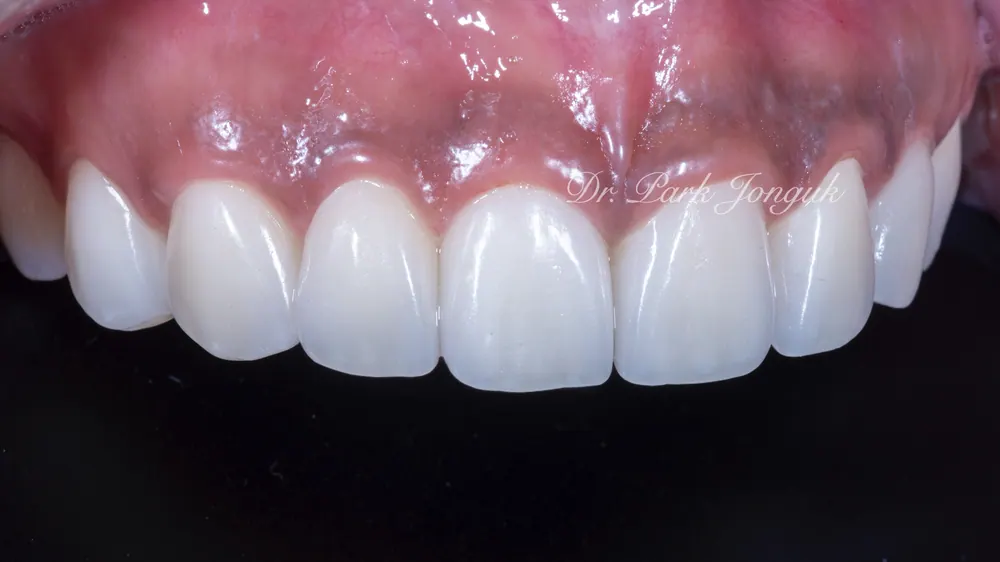
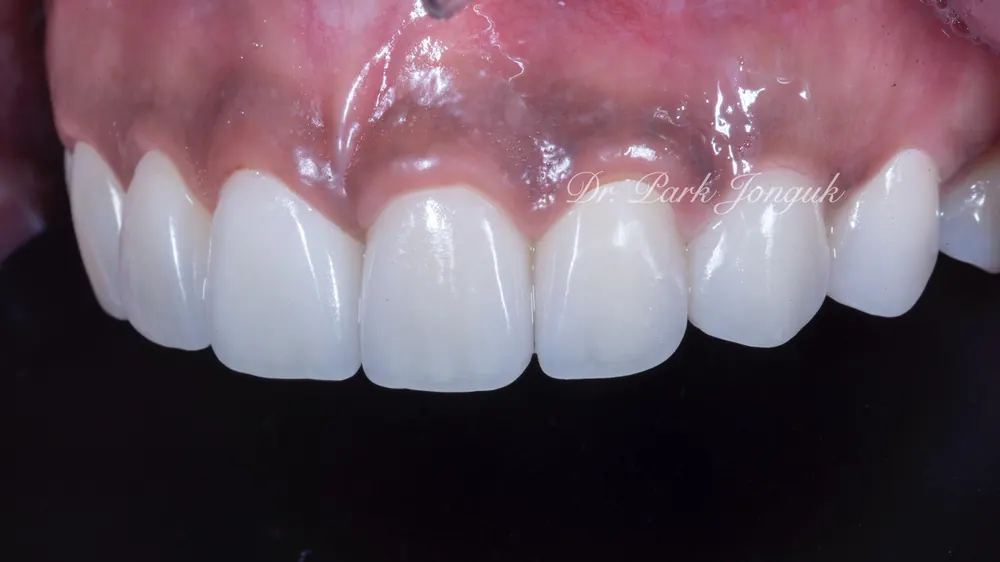
This is how such a natural cosmetic dental result is achieved.
Since this case involved an appropriate mix of veneers and an all-ceramic crown bridge,
how the color and translucency come through for each individual tooth matters a great deal.
The shape of the gum also matters greatly, so we finish each tooth's details according to its individual position.
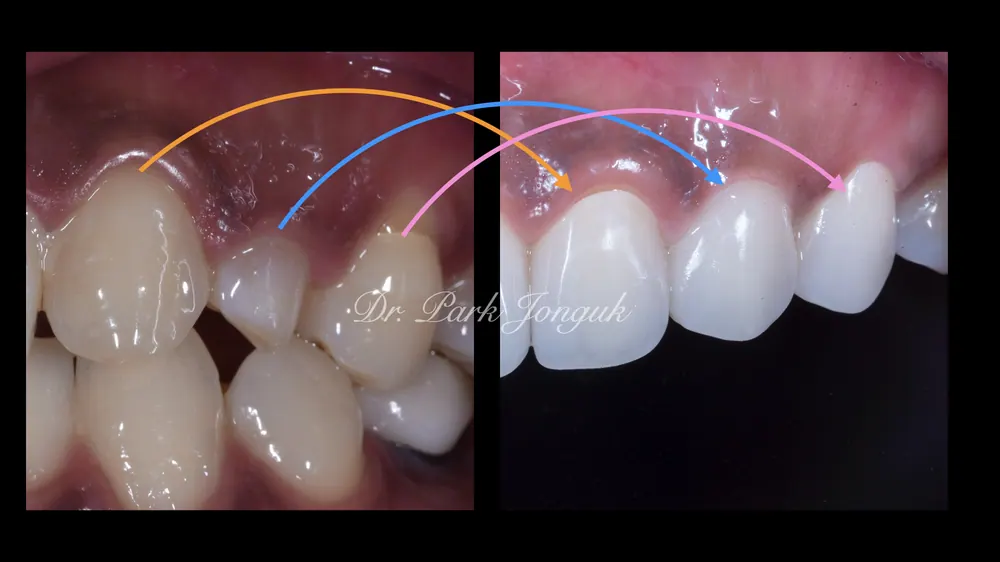
In particular, the spot where the baby tooth used to be needs to be finished naturally.
This shows how each individual tooth turned out after the veneer-based cosmetic treatment.
The canine was shaped like a lateral incisor,
and the spot where the baby tooth had been, with its narrow space and gum that had receded considerably,
was finished into a canine shape natural enough that no one could tell.
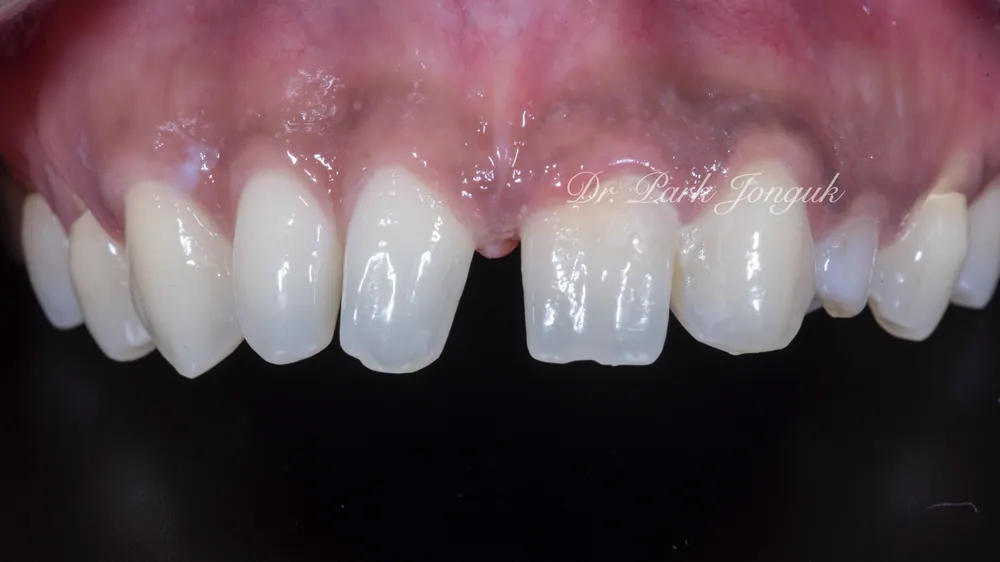
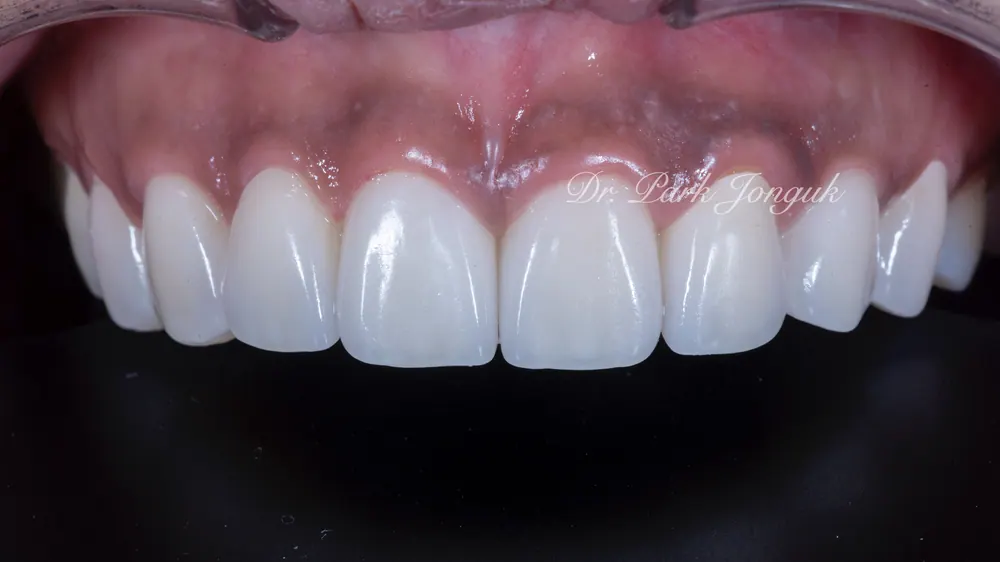
Comparing the starting point with the finished veneer-based cosmetic result like this,
you can see just how beautiful the teeth became.
Treating a wide range of cosmetic cases, veneers, and all-ceramic crowns in Apgujeong-dong alone since 2006,
Dream Dental Clinic pursues prettier, more natural teeth.
Since 2006, Dream Dental Clinic
This article is a clinical note written by Dr. Park Jonguk of Dream Dental Clinic, Gangnam; the original was published on his blog. The photographs shown are real cases he treated. Results vary with each patient’s condition, and every procedure carries the possibility of individual variation and side effects.
![[Peg Lateral Veneers] From a Strong-Looking Impression to a Soft, Feminine Smile — The Esthetics of Front-Tooth Veneers](/column-media/224178565168/thumb.webp)
Quick Consult
Request a Callback
Leave your number and we will call you back during clinic hours.
Request Received
We will contact you during clinic hours. For urgent matters, please call +82-2-3448-0028.