
Retreating Veneers to Look Natural
Hello. I'm Park Jonguk, director of Dream Dental Clinic.
Once you've had veneer or all-ceramic crown treatment,
since this treatment isn't permanent,
retreatment eventually becomes necessary.
Reasons for retreatment include fracturing and debonding,
and sometimes retreatment is done for purely aesthetic reasons.
It's hard to give a clear-cut number for the lifespan,
but if you have habits like nail-biting or teeth-grinding,
the lifespan will shorten considerably,
and if you use your front teeth to tear at chewy foods like dried squid,
the lifespan will inevitably shorten even further.
Even when a patient simply wasn't happy with the veneer from the start,
retreatment can be done.
Some patients come to our clinic for retreatment
even though it's only been a few months since their veneer treatment.
When retreatment is done for this kind of aesthetic purpose,
the treatment needs to proceed with a clear check on the aesthetic result the patient wants.
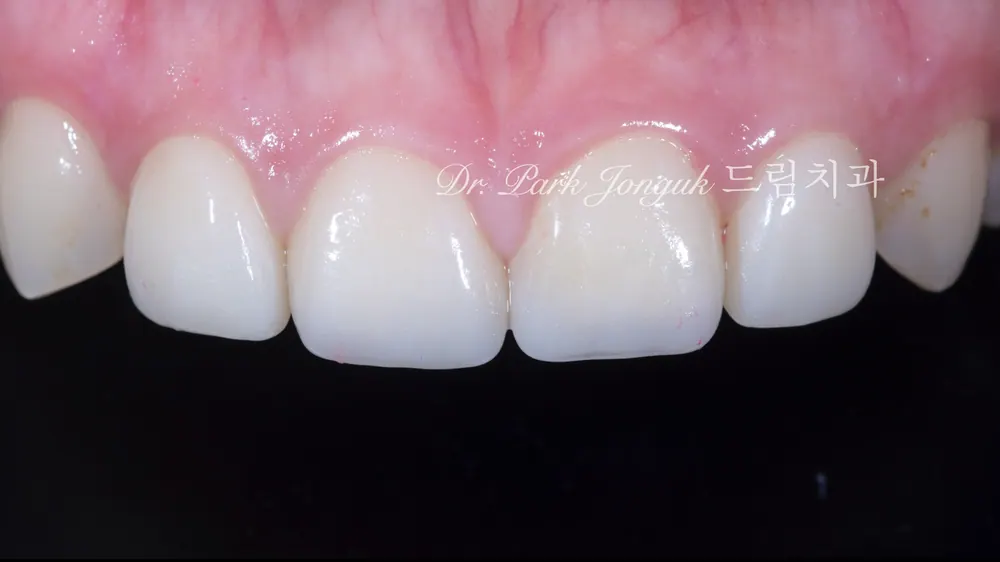
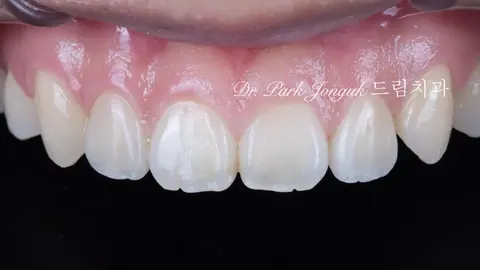
This patient already had all-ceramic crowns on 4 teeth.
It wasn't that they'd broken or come off;
the patient wanted retreatment because the shape of all 4 teeth looked too awkward.
The shape of the teeth was too wide and flat,
and the overall form was awkward as well.
With no three-dimensionality at all and a single flat color throughout,
these were a textbook example of a "simply made" all-ceramic crown.
Since all 4 teeth were far too wide,
we decided to include the canines in treatment as well, to redistribute the tooth sizes.
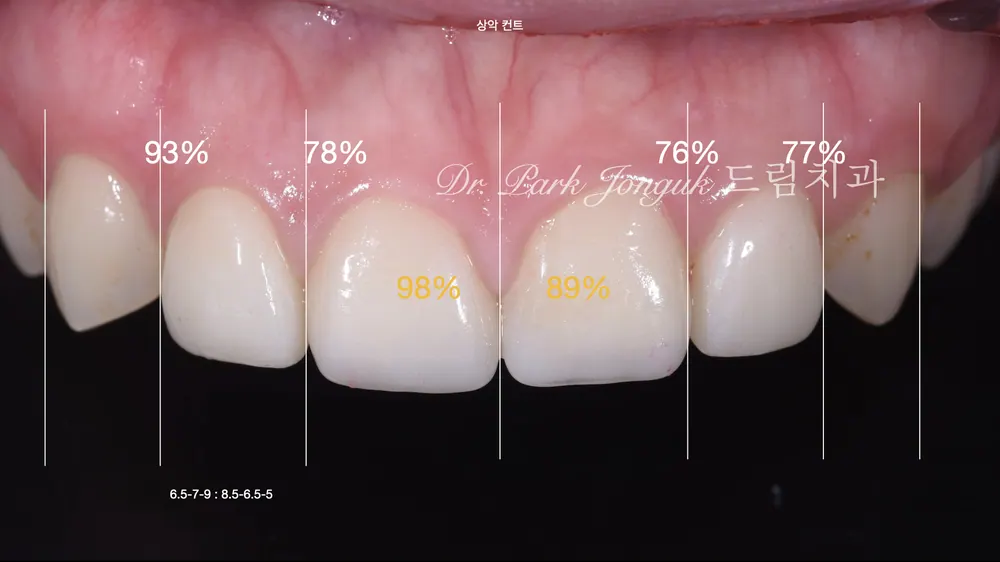
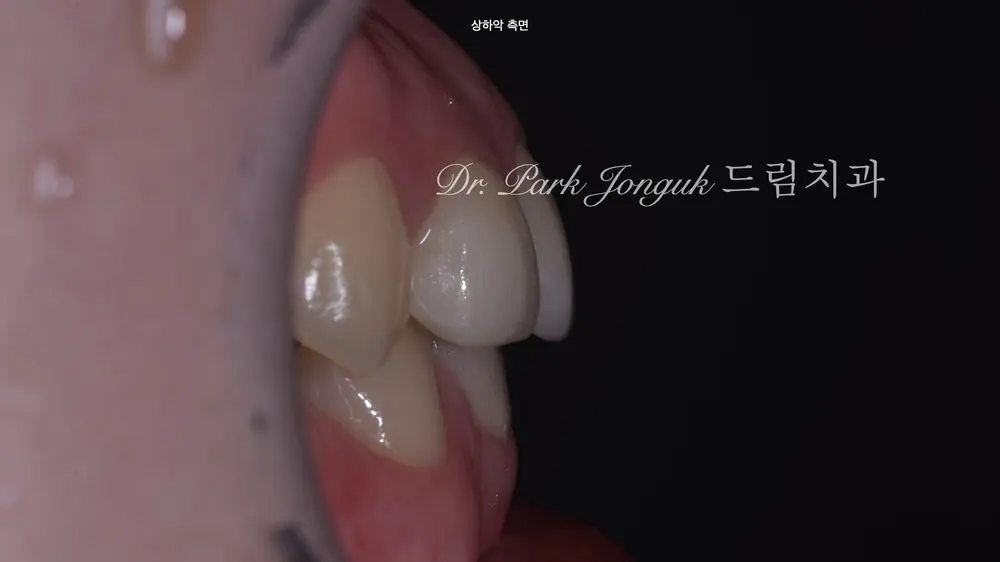
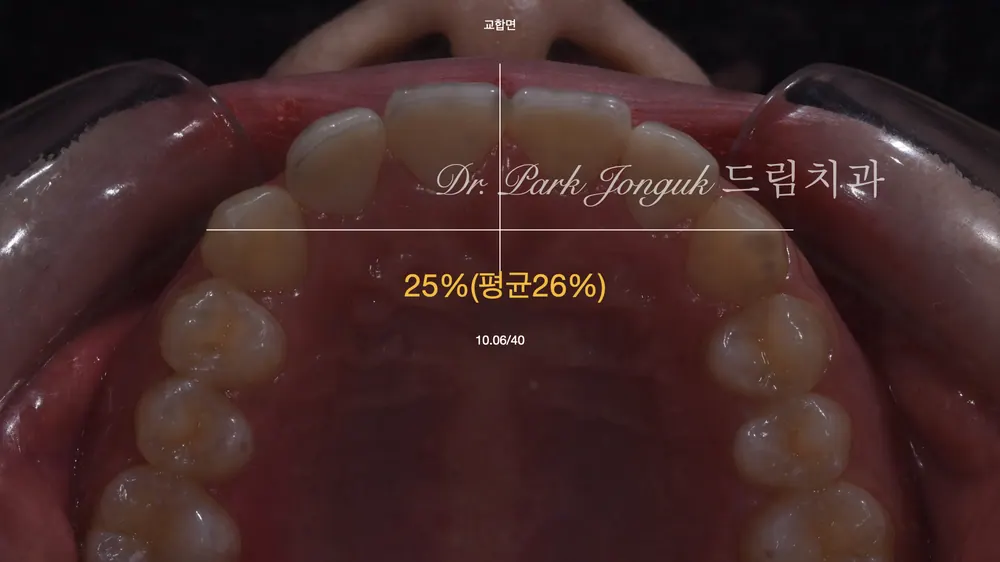
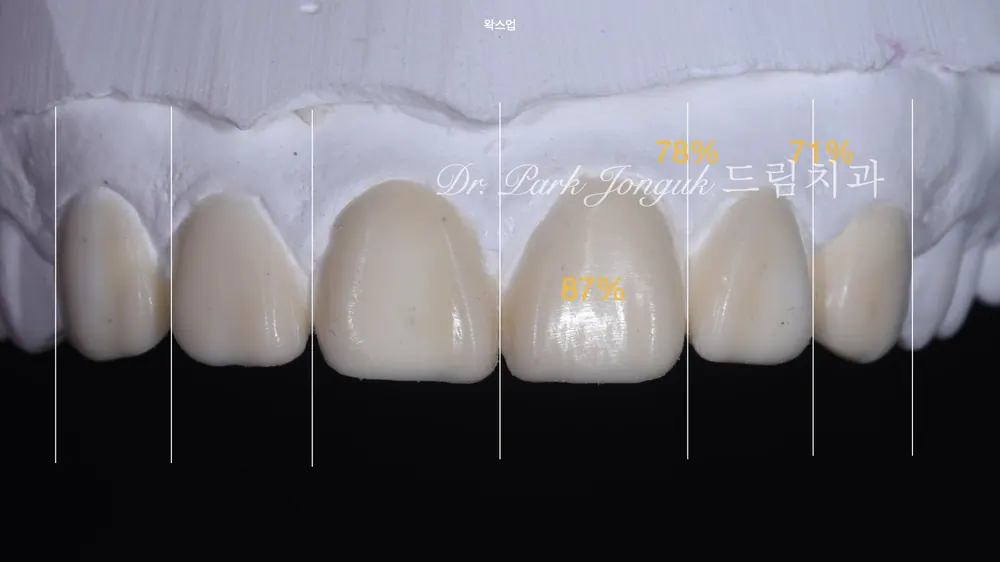
We tested out in advance
what proportion the current teeth should be changed to.
We checked the degree of protrusion and the position of the front teeth relative to the canines,
and also analyzed, from an occlusal standpoint,
whether the teeth could be brought further inward.
Now we remove the existing all-ceramic crowns
and proceed with retreatment.
Removing a veneer has some fairly tricky aspects,
and an all-ceramic crown is a bit easier by comparison.
Even so, the removal still has to be carried out very carefully.
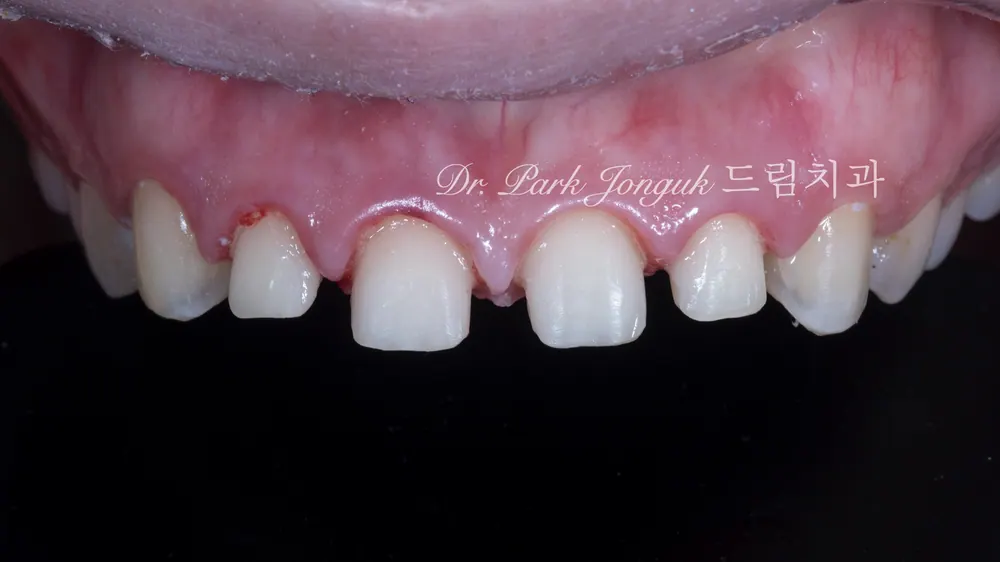
This is the state after removal.
Unlike with a veneer, a lot of the tooth has already been reduced,
which is somewhat unavoidable given the shape an all-ceramic crown requires.
But if a veneer could have worked and an all-ceramic crown was chosen instead,
that's a treatment choice that leaves a bit of regret.
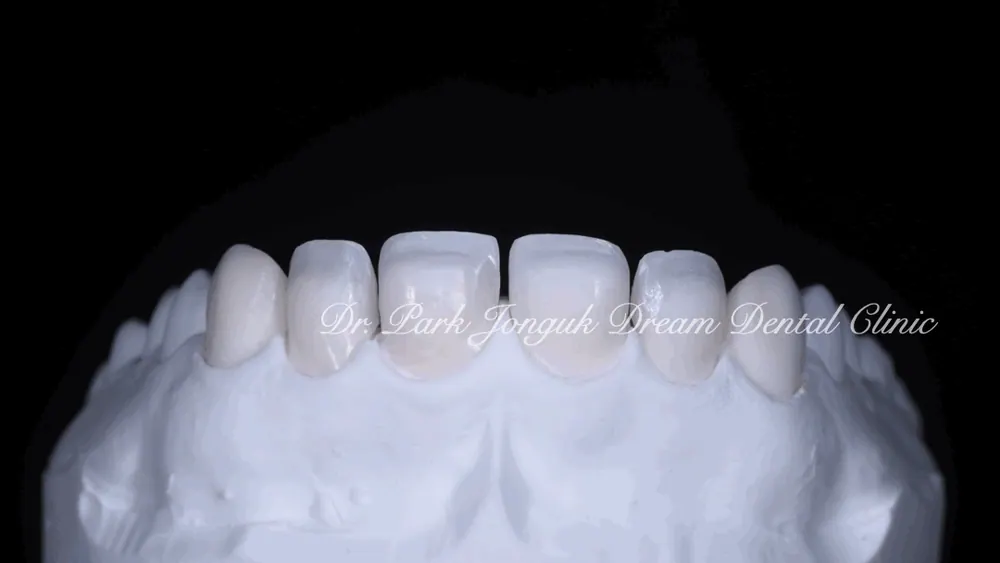
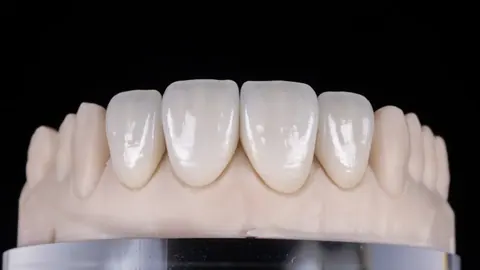
Now, using ceramic,
the all-ceramic crown has to be fabricated.
Compared with the existing crown, the fabrication process here is far more elaborate,
going through a variety of steps
to bring out as much of a natural-tooth feel as possible,
while also making the tooth look somewhat smaller.
That's how it's fabricated.
The same is true for veneers,
but the one-day method, made with computer and milling machine,
simply cannot match this level of refinement.
In particular, to make it look like a natural tooth,
this kind of long, demanding process is essential.
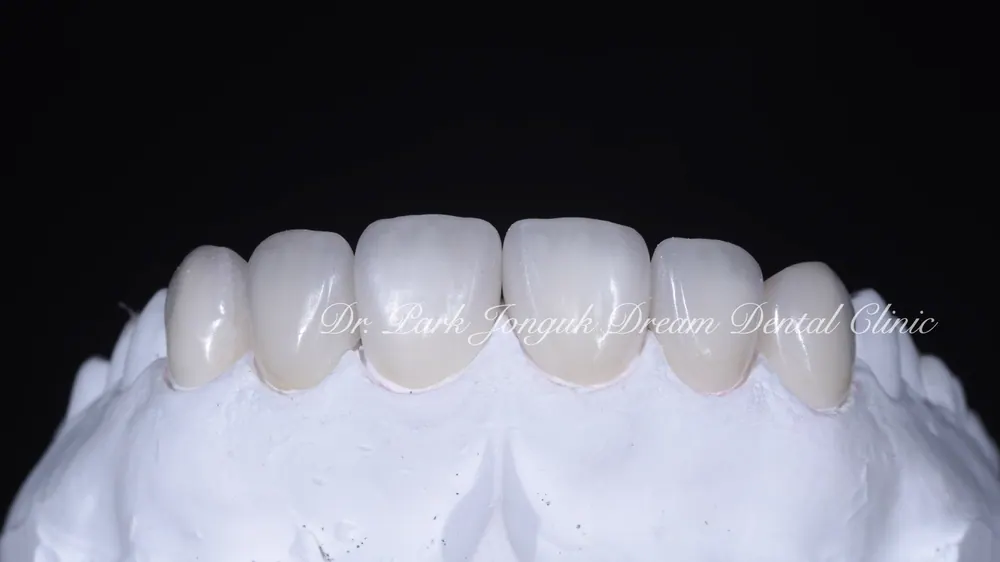
The all-ceramic crown made this way is then
tried in the mouth to check the fit.
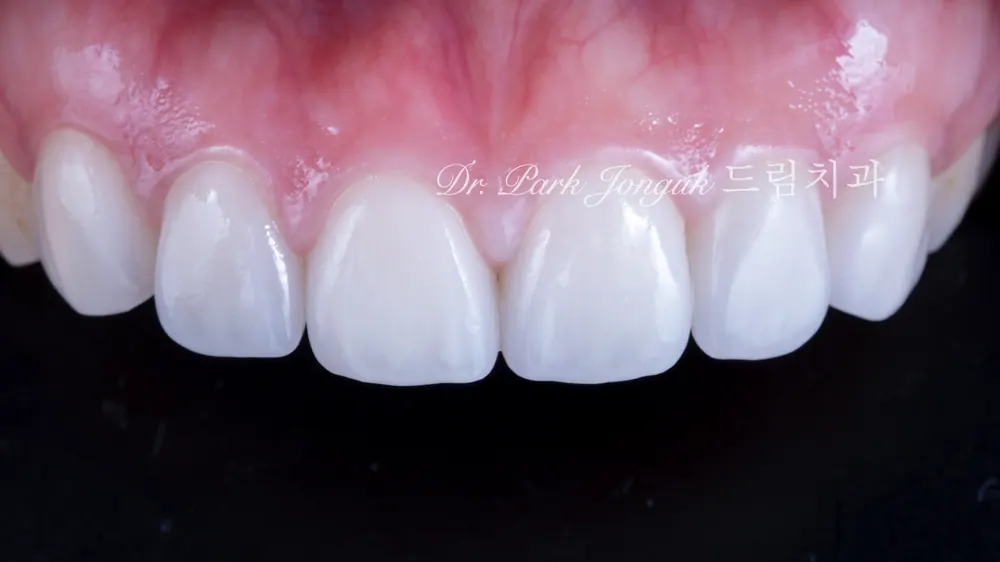
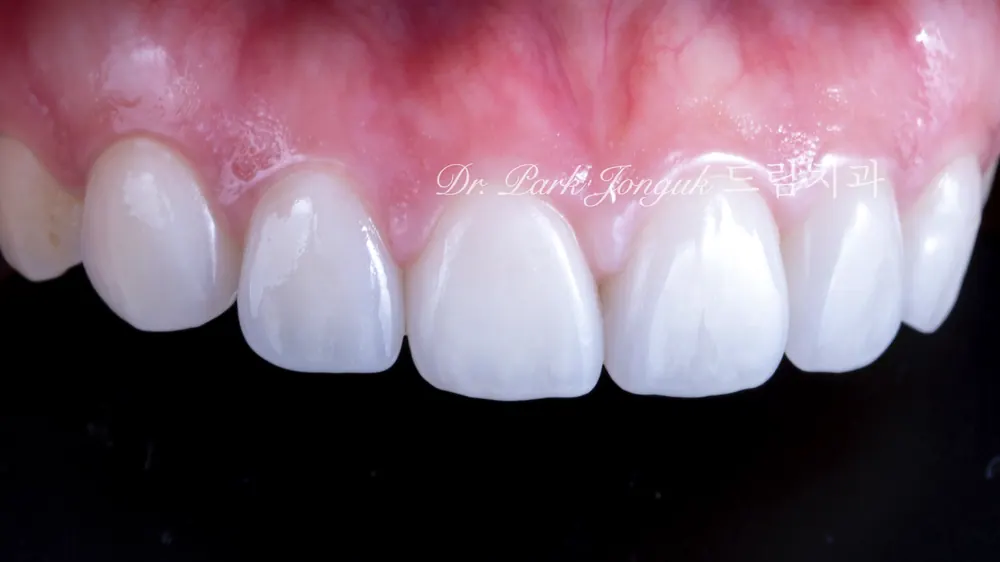
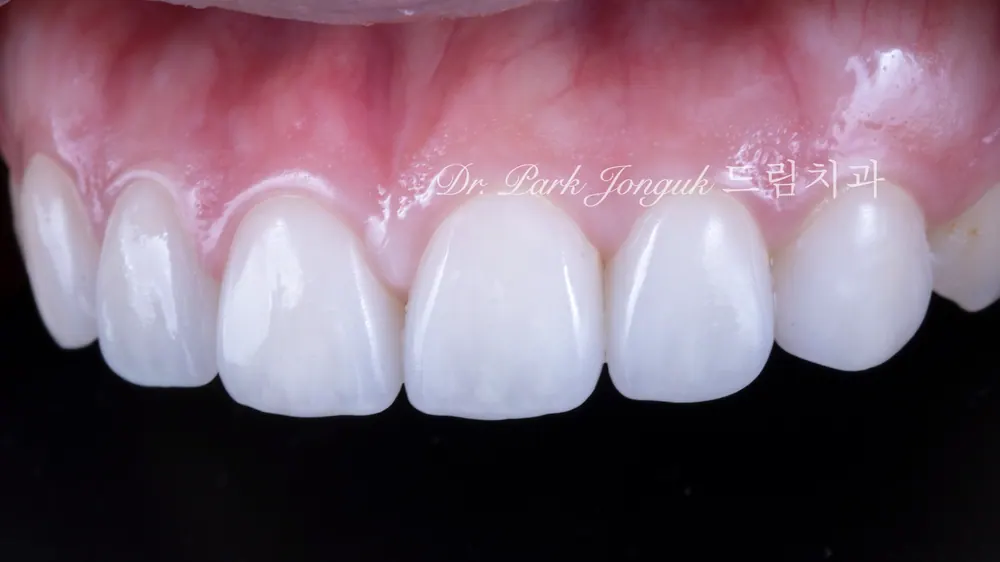
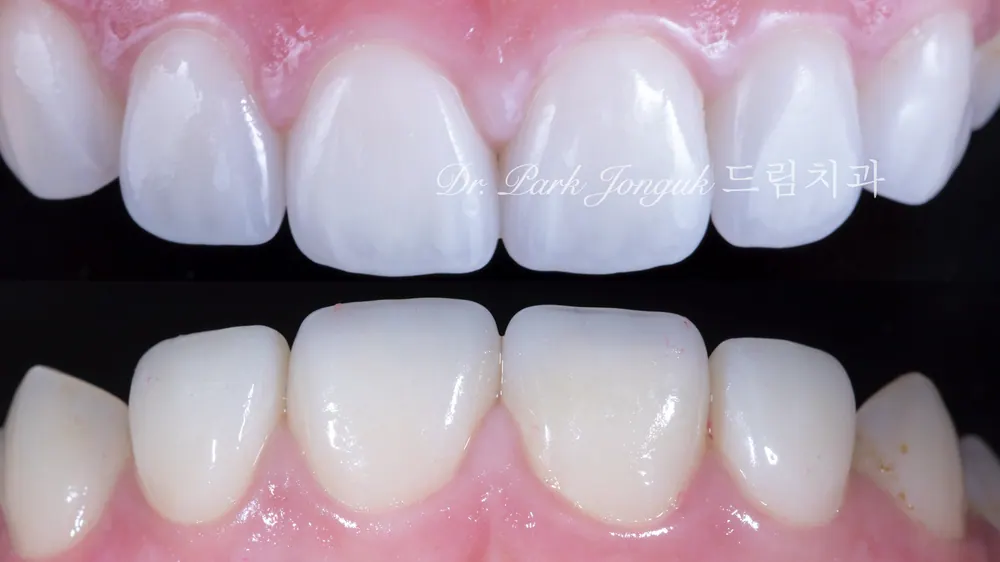
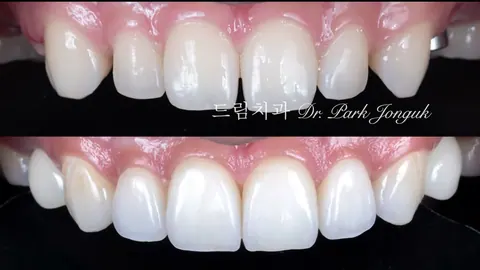
The all-ceramic crown retreatment has been completed.
There was some actual change in the tooth's proportions,
but more important was bringing out the tooth's three-dimensionality
to keep the tooth from looking flat and wide.
Giving the tooth surface a range of color tones and translucency
to make it look more like a natural tooth is also one factor
that helps the tooth's proportions look better.
Natural beauty
Since 2006, Dream Dental Clinic
This article is a clinical note written by Dr. Park Jonguk of Dream Dental Clinic, Gangnam; the original was published on his blog. The photographs shown are real cases he treated. Results vary with each patient’s condition, and every procedure carries the possibility of individual variation and side effects.
Quick Consult
Request a Callback
Leave your number and we will call you back during clinic hours.
Request Received
We will contact you during clinic hours. For urgent matters, please call +82-2-3448-0028.