
Apgujeong Dental Clinic That Does No-Prep Veneers Well
Hello, I'm Park Jonguk, director of Dream Dental Clinic in Apgujeong.
Among the patients who visit our Apgujeong dental clinic for front-tooth veneer treatment,
quite a lot of them seem to come specifically to ask about no-prep veneers.
That's probably because they're hesitant about a cosmetic dental procedure
that corrects the shape of the teeth
by reducing tooth structure.
The problem, though, is that in most cases, no-prep veneers simply aren't possible.
For no-prep veneers to give a beautiful result,
the current teeth need to meet a few specific conditions.
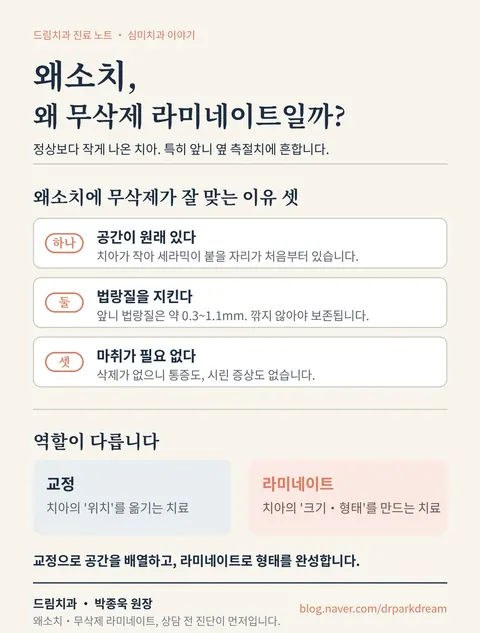
First, the teeth need to be small,
second, the alignment — the way the teeth line up — needs to be good,
and third, the teeth must not be protruding.
Cases that meet all three of these conditions aren't actually all that common.
Even so, if no-prep veneers are placed anyway,
the result won't come out looking beautiful.
Since this is a treatment done for esthetic purposes,
there's no reason to do it if the result isn't good.
So does that mean everyone needs a lot of reduction?
No, that's not the case.
Depending on the case, there's also a veneer approach that's close to no-prep,
with only an amount of reduction so small it's barely visible —
that's another option.
The reason for this kind of minimal, fine reduction
is to make the result even more beautiful
without harming the health of the tooth.
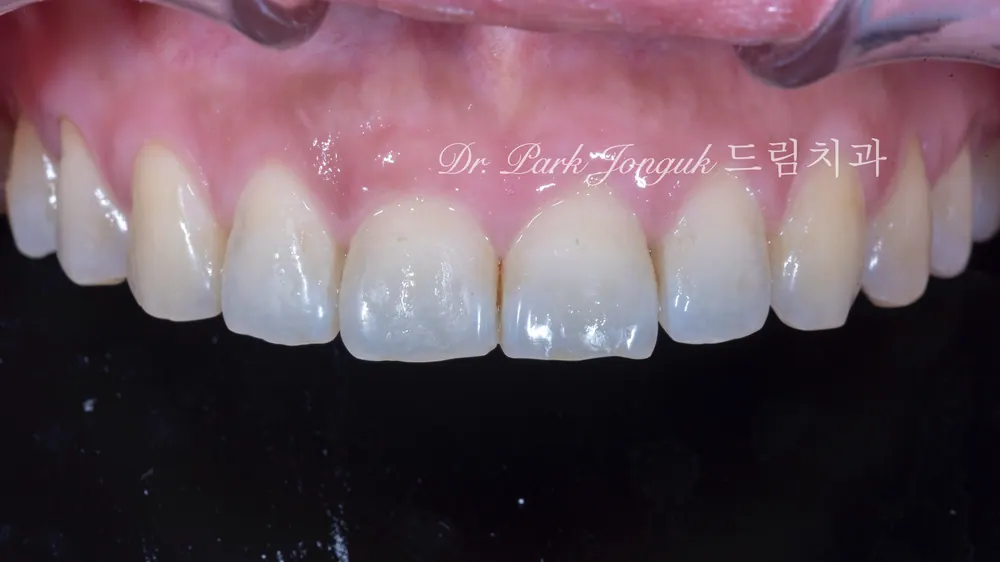
The three conditions for no-prep veneers mentioned earlier —
small teeth, even alignment, and teeth that aren't protruding —
except for the fact that the tooth tips protrude slightly,
this patient's teeth met the conditions for no-prep veneers.
The only issue
was that the teeth were packed so tightly together
that there was very little sense of separation between them.
If veneers were simply placed as-is in this state,
there wouldn't be enough room between the teeth for the ceramic veneer to fit,
which would produce a result that looks quite dense and cramped.
To resolve this kind of esthetic detail,
a small amount of fine reduction
can make the result look even more beautiful.
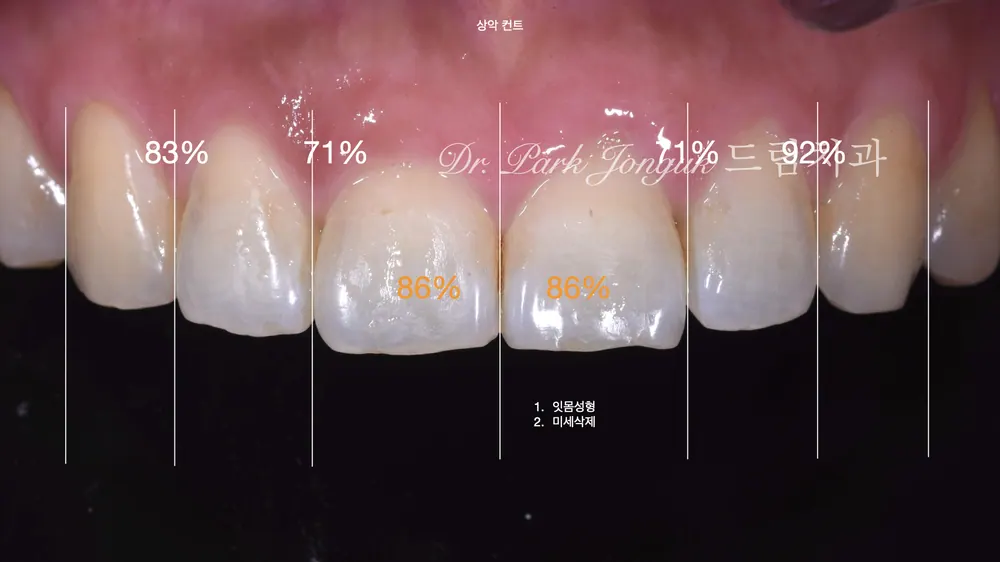
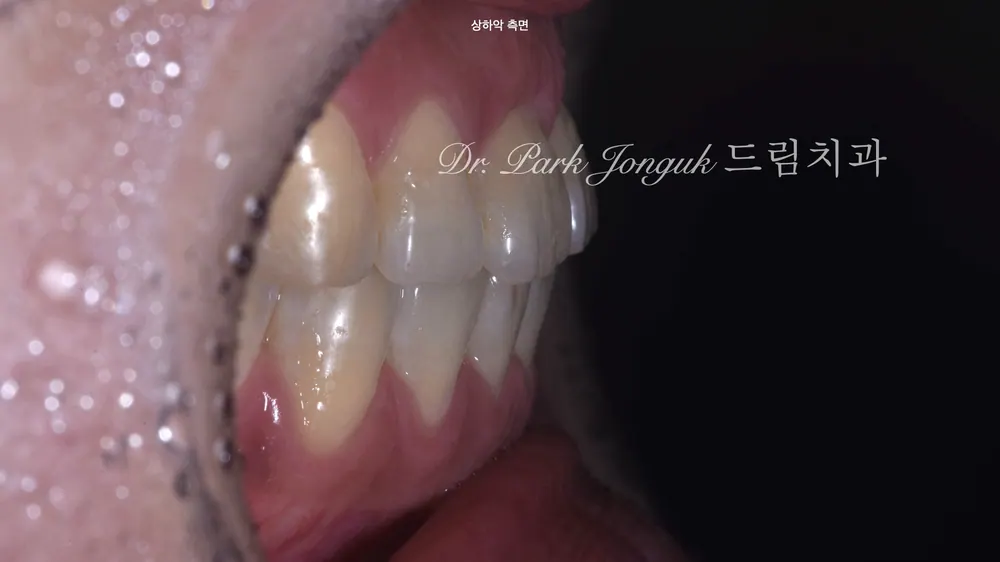
First, we carry out a diagnosis of the current condition.
The diagnostic method I use was developed based on a range of academic papers and books on veneers,
along with my own long clinical experience,
and I lecture on this to dentists every year.
Please see the link below for more details.
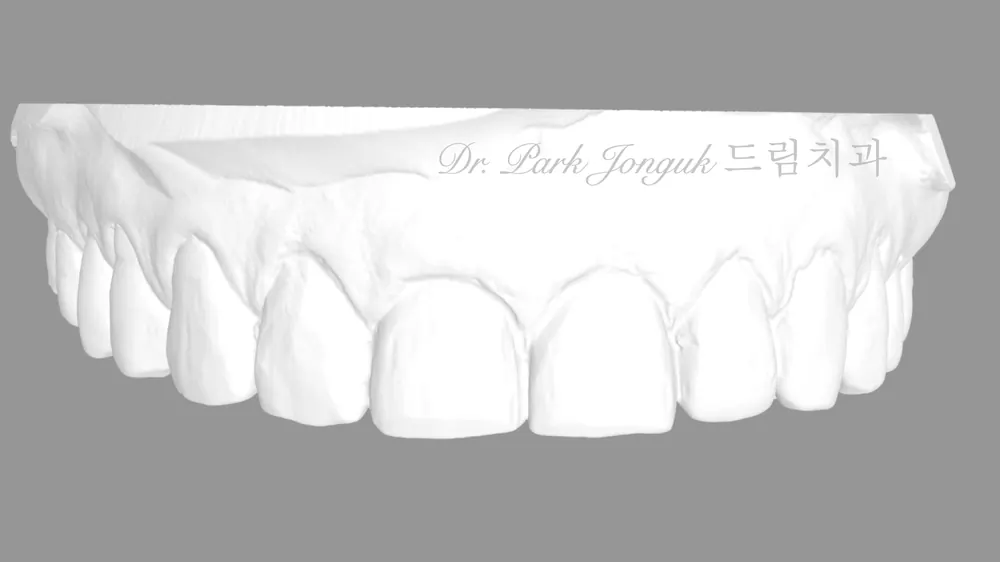
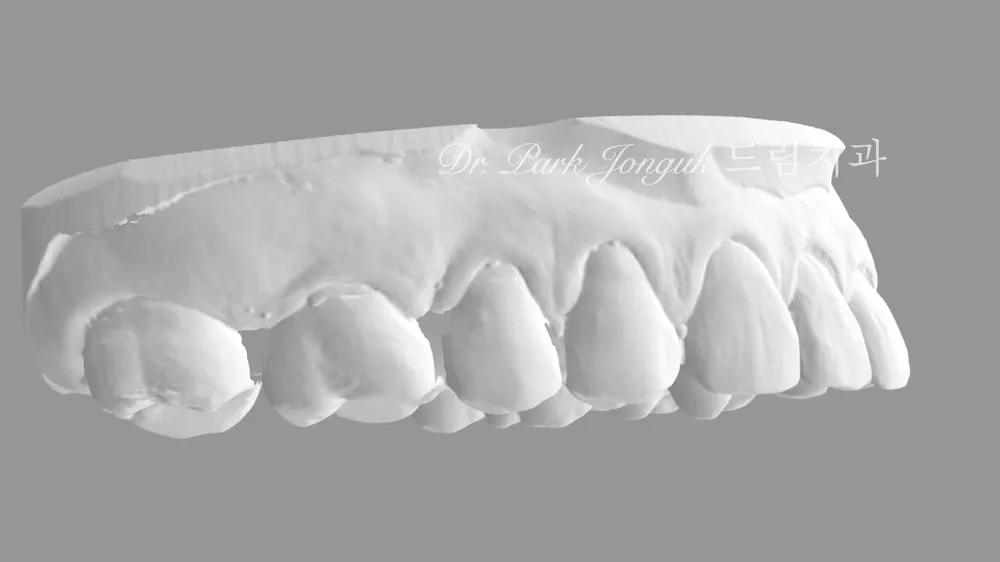
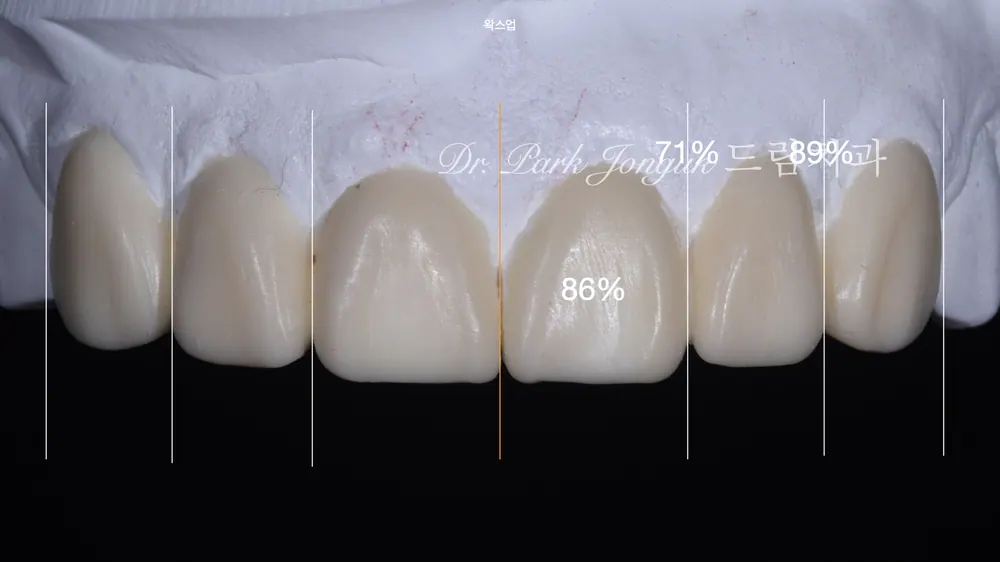
From the diagnostic results,
we can confirm both the shape of the reduced tooth and the shape after the veneers are placed.
We prepare by making fine reductions
in the spaces between the teeth,
so ceramic can be placed there to naturally shape the teeth.
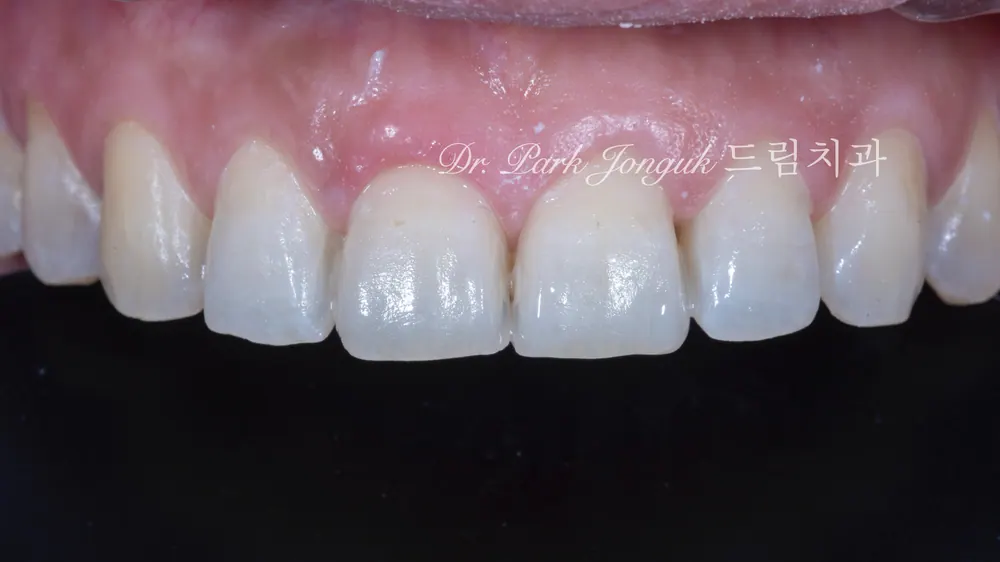
The teeth have been reduced according to the diagnosis.
Only the spaces between the teeth have been finely reduced.
This is a state very close to no-prep veneers.
From here, we take an impression of the teeth and begin fabricating the veneers in ceramic.
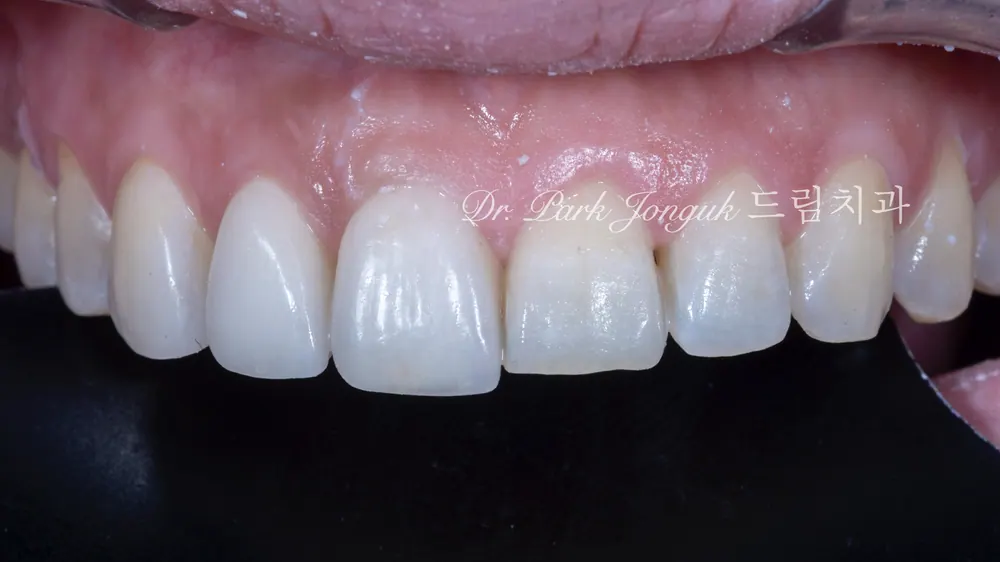
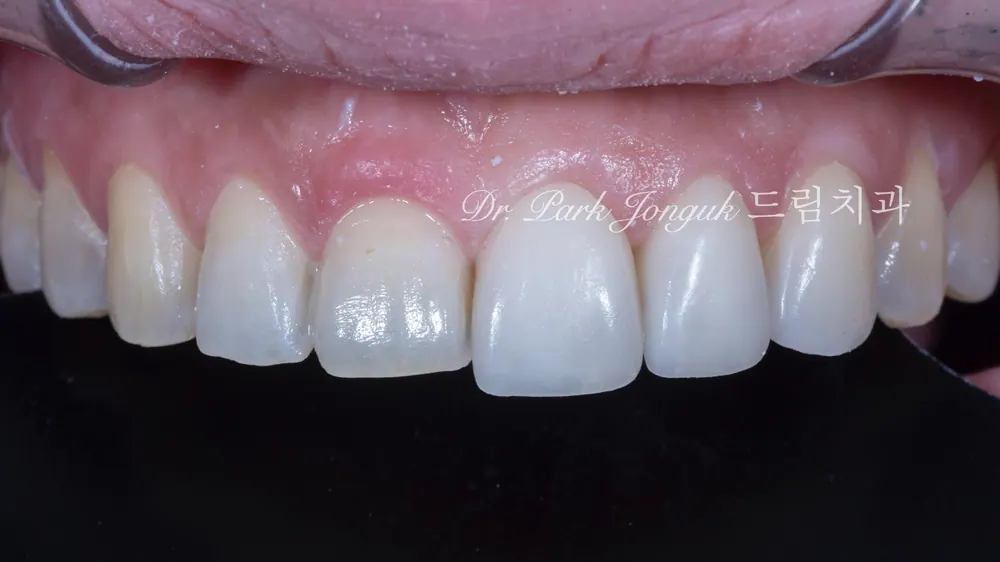
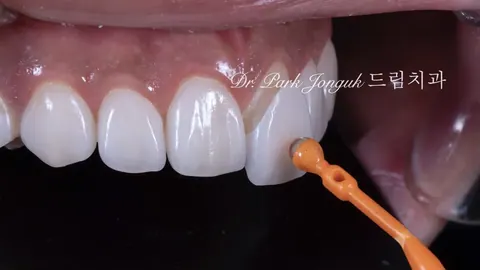
Once the veneers are fabricated,
we take photos with them placed on just one side of the teeth at a time.
This lets us check how the feel of the teeth changes.
Since the teeth were originally small,
we fabricate the veneers slightly larger than the existing teeth.
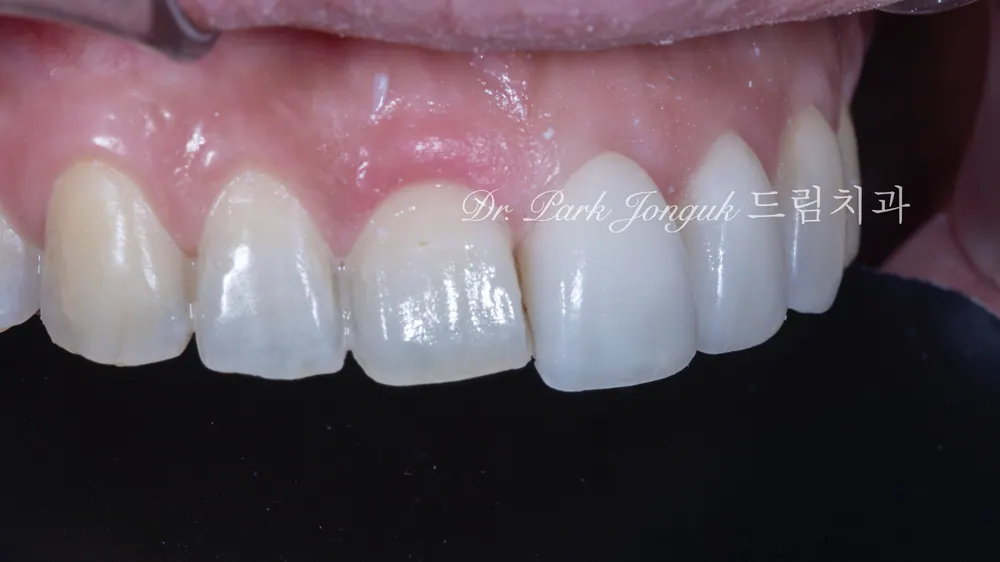
This is a photo showing
the effect that the reduction between the teeth has.
Because the ceramic naturally wraps around that area and shapes it,
the result looks far more natural, with a better sense of separation between the teeth.
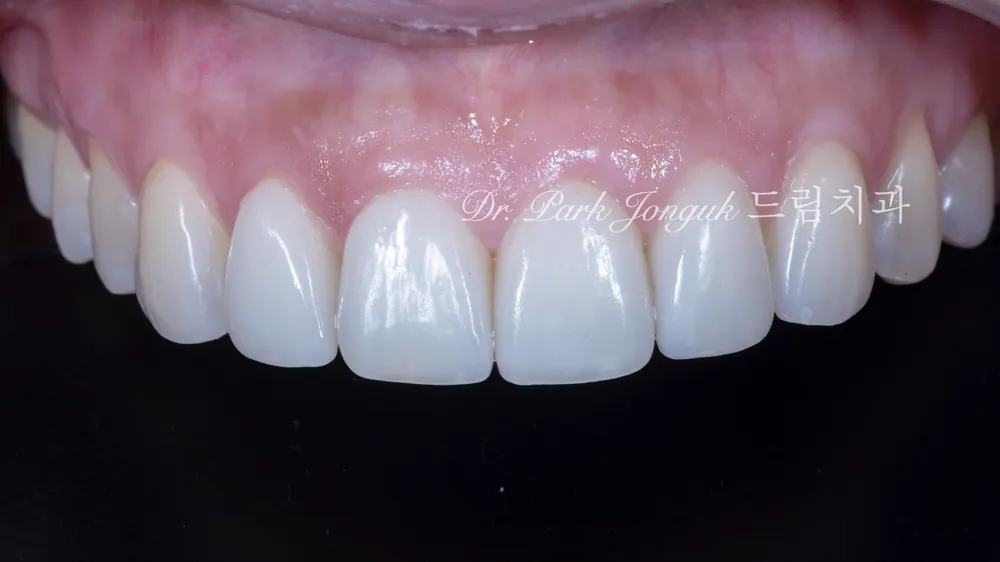
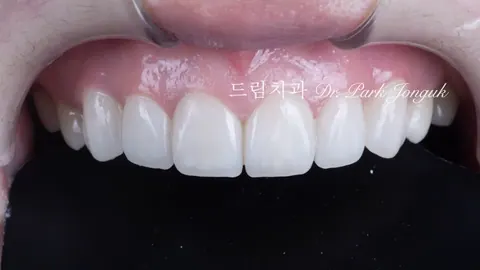
We took another photo with the veneers placed on both sides.
It gives the teeth a natural sense of dimensionality
while fully preserving a bright yet translucent feel.
Because the separation between the teeth is clearly visible,
the result feels even more natural.
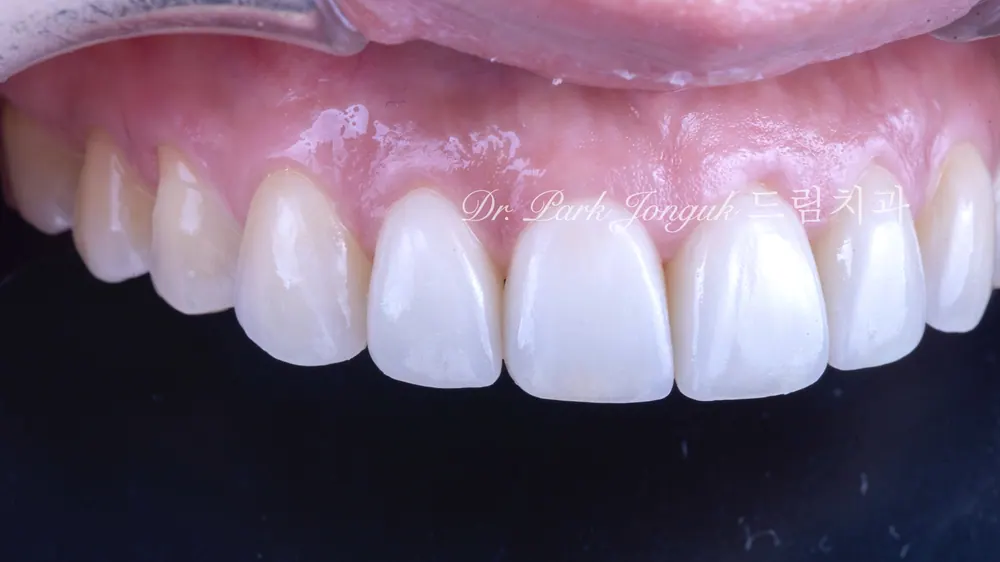
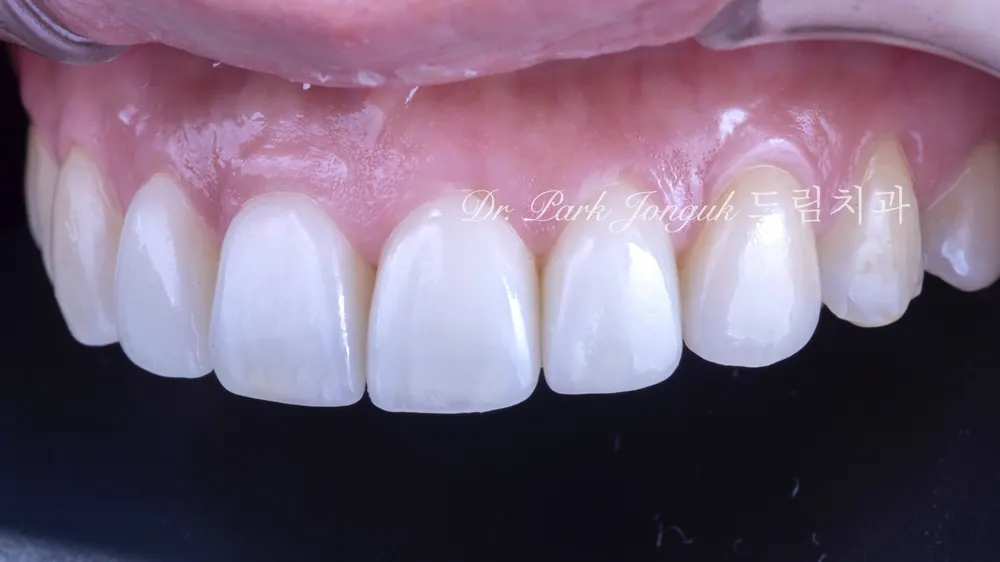
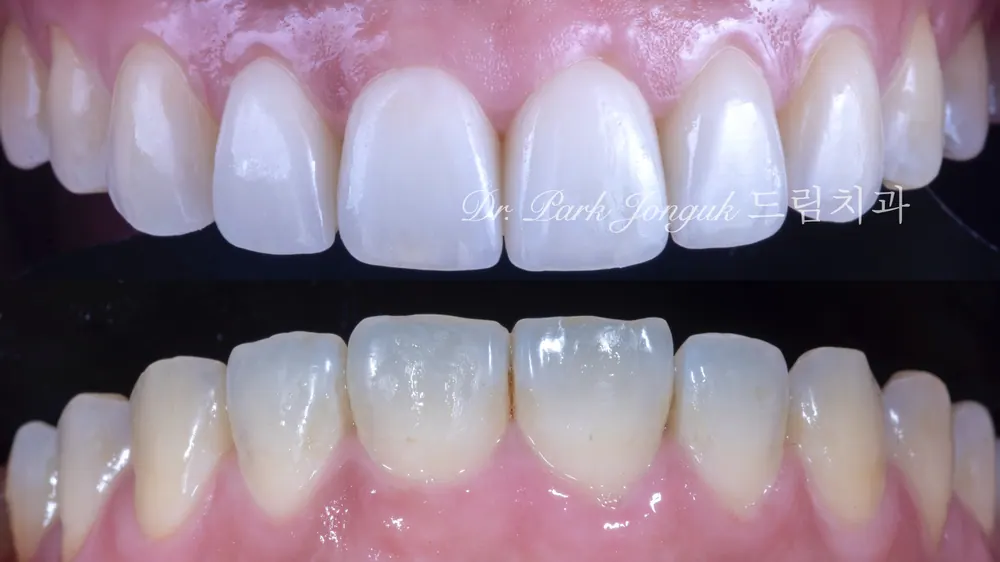
With natural, beautiful teeth,
the veneer treatment is now complete.
Preserving no-prep, or minimal-prep, tooth structure
while still capturing this natural tooth feel — this is exactly what sets our clinic, Apgujeong Dream Dental Clinic, apart.
Natural Beauty
Since 2006, Apgujeong Dream Dental Clinic
This article is a clinical note written by Dr. Park Jonguk of Dream Dental Clinic, Gangnam; the original was published on his blog. The photographs shown are real cases he treated. Results vary with each patient’s condition, and every procedure carries the possibility of individual variation and side effects.
Quick Consult
Request a Callback
Leave your number and we will call you back during clinic hours.
Request Received
We will contact you during clinic hours. For urgent matters, please call +82-2-3448-0028.