
The Know-How Behind Nearly Side-Effect-Free No-Prep Veneers
The biggest drawback of veneers is that they require removing tooth structure.
It's a great treatment that improves the look of your teeth, evens out your alignment, and beautifies your smile — but it can come with a range of side effects.
1. Tooth sensitivity
2. Veneers coming loose
3. Discoloration
4. Tooth inflammation
5. Gum inflammation
Most of these side effects start with the reduction of tooth structure.
Put the other way around, that means if there's no reduction, there's almost no risk of side effects. Let's talk about the veneer method that minimizes or eliminates reduction — no-prep veneers.
1. Is it always possible?
Quite a lot of patients come in asking whether no-prep veneers are possible for them, too. In theory, veneers could be placed without any reduction in any case. But the problem is that the result still has to look better than it does now, so the cases where this is possible are clearly limited.
● The teeth need to be small,
● the alignment needs to be even,
● the teeth must not be protruding,
● and it's even better if there's some space between the teeth.
These are the conditions needed to place no-prep veneers with almost no side effects.
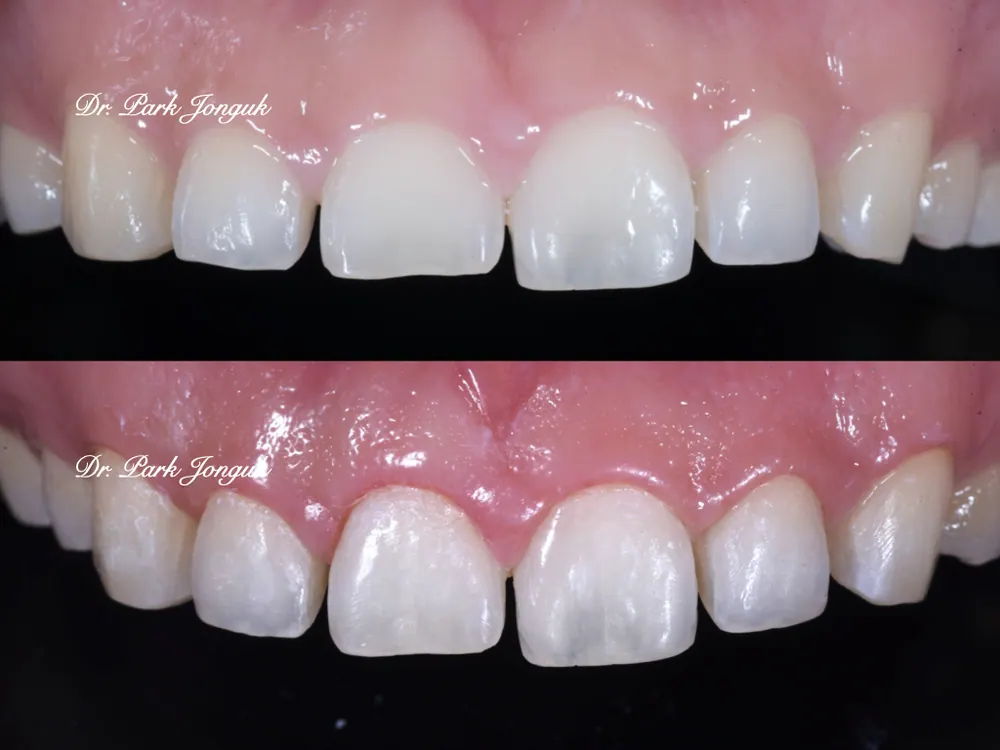
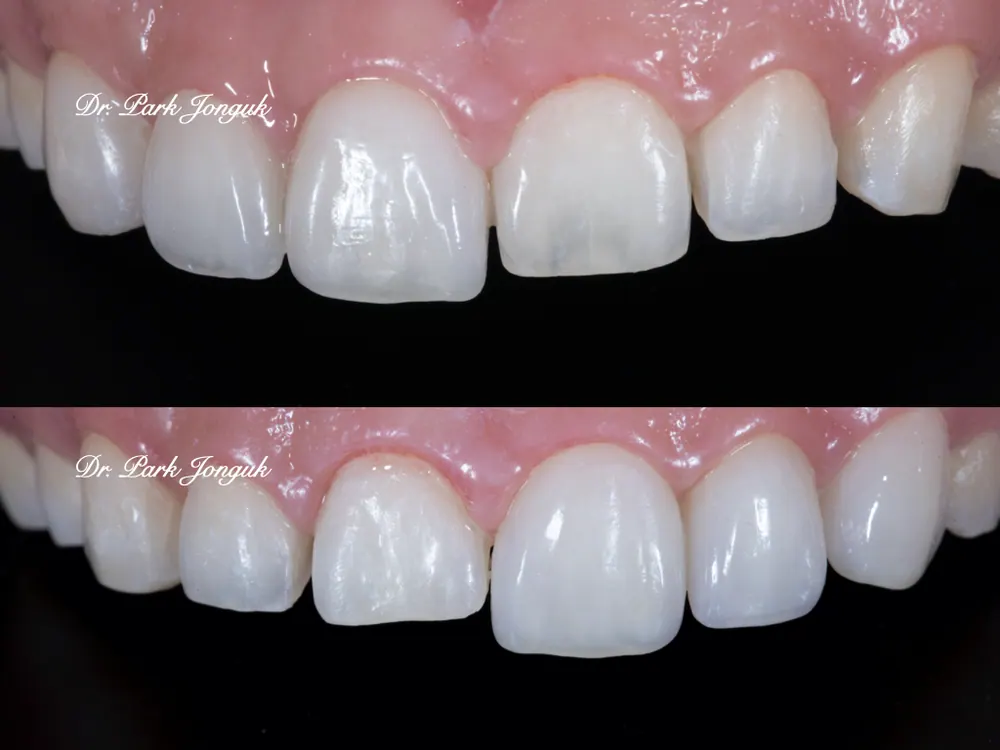
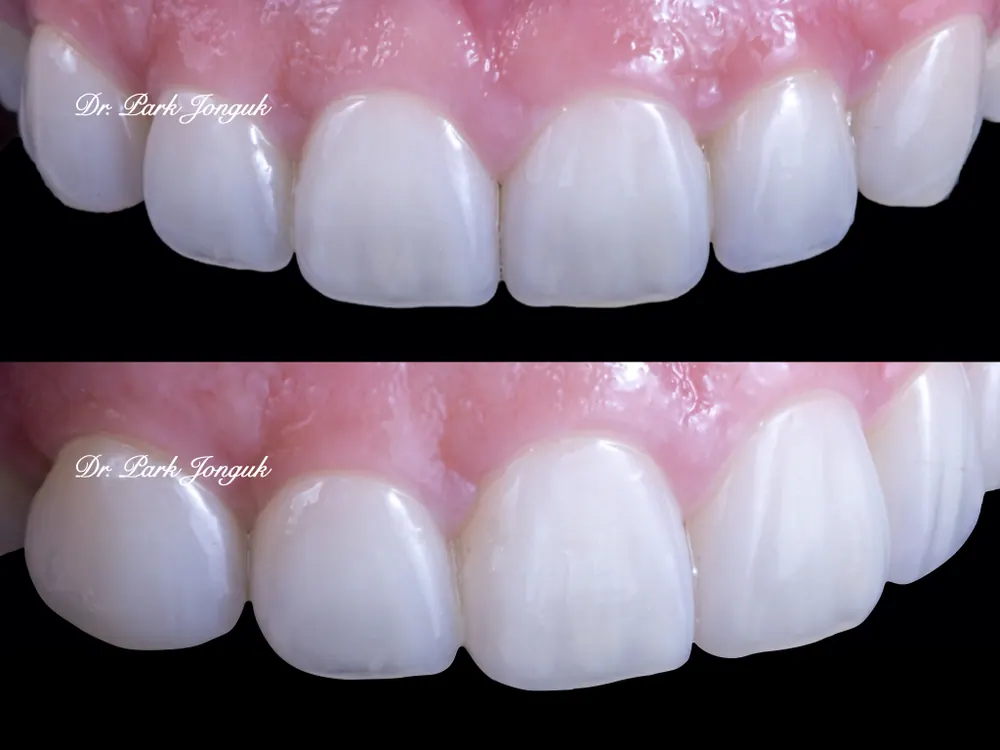
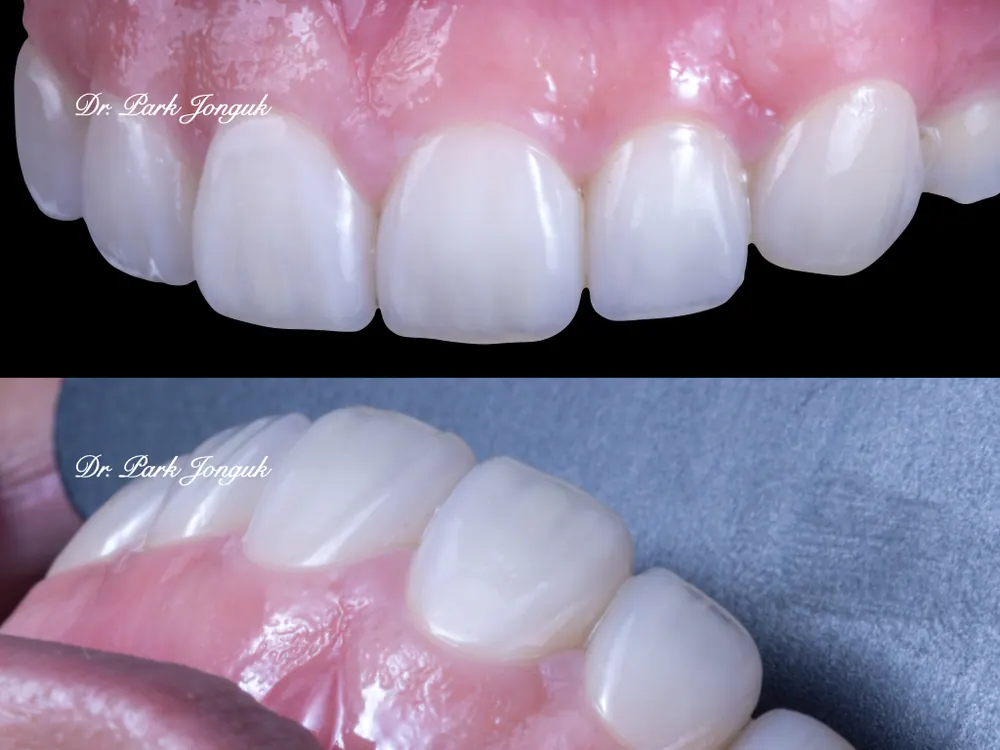
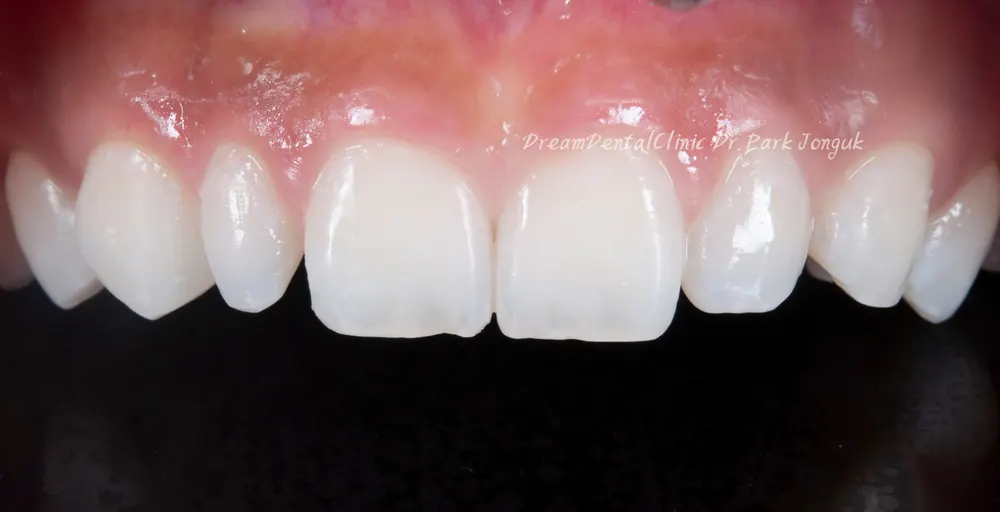
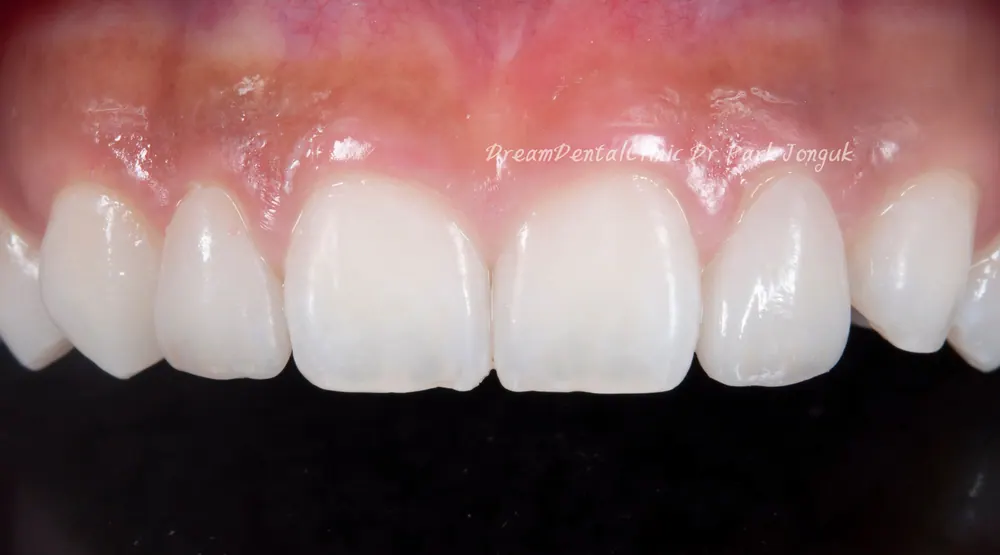
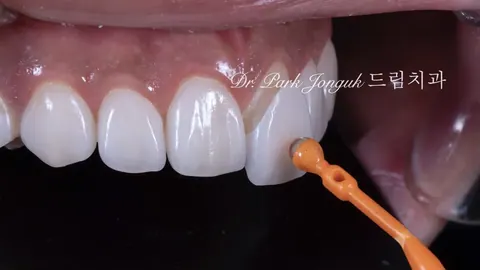
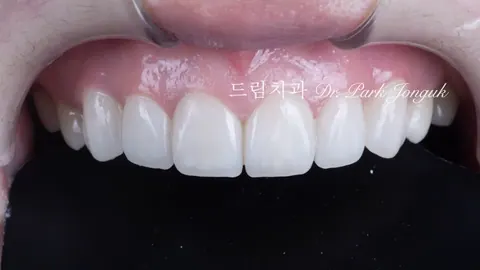
As in the photo above, it's ideal when the teeth are small and even, with some space between them.
There's another important point to mention about this photo. In many no-prep cases, the teeth end up looking white, opaque, dense, and artificial. Because the ceramic in no-prep veneers is quite thin, it's hard to achieve a wide range of expression.
This is especially true with the same-day method, where expression becomes even more limited. In the same-day method, a block of ceramic is milled with CAD/CAM, but current technical limits mean the milled ceramic has to stay above a certain thickness — so beyond color and translucency, even the shape is hard to make look beautiful.
At present, the handmade buildup method I use is the best fit for no-prep veneers.
2. Are no-prep veneers completely free of side effects?
Compared with veneers that require a lot of reduction, the side effects are greatly reduced. If there's a side effect at all, it's mainly the possibility of gum inflammation — and that's usually not a problem as long as you brush properly.
Since no tooth structure was removed, there's no need to worry about tooth sensitivity, damage to the tooth nerve, or the discoloration that can result from it.
Bond strength to the tooth is also stronger the less reduction there is, which lowers the risk of the veneer coming loose. Minimal reduction gives slightly better bond strength than completely no-prep, but no-prep still bonds far more strongly than a poorly done veneer with excessive reduction.
3. Is it possible on discolored teeth?
This is somewhat debated. If it's acceptable for the result to be a bit opaque, it can be possible — but even with the most opaque ceramic, at a thickness of 0.2-3mm, it's difficult to fully keep discoloration from showing through.
In the end, it really depends on the degree of discoloration, so it varies case by case.
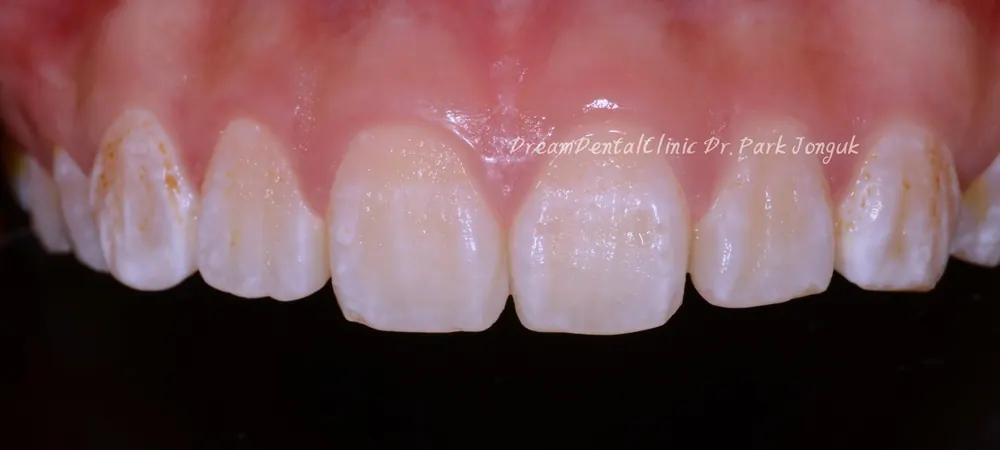
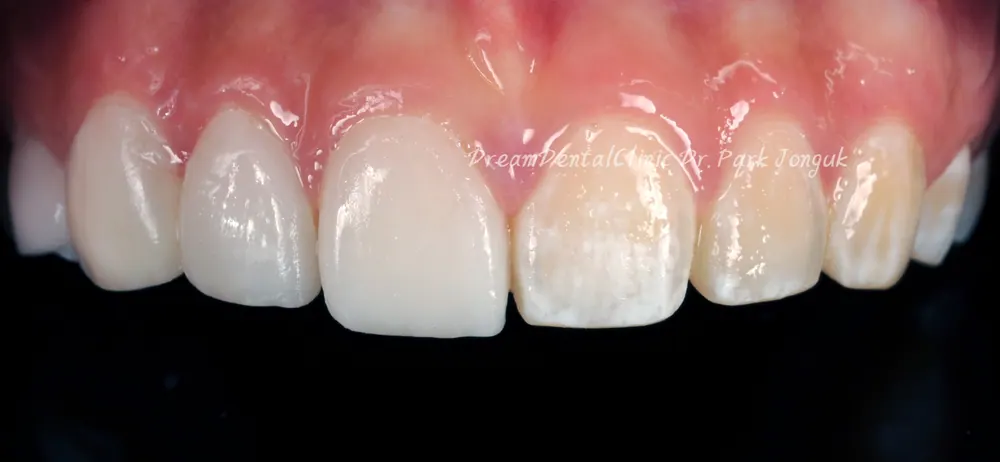
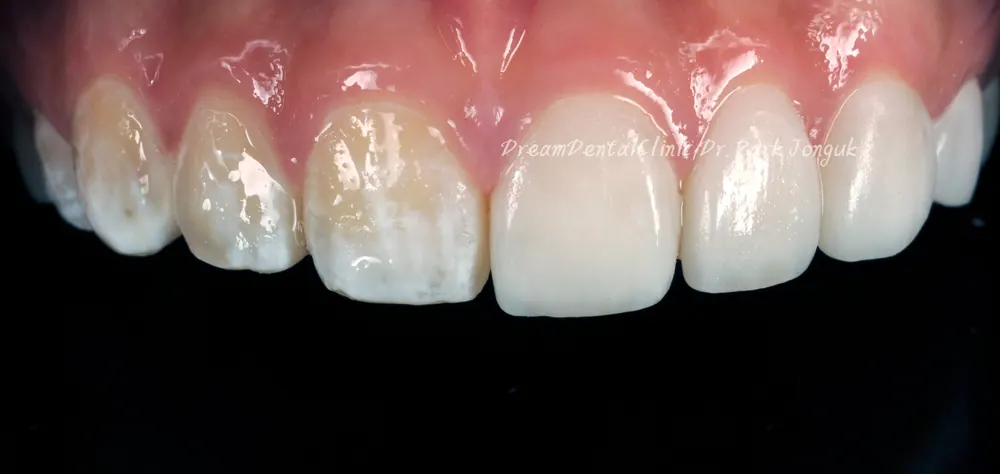
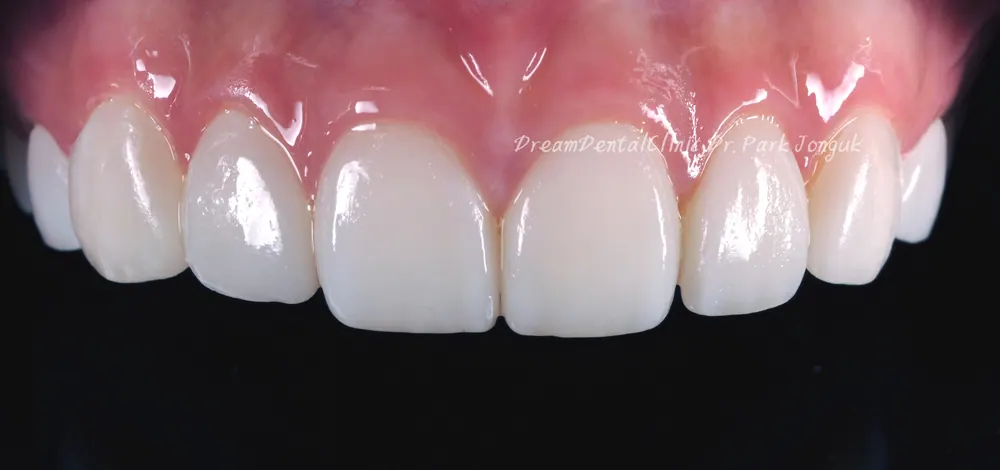
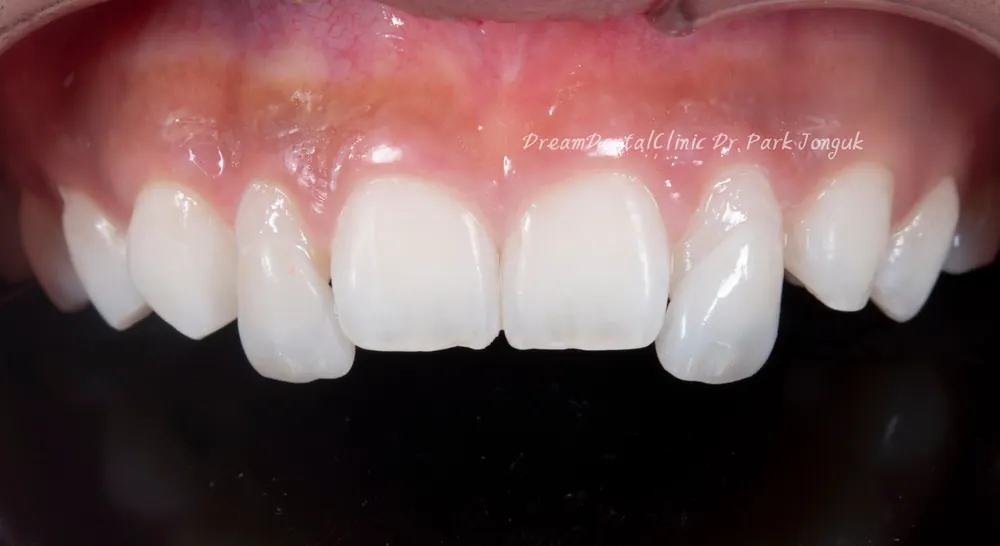
Even on discolored teeth like this, no-prep veneers can sometimes be possible.
4. Peg laterals
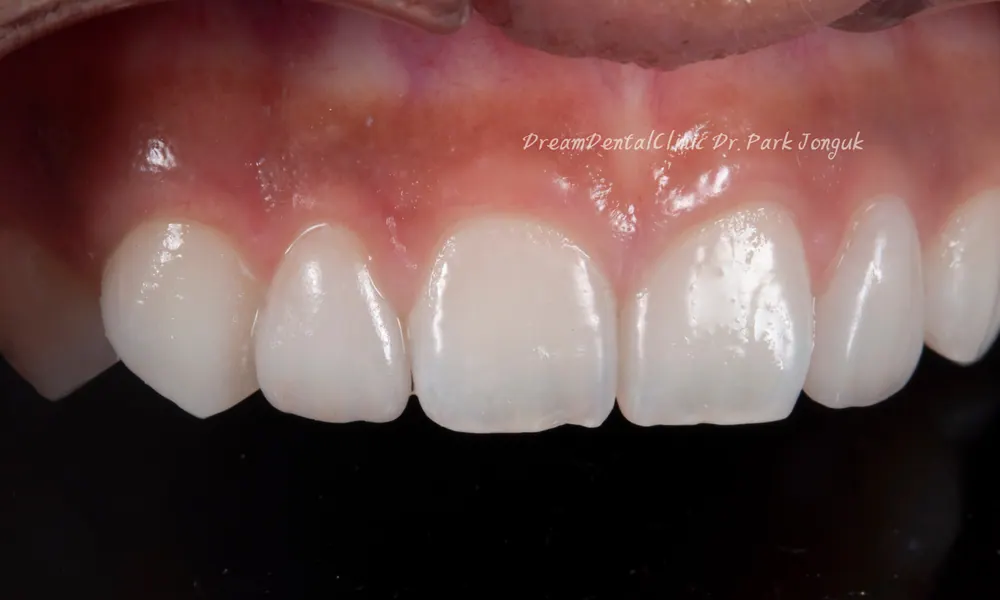
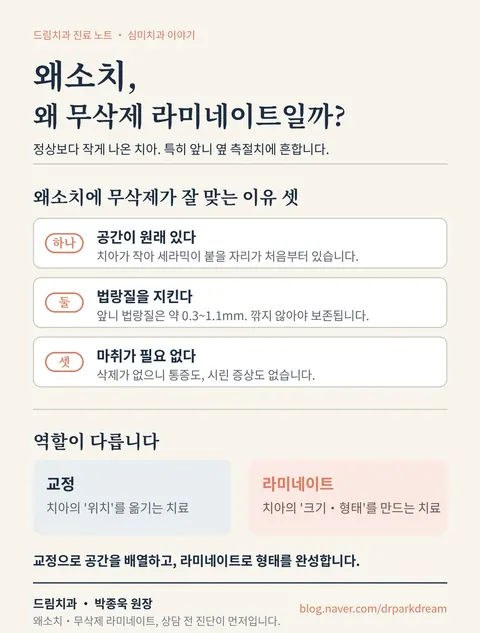
The tooth next to the central incisor is called the lateral incisor, and when that tooth is unusually small, it's called a peg lateral. This is an excellent case for proceeding without any reduction.
That covers what you should know about no-prep veneers. As with the previous post, the "diagnostic process" is extremely important here as well.
This article is a clinical note written by Dr. Park Jonguk of Dream Dental Clinic, Gangnam; the original was published on his blog. The photographs shown are real cases he treated. Results vary with each patient’s condition, and every procedure carries the possibility of individual variation and side effects.
Quick Consult
Request a Callback
Leave your number and we will call you back during clinic hours.
Request Received
We will contact you during clinic hours. For urgent matters, please call +82-2-3448-0028.