
Veneer Fabrication: Handmade vs. Same-Day
Veneers are made of ceramic. The ceramics typically used are three main types: feldspathic ceramic (called feldspar), a reinforced feldspathic ceramic, and lithium disilicate.
Different clinics may call their veneers by different names, but the material can't fall outside these three. A special material unique to us? That can't exist. Every dental material has to be approved by the Ministry of Food and Drug Safety, so there's no such thing as a material used exclusively by a single clinic. If a clinic claims to use a material unique to itself, that's either false advertising or illegal.
And the veneer fabrication process breaks down further into two methods, depending on approach.
1. The Same-Day Method
These days, veneer treatment is often completed in a single day. The reason it can be finished this quickly is the advancement of computer technology.
Almost all same-day veneers use Sirona's CEREC equipment. In fact, CEREC is still the most well-known equipment worldwide for easily making veneers, crowns, or inlays in a single day. Even from my perspective, it seems to be the best-made piece of equipment for the job.
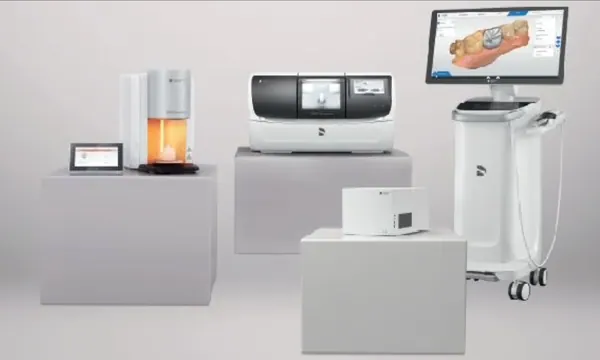
After the tooth is reduced and scanned by computer, the computer does a certain amount of the design for you.
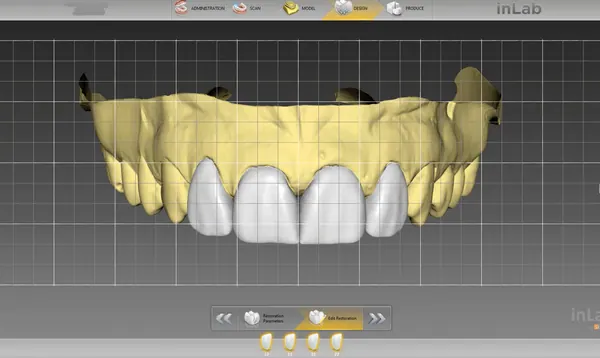
Since it generally draws on a library built into the software, it isn't made with the person's face shape, lip shape, or dental arch in mind.
Most of the time, the veneers end up being made in a similar shape.
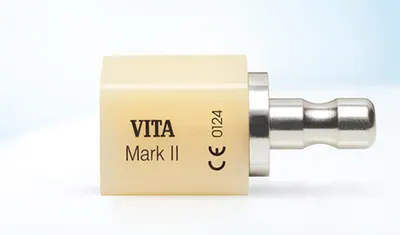
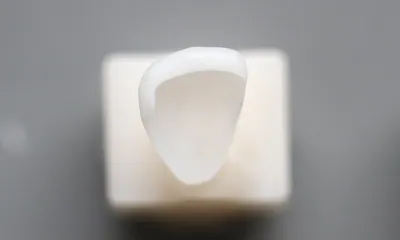
When a ceramic block about the size of a thumb is put into the milling machine like this, the machine cuts it out according to the design. Milling one piece takes around 15 minutes, so making 6 or 8 veneers in a single day is no problem at all.
But the problem is that most of these use a single-colored, opaque ceramic block. As a result, the outcome often looks quite unnatural.
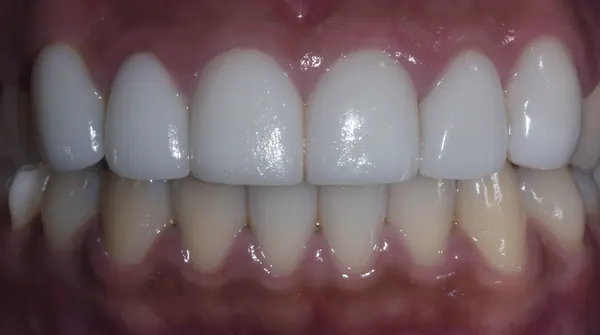
Like this... When I see teeth like that, I always say it looks like a stick of xylitol gum stretched flat across them... and seeing it in person, it looks even more unnatural.
Of course, this is a matter of taste. There are certainly people who prefer this artificially white, obvious look.
I strongly dislike shaping teeth into a form that departs too far from natural teeth, so it's hard for me to call this result beautiful.
2. Handmade
The method I use is the handmade method. Since it's inevitably work done by human hands, years of experience and know-how matter a great deal. Let's take a look at one case.
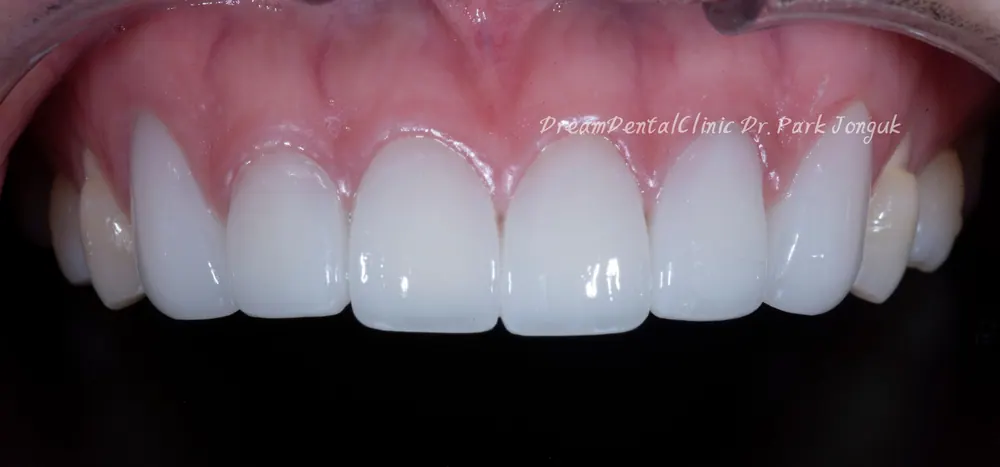
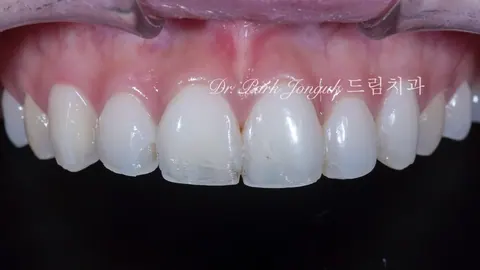
The teeth were white, flat, and unnatural-looking. A redo was done for a more natural shape, color, and translucency.
A good diagnostic process is absolutely essential at this stage. Please refer to an earlier post for this part.
Please refer to a previous post for the process of removing the ceramic. Removing the ceramic is a very important part.
After removing it like this, we move on to the veneer fabrication process.
With the same-day method, you just put it in the machine and it makes itself, but with the handmade method, a great deal of care goes into each and every step.
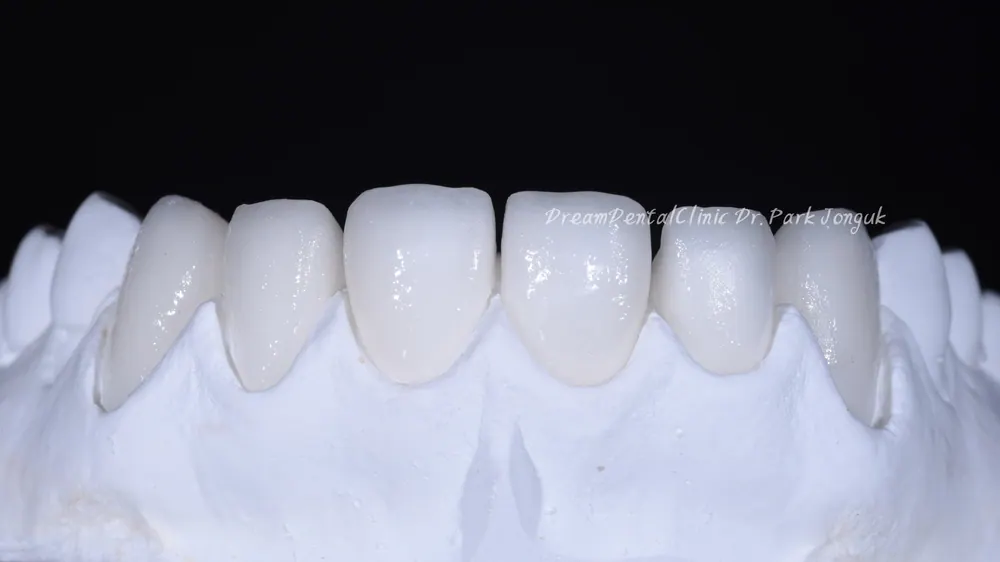
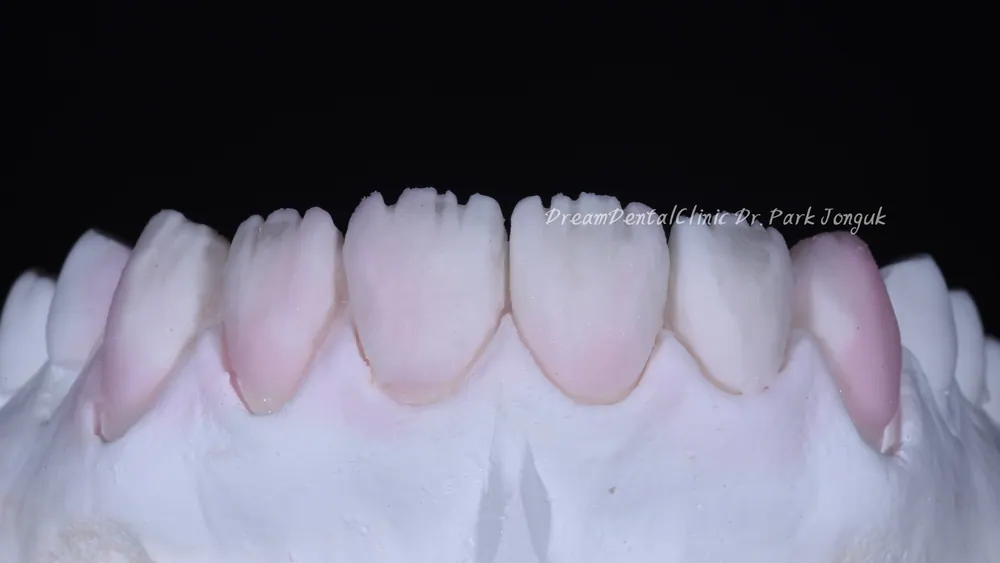
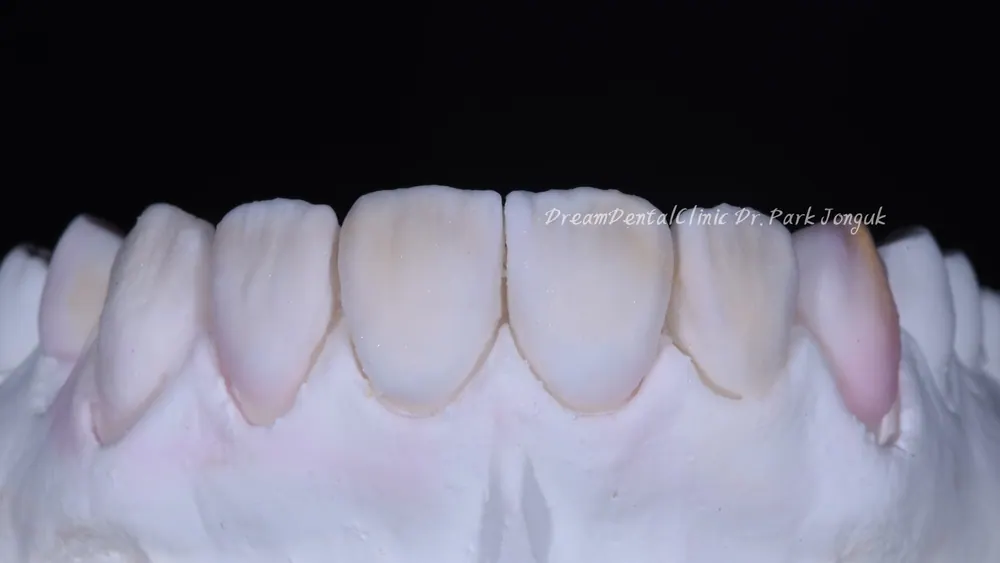
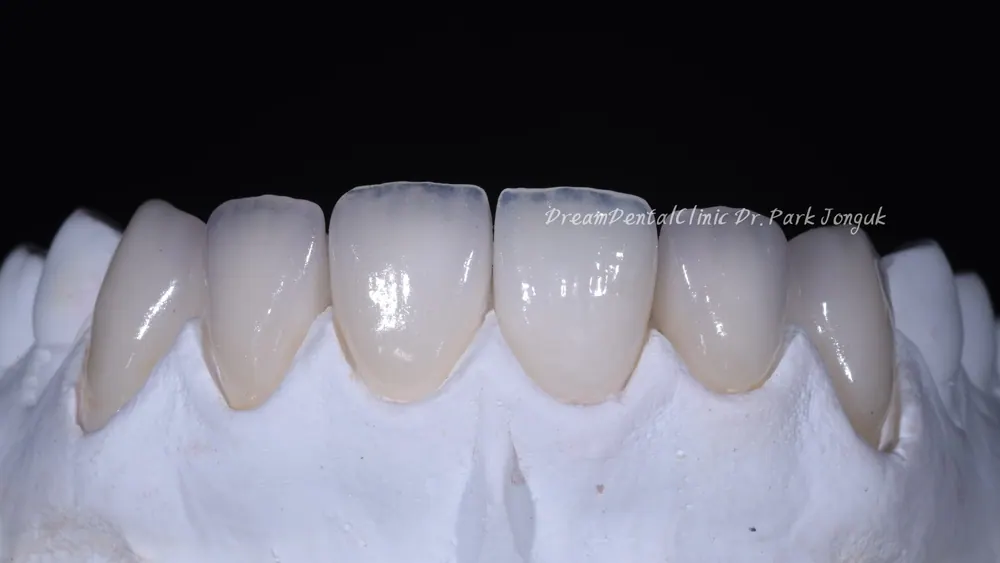
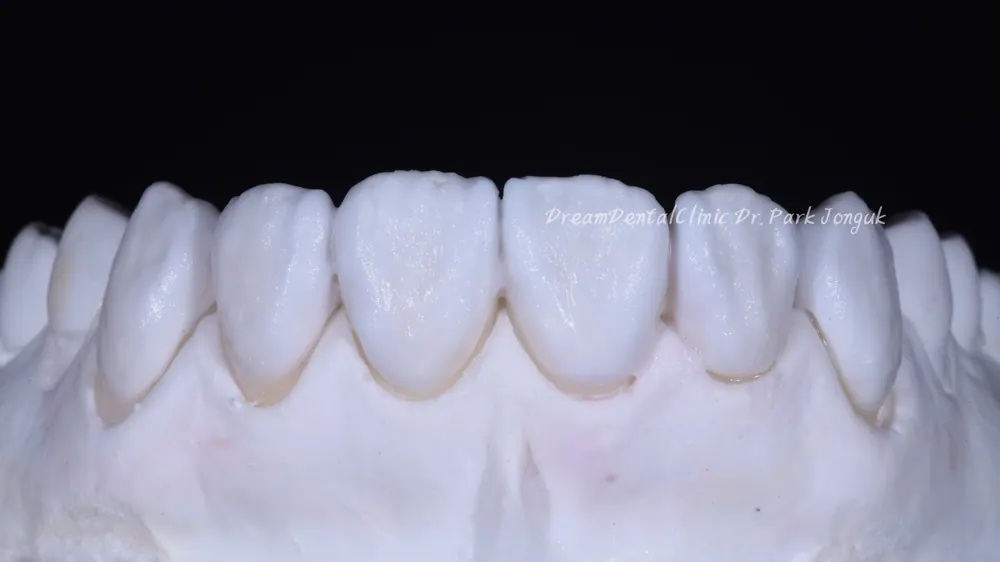
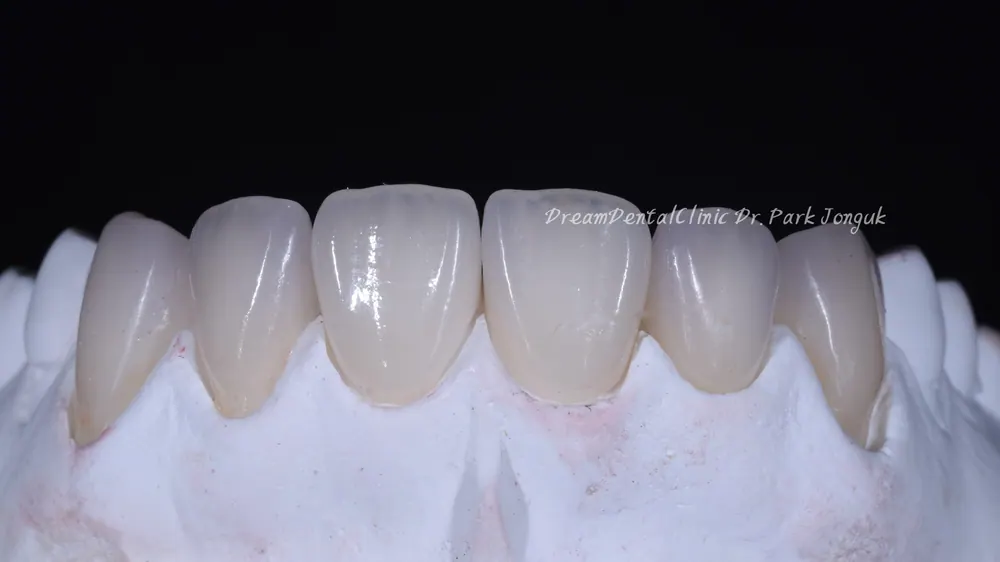
Every time a layer of ceramic is added, it's fired, just like firing pottery.
The ceramic is built up as if actually recreating a natural tooth.
While faithfully recreating the shape of a natural tooth, the translucency and color are crafted to be as beautiful as possible.
It's on a completely different level from something made out of a single-colored ceramic block.
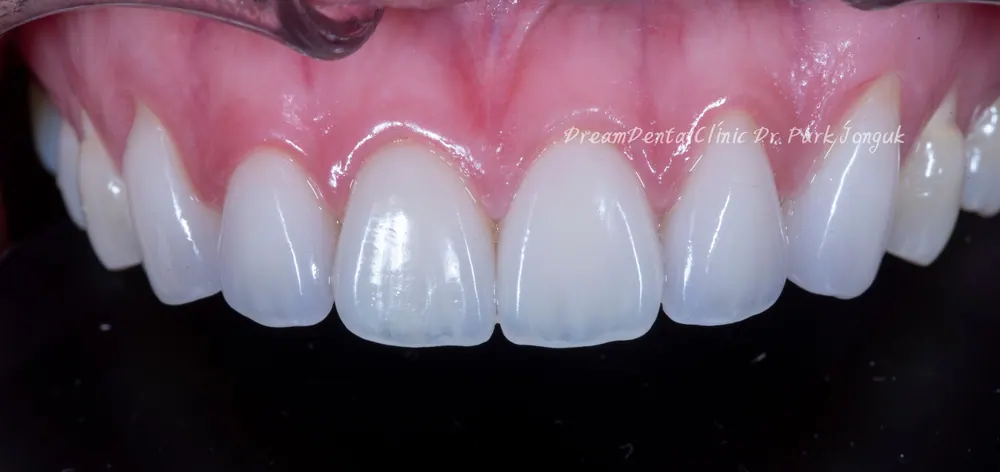
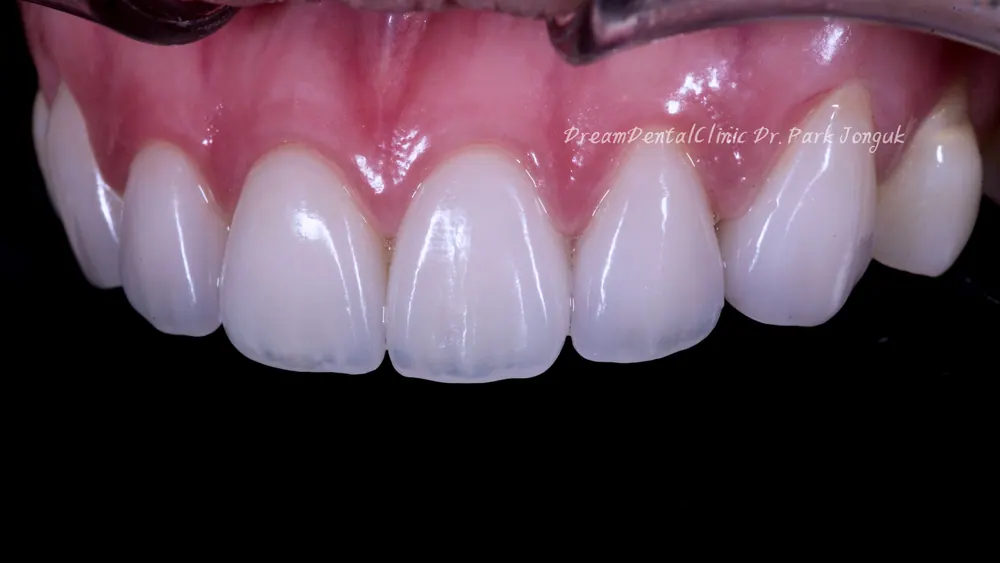
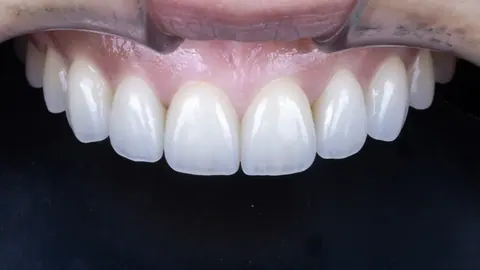
It was finished this beautifully.
From the natural translucency at the tooth's edge to the tooth's contours and line angles, right down to the texture of the surface — it's crafted beautifully while still recreating the look of a natural tooth.
There's one more important characteristic of the handmade method in the veneer fabrication process — thickness.
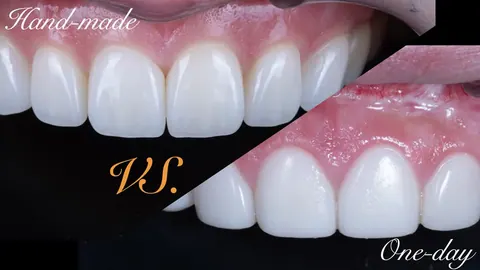
To fabricate veneers with the same-day method, as I mentioned earlier, you need equipment called "CEREC." Due to current technical limitations, this equipment still can't mill ceramic extremely thin. For example, no-prep veneers require a ceramic thickness of around 0.1-0.3mm, but CEREC still can't process the ceramic commonly used for veneers down to that thickness.
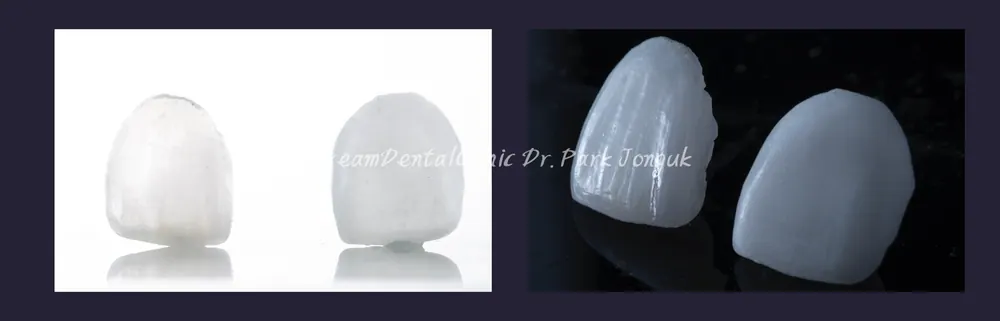
Since we also have a CEREC unit, we tried making the same veneer both by hand and with CEREC milling, using the equipment. The difference in thickness is still considerable. In the photo above, the left is handmade and the right is CEREC. The handmade method can be made significantly thinner, and this connects directly to how much tooth needs to be reduced. Only when the ceramic can be made thin can the amount of tooth reduction be kept low.
This article is a clinical note written by Dr. Park Jonguk of Dream Dental Clinic, Gangnam; the original was published on his blog. The photographs shown are real cases he treated. Results vary with each patient’s condition, and every procedure carries the possibility of individual variation and side effects.
Quick Consult
Request a Callback
Leave your number and we will call you back during clinic hours.
Request Received
We will contact you during clinic hours. For urgent matters, please call +82-2-3448-0028.