
Natural Veneers: Confidence Regained Through the Handmade Method After a Same-Day Failure
Veneer treatment can be divided into the fast, simple same-day method and the precisely crafted handmade method.
Recently, a patient came to my clinic wanting a redo after fracturing (chipping) and cracking developed, even though it had only been a short time since her same-day veneer treatment.
This is a problem that can often occur when the ceramic's thickness or strength wasn't adequately controlled during fabrication.
Today, through this case, I'd like to introduce a real example of the limitations of same-day veneers and the advantages of a handmade redo.
Veneer treatment is one of the most commonly chosen methods for cosmetic treatment of the front teeth.
But even under the same name, "veneer," the result can vary greatly depending on the fabrication method.
Recently, the same-day veneer method, which emphasizes convenience, has become widely known,
but if precision suffers during this quick fabrication-and-bonding process, problems like fracture, cracking, or uneven shading can occur.
The patient who came in this time had also had same-day veneer treatment at another clinic just a few months earlier.
At first glance, things looked fine, but after a little time passed, small cracks (fine cracks) appeared in the teeth,
and some of the veneers developed fractures, causing both aesthetic discomfort and functional problems.
The patient was very worried, asking, "It's barely been any time since treatment — why is it chipping and cracking so easily?"
Analyzing it from a dental standpoint, this appeared to stem not simply from the patient's usage habits, but from the limitations of the fabrication process.
The same-day method has speed and convenience as advantages, but its ceramic combinations and layering methods are limited,
and it's difficult to adequately reflect the differing anatomical characteristics of each tooth.
In particular, balancing strength and translucency requires handmade fabrication that blends several kinds of ceramic while accounting for how light passes through and reflects,
and the same-day method often struggles to capture that level of precision.
In this case, the existing veneers were safely removed using laser equipment,
and it was decided to fabricate new veneers after a thorough wax-up precision diagnosis.
Rather than simply "reattaching" something, we accurately analyzed the cause of the fracturing and cracking,
and chose the optimal method, taking into account the patient's tooth condition and aesthetic requirements as well.
As a result, the patient regained natural, healthy front teeth once again.
Through this case, I'd like to once again emphasize the importance of the fabrication process in veneer treatment, the need for a precise diagnosis, and the advantages of the handmade method.
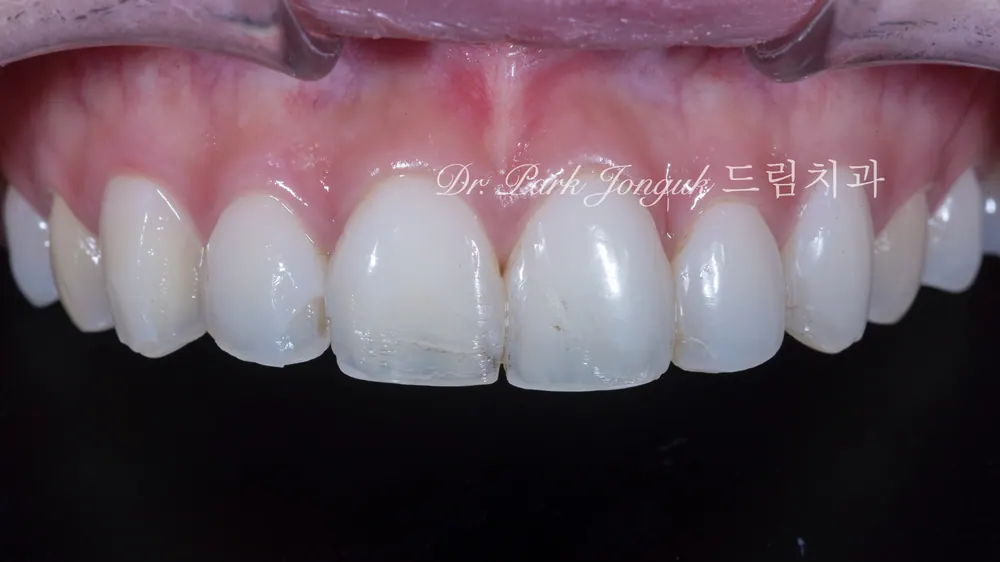
Even though it hadn't been long since her same-day veneer treatment, fractures and cracks were found in multiple areas.
This suggests both a strength issue with the restoration and a strong likelihood of an error during fabrication.
It looked thin and sturdy on the outside, but this case shows just how much the fabrication process matters.
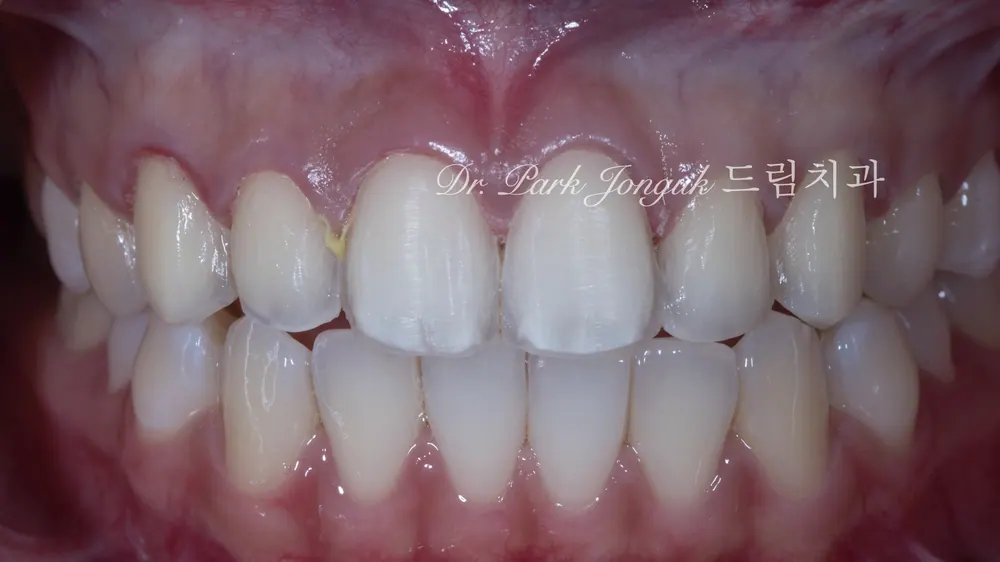
When removing a fractured veneer, careful attention is needed to minimize damage to the tooth.
In this case, laser equipment was used to safely remove the veneers.
Using a laser reduces unnecessary tooth reduction and can minimize the patient's pain and discomfort.
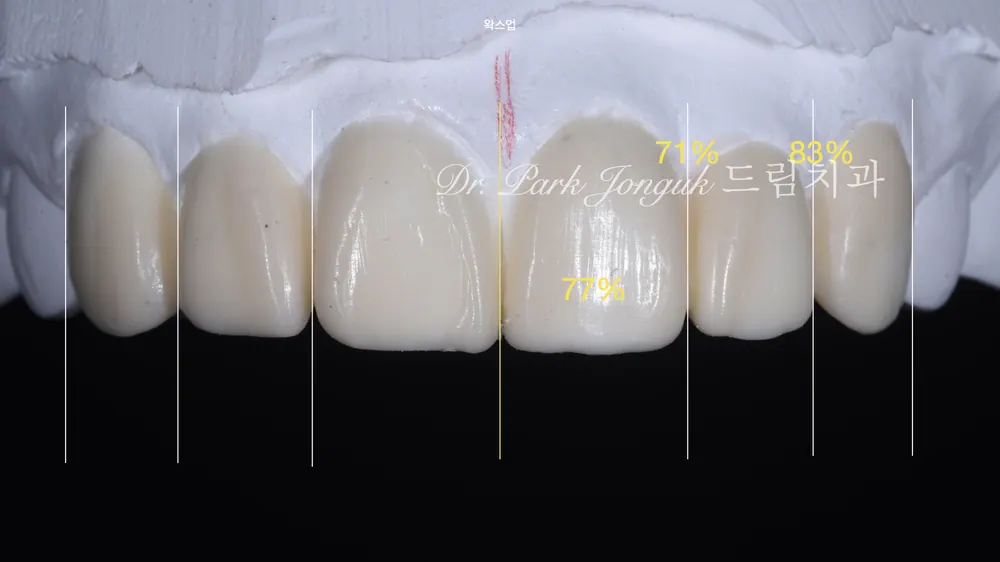
The most important thing in the redo process is an accurate diagnosis.
It isn't simply a matter of replacing the broken veneer — the arrangement, shape, and occlusal condition of the patient's teeth all need to be taken into account.
For this, a wax-up precision diagnosis was carried out, and at this stage, the final shape, shade, and thickness of the teeth can be planned in advance.
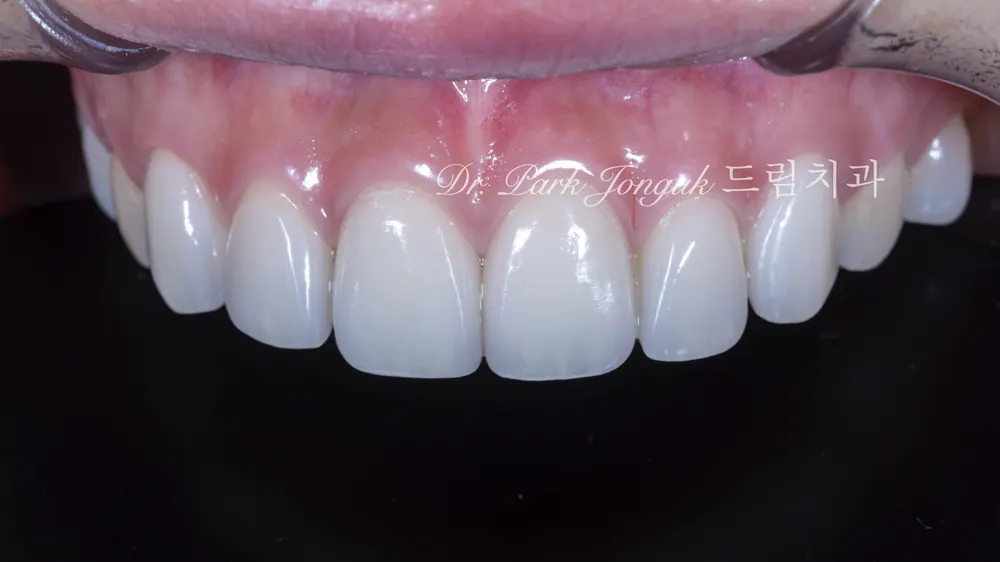
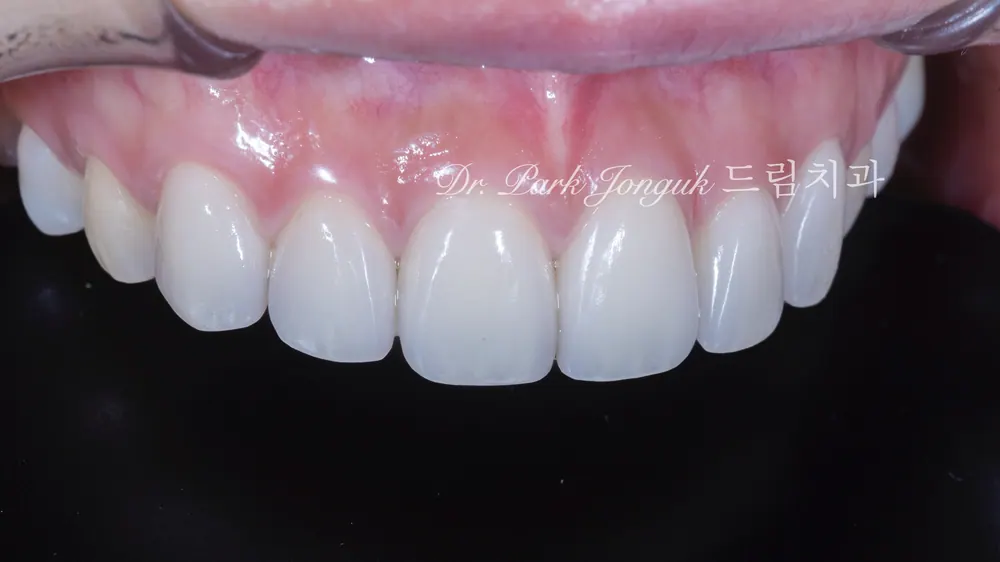
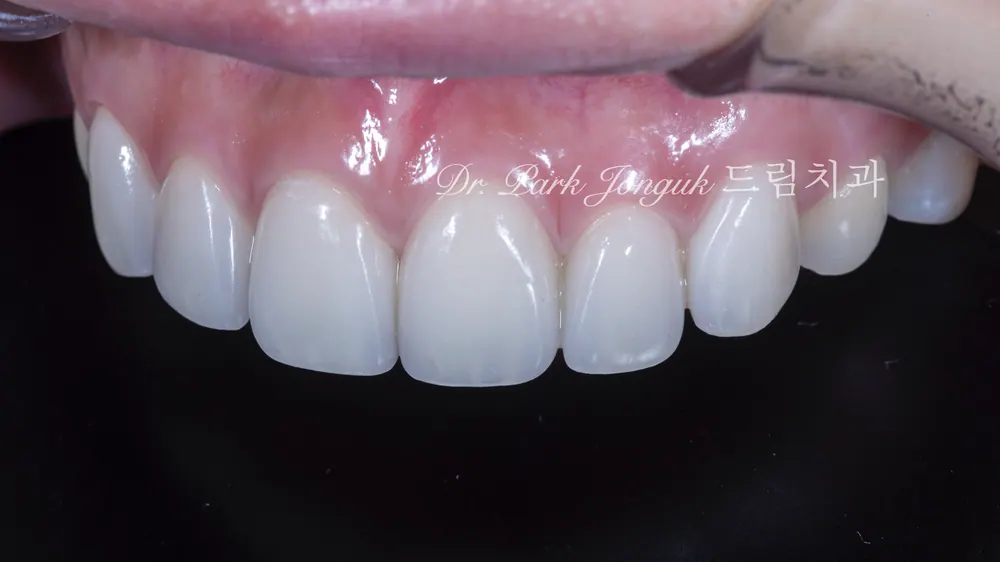
In the end, veneers made by blending several kinds of ceramic with the handmade method were bonded in place.
Because this process accounted for light transmission, reflectance, and the differing shades of each tooth,
the end result was a very natural, aesthetically pleasing outcome.
The patient expressed her satisfaction, saying, "This time it really looks natural."
Veneer treatment isn't simply about "bonding something on" — it's a precision treatment where the fabrication process and the diagnostic process determine the final result.
The same-day method has the advantages of speed and convenience,
but in that process, strength and aesthetics can suffer, potentially leading to side effects like fracture or cracking.
For patients who, like in this case, have experienced the limitations of same-day veneers,
a redo through handmade fabrication and a thorough diagnostic process can lead to a satisfying result.
If you're considering veneer treatment, be sure to check the fabrication process and method as well.
This is because the essence of the treatment lies in the quality of the finished result, not the speed.
📌 Q&A
Q. Do all same-day veneers have problems?
A. Not necessarily. But since precision can suffer during fabrication, whether it's suitable needs to be carefully weighed against the individual's own tooth condition.
Q. Does a fractured veneer always need to be removed?
A. If the fractured area is large or the crack is progressing, a redo is needed. Even a small problem can lead to tooth damage over the long term.
Q. Why do handmade veneers look more natural?
A. Because it layers several kinds of ceramic to control how light passes through and reflects, it can achieve a texture that most closely resembles a real tooth.
This article is a clinical note written by Dr. Park Jonguk of Dream Dental Clinic, Gangnam; the original was published on his blog. The photographs shown are real cases he treated. Results vary with each patient’s condition, and every procedure carries the possibility of individual variation and side effects.
Quick Consult
Request a Callback
Leave your number and we will call you back during clinic hours.
Request Received
We will contact you during clinic hours. For urgent matters, please call +82-2-3448-0028.