
Ceramic Block vs. Handmade Build-Up: What Really Decides Your Veneer's Fate
Hello, I'm Dr. Park Jonguk, director of Dream Dental Clinic in Apgujeong.
Today I'll clearly show you the difference that veneer fabrication method makes in the final result.
It's the difference between veneers milled from a single ceramic block and the build-up method we use.
One Photo Says It All
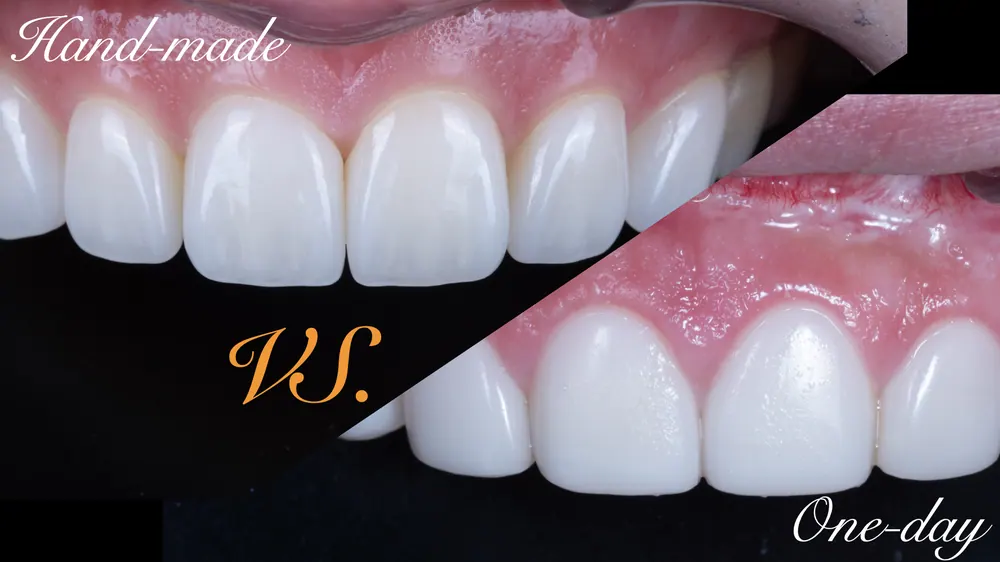
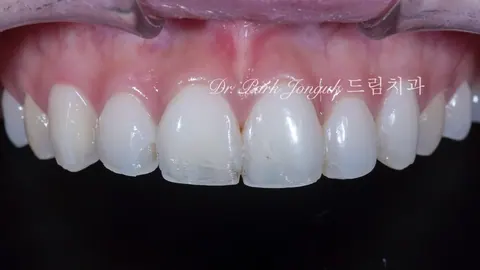
Everything becomes clear once you look at Photo 1.
In a single photo, we placed the results of handmade and same-day veneers side by side.
Left: Handmade Build-Up
Natural and beautiful.
The translucency is alive.
The color is soft and harmonious.
It looks like a real tooth.
Right: Same-Day Ceramic Block
White only, unnatural and opaque, like a piece of xylitol gum.
There's no translucency at all.
The color is flat and dull.
It's obviously fake-looking.
Why Does This Difference Happen?
This difference comes down to the fabrication process.
They share the same name, "veneer," but the way they're made is completely different.
The results are completely different too.
My previous post covered this difference in fabrication process in detail.
The Fundamental Limitation of the Ceramic Block Method
A veneer made from a single ceramic block has a structural limitation.
It Uses Only One Material
A milling machine carves the veneer out of a single ceramic block.
One ceramic, one color, one level of translucency.
The entire tooth is a single, uniform material.
Natural Teeth Are Not Like This
A natural tooth varies from area to area.
Near the root, it's an opaque, warm dentin color.
In the middle, it's a translucent, bright enamel color.
At the tip, it's translucent.
A Single Material Can't Reproduce This
One type of ceramic can't create all of these transitions.
Make it opaque, and the translucency at the tip disappears.
Make it translucent, and the root shows through too much.
Find a compromise, and every part ends up somewhere in between.
The result ends up white and opaque, and nothing more.
The Superiority of Handmade Build-Up
The build-up method we use is completely different.
It Uses Several Types of Ceramic
We use a different ceramic for each area of the tooth.
Root: opaque dentin ceramic
Middle: translucent enamel ceramic
Tip: transparent ceramic
Surface: ceramic that expresses surface characteristics
We Build It Up Layer by Layer
We carefully stack multiple layers of ceramic.
Each layer is fired separately.
This faithfully reproduces the multilayer structure of a natural tooth.
The Result Looks Natural
The warm color at the root
The natural brightness in the middle
The beautiful translucency at the tip
All of it is reproduced perfectly.
You Can See It in the Finished Veneer
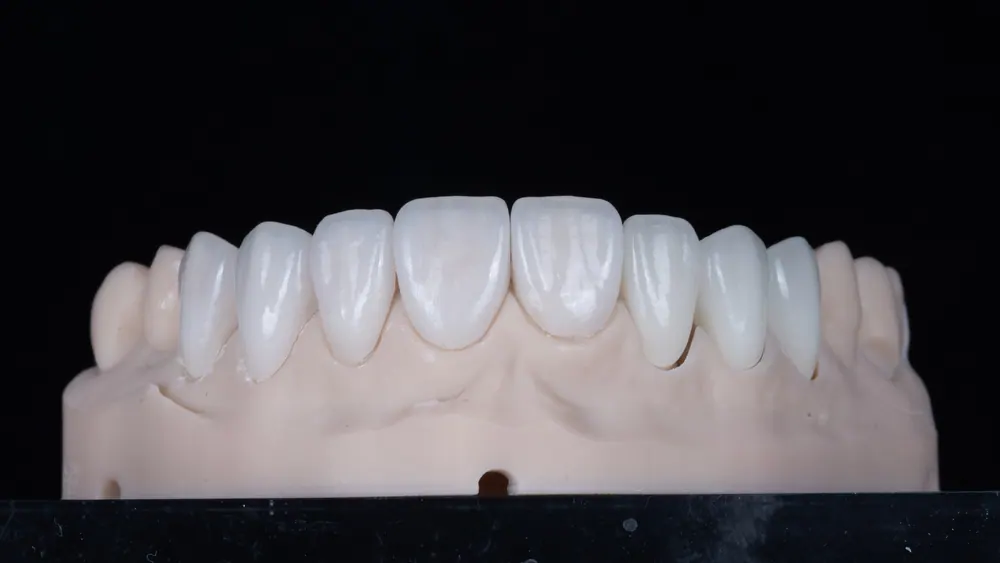
Photo 2 shows the finished veneers placed on a 3D-printed tooth model.
They're truly beautiful.
Each Tooth Feels Alive
You can see a natural shape.
Each tooth has its own unique character.
Nothing looks uniform—each one has its own individuality.
The Color Is Rich
It's never flat.
There's a subtle color variation from area to area.
It feels warm and full of life.
You Can Feel the Translucency
The translucency at the tip of the tooth in particular is beautiful.
You can see light passing through.
It's a hallmark of young, healthy teeth.
Thin, Yet Rich in Expression
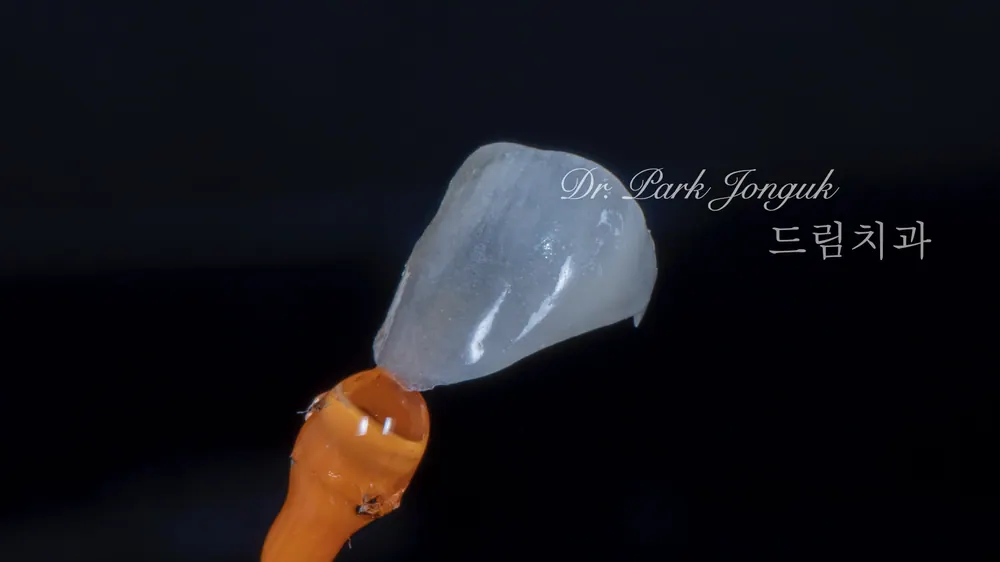
Photo 3 is a close-up of a single veneer—thin, yet full of varied expression.
You'll see something remarkable.
It's Genuinely Thin
It's an ultra-thin 0.3mm or so.
Nearly the thickness of a contact lens.
Yet the Expression Is Rich
Even at this thinness, every nuance is still alive.
You can see color variation.
You can feel translucency.
The surface texture is delicate.
This Is the Power of Build-Up
It's because multiple layers of ceramic were stacked.
Each layer plays a different role.
Even thin, it's rich in expression.
Translucency Is the Lifeblood of a Veneer
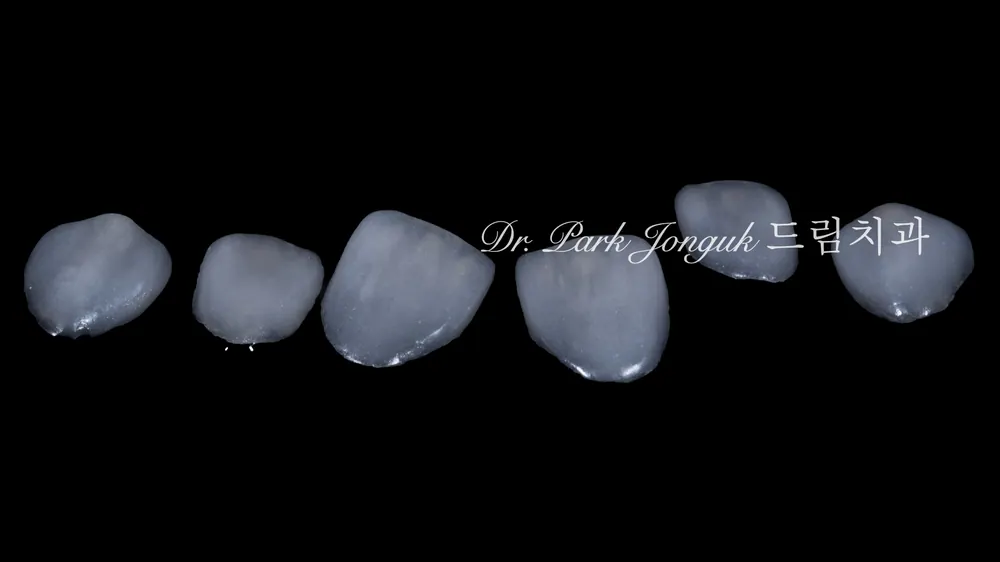
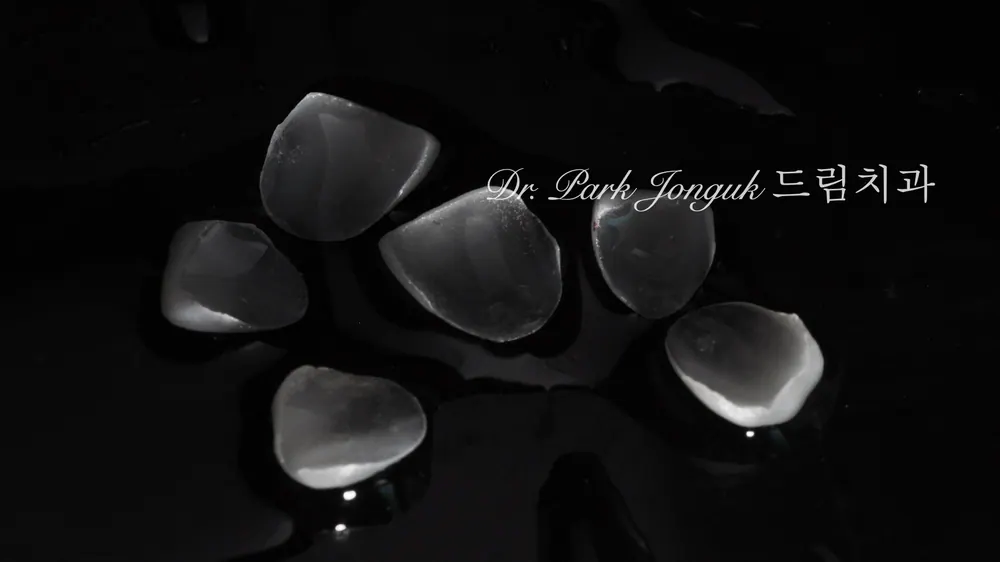
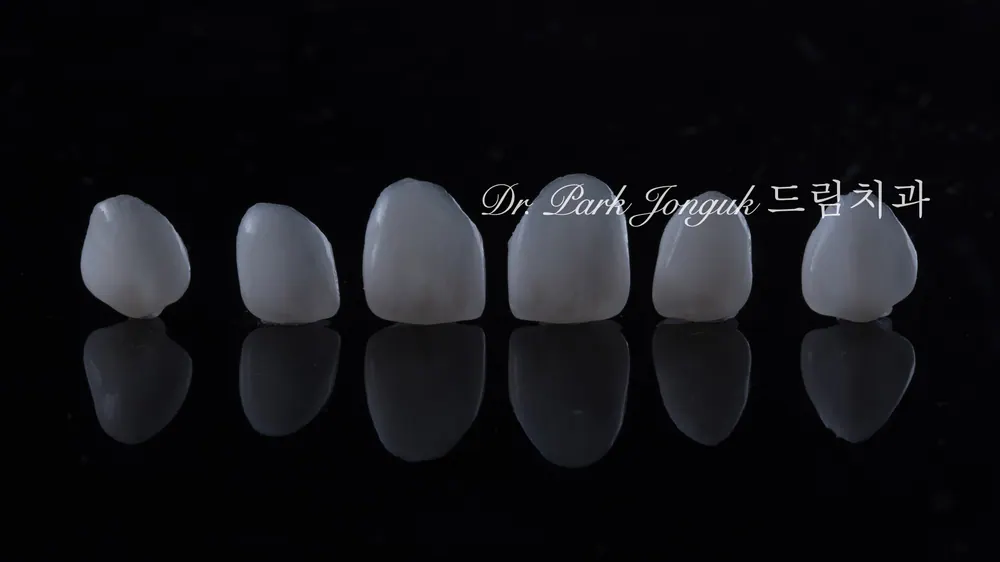
Photos 4, 5, and 6 show the translucency of six veneers.
This is the key point.
Light Passes Through
Light passes through the veneer.
It's especially clear at the tip of the tooth.
It diffuses softly.
It Looks Like a Natural Tooth
Natural teeth have this same translucency.
The younger and healthier the tooth, the more translucent it is.
This is the source of that lifelike quality.
A Ceramic Block Can't Achieve This
A single block is opaque.
Light doesn't pass through it.
It looks dull and heavy.
The Veneer Our Clinic Aims For
The veneer our clinic aims for is exactly this—thin and natural.
It's Thin
It preserves as much of the tooth as possible.
Made at an ultra-thin 0.3mm.
Tooth reduction is minimized.
It's Natural
It looks like a real tooth.
No one can tell you've had veneers done.
The translucency and color variation are flawless.
It's Made with Care
It's not a fast, same-day process.
It's made carefully over several days.
Several types of ceramic are used.
It's built up layer by layer.
It Delivers a Lifetime of Satisfaction
It takes more time and costs more up front.
But you can smile with confidence for the rest of your life.
No one will ever know you have veneers.
The Choice Is Yours
The ceramic block method and the handmade build-up method.
Both go by the name "veneer."
But the results are completely different.
If You Choose Ceramic Block
It's fast. It's cheap.
But it's white and opaque, nothing more.
It looks as unnatural as a piece of xylitol gum.
Anyone can tell it's a fake tooth.
If You Choose Handmade Build-Up
It takes time. It costs more.
But it looks as natural as a real tooth.
The translucency and color are beautiful.
No one will ever know you have veneers.
What Will You Choose?
These are front teeth you'll use for the rest of your life.
This is the smile you see every time you look in the mirror.
This is the first impression people see every time you meet them.
Investing a little more for a lifetime of confidence—
that's the wise choice.
Frequently Asked Questions (Q&A)
Q1. Why doesn't the ceramic block method have translucency?
A. Because it's made from a single ceramic block alone. A natural tooth has varying translucency by area, and one material can't reproduce that. Make it translucent, and the whole thing becomes translucent; make it opaque, and the whole thing becomes opaque. Find a compromise, and the whole thing ends up dull and in between.
Q2. How long does handmade build-up take?
A. It usually takes about 7 to 10 days. This is because multiple layers of ceramic have to be stacked, with each layer fired separately. It takes time, but the result is completely different. Investing a week into teeth you'll use for a lifetime is well worth it.
Q3. Is there a big cost difference?
A. Handmade build-up is more expensive. It requires several days of work by a skilled dental technician, several types of premium ceramic material, and multiple firing steps. But these are front teeth you'll use for the rest of your life, and considering how much a confident smile affects your quality of life, it's an investment well worth making.
This article is based on the real clinical experience of Dr. Park Jonguk, director of Dream Dental Clinic in Apgujeong. He has practiced cosmetic dentistry for 20 years and teaches dentists the handmade veneer fabrication technique every month at Lamista Academy. He authored Korea's first veneer textbook.
This article is a clinical note written by Dr. Park Jonguk of Dream Dental Clinic, Gangnam; the original was published on his blog. The photographs shown are real cases he treated. Results vary with each patient’s condition, and every procedure carries the possibility of individual variation and side effects.
Quick Consult
Request a Callback
Leave your number and we will call you back during clinic hours.
Request Received
We will contact you during clinic hours. For urgent matters, please call +82-2-3448-0028.