
Minimal-Reduction Veneers: The Minimum Amount of Reduction for the Most Beautiful Teeth
Veneer treatment is a process that goes beyond medical treatment to pursue aesthetic beauty.
General cosmetic procedures, like eye or nose contouring, share the same goal of pursuing beauty,
but veneers are different in that a work of ceramic art has to be added on top of that.
The process of dental cosmetic reshaping uses veneers, a work of ceramic art placed over the teeth,
to further bring out the beauty of the teeth,
so it's a fairly complex and delicate process.
Another important factor in this process is the health of the tooth.
Tooth health ultimately depends heavily on the amount of tooth reduction, meaning how much of the tooth is shaved down.
From this perspective, what a dentist needs to do is
find "the minimum amount of reduction at which the tooth can look its most beautiful."
The less reduction there is, the markedly fewer side effects can occur after veneer treatment,
so a dentist's effort to keep reduction to a minimum is very important.
This is why a fairly long and complex diagnostic process is required.
For over 16 years, while performing minimal-reduction veneer treatment in Apgujeong,
I've continued to research and refine this process myself,
and I regularly teach other dentists about this diagnostic and treatment process.
Another difference between veneers and other cosmetic procedures is
durability.
Of course, double-eyelid surgery can loosen over time, and nose surgery can also later develop issues like inflammation.
With veneers, what can happen over a long period of time is the veneer coming off.
Here too, the less reduction there is, the longer the lifespan,
so the single most important factor in veneer treatment is controlling the amount of tooth reduction.
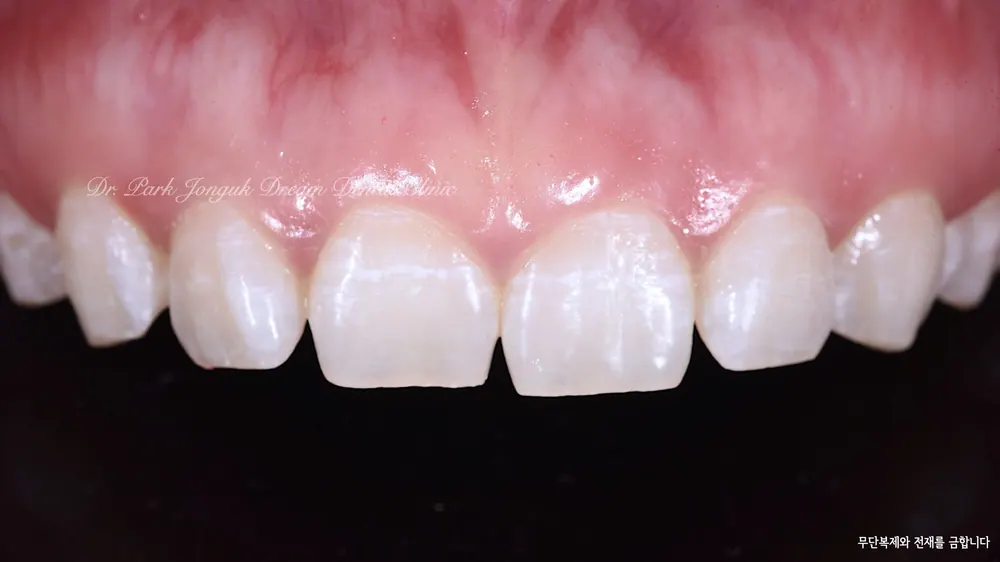
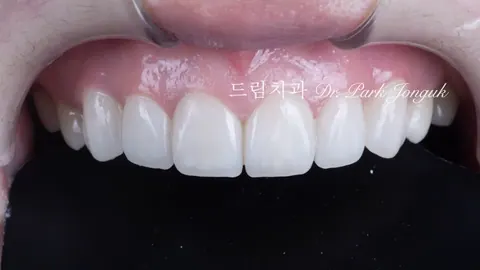
The improvements the patient wanted were:
1) There are stains on the teeth
2) The teeth are yellow
3) There are gaps between the teeth that make them look like a saw blade.
4) The teeth are too short.
This is what the patient told me.
These are issues orthodontics alone couldn't solve, and since the alignment was already fairly good,
we decided to address them with veneers.
Once minimal-reduction veneer treatment is decided on,
we first plan what areas will be improved and how,
what treatment is needed to achieve that,
and how much reduction will be needed in which areas, all in advance.
This process is called the diagnosis stage of dental cosmetic reshaping,
and I've systematized this process through years of experience.
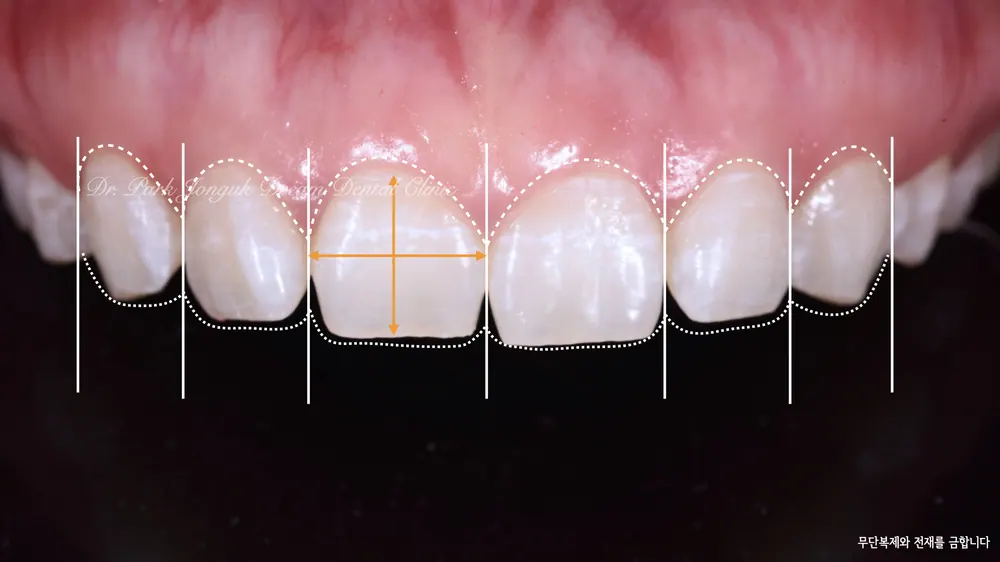
First, we plan how to treat the gums to improve tooth proportion,
and how much longer the teeth should be made.
For this, we simulate how much tooth structure to remove and what shape to create.
This case could have been done without any reduction at all.
But this was a case where the teeth couldn't be allowed to get any bigger than they already were.
Since the patient's face was small while the teeth were already quite large,
making the teeth any bigger would throw off the proportion with the face.
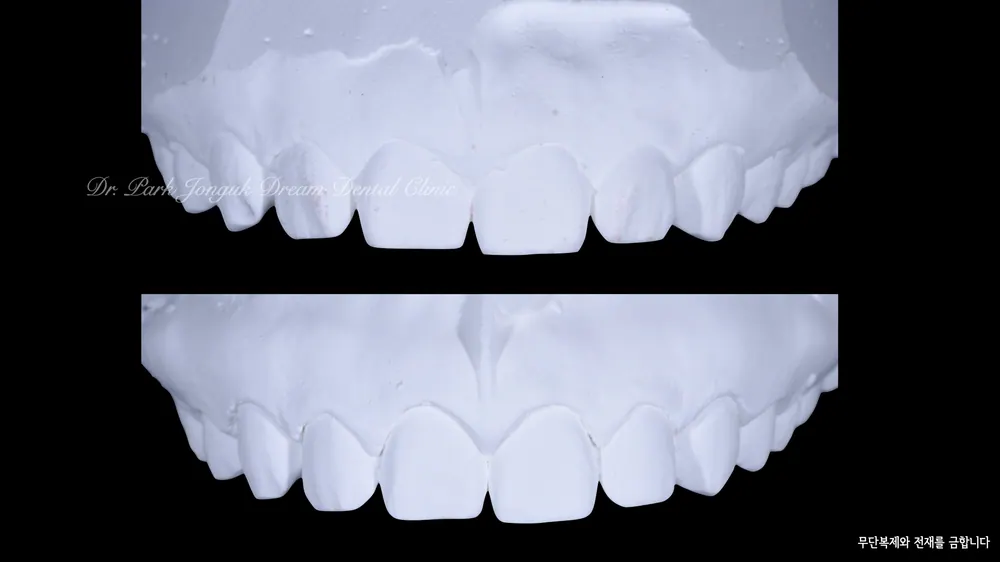
Everything, from gum contouring to minimal tooth reduction, is simulated on a plaster model like this.
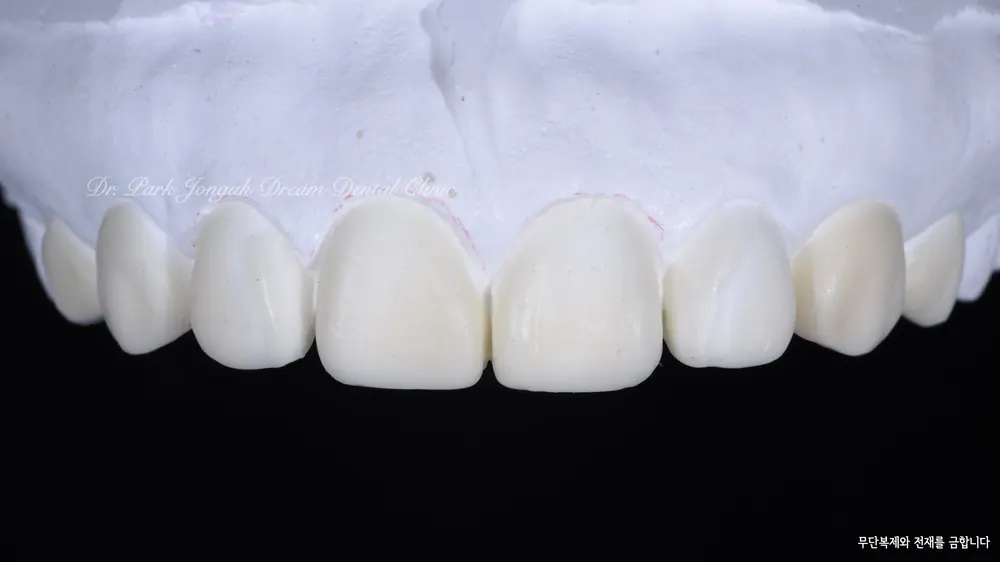
Then the expected veneer shape is built up in wax on top of that.
This process is called a wax-up.
It lets us predict how much of the tooth needs to be reduced and what the outcome will look like.
Since it's a very detailed early stage, it doesn't reproduce color or translucency,
but it lets us first check the overall proportion, volume, and general shape.
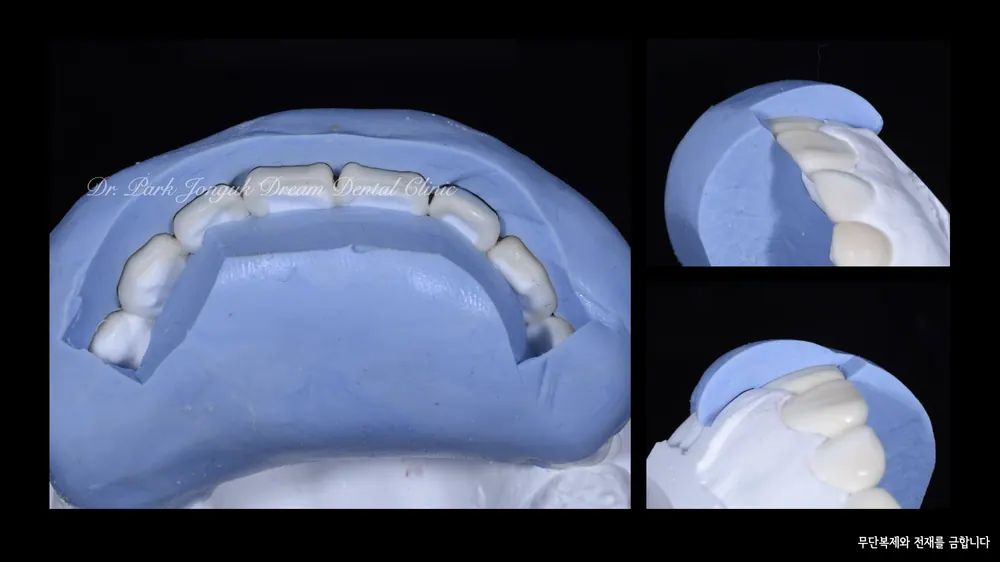
Based on this wax-up, a guide is made for use when reducing the tooth, which controls the amount removed.
The guide is an essential part of the minimal-reduction veneer process.
Precisely controlling the amount of reduction is also very important for reducing later side effects.
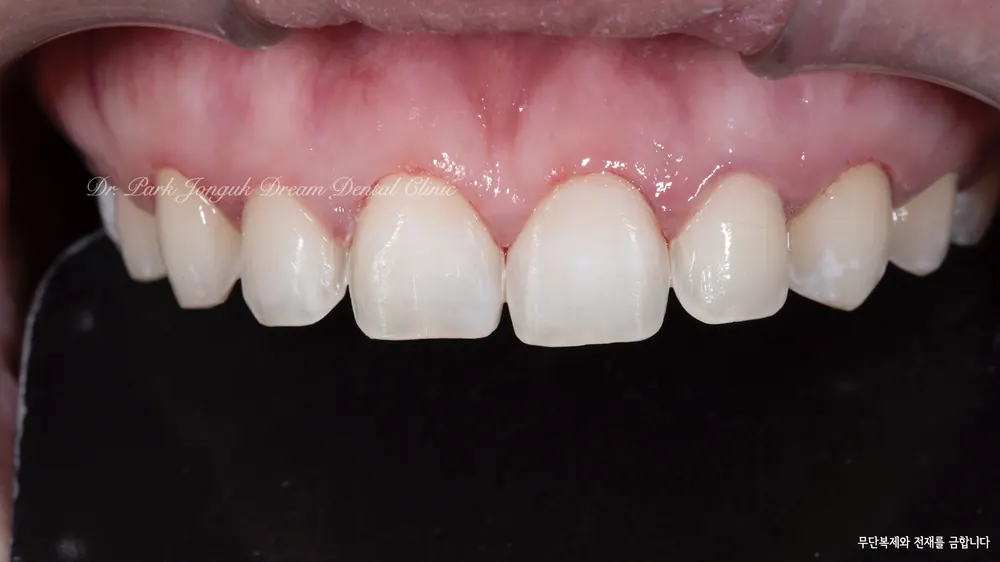
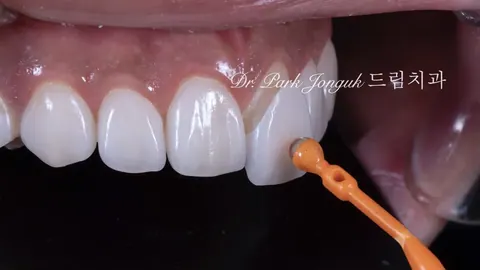
This shows the teeth after reduction.
Only minimal reduction was done, and minimal-reduction veneers were carried out.
Since enamel remains in every area, there's no issue with bonding,
and side effects like tooth sensitivity don't occur.
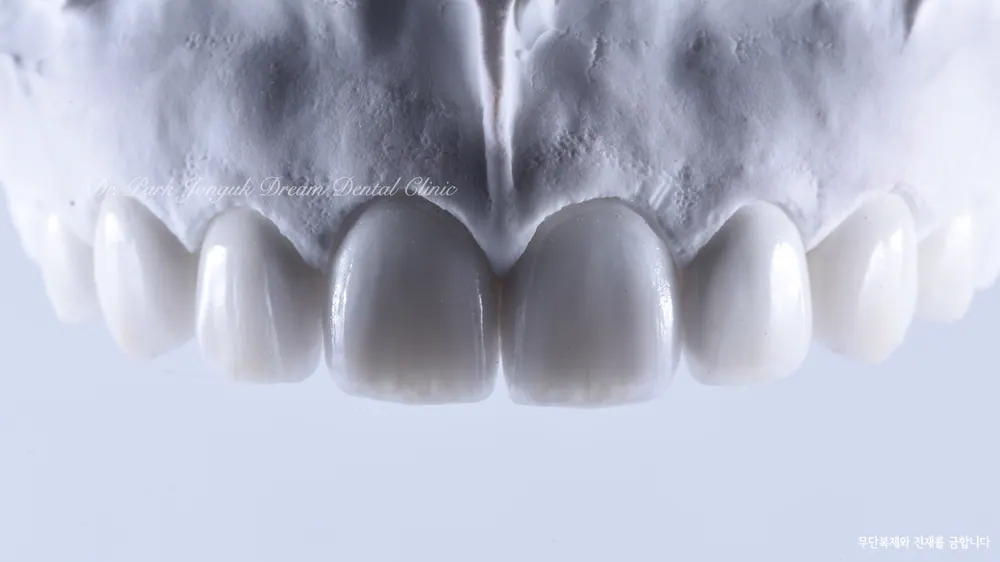
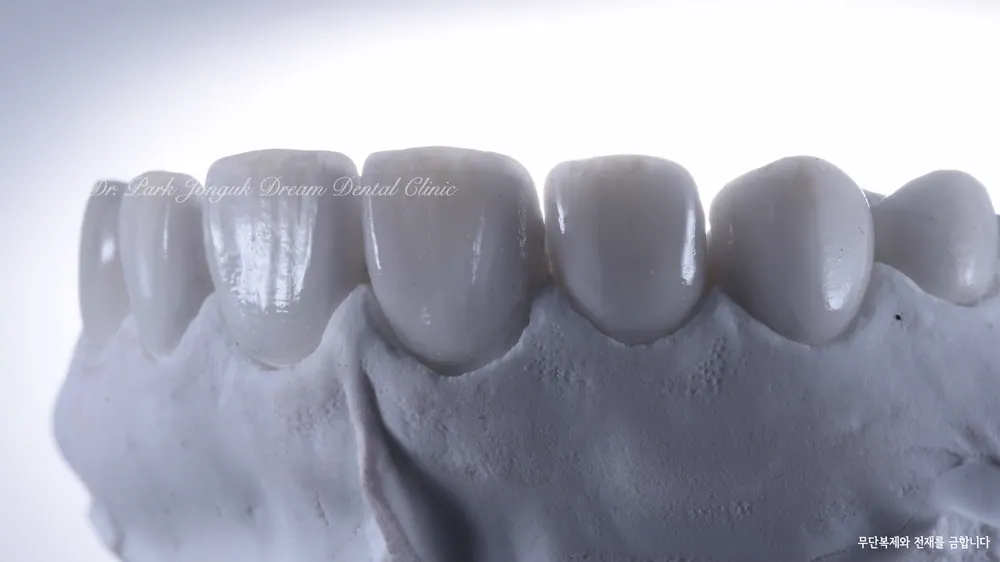
The veneers are fabricated using ceramic.
Because the ceramic is extremely thin, the fabrication process is quite demanding.
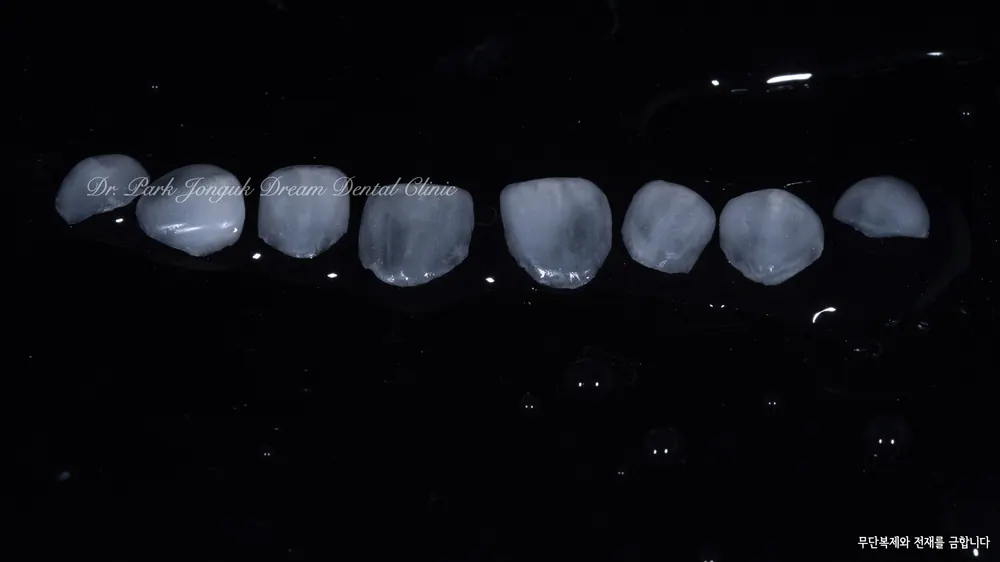
The thickness varies by area, but is roughly 0.1-0.5mm.
Recently, there's also a one-day method that finishes veneers in a single day.
This method uses CAD/CAM to machine-mill the ceramic.
It has the advantage of being fast, but it has a few drawbacks due to the limits of the milling method:
1) It's hard to mill thinly - more tooth reduction is required.
2) A variety of colors can't be produced - the result is usually made too white, giving it an artificial look.
3) The translucency is uniform - since the whole piece is made with the same translucency, it usually ends up mostly opaque.
In the end, the one-day method often requires removing more tooth structure, and the result often turns out unnatural.
The method we use is a handmade approach, where the ceramic is built up in layers rather than milled down.
Because the handmade method allows thickness to be controlled down to 0.1mm,
it's used for no-prep veneers or, as in this case, minimal-reduction veneers.
Not only is it thin, but it's also far more natural, since the color and translucency can be varied area by area,
which makes it possible to achieve a beauty that doesn't look artificial.
Please click the link to see the difference in process.
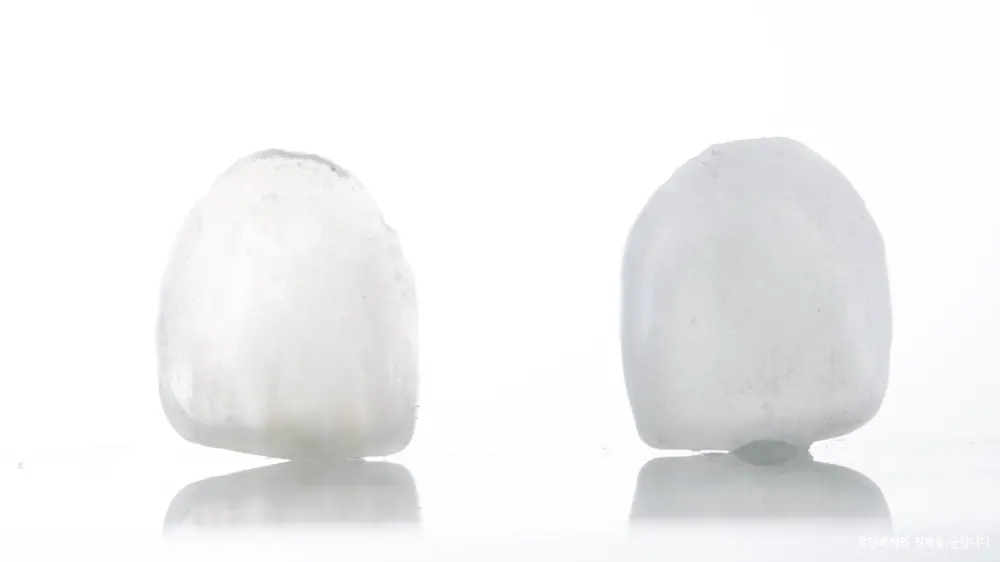
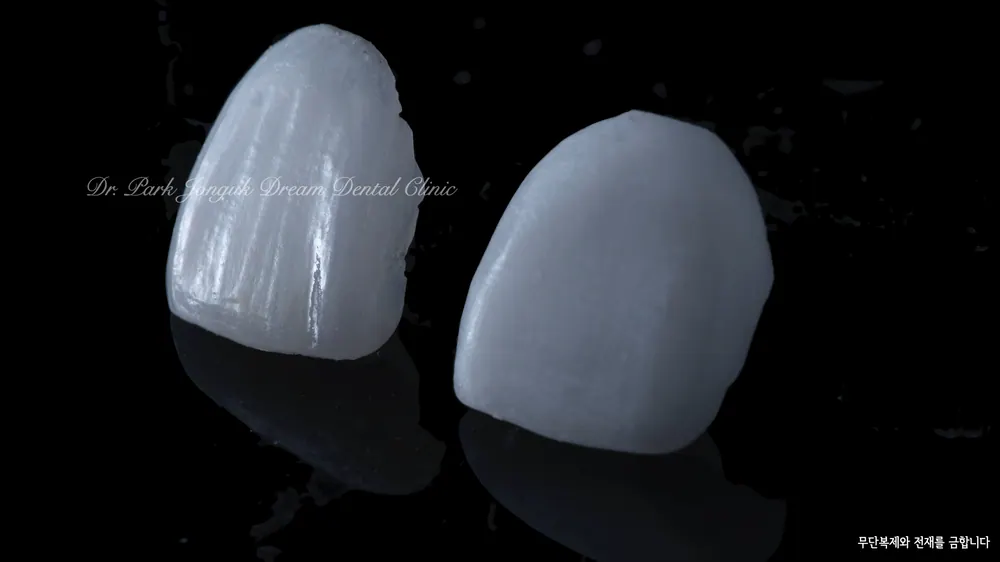
The one on the left was made using the handmade method,
and this shows the difference when the same tooth was made again using the one-day method.
There's a considerable difference, even in thickness and surface texture.
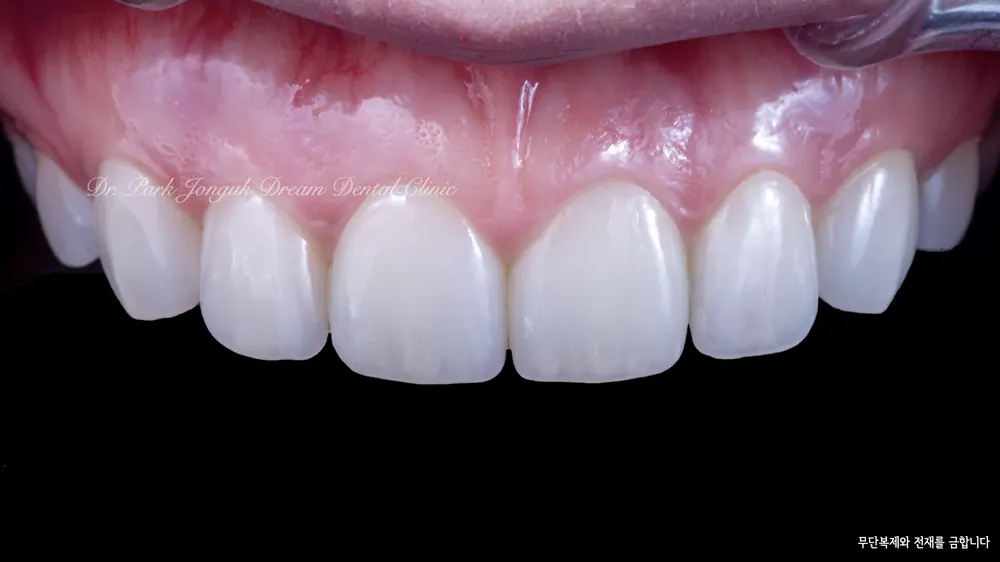
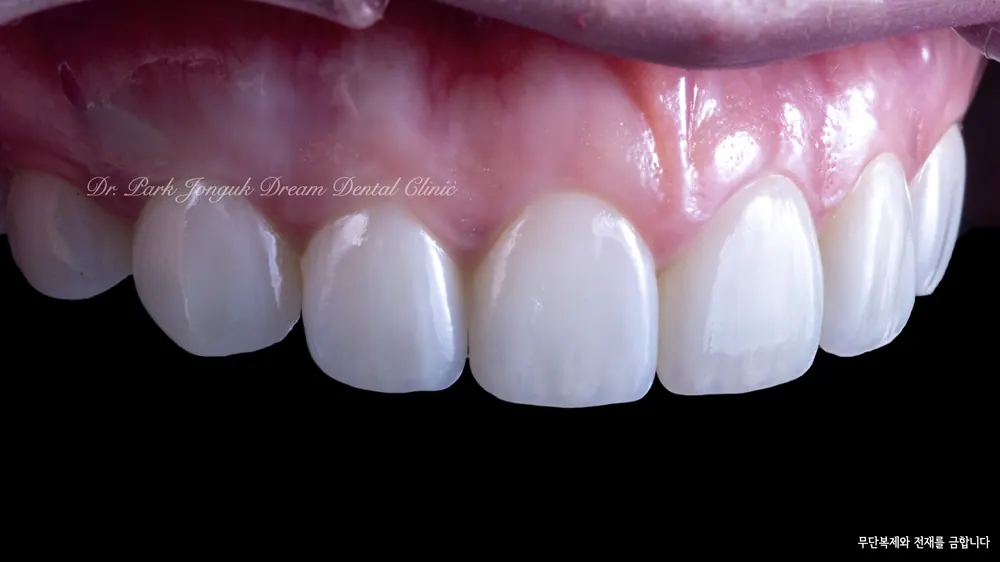
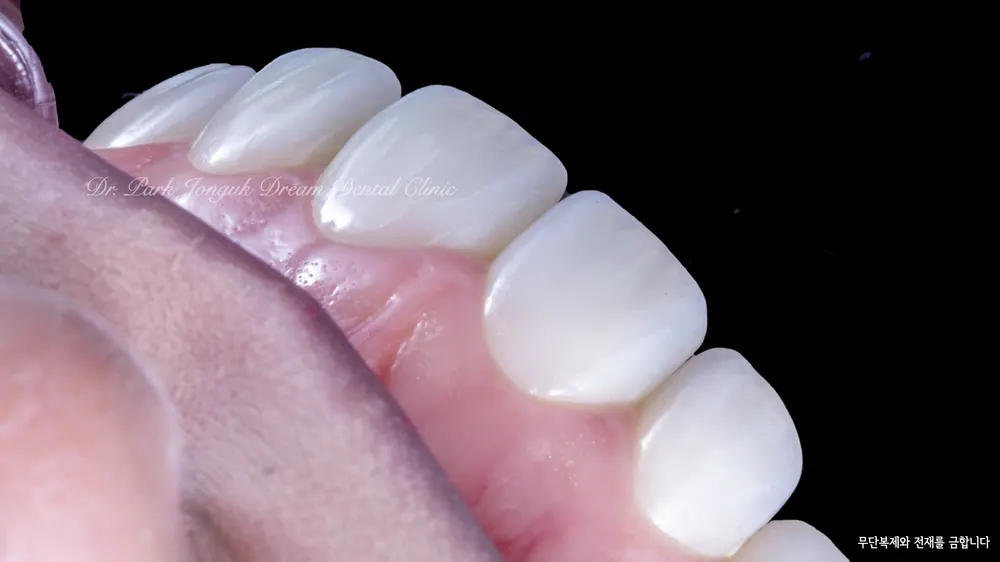
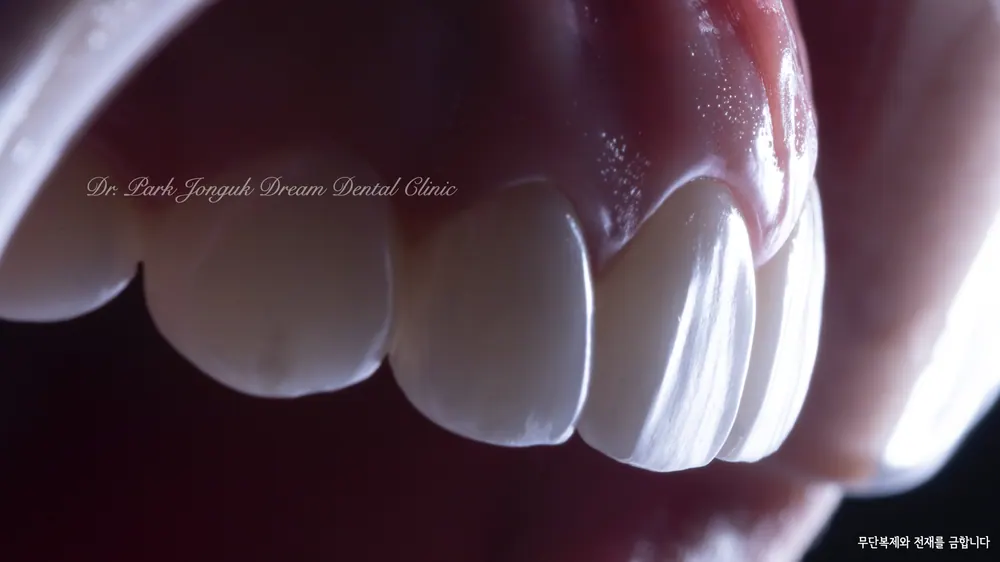
In ceramic this thin, we were able to express all of the natural tooth's varied color, translucency, shape, texture, contours, and surface quality.
This kind of process depends heavily on substantial know-how and years of experience.
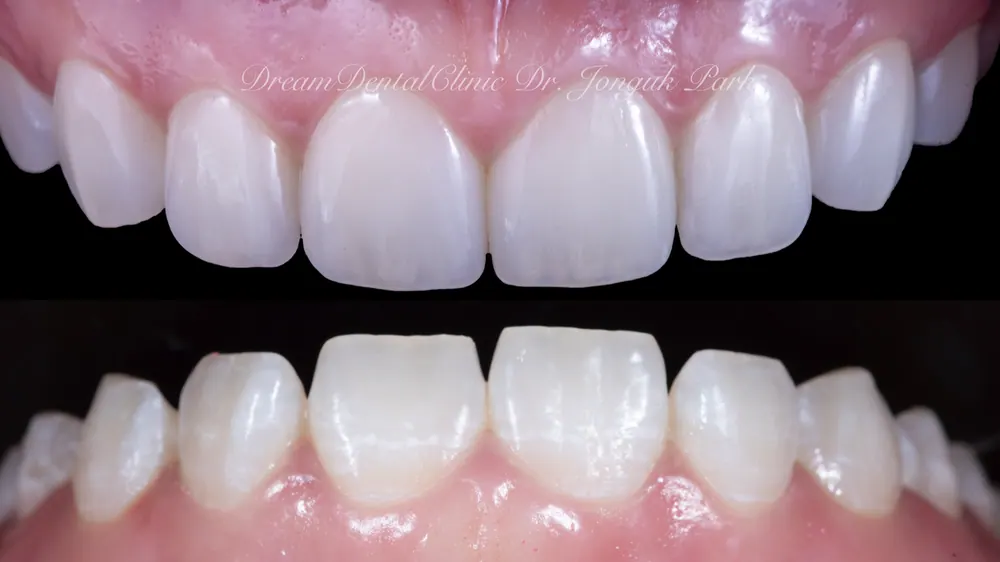
Anyone can produce veneers that require removing a fair amount of tooth structure and turn out looking unnatural.
But achieving beautiful teeth that keep the feel of natural teeth alive, with only minimal reduction,
isn't something just anyone can do.
That's how much precise diagnosis, the treatment process that follows, and even the fabrication and bonding of the ceramic all matter.
This is a strength that comes from Dream Dental Clinic's years of experience.
Since 2006, Dream Dental Clinic
This article is a clinical note written by Dr. Park Jonguk of Dream Dental Clinic, Gangnam; the original was published on his blog. The photographs shown are real cases he treated. Results vary with each patient’s condition, and every procedure carries the possibility of individual variation and side effects.

Quick Consult
Request a Callback
Leave your number and we will call you back during clinic hours.
Request Received
We will contact you during clinic hours. For urgent matters, please call +82-2-3448-0028.