
Asymmetric Gum Line After Veneers: Redoing an All-Ceramic Crown
Hello, I'm Park Jonguk, director of Dream Dental Clinic.
When patients who had cosmetic dental work on their front teeth a long time ago come back,
most say they've come for a veneer redo,
but a good number of them actually have all-ceramic crowns rather than veneers.
This seems to be because, at one time, some clinics called every esthetic front-tooth treatment a "veneer,"
and treated patients without a proper explanation, which seems to be how this confusion happened.
Since veneers are an esthetic treatment that removes very little tooth structure while improving a tooth's shape and color,
they tend to feel like they'd carry fewer side effects,
so even when a clinic was actually placing all-ceramic crowns — which require removing a lot more tooth structure —
some clinics, 10 to 15 years ago, would describe it to patients as a "veneer."
As a result, side effects that actually belong to all-ceramic crowns
ended up being mistaken for side effects of veneers,
and veneers themselves came to be misunderstood as a treatment with a lot of side effects.
Whatever treatment a patient originally received,
the process of redoing it is never simple.
It's especially difficult when a large amount of tooth structure was removed the first time.
Cases where a lot of tooth structure was removed are, in most instances, cases where the teeth were very poorly aligned to begin with.
As a result, because of problems with the shape of the gums,
gum contouring often had to be done alongside the crowns,
and if that, too, is done excessively, it causes problems of its own.
Let's look at a case being redone
because of gum inflammation, gum asymmetry, and an awkward tooth shape caused by excessive tooth reduction and gum contouring done long ago.
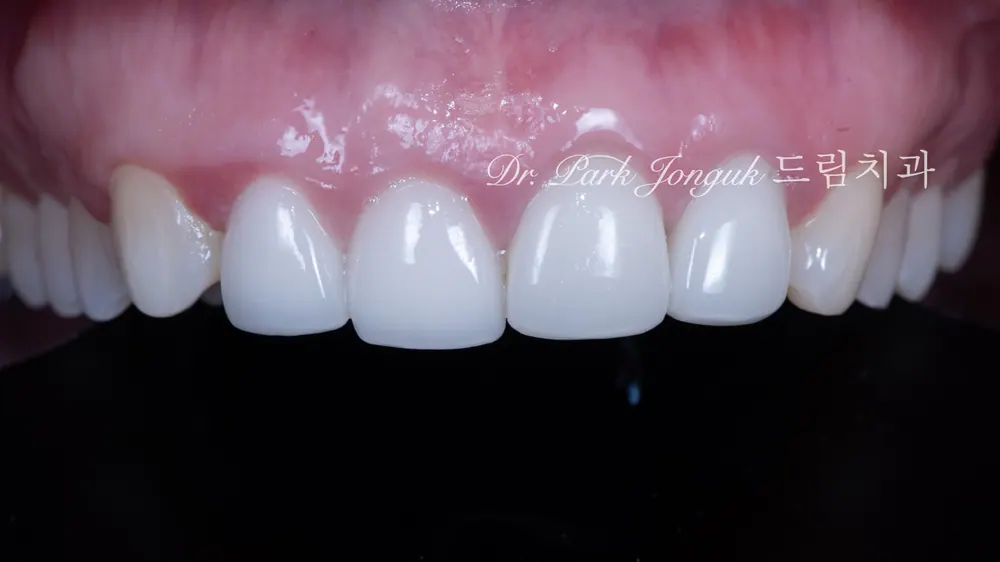
The patient came in for a redo of all-ceramic crowns that had been placed long ago to address a range of problems.
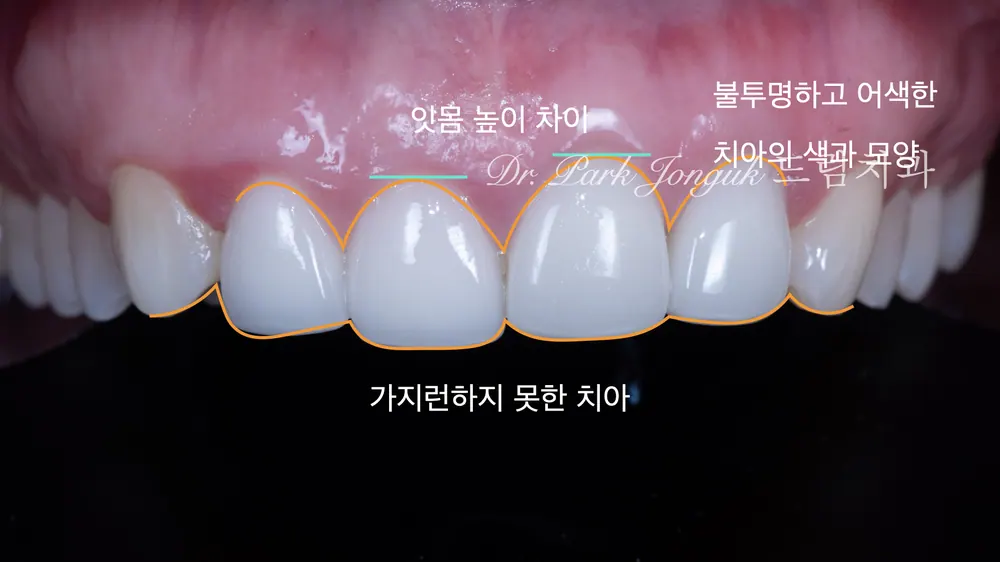
First, the teeth themselves were not well aligned.
As a long time passed since the original treatment, the teeth gradually shifted, and the alignment worsened.
There was also the problem that the color and shape of the teeth looked very unnatural.
The teeth were simply white and opaque, with no sense of a natural tooth at all,
and they were also strangely short.
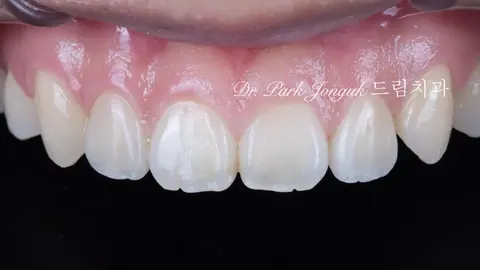
In particular, there was a serious problem with the height of the gums.
The asymmetry between the two sides was severe.
Normally, when there's this much of a difference in gum height,
the side where the gum sits lower is raised to restore symmetry.
But in this case, once we removed the existing all-ceramic crowns,
we found that this kind of treatment simply wasn't possible.
Cases like this tend to share the same characteristics.
The teeth were poorly aligned to begin with — a case that should have been treated with orthodontics —
but at one time, there were clinics that would remove a large amount of tooth structure and place all-ceramic crowns instead,
misleadingly calling it "rapid orthodontics."
Orthodontic treatment takes around two years,
so it's easy to see why patients would be tempted when told this approach can be finished in one to two weeks.
When the alignment of the teeth is poor, the gums aren't even either,
and forcing symmetry right away through aggressive gum contouring
is how the treatment gets finished.
There may be no problems for around 6 to 12 months,
but in most cases, as in this one, asymmetry in gum height eventually develops,
and sometimes the gums even become inflamed.
Redoing a case like this is extremely challenging.
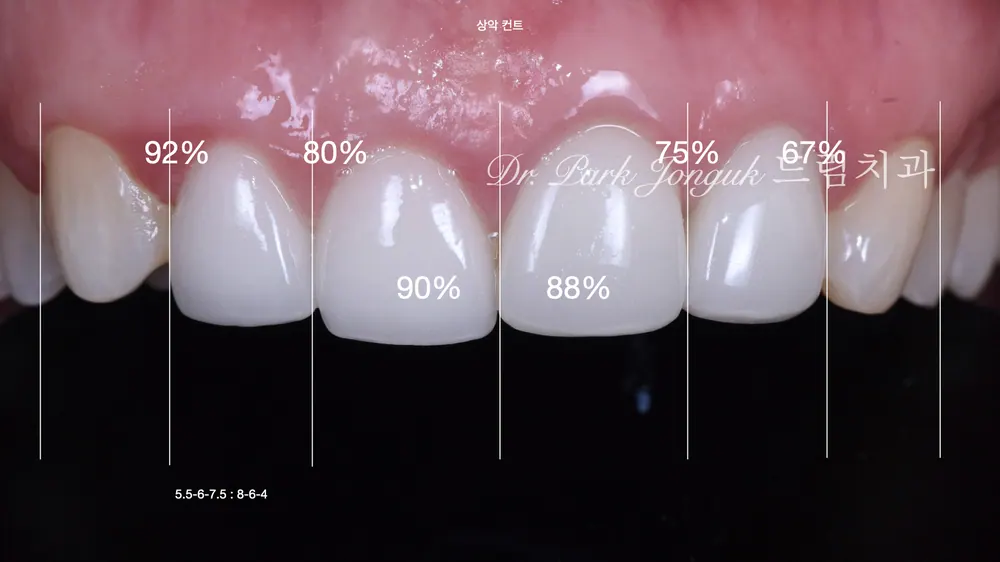
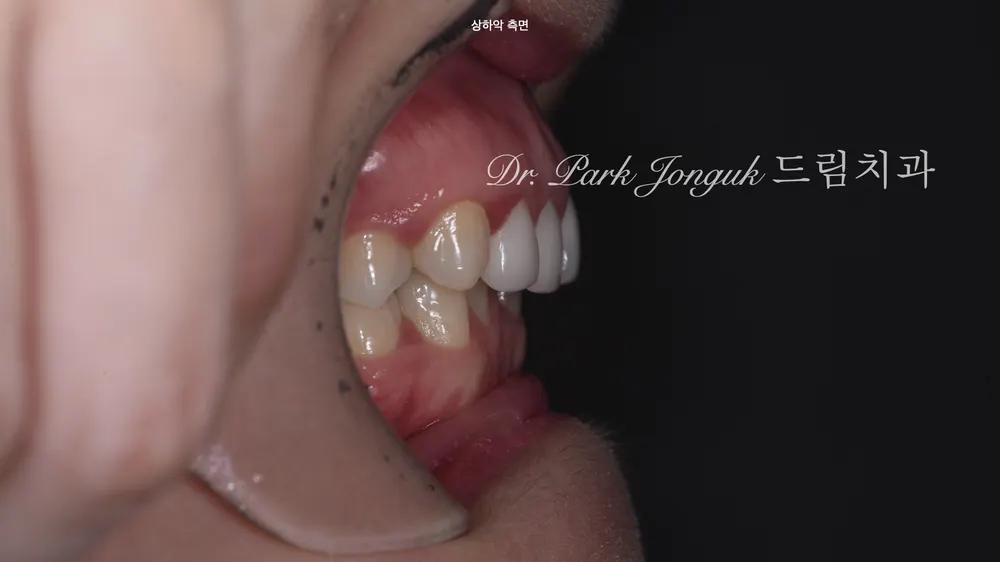
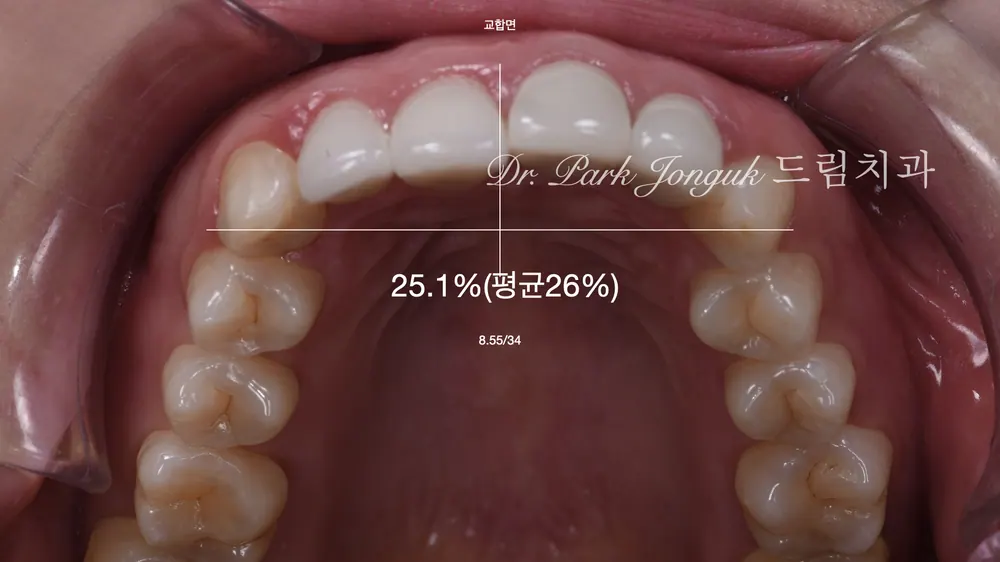
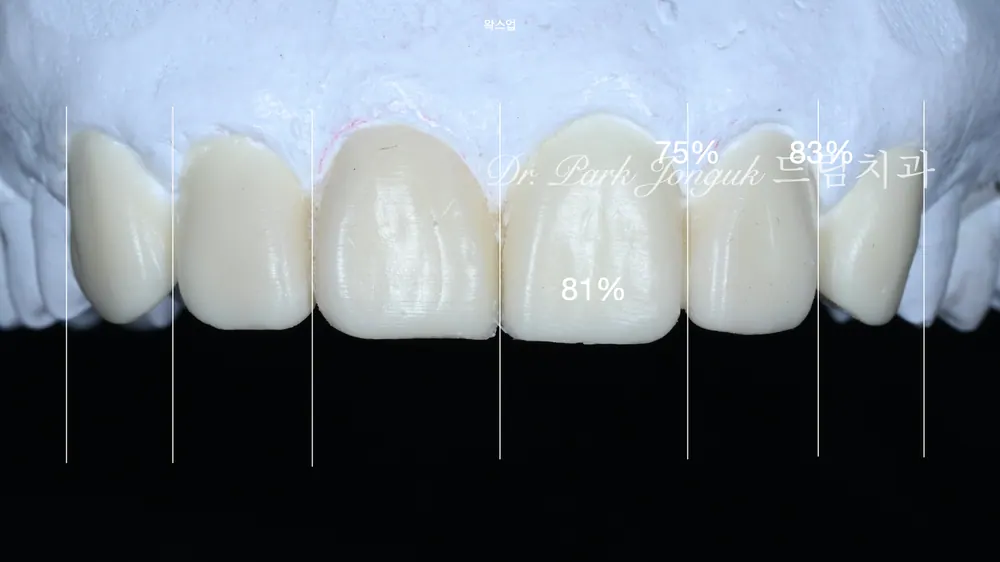
First, we work out a plan through diagnosis
for how to change the shape of the teeth.
The initial plan was to trim the gum that had grown down too far
to even out the gum height,
but after removing the crowns, we changed the plan.
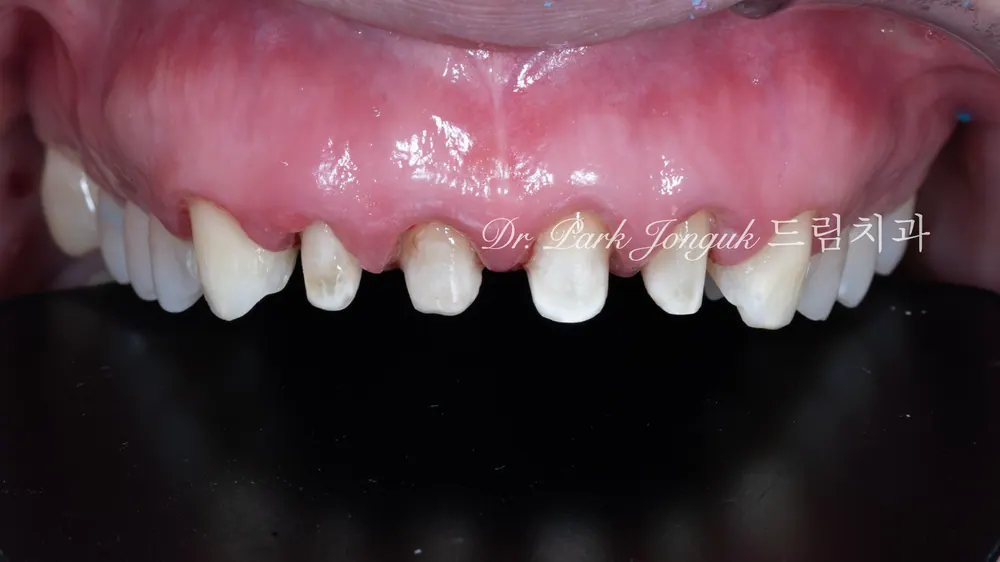
Too much tooth structure had already been removed,
and there's a concept called biologic width that limits how much gum contouring can be done —
and this had already reached its limit.
In a case like this, to even out the gum height,
there is a method involving gum surgery,
where the underlying gum bone itself is reshaped.
Personally, unless it's a special case,
I prefer not to recommend this.
Another approach
is for the gum that has grown up too far to be allowed to gradually grow back down on its own,
using a temporary crown to make that adjustment.
This isn't possible in every case.
It's only possible in a few special cases where the gum contouring was excessive.
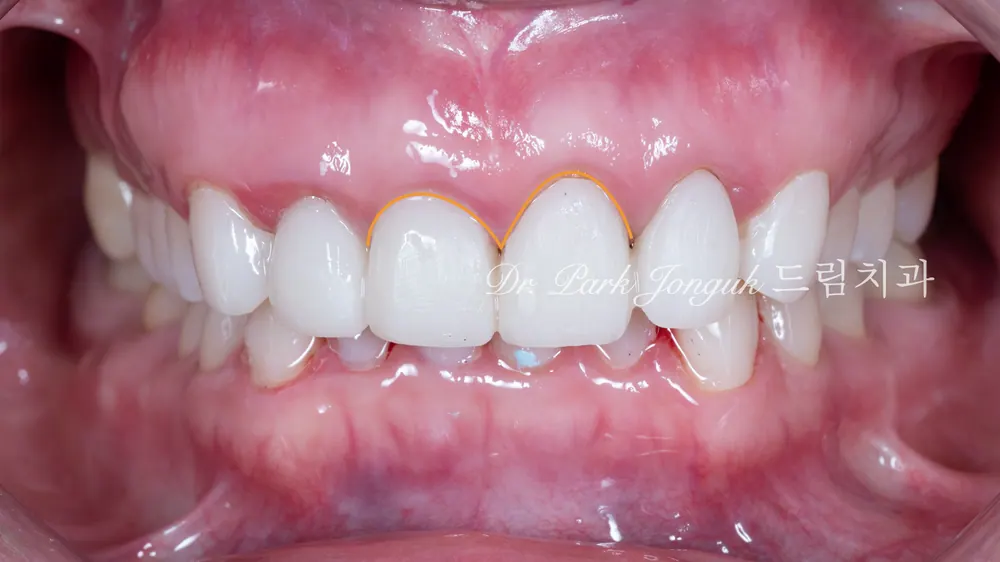
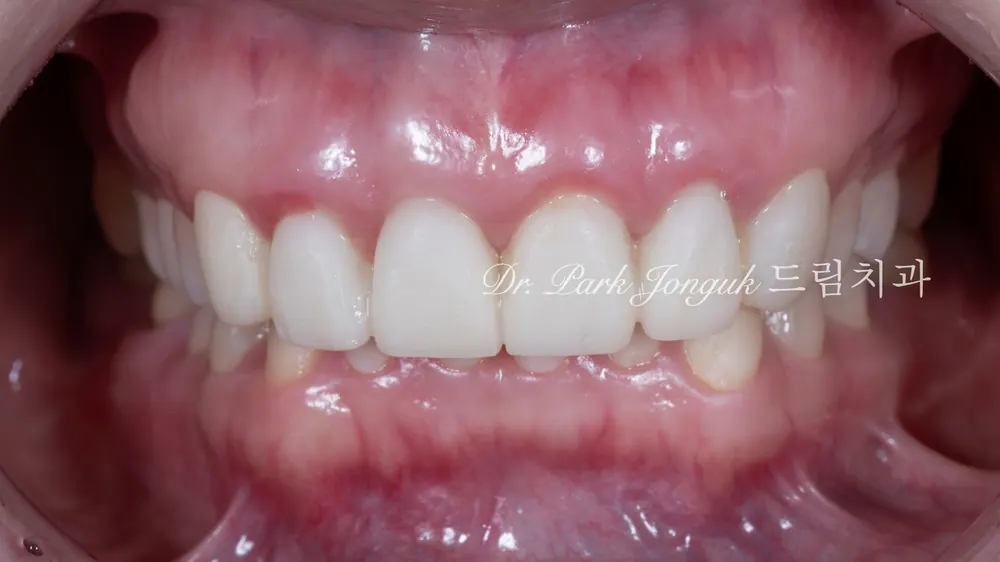
A temporary crown is made and used for several weeks.
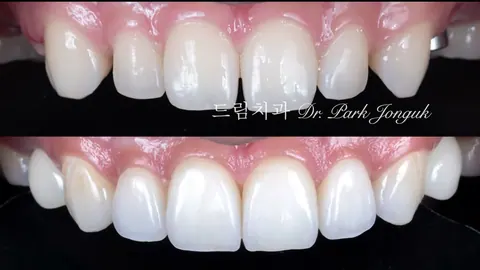
In the photo on the left, the gum asymmetry was severe,
but you can see that, over time, the gum grew back down over the temporary crown.
The gum inflammation didn't disappear completely, because the tooth had already been reduced so aggressively.
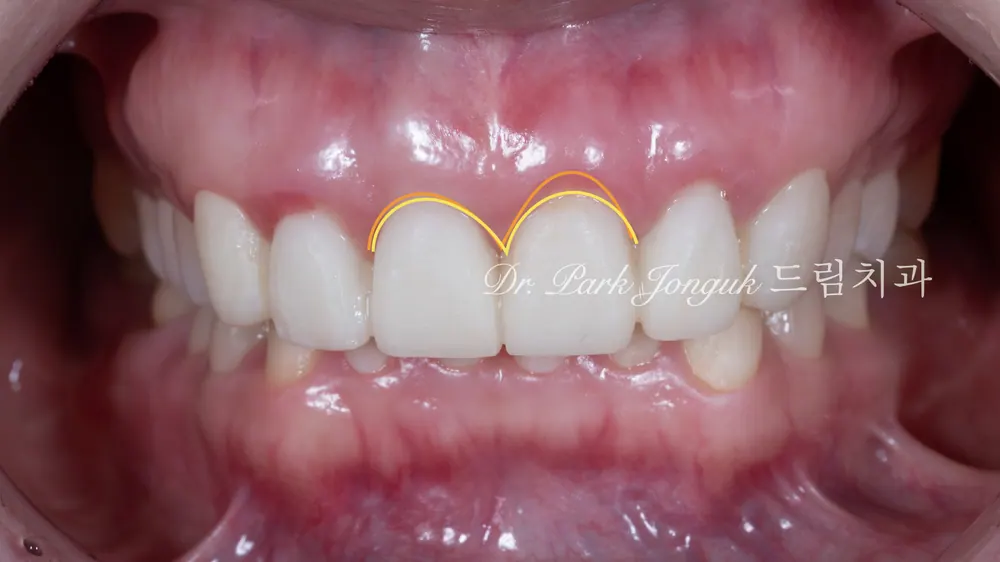
The change in gum shape is quite dramatic.
Cases where the gums stabilize like this aren't very common.
Because so many different factors affect the outcome — from gum thickness to tooth shape to the position and shape of the underlying bone —
there's a great deal of variation from case to case.
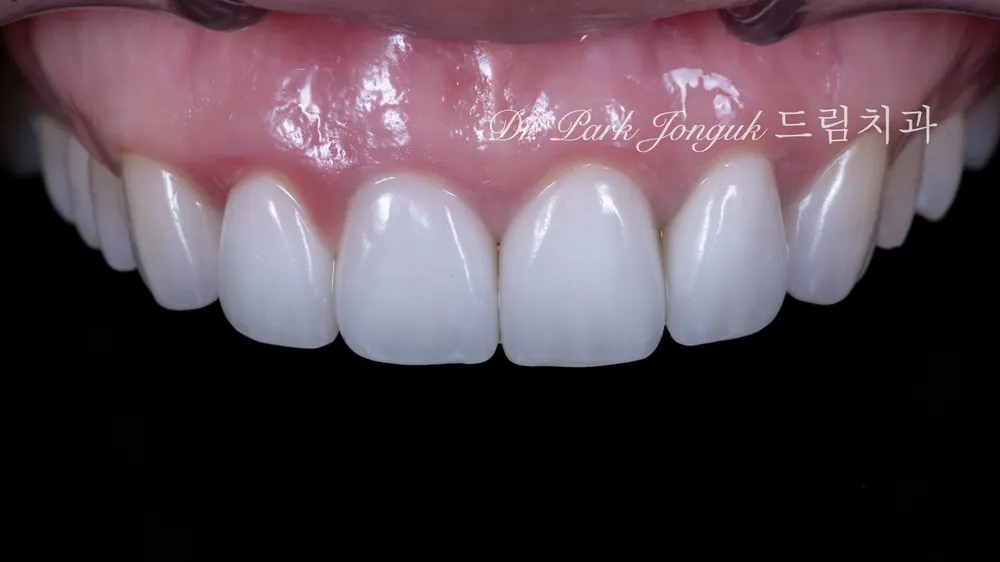
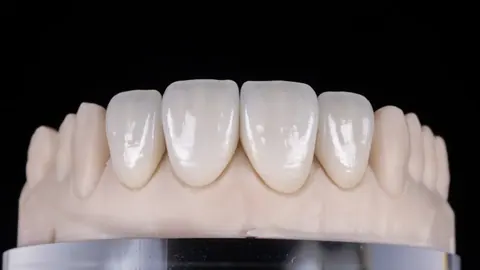
The redo of the all-ceramic crowns is now complete.
This is the state one week after treatment.
Compared with the initial state,
you can see a tremendous improvement.
It's just unfortunate that a little gum inflammation still remains.
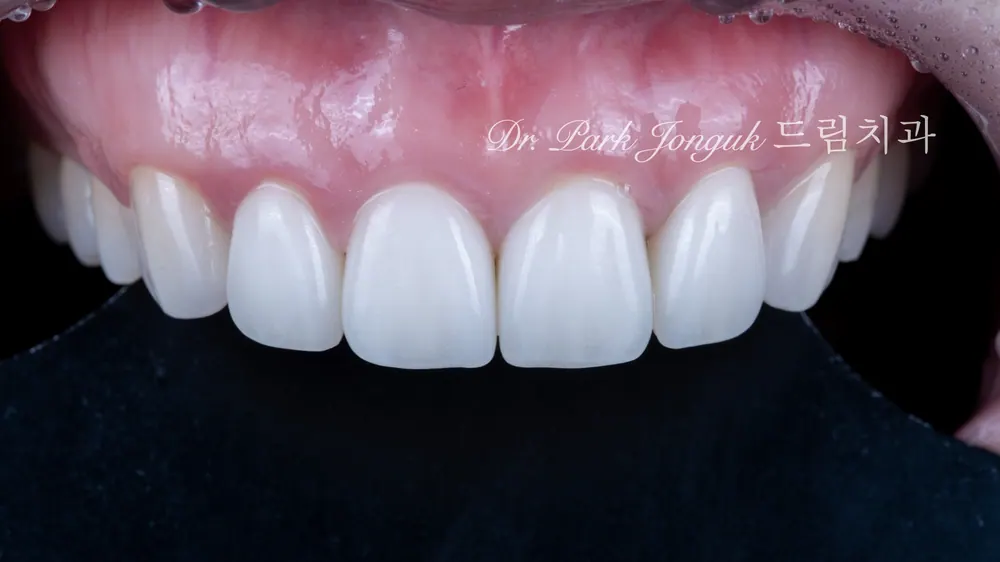
This is the state six months after treatment.
The change in gum shape has clearly settled in,
and you can see the gums adapting in a healthy way.
Compared with before treatment,
you can clearly feel how natural the color and shape of the teeth have become.
Natural, beautiful teeth are exactly the direction Dream Dental Clinic aims for.
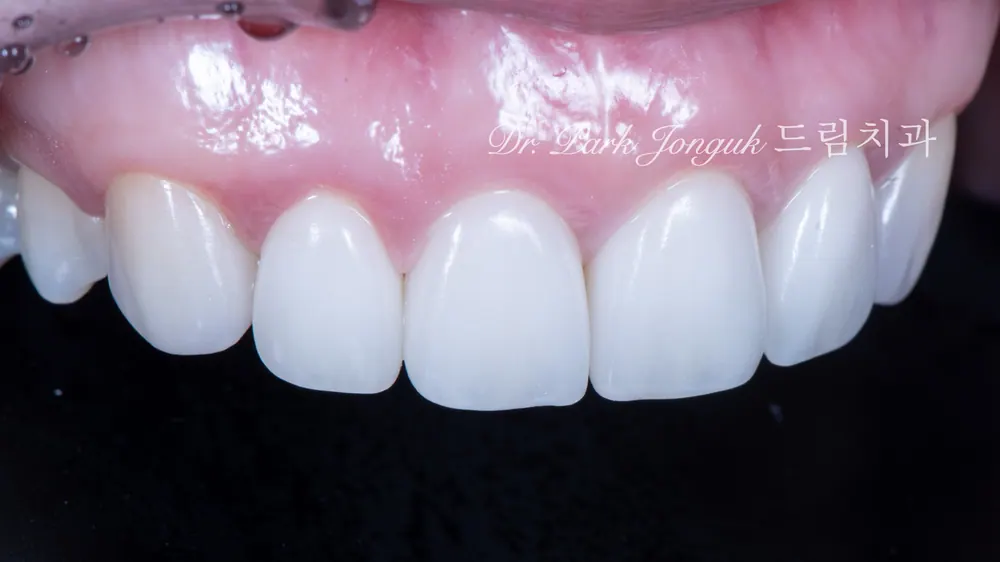
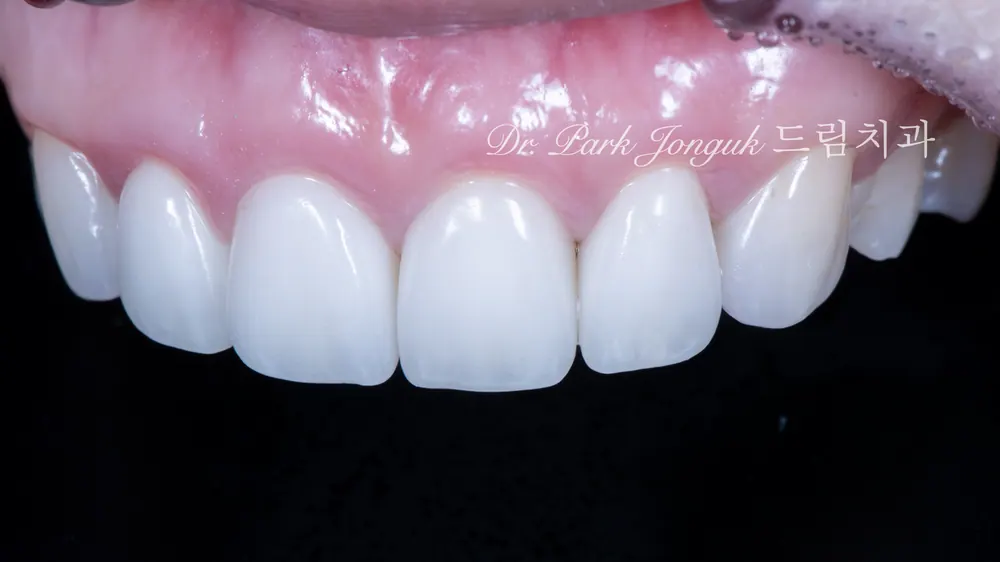
With the teeth poorly aligned to begin with,
we've looked at the process of treating a range of side effects
caused by aggressive veneer or all-ceramic crown treatment.
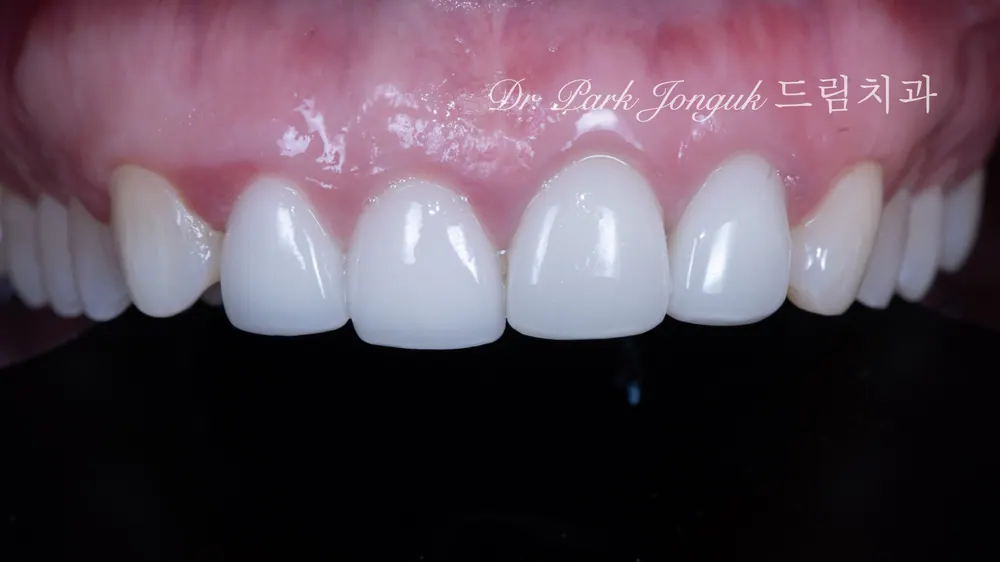
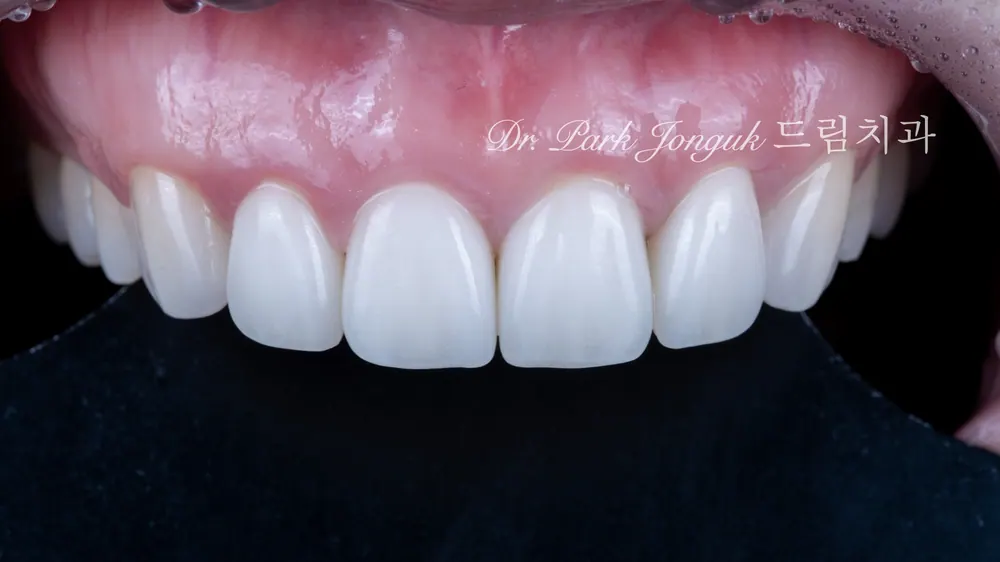
Comparing the beginning and the end like this,
you can feel a clear difference.
Natural Beauty
Since 2006, Dream Dental Clinic
This article is a clinical note written by Dr. Park Jonguk of Dream Dental Clinic, Gangnam; the original was published on his blog. The photographs shown are real cases he treated. Results vary with each patient’s condition, and every procedure carries the possibility of individual variation and side effects.
Quick Consult
Request a Callback
Leave your number and we will call you back during clinic hours.
Request Received
We will contact you during clinic hours. For urgent matters, please call +82-2-3448-0028.