
Minimal-Prep and No-Prep Veneer Treatment for Chipped Teeth
Hello, I'm Park Jonguk, DDS, MS, director of Dream Dental Clinic.
There are many reasons for front-tooth veneer treatment.
Since it improves the shape and color of teeth,
it counts as tooth reshaping.
It's often chosen when the tooth color is dark or the shape isn't good.
Veneer treatment is also done when a tooth is chipped or cracked.
In such cases, it's important to identify why the tooth chipped before proceeding with treatment.
If the fracture was caused by a bite problem or a habit,
the first step is to check whether that underlying problem can be resolved.
If it was chipped due to trauma,
veneer treatment tends to produce a better result.
If the tooth had no problems before the trauma
and the problem developed only because of the trauma,
the veneer generally won't be subjected to significant force under normal circumstances,
so it can also last a long time.
Let's look at the process of treating a fractured tooth with only minimal reduction and veneer treatment.
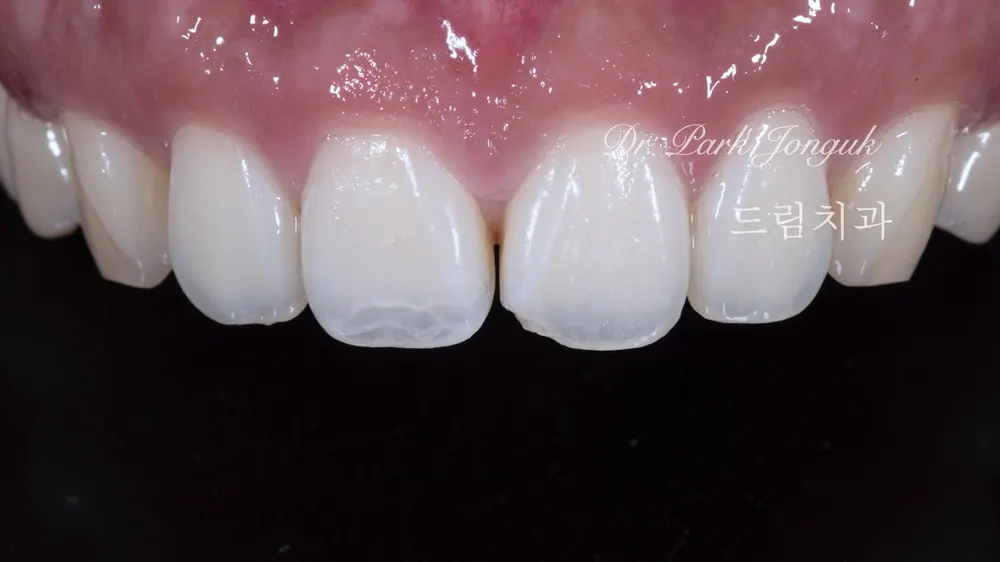
This patient came in with a tooth fracture caused by trauma.
One front tooth had fractured and chipped away,
and the other front tooth showed a lot of visible cracks.
Cracks like that don't necessarily mean the tooth will chip easily,
but they don't look good esthetically.
With a gap between the front teeth as well,
and since the patient also wanted the tooth color brightened,
we decided to do veneer treatment on six teeth.
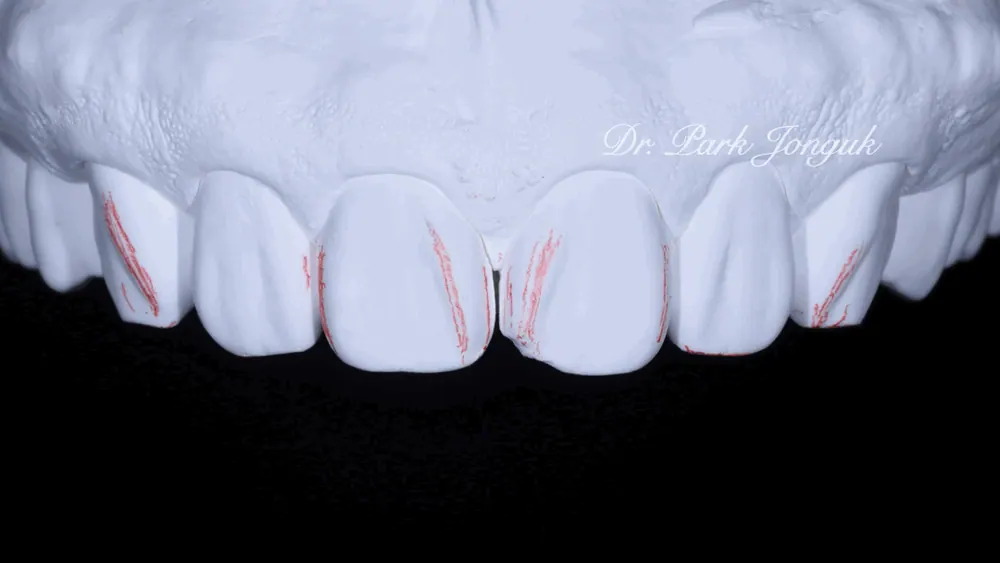
To anticipate the treatment process,
we carry out a wax-up precision diagnosis.
We mark the areas to be reduced,
reduce only those areas,
and coat wax over them
to plan out how treatment will proceed in advance.
Through this process,
we plan in advance exactly which part of which tooth needs to be reduced, and by how much.
There are areas that require minimal reduction,
but most of the teeth are treated with no reduction at all.
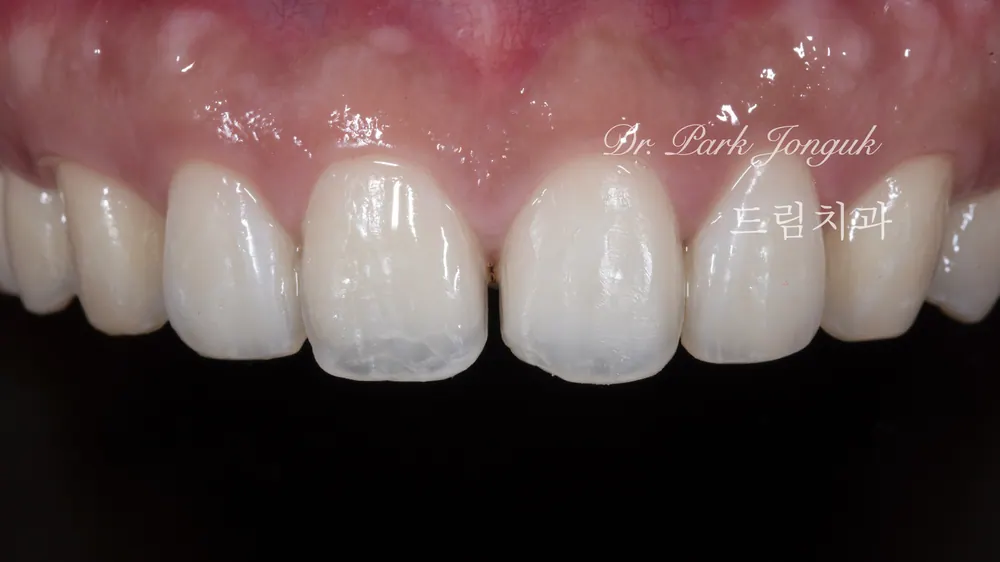
Tooth reduction was carried out according to the plan.
Precisely reducing only the areas that need it matters more than anything else.
Tooth reduction is carried out using a microscope.
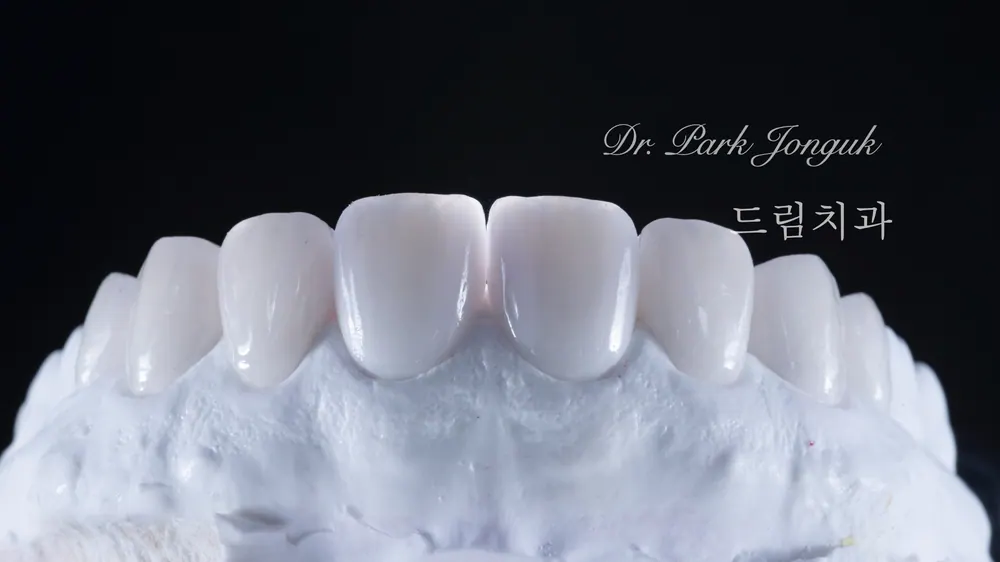
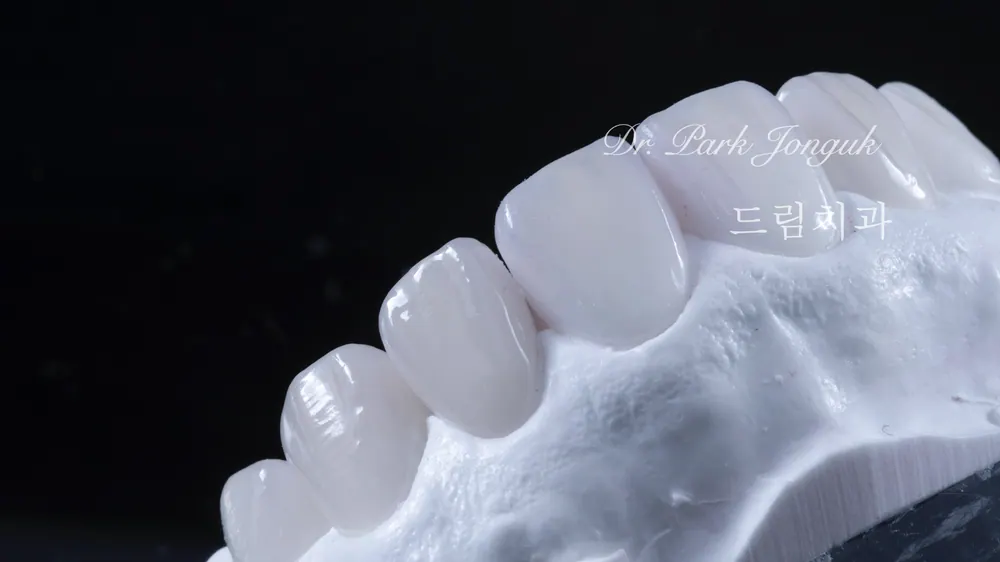
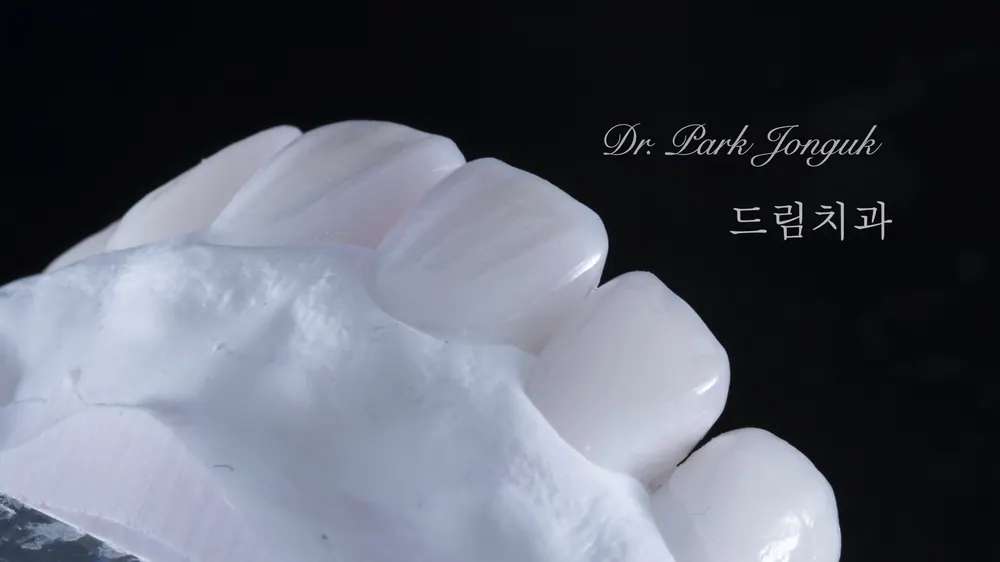
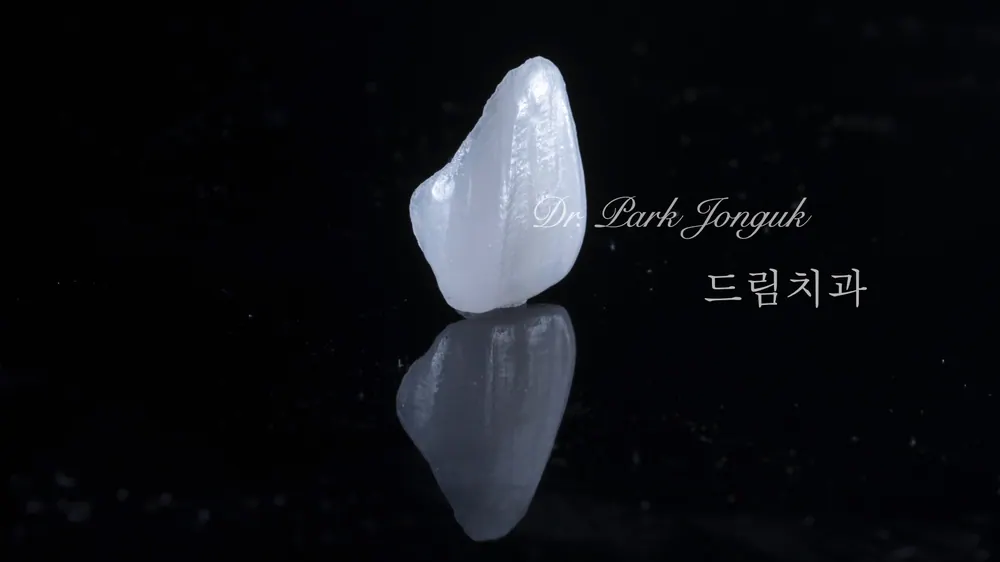
We proceed with fabricating the veneers in ceramic.
Since so little was reduced,
an extremely thin veneer is fabricated, much like a no-prep veneer.
What matters is that even while making it this thin,
it still needs to capture the characteristics of a natural tooth well.
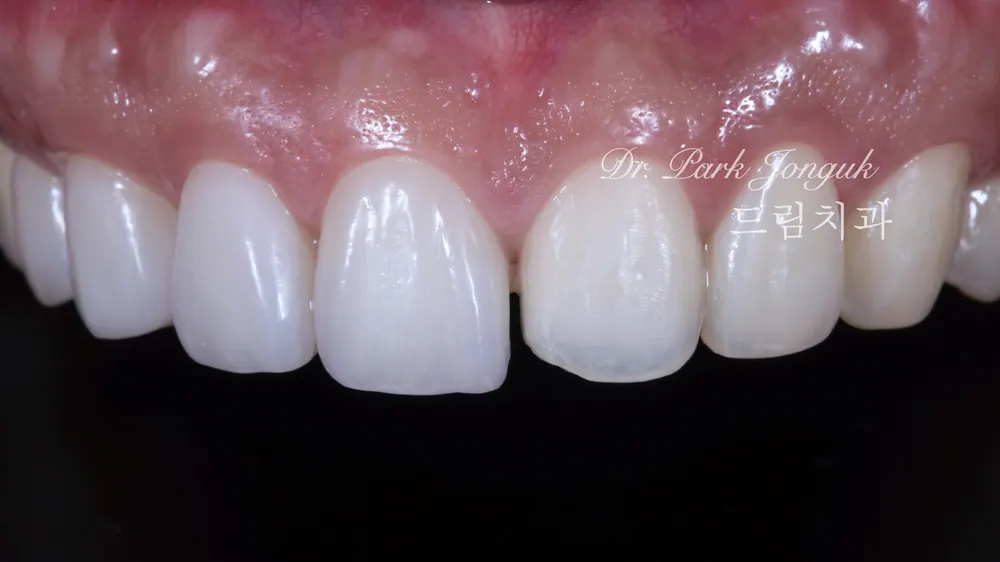
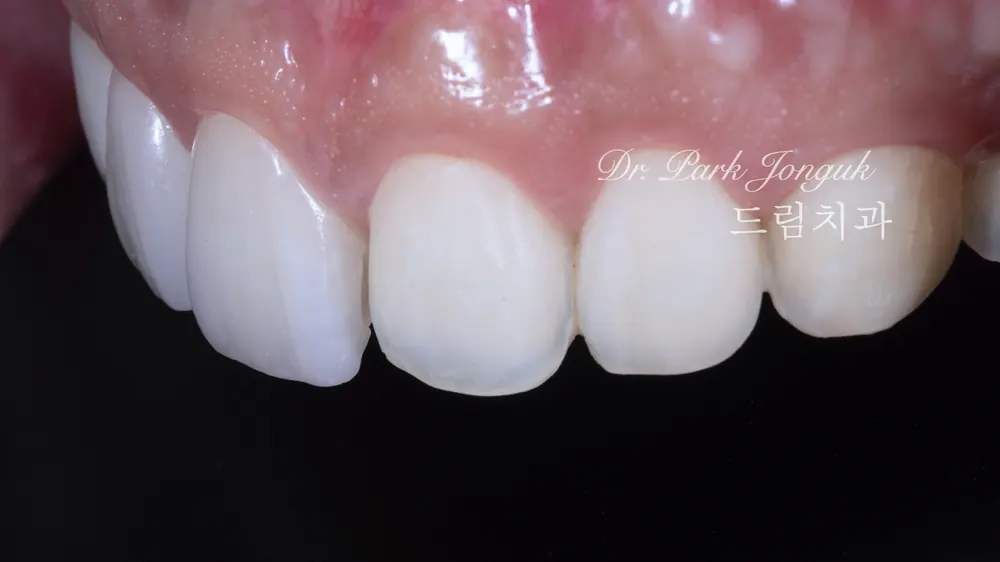
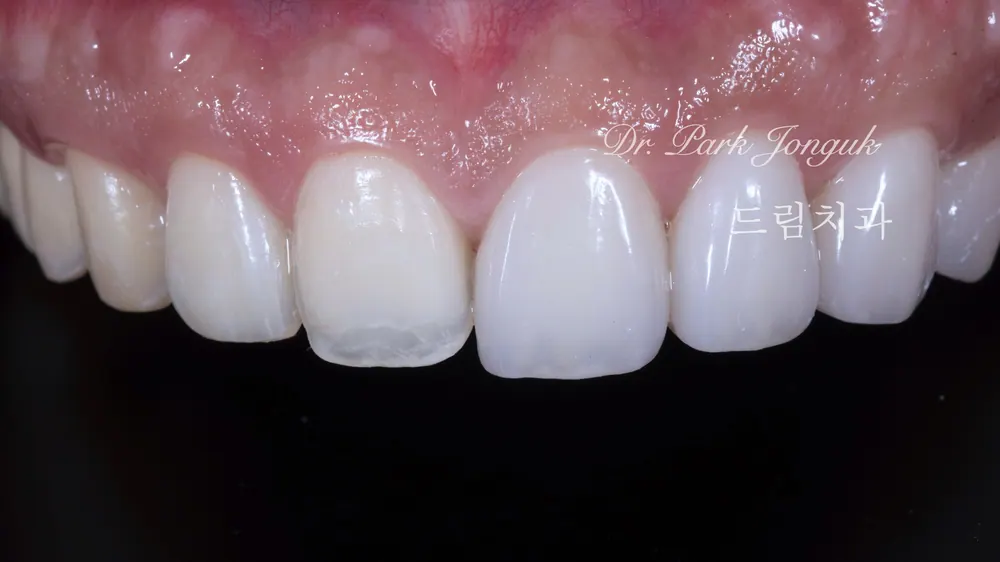
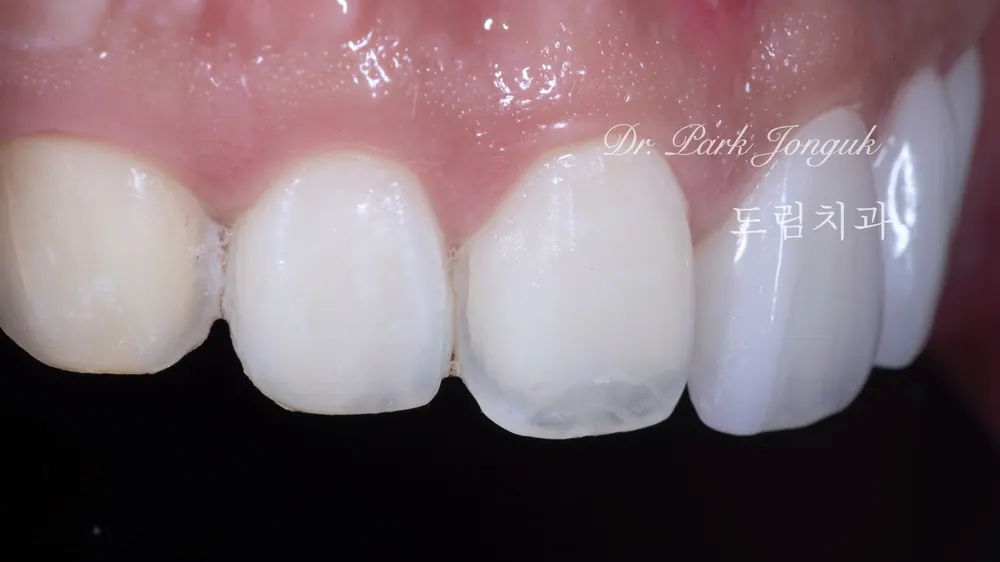
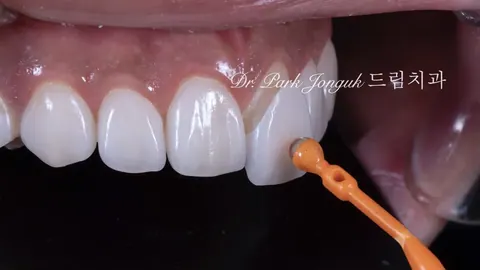
We tried placing the veneer onto the tooth.
Seeing that there's almost no change in the size of the tooth,
you can tell just how thin the veneer is.
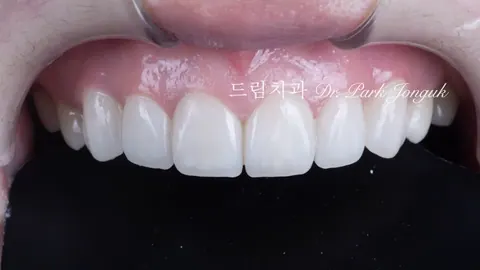
Despite its thinness,
it expresses the natural shape and color of a tooth.
Expressing the translucency of the tooth is also very important.
A good result is achieved through no-prep and minimal-prep reduction.
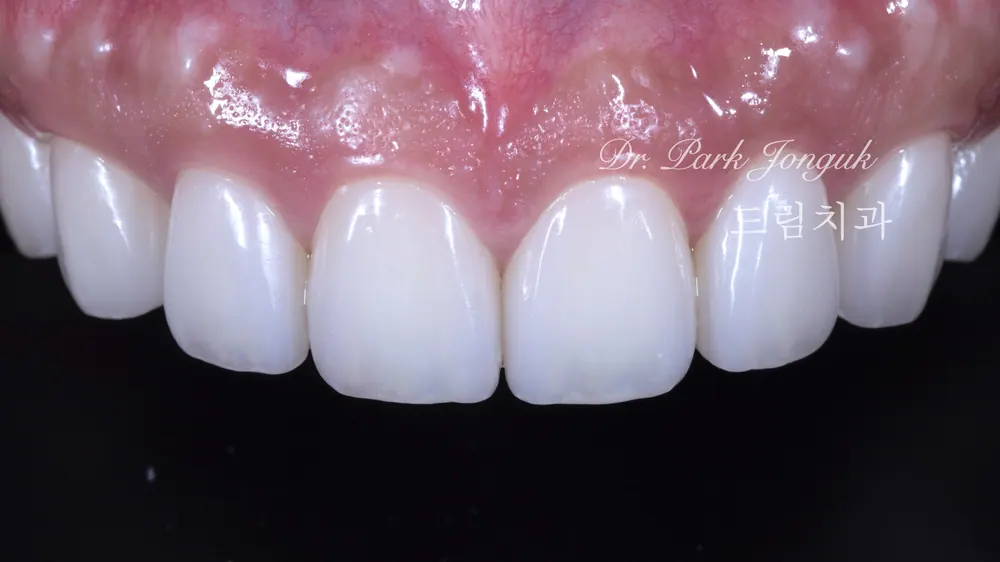
The front-tooth veneer treatment has now been completed.
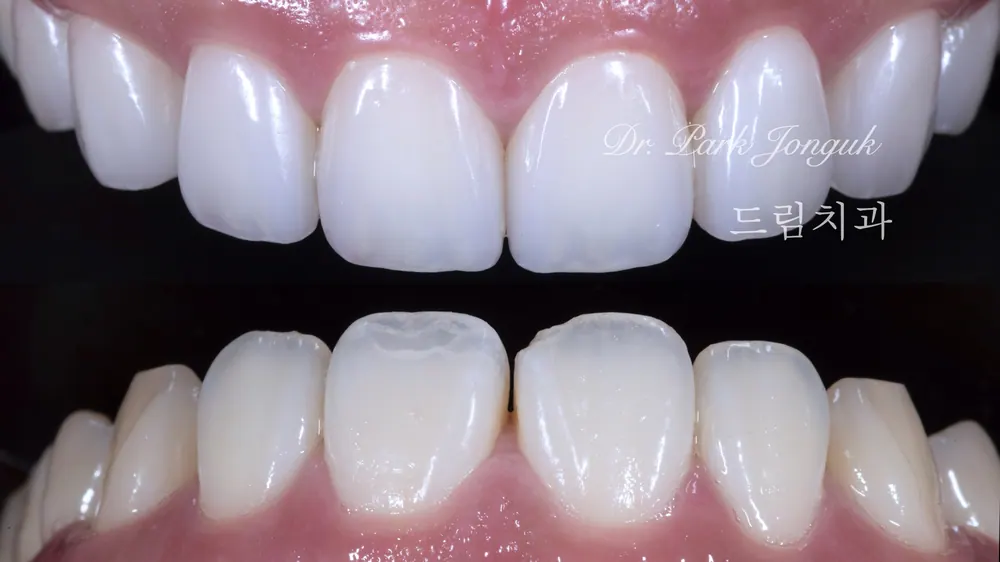
Looking at how the tip of the tooth is expressed,
you can see not only a translucent feel like a natural tooth,
but also a variety of coloring expressed there.
Without giving the tooth a sense of dimension,
it ends up looking white and awkward.
This kind of detailed expression is possible only with handmade fabrication.
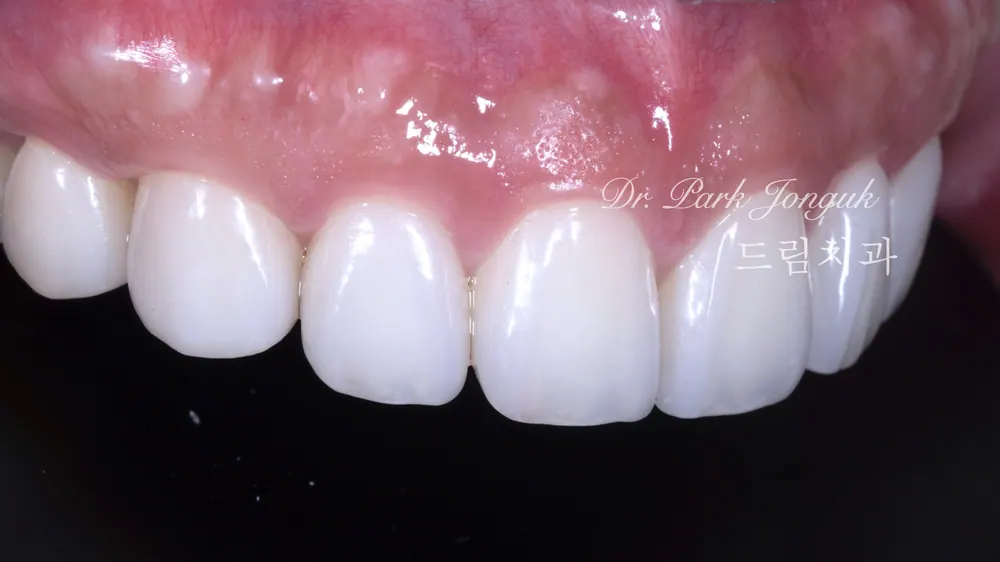
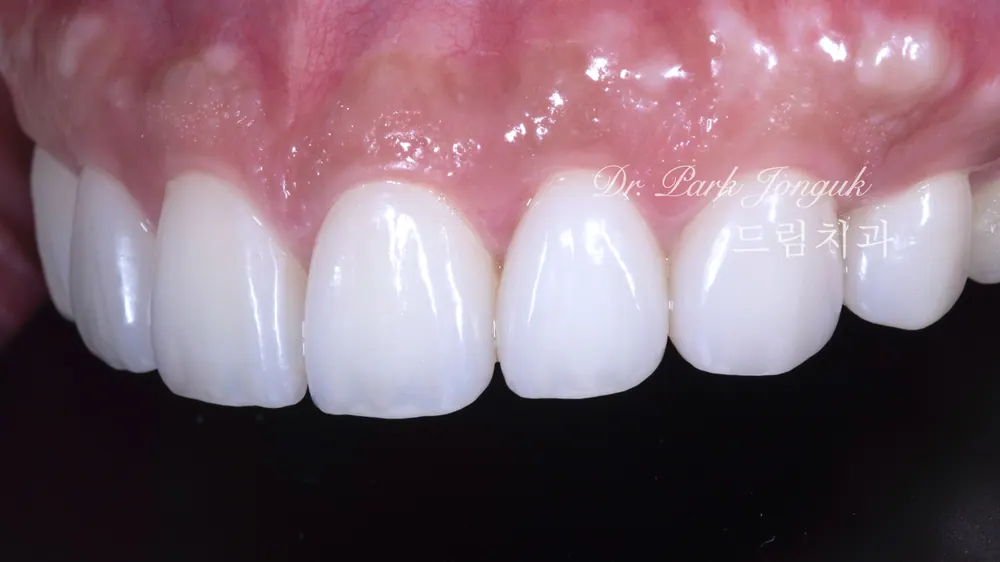
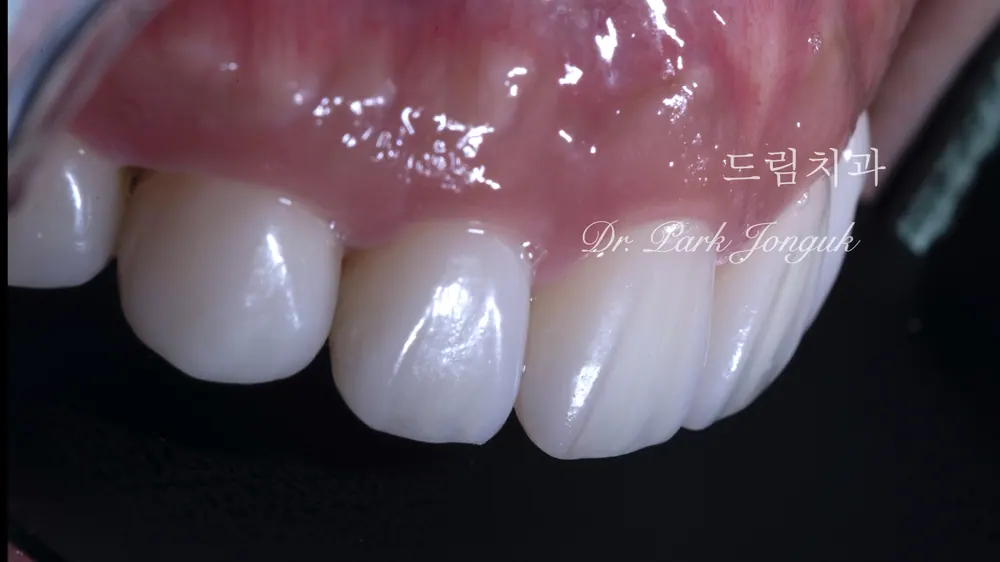
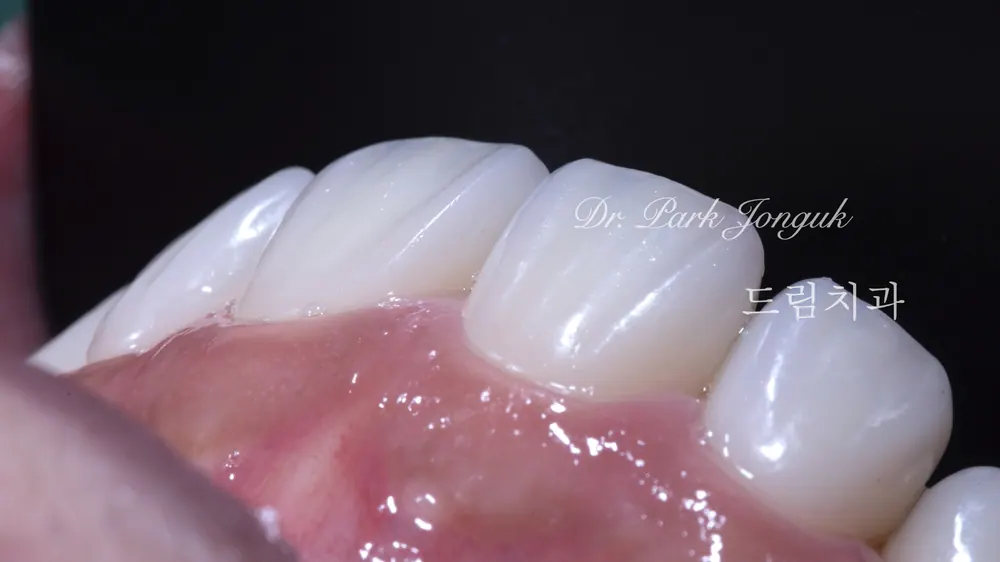
You can see that the texture and dimensionality of the tooth surface have been well expressed.
This is exactly where the difference lies — in these details.
The one-day method in particular finds it very difficult to create this kind of detail.
Natural beauty.
Since 2006, Dream Dental Clinic
This article is a clinical note written by Dr. Park Jonguk of Dream Dental Clinic, Gangnam; the original was published on his blog. The photographs shown are real cases he treated. Results vary with each patient’s condition, and every procedure carries the possibility of individual variation and side effects.
Quick Consult
Request a Callback
Leave your number and we will call you back during clinic hours.
Request Received
We will contact you during clinic hours. For urgent matters, please call +82-2-3448-0028.