
Redoing Artificial-Looking Veneers into Natural Ones, Part 2
Hello, I'm Park Jonguk, director of Dream Dental Clinic.
In my previous post, I wrote about
redoing artificial, awkward-looking veneers into natural-looking teeth.
The most common trait of unnatural veneers
is teeth that look opaque and far too white.
There's another way veneers can end up looking unnatural,
and that's when the wrong ceramic is chosen,
resulting in veneers that look too dark.
The veneers I make are handmade,
so I can capture a range of translucent-to-opaque effects,
but veneers that are designed by computer
and milled by machine
can't have their translucency adjusted.
Since the entire tooth has to be made with a single level of translucency,
it's easy to end up with a result you didn't want.
Please see the link below for the difference between the handmade method
and veneers made by computer in a single day.
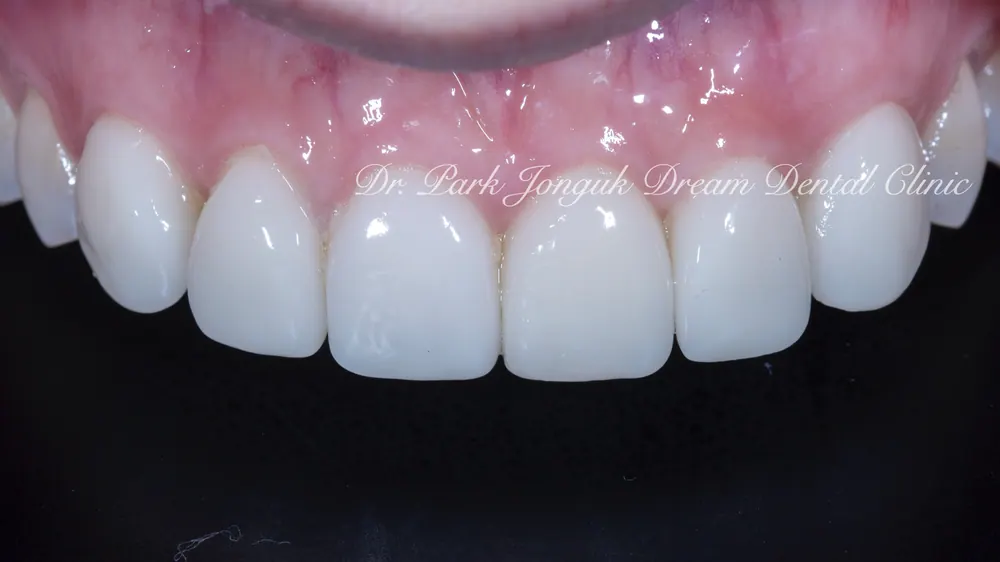
This is the state after veneer treatment.
Comparing it with the case from the previous post,
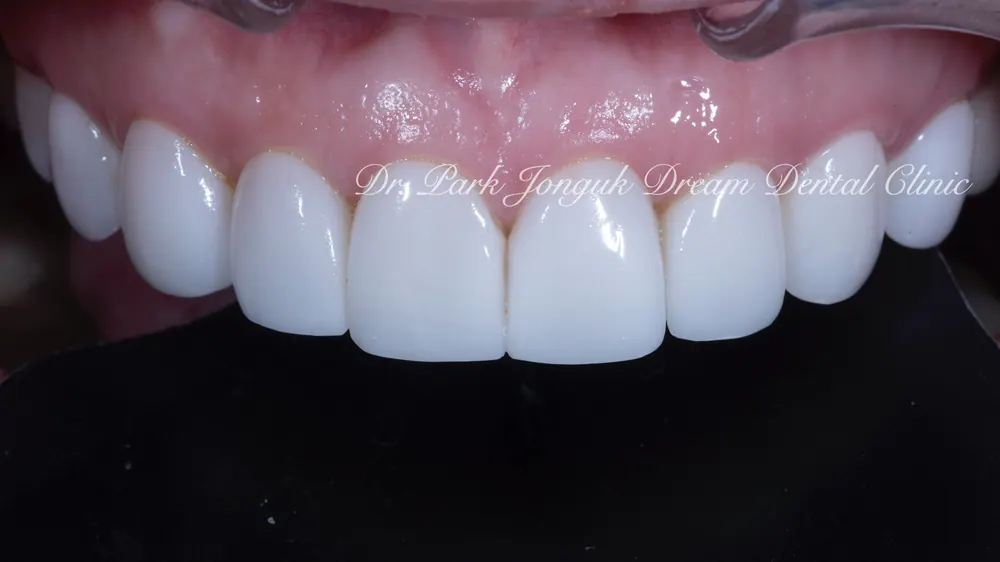
you can tell there's a difference in feel, can't you?
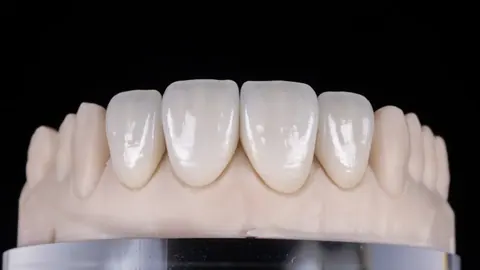
It comes down to a difference in the translucency of the ceramic.
The photo above used a ceramic with translucency,
while the photo below used a ceramic with almost no translucency.
Because a natural tooth has some degree of translucent feel,
some clinics choose a translucent ceramic,
but the problem is that a natural tooth's translucency varies from area to area,
and with this same-day, computer-made method, as mentioned above,
the entire tooth ends up with a single level of translucency,
which causes a problem.
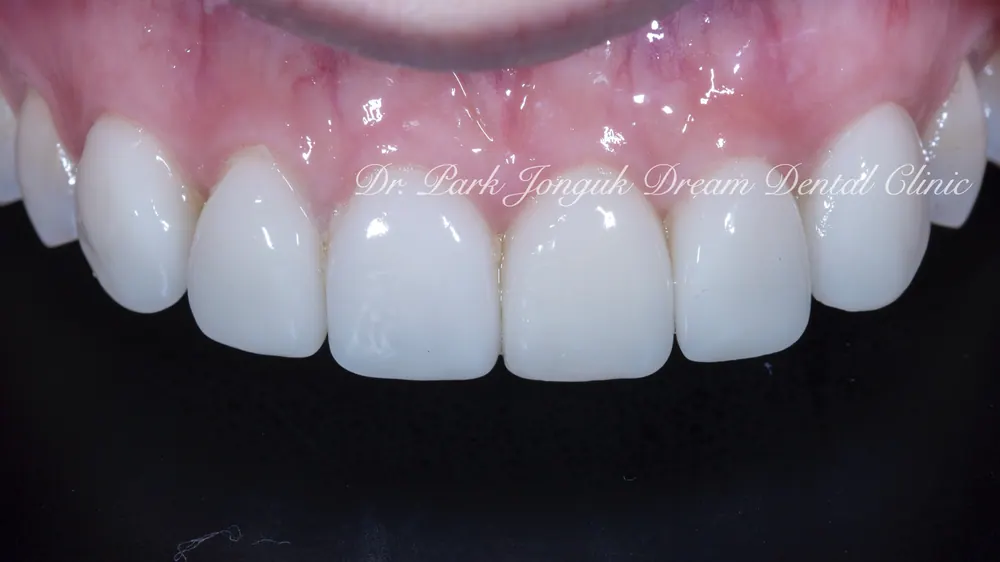
Looking at the photo again,
one problem is that teeth that should be symmetrical are different sizes,
and another is that each tooth looks a different color.
When a translucent ceramic is used,
the tooth's underlying color shows through,
so depending on how much the tooth was reduced or its original color, the resulting shade after veneer treatment can end up looking quite different from tooth to tooth.
In a sense, using a translucent ceramic
carries a certain risk for the result.
That's why the same-day method mostly uses an opaque ceramic instead,
which ends up creating that feeling of a stick of xylitol gum stuck onto the teeth.
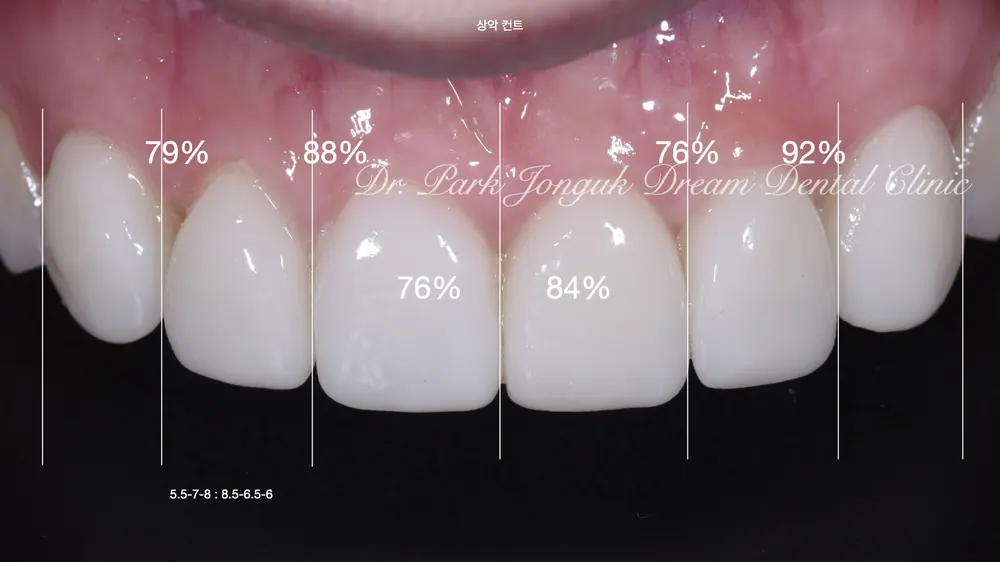
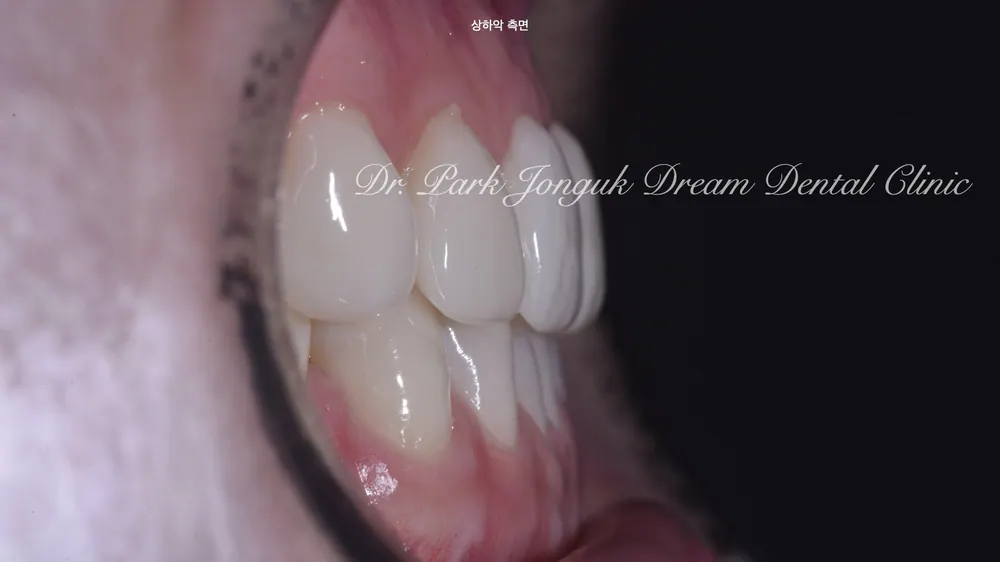
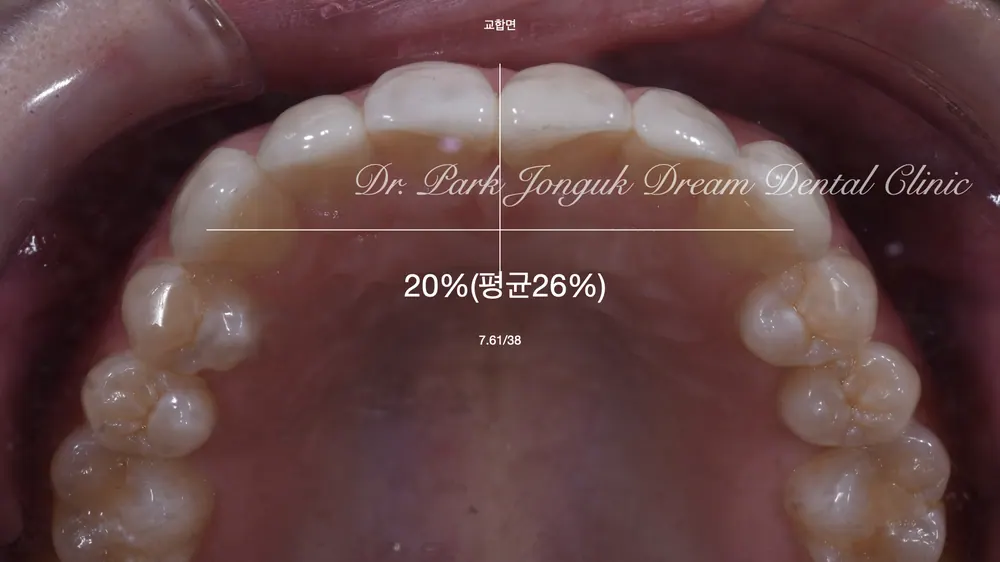
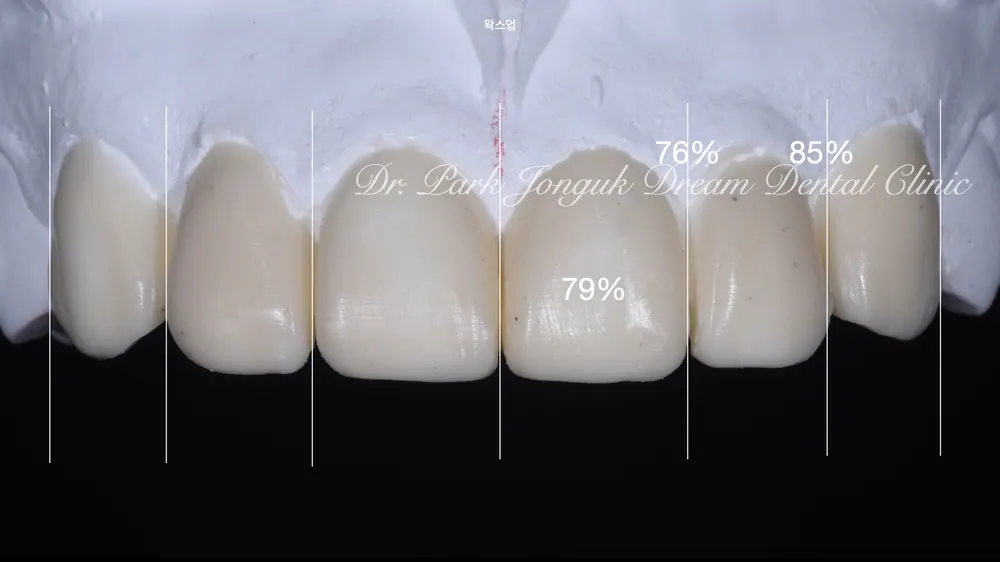
We analyze the current condition of the teeth
and, for how to correct them,
we carry out a diagnostic wax-up
that builds a preview in wax beforehand.
We need to understand clearly why the patient wants a retreatment.
Since she wanted the redo to look more natural,
nearly every aspect — the tooth's form, shape, proportions, and even translucency —
had to be improved.
Removing the veneers is quite important here.
Most clinics remove them just by grinding, which can cause a lot of damage to the tooth.
Removing veneers with a laser
can minimize damage to the tooth.
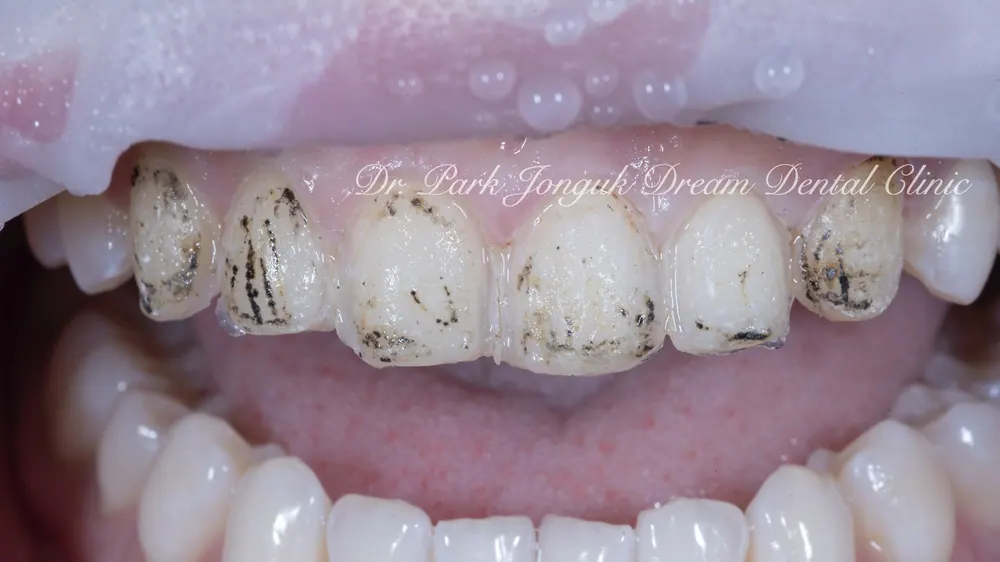
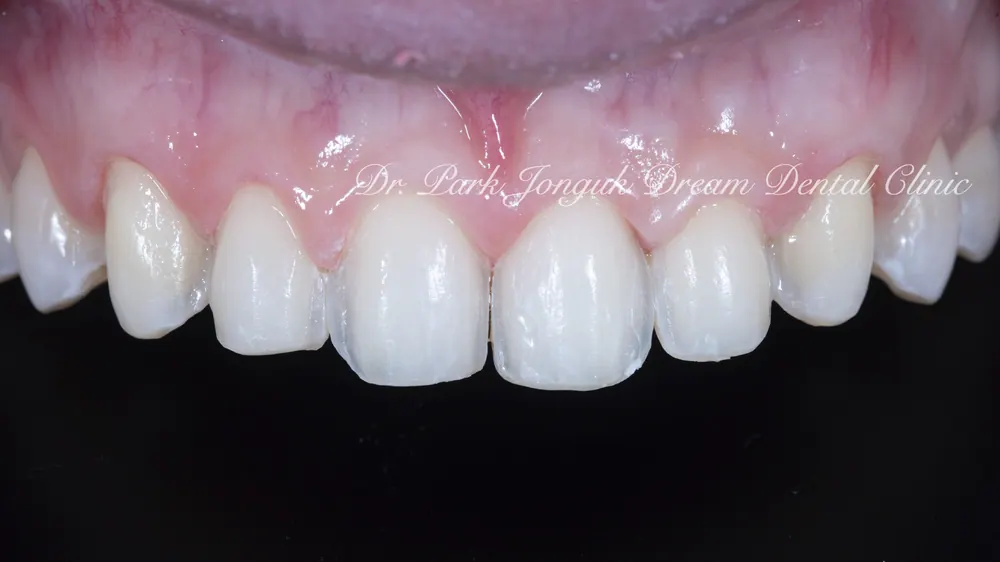
We used a laser
to remove the veneers.
It turned out to be a case where more reduction had been done than expected.
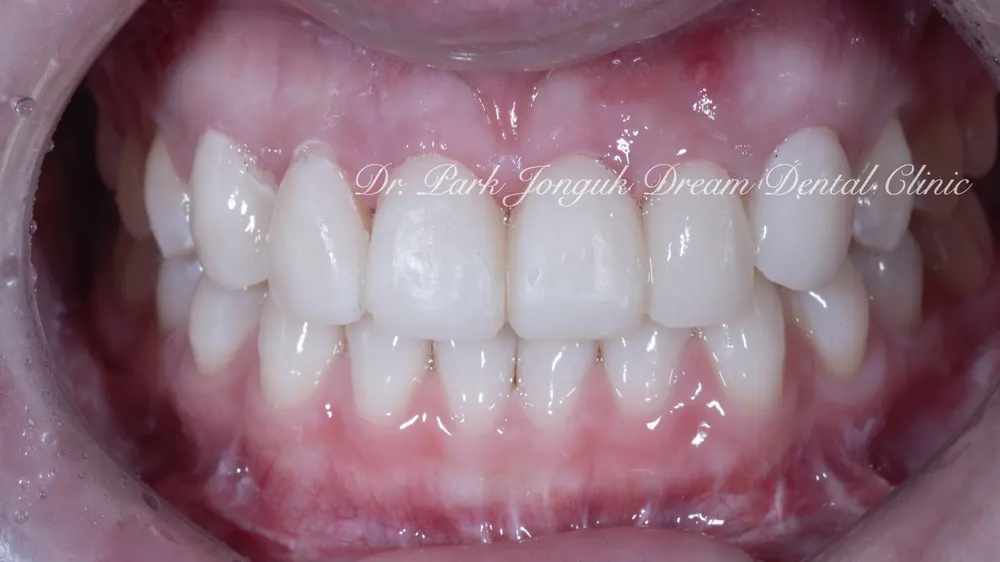
Using a temporary veneer,
we have to talk with the patient extensively about what kind of feel she wants.
We use the temporary veneer to decide many aspects — the tooth's volume, length, proportions, and more —
before moving into fabricating the veneers in ceramic.
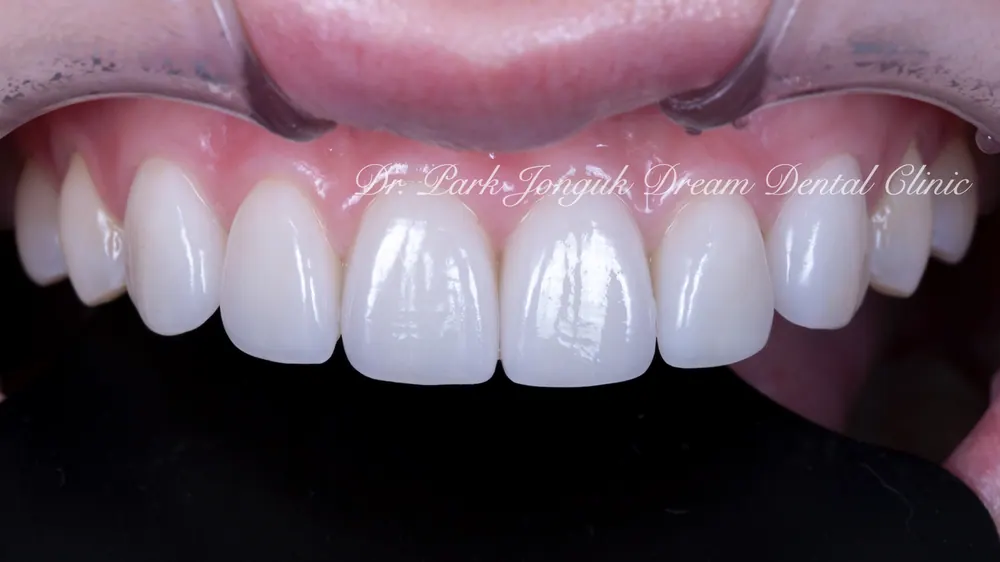
With a more lively, vibrant, natural feel,
the treatment is now complete.
Even the texture of the tooth surface was reproduced naturally.
The dimensionality holds up well, too.
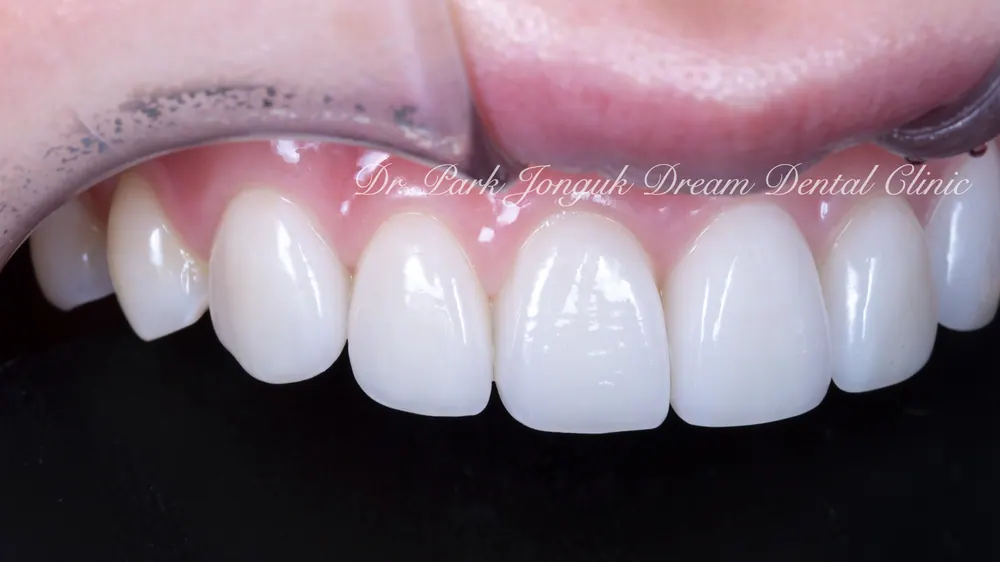
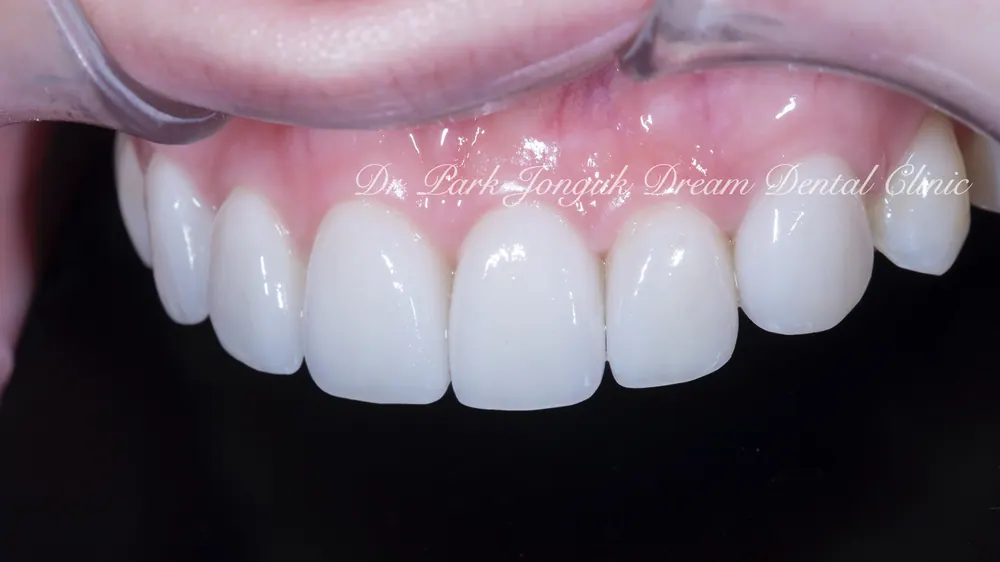
Every single tooth has a natural shape.
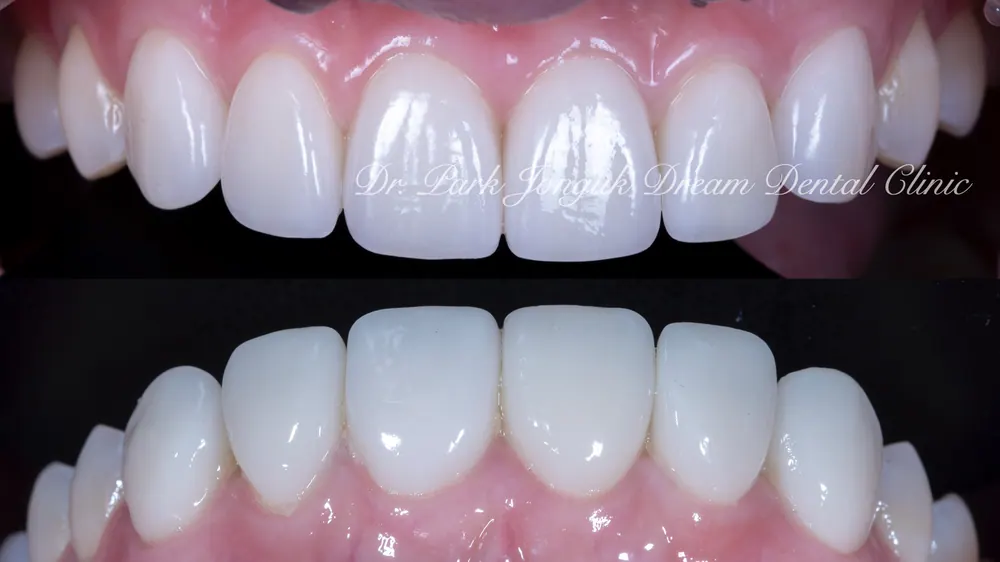
Compared with how it looked before treatment,
you can see a clear improvement.
Between a natural-looking tooth and an artificial-looking one,
preferences can vary from person to person.
The process of creating a natural-looking tooth
is an incomparably more demanding and difficult process than creating an artificial-looking one.
A big reason many clinics
treat patients with a simpler, artificial-looking shape rather than natural-looking veneers
comes down to this technical difficulty.
Since 2006, Dream Dental Clinic
This article is a clinical note written by Dr. Park Jonguk of Dream Dental Clinic, Gangnam; the original was published on his blog. The photographs shown are real cases he treated. Results vary with each patient’s condition, and every procedure carries the possibility of individual variation and side effects.
Quick Consult
Request a Callback
Leave your number and we will call you back during clinic hours.
Request Received
We will contact you during clinic hours. For urgent matters, please call +82-2-3448-0028.