
Sinsa Station Veneer Redo: A Look at the Process, Step by Step
Hello, I'm Park Jonguk, director of Dream Dental Clinic.
Redoing a veneer after Sinsa Station veneer treatment is a fairly demanding process.
There's a lot to think through before a redo.
When I asked ChatGPT about this, here's the kind of answer it gave.
The points to watch for when redoing a front-tooth veneer are as follows:
Cause analysis: You need to analyze what went wrong with the previous veneer. Check why the previous veneer was damaged, and remove that cause.
This part is very important. If there's a chipped or broken area, you need to check why it broke and whether there's an occlusal issue, and if the shape or color is disliked, whether that can actually be fixed.
2. Checking tooth health: Before placing a new veneer, the dentist needs to check the health of the patient's tooth. If the tooth's condition isn't good, treating the tooth should take priority over placing the veneer.
If there's been ongoing tooth sensitivity, or if the tooth has already been reduced too much, root canal treatment should be considered. With all-ceramic crowns rather than veneers, it's also fairly common for the decay underneath to be severe once the crown is removed, making treatment more difficult.
3. Choosing the right veneer: Choosing a different material or design of veneer from the previous one can help prevent the same problem from recurring. It's also important to choose a veneer of the right size and shape.
The materials available for veneer treatment generally fall into about 3-4 categories, and choosing among them is very important.
4. Proper technique: When redoing a veneer, the dentist needs to use proper technique. Care must be taken not to apply too much pressure to the tooth during the procedure.
Removing the veneer is very important. Removing it with an ordinary method can cause a lot of damage to the tooth. Laser removal of the veneer is the best way to minimize damage to the tooth.
As you can see, a redo is a very demanding, complex, and delicate process.
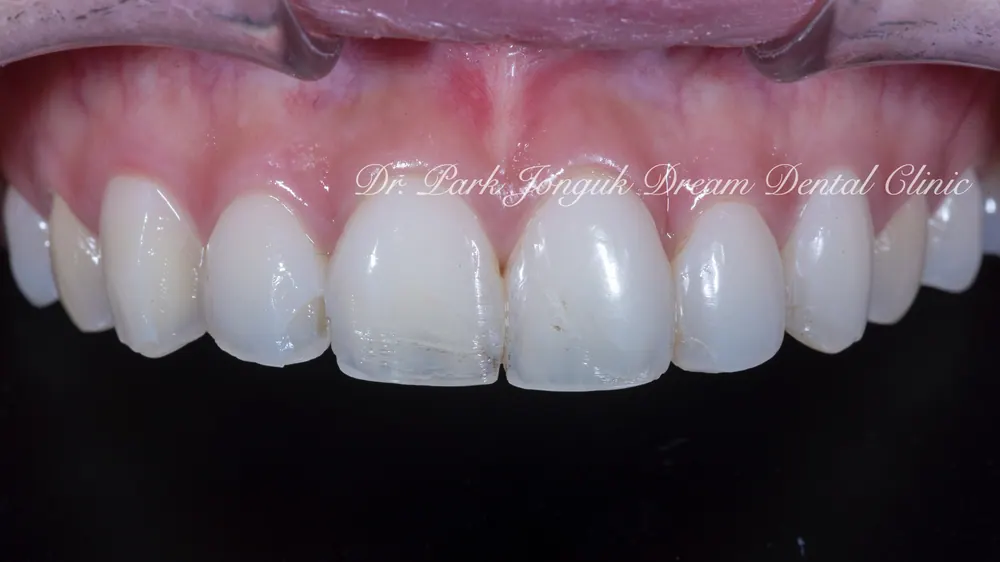
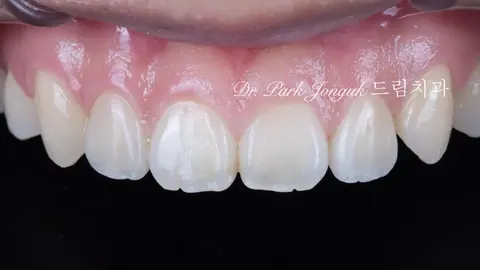
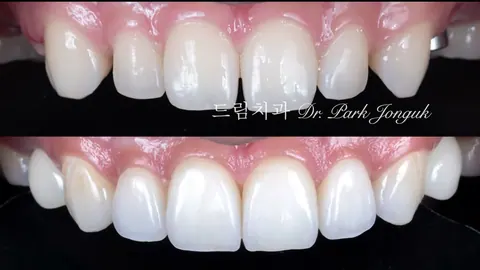
A veneer that hadn't been on very long
came in with chips broken off in several spots like this.
Even before it broke, the shape of the teeth already looked odd,
and the patient said each tooth looked strange in its own way, so she wanted to have them redone anyway.
Why did it break like this?
There was no occlusal problem.
Even if there had been an occlusal problem, it's not easy for several teeth to break like this.
This kind of breakage sometimes occurs with the one-day method — that is, the method where the veneer is designed and fabricated by computer.
First, please see the link below for what the one-day method actually involves.
One of the many drawbacks of the one-day method
is that it can't be made very thin.
0.5mm is generally seen as the limit, and depending on the material, even at 0.5mm the veneer often chips like a saw blade.
So to get around this drawback,
some labs mill it thicker first
and then have a technician grind it thinner by hand,
but the problem is that this process creates a lot of microscopic cracks in the ceramic.
Ceramic is essentially a form of pottery, so when it's ground down by hand to make it thinner,
a lot of vibration is generated and it's hard to apply force evenly,
which creates cracks, and that can lead to the kind of fracture seen here.
It's not so much a problem with the computer design and milling process itself —
it's a problem with the ceramic material itself, so unless a completely new material comes along, it probably won't be easy to solve.
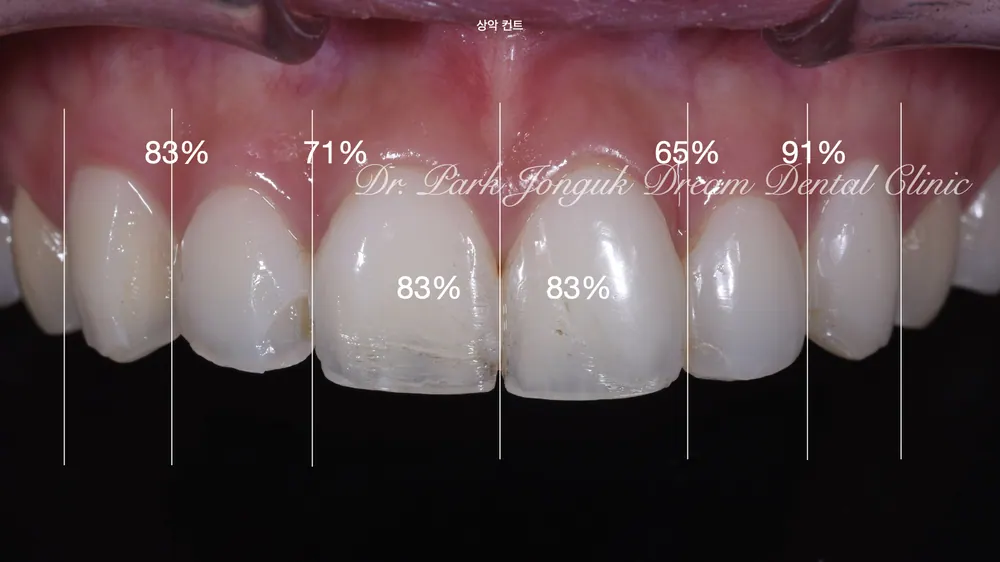
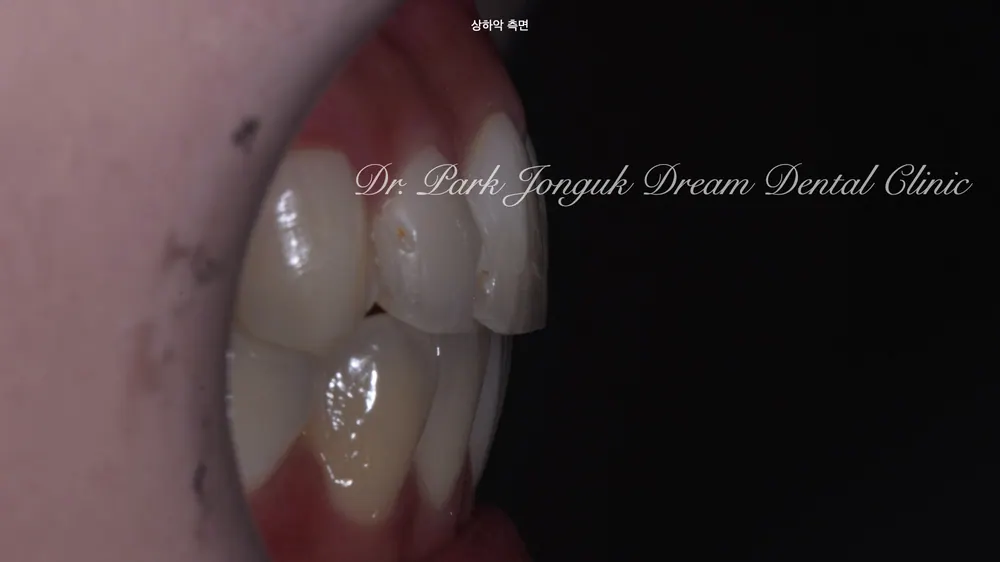
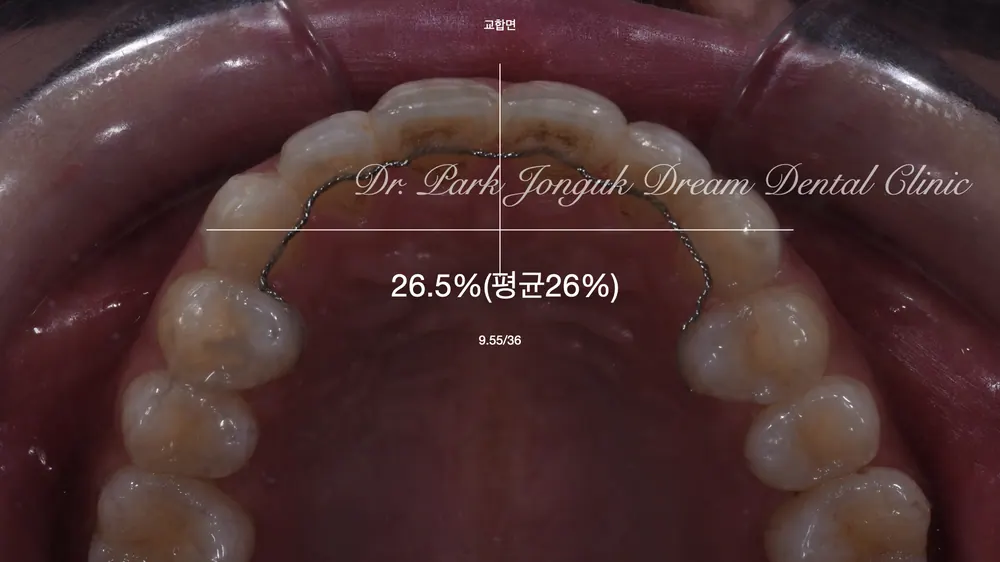
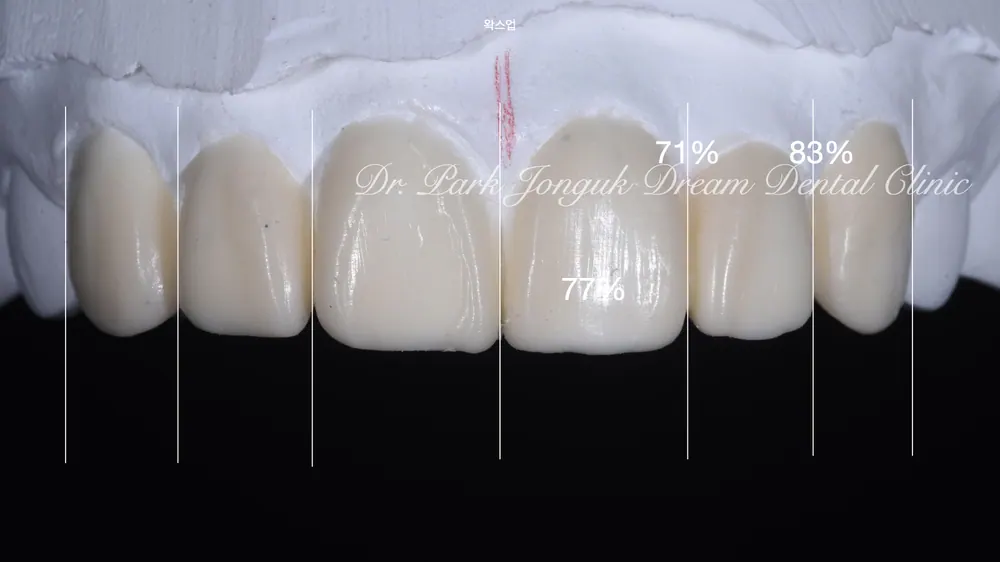
We proceed with diagnosis for the retreatment.
We check the current problems with the tooth's shape, color, and proportions,
and work out how these should be changed for the redo.
Removal of the Sinsa Station veneer is done with a laser, as in the link above.
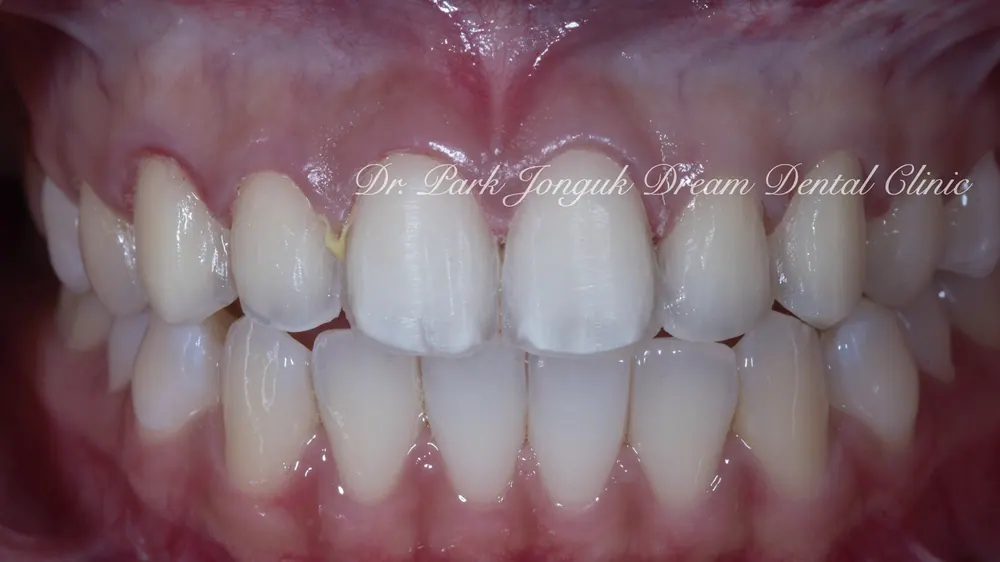
After removing the Sinsa Station veneer,
additional tooth reduction was completed to prepare for the improved new shape.
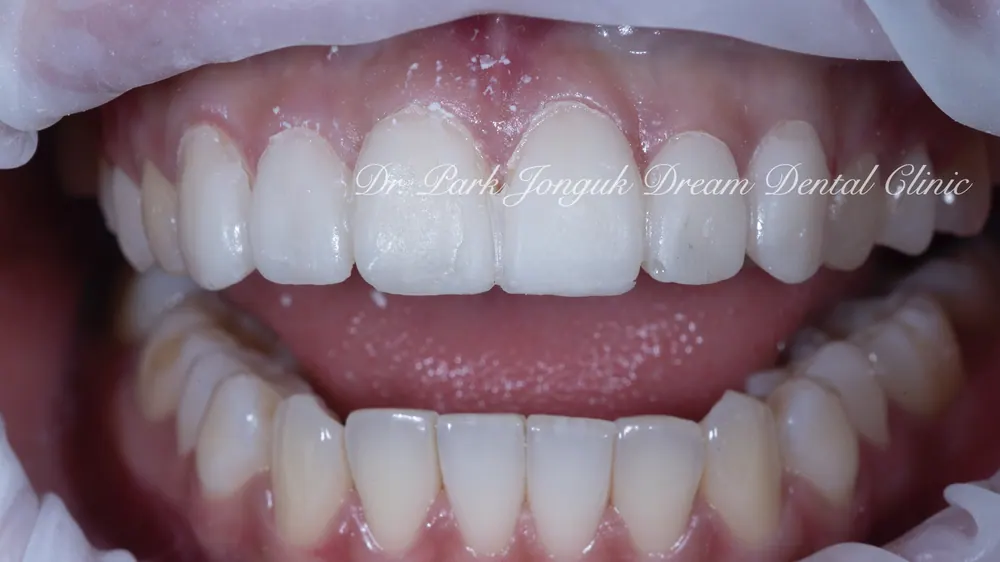
Using temporary teeth,
we predict the outcome of treatment and consult with the patient.
Temporary teeth are made partly
to protect the tooth while the Sinsa Station veneer is being fabricated,
but more importantly, they're used to predict the treatment result and discuss it with the patient.
In a redo, they're also used to check for any occlusal issues.
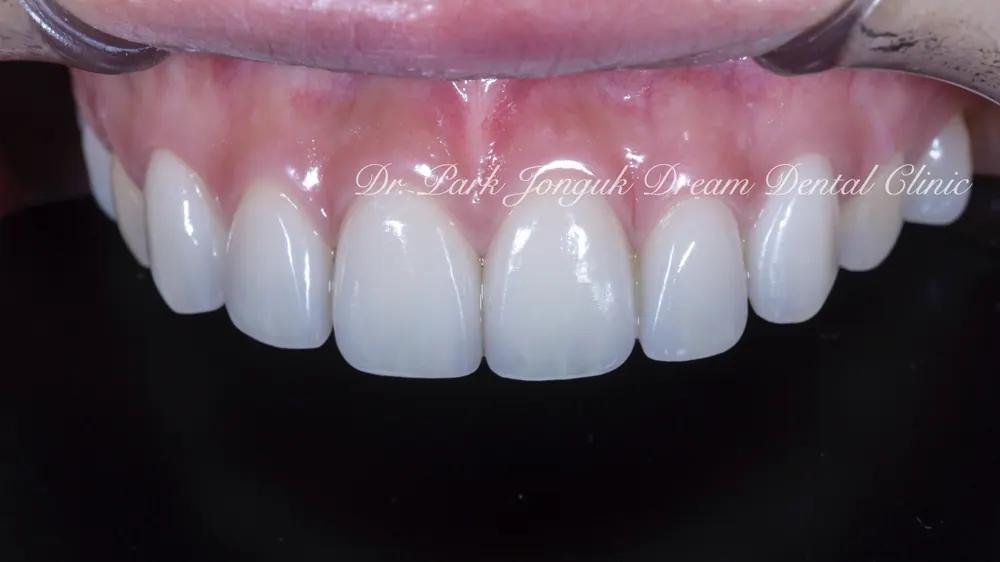
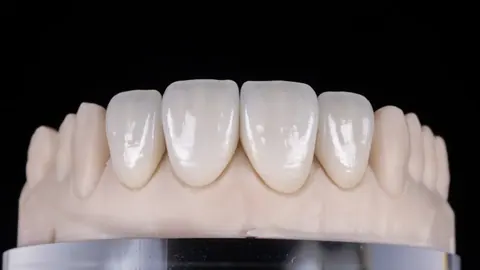
The redo was finished with a very natural look.
The color of the Sinsa Station veneer is also close to that of a natural tooth,
and the translucent feel is well preserved too.
Dimensionality was used to add even more naturalness,
and the symmetry was matched as closely as possible.
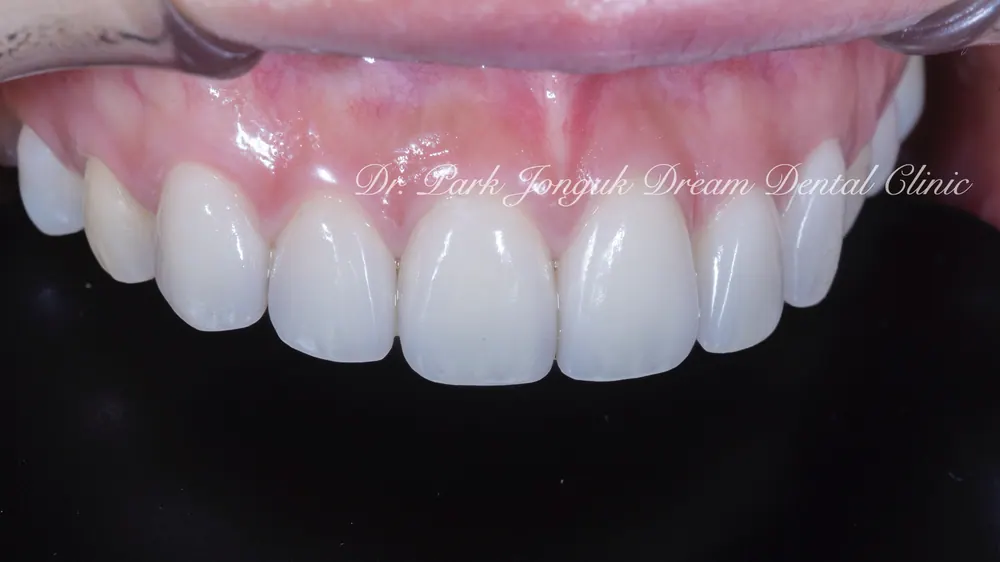
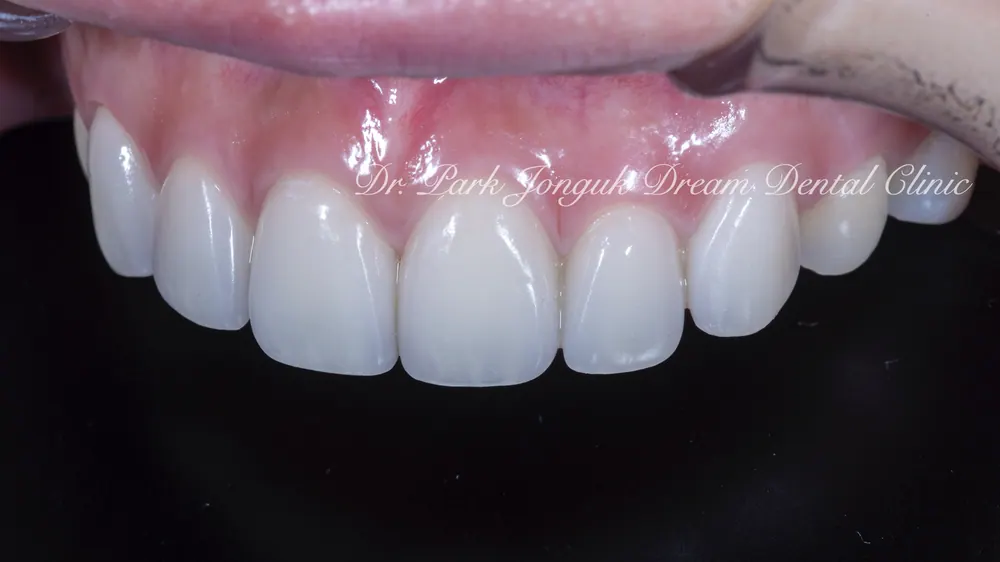
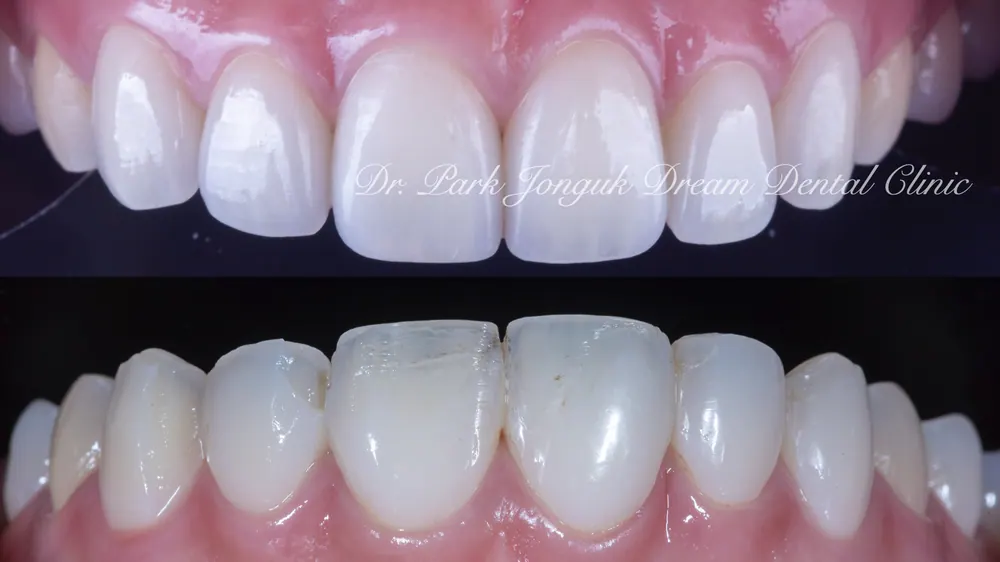
You can see a level of naturalness
that the one-day method simply cannot match.
Extensive experience matters a great deal in veneer redo treatment.
Since 2006, Dream Dental Clinic
This article is a clinical note written by Dr. Park Jonguk of Dream Dental Clinic, Gangnam; the original was published on his blog. The photographs shown are real cases he treated. Results vary with each patient’s condition, and every procedure carries the possibility of individual variation and side effects.
Quick Consult
Request a Callback
Leave your number and we will call you back during clinic hours.
Request Received
We will contact you during clinic hours. For urgent matters, please call +82-2-3448-0028.