
Redoing Artificial-Looking Veneers into Natural Ones, Part 1
Hello, I'm Park Jonguk, director of Dream Dental Clinic.
What I want to talk about today is probably a topic
where opinions will differ depending on personal taste.
In fashion, too, different brands have designs that some people like and others don't,
and it's the same with cars — preferences clearly differ by brand.
Cosmetic surgery is no different.
Even if it doesn't suit the face,
some people may prefer an unconditionally sharp, high nose,
and even if it looks unnatural, some may prefer unconditionally large, heavily made-up eyes.
Design preferences inevitably vary from person to person.
Veneers are also a treatment where very fine design details matter a great deal.
Depending on how the ceramic is made,
the results can vary enormously.
Depending on the veneer material,
depending on the fabrication method,
depending on how a single line is placed,
and depending on how the tooth tip is finished,
opinions are bound to differ quite a bit.
I'd like to talk about the very fine details of veneer design.
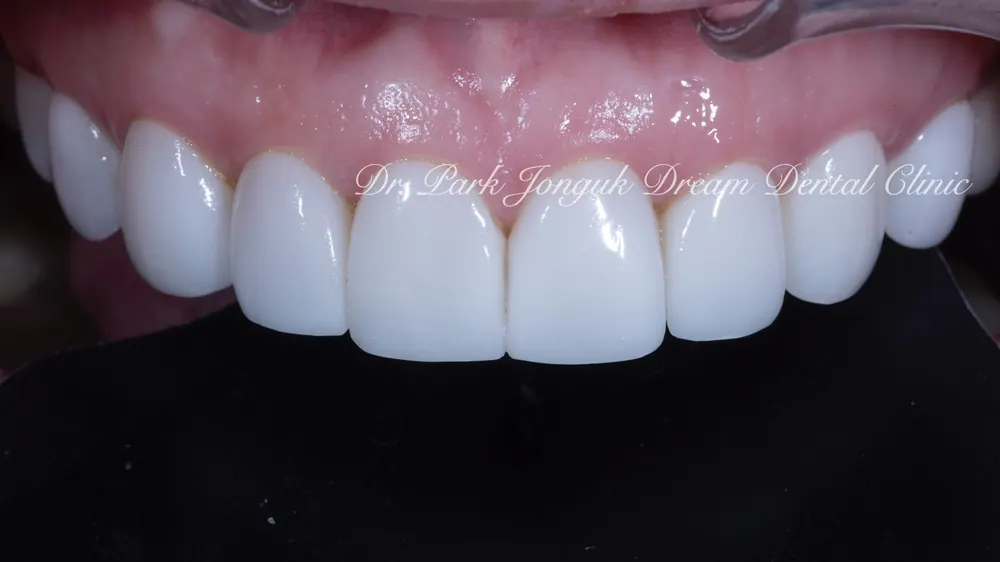
Not long after having veneer treatment done elsewhere,
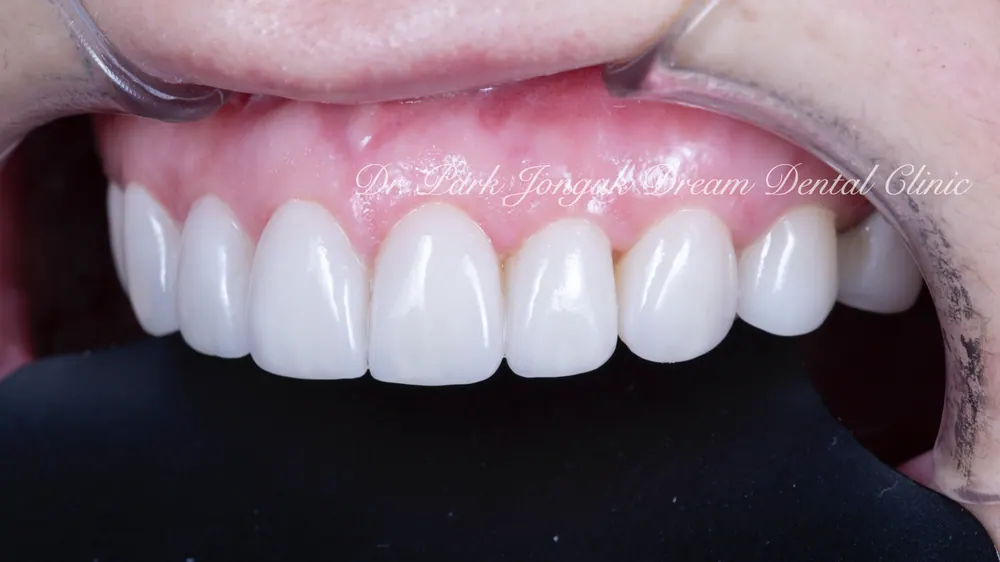
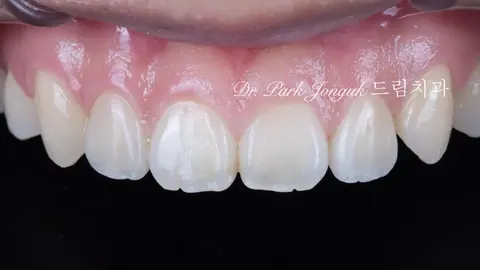
the patient came in for a redo because the shape and color looked too unnatural.
Of course, redos of older veneers are more common,
but even in a case like this, where the veneers were still fairly new,
patients sometimes come in for a redo purely because of a design problem.
What matters in a case like this
is figuring out exactly what the patient clearly doesn't like,
and how they want it improved.
In truth, most patients only have a general sense of what feels off overall —
they rarely come in having thought through the fine details.
This particular case had received veneer treatment using the same-day method,
and you can see the link below for the difference between the same-day method and the handmade method we use.
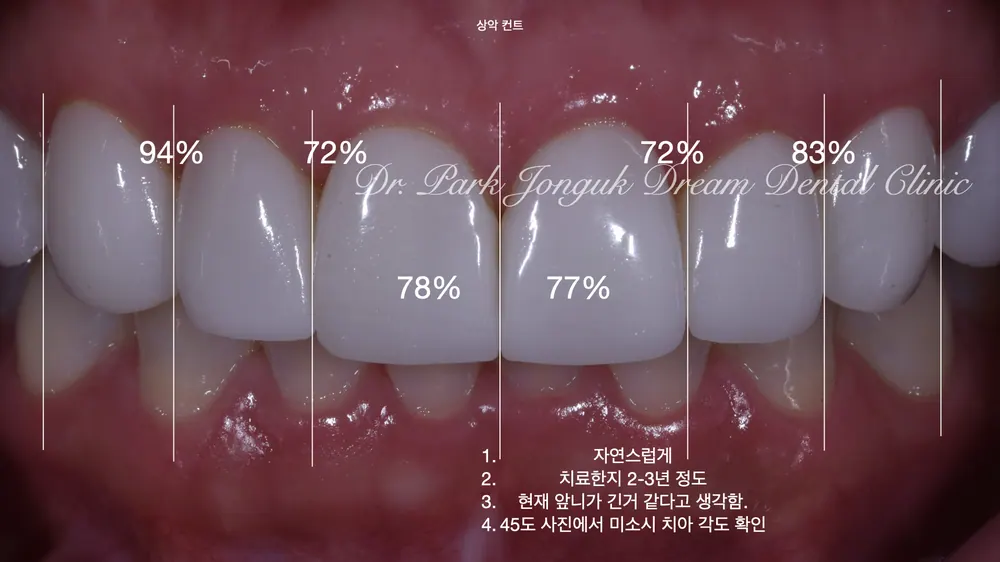
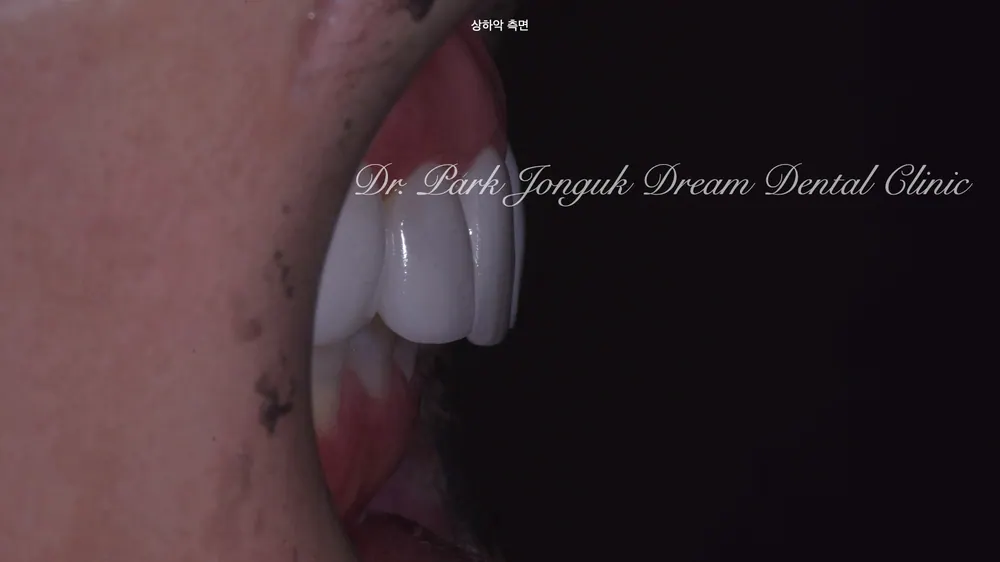
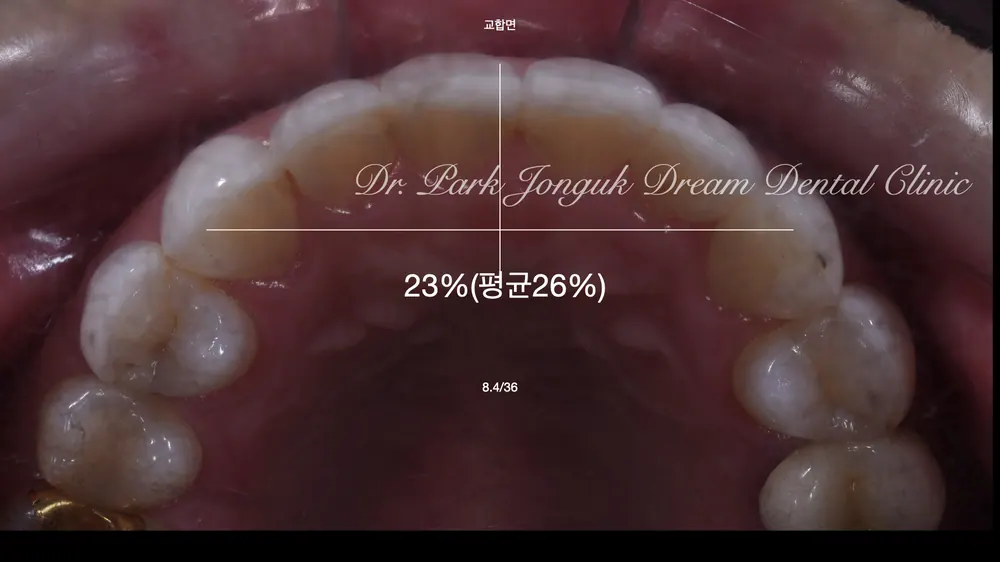
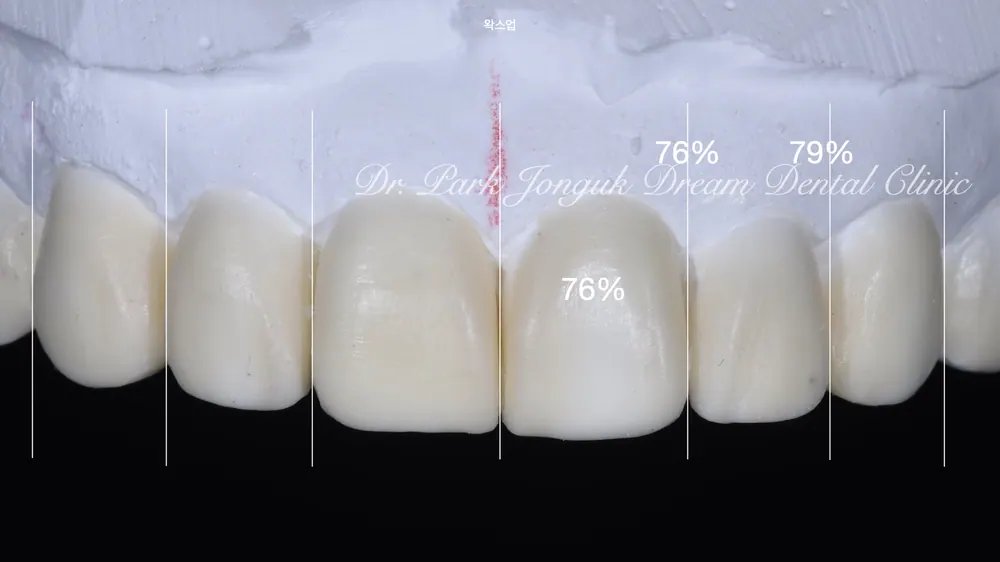
Analyzing the current condition before treatment is essential.
We identify the problems as they stand now
and work out a very detailed treatment plan
for how to improve them.
Assuming the ceramic is removed,
we analyze, in a variety of ways, how the tooth should be changed.
Now we have to remove the veneers,
and this step is extremely important.
Please see the link below for a laser-based veneer removal method that minimizes damage to the tooth.
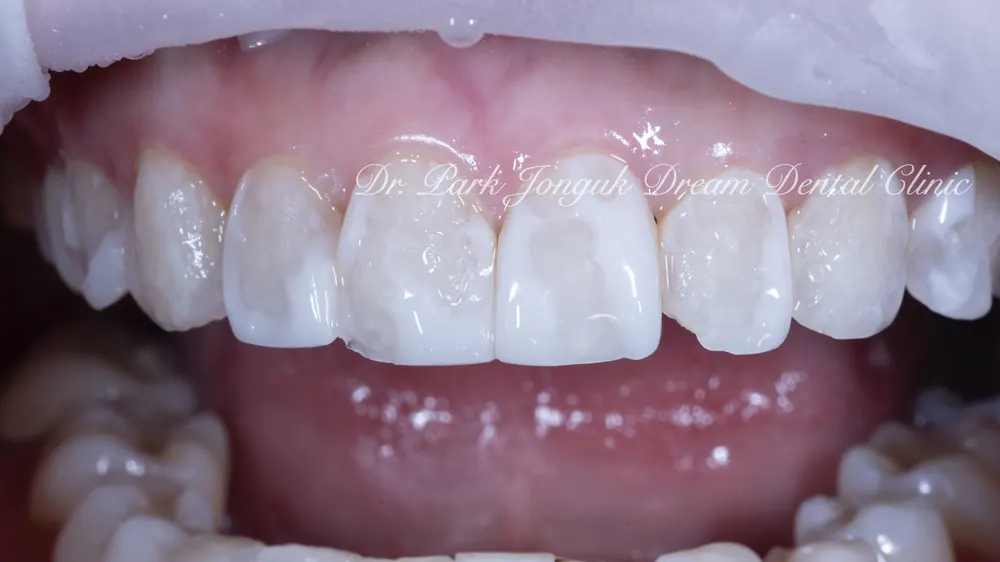
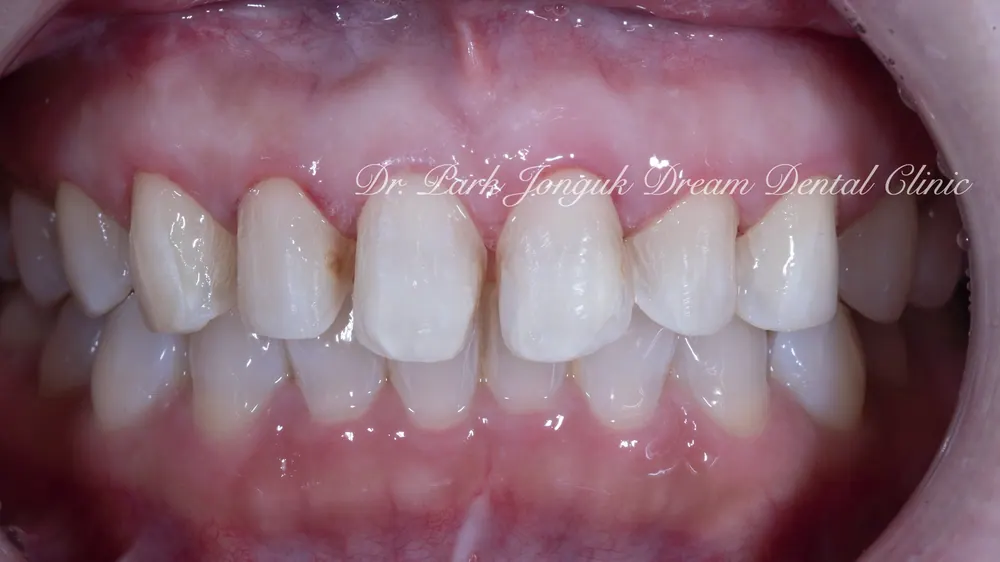
Using the method linked above, we remove the veneers with a laser.
The tooth had already been reduced quite significantly.
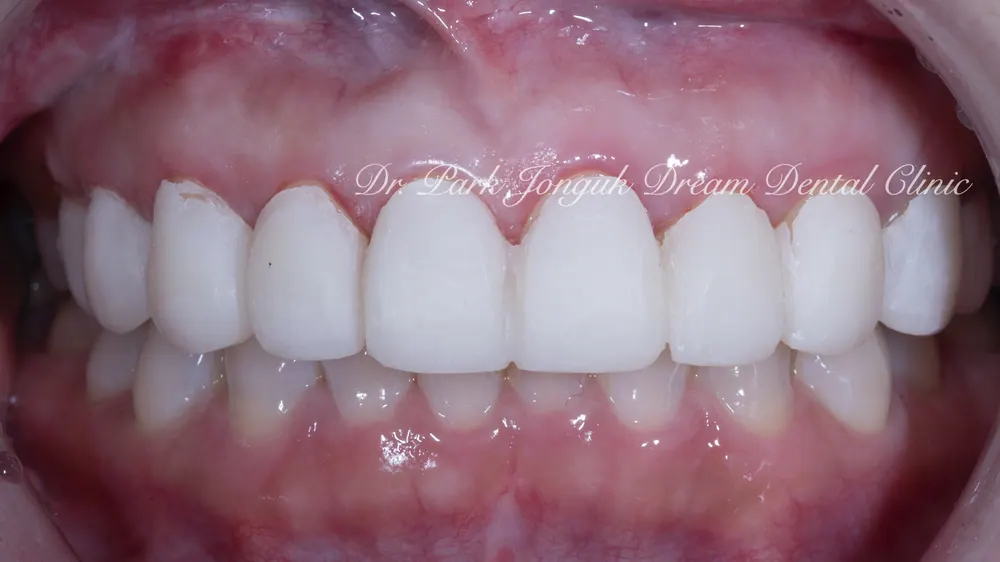
We made several temporary veneers
to gauge the size and shape we were aiming for.
This doesn't let us achieve the fine details,
but it does let us check the proportions, size, and volume between the teeth.
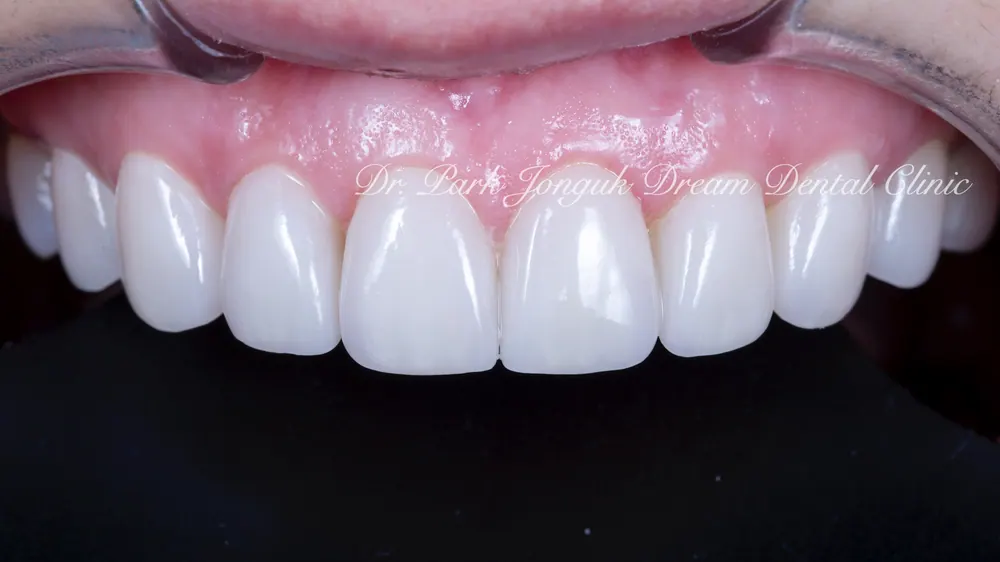
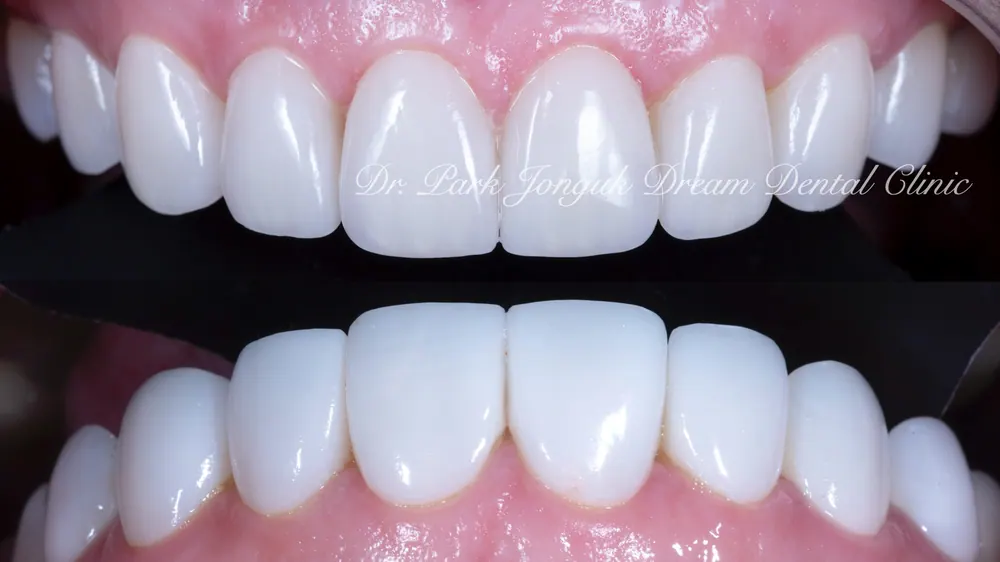
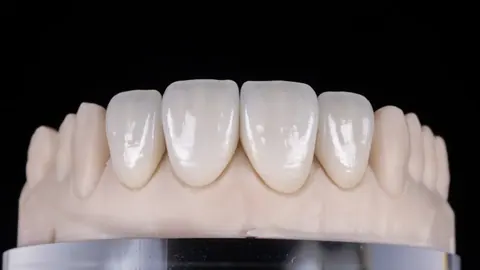
With this general feel established, the veneer redo was completed.
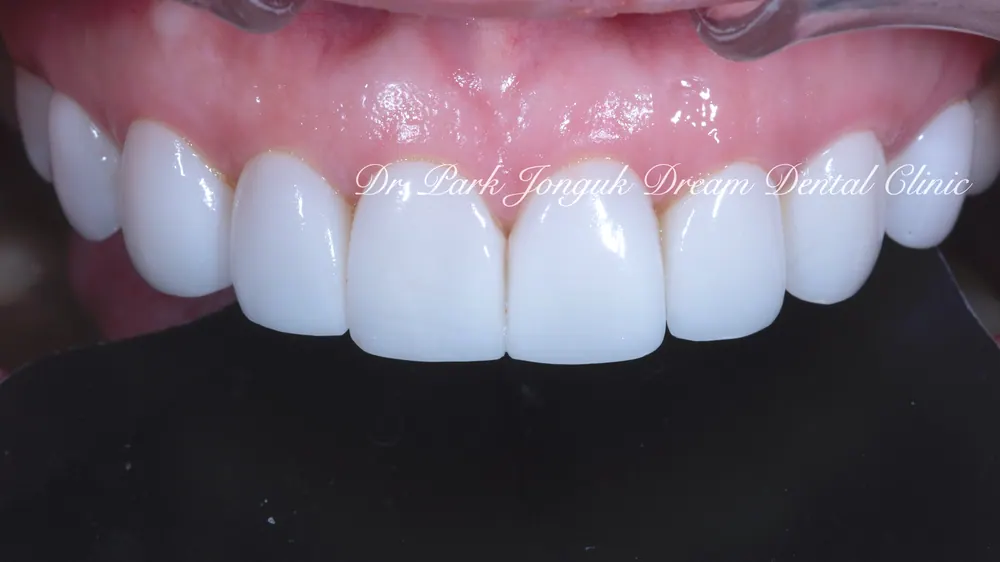
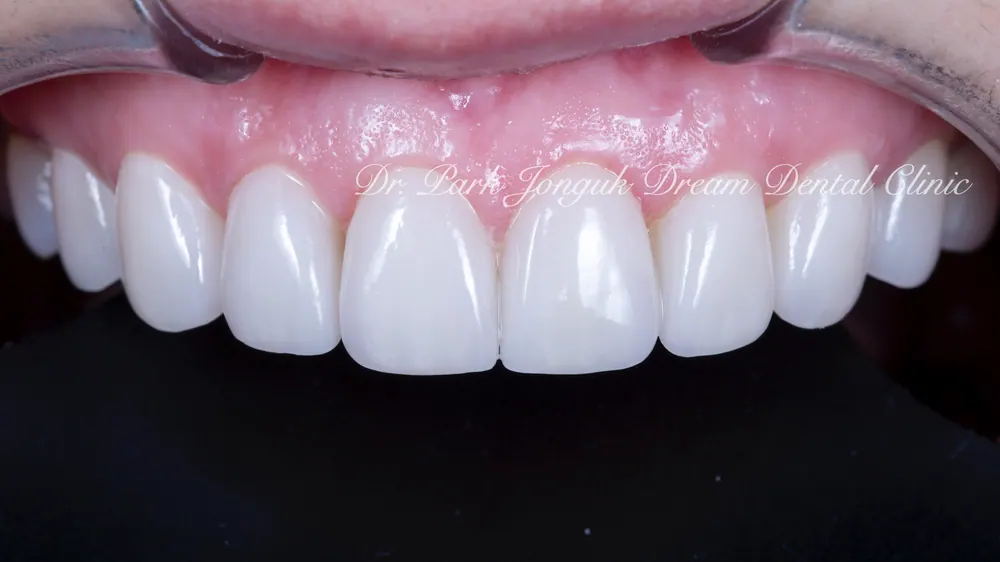
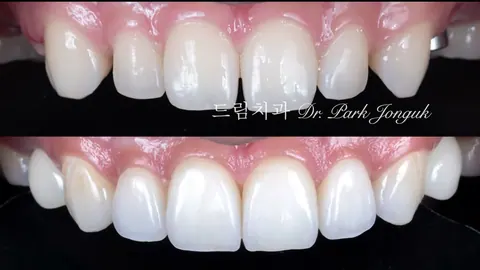
Comparing it with the before-treatment photo,
1. The tooth color went from a completely opaque, artificial white to a natural look with a clear sense of translucency.
2. The teeth now clearly have a sense of dimensionality. A veneer with no dimensionality and a flat, opaque white ends up feeling like a stick of xylitol gum.
3. Looking at the incisal edge, you can see a young, dynamic quality that's now been properly captured.
4. The canine went from a rounded, awkward shape to one with clear, defined character.
5. The shape of the front tooth went from square to a natural front-tooth shape.
Beyond these, you can see that quite a lot of other fine details have changed as well.
This is exactly the kind of thing that divides opinion —
some people may genuinely prefer that artificial, unnatural-looking tooth.
That said, that kind of result is made very simply, by computer.
Because it's a method designed to be made quickly and simply,
it just isn't capable of capturing that level of detail.
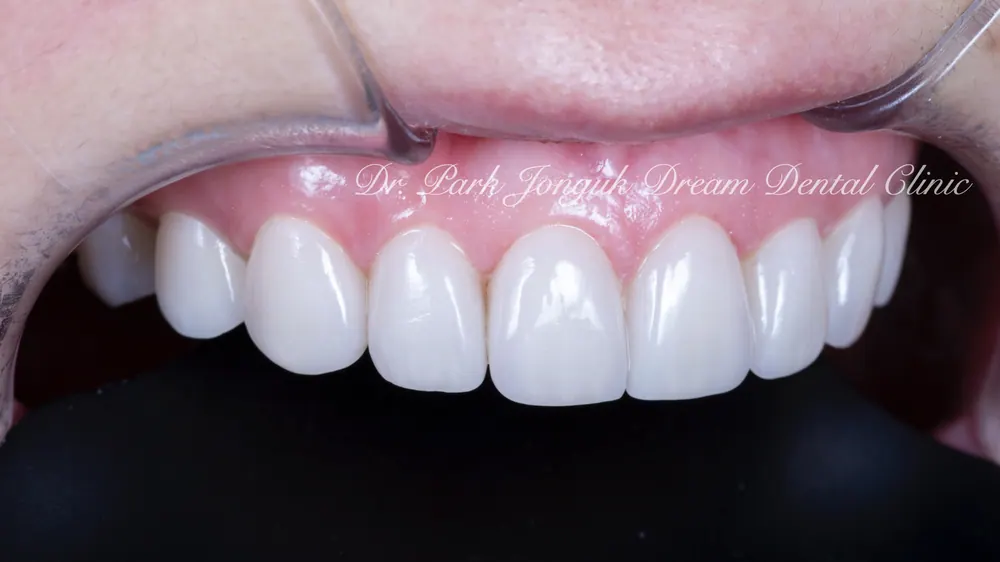
Since 2006, Dream Dental Clinic
This article is a clinical note written by Dr. Park Jonguk of Dream Dental Clinic, Gangnam; the original was published on his blog. The photographs shown are real cases he treated. Results vary with each patient’s condition, and every procedure carries the possibility of individual variation and side effects.
Quick Consult
Request a Callback
Leave your number and we will call you back during clinic hours.
Request Received
We will contact you during clinic hours. For urgent matters, please call +82-2-3448-0028.