
All-Ceramic Crown and Veneer Redo for Gum Inflammation After Treatment
Hello, I am Park Jonguk, director of Dream Dental Clinic.
Treatment using veneers or all-ceramic crowns
to make teeth beautiful while also achieving the effect of correcting tooth alignment
is called dental contouring.
Some clinics even advertise it as though it were a treatment different from veneers.
But simply giving a treatment a different name doesn't make it a different treatment.
Overseas it's called "laminate veneer," usually just referred to as a veneer.
In Korea it's called a laminate,
and it refers to the general term for any treatment that involves
a fine reduction of the front surface or sides of the tooth, and bonding a ceramic plate (veneer) onto it.
Whether the amount of reduction is greater or smaller,
once it meets certain criteria it counts as a veneer,
and if reduction goes further and the whole tooth is capped,
that is called an all-ceramic crown.
Giving this a different name and presenting it as though it were a different treatment
is, I believe, wrong and risks confusing patients.
Whatever the method, the goal should be to reduce as little tooth structure as possible
and to treat in a way that doesn't affect the health of the tooth.
The problem is that overly aggressive treatment sometimes leads to serious side effects.
Among various side effects, the most common
is gum inflammation.
Due to a poor design or treatment, or due to poor maintenance,
persistent gum inflammation can occur after treatment.
In these cases, the process of redoing the treatment is also demanding.
You must identify the cause, establish the correct treatment plan, and accordingly
carry out the redo slowly, one step at a time.
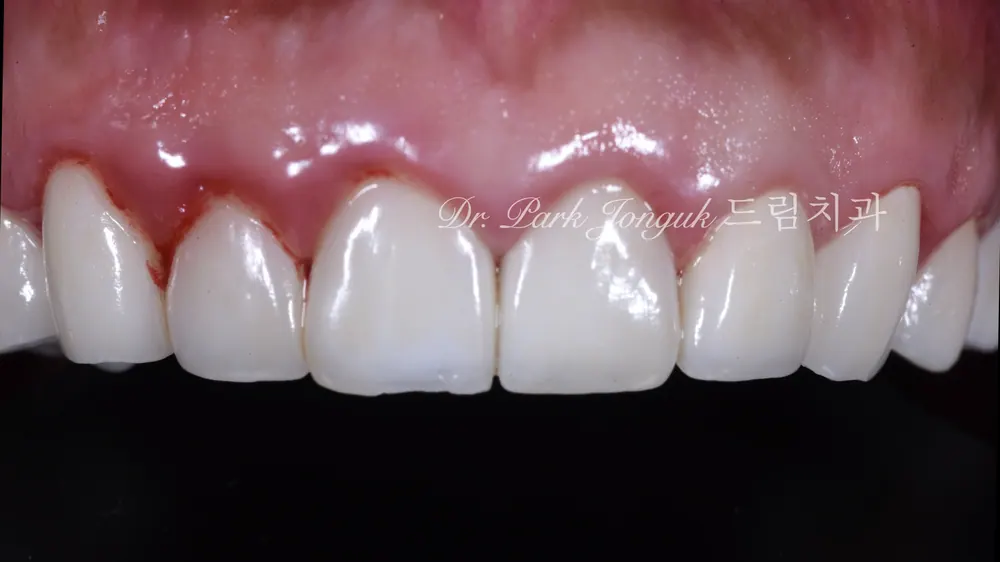
The patient had all of the front teeth treated with all-ceramic crowns,
and came in for a redo due to persistent gum inflammation.
All six teeth had all-ceramic crowns,
and every tooth had inflammation.
The first thing that had to be done was gum treatment.
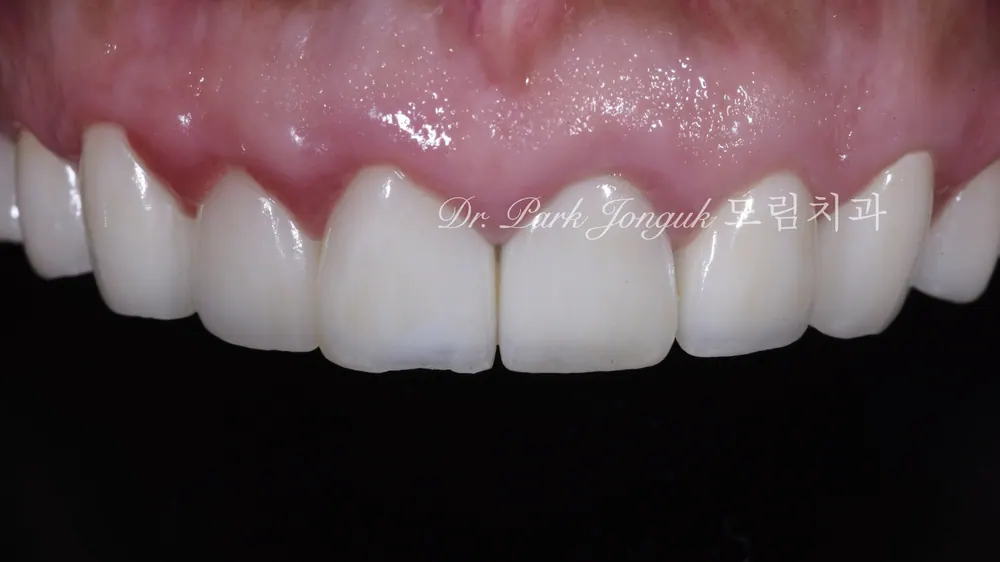
Through gum treatment, the inflammation improved somewhat,
but the inflammation had not disappeared completely.
Since the treatment was also quite old,
and there was a chipped area at one edge as well, we decided to proceed with a redo.
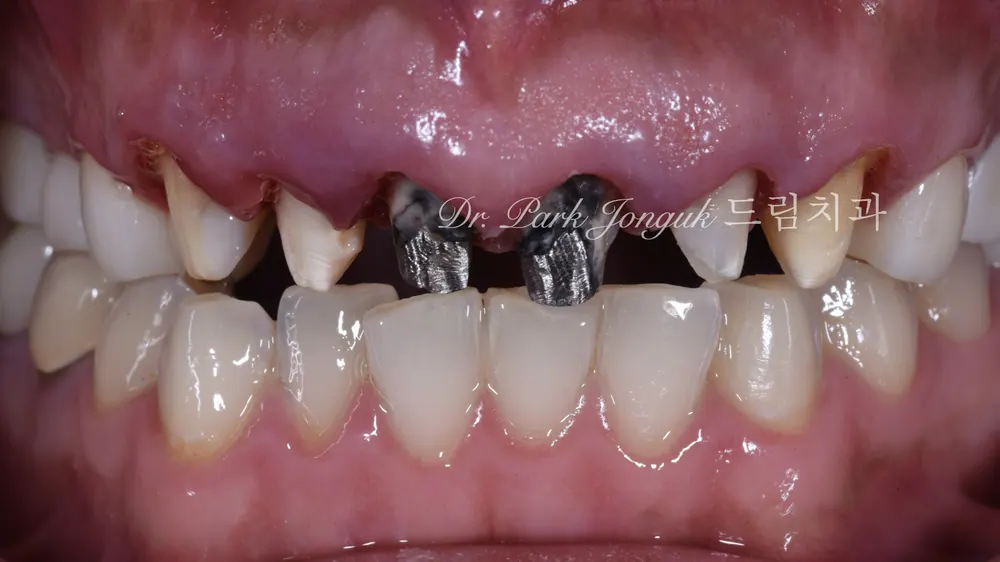
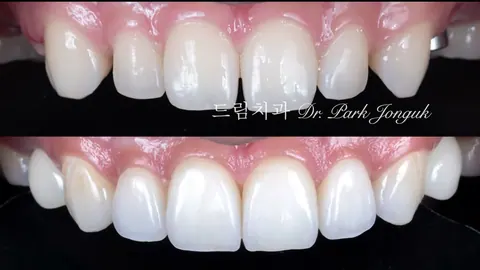
This is the appearance after the all-ceramic crowns were removed.
Looking at cases like this,
I often feel a sense of regret that it had to come to this kind of treatment.
Of course, if the front tooth had been broken due to an accident it can't be helped,
but the case above is one where, for the single purpose of making the teeth pretty,
the teeth were excessively reduced,
and on top of that, since it's the front teeth, metal posts were placed inside, causing serious discoloration,
which also made removing that discoloration impossible.
For dental contouring — whether veneers or all-ceramic crowns —
getting the first treatment right is extremely important.
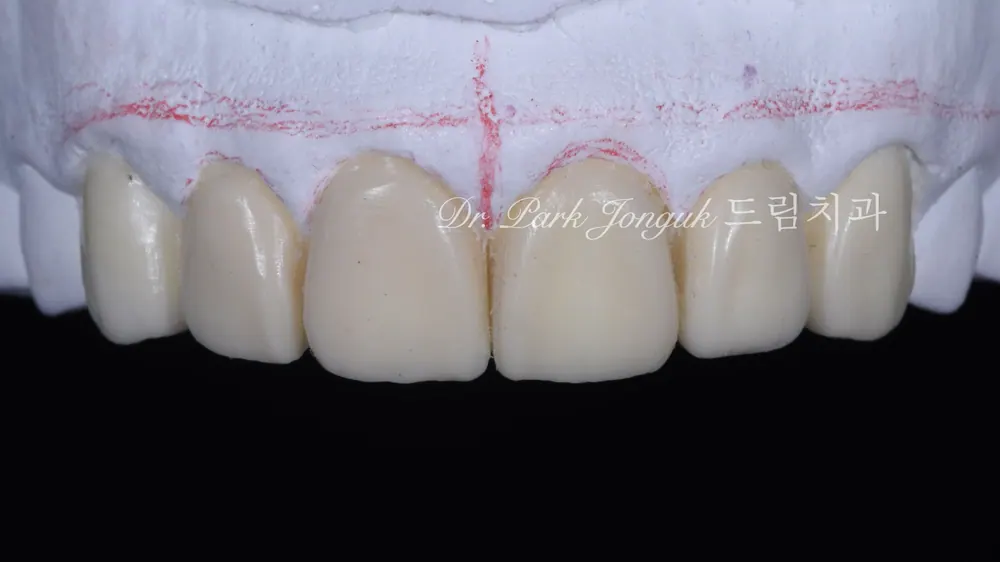
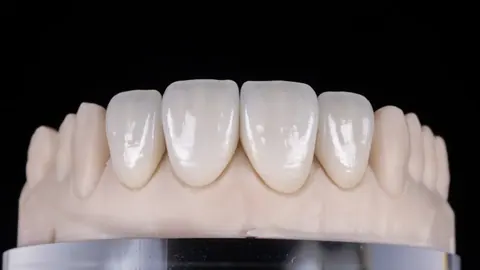
We plan in advance, using wax, how to change the shape of the teeth.
The wax-based precision diagnostic process is a very important step in re-treatment.
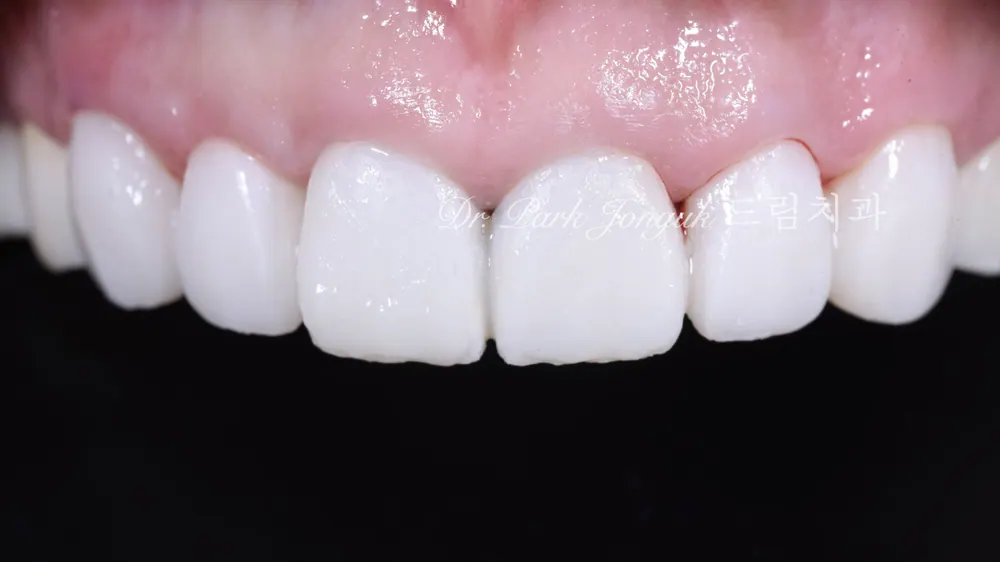
We make temporary teeth using the wax-up,
and observe this state for at least two weeks.
We make adjustments so that the gum inflammation completely disappears,
and once the inflammation is completely gone,
we proceed with the all-ceramic crown redo, referencing the temporary teeth.
The temporary teeth are very important in this process.
The gum area has to be shaped very precisely.
The cause of the inflammation could be excessive tooth reduction,
or it could be a problem with the ceramic shape,
or it could be leftover cement.
For every issue, we use the temporary teeth to find the cause and set the treatment direction.
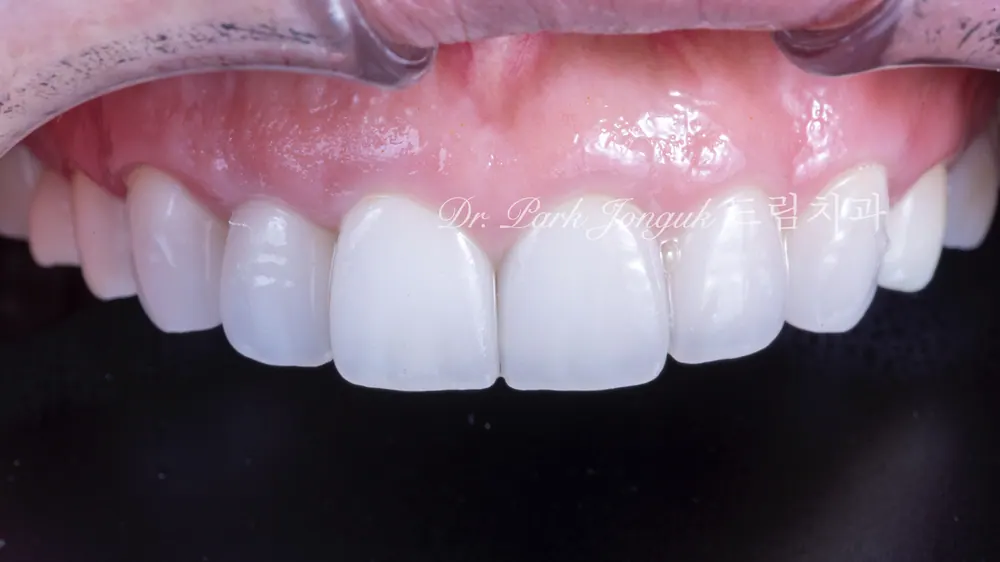
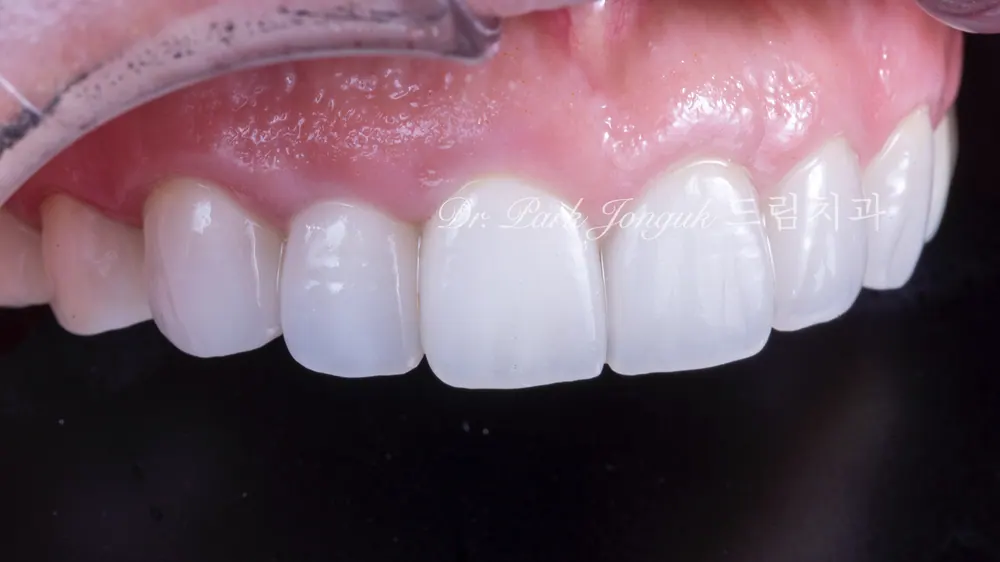
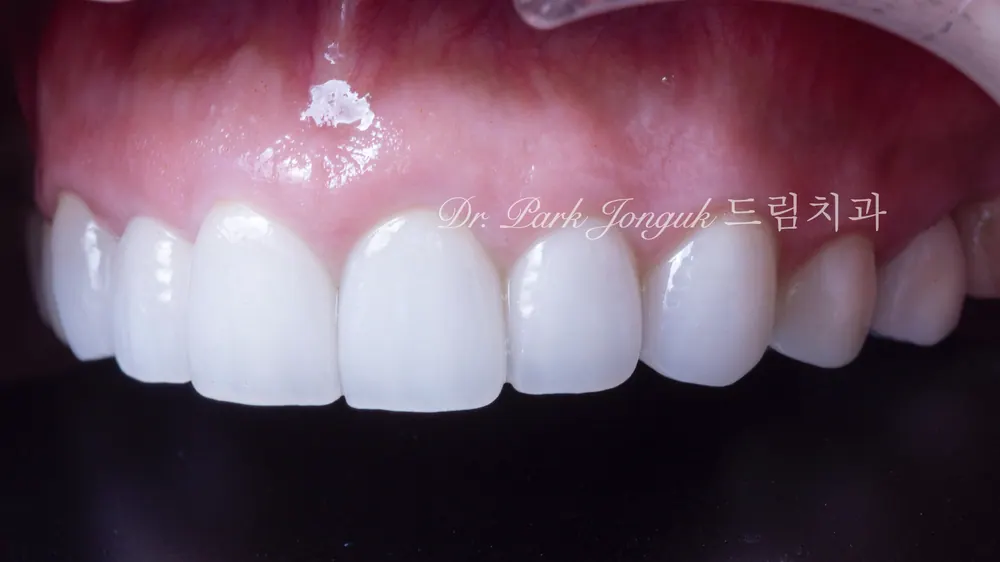
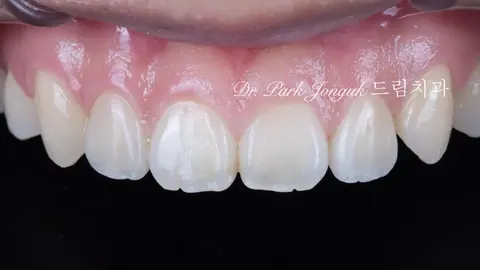
The redo has been completed.
You can see that the gums have healed extremely cleanly.
The shape of the teeth has also improved considerably.
The gums have regained a healthy pink color,
and more importantly, ongoing care will need to continue going forward.
At our Dream Dental Clinic, we place great importance on follow-up care.
Since 2006, Dream Dental Clinic
This article is a clinical note written by Dr. Park Jonguk of Dream Dental Clinic, Gangnam; the original was published on his blog. The photographs shown are real cases he treated. Results vary with each patient’s condition, and every procedure carries the possibility of individual variation and side effects.
Quick Consult
Request a Callback
Leave your number and we will call you back during clinic hours.
Request Received
We will contact you during clinic hours. For urgent matters, please call +82-2-3448-0028.