
No-Prep Veneers: Minimizing the Side Effects of Veneer Treatment
Hello. This is Park Jonguk, director of Dream Dental Clinic.
Veneers have long been misunderstood,
one of the treatments surrounded by a lot of misconceptions.
In particular, around the early 2010s, at a number of clinics,
veneer treatment was performed far too aggressively,
and it was often described with terms like "rapid orthodontics,"
as if the treatment were a form of braces,
which seems to have built up a great deal of misunderstanding about the treatment.
The biggest stigma attached to veneers
is the idea that the tooth gets reduced so much that it becomes sensitive and painful,
eventually requiring root canal treatment.
This seems to come from confusion between all-ceramic crowns and veneers as treatments,
and that confusion is what created this kind of stigma.
In particular, I think a big factor was that some clinics performed cosmetic tooth work
that was actually an all-ceramic crown — a method involving a lot of tooth reduction —
while mistakenly telling patients it was the veneer method, which barely reduces the tooth at all.
As a result, veneers have become one of the more controversial treatments,
to the point that people think of side effects the moment veneers come up.
But when it goes through a proper, precise diagnostic and treatment process,
there aren't many treatments with fewer side effects than veneers.
The problems arise because something is being done that shouldn't be done with this method.
The side effects of veneers
can include tooth sensitivity, gum inflammation, and fracture or debonding after treatment.
Since most side effects originate from the tooth reduction,
the way to minimize the side effects of veneers
is to minimize the amount of tooth reduction,
and among veneer methods, no-prep veneers can be said to have the fewest side effects of all.
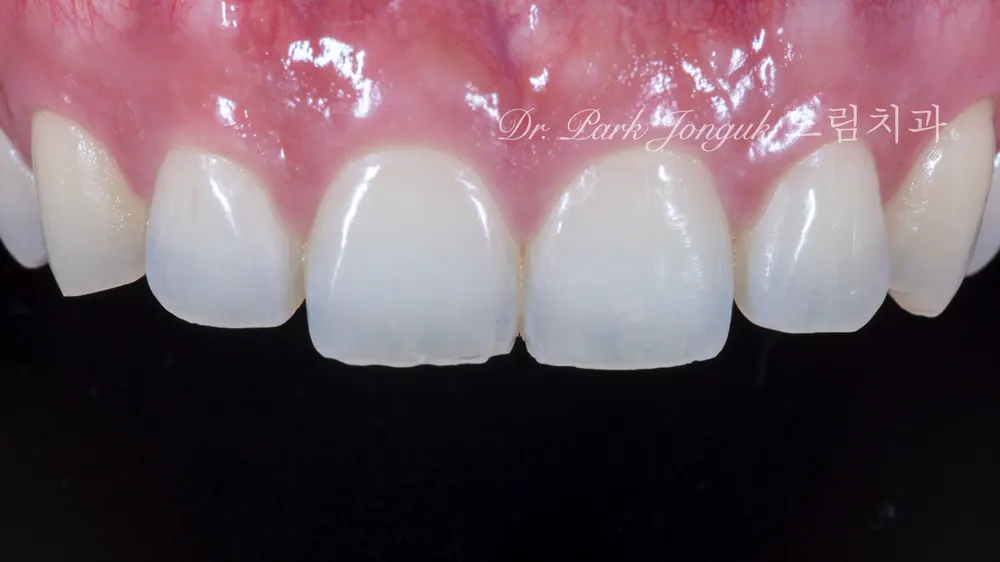
Viewed from the front, the alignment is good,
and although the tip of the tooth is slightly chipped,
there's no problem visible at all in the shape or color of the teeth.
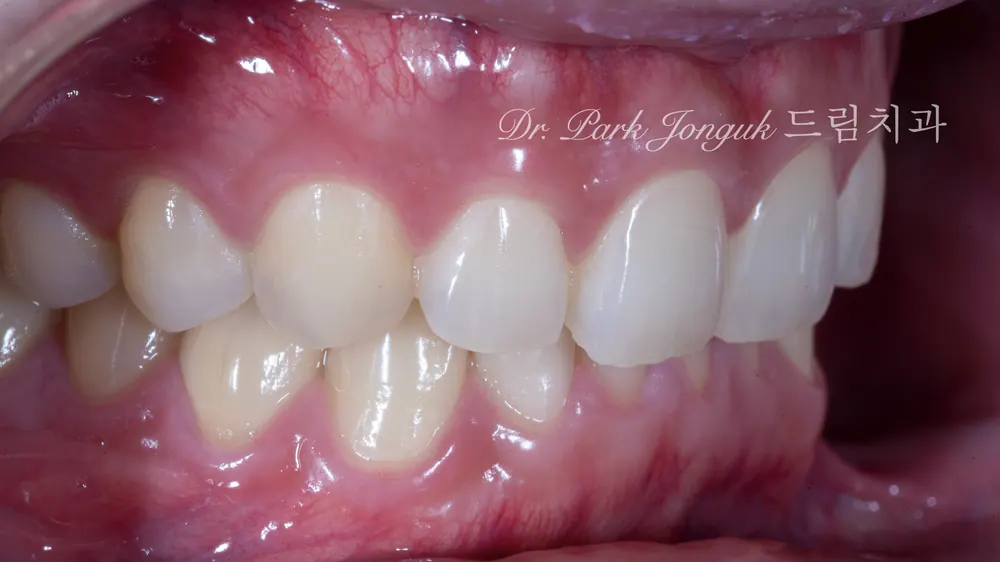
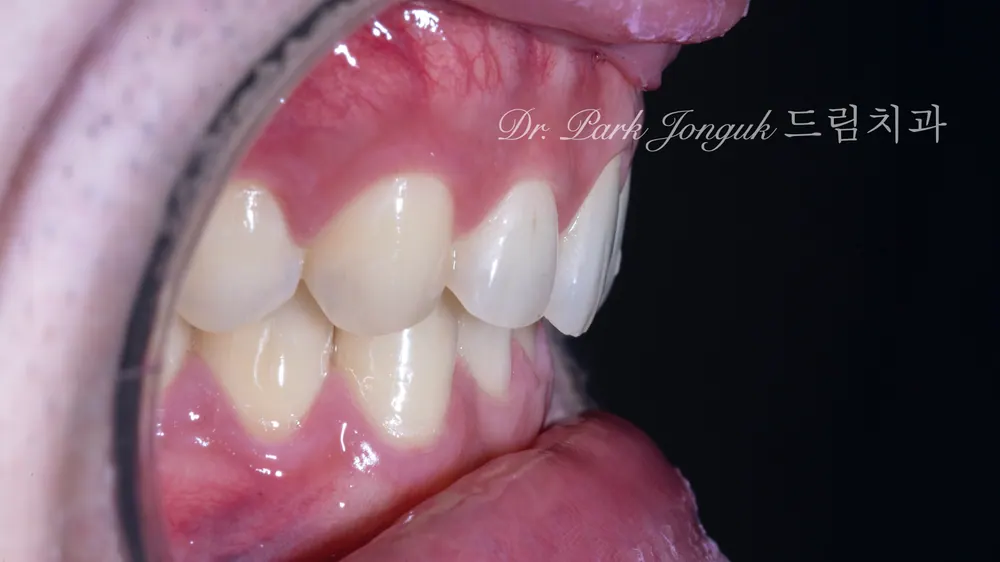
But when you look from the side like this,
you can see the teeth are quite severely over-retracted.
The teeth are tilted much too far inward.
This means the teeth don't show well when speaking or smiling,
which creates an awkward look.
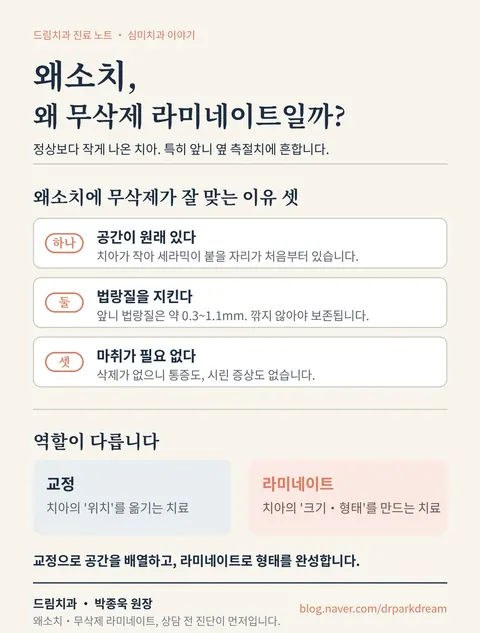
When the alignment is good, the teeth are small, and the teeth are over-retracted like this, no-prep veneers become possible.
Here I want to emphasize once more:
not every case can be done as no-prep veneers.
Among the patients who typically come in, only around 10% qualify.
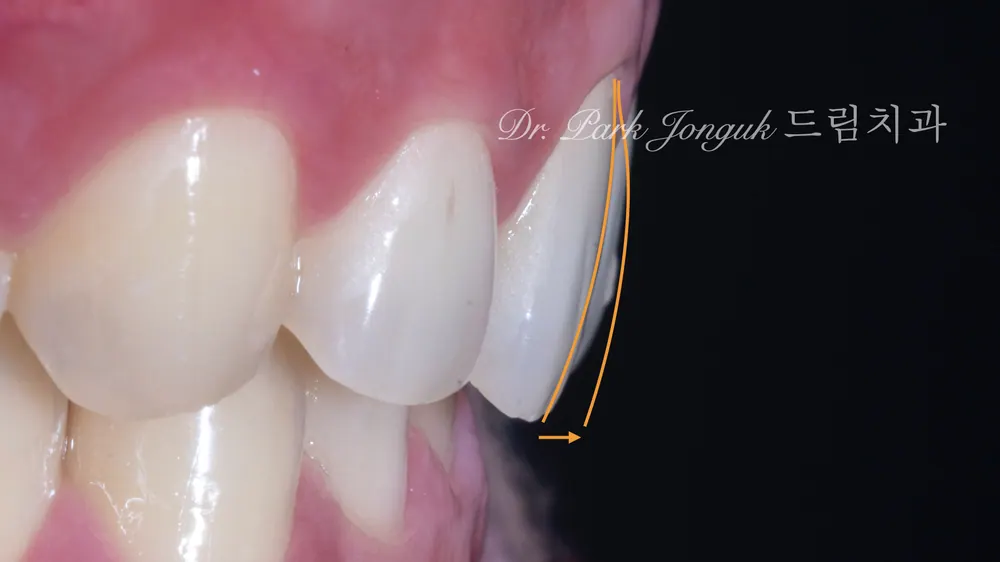
The goal here is to bring these severely over-retracted teeth back outward,
creating a normal-looking alignment.
Because the teeth need to come outward like this, even without reduction,
veneers are possible.
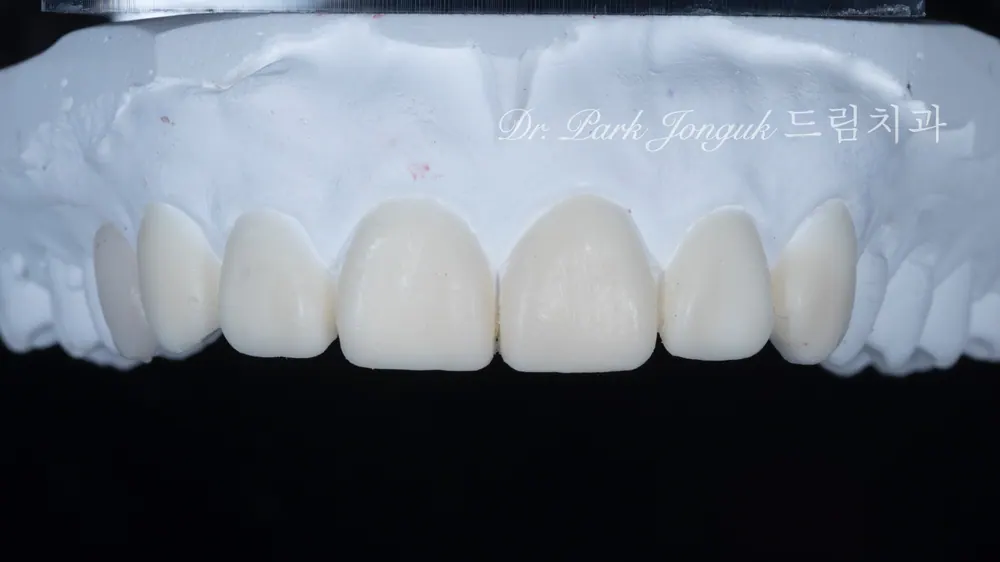
Using wax,
we build the possible result in advance to see what it will look like.
This kind of precise wax-based diagnosis for no-prep veneers
is a very important process.
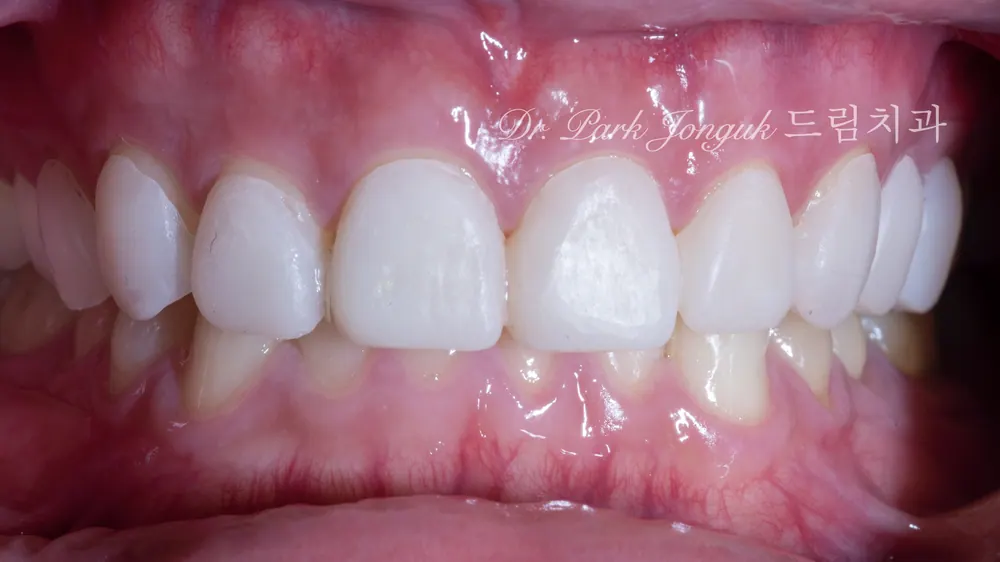
Using this wax diagnostic model,
we use resin to build in advance
what shape the treatment can take,
so the wax-up precision diagnostic process must always be carried out.
Using these temporary teeth, we consult with the patient about the treatment outcome in advance.
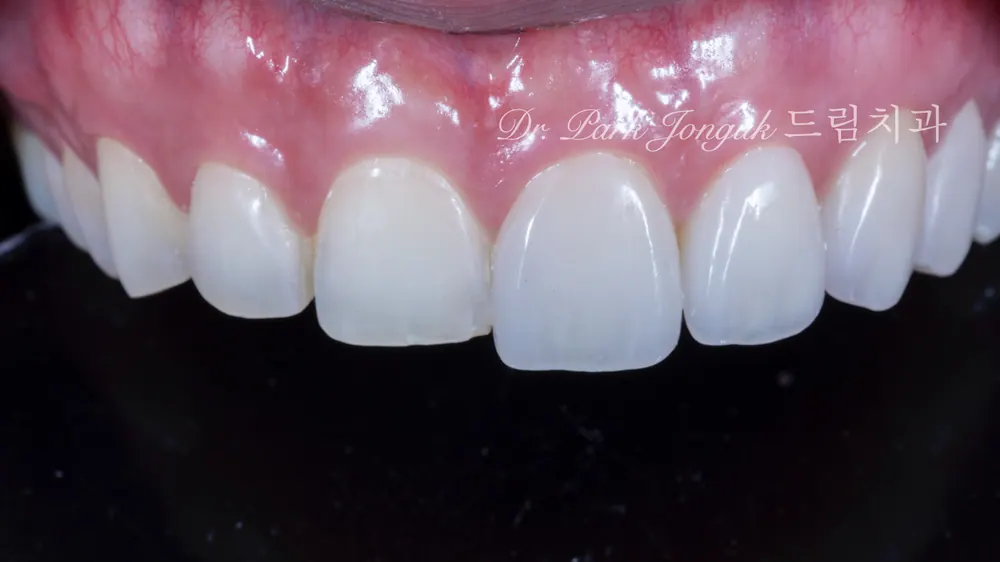
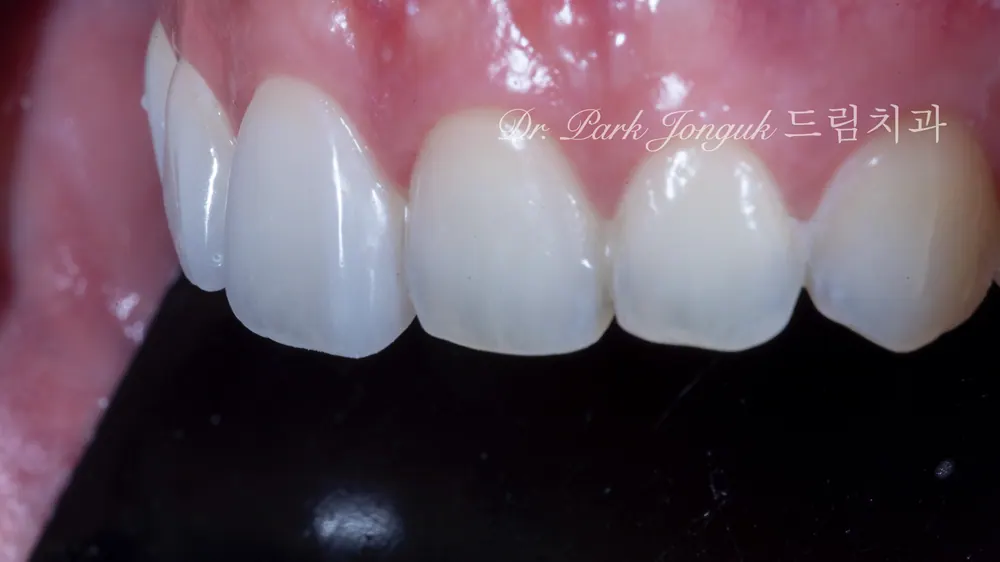
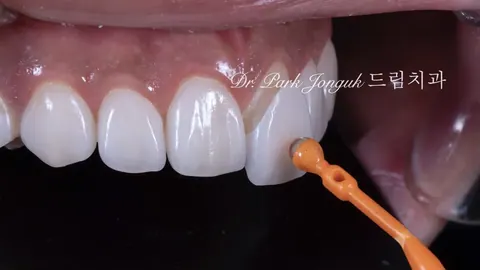
Before bonding the veneers on,
we place them on the teeth to check the shape.
As you can see, the over-retraction has been completely resolved.
The teeth now come out much further,
and the shape and color of the teeth have also improved considerably.
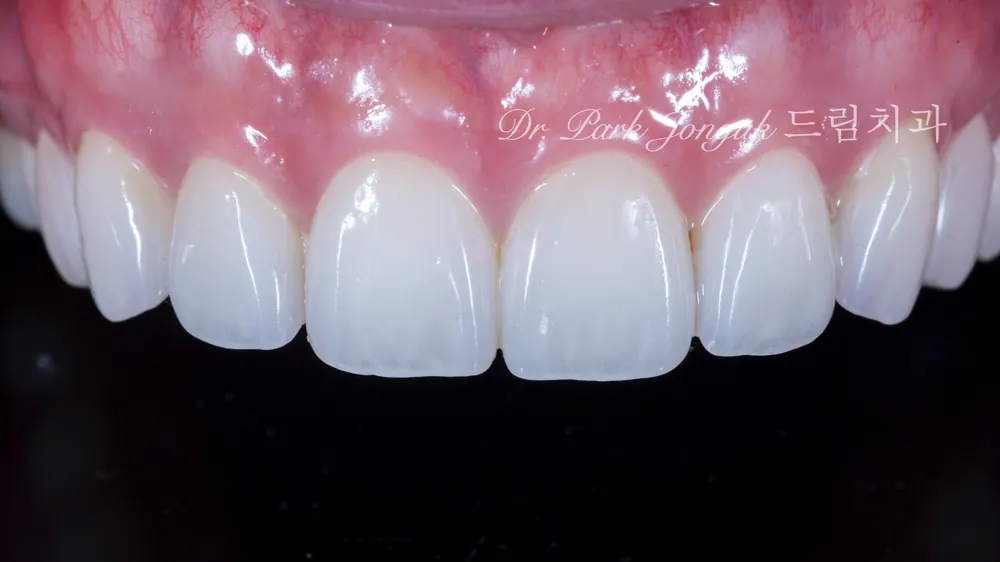
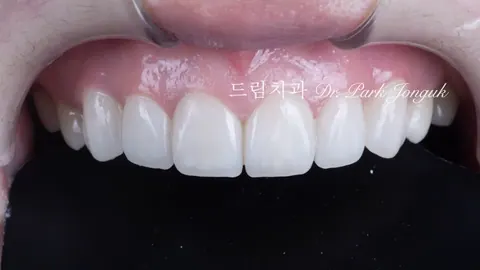
The no-prep veneers have been completed.
The teeth have become much prettier and brighter than before.
At the same time, translucency — a hallmark of youthful teeth and an essential element of beautiful teeth —
has been clearly imparted,
and with the three-dimensional feel of the teeth alive,
without any of the side effects of veneers,
the result has a natural yet beautiful feel.
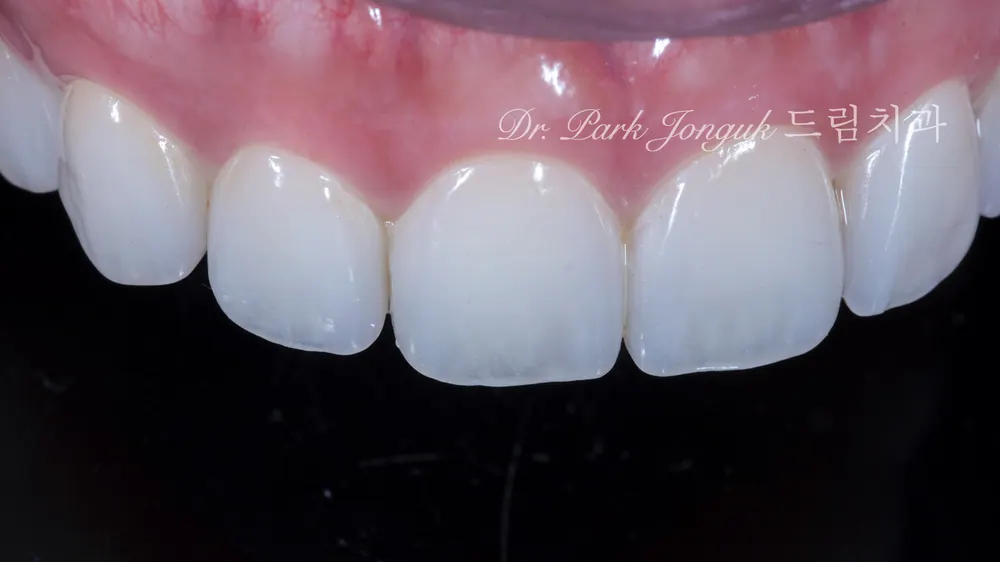
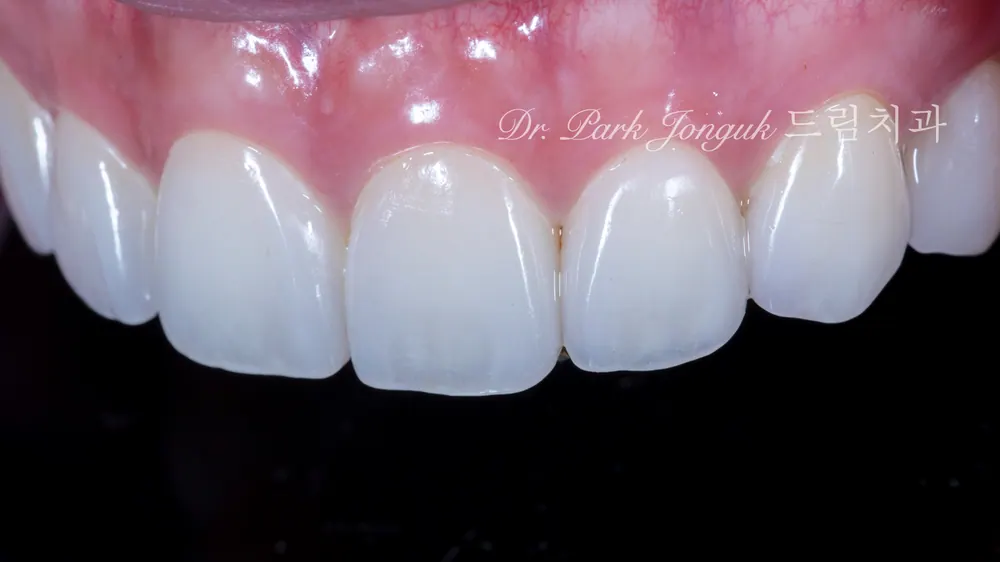
From every angle,
whether it's a veneer or a natural tooth
is indistinguishable — the treatment was finished this naturally,
and without any of the side effects of veneers,
the teeth have become natural and truly beautiful.
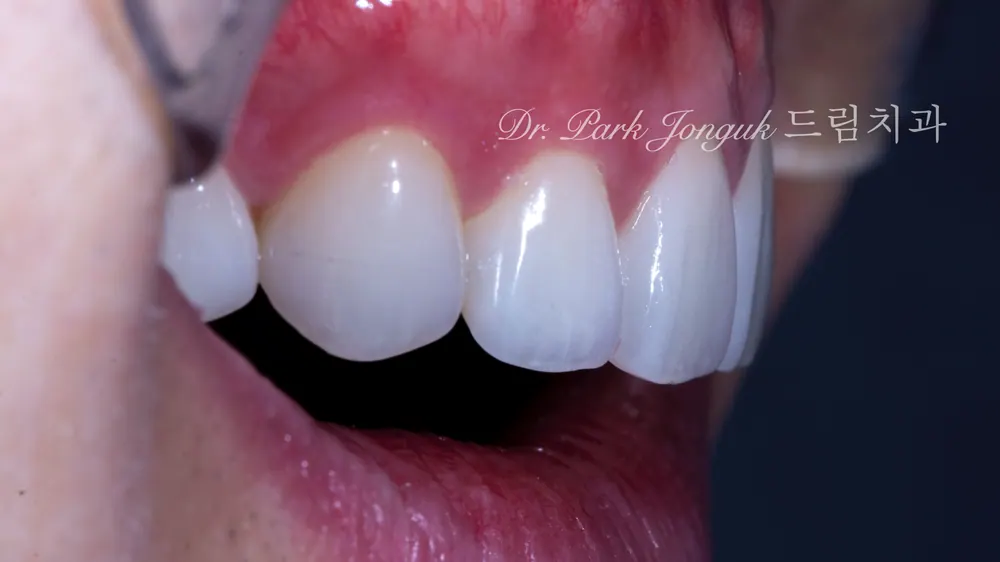
Viewed from the side, you can confirm that the over-retraction has been completely corrected like this.
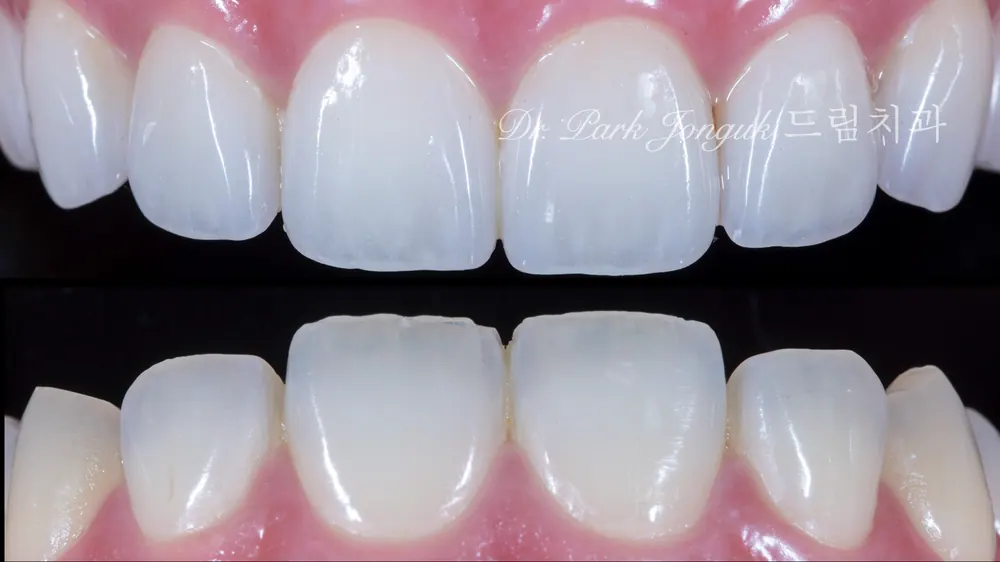
While maintaining the translucency and shape of a natural tooth,
and without reducing a single tooth,
the over-retraction was corrected.
Since 2006, Dream Dental Clinic
This article is a clinical note written by Dr. Park Jonguk of Dream Dental Clinic, Gangnam; the original was published on his blog. The photographs shown are real cases he treated. Results vary with each patient’s condition, and every procedure carries the possibility of individual variation and side effects.
Quick Consult
Request a Callback
Leave your number and we will call you back during clinic hours.
Request Received
We will contact you during clinic hours. For urgent matters, please call +82-2-3448-0028.