
What It Takes for Veneers to Last More Than 10 Years: 5 Factors That Determine Their Lifespan
There's a question patients ask most often when they come in for a veneer consultation.
"How long do veneers last?"
The common answer is "usually more than 10 years."
But in actual practice, some cases develop problems within just 5 years,
while others still look exactly as they did at the start even after 15 years.
Same veneer, so why does the lifespan differ?
Looking back over the cases I've seen in 20 years, there are five factors that determine lifespan.
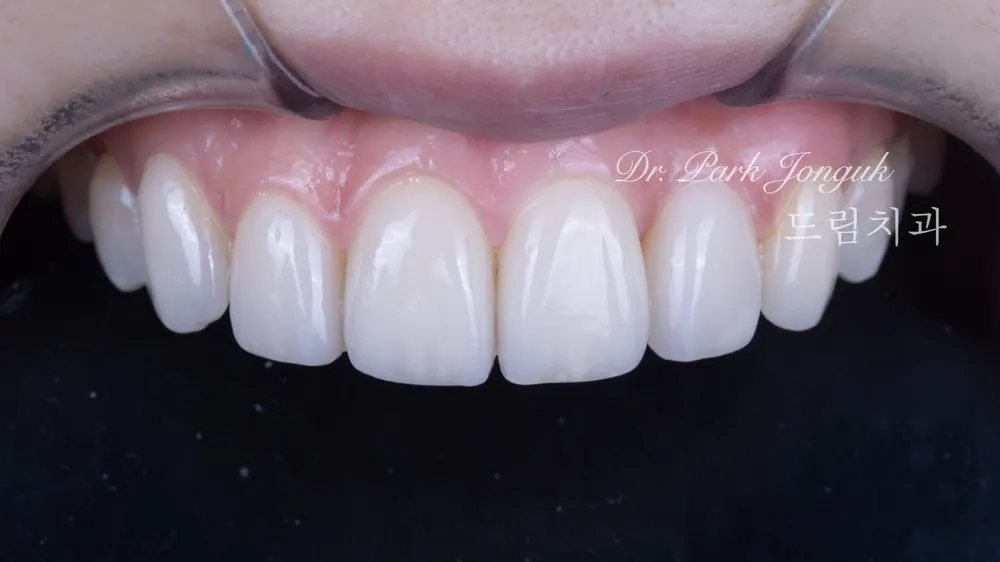
1. The average lifespan of a veneer vs. the real-world lifespan
The average lifespan of a veneer is generally reported as 10 to 15 years.
But that's just the average; in actual clinical practice, the variation is large.
Some cases develop problems within 5 to 7 years, while others keep their bond and color intact even after 15 to 20 years.
The reason results differ with the same material and the same procedure is that there are simply too many variables surrounding treatment.
Five factors determine that lifespan.
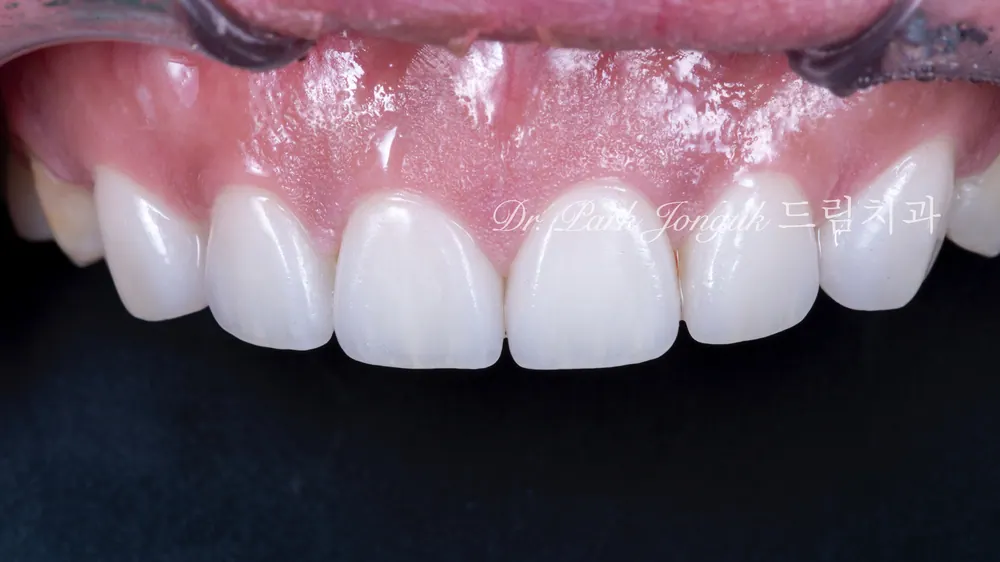
2. The five factors that determine lifespan
First, the accuracy of the initial diagnosis
Half of a veneer's lifespan is decided at the initial diagnosis.
The bite, gum condition, alignment of neighboring teeth, and whether there's nighttime grinding,
the difference in lifespan between cases where these factors were thoroughly diagnosed and cases where they weren't averages 3 to 5 years.
Second, precision of the procedure, especially the margin
How precisely the boundary where the veneer meets the tooth (the margin) fits is the key to lifespan.
If the margin is loose or has a step, bacteria and food particles get into that gap, eventually leading to lifting and decay.
Achieving a precise margin requires attention to detail at every stage, from taking the impression through to final bonding.
That's why using a microscope is essential.
Third, material selection
The type and quality of the ceramic used in the veneer directly affects its lifespan.
Even with the same ceramic, the result differs depending on the skill level of the dental lab that fabricates it.
Fourth, the patient's habits
Nighttime grinding, a habit of eating hard foods, brushing technique, and eating foods with strong pigments, these everyday habits directly affect how long a veneer lasts.
It's common to see a 5-year difference in the same procedure depending purely on the patient's habits.
Fifth, regular maintenance
Checking every six months lets you catch changes in the margin, the gums,
and color early, so you can address them before they turn into a bigger problem.
If left unmanaged, a small problem can grow into a major one within 10 years.
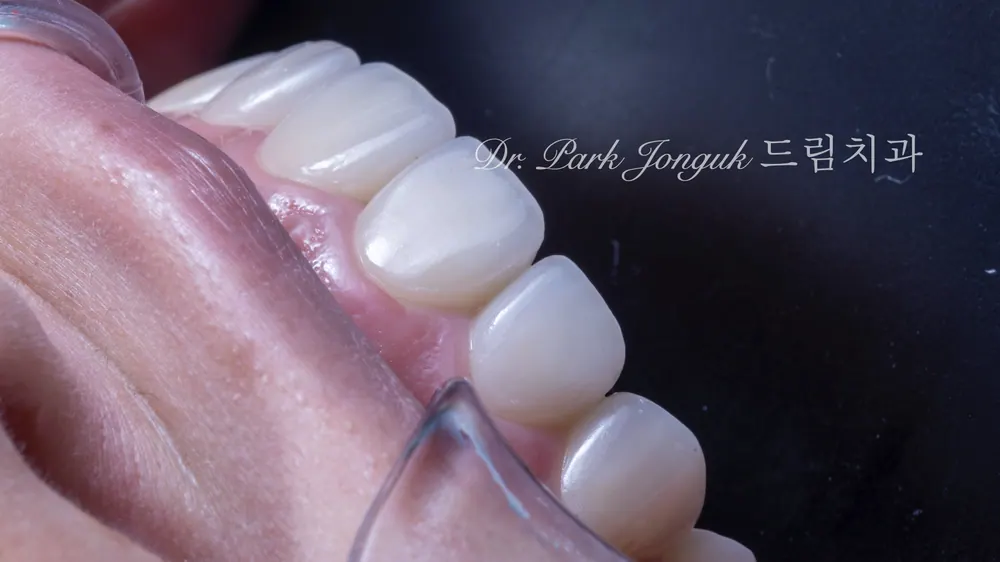
3. Five daily habits to keep up after treatment
Here are everyday habits that extend a veneer's lifespan.
Use a soft toothbrush
Coarse bristles can cause fine wear on the surface of a veneer.
A soft toothbrush and a low-abrasion toothpaste are recommended.
Manage nighttime grinding
If you have a grinding habit, wearing a mouthguard is essential.
The strong bite force at night is the factor that shortens a veneer's lifespan the fastest.
Watch out for hard foods
Ice, hard nuts, dried squid, and similar foods deliver a direct impact to a veneer.
It's best to cut down on biting through things with your front teeth altogether.
Care after pigmented foods
Coffee, wine, curry, kimchi, and similar foods can leave pigment buildup along the gumline at the edge of a veneer.
Brushing or rinsing after meals helps with this.
Quit smoking
Smoking affects gum health more than it affects the veneer itself.
If the gums recede, the edge of the veneer becomes exposed, and the result starts to look unnatural.
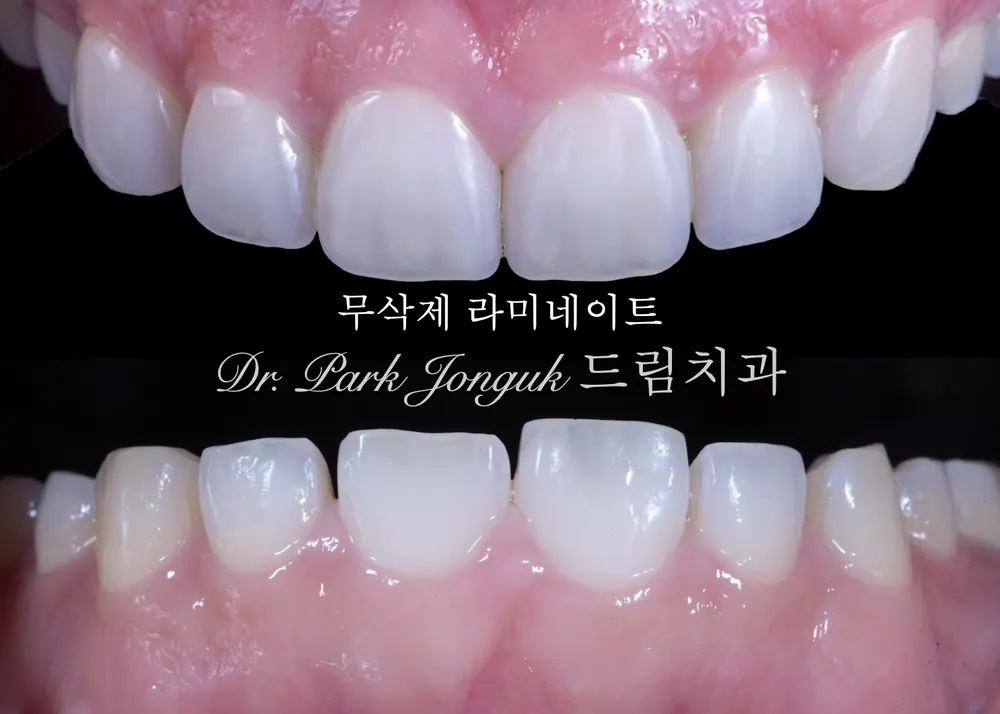
4. Signs that your veneer's lifespan may be shortening
If you notice any of the following symptoms, it's a good idea to stop by the clinic for a checkup, even if time has passed since treatment.
Frequent gum bleeding or swelling
A possible sign of ongoing chronic inflammation at the margin.
The edge of the veneer has darkened in color
A sign of bacterial buildup or a poorly fitting margin.
The gums at the treated area have receded
Possible weakening of gum health or a mismatch with the veneer.
Sensitivity or pain with cold foods
Possible decay or a nerve issue.
If even one of these signs appears, don't wait for your next scheduled checkup,
it's better to stop by the clinic ahead of time.
The earlier it's caught, the more likely it can be resolved with a partial repair; the later it's caught, the more likely it leads to a full replacement.
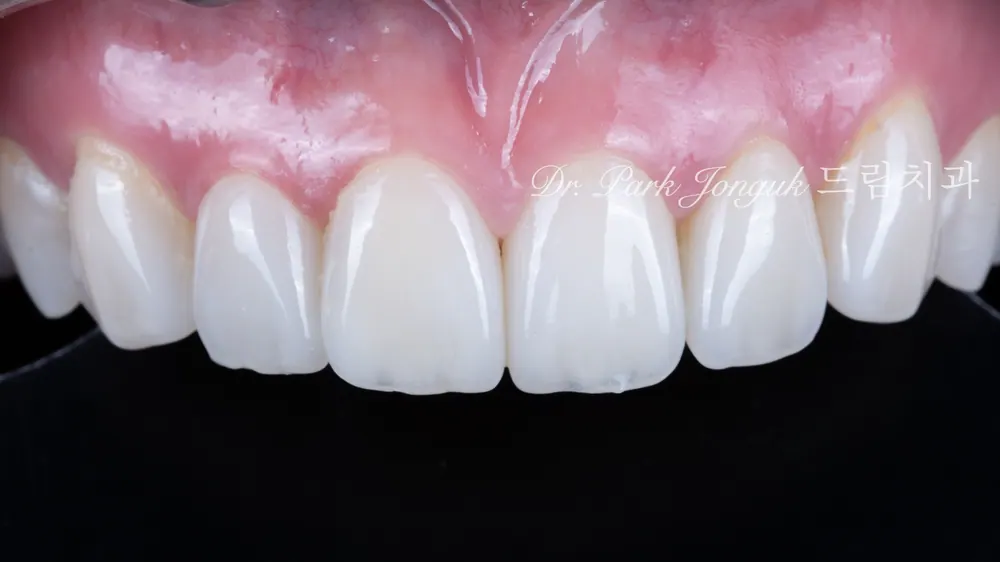
5. In the end, lifespan is decided by "the sum of every detail," more than by the procedure itself
Accurate diagnosis → precise procedure → suitable material → the patient's daily care → regular checkups.
When all five of these stages line up well, a veneer that lasts 15, even 20 years, becomes possible.
If even one is missing, problems can start showing up at 5 or 7 years.
Frequently Asked Questions (FAQ)
Q1. Do I have to avoid certain foods for the rest of my life after getting veneers?
You don't need to avoid every kind of food forever.
You just need to avoid actions that deliver a direct impact, like biting on ice or tearing through hard food with your front teeth.
Ordinary meals have almost no restrictions.
Q2. Can veneers get cavities?
The veneer itself can't develop a cavity.
But decay can develop where the veneer meets the natural tooth (the margin), or in areas the veneer doesn't cover.
That's why regular brushing and flossing matter even more than they did with your natural teeth.
Q3. Can a veneer's color change over time?
The ceramic itself doesn't change color.
But pigment can build up near the boundary between the veneer and the natural tooth, or around the margin.
Regular scaling manages this well enough.
Q4. If just one veneer comes off, can only that one be replaced?
Yes, that's possible.
If the color and shape of the neighboring teeth are unchanged, only the one that came off can be newly fabricated and bonded on.
That said, if a lot of time has passed, there can be a visible color difference from the other veneers, so we do precise color matching during the visit.
Q5. It's been 10 years and mine still look fine. Do I still need to replace them?
Replacement itself isn't mandatory.
If the margin, color, and bond all look good at a regular checkup, you can keep using them as they are.
A veneer's lifespan is more accurately judged by its "condition" than by its "age in years."
In closing
A veneer's lifespan isn't decided by the procedure alone.
It's decided by the sum of five things: the initial diagnosis, the precision of the procedure, the material, the patient's daily care, and regular checkups.
There's a phrase that comes to mind most often in 20 years of clinical practice.
"The difference between a veneer that lasts 10 years and one that lasts 15 isn't the procedure itself, it's in every detail surrounding the procedure."
A veneer is a procedure that lasts a long time once you decide on it.
That's why going through every step carefully from the very start ends up being the most economical choice in the end.
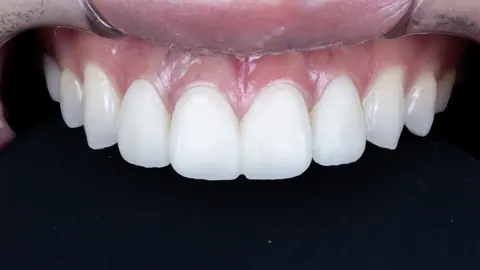
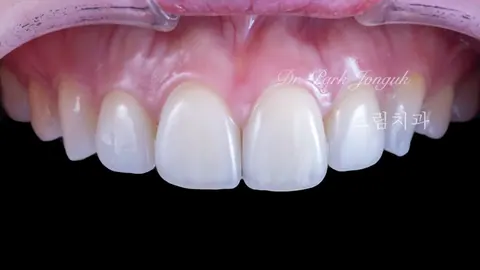
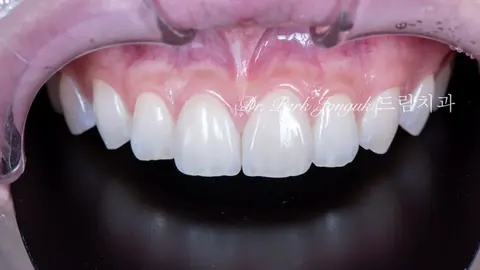
This article is a clinical note written by Dr. Park Jonguk of Dream Dental Clinic, Gangnam; the original was published on his blog. The photographs shown are real cases he treated. Results vary with each patient’s condition, and every procedure carries the possibility of individual variation and side effects.
Quick Consult
Request a Callback
Leave your number and we will call you back during clinic hours.
Request Received
We will contact you during clinic hours. For urgent matters, please call +82-2-3448-0028.