
Know Exactly What No-Prep Veneers Involve Before You Get Them
Hello, I am Park Jonguk, director of Dream Dental Clinic.
Continuing from my last post,
I'd like to talk about no-prep veneers once more.
In the lectures I give to other dentists,
the topic they show the most interest in
is no-prep veneers.
Veneer treatment
is unfamiliar territory for most dentists.
No-prep veneers in particular
require the dentist's experience and the ceramist's skill in fabricating the veneer
to come together well for the treatment to even be possible,
so even among dentists there's a lot of debate about whether it's really achievable.
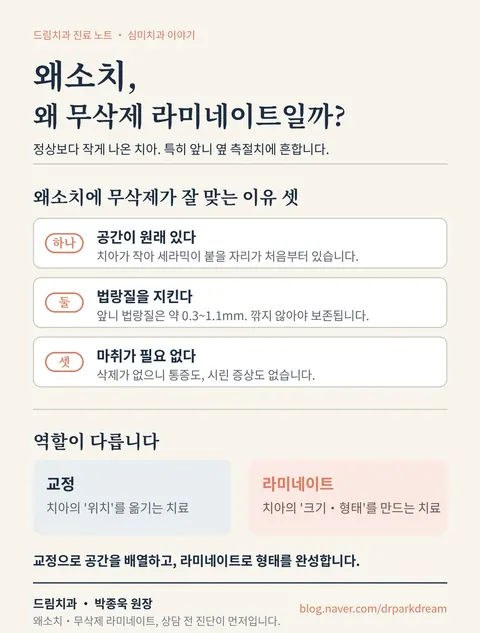
First of all, no-prep veneers aren't possible for every case.
1. The teeth need to be small.
2. The bite needs to be good.
3. The teeth must not be protruding.
Only when these three conditions are met
does no-prep veneer treatment become possible,
and among the patients who come in for veneer treatment,
not many actually meet these conditions.
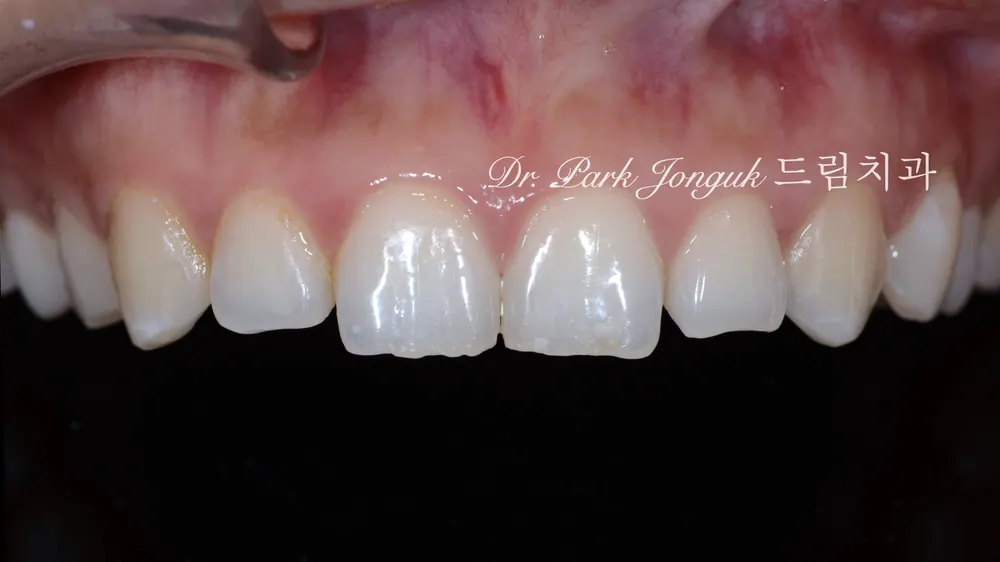
This patient's teeth were quite small overall.
Her bite was good,
and her teeth were slightly angled inward, in a mild crowded-bite state.
This could be described as an ideal state for no-prep veneers.
What the patient wanted from veneer treatment as well
was for her teeth to look a bit bigger and show more when she smiled.
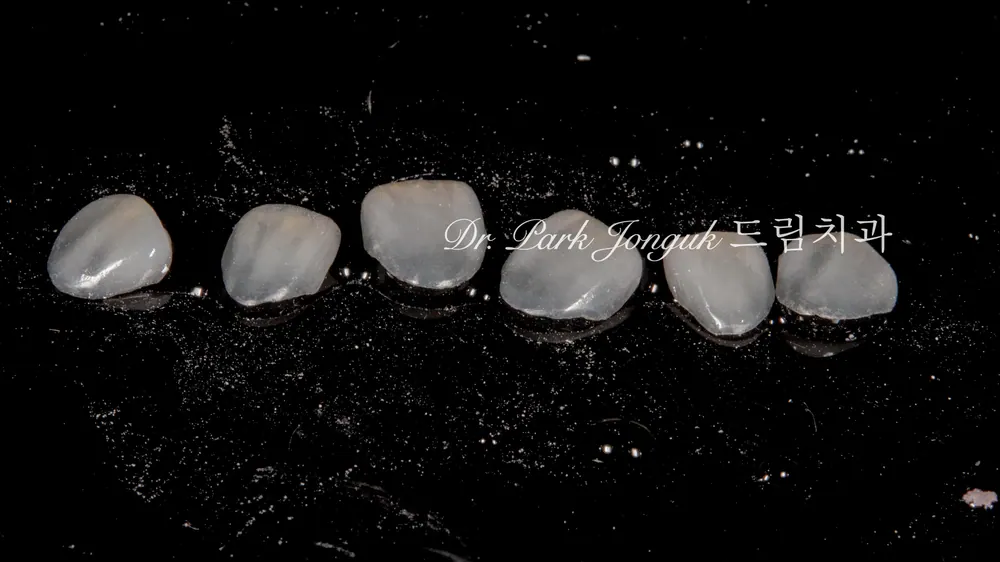
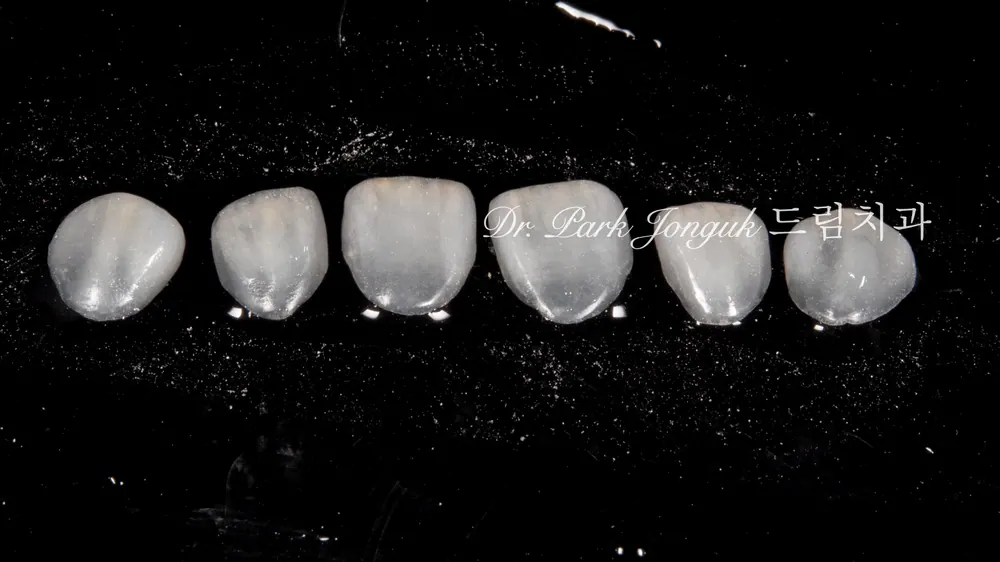
Because these are no-prep veneers,
an impression is taken right away, with no tooth reduction,
and fabrication of the veneers begins.
The ceramic is made as thin as under 0.1mm in the thinnest areas
and around 0.3 to 0.5mm in the thickest areas.
The one-day method, which has become trendy recently,
finishes veneer treatment within a single day,
but that kind of factory-style fabrication can never match this level of work.
Please see the link below for that difference.
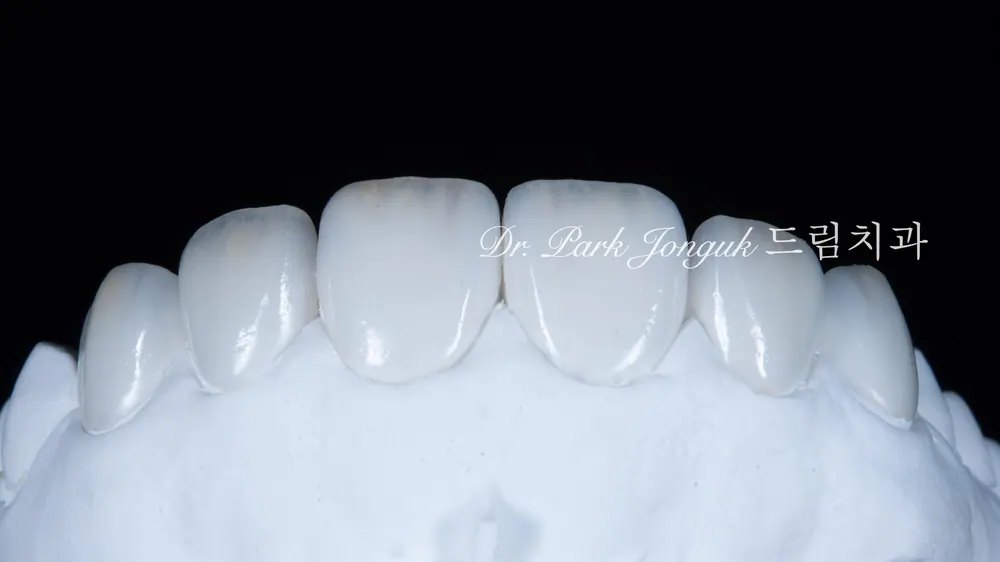
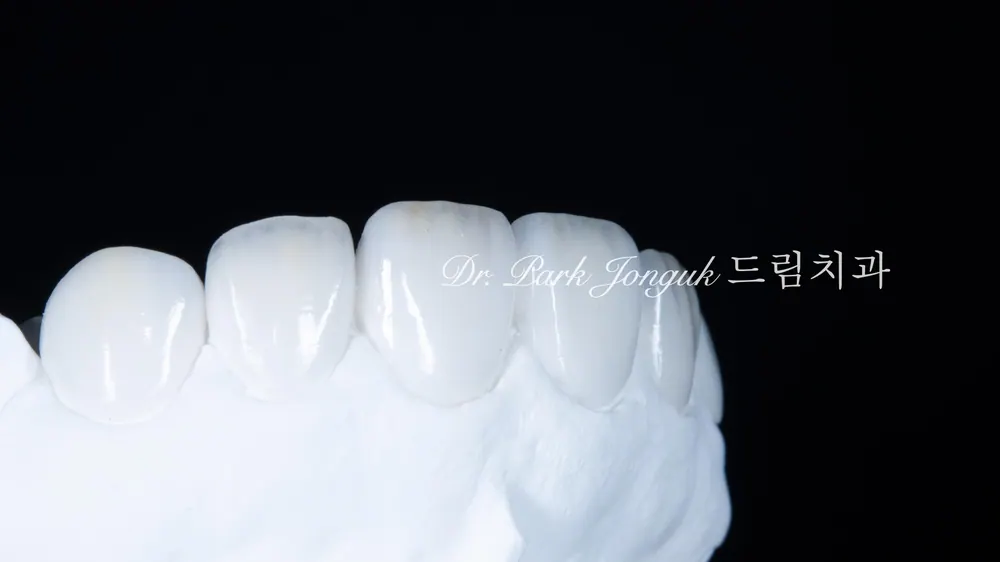
The veneers made this way
are then bonded to the teeth.
Before bonding, they're placed on the teeth first,
and we talk with the patient about the change in size and color,
and once the patient is satisfied,
the setting process is carried out.
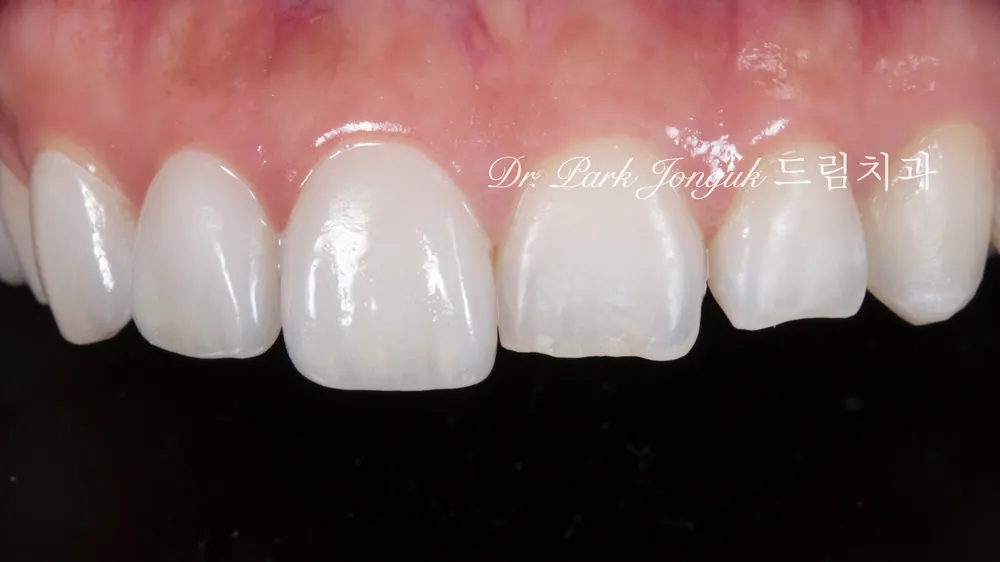
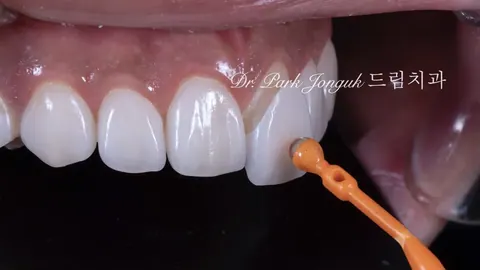
Here's a photo with the veneer placed on just one side.
You can clearly feel the change from the original tooth.
The size has become larger,
and the tooth clearly still keeps a natural feel.
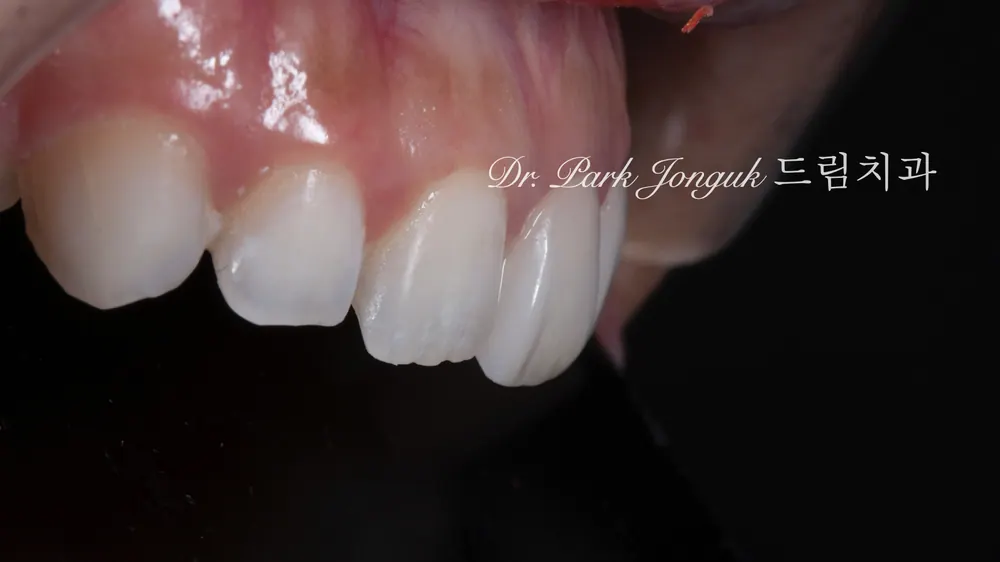
You can see that the crowded-bite look has also improved.
The surface of the veneer was made to have the same texture as a natural tooth.
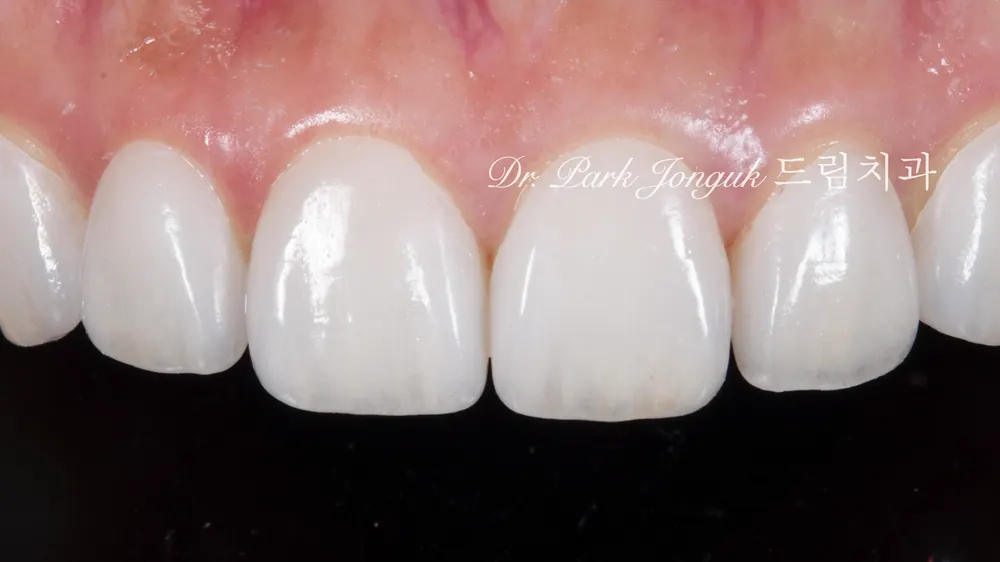
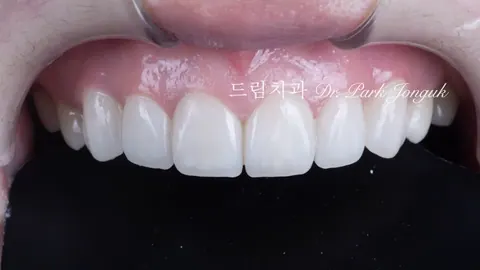
Here, all the veneers have been placed.
You can clearly see the natural expression at the edges of the teeth.
With no-prep veneers,
because the ceramic has to be made quite thin,
it isn't easy to fit in all of this natural expression.
It's made the way a highly skilled ceramist crafts a fine, luxury-grade piece,
which is what makes this possible.
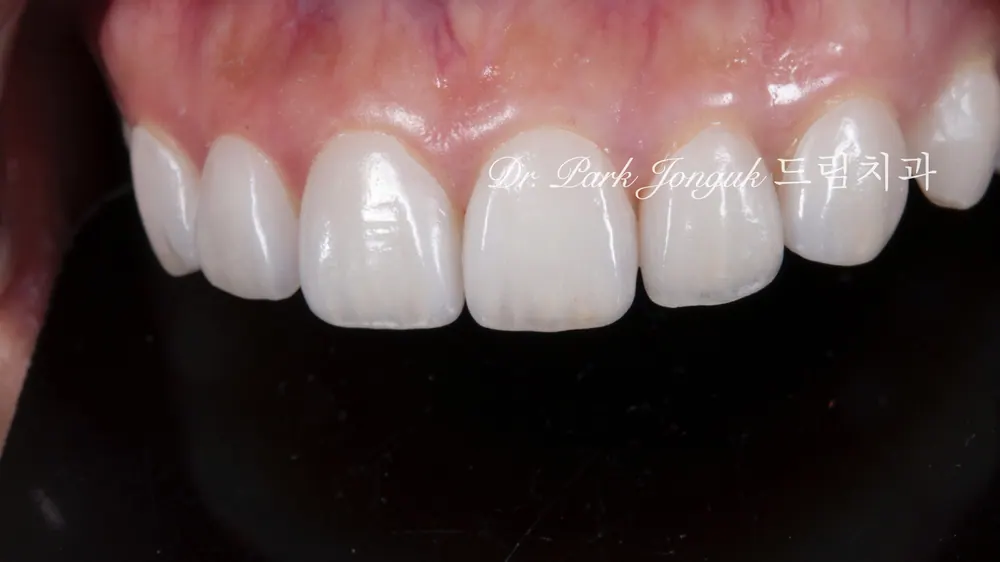
So as not to irritate the gums,
designing the ceramic carefully is very important.
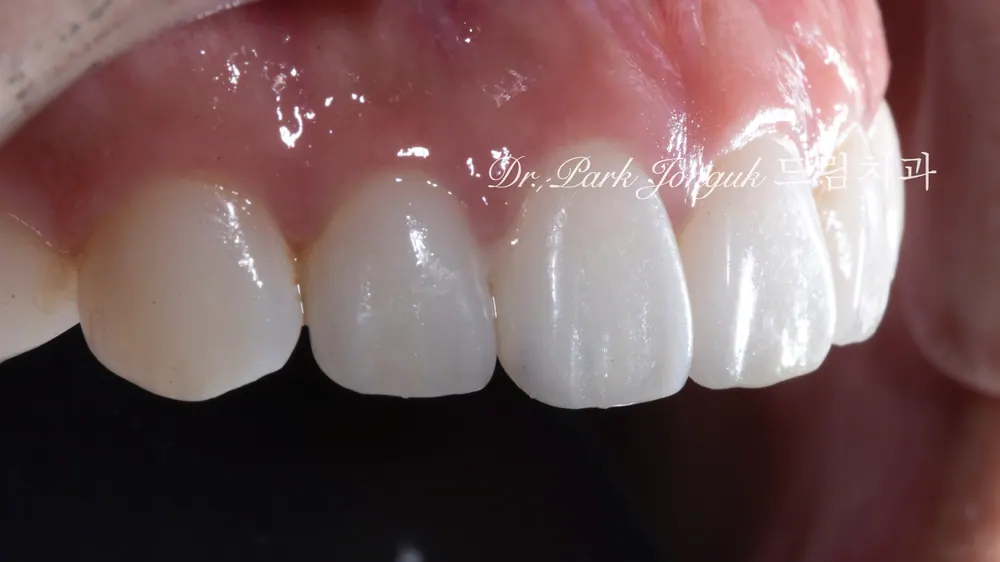
The feel of the tooth surface also needs to closely capture the feel of a natural tooth.
No-prep veneers
depend heavily on technical skill.
Natural beauty
Since 2006, Dream Dental Clinic
This article is a clinical note written by Dr. Park Jonguk of Dream Dental Clinic, Gangnam; the original was published on his blog. The photographs shown are real cases he treated. Results vary with each patient’s condition, and every procedure carries the possibility of individual variation and side effects.
Quick Consult
Request a Callback
Leave your number and we will call you back during clinic hours.
Request Received
We will contact you during clinic hours. For urgent matters, please call +82-2-3448-0028.