
Are No-Prep Veneers Really Possible Without Any Tooth Reduction?
Hello. This is Park Jonguk, director of Dream Dental Clinic.
Veneer treatment is a method for reshaping the teeth.
Its precise name is "laminate veneer."
In Korea, it's usually just called "laminate,"
while abroad, the term "veneer" is used more often.
Recently, some clinics have started calling it by different names,
advertising it almost as if it were a different treatment from veneers.
That's a spread of incorrect information.
Changing the name doesn't change the treatment.
Different materials can be used and the treatment process can vary slightly from clinic to clinic,
but there's no special material that only one particular clinic uses.
In the course of veneer treatment,
the tooth gets reduced.
The more the tooth is reduced, the higher the likelihood of side effects.
As a result,
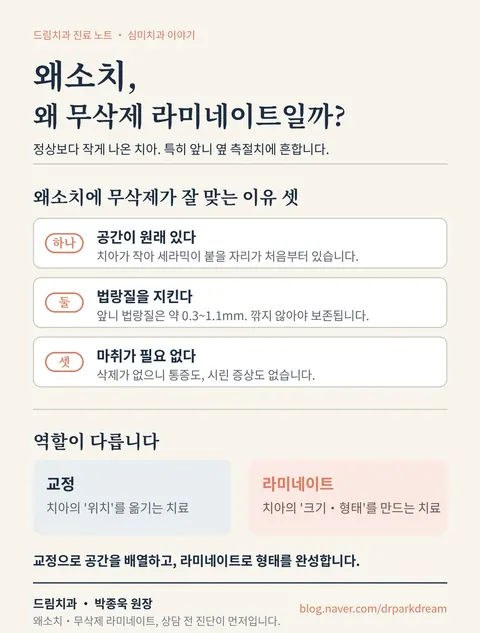
the no-prep veneer — a method where not a single bit of the tooth is reduced —
can be considered the most ideal form of veneer.
That said, it's not possible in every case;
certain conditions need to be met.
First, the teeth need to be small,
the alignment needs to be good,
and the teeth must not be protruding.
It's not common for every one of these conditions to be met.
Even when these conditions aren't met,
there are still cases where no-prep veneers are possible.
Today let's look at a case where the teeth were neither small nor well-aligned,
and were somewhat protruding,
yet veneer treatment was still done for esthetic improvement.
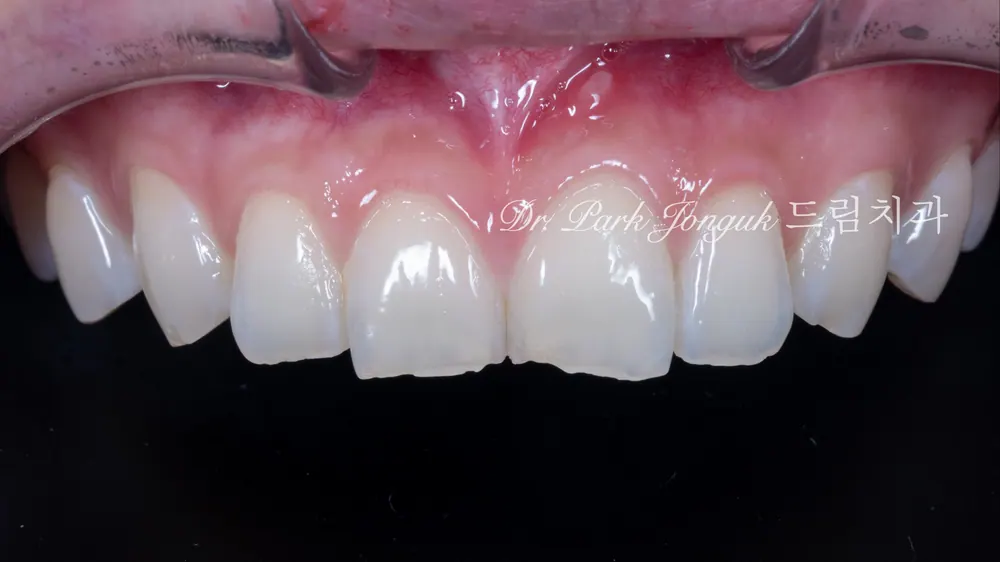
Compared to the other teeth,
the two front teeth were quite large, sticking out,
and even differed in size from each other.
In effect, it didn't meet a single one of the conditions for no-prep veneers.
What the patient wanted
was to lengthen the front teeth.
Fracture caused by tooth wear (wear from the upper and lower teeth grinding against each other is called attrition)
was causing an esthetic problem,
so we decided to do veneer treatment to resolve that.
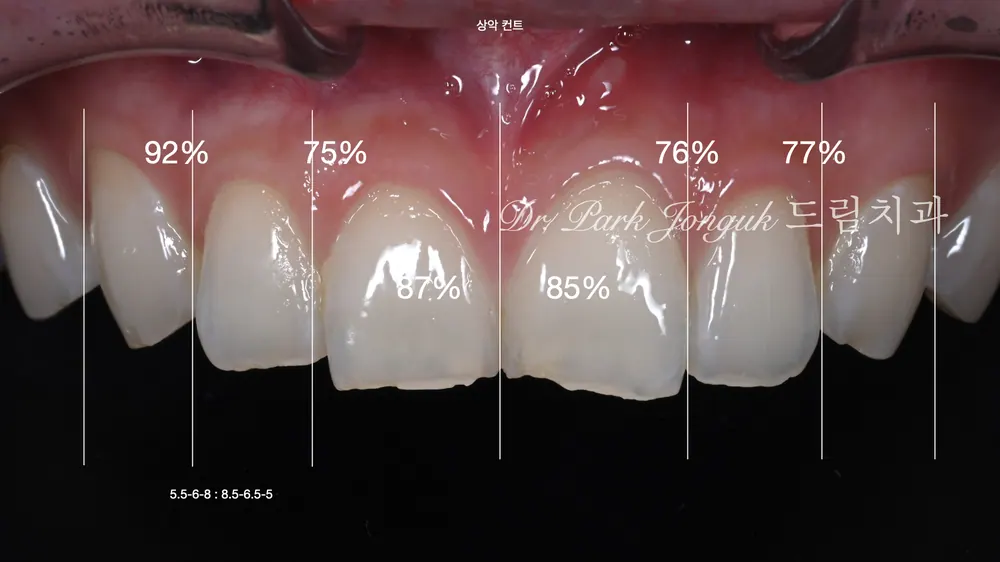
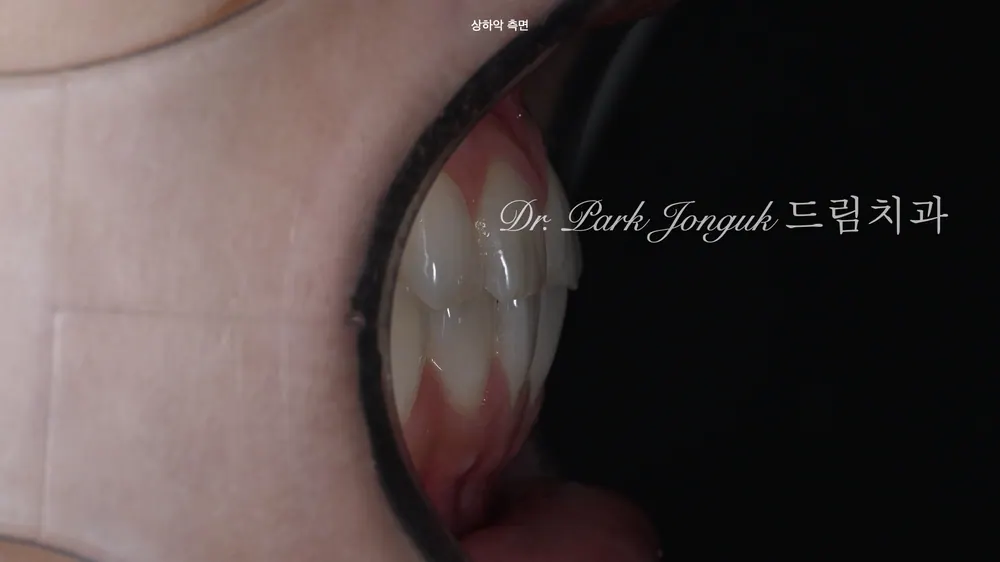
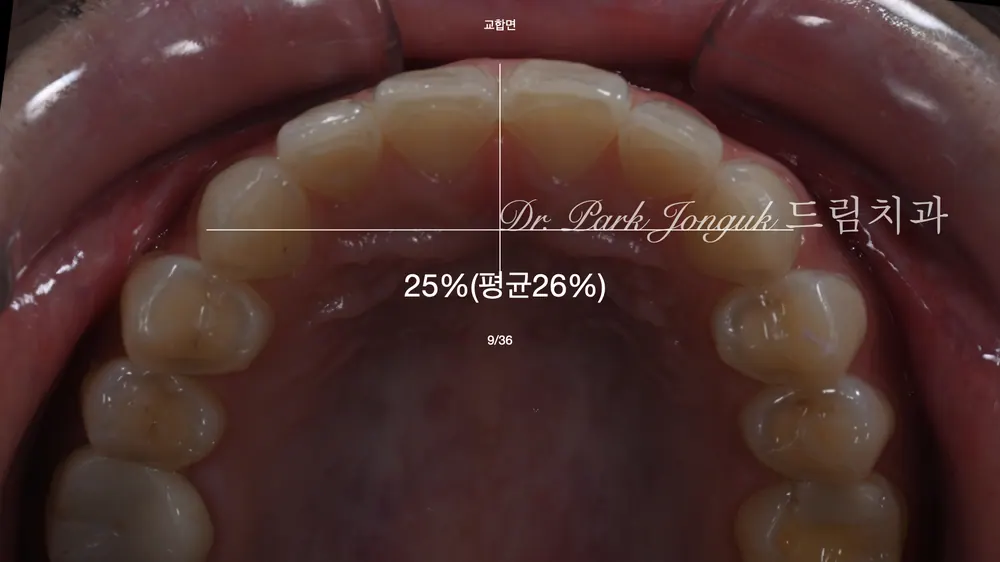
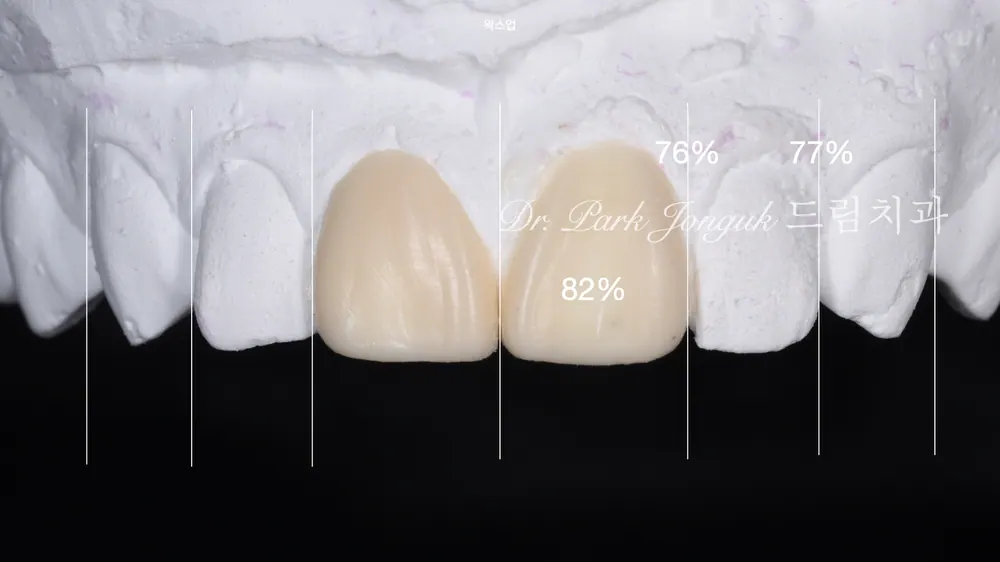
We planned
no-prep veneer treatment for just the two teeth,
but as the treatment actually proceeded,
going fully no-prep would have made the teeth too large and made the asymmetry stand out even more,
so we explained that minimal reduction was necessary and proceeded with the treatment.
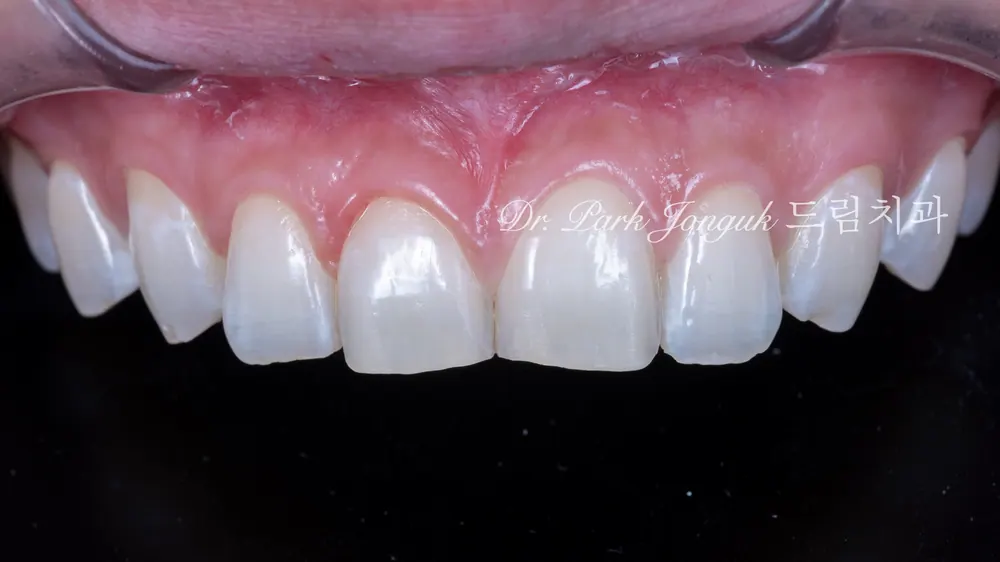
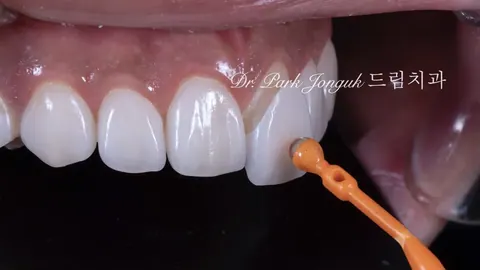
We smoothed the rough areas
and performed a very minimal reduction on the teeth.
No anesthesia was needed,
and the reduction was minimal enough
that no one would suspect this wasn't the natural tooth state.
The reason is to make the tooth appear even slightly smaller.
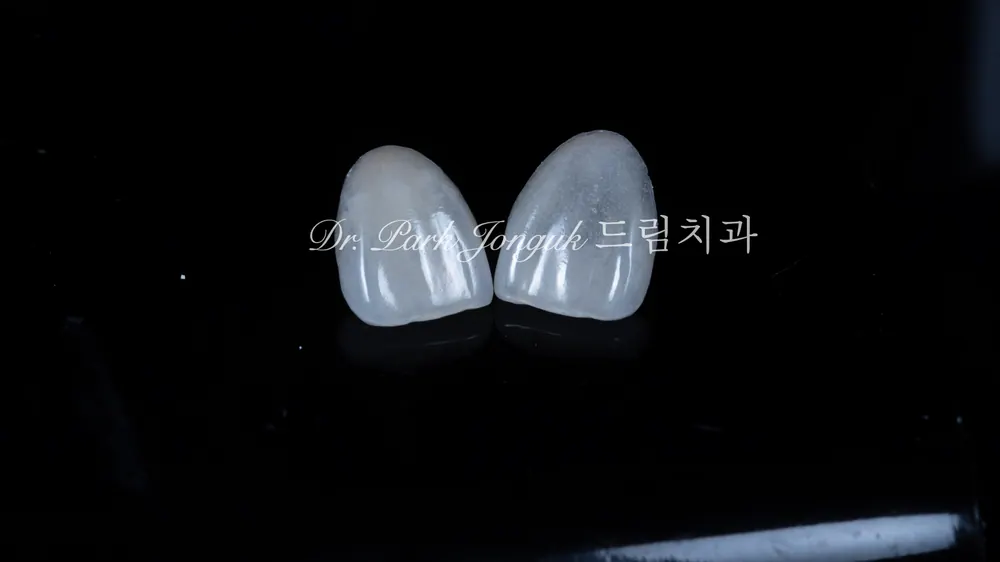
We fabricate the veneer in ceramic.
Even with barely any reduction, close to no-prep,
for the tooth size not to end up larger,
it has to be made extremely, extremely thin.
At the same time, it has to match the coloring and translucency of the other natural teeth.
It's quite a demanding fabrication process.
It's a result that the currently popular one-day method could never achieve.
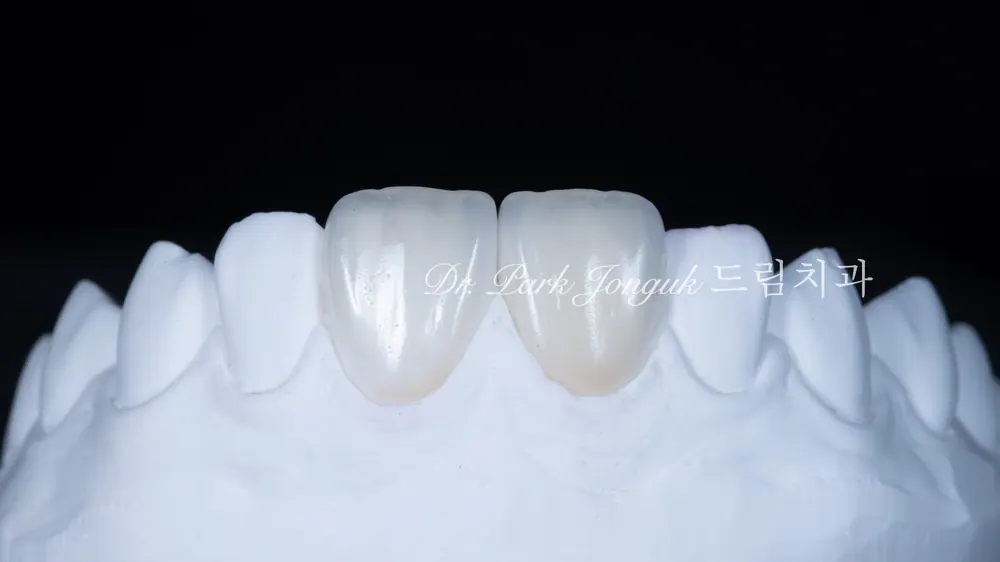
You can see a veneer
with the translucency of a natural tooth alive in it.
In a method this close to no-prep,
achieving this kind of natural expression
is what sets a premium veneer apart.
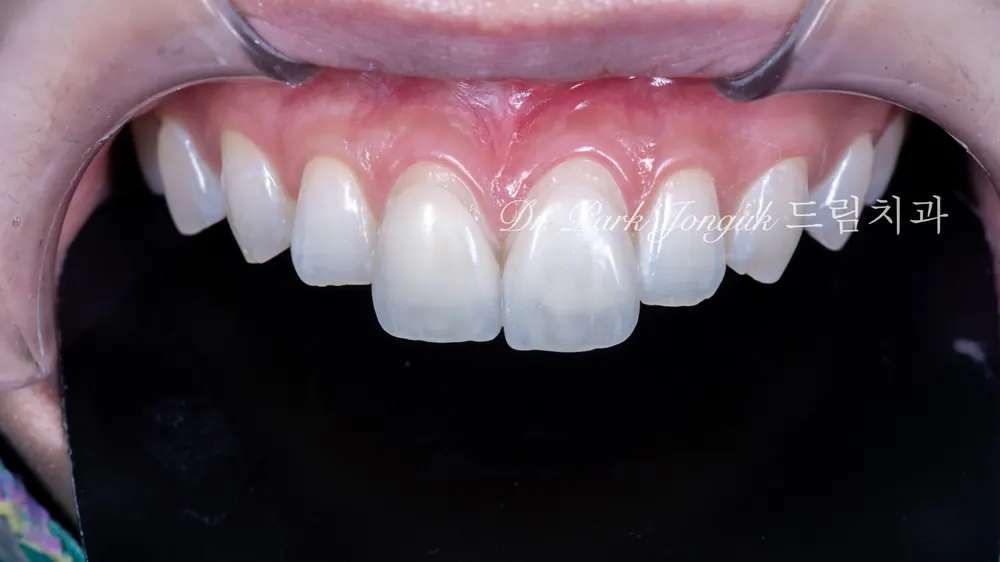
To set the veneer,
we placed it on the tooth.
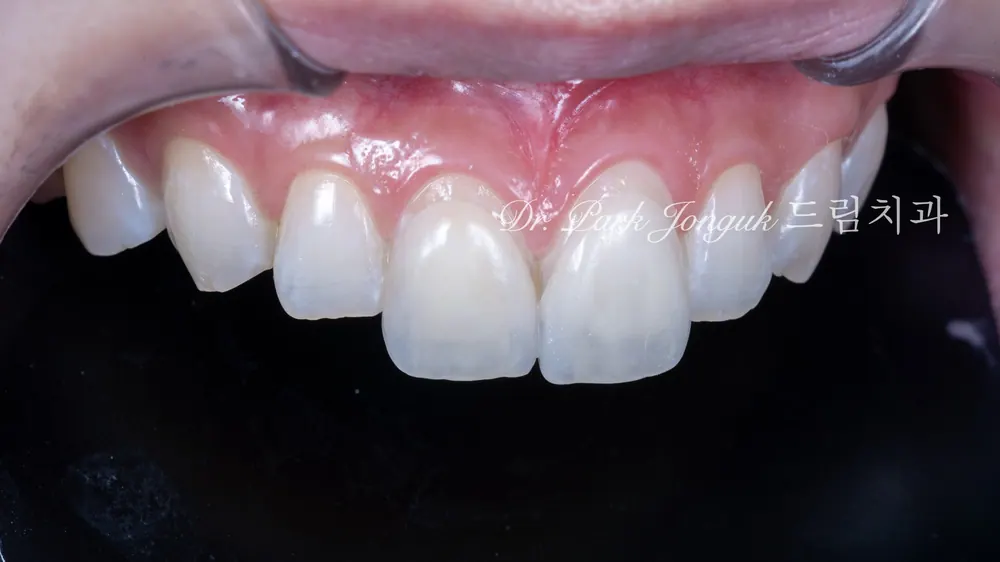
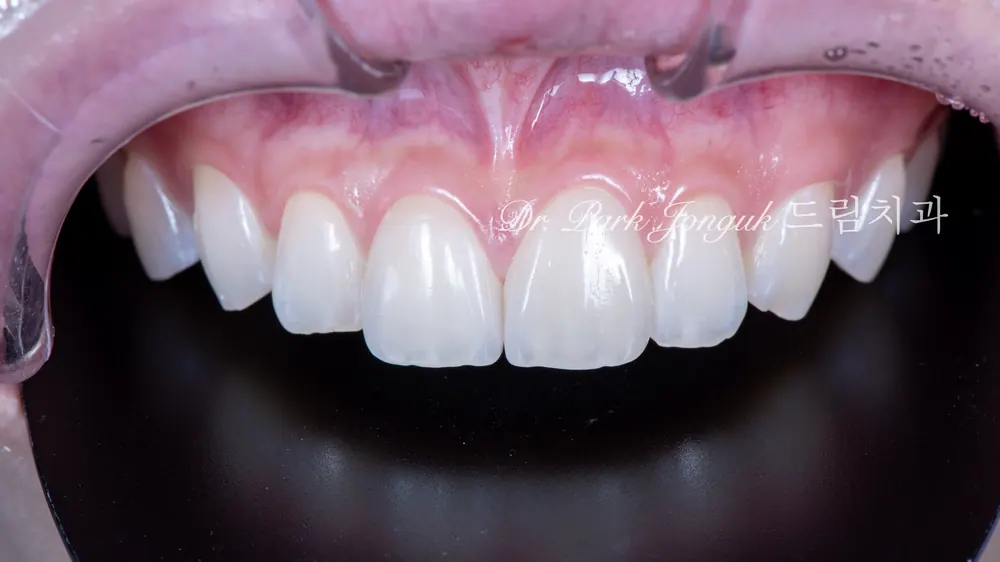
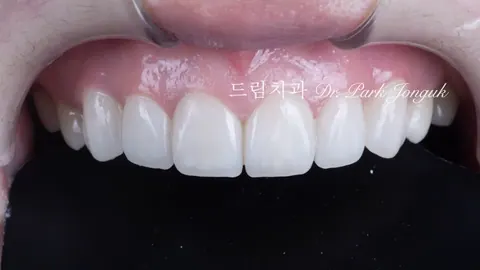
This is the appearance after the no-prep veneer was set.
It's to the point where you can't tell
which tooth is natural and which is the veneer.
It has the same translucency and coloring as a natural tooth,
and the shape also shows a natural three-dimensional depth.
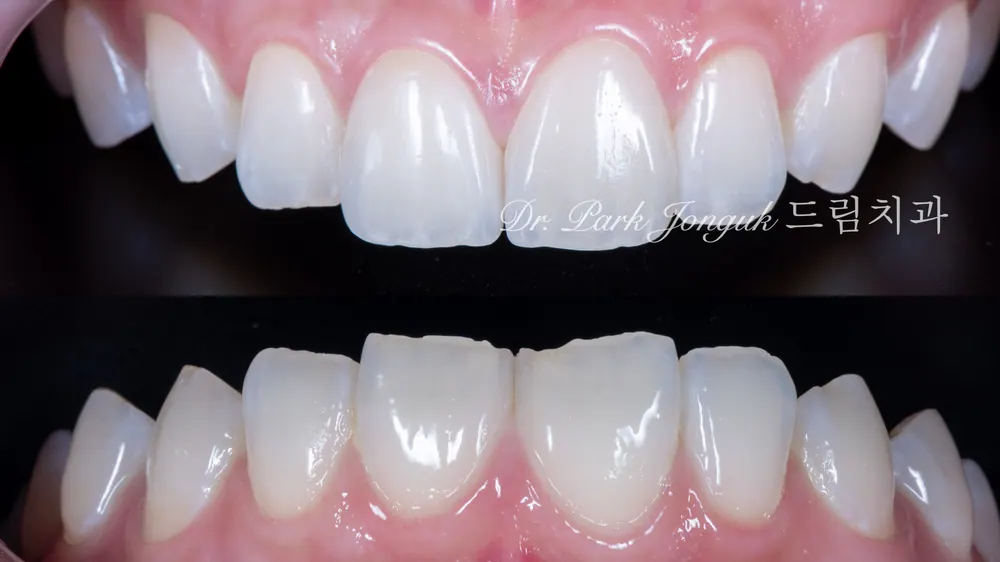
You can see that the esthetic problem caused by tooth wear
was resolved with a method involving almost no tooth reduction.
Close to no-prep,
the veneer was completed as a natural-looking tooth.
Natural beauty.
Since 2006, Dream Dental Clinic
This article is a clinical note written by Dr. Park Jonguk of Dream Dental Clinic, Gangnam; the original was published on his blog. The photographs shown are real cases he treated. Results vary with each patient’s condition, and every procedure carries the possibility of individual variation and side effects.
Quick Consult
Request a Callback
Leave your number and we will call you back during clinic hours.
Request Received
We will contact you during clinic hours. For urgent matters, please call +82-2-3448-0028.