
Veneer Care: 5 Tips from a 20-Year Specialist for Extending Their Lifespan
Hello, I'm Dr. Park Jonguk, head director of Dream Dental Clinic, Apgujeong.
After getting veneers, I often get questions like these.
"How should I take care of them?" "Do I need to be careful with food?" "What should I do to make them last longer?"
Veneer care refers to the daily habits and regular checkups needed after the procedure to maintain the lifespan and esthetics of the veneers.
There's something I've noticed after treating thousands of cases over 20 years. The difference between patients who care for their veneers well and those who don't is clear.
The Korean Academy of Prosthodontics has also stated that the long-term prognosis of ceramic restorations depends as much on the patient's oral hygiene and bite habits as on the material and the operator's skill.
Today I'll lay out veneer care based on 20 years of clinical experience.
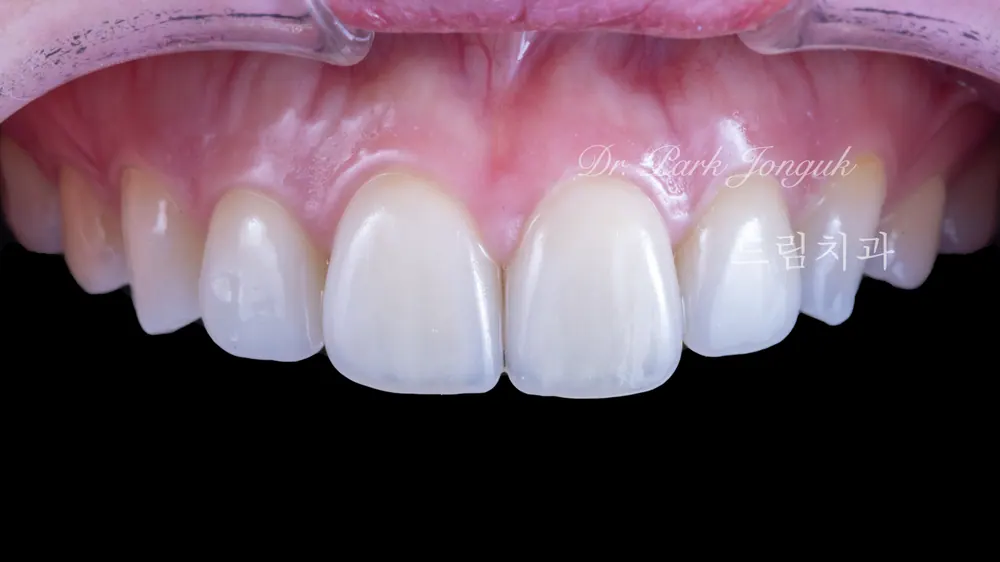
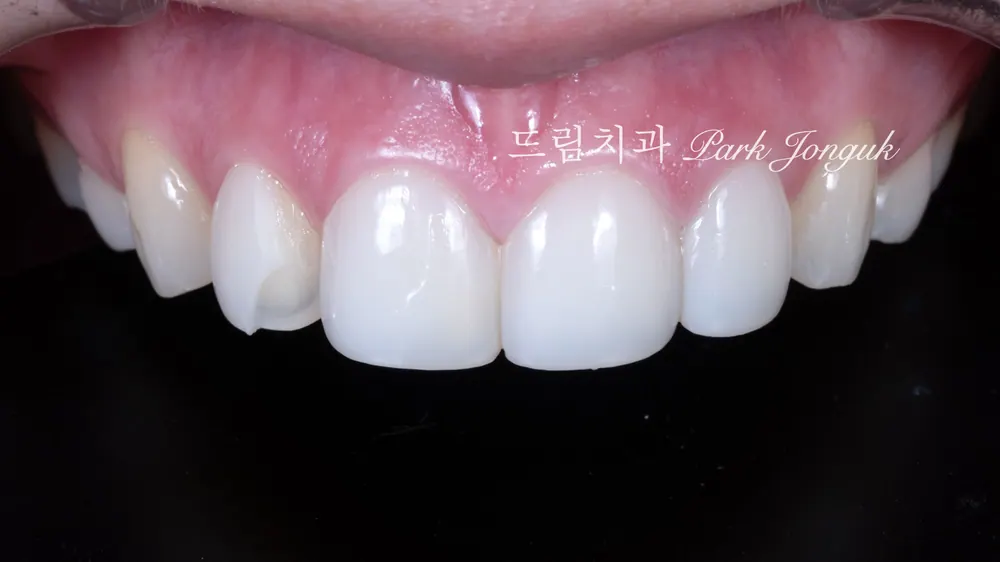
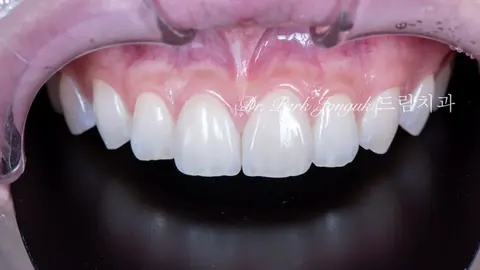
[Photo 1] Comparison of a well-cared-for veneer and a veneer that has discolored or come loose from poor care
💡 If you're curious about the lifespan of veneers themselves, I'd recommend reading [How Long Do Veneers Last? 20 Years of Experience] first.
1. Care for the first 48 hours right after getting veneers
Right after the procedure, the adhesive needs time to fully cure. This usually takes around 24 to 48 hours.
During this period, you'll need to keep the following in mind.
First, avoid overly hard or chewy foods. This includes things like squid, ribs, and biting on ice.
Second, hold off on strongly staining foods like coffee, curry, and wine. The veneer itself rarely stains, but it can affect the resin bonding area at the margin.
Third, brush gently on the day of the procedure. It's best to avoid rough brushing.
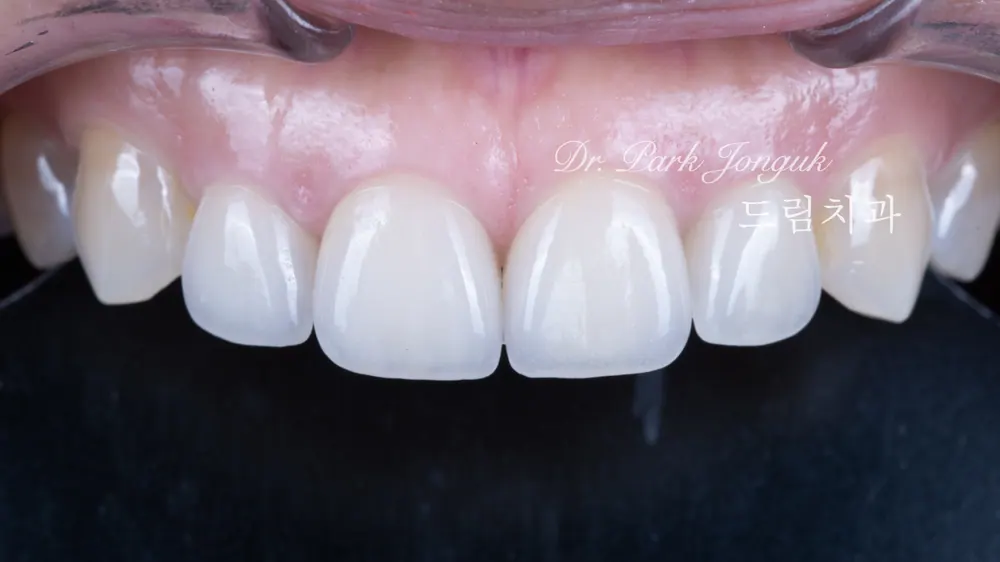
[Photo 2] Close-up of veneers right after the procedure (natural sheen)
2. The basics of veneer care: brushing and flossing
The core of veneer care is actually not very different from caring for natural teeth. If anything, sticking to the basics is the most effective approach.
Use a soft-bristled toothbrush. Brushing too hard can cause micro-damage at the veneer margin.
Flossing also has to be done alongside brushing. If food gets stuck between the veneer and the adjacent tooth, it affects gum health.
If the gum recedes, the veneer margin can become exposed.
Occasionally, some patients find that floss won't go through because leftover adhesive remains after veneer treatment —
in that case, it absolutely needs to be removed at the dental clinic.
An oral irrigator like a Waterpik is also a good supplementary tool. I recommend it for people who find flossing difficult.
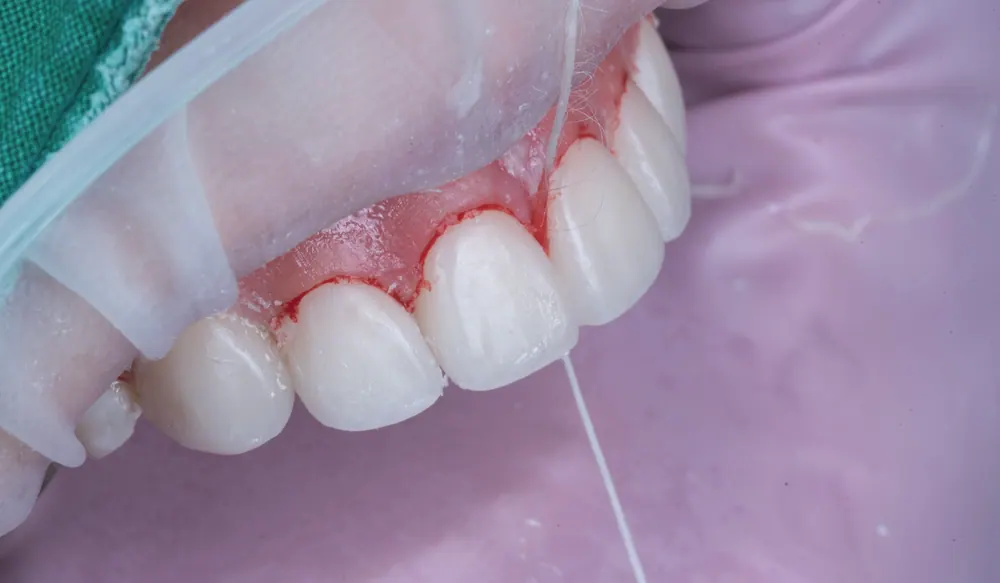
[Photo 3] Using floss to remove excess adhesive between the teeth during veneer bonding
3. 3 bad habits that shorten the lifespan of veneers
No matter how good the veneers are, bad habits will shorten their lifespan. In particular, the following three habits absolutely need to be corrected.
1) Teeth grinding (bruxism) — people who grind their teeth at night put excessive force on their veneers. In severe cases, the veneer can crack or come loose. If you grind your teeth, you must wear a night guard.
2) Nail biting, chewing on pens — unconscious habits like these put a lot of stress on veneers. Front tooth veneers in particular are vulnerable to habits like this.
3) Biting hard things with the front teeth — avoid biting nuts, ice, hard candy, and the like with your front teeth. Even when chewing with your molars, don't apply excessive force.
💡 For those who grind their teeth, diagnosis before the procedure matters even more. Please also refer to the article [Did You Get Veneers Without a Proper Diagnosis? That's Risky].
4. Regular veneer checkups — make sure to go once every 6 months
Some patients ask, "if nothing seems wrong, do I still need to come in?" after getting veneers. The short answer is: yes, you absolutely need regular checkups.
Visiting once every 6 months is enough.
At a regular checkup, we check the following.
The condition of the veneer bond
The health of the gums
Any change in the bite (occlusion)
Removal of surrounding tartar through scaling
Catching a small problem early makes it simple to resolve. Left unaddressed, it can lead to the need for retreatment.
5. The difference between a well cared-for veneer and one that isn't
For patients who take good care of their veneers, even after 10 years they look almost the same as when they started. The color stays the same, and the shape stays the same.
On the other hand, when veneer care is neglected, you see staining at the margin, gum recession, and in severe cases even detachment.
The lifespan of a veneer is half material and skill, and half veneer care. Keeping a good veneer looking good for a long time is also the patient's role.
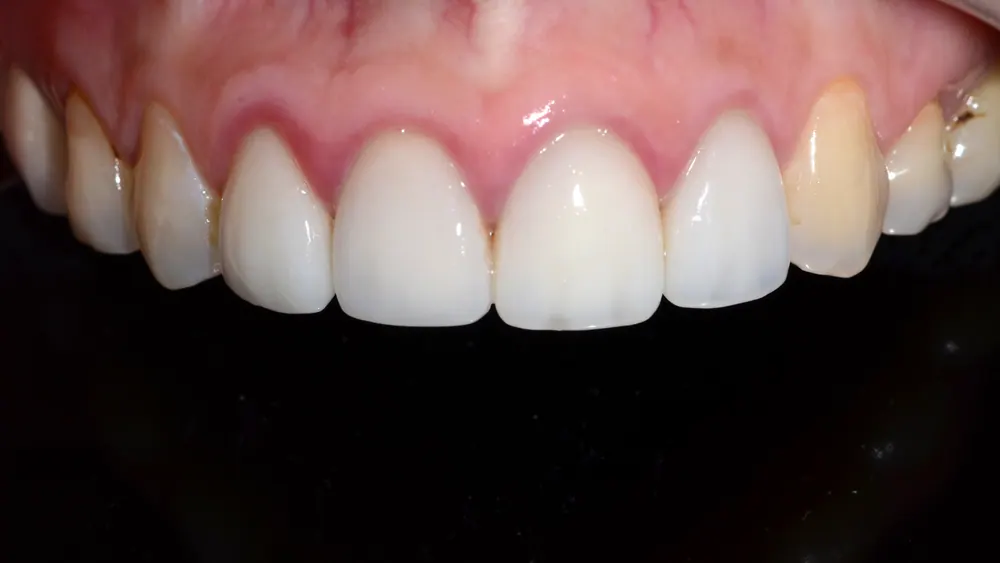
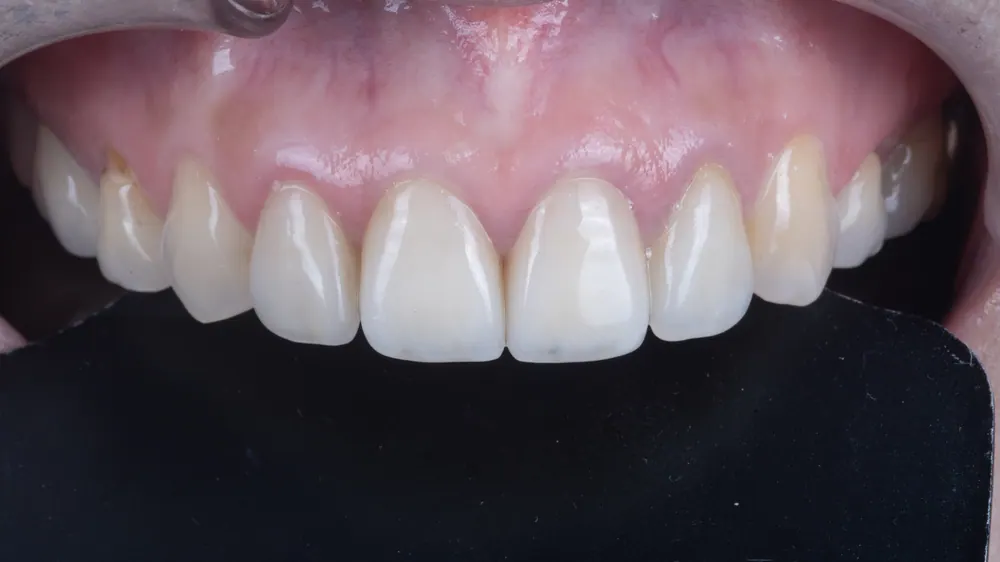
[Photo 4] Long-term follow-up of a veneer maintained over many years (before/after)
Frequently asked questions
Q. If I have veneers, does that mean I can't get whitening?
A. The veneer itself cannot be whitened. Since it's a ceramic material, it doesn't respond to whitening agents. If an adjacent natural tooth without a veneer becomes discolored, you can whiten just that natural tooth to match the veneer's color. The most ideal approach is to whiten first, before getting veneers, and then fabricate the veneer to match the brightened color.
Q. Is it okay to bite into an apple with a veneered tooth?
A. Yes, you can eat normal foods without any problem. You can bite naturally into an apple as well. However, it's best to avoid biting directly on hard seeds or bones with your front teeth. That's a bad habit for natural teeth too. There's no restriction at all on a normal diet.
Q. Does getting a scaling damage veneers?
A. A regular scaling causes no problem at all. In fact, you should get it regularly to remove tartar around the veneers. That said, if you get your scaling done at the clinic that placed the veneers, the margins of the veneers can be cared for more carefully. An ultrasonic scaler doesn't damage veneers either, so you can rest assured.
Dream Dental Clinic, Apgujeong, runs a systematic regular care program even after veneer treatment. Our goal isn't for treatment to simply end there, but for you to keep a beautiful smile for a long time.
If you have any questions about veneer care, please feel free to reach out anytime.
This article is a clinical note written by Dr. Park Jonguk of Dream Dental Clinic, Gangnam; the original was published on his blog. The photographs shown are real cases he treated. Results vary with each patient’s condition, and every procedure carries the possibility of individual variation and side effects.
Quick Consult
Request a Callback
Leave your number and we will call you back during clinic hours.
Request Received
We will contact you during clinic hours. For urgent matters, please call +82-2-3448-0028.