
What a Dentist Really Wants You to Know Before Getting Veneers
Hello, I am Park Jonguk, director of Dream Dental Clinic and director of Lamista Academy.
Lamista Academy is a seminar group that regularly trains dentists in veneer techniques.
Many patients who visit the clinic have a certain image that comes to mind first when they hear the word "veneer."
White, even teeth, a smile that shines when you smile, and the idea that it's something celebrities often get done.
Veneers really do offer excellent aesthetic improvement, which is why so many people are interested in them.
But at the same time, it's just as easy to come across negative claims like "they grind down too much of the tooth," "there are a lot of side effects," or "they all fall off eventually."
From a patient's perspective, encountering such conflicting information is bound to be confusing.
One side talks about it as though it's a treatment you absolutely should get, while the other side says you should never get it at all,
so it's hard to know whose word to trust. In fact, even among patients who visit our clinic,
quite a few say, "I wanted veneers, but I hesitated because I was worried about side effects."
So what's the truth?
Is a veneer really such a dangerous treatment?
Or, with the right diagnosis and process, is it a treatment that can produce a safe, satisfying result?
Based on my experience of practicing veneer treatment exclusively for over 20 years,
writing Korea's first textbook devoted to veneers,
and passing on the correct approach to veneers to countless patients and dentists,
a veneer is a treatment that can achieve the most beautiful, most natural result when both the patient and the dentist fully understand it and prepare properly.
In this article, I've laid out the key things patients absolutely need to know before veneer treatment.
I'll go into detail on "misunderstandings about side effects," "the truth about no-prep veneers," "how veneers are removed,"
and a "checklist you must go through before treatment."
1️⃣ Are veneer side effects really that common?
Side effects are probably the thing you hear about most when it comes to veneers.
Tooth sensitivity, needing root canal treatment, swollen gums, veneers falling off, and so on.
Hearing stories like this from people around you naturally makes you more afraid of the treatment.
But if you look closely at the cases where side effects actually occur, there's a common cause.
It's excessive tooth reduction and an incomplete diagnosis.
A veneer is, by nature, a treatment that can be done with minimal tooth reduction, or even none at all.
But at some clinics, in a rush to achieve an aesthetic result quickly,
or by proceeding without a precise diagnosis, teeth end up being reduced more than necessary.
In the process, the tooth's nerve can become exposed, or excessive reduction can undermine the tooth's structural stability, causing problems.
At our clinic, a precision wax-up diagnosis is a mandatory step.
This is a method based on a model of the patient's actual mouth,
where the final result is simulated before treatment and the exact amount of reduction is calculated.
Through this process, we can minimize the amount of reduction, or determine whether a no-prep veneer is fully achievable instead.
In other words, side effects aren't a problem with the "veneer" treatment itself,
they're caused by an inadequate diagnosis and a forced approach during treatment.
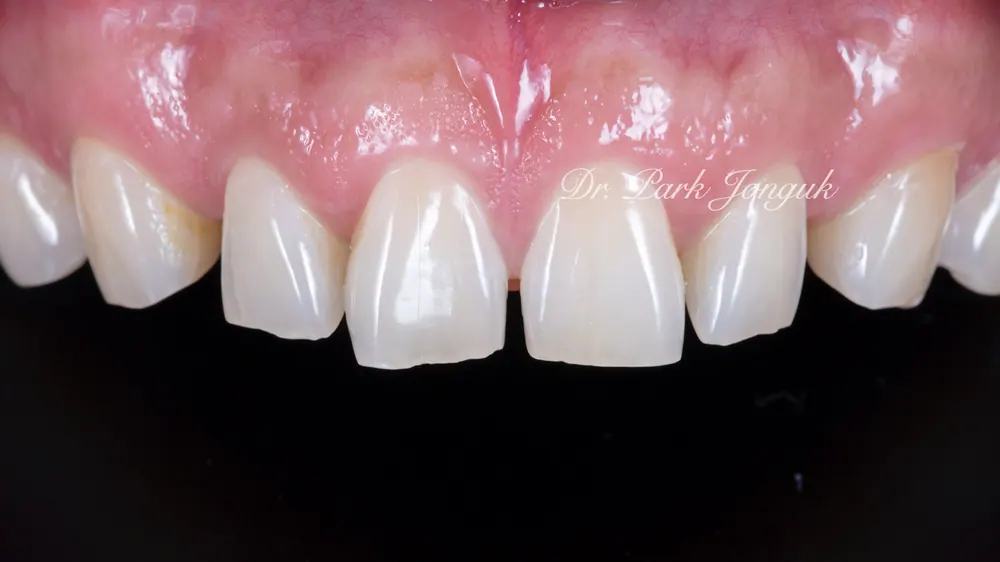
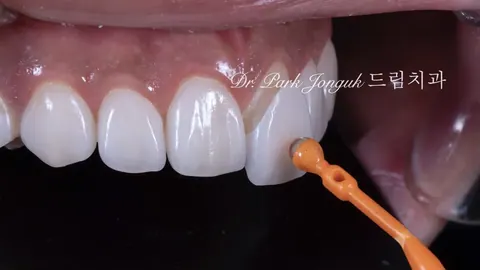
This patient came in for veneer treatment to close a gap between the front teeth and improve their shape.
If a case like this proceeds without a diagnosis,
unnecessary tooth reduction is bound to happen.
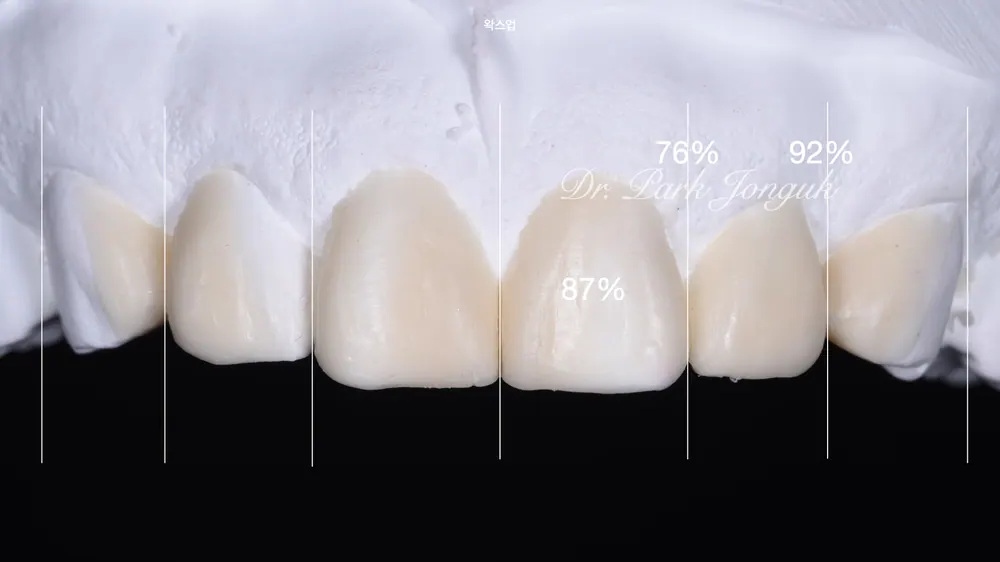
The precision wax-up diagnosis process is an essential step in veneer treatment.
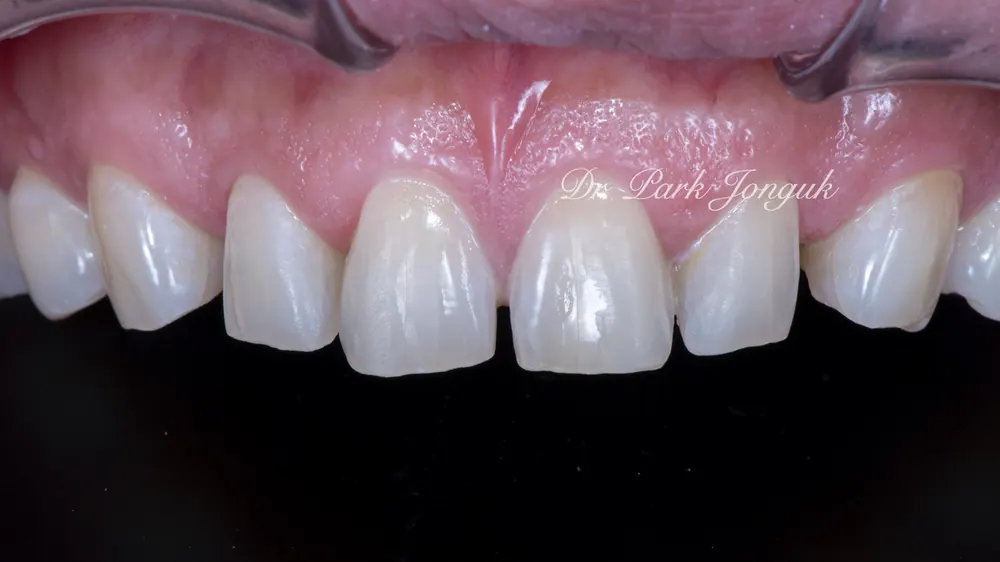
The minimum reduction that can still achieve the most beautiful result, this is exactly
why we perform a precision wax-up diagnosis for veneer treatment.
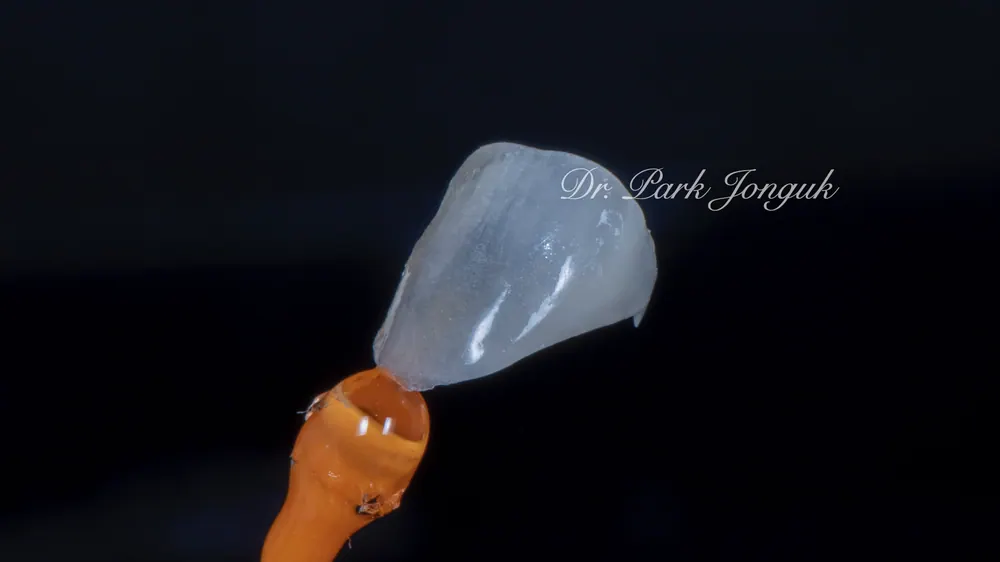
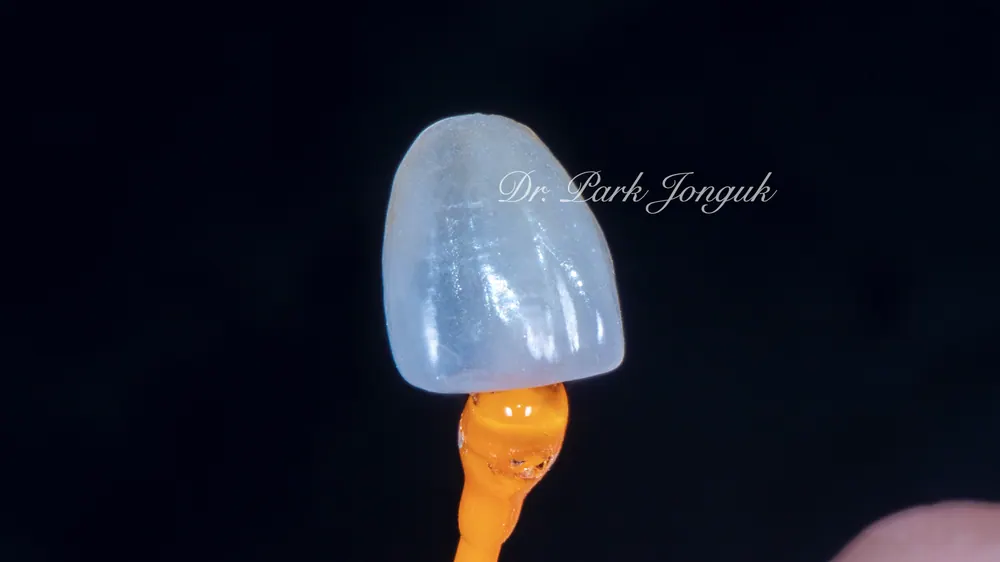
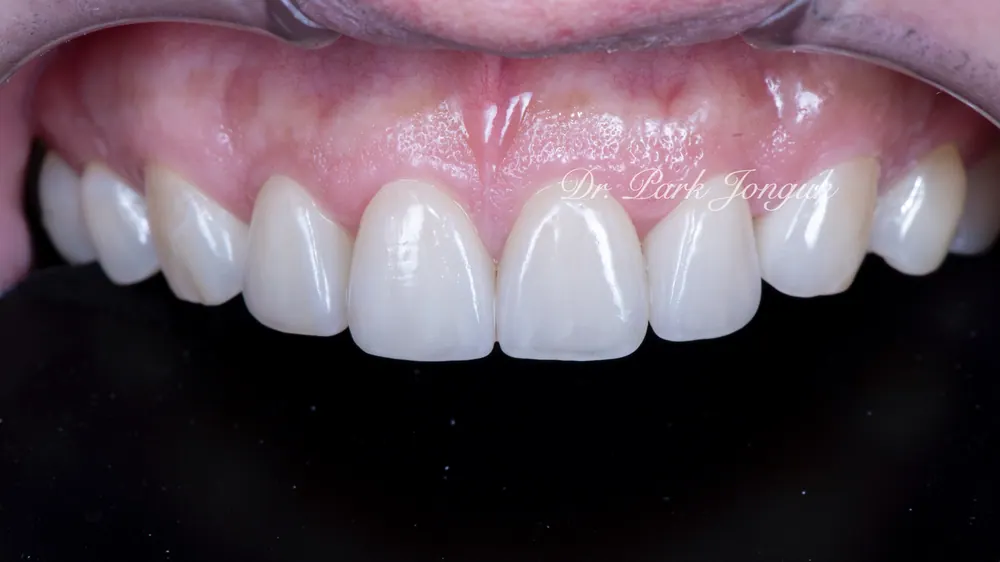
Through minimal reduction,
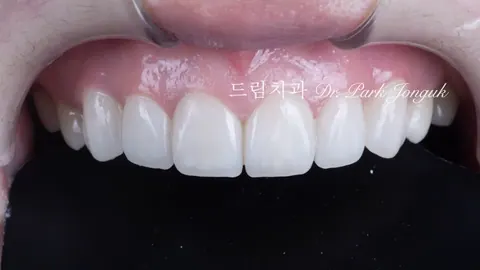
a beautiful result of veneer treatment was completed.
2️⃣ Are no-prep veneers unnatural?
A lot of people ask, "If you don't reduce the tooth at all, won't it end up too thick and look awkward?"
On the surface, that can sound like a reasonable point.
After all, the concept is attaching a thin restoration on top of the tooth.
But in reality, it's different.
Making a veneer isn't simply the work of bonding a thin shell onto a tooth,
it's a highly advanced technique that designs translucency, color, shape, and even sheen all together.
At our clinic, we run our own in-house dental lab and fabricate the veneers ourselves.
In that process, we can build up a dimensional layered structure even without any tooth reduction,
and reproduce the same translucency and light reflection as a natural tooth.
In fact, a significant number of our patients have chosen no-prep veneers,
and many tell us, "the people around me had no idea I'd gotten veneers."
This is precisely because the dentist and the technician designed the tooth's subtle curves and light reflection together.
The idea that no-prep veneers look unnatural is an outdated impression,
with today's precise fabrication technology and clinical experience, a fully natural, beautiful result is achievable.
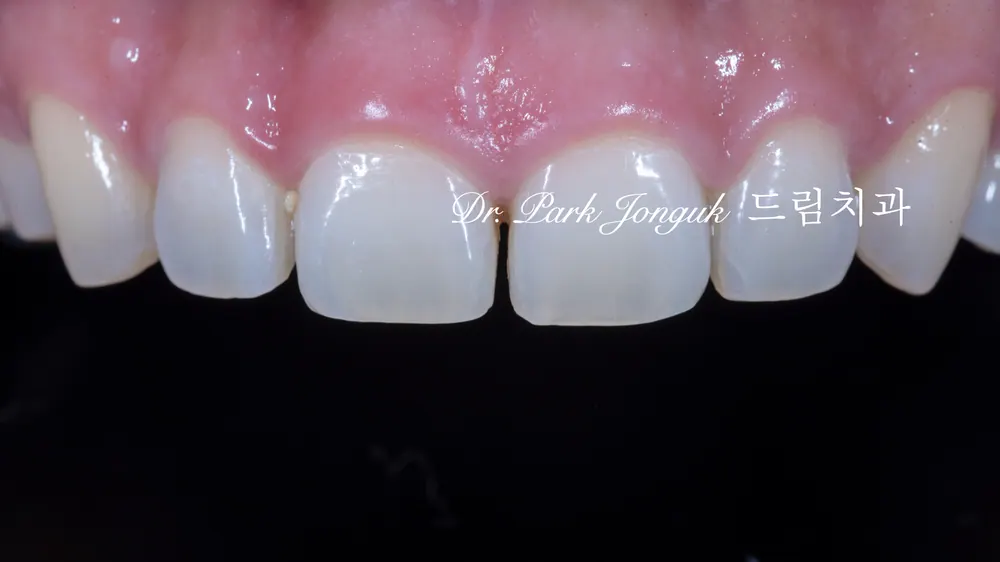
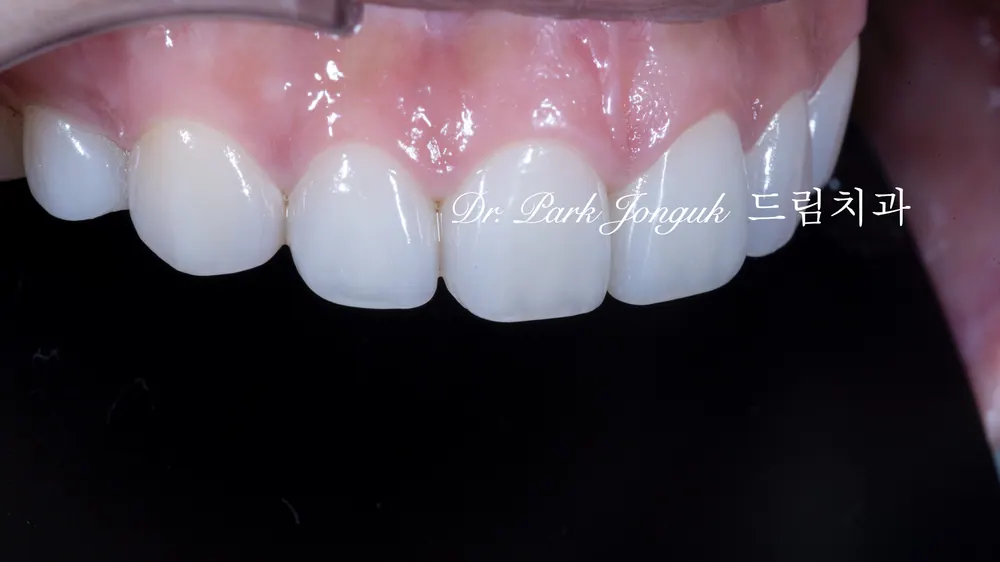
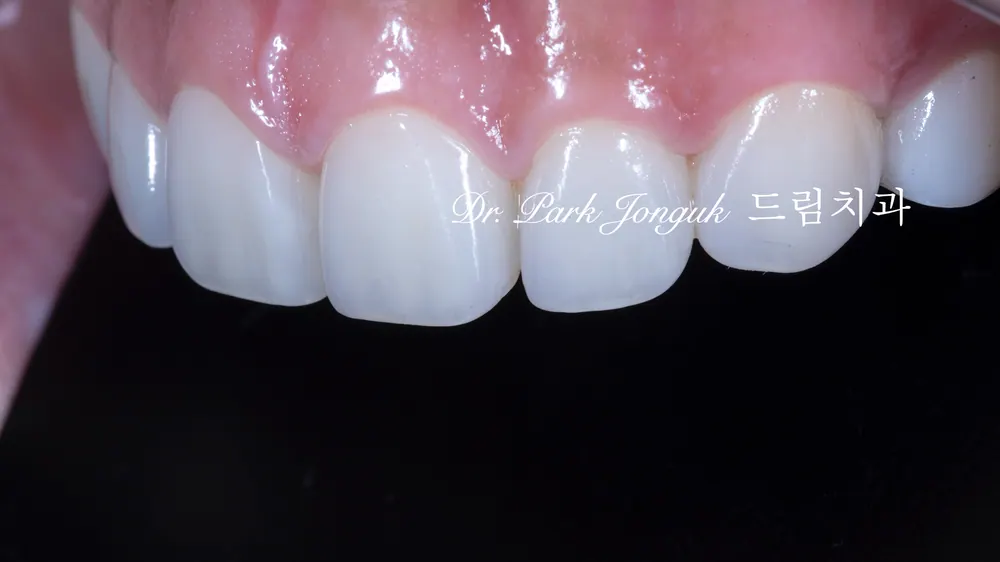
A no-prep veneer case
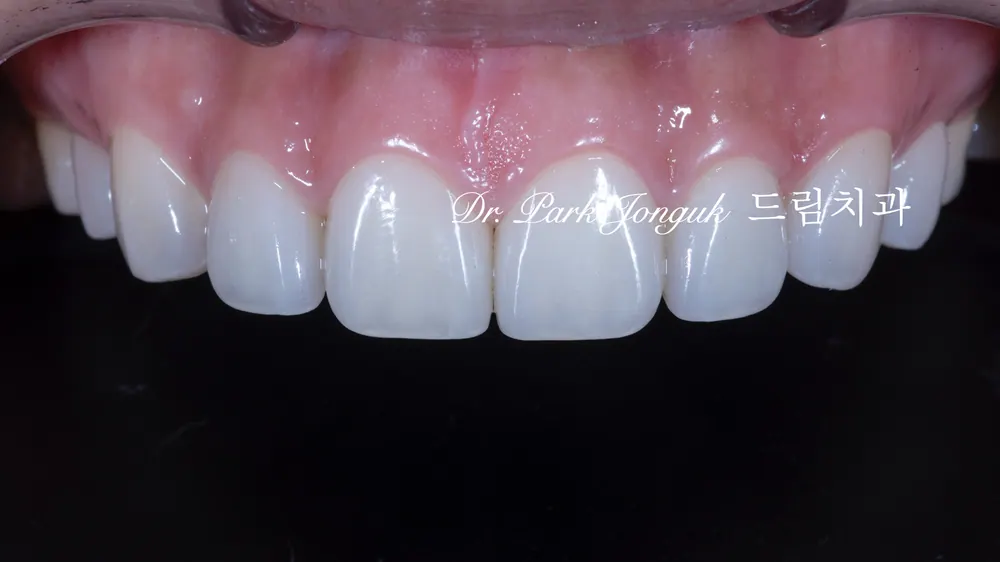
3️⃣ How do you safely remove an existing veneer?
Veneers are known as a semi-permanent treatment,
but many patients want a retreatment because of the passage of time or an unsatisfying result.
The problem lies in the process of removing the existing veneer.
Typically it's removed mechanically, essentially by grinding it away,
and this causes considerable damage to the tooth.
Because a veneer is so thin, the boundary with the tooth isn't clearly defined,
so the tooth itself often ends up being reduced along with it.
To get around this limitation, our clinic uses a laser removal method.
The laser weakens the adhesive between the veneer and the tooth,
so the veneer comes away almost as if it's separating on its own.
Of course, there can be very minor damage,
but it's a far safer, more conservative method compared to the traditional approach.
In fact, even in just the past few months,
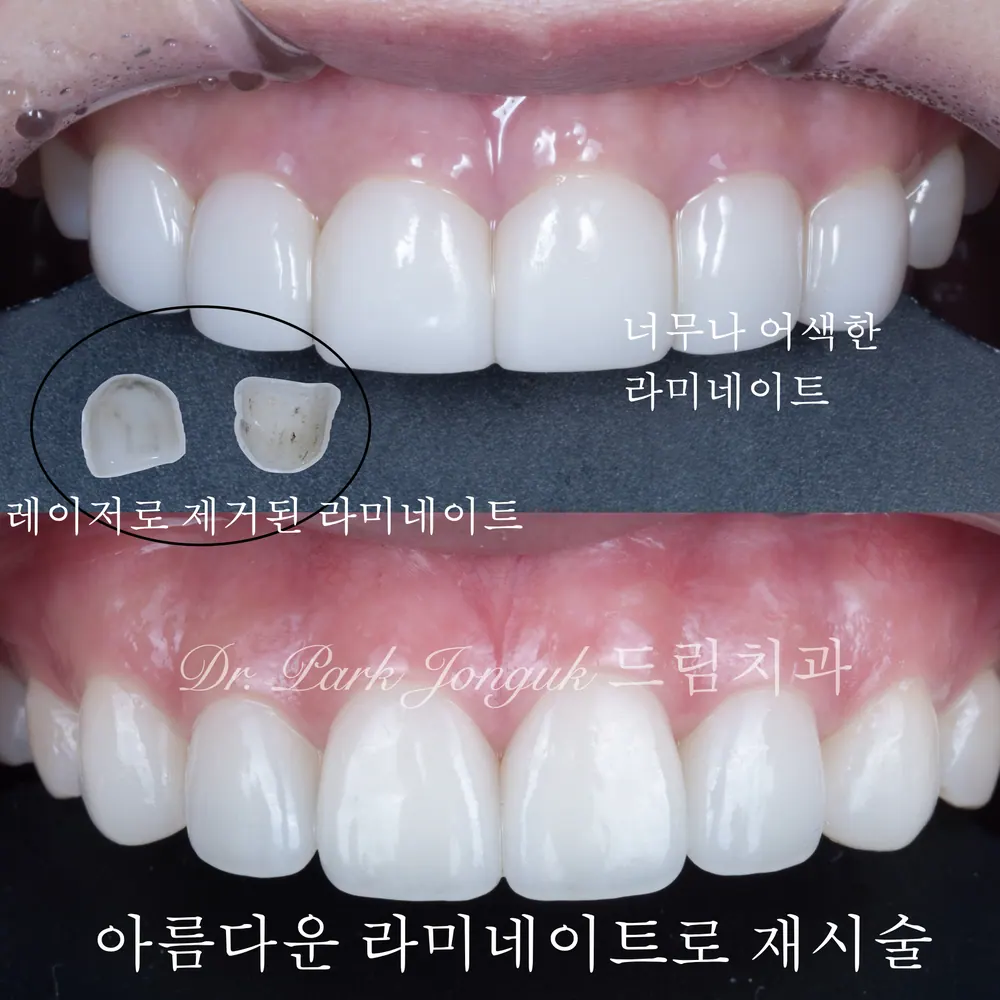
several patients have come in wanting a redo because veneers done at another clinic were too thick and looked awkward.
We first remove the existing veneers safely with the laser,
and if needed, carry out another precise diagnosis before fabricating new veneers.
What surprises patients the most
is how reassured they feel that "there's almost no damage to the tooth."
For a detailed look at safely removing veneers with a laser, please see the link below.
4️⃣ With veneers, understanding comes before looking pretty
A veneer isn't simply a cosmetic treatment that makes teeth look pretty.
It's a highly demanding treatment where countless factors work together, including the amount of reduction, bite condition, gum health, and color harmony.
That's why we never keep our consultations short.
We spend at least 10 to 15 minutes explaining everything thoroughly,
and only proceed with treatment after answering the patient's questions in full.
Even so, many patients come to us after getting treatment elsewhere without a proper explanation,
unhappy with the result.
Some patients find the result so hard to look at that they can't even get a retreatment,
and end up simply having all their veneers removed and going home.
Every time I see a case like this, I'm reminded that explanation isn't optional, it's essential.
❓ A Q&A checklist of what to confirm before veneer treatment
Q. Do veneers require reducing a lot of the tooth?
👉 Not necessarily. A precise diagnosis can minimize the amount of reduction, or make a no-prep approach possible.
Q. Aren't no-prep veneers thick and awkward-looking?
👉 No. With precise fabrication technology, natural dimension and translucency can be fully expressed.
Q. Does removing an existing veneer damage the tooth a lot?
👉 The traditional method causes significant damage, but using laser removal makes it far safer.
Q. What should I be sure to check before treatment?
👉 The process, the amount of reduction, and the scope for adjusting the result.
You need to confirm these three things before getting started.
✅ To sum up,
a veneer isn't a dangerous treatment, it's a treatment you need to "properly understand and properly prepare for."
When the patient has the right information, the dentist explains thoroughly, and the technician fabricates it with precision,
a veneer can become the best treatment for protecting both your teeth and your smile.
This article is a clinical note written by Dr. Park Jonguk of Dream Dental Clinic, Gangnam; the original was published on his blog. The photographs shown are real cases he treated. Results vary with each patient’s condition, and every procedure carries the possibility of individual variation and side effects.
Quick Consult
Request a Callback
Leave your number and we will call you back during clinic hours.
Request Received
We will contact you during clinic hours. For urgent matters, please call +82-2-3448-0028.