
No-Prep Veneers: A Way to Achieve Both Naturalness and Safety at Once
Hello. This is Park Jonguk, director of Dream Dental Clinic.
There's a question that people considering veneer treatment ask most often.
"Is it possible to get veneers without having my teeth cut down?"
"Aren't no-prep veneers thick and awkward-looking?"
If you actually search online, you'll find plenty of posts claiming no-prep veneers look unnatural.
But most of this comes from cases that were pushed through aggressively without a precise diagnostic process.
Depending on how much of the tooth is reduced, veneers can broadly be divided into no-prep, minimal-prep, and standard-prep.
Among these, no-prep veneers cause almost no damage to the tooth while still achieving an esthetic improvement,
so they're the method patients prefer most. But that doesn't mean it can be applied to absolutely everyone.
Before treatment, I always carry out a precise wax-up diagnosis.
After carefully analyzing the patient's tooth shape, alignment, degree of protrusion, and bite condition, I determine whether veneers are actually possible without any reduction.
If this process is skipped, the result inevitably ends up thick and awkward.
Conversely, when a precise diagnosis is carried out, a natural-looking veneer with translucency and dimensional depth is fully achievable even without reducing the tooth.
What I've come to realize after experiencing countless no-prep veneer cases over 20 years is this:
"the way to minimize tooth reduction while still achieving naturalness comes down entirely to diagnosis."
If you're considering no-prep veneers, don't just focus on the simple advantage of "not cutting the tooth" —
make sure to check what process is used for diagnosis and fabrication.
There are three main principles for no-prep veneers to be possible.
1) The teeth need to be small
2) The alignment of the teeth needs to be even
3) They must not be protruding — being over-retracted is favorable
Let me show you a case that fits these three conditions well.
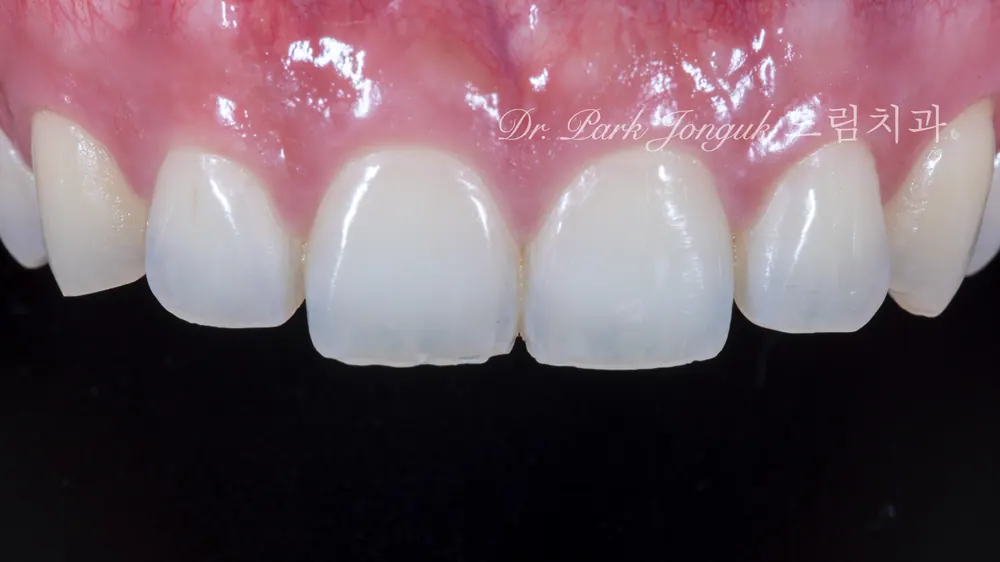
This patient came in because her over-retraction had gotten severe after orthodontic treatment.
Her tooth size was small and the alignment was very good.
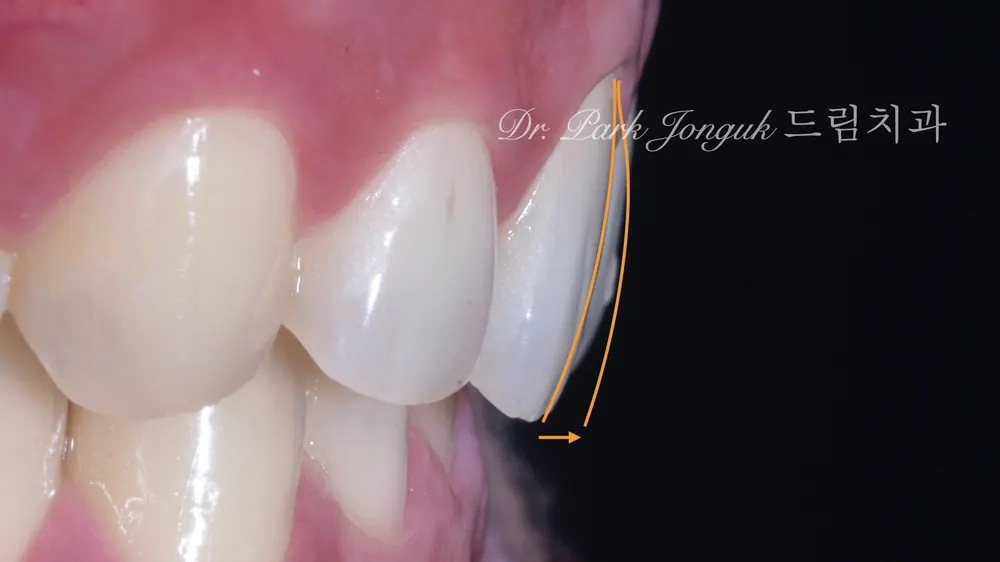
Viewed from the side, the over-retraction was so severe that the teeth needed to be brought outward like this.
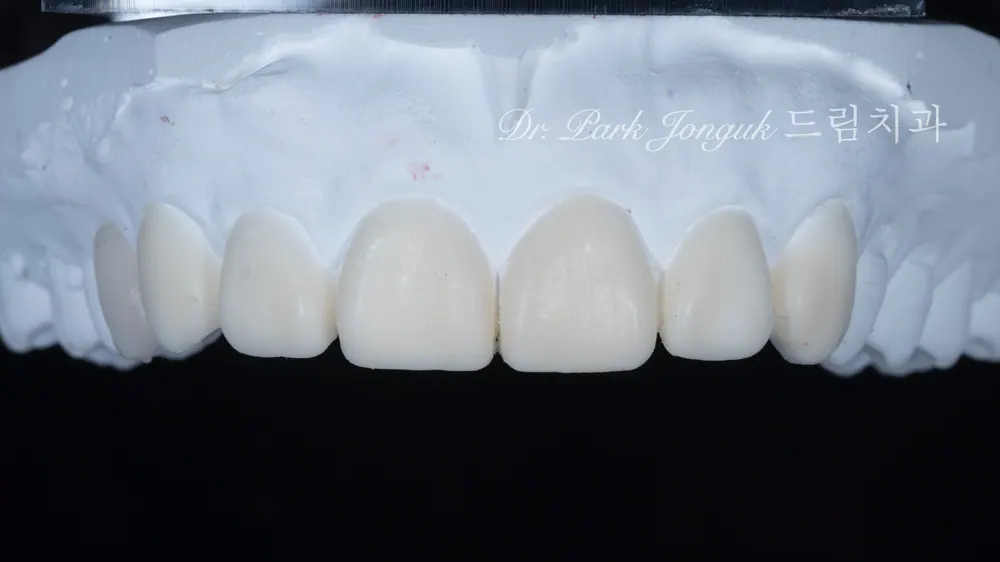
In practice, we run a simulation using a model like this.
This process lets us check in advance whether tooth reduction is needed or whether no-prep is possible.
This process is called the wax-up precision diagnosis for veneers.
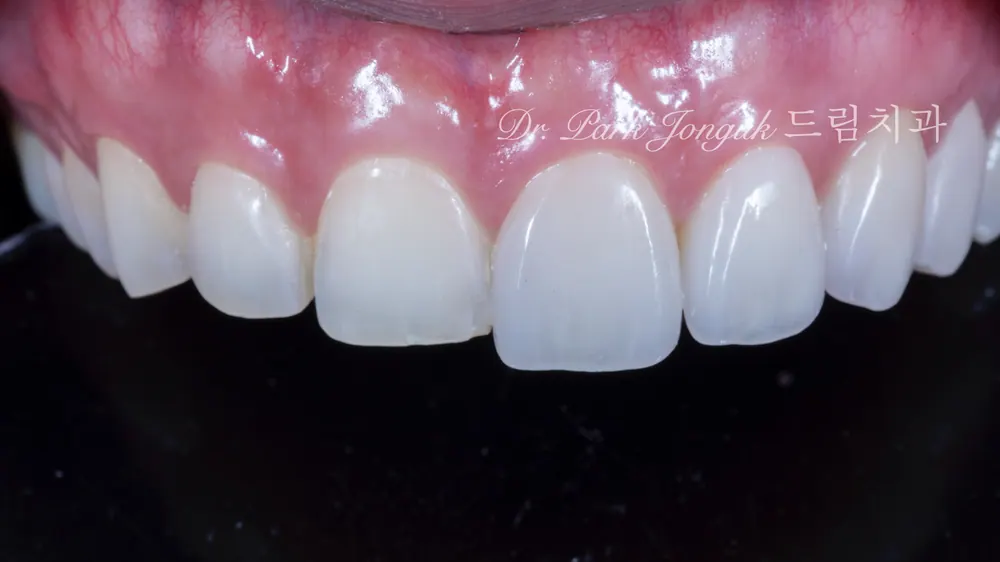
The veneers have been fabricated.
As you can see, no-prep veneers end up larger in size than the current tooth.
That's why the result comes out well only when the tooth is small to begin with.
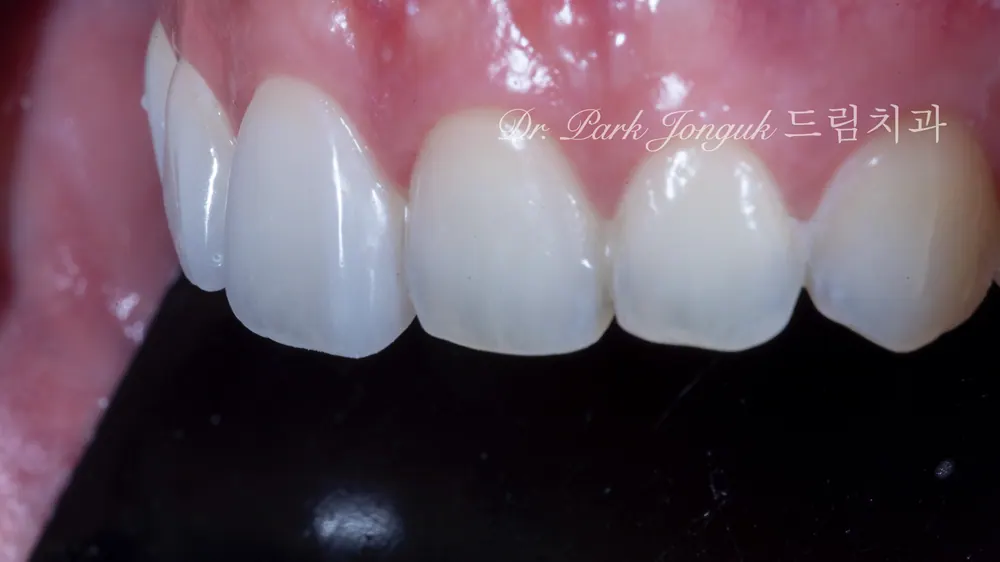
You can see the over-retraction has been effectively improved.
The feel of the teeth being small and tucked inward has clearly improved.
Getting a good result like this through no-prep veneers
is something that must be confirmed and carried out during the wax-up precision diagnosis process.
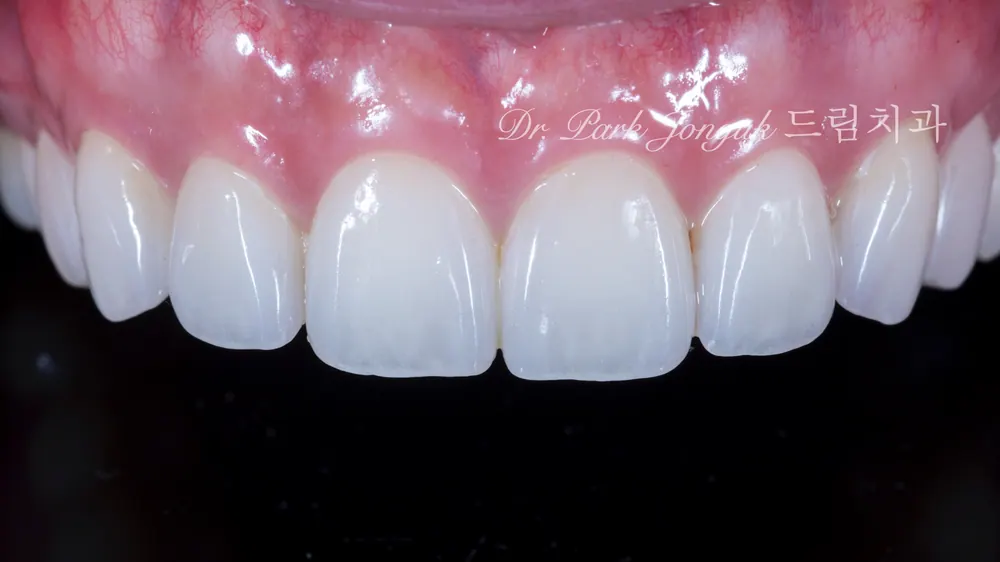
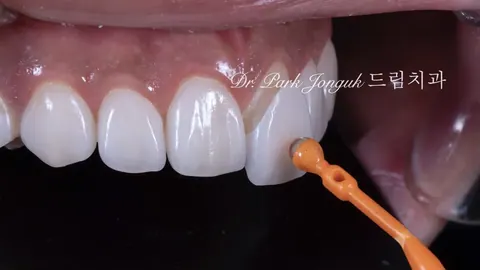
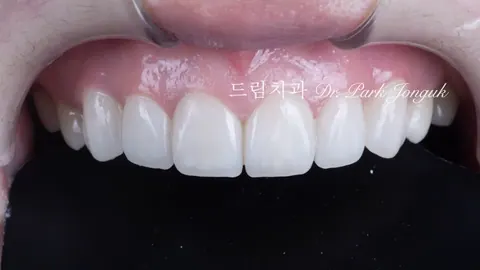
The treatment has been completed.
It shows the natural shape of the teeth well.
No-prep veneers aren't simply a thin layer bonded on — a technician fabricates them with precision so they harmonize with the tooth.
Our clinic has the advantage of operating our own in-house lab, which allows custom fabrication for each individual patient.
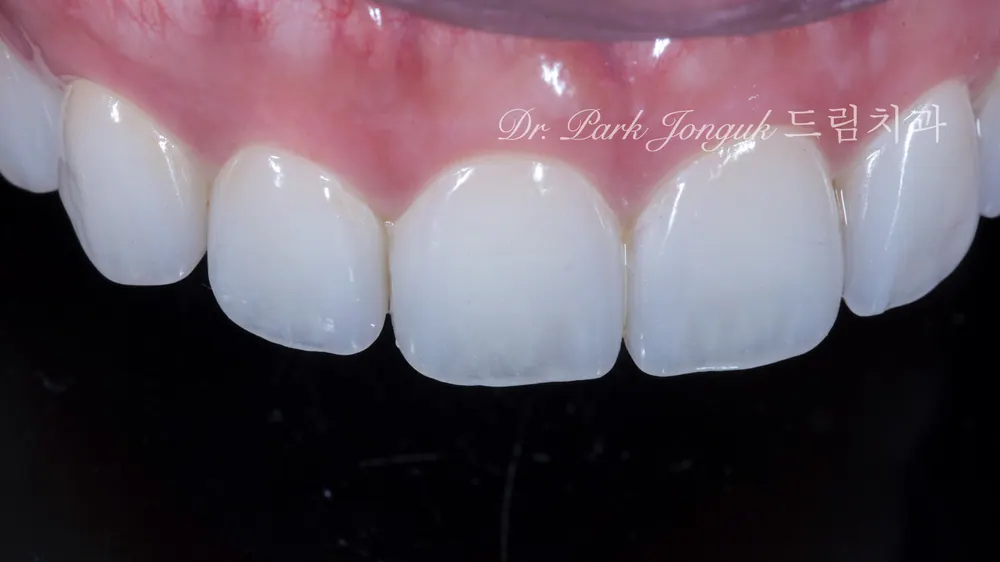
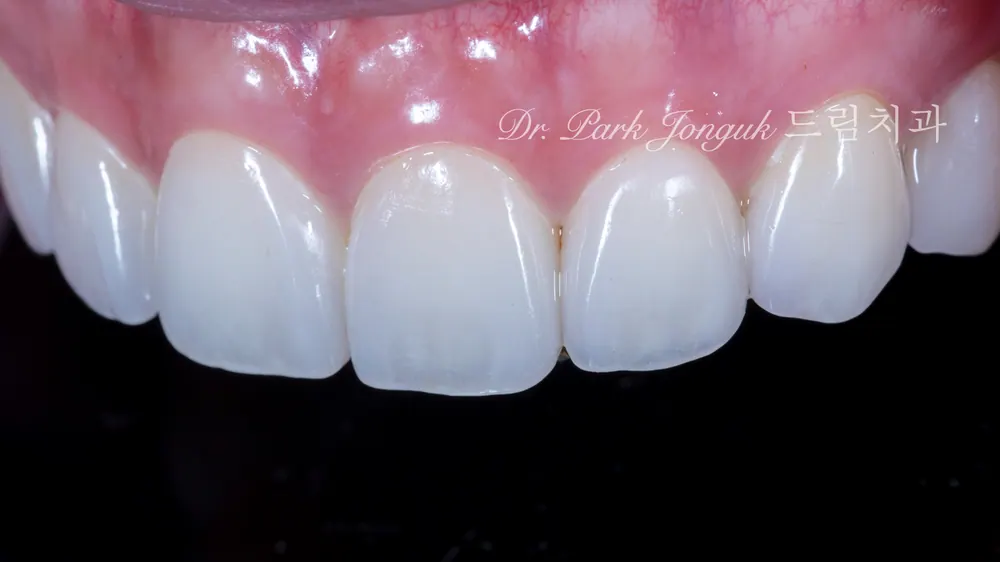
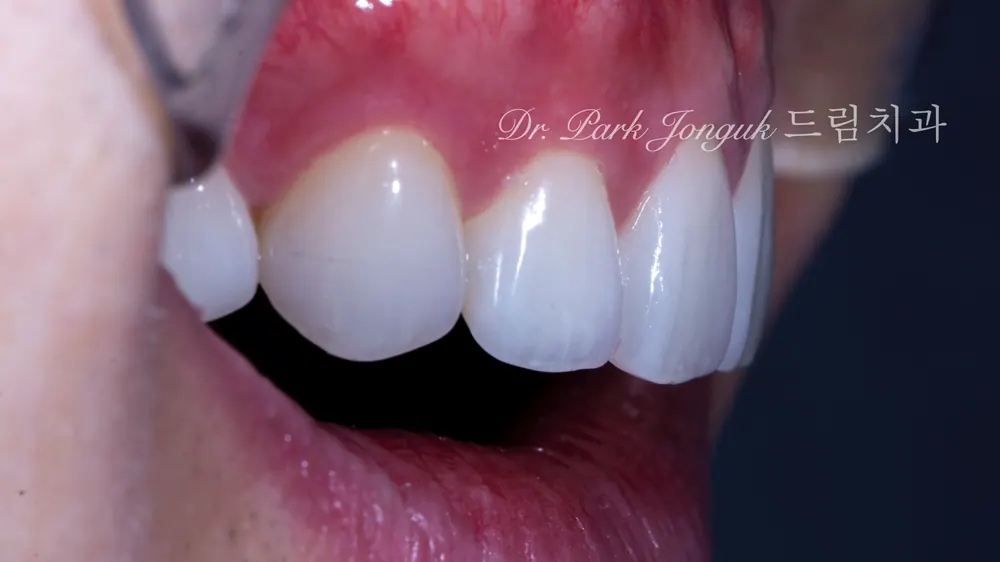
You can see the over-retraction has been completely corrected.
Conclusion + Q&A
To sum up,
no-prep veneers are a way to achieve a natural, beautiful result while minimizing tooth reduction. That said, they can't be applied to every patient unconditionally, and suitability must always be confirmed through precise diagnosis.
Q&A
Q. Can anyone get no-prep veneers?
No. It depends on the tooth alignment, degree of protrusion, and bite condition. Whether it's possible is determined after precise diagnosis.
Q. Do no-prep veneers have side effects too?
Since there's almost no tooth reduction, side effects are minimal. That said, if applied excessively, the result can become thick and awkward.
Q. How long do they last?
They can last as long as, or even longer than, regular veneers. Depending on care, many patients use them for over 10 years.
Q. What about the price?
Because the fabrication process is more precise, the price can be similar to or somewhat higher than regular veneers.
This article is a clinical note written by Dr. Park Jonguk of Dream Dental Clinic, Gangnam; the original was published on his blog. The photographs shown are real cases he treated. Results vary with each patient’s condition, and every procedure carries the possibility of individual variation and side effects.

Quick Consult
Request a Callback
Leave your number and we will call you back during clinic hours.
Request Received
We will contact you during clinic hours. For urgent matters, please call +82-2-3448-0028.