
What You Need to Know Before Getting Front-Tooth Veneers
Hello, I'm Park Jonguk, director of Lamista Academy and Dream Dental Clinic.
Lamista Academy is a seminar group that regularly trains dentists in veneer techniques.
Veneers are widely known as a leading esthetic treatment for making teeth more attractive.
On TV shows and in ads, you'll often see a bright, sparkling celebrity smile credited to veneers.
As a result, many people think of veneers simply as a treatment that whitens the teeth and straightens them out.
But in reality, veneers aren't nearly that simple a treatment.
The treatment approach differs based on each patient's tooth condition, alignment, size, and esthetic goals,
and in some cases, veneers may not even be the right fit.
In particular, phrases commonly seen online or in advertising, like "no-prep veneers" or "special new-material veneers,"
are, in truth, often exaggerated or purely marketing terms.
What matters most from a patient's perspective isn't a flashy name or an advertising slogan, but knowing that the real factors are proper diagnosis, minimal tooth reduction, and a fabrication process capable of producing a natural result.
In this article, I'll go over the four key things you need to know before getting veneers.
01. Are No-Prep Veneers Possible?
One of the questions patients ask most often about veneer treatment is, "Is it really possible to get veneers without any reduction at all?"
In ads, you'll often see phrases like "always no-prep" or "only 0.1mm removed," but in truth, these are frequently exaggerated.
The accurate answer is that no-prep veneers may be possible, depending on the condition of the patient's teeth.
The amount of tooth reduction varies from person to person, tooth to tooth, and even depending on the tooth's position and shape.
For no-prep veneers to be possible, the following conditions are needed.
1️⃣ The teeth need to be small
2️⃣ The alignment of the teeth needs to be even
3️⃣ The teeth must not protrude forward
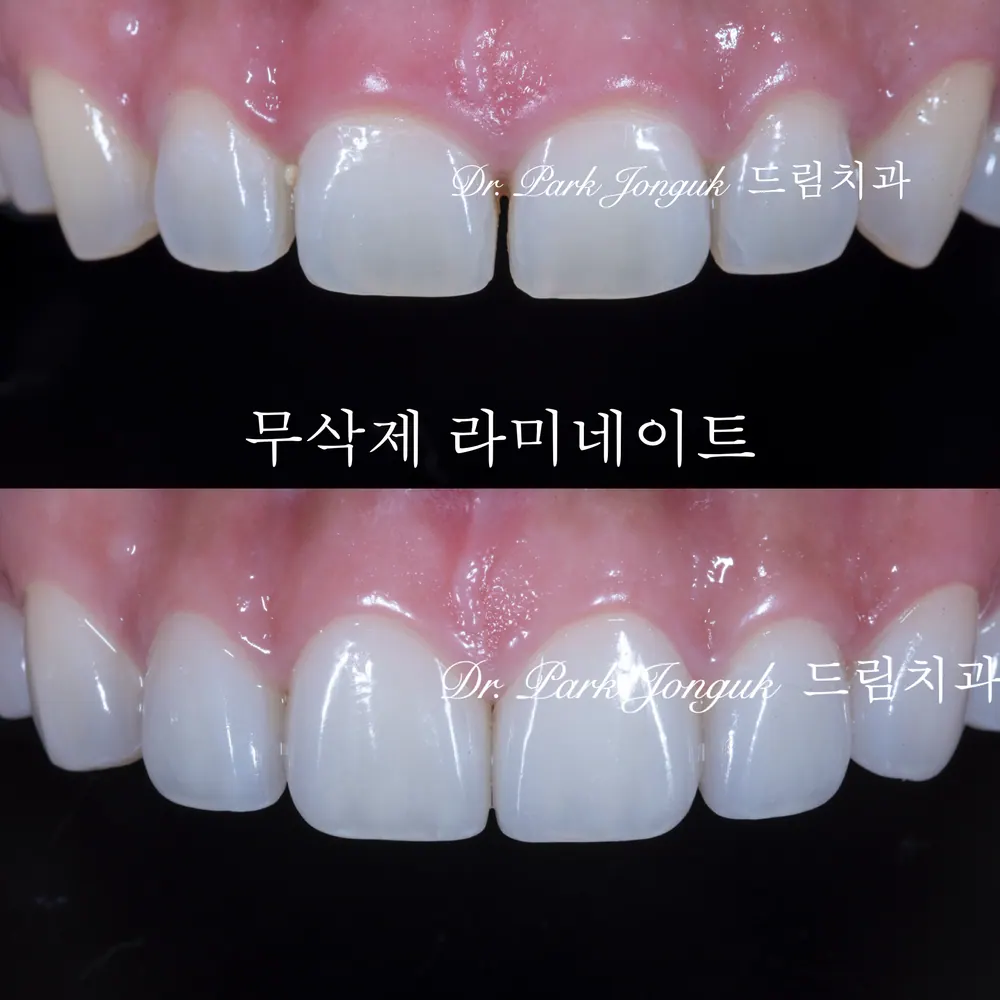
A classic example is a peg lateral. When one of the front teeth has developed unusually small, veneers can add size and shape without any tooth reduction at all.
In other words, no-prep veneers are possible, but they don't apply to every case — the amount of reduction needed must always be accurately assessed through a precise diagnostic wax-up.
02. Is There a Special Material?
In ads, you'll sometimes see phrases like "a special material only our clinic uses" or "new-material veneers."
But in reality, the ceramic used for veneers isn't made in-house by the clinic — it's a product manufactured and sold under license by specialized ceramic companies.
In other words, any clinic or dental lab can purchase the same material.
What actually matters is who makes it, and how.
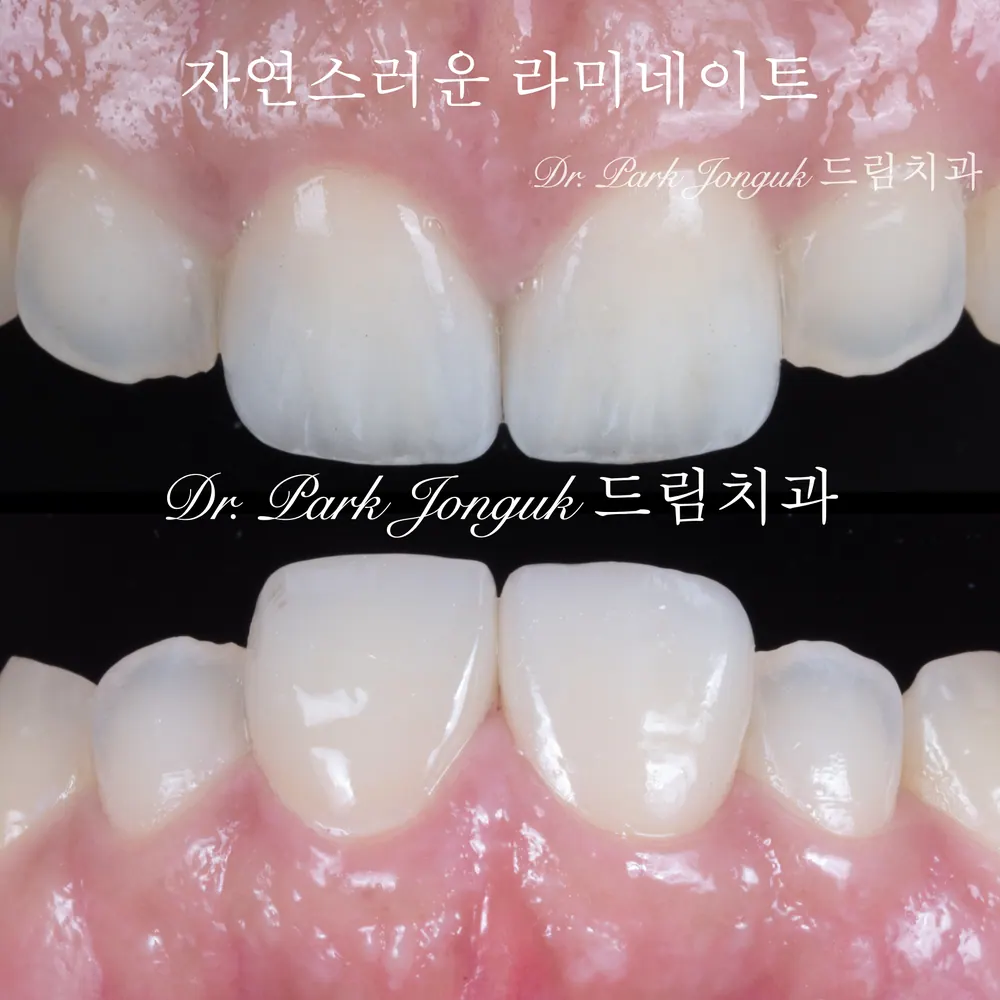
Just as the same flour can make very different-tasting spaghetti depending on the chef, using the same ceramic can produce very different final results depending on the technician's skill and the dentist's diagnostic and design ability.
In the end, the difference lies not in the material, but in the fabrication process and the level of skill involved.
03. Are All Veneer Fabrication Methods the Same?
There are broadly two methods for fabricating veneers.
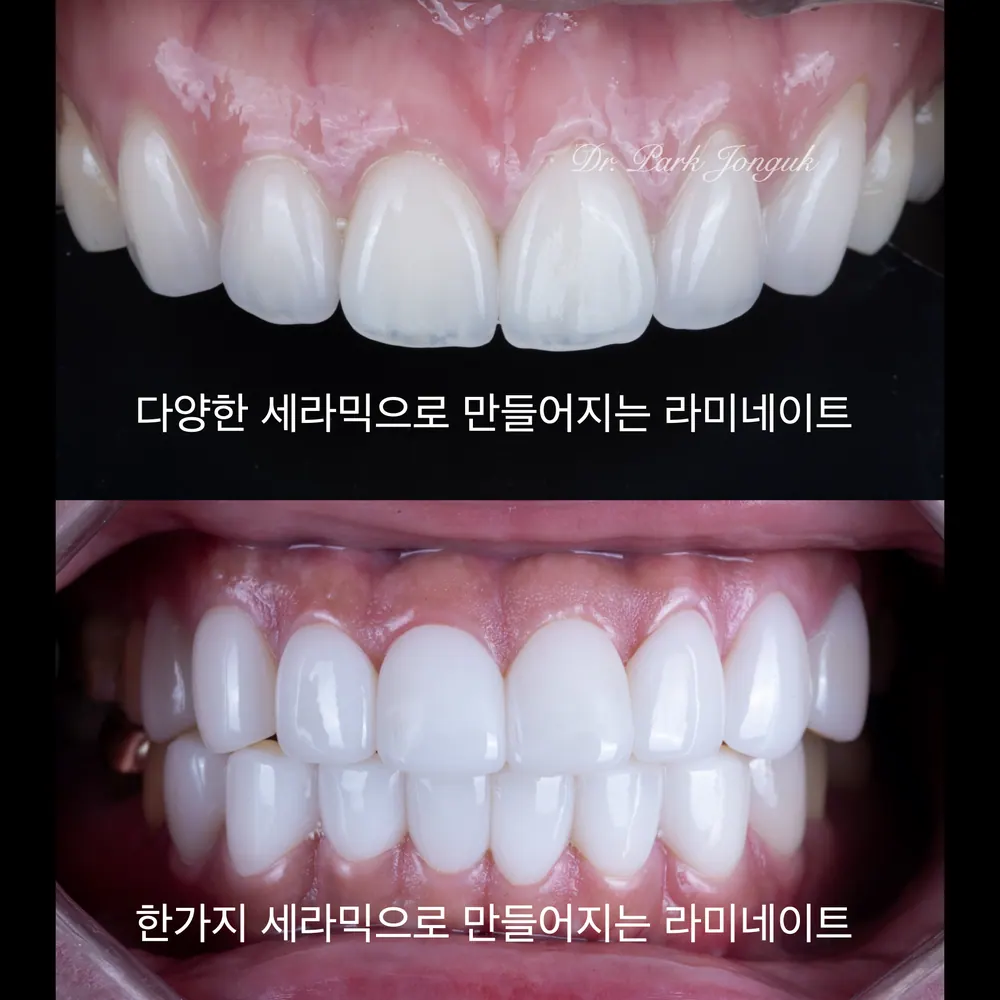
1️⃣ The buildup (handcrafted build-up) method
Multiple types of ceramic are stacked layer by layer to express a natural tooth's range of color, translucency, and depth
This is the best method for reproducing a natural esthetic result
The fabrication process is complex and takes a long time
2️⃣ The single-material (one-material) method
Made from just one type of ceramic
Fast, simple, and low-cost
But can look opaque and artificial
Often referred to as the "same-day method"
Most clinics choose the second method for the sake of speed and cost efficiency.
But if you want a natural-looking result, careful fabrication through the buildup process is what's needed.
In other words, how natural a veneer looks ultimately comes down to the fabrication process.
04. Are Veneers Under Different Names Different Treatments?
"Laminate" is actually short for "laminate veneer."
In Korea, it's called a "laminate"; in other countries, it's usually called a "veneer."
But in dental advertising, you'll often see flashy names like "__ Smile" or "__ Design Veneer" used instead of the plain term.
From a patient's perspective, these can feel like something special and cutting-edge, but in truth, they're all the same veneer treatment.
The reason clinics give it different names is, in most cases, purely for marketing.
But what actually matters isn't the name — it's how precisely the clinic diagnoses, how committed it is to minimal reduction, and how naturally it fabricates the result.
In the end, don't be swayed by the name — look at the substance.
Veneers are a good treatment for improving the esthetics of your teeth, but the result can vary enormously depending on the process and philosophy behind it.
More important than whether no-prep is possible, what material is used, how it's fabricated, or what it's called is a process aimed at the right diagnosis for the patient, minimal reduction, and a natural-looking result.
Veneer Q&A (Frequently Asked Questions)
Q1. Are no-prep veneers possible for everyone?
👉 No. It depends on tooth size, alignment, and how much the teeth protrude. This needs to be confirmed through a precise diagnosis.
Q2. Is there a special material?
👉 No. All ceramic is manufactured and supplied by companies. The difference lies not in the material, but in the fabrication process and the technician's skill.
Q3. Is everything handmade automatically natural-looking?
👉 Not necessarily. Even among handmade veneers, only those made through the "buildup" process can achieve a natural color and translucency. Some handmade veneers are still made with just a single type of ceramic.
Q4. Are laminate and veneer different treatments?
👉 No. "Laminate" is simply short for "veneer," and other countries usually just say "veneer."
Q5. Are the different names seen in ads all different treatments?
👉 No. The names differ, but the underlying treatment is the same veneer treatment. What matters isn't the name, but the process.
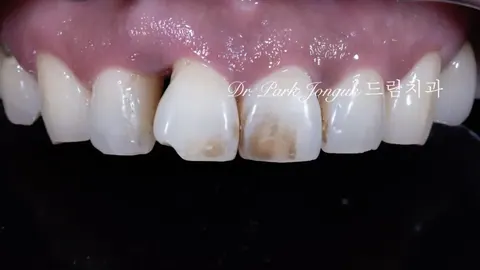
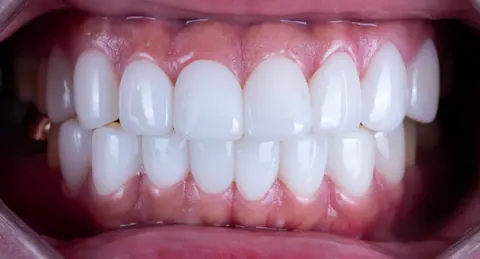
This article is a clinical note written by Dr. Park Jonguk of Dream Dental Clinic, Gangnam; the original was published on his blog. The photographs shown are real cases he treated. Results vary with each patient’s condition, and every procedure carries the possibility of individual variation and side effects.
Quick Consult
Request a Callback
Leave your number and we will call you back during clinic hours.
Request Received
We will contact you during clinic hours. For urgent matters, please call +82-2-3448-0028.