
Veneer Treatment Carried Out Through Ongoing Communication
Hello, I am Park Jonguk, medical director of Dream Dental Clinic in Apgujeong.
It's something I always feel while performing veneer treatment,
but a great deal of conversation and rapport with the patient is extremely important.
Since this is an aesthetic treatment — essentially a form of reshaping — the average, typical form and shape of teeth matters, but
what direction the patient wants also matters a great deal.
By identifying the goal of treatment — what the current problem is — and exchanging a range of opinions about how the patient would like things to change,
we clearly discuss what is and isn't possible, and
in the process, we need to talk about how much tooth reduction is required and why that amount is necessary.
Another important step is confirming, through temporary teeth, whether all of those requests can actually be achieved.
Because aesthetic treatment isn't about restoring a lost chewing function — that is, the function of biting and chewing food —
more attention has to be paid to the patient's satisfaction.
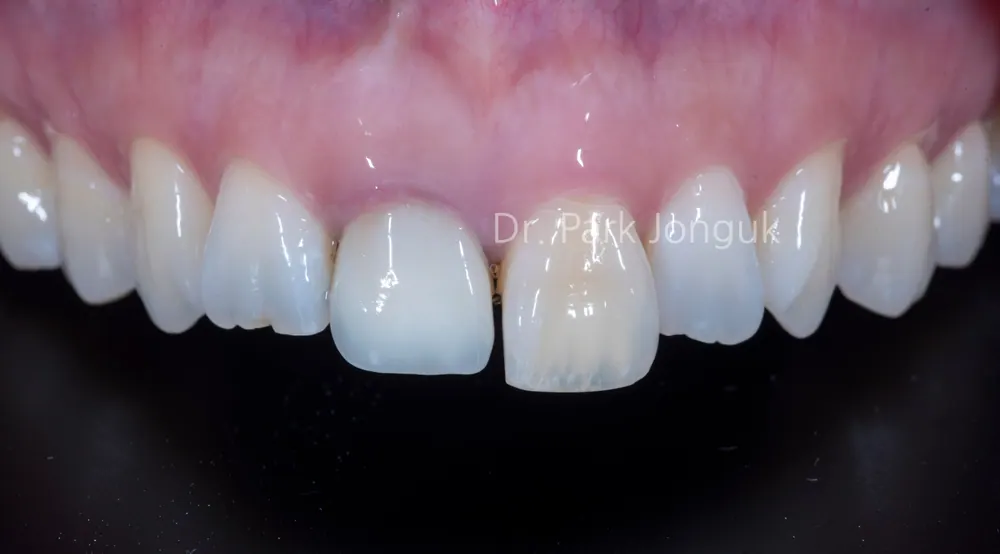
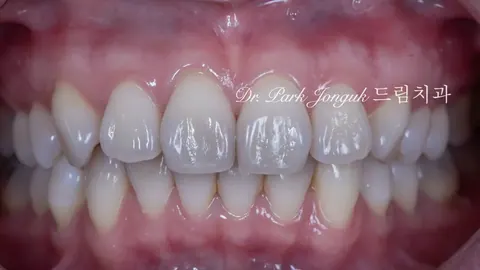
One tooth had already received crown treatment.
However, one of the front teeth had become severely discolored, and the tooth had dropped down quite a bit.
The balance was likely correct when the crown treatment was first done, but the position of the tooth had shifted over time.
This kind of case is fairly common. In particular, when crown treatment is done during the growth period,
changes in tooth position after growth is complete often make the alignment worse.
On top of that, the teeth next to the front tooth were markedly asymmetrical, with significant differences in both position and size between the two sides.
We decided to proceed with treatment to improve all of this overall.
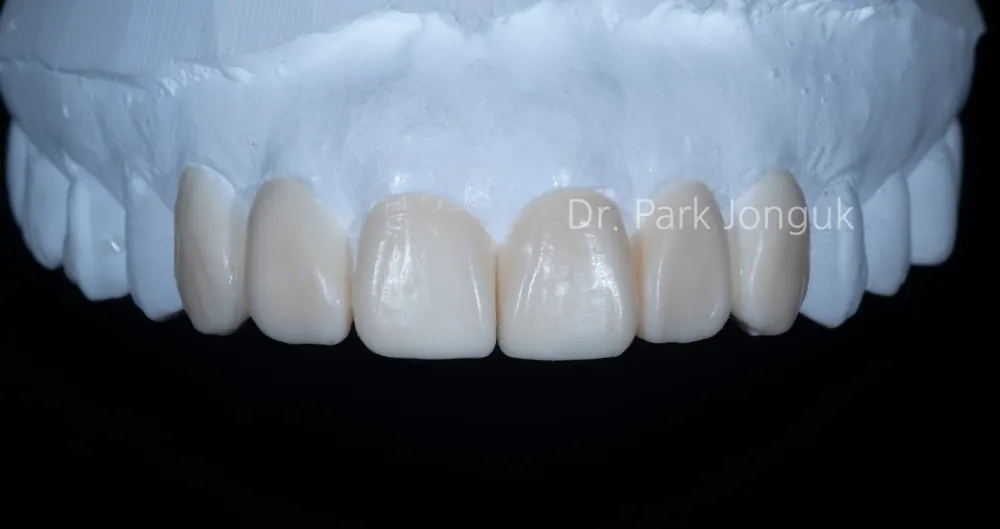
First, we use wax to work out in advance how the treatment will proceed.
This process is called a wax-up.
The wax-up can be considered the single most important step in veneer treatment.
It lets us see in advance how the teeth will be treated, and
it also lets us anticipate the amount of tooth reduction beforehand.
On top of that, because the temporary teeth are made based on this shape,
the entire process of veneer treatment both begins and ends with the wax-up.
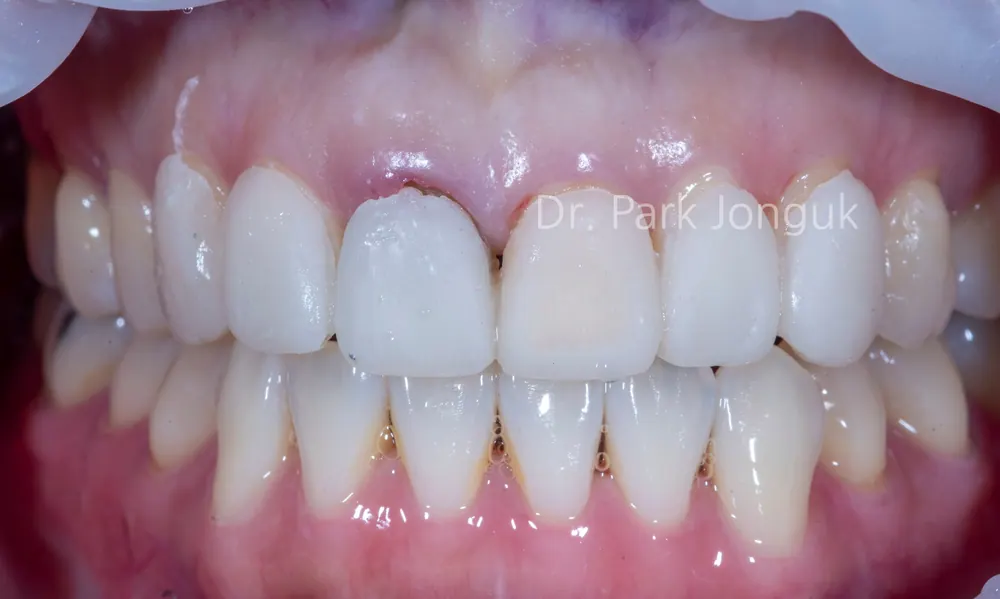
After the teeth are reduced for the veneers, temporary teeth like the ones above are made.
In my case, I typically make this kind of temporary tooth two to three times, continuing to consult with the patient throughout.
Since they're made using resin, a type of plastic,
they don't reproduce fine detail in color and texture,
but they let us discuss the overall volume, proportions, and so on.
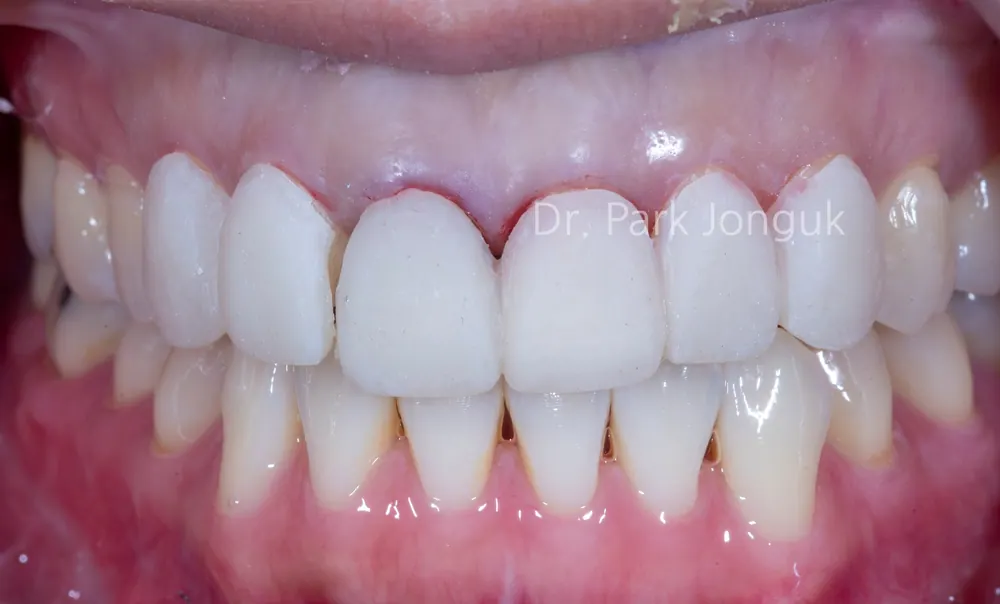
After making them several times this way, adjusting the length and proportions in various ways, once the patient is happy with the shape,
we take an impression at that point and bond the temporary teeth in place.
On the day of treatment, since the patient is under local anesthesia, we also need to consider how the teeth will relate to the lips once the anesthesia wears off, and
going straight into fabrication on the same day ends up sacrificing something far too important in aesthetic treatment.
Time needs to be taken to work out the color, shape, proportions, and size of the teeth.
Making teeth that need to last more than 10 years once treated, in a single day, is not a good approach.
After that, we continue consulting about the shape by phone or in follow-up visits.
Once the shape is finally confirmed, fabrication in ceramic begins.
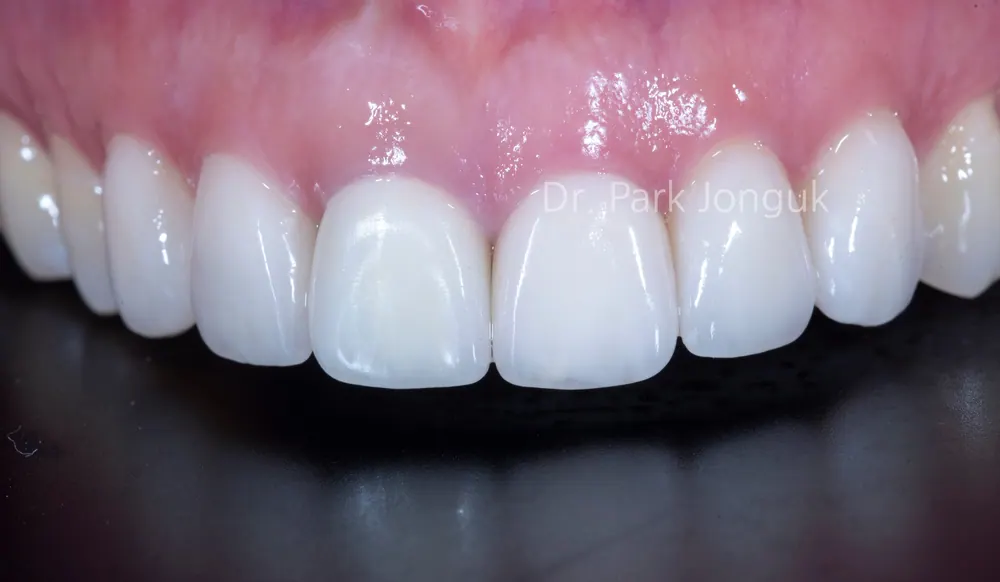
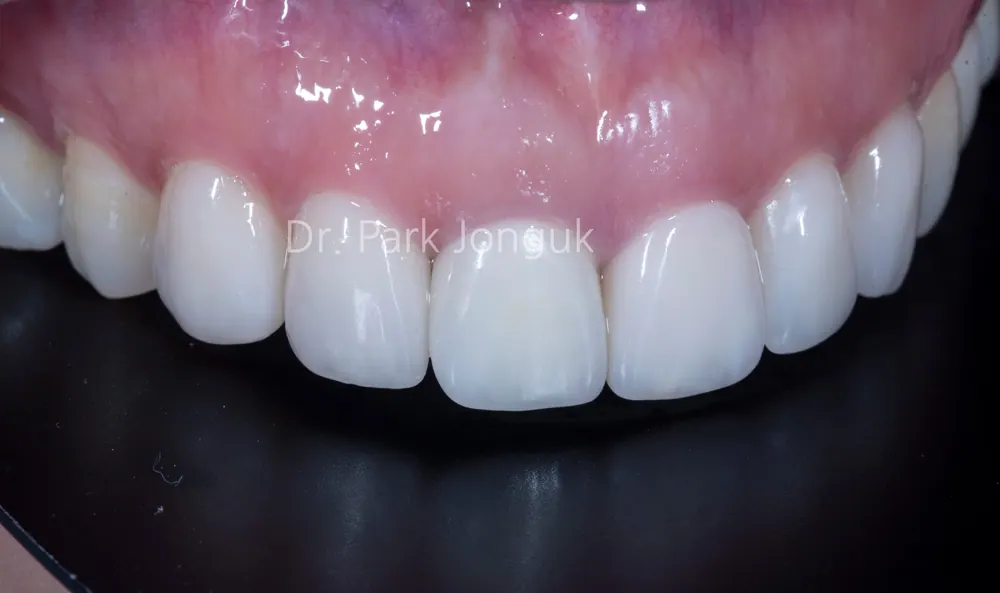
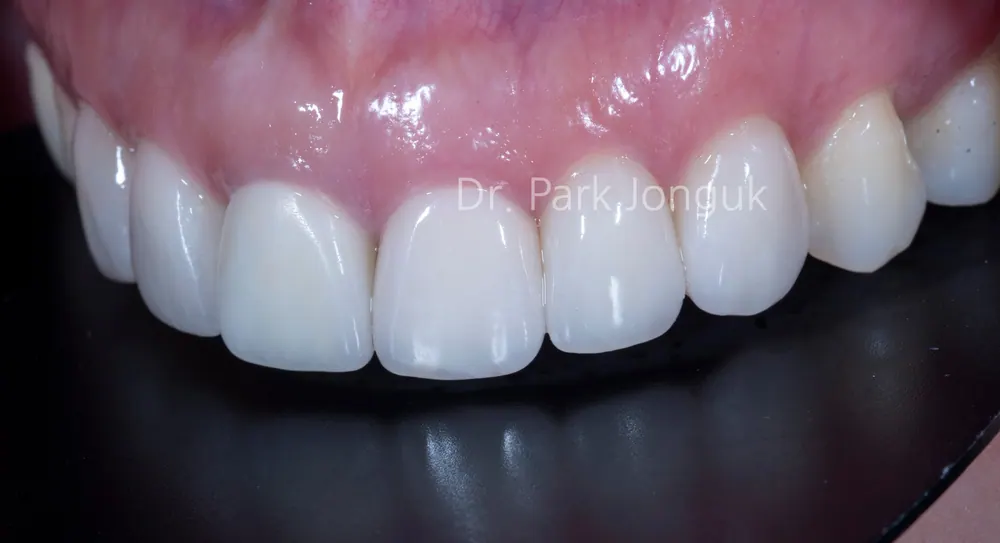
Because treatment proceeds through this kind of process,
satisfaction is much higher than with a same-day approach.
And rather than the dull, artificial look that is a common problem with one-day methods,
the result is a natural-looking tooth with a bright, clear, translucent feel.
These days, the trend is toward natural-looking veneers rather than veneers that give themselves away.
This article is a clinical note written by Dr. Park Jonguk of Dream Dental Clinic, Gangnam; the original was published on his blog. The photographs shown are real cases he treated. Results vary with each patient’s condition, and every procedure carries the possibility of individual variation and side effects.
Quick Consult
Request a Callback
Leave your number and we will call you back during clinic hours.
Request Received
We will contact you during clinic hours. For urgent matters, please call +82-2-3448-0028.