
Why Teeth Turn Yellow in Your 50s and 60s: Can Veneers Make Them Look Younger?
Hello, I'm Park Jonguk, director of Dream Dental Clinic in Apgujeong.
Today I want to talk about veneers for people in their 50s and 60s.
"My teeth keep getting more yellow as I get older. Is it even worth getting veneers at this point?"
Many middle-aged and older patients ask me exactly this.
The answer is, "Yes, it's possible. And it's very effective."
Why Do Teeth Turn Yellow with Age?
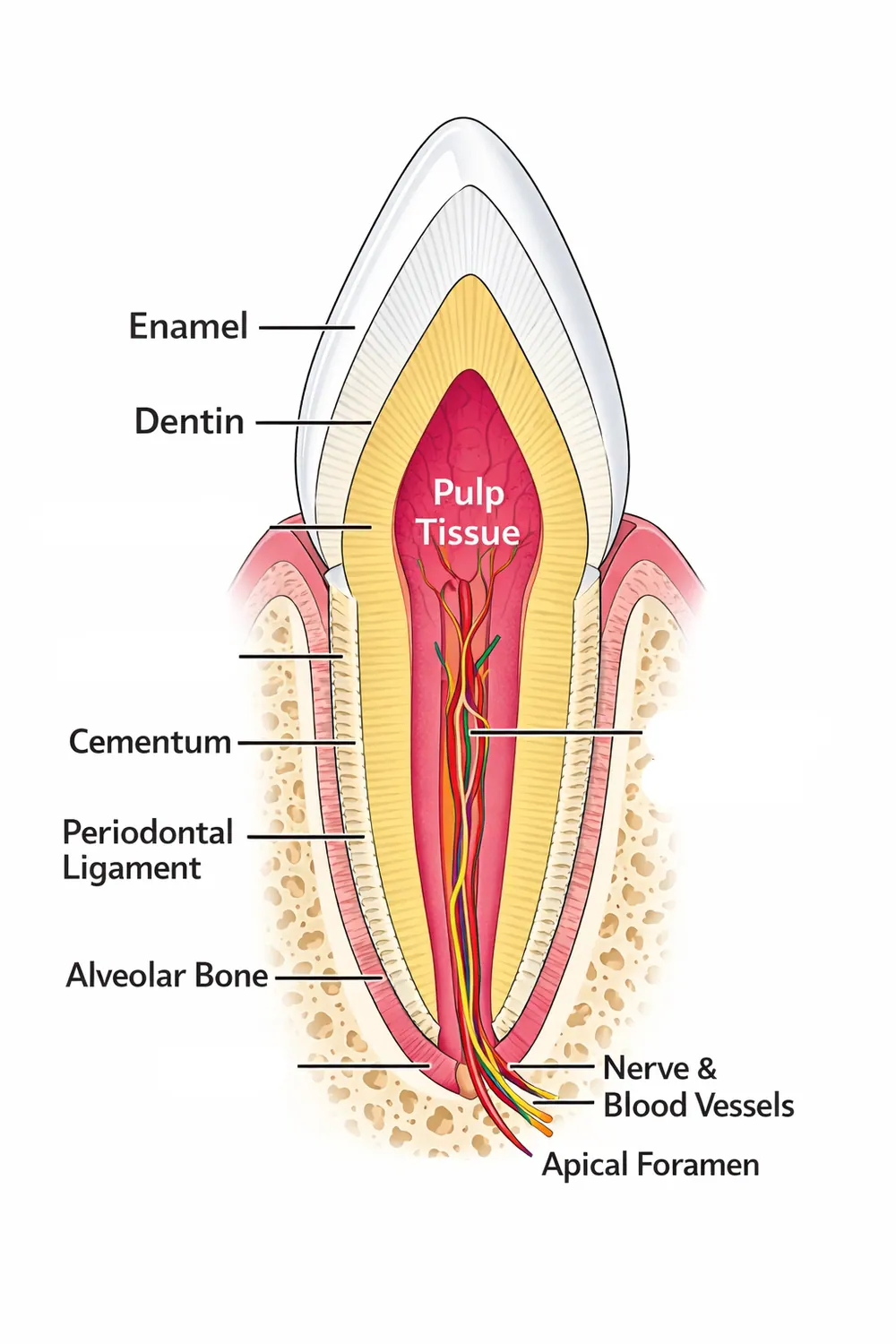
Photo 1 shows the structure of a tooth.
Tooth Structure
A tooth's outermost layer is enamel, with dentin underneath it.
Enamel is white and translucent.
Dentin is yellowish in color.
What Happens as You Age?
As you get older, the enamel gradually wears down and thins.
A lifetime of chewing, brushing, and everyday living wears it down little by little.
As the enamel gets thinner, more of the dentin shows through, which is what makes the tooth look yellow.
Because enamel is translucent, more of the yellow dentin underneath becomes visible.
Can Whitening Fix This?
Unfortunately, whitening has its limits.
Thinned enamel isn't something whitening can fix.
It's a structural problem.
Enamel Loss Is Not Just a Cosmetic Issue, but a Health Issue
Many people think of yellowing teeth as purely a cosmetic issue.
But that's not the whole picture.
It Affects Tooth Strength Too
Losing enamel affects not only the appearance of the tooth but its structural strength as well.
Enamel is the hardest tissue in the human body.
It's what protects the tooth.
When enamel is lost, the tooth becomes weaker.
Biomimetic Theory
According to biomimetic theory, significant enamel loss can lead to other kinds of damage in the tooth.
Enamel loss → weakened tooth → cracks, fractures, and sensitivity
A vicious cycle begins.
Restoring Enamel Matters
That's why restoring lost enamel is important for the health of the tooth.
How Can It Be Restored?
In this situation, restoring it with ceramic is said to be the most effective approach.
Ceramic has strength and properties similar to enamel.
What Veneers Mean for Patients in Their 50s and 60s
That's why veneers for middle-aged and older patients carry a dual meaning: cosmetic improvement plus tooth health.
It's Not Just About Looking Pretty
For younger patients: cosmetic improvement is the main goal
For middle-aged and older patients: cosmetic improvement plus enamel restoration plus reinforcing the tooth
Veneers in your 50s or 60s are a treatment that makes your teeth look younger while also making them healthier.
It's Not Too Late
"Is it okay to get veneers at my age?"
It is absolutely not too late.
If anything, now is the right time.
It's best to restore the enamel before more of it is lost.
A Real Case: A Patient Who Came In for Worn Teeth
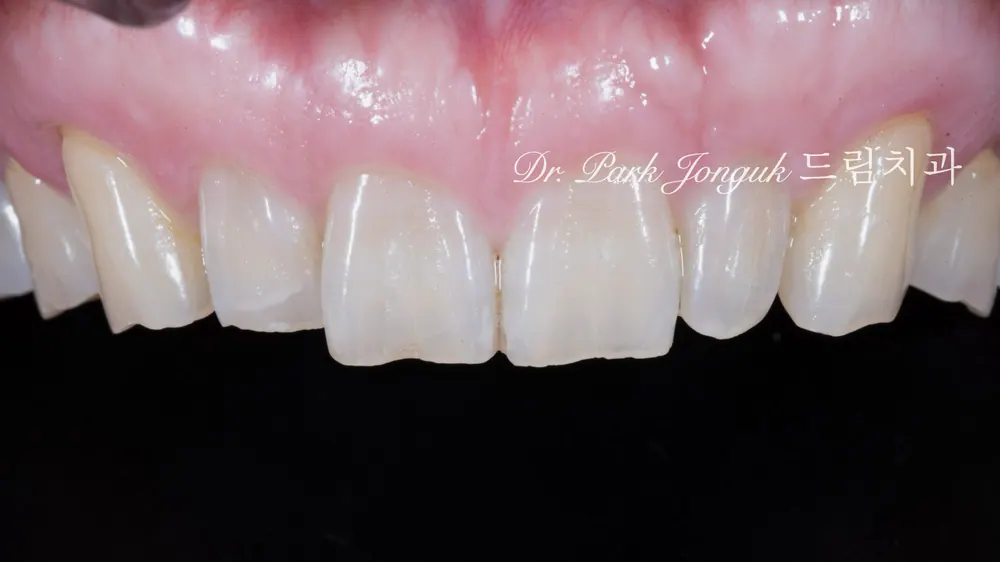
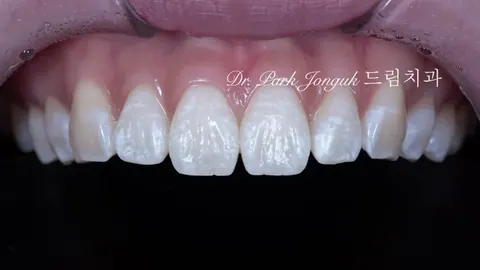
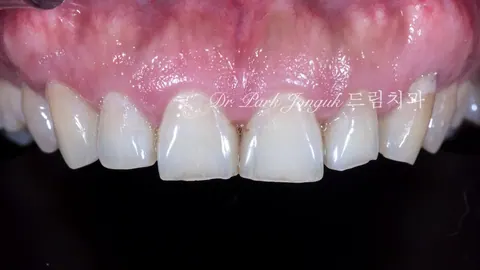
Photo 2 shows a patient who came in for cosmetic concerns caused by tooth wear.
The Patient's Condition
With age, a significant amount of enamel had worn away.
The teeth appeared yellow.
The tooth edges had worn down and become shorter.
Overall, the teeth had an aged look.
No-Prep Veneers Are Possible
In a case like this, since the enamel is already worn away, the veneer works by adding material back, which makes near-no-prep veneers possible.
Paradoxically, having already-worn enamel becomes an advantage here.
There's no need to reduce the tooth any further.
It just needs to be built back up.
The worn-away portion is filled back in with ceramic.
Treatment can be done without damaging any healthy tooth structure.
A Careful Fabrication Process
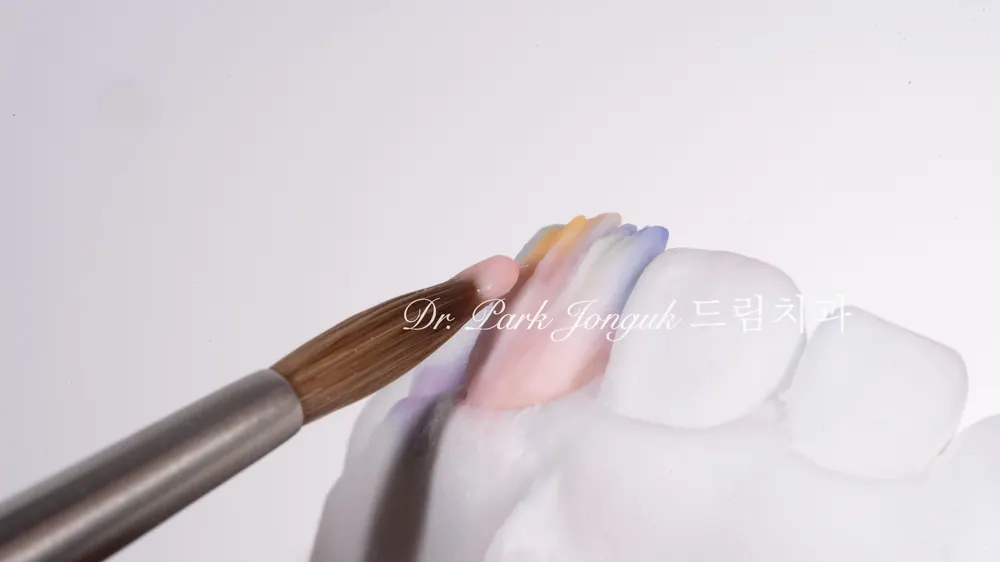
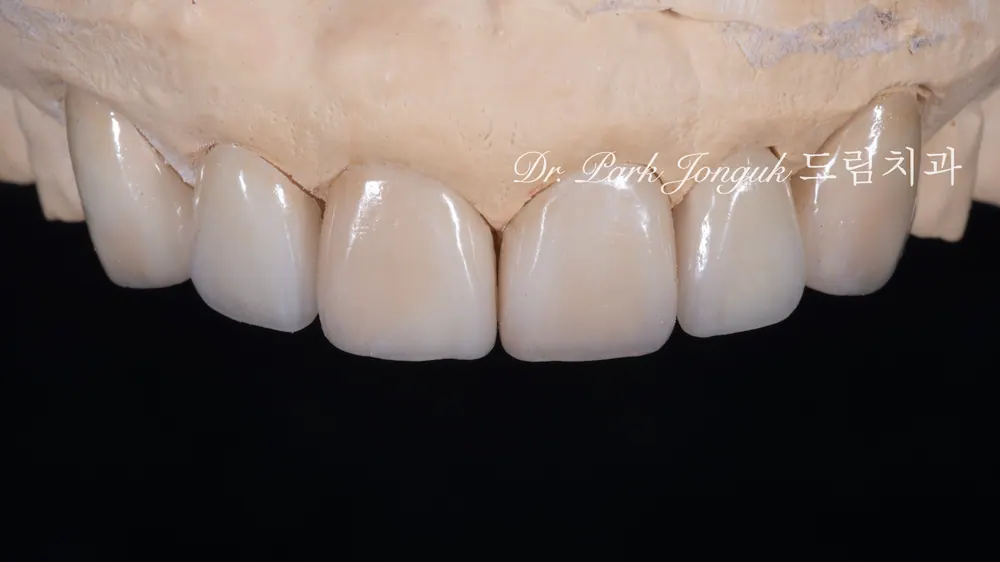
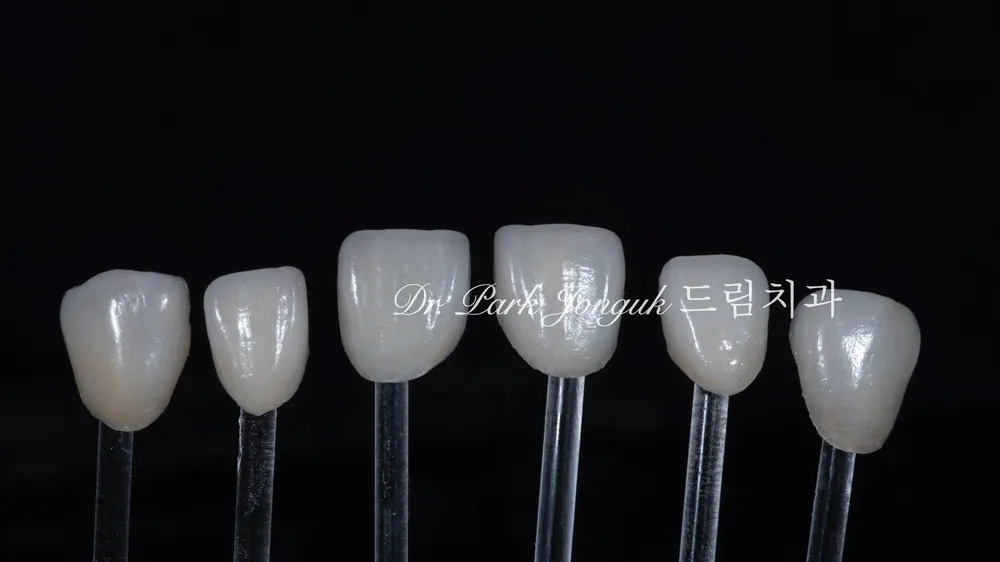
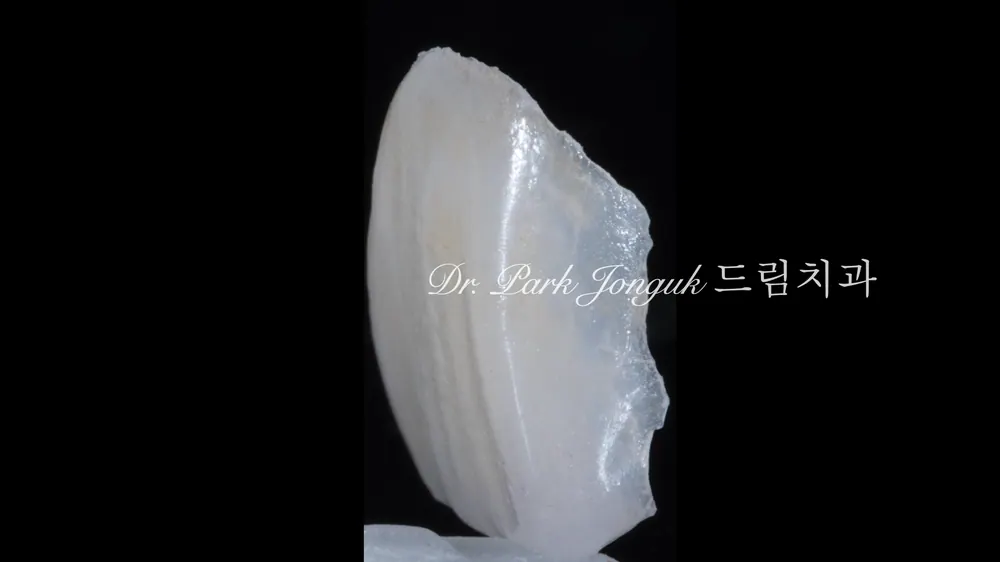
Photos 3, 4, 5, and 6 show the veneer fabrication process.
Our Clinic's Fabrication Method
Our clinic fabricates veneers by building up feldspathic porcelain over a lithium disilicate base.
Lithium disilicate: a high-strength ceramic base
Feldspathic build-up: hand-layered for natural color and translucency
Thin, Yet Richly Expressive
Though thin, it captures the rich variety of a natural tooth's appearance.
Translucency, color variation, dimensionality, and surface texture.
All of it is reproduced with precision.
Naturalness Suited to Middle Age and Beyond
A bright white, opaque veneer simply doesn't suit a middle-aged or older patient.
Making the teeth as white as they'd be for someone in their 20s or 30s ends up looking unnatural instead.
For veneers in your 50s or 60s, a natural brightness and translucency suited to your age matters most.
Looking younger, but naturally.
Brighter, but not overdone.
That is our philosophy.
The Try-In Process: Checking Before Proceeding
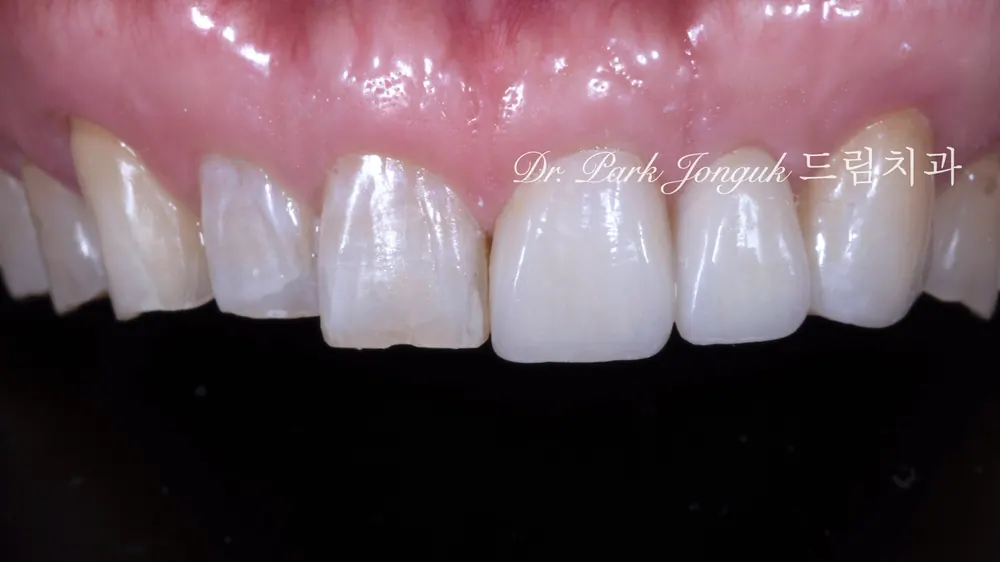
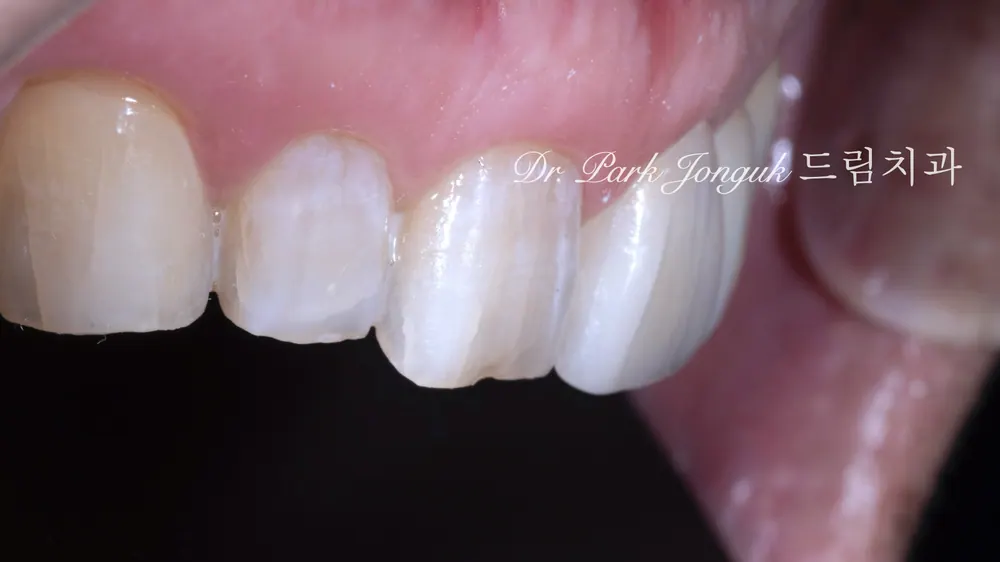
Photos 7 and 8 show the veneer placed only on the left-side tooth.
One-Sided Try-In
Before final bonding, we place the veneer on one side first.
The patient checks it herself in person.
We check whether the size, shape, and color are satisfactory.
Checking the Interproximal Surfaces
Viewed from the side, you can see that the sides of the tooth are also well covered.
The veneer doesn't just cover the front of the tooth.
It wraps around the sides as well, for complete protection.
It genuinely performs the role of enamel.
Final Bonding After Approval
Once the patient is satisfied, we do the final bonding.
If not, we make adjustments.
This is patient-centered treatment.
After Treatment: Younger, More Beautiful Teeth
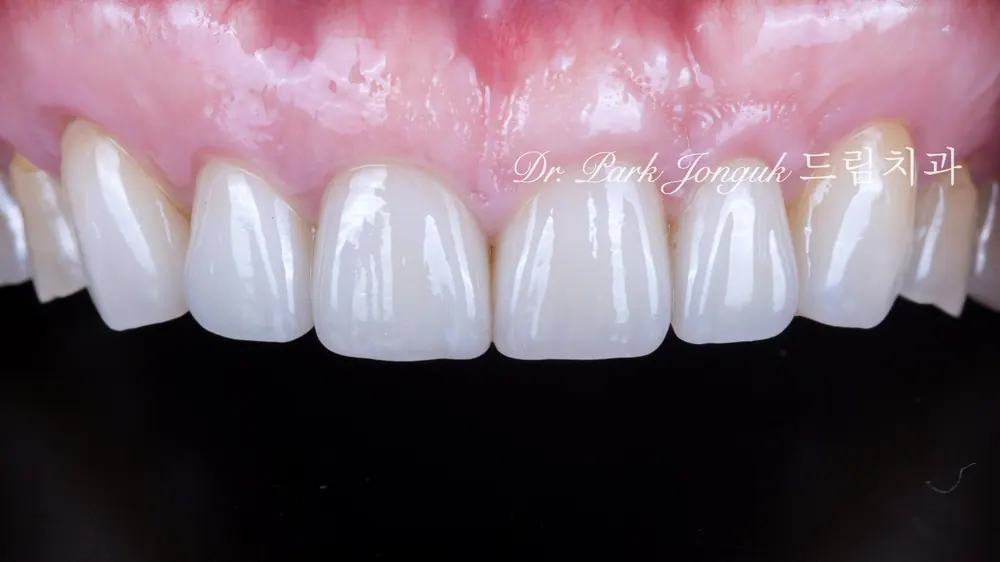
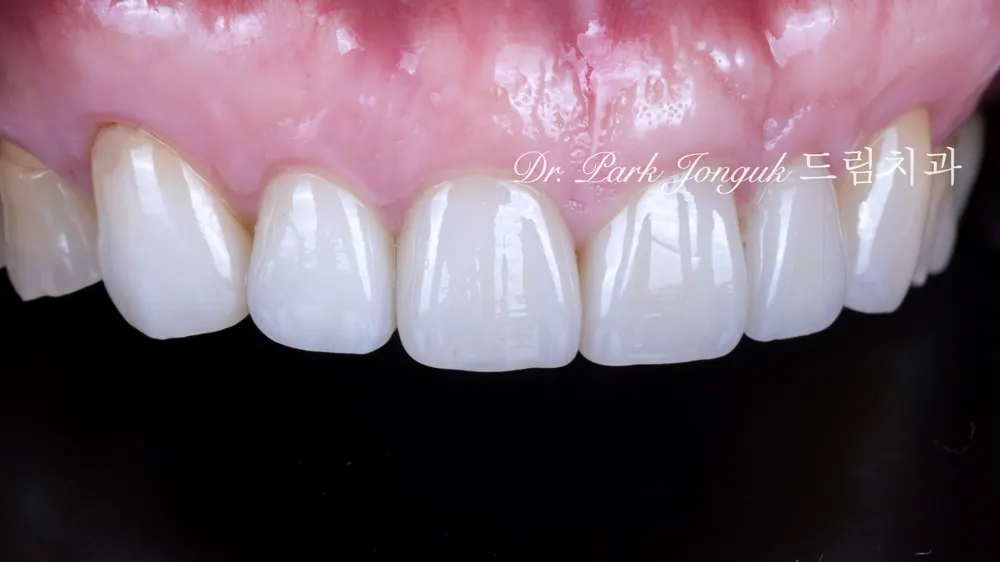
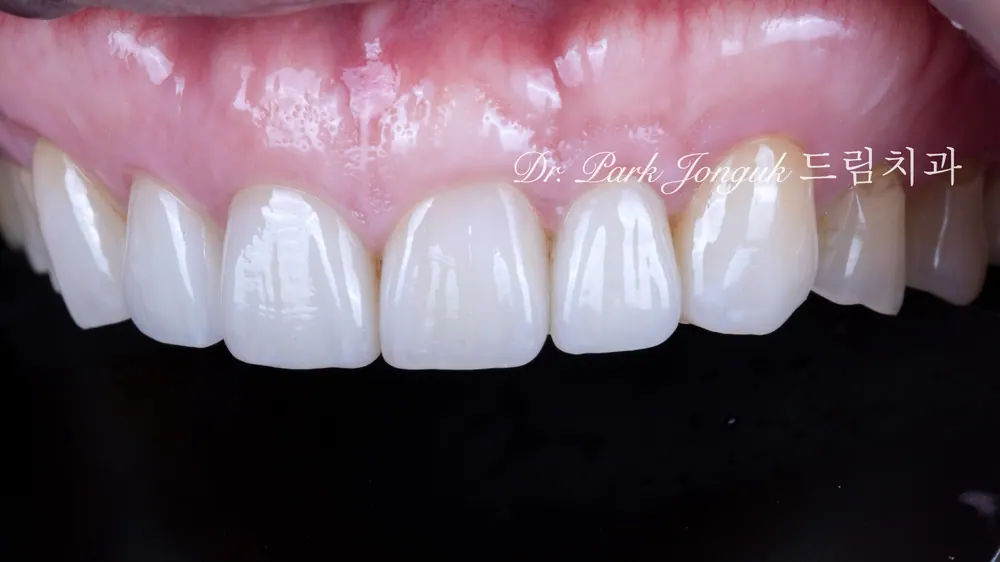
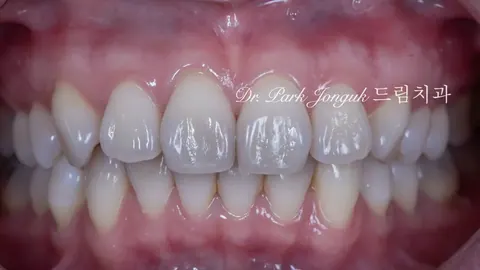
Photos 9, 10, and 11 show the younger, more beautiful teeth after treatment.
A Remarkable Change
Teeth that had turned yellow are now brighter.
Teeth that had become shorter have been restored to a proper length.
Worn teeth now look healthy.
The patient looks about 10 years younger.
Naturalness
It's not overdone.
It's a natural brightness suited to someone in their 50s or 60s.
The translucency and dimensionality are still there.
No one can tell they're veneers.
Aesthetics Plus Health
Of course the teeth look better.
But what matters more is that the teeth have become healthier.
The enamel has been restored.
The teeth have been reinforced.
They can now be used in good health for longer going forward.
Considering Veneers in Your 50s or 60s?
Do any of these concerns sound familiar?
"Is it okay to get veneers at my age?"
Yes. If anything, now is the right time.
"Will a lot of my tooth need to be shaved down?"
No. When the enamel is already worn, near-no-prep treatment is usually possible.
"Won't a white shade look strange at my age?"
No. We use a natural brightness suited to your age.
"Will it be expensive?"
These are teeth you'll use for the rest of your life. It's an investment in your health and confidence.
The Benefits of Veneers in Your 50s or 60s
Cosmetic improvement: yellowed teeth become brighter and look younger.
Enamel restoration: worn-away enamel is restored with ceramic.
Tooth reinforcement: weakened teeth become stronger.
No-prep or minimal-prep: when enamel is already worn, there's no damage to healthy tooth structure.
Restored confidence: you feel confident again when you smile.
Looking 10 years younger: your overall appearance looks younger.
Middle-Aged and Senior Veneer Care at Dream Dental Clinic
Dream Dental Clinic in Apgujeong has performed many veneer treatments for patients in their 50s and 60s.
20 Years of Experience
We've treated countless middle-aged and older patients.
We understand what natural, age-appropriate aesthetics look like.
A brightness that isn't overdone, appropriate translucency, and a harmonious shape.
Lithium Disilicate Plus Feldspathic Build-Up
This achieves both strength and aesthetics.
Strong, yet beautiful.
It's a method optimized for middle-aged and older patients.
Patient-Centered Treatment
We check with a one-sided try-in.
We adjust until the patient is satisfied.
The patient's own opinion comes first.
It's Not Too Late — Start Now
Veneers in your 50s or 60s.
It's not too late.
Right now is the earliest it can be.
Before more enamel is lost.
Before your teeth get any weaker.
Get both aesthetics and health at once.
Smile with confidence, with teeth that look young and beautiful.
Frequently Asked Questions (Q&A)
Q1. Can people in their 50s and 60s get veneers too?
A. Of course. If anything, veneers are a very effective treatment for middle-aged and older patients. Restoring worn enamel with ceramic improves the look of the teeth and also reinforces them. When the enamel is already worn, treatment can usually be done with near-no-prep, which minimizes damage to healthy tooth structure. In Dr. Park Jonguk's 20 years of experience at Dream Dental Clinic in Apgujeong, satisfaction among patients in their 50s and 60s has been very high.
Q2. Won't going too white look strange at a middle-aged patient's age?
A. That's right. That's why a natural, age-appropriate brightness matters. Making the teeth as white as they'd be for someone in their 20s or 30s ends up looking artificial and out of place instead. Veneers for someone in their 50s or 60s should be made with appropriate translucency, natural color variation, and a brightness suited to their age. Looking younger, but naturally, is the key point.
Q3. Can veneers also improve the health of my teeth?
A. Yes, that's right. Veneers for middle-aged and older patients aren't just about making teeth look nicer — restoring worn enamel also reinforces the tooth. According to biomimetic theory, enamel loss weakens the strength of a tooth and can lead to other damage, such as cracks or fractures. Restoring the enamel with ceramic strengthens the tooth so it can be used in good health for longer. It's a treatment that achieves both aesthetics and health at once.
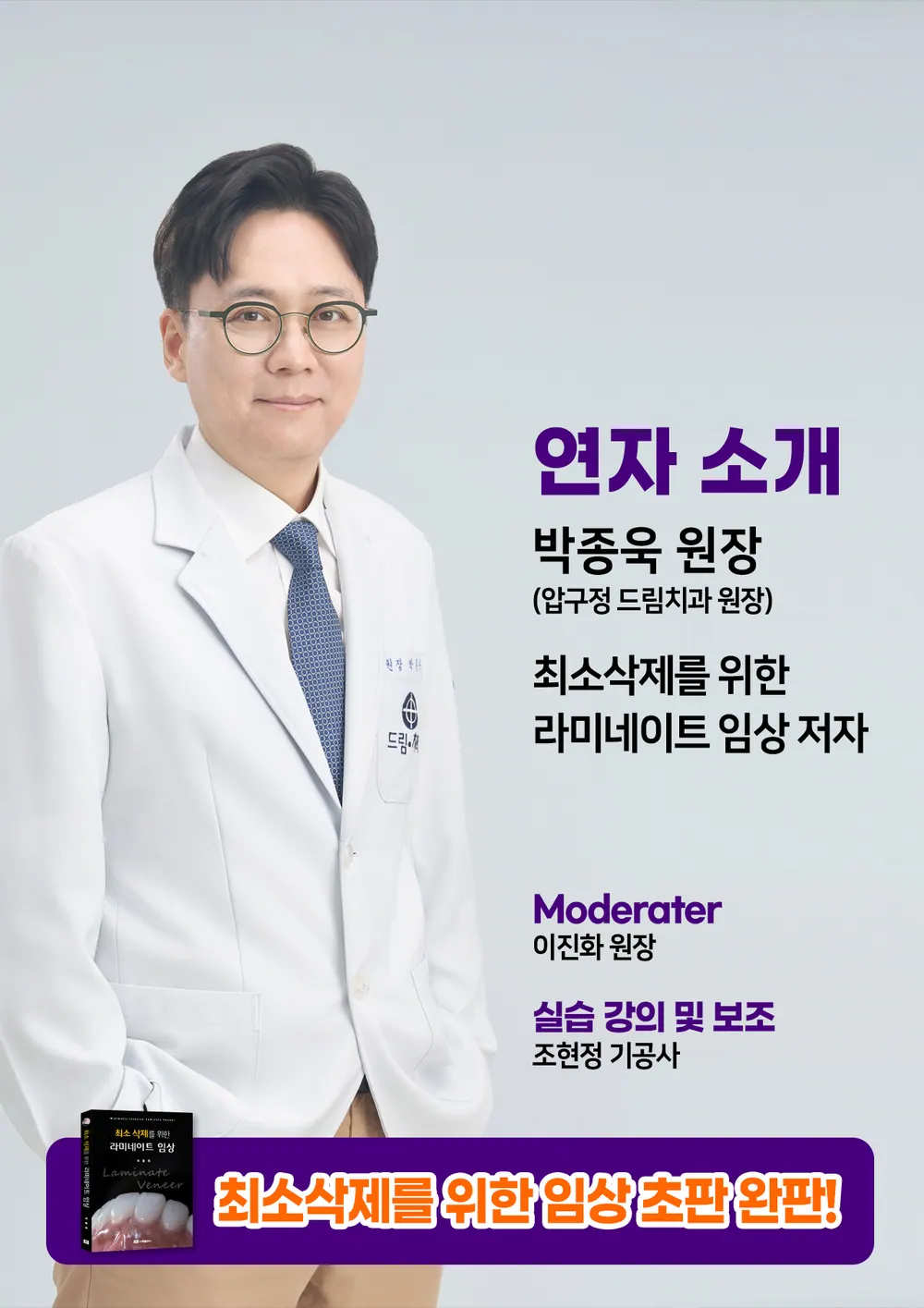
This article was written based on the actual clinical experience of Dr. Park Jonguk, director of Dream Dental Clinic in Apgujeong. He has practiced cosmetic dentistry for 20 years and has extensive experience treating middle-aged and older patients with veneers. He authored Korea's first veneer textbook.
This article is a clinical note written by Dr. Park Jonguk of Dream Dental Clinic, Gangnam; the original was published on his blog. The photographs shown are real cases he treated. Results vary with each patient’s condition, and every procedure carries the possibility of individual variation and side effects.
Quick Consult
Request a Callback
Leave your number and we will call you back during clinic hours.
Request Received
We will contact you during clinic hours. For urgent matters, please call +82-2-3448-0028.