
Veneer Side Effects and Veneer Retreatment: Removal–Temporary Teeth–Setting–One-Year Follow-Up in a Gum Inflammation Case
The core causes of veneer side effects are excessive tooth reduction and insufficient diagnosis.
This article walks step by step through a case of gum inflammation that was resolved through veneer retreatment.
From removal → temporary teeth → final setting → one-year follow-up, we show a natural and healthy recovery.
Veneers are widely known as a treatment that can quickly improve the aesthetics of the front teeth, but
not every result is satisfactory.
The two most common veneer side effects seen in clinical practice are,
tooth sensitivity and gum inflammation.
The common denominator of these two problems usually starts with excessive tooth reduction and inaccurate diagnosis.
When treatment proceeds hastily without a detailed evaluation of tooth shape, occlusion, and gingival (gum) condition,
the boundary between the veneer and the tooth becomes unstable, and the ceramic ends up extending below the gumline.
Ceramic that extends below the gumline repeatedly irritates the soft tissue, which is likely to cause inflammation.
More fundamentally, if the pre-treatment evaluation shows that the amount of reduction is likely to become excessive,
there are quite a few cases that, in fact, should never have been treated with veneers in the first place.
Veneer retreatment is not simply a matter of removing the existing restoration and bonding a new one.
It requires a systematic process — safe removal (debonding), inflammation control, design verification with temporary teeth, and follow-up observation after the final setting.
Especially when gum inflammation is present, rather than rushing to place a new restoration, sufficient time must be allowed for the gingiva to heal, and
the margin fit must be improved based on a design that minimizes the amount of reduction in order to reduce the chance of recurrence.
For the past 20 years, I have handled the entire clinical process of veneer diagnosis, fabrication, and bonding, and
I have written a textbook that systematizes veneer diagnosis for clinicians in Korea.
This article, too, is a real case organized on the basis of those principles.
The case introduced today involves a patient who, within a few months of treatment at another clinic, came to us suffering from gum inflammation,
and this is the process by which the inflammation was resolved and natural aesthetics and health were restored together through veneer retreatment.
In particular, even under the practical constraint that the ideal waiting period could not be secured because of a limited treatment window (the patient lived abroad),
we would like to draw attention to how the step-by-step principles were followed as closely as possible.
In conclusion, the success of a veneer treatment does not depend on a 'special name' or 'proprietary material,' but on the precision of diagnostic accuracy, appropriate reduction amount, margin design, fabrication, and bonding.
This patient visited Korea from China for medical tourism and received veneer treatment.
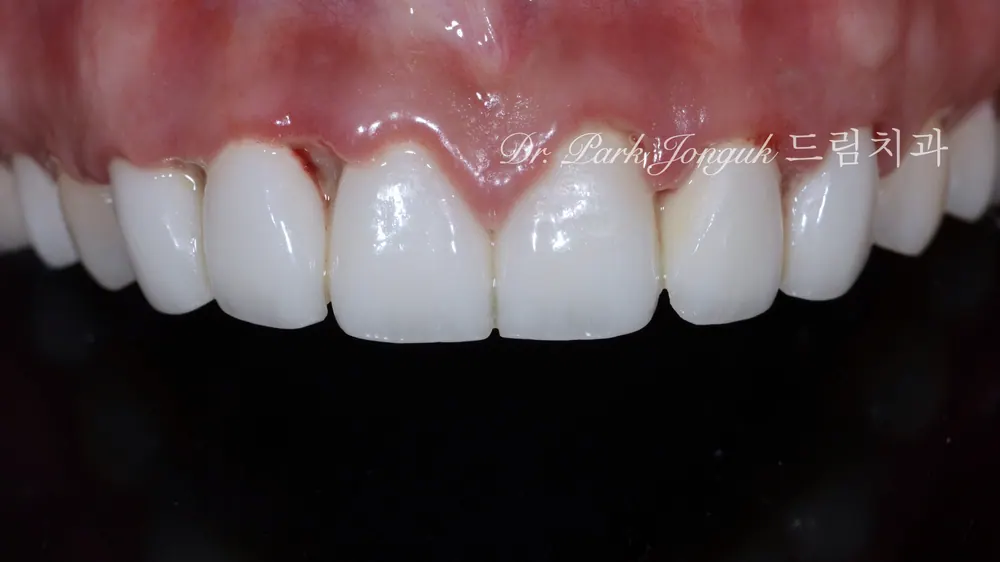
However, within just a few months, severe gum inflammation developed.
Because of the patient's circumstances, the treatment period was only one week, so
a major cause was that sufficient diagnosis and consultation could not take place. The gums were red, swollen, and bled easily, and
the situation was also very unsatisfactory aesthetically.
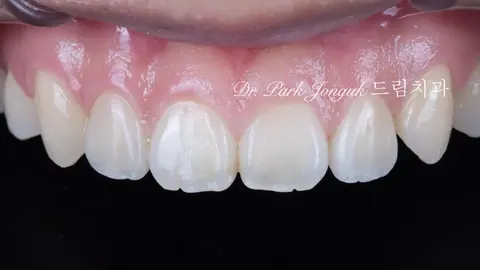
Photo 1. Severe gum inflammation
Afterward, to minimize the side effects, our clinic removed all of the existing veneers.
While safely removing the adhesive between the veneer and the tooth, we first carried out treatment to stabilize the condition of the gums.
Photo 2. After veneer removal: confirming excessive tooth reduction
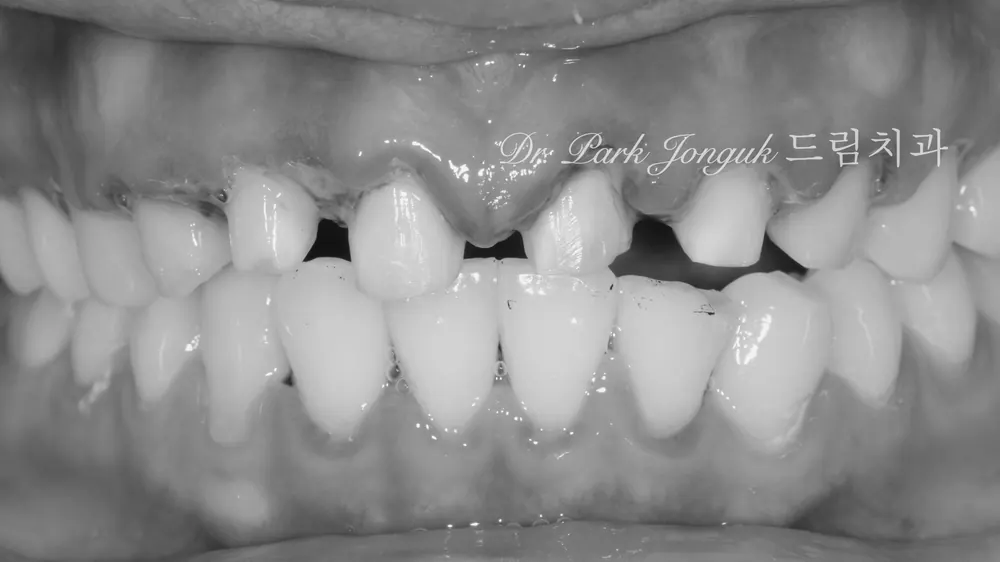
Once the existing veneers were safely removed, excessive tooth reduction was clearly revealed.
When the amount of reduction is large, the veneer–tooth margin forms unfavorably, making plaque retention easier, and
gum irritation and inflammation can recur.
At this stage, the top priority is to remove the causes aggravating the inflammation and restore an environment in which the soft tissue (gums) can heal.
(Laser, ultrasonic, and conservative periodontal treatment used in combination as needed)
Photo 3. Fabricating temporary teeth: the principle is 1–2 months of stabilization
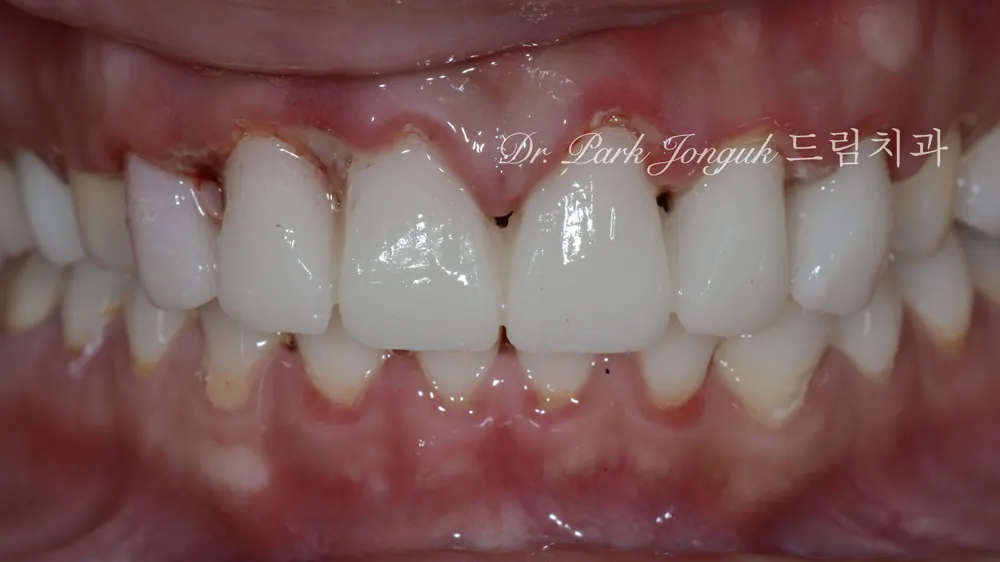
Normally, the patient is observed in temporary teeth for 1–2 months, while
checking that the gum inflammation subsides and that the margin fit, length-to-width ratio, pronunciation, and hygiene accessibility are all stable — that is the principle.
In this case, however, because the patient lived in China and faced significant time constraints,
the temporary stage inevitably had to be shortened.
In such a case, an even more conservative approach is needed, focusing on margin design, minimizing the amount of reduction, and minimizing soft-tissue irritation to lower the chance of recurrence.
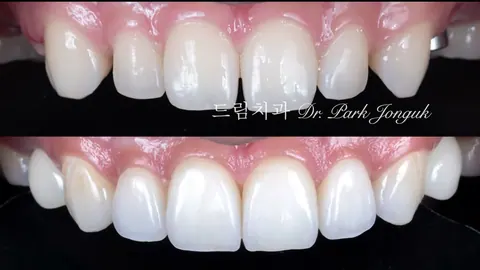
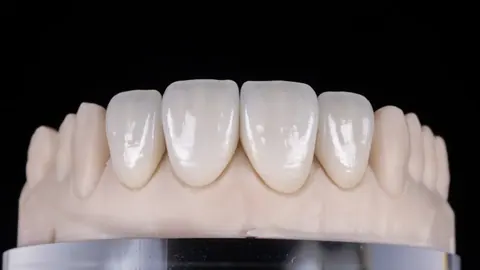
Photo 4. Final veneer setting: restoring function and aesthetics together
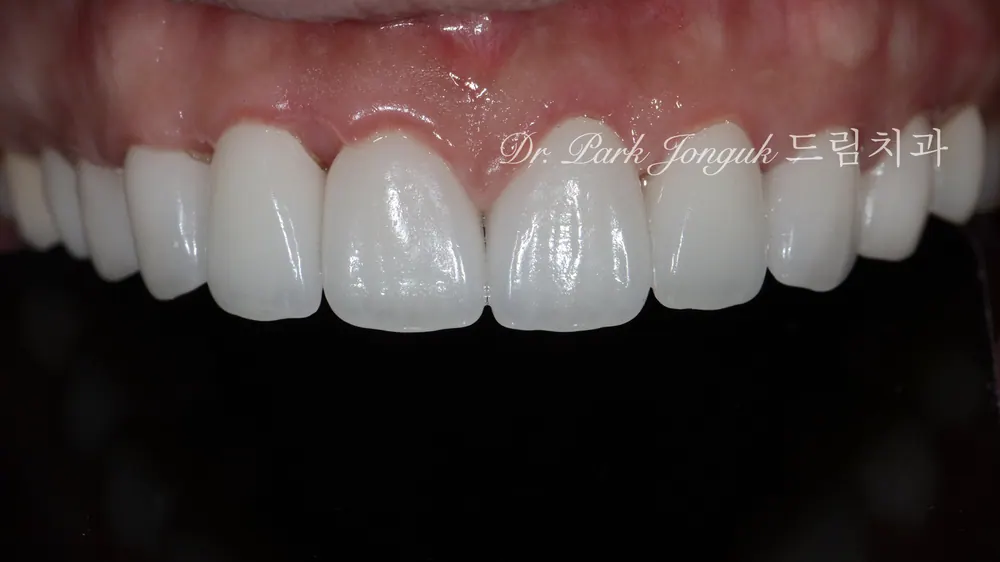
Based on the design confirmed during the temporary stage, we set the final veneers with margin fit as the top priority.
Considering the tooth structure weakened by excessive reduction, with bonding pretreatment (surface treatment and moisture control), resin cement selection, and microscope-assisted precision bonding,
microscopic gaps were minimized.
The shade was set to blend naturally with the surrounding teeth, restoring translucency and dimensionality. The patient then returned to her home country.
Photo 5. A visit several months later: inflammation trending toward resolution
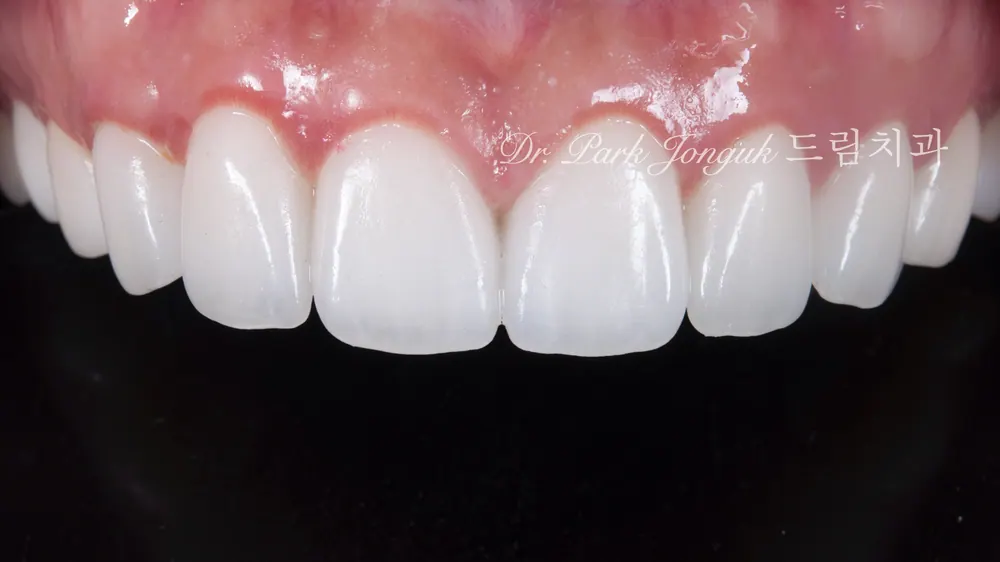
This shows the patient's return visit several months after going back to her home country.
The redness and bleeding tendency of the gums had noticeably decreased, and stabilization of the soft tissue around the margin was confirmed.
We reinforced daily hygiene education (floss and interdental brushes) and set a regular checkup schedule.
Photos 6–8. One-year follow-up: inflammation completely resolved, aesthetics and function stable
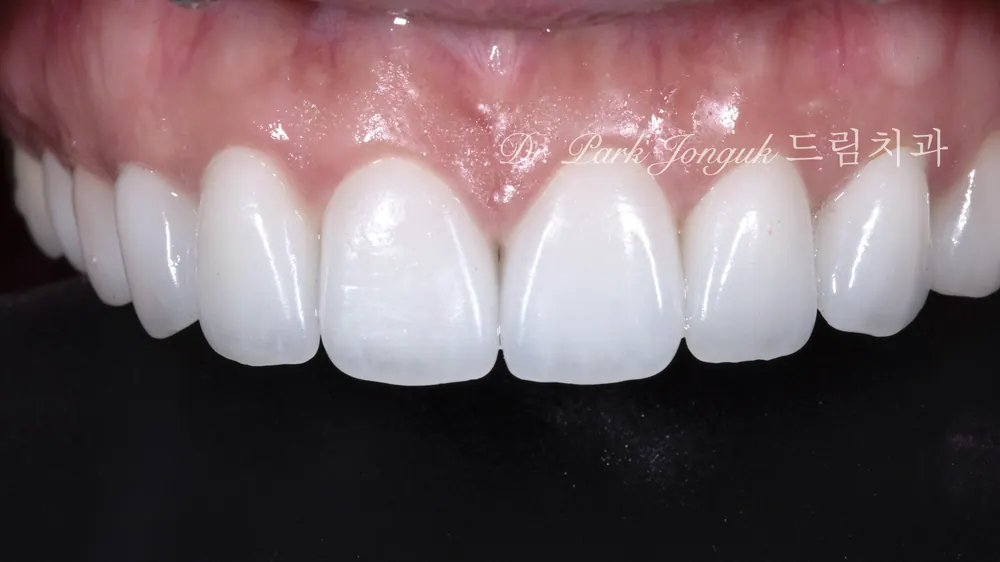
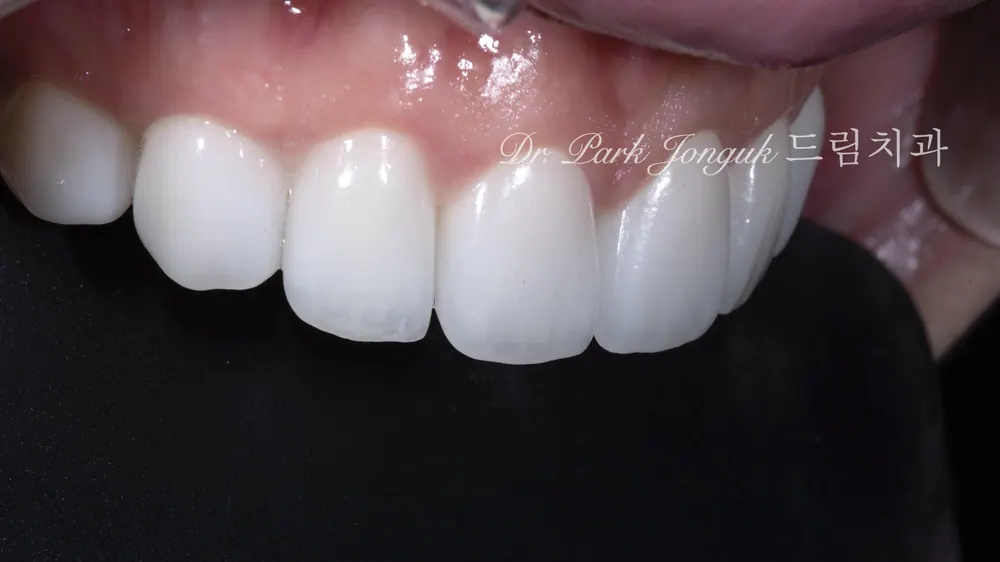
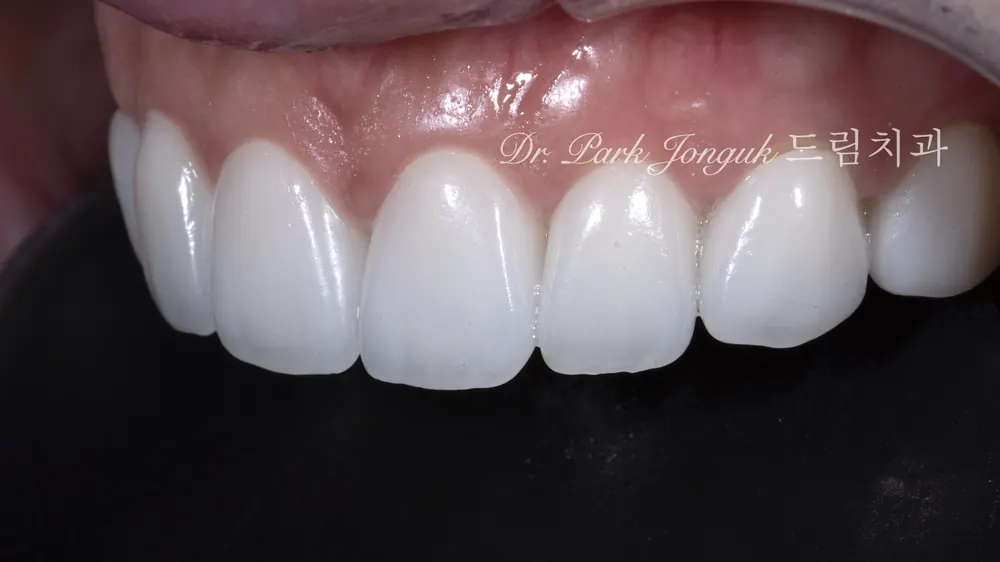
At the one-year follow-up, the gum inflammation had completely resolved, and
the veneer margins remained clean.
The natural shade, translucency, and dimensionality have been maintained, and pronunciation, chewing, and hygiene accessibility are all stable.
The key was adhering to the diagnosis–design–reduction–bonding–maintenance principle from start to finish, and
applying a conservative strategy that minimized the risk of recurrence even under time constraints.
Conclusion
The main causes of veneer side effects (especially gum inflammation) are usually excessive tooth reduction and insufficient diagnosis.
If a case is one where the amount of reduction inevitably becomes large, the possibility that it was never a good indication for veneers in the first place must also be considered.
When retreatment is needed, following the system of safe removal–soft-tissue stabilization–temporary-teeth verification–precision setting–follow-up observation reduces the chance of recurrence.
I have practiced veneer treatment clinically for over 20 years, and
I have written a textbook that systematizes veneer diagnosis, sharing this knowledge with fellow dentists.
As this case shows, the power to change the outcome lies in 'diagnosis.'
If you are considering veneer treatment, we recommend choosing a clinic that diagnoses properly, rather than one with a 'special name' or 'proprietary material.'
That is the surest way to reduce side effects while achieving natural aesthetics and health at the same time.
Q&A
Q1. Why do veneer side effects (gum inflammation) occur?
In most cases, the causes are excessive reduction, inaccurate margin design, and insufficient diagnosis. If plaque accumulates at the margin or gum irritation recurs, inflammation can develop or come back.
Q2. How are existing veneers removed? Is there any damage to the teeth?
By using laser, microscope, and pretreatment procedures to selectively debond the adhesive, the veneers can be removed safely while minimizing unnecessary damage. Conservative treatment is combined depending on the condition.
Q3. Why is a temporary-teeth period needed?
During the 1–2 month temporary stage, we check whether the gum inflammation subsides and whether the length-to-width ratio, pronunciation, and hygiene are appropriate. Skipping this process can increase the risk of recurrence.
Q4. How long do veneers last after retreatment?
If the design, bonding, and maintenance are good, an average of 10–20 years can be expected. Regular checkups, proper hygiene management, and managing excessive force (hard foods, teeth grinding) greatly affect the lifespan.
Q5. Is no-prep always better?
Not necessarily. The key is the 'minimum necessary reduction' matched to the diagnostic findings. A strategy of reducing as little as possible without regard to the diagnosis can actually harm the margin, aesthetics, and function.
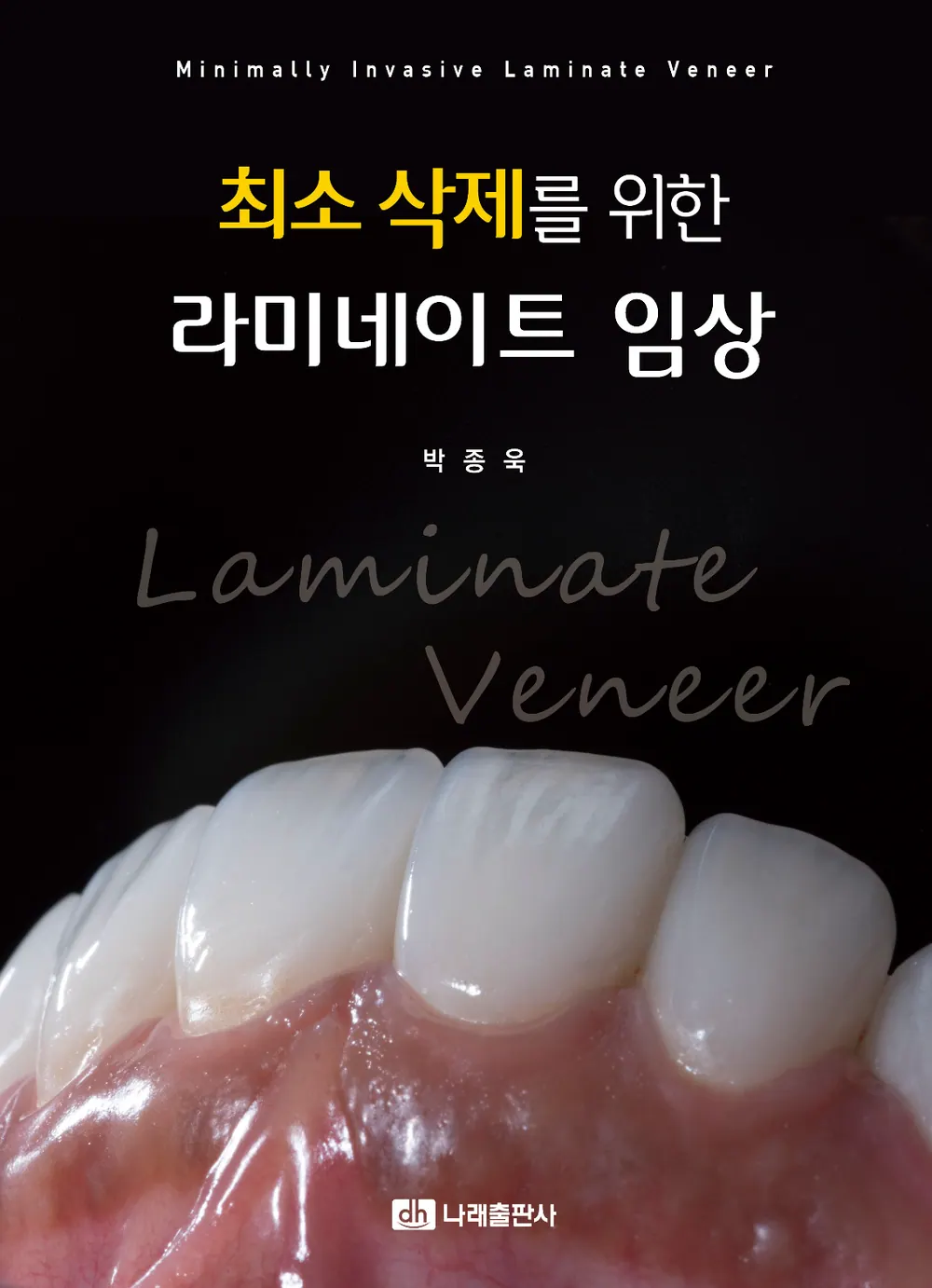
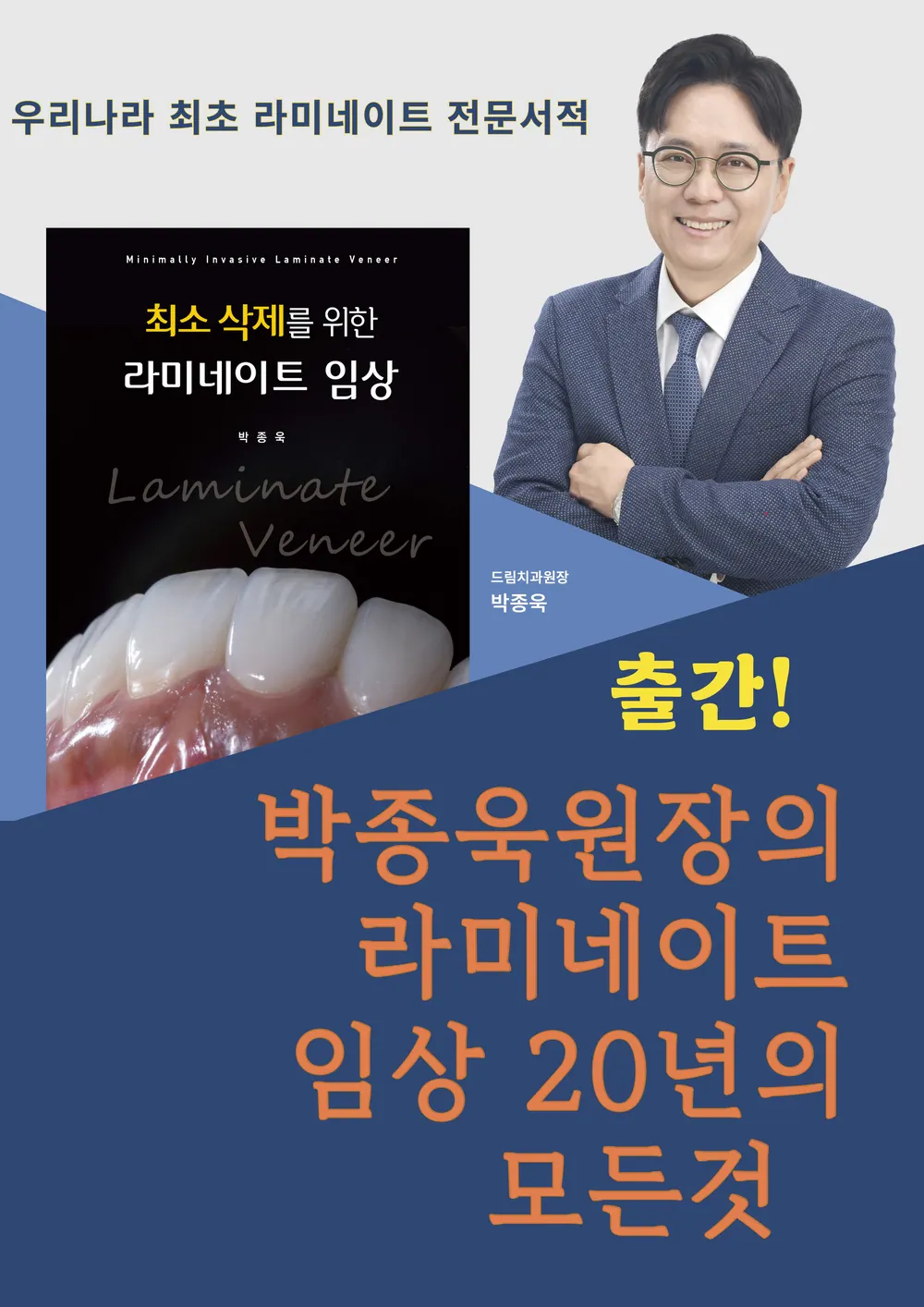
This article is a clinical note written by Dr. Park Jonguk of Dream Dental Clinic, Gangnam; the original was published on his blog. The photographs shown are real cases he treated. Results vary with each patient’s condition, and every procedure carries the possibility of individual variation and side effects.
Quick Consult
Request a Callback
Leave your number and we will call you back during clinic hours.
Request Received
We will contact you during clinic hours. For urgent matters, please call +82-2-3448-0028.