
Veneer Redo | A Case Restoring Awkward Front Teeth to a Natural Look
Have your front-tooth veneers grown awkward-looking over time, with your gums becoming uncomfortable too?
In this article, through an actual patient's veneer redo process,
we show how awkward front teeth can be restored to a natural, translucent smile.
Front-tooth veneers are a treatment many people choose for esthetic reasons.
But as time passes, unlike what was first expected,
"it looks too awkward,"
"the teeth and gums don't go well together" —
there are quite a few patients who become dissatisfied in these ways and want a redo.
Old veneers often discolor or chip.
Gum inflammation can also appear near the margin,
and it's also common for the alignment to shift gradually, throwing off the harmony of the whole smile.
In the end, patients end up complaining of even greater discomfort and esthetic stress than before.
A veneer redo isn't simply a matter of taking off the old restoration and bonding on a new one.
It actually requires a far more demanding, meticulous approach.
The condition of the already-reduced tooth has to be taken into account,
how to set the border between the gum and the tooth has to be decided,
and even how to naturally shape the spacing between the front teeth and the gum shape
all has to be designed.
Front teeth in particular determine the impression of the whole smile.
So even the slightest awkwardness stands out immediately,
and because naturalness is everything, the difference in outcome shows clearly.
The process that absolutely must be gone through here is the wax-up.
A wax-up isn't simply a procedure to preview the final shape.
It's a very important stage where the tooth length and width, arrangement, gumline, and bite relationship
are all checked and verified in advance.
Through this process, the patient and the medical team can predict the outcome together,
and achieve esthetic harmony while minimizing the amount of tooth reduced.
Over the past 20 years, I've handled a great many veneer cases.
And I wrote the first textbook in Korea to systematize veneer diagnosis.
There is one point I always emphasize from that experience.
A veneer isn't simply a treatment where something gets bonded on —
diagnosis and design are what matter most.
Today, through two real cases of redoing old veneers and crowns,
I'll show why diagnosis and design matter so much in a veneer redo,
and how awkward front teeth can be restored to a natural look.
Case 1. Redoing old veneers and an all-ceramic crown
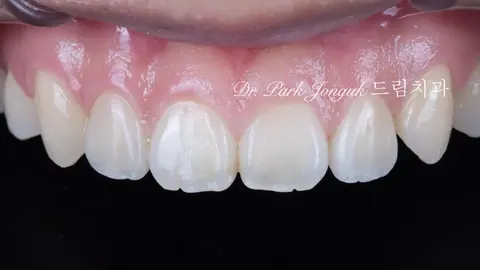
Photo 1. Condition before treatment
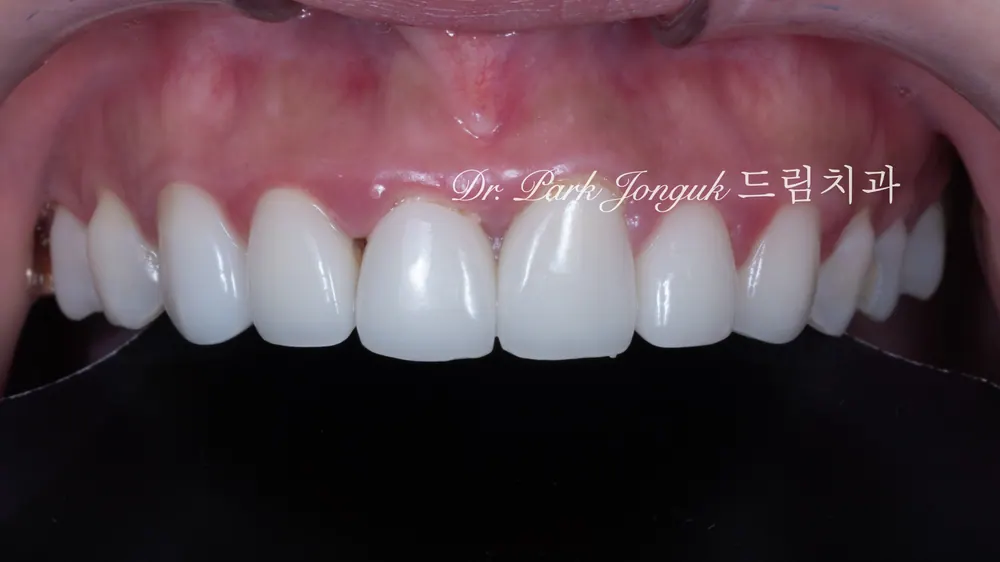
A patient who believed she'd had veneers and a crown done long ago.
In fact, all but one turned out to be all-ceramic crowns. And even the veneer had been placed with extremely heavy tooth reduction.
Over time, inflammation developed and the alignment shifted as well.
As a result, awkward, unnatural esthetic problems stood out.
Photos 2, 3. The wax-up diagnostic
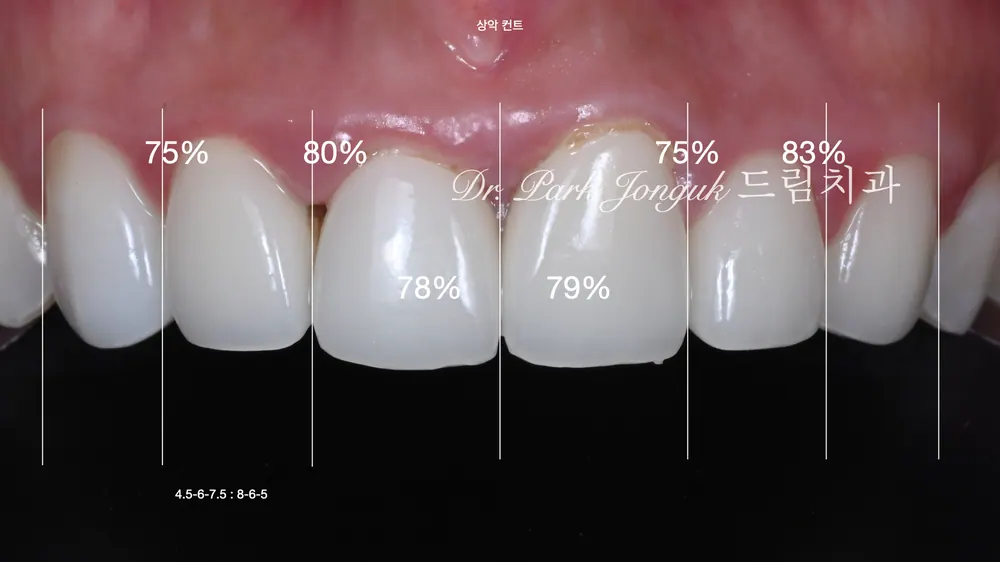
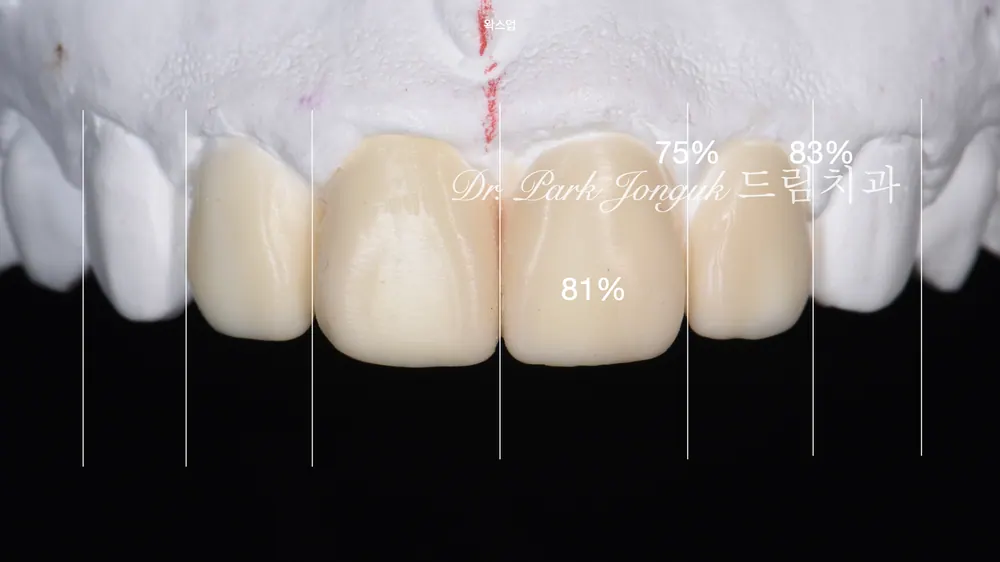
The first step of a redo is the wax-up.
We analyzed the tooth length, width, gumline, arrangement, and bite all together.
Through this process, we predicted the final shape and designed the treatment to minimize the amount of tooth reduced.
Photo 4. After removing the restorations
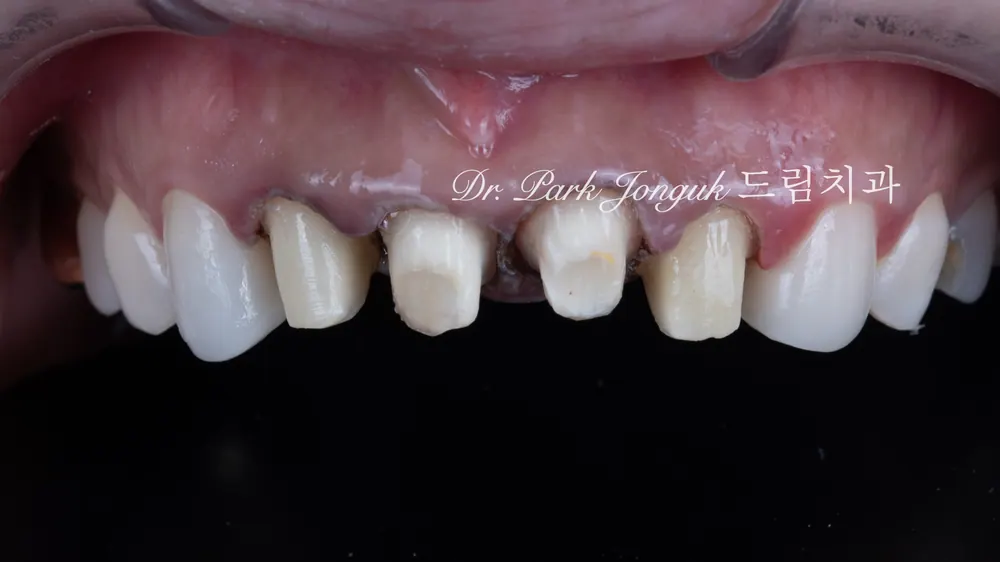
When the existing veneer and crowns were removed, the amount of tooth structure removed turned out to be excessive.
Preserving as much of the remaining tooth as possible was the central challenge of this treatment.
Photos 5, 6, 7. After the redo
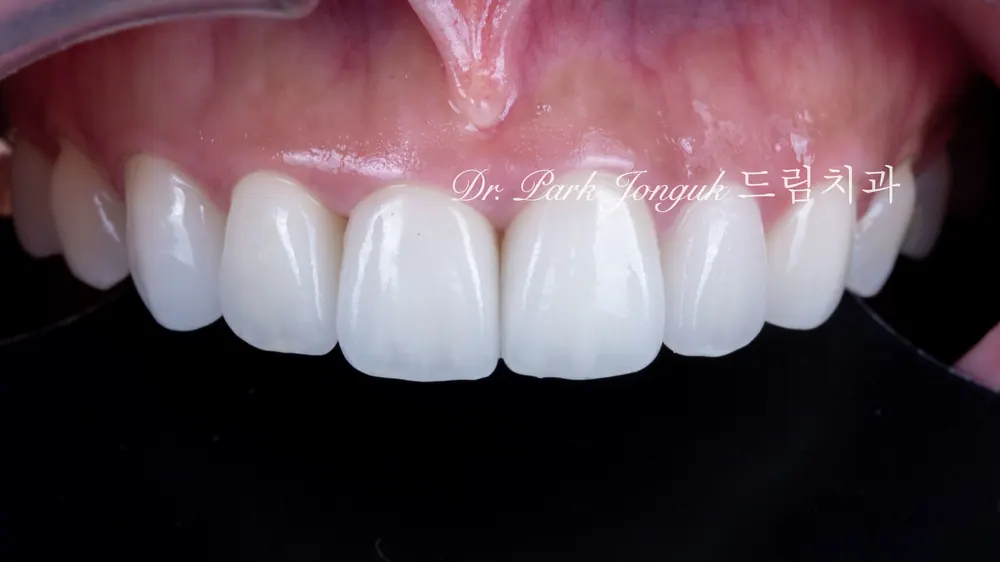
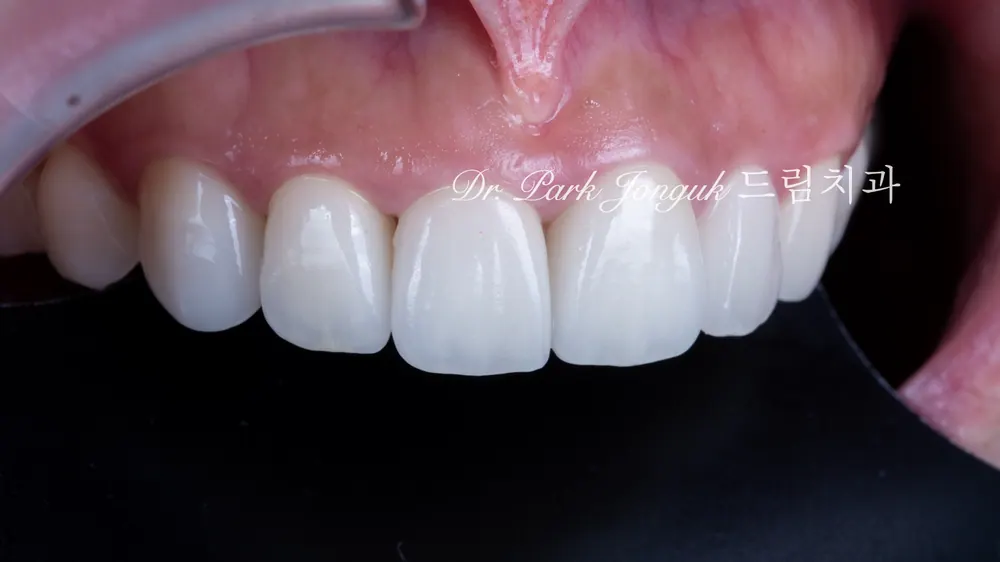
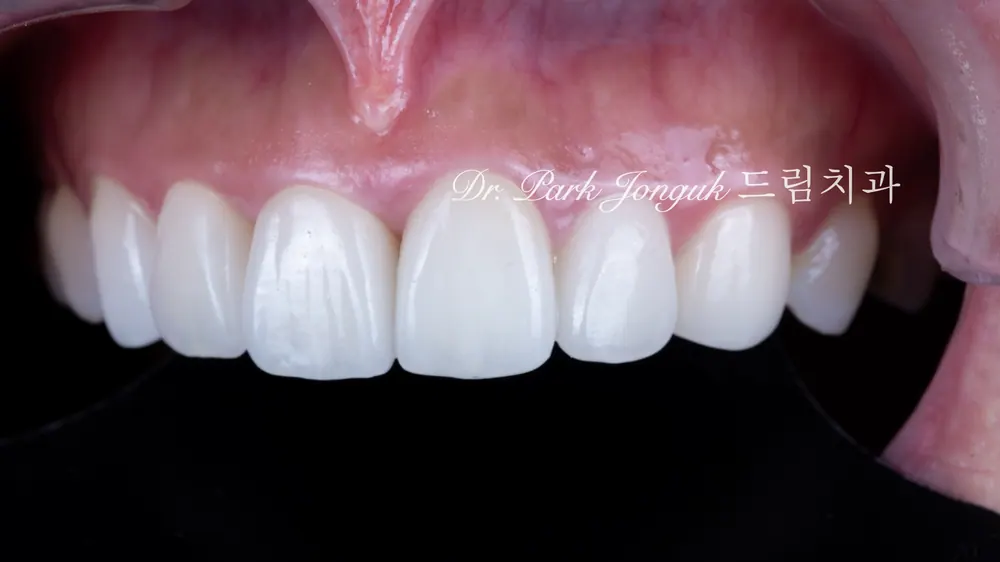
After the redo, the inflammation cleared up, and the teeth and gums came into harmony.
With translucency and dimensionality brought back to life, the natural result left the patient highly satisfied.
Case 2. Redoing 2 old veneers into 4 veneers
Photo 1. Condition before treatment
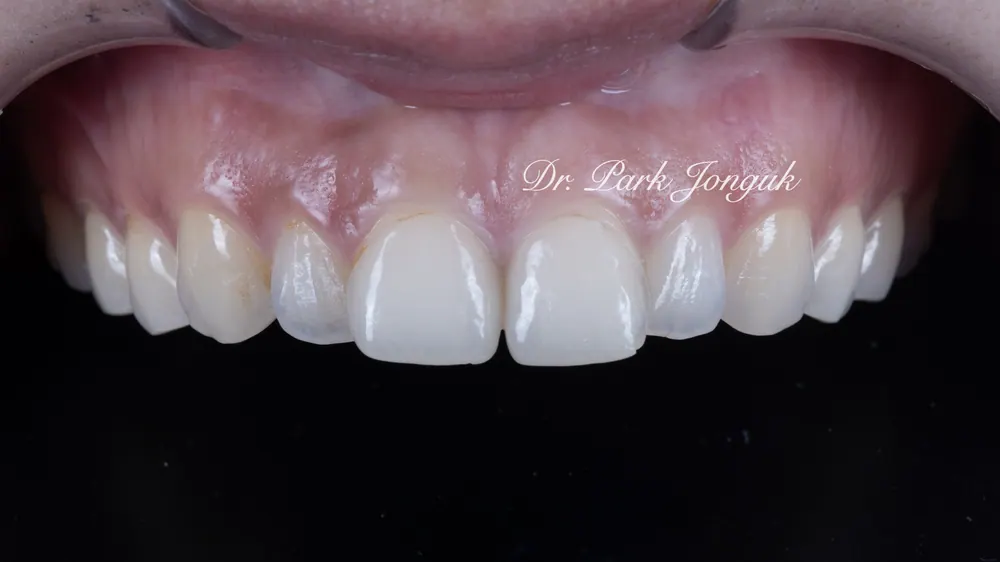
The two front-tooth veneers were old, chipped, and discolored near the margins.
The patient's esthetic dissatisfaction had grown substantial.
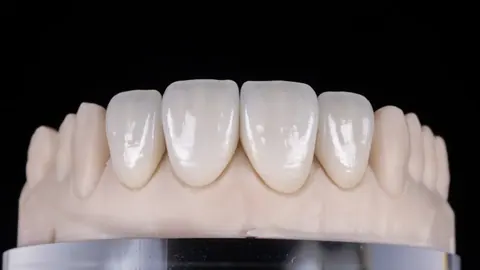
Photos 2, 3. The wax-up diagnostic
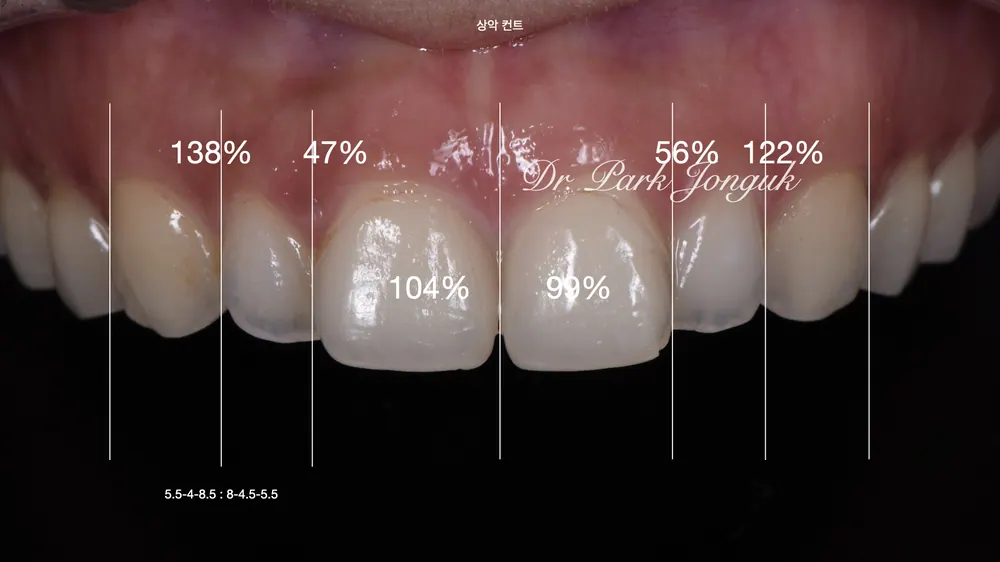
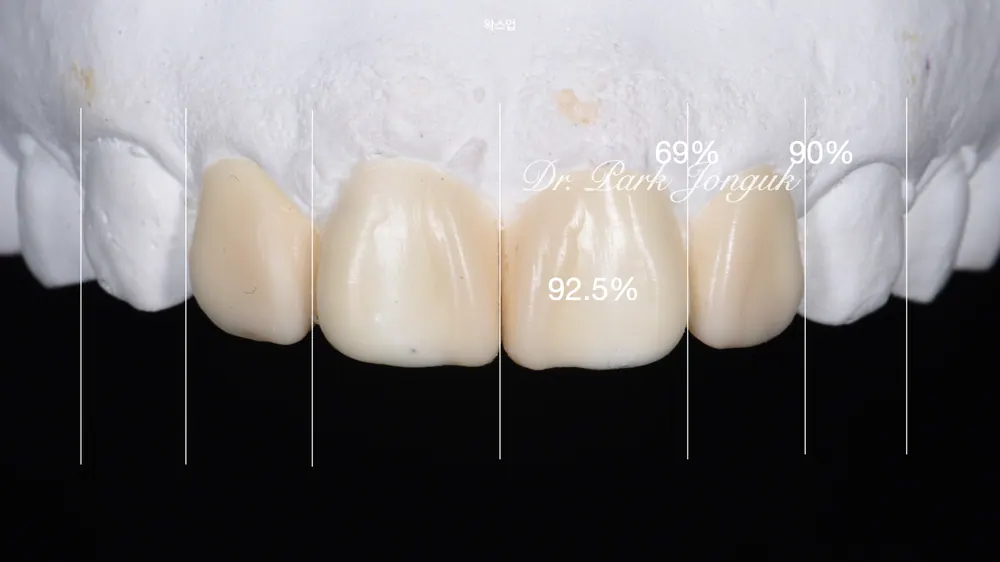
Rather than simply redoing just the two teeth, we decided to treat all four front teeth together.
Through the wax-up, we simulated the final proportions and gumline.
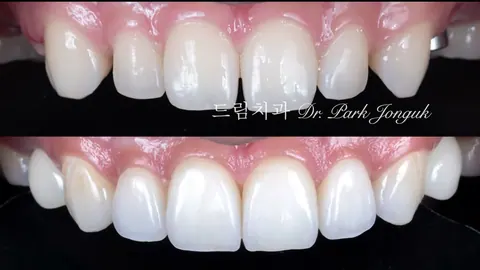
Photo 4. After removing the veneers
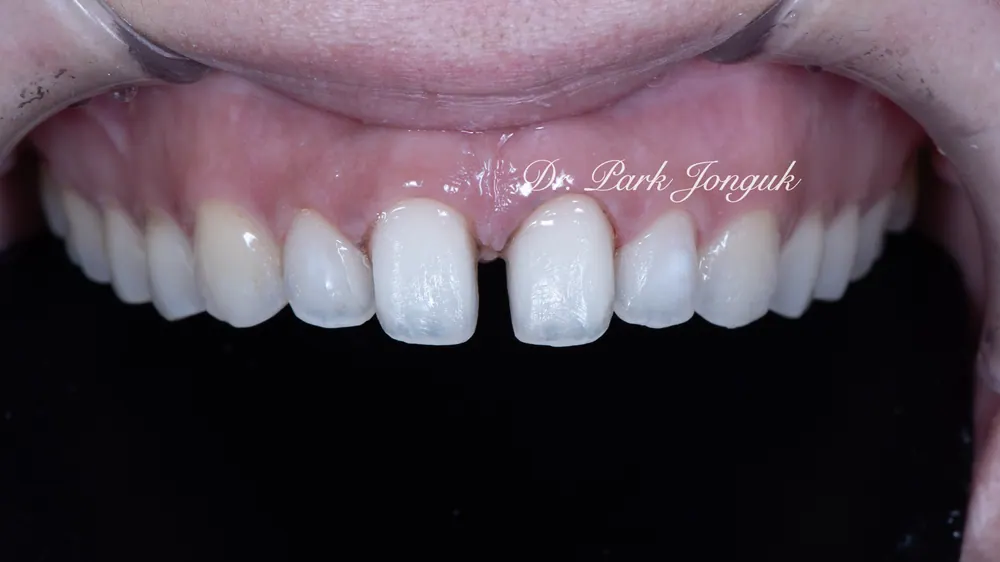
Once removed, a large gap between the front teeth became clearly visible.
In cases like this, not only the tooth shape but also the natural formation of the gum between the front teeth — the interdental papilla — matters a great deal.
It's a very demanding process, but it's a key element of the esthetics.
Photos 5, 6, 7. After the redo
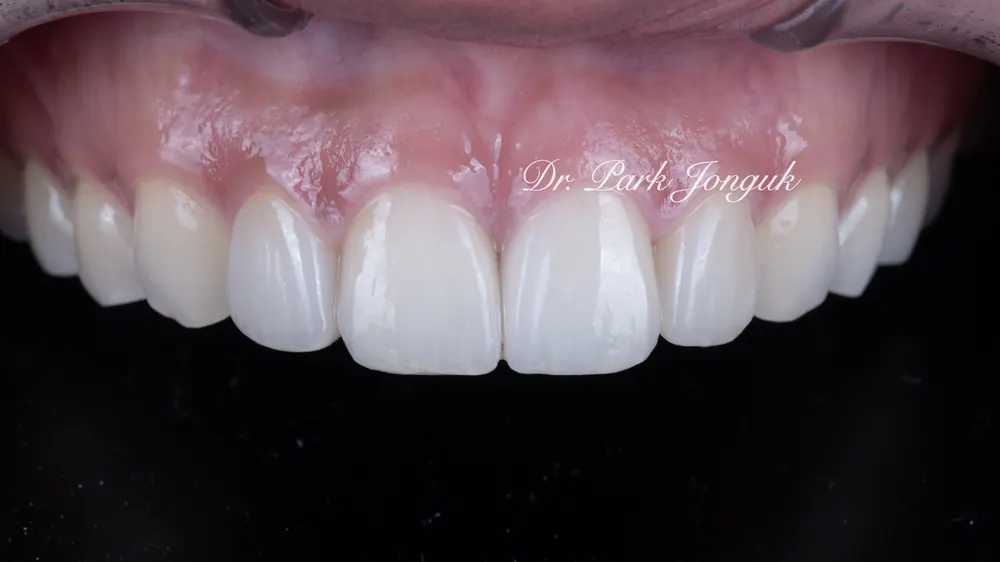
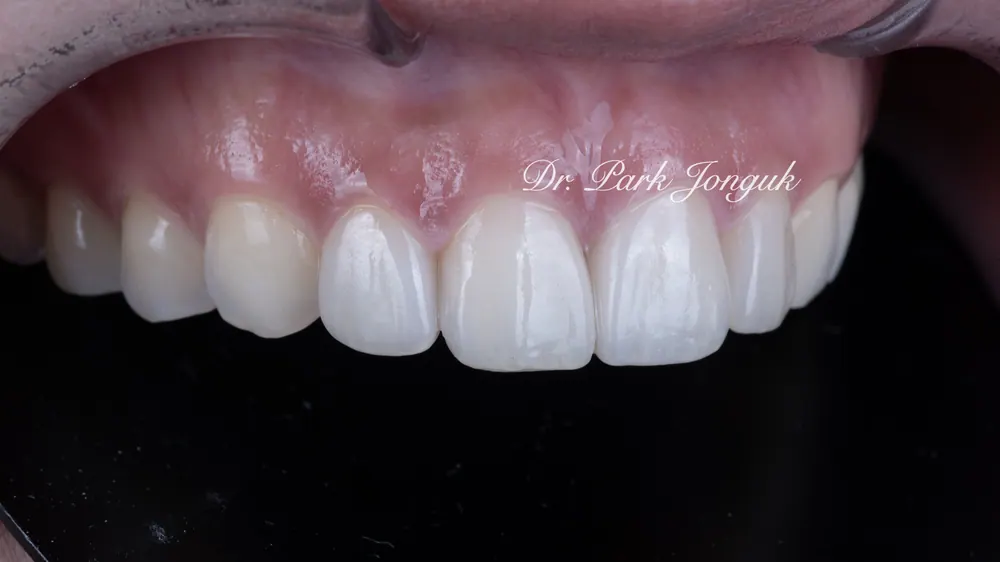
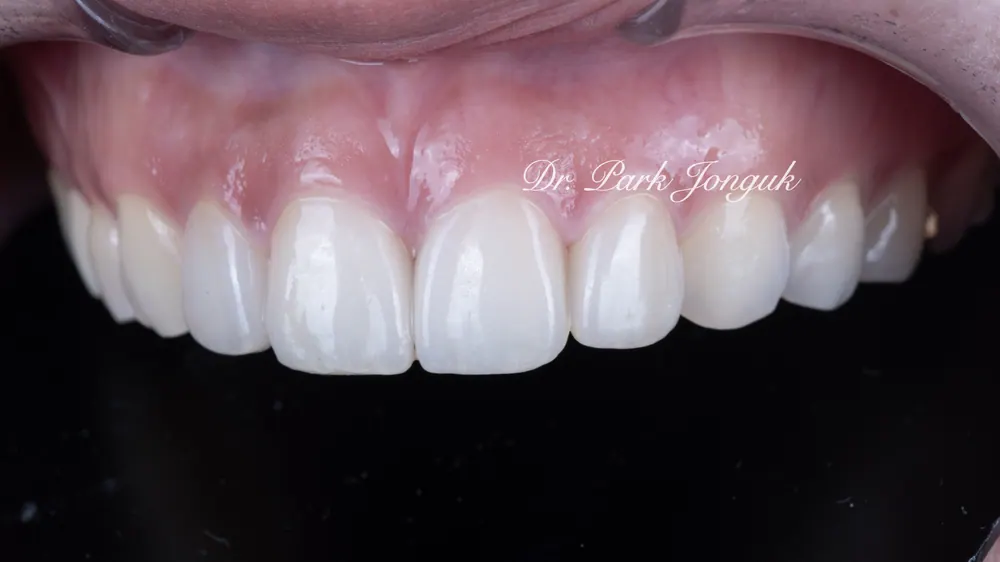
The chipped, discolored look disappeared, and the teeth and gums came into natural harmony.
The unnaturalness in the patient's smile was completely resolved.
A veneer redo isn't a simple swap job.
It actually requires more demanding, careful design than the initial treatment.
The amount of tooth reduced, the gumline, tooth proportions, and even the spacing and gum shape between the front teeth all have to be considered.
As with these two cases, the awkwardness or inflammation problems from old veneers
can be fully restored to a natural, healthy result through a proper redo process.
Over the past 20 years, I've handled a great many veneer cases.
And I wrote the first textbook in Korea to systematize veneer diagnosis.
There is one conclusion I've reached from that experience.
The core of veneer treatment lies in diagnosis and design.
If you're considering treatment, I'd recommend choosing a clinic based
not on speed or simple whitening,
but on how natural and how healthily long-lasting the result will be.
Q&A
Q1. When is a veneer redo needed?
It's needed when problems like discoloration, chipping, or gum inflammation appear in a veneer.
In particular, if old veneers look awkward or feel uncomfortable, a redo should be considered.
Q2. Doesn't removing an existing veneer damage the tooth badly?
These days, a laser and specialized equipment are used to separate the bonding agent.
This reduces unnecessary tooth reduction and allows as much of the remaining tooth as possible to be preserved.
Q3. Is a veneer redo more difficult than the first treatment?
Yes, it is.
It's more demanding because the condition of the already-reduced tooth and the gum condition both have to be taken into account.
So it should be done at a clinic with rich experience and know-how in order to get a stable result.
Q4. How long do veneers usually last?
On average, they last about 10 to 20 years.
But depending on the patient's oral care habits, they can last much longer, or shorter.
Q5. Will it look natural if I only get veneers on the two front teeth?
It's possible.
But the proportions, color, and gumline relative to the surrounding teeth all have to be carefully matched.
Otherwise, the result can actually end up looking more awkward.
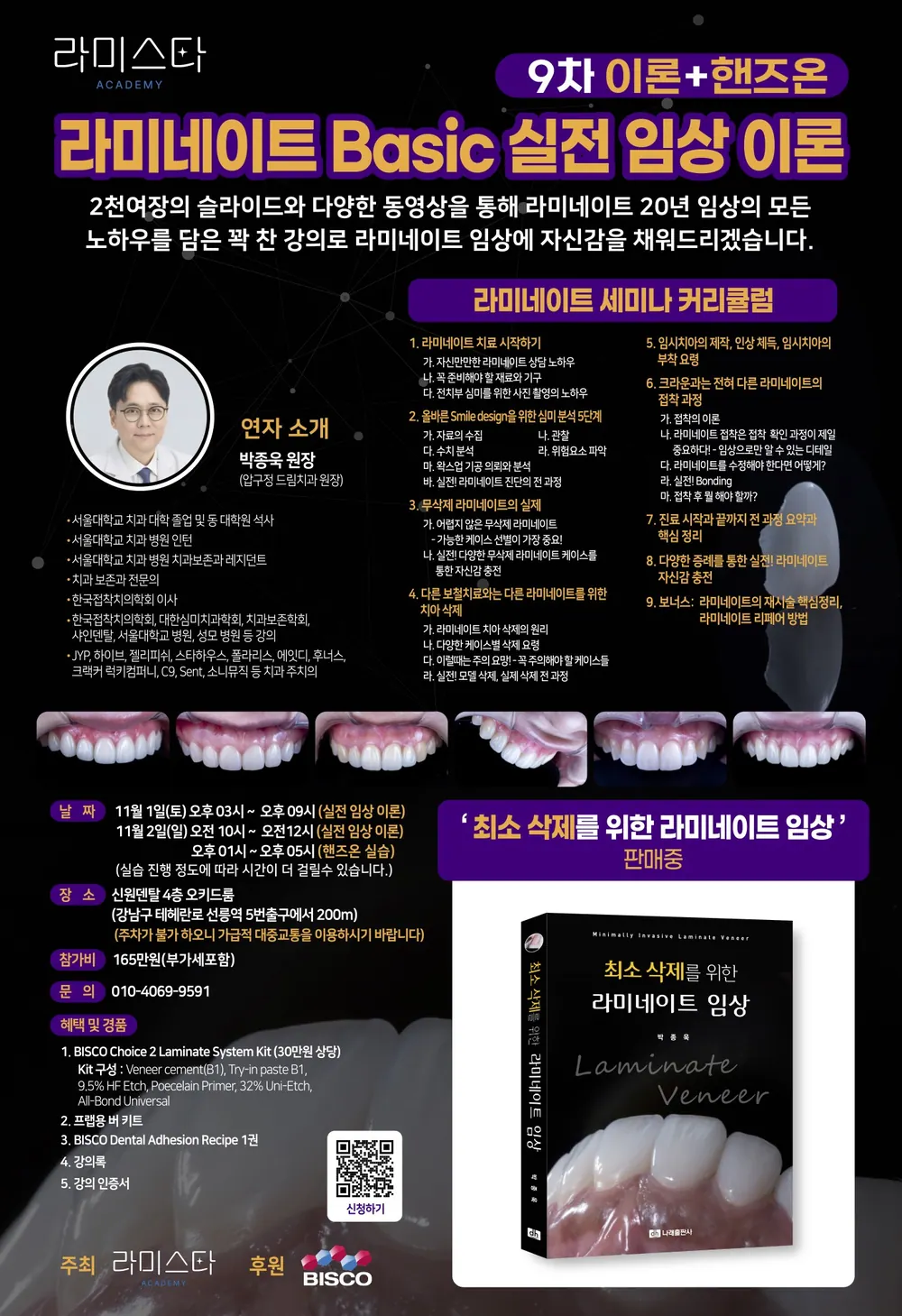
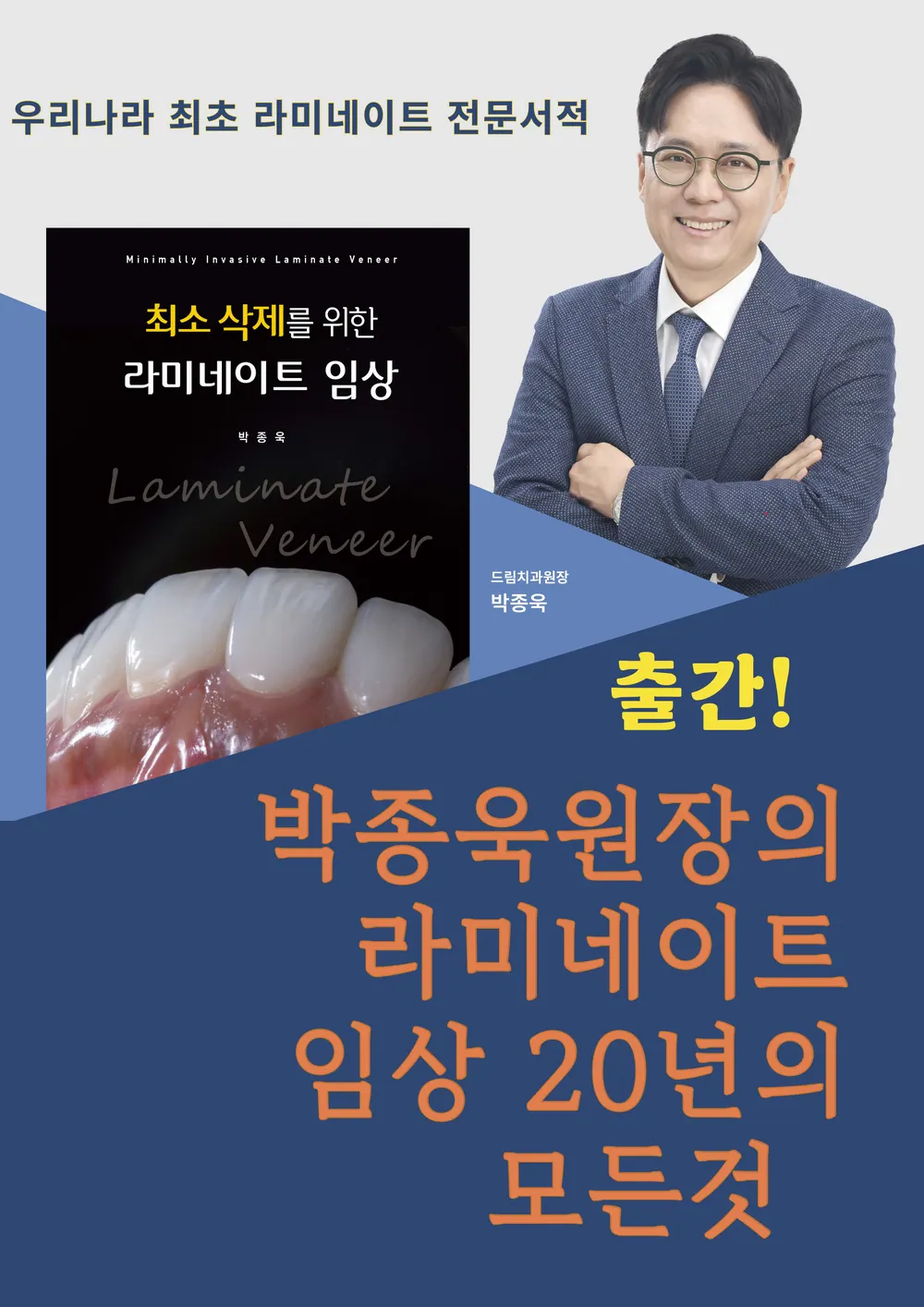
This article is a clinical note written by Dr. Park Jonguk of Dream Dental Clinic, Gangnam; the original was published on his blog. The photographs shown are real cases he treated. Results vary with each patient’s condition, and every procedure carries the possibility of individual variation and side effects.
Quick Consult
Request a Callback
Leave your number and we will call you back during clinic hours.
Request Received
We will contact you during clinic hours. For urgent matters, please call +82-2-3448-0028.