
A Collection of Natural Veneer Cases: From Front-Tooth Retreatment to No-Prep
A veneer isn't good just because it's made white.
Front-tooth veneers in particular need natural translucency and three-dimensionality to achieve real satisfaction.
This article introduces real cases where artificial-looking veneers were turned into natural ones.
Veneers are the most widely known method of aesthetic dental treatment.
But many people think of it as simply a procedure that makes teeth white.
In reality, the key to a veneer lies in how natural and harmonious a result you can achieve.
Front-tooth veneers in particular are the most noticeable area when smiling, so if the result looks artificial, satisfaction drops sharply.
That's exactly why complaints like "the teeth look too white and plastic-y" or "the color doesn't match the neighboring teeth" come up.
So these days, patients go beyond simply searching for "veneers" and
actively search for the keyword "natural veneers," carefully gathering information for themselves.
The problem is that not all veneers are the same.
Some clinics fabricate them from a single type of ceramic to save cost and time,
or repackage them under a different name and advertise them as if they were some new treatment.
But this kind of method lacks light transmission and reflection, making it hard to bring out a tooth's natural depth and three-dimensionality.
As a result, the outcome ends up excessively white and artificial.
By contrast, building up multiple layers of ceramic
can achieve delicate color and translucency that's nearly indistinguishable from a natural tooth.
In the end, you need to know that what makes the difference isn't a "special name" or "proprietary material," but the precision of the diagnosis and the fabrication method.
Over the past 20 years, I have treated countless veneer cases,
and researched this treatment while writing Korea's first veneer textbook.
What I can say clearly from that experience is that a veneer is not simply a procedure of bonding ceramic to the front of a tooth.
A satisfying result only comes when precision diagnosis suited to the patient's tooth condition, a principle of minimizing unnecessary reduction, and a fabrication process that achieves a natural aesthetic all come together.
In this article, through the cases of real patients,
I'll show how artificial, awkward-looking veneers were changed to look natural,
and how front-tooth veneers can transform a patient's overall impression.
Rather than just promotional photos, I'll explain the diagnostic process together with the changes after treatment,
so this can serve as a practical benchmark for anyone considering natural veneers.
The one-day fabrication process
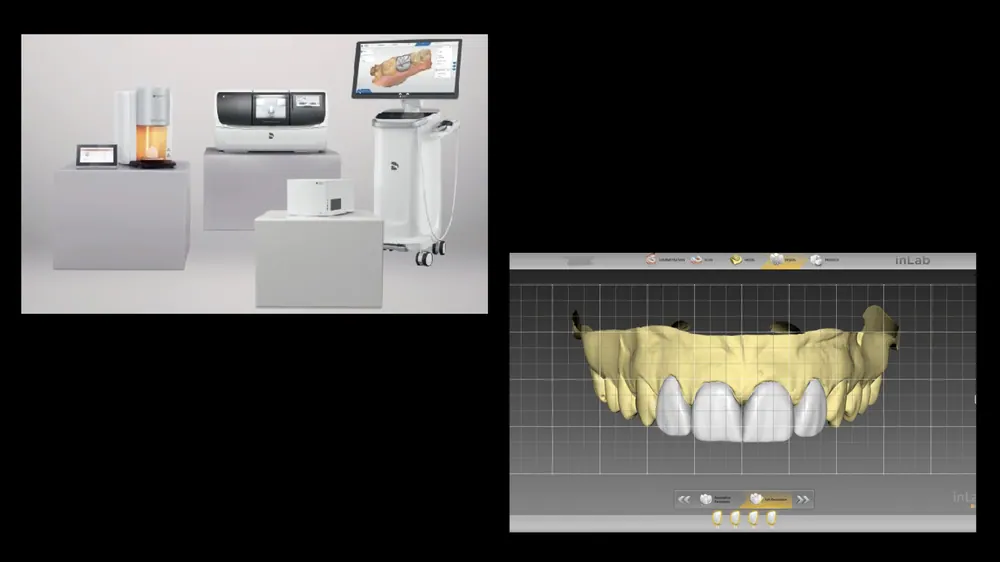
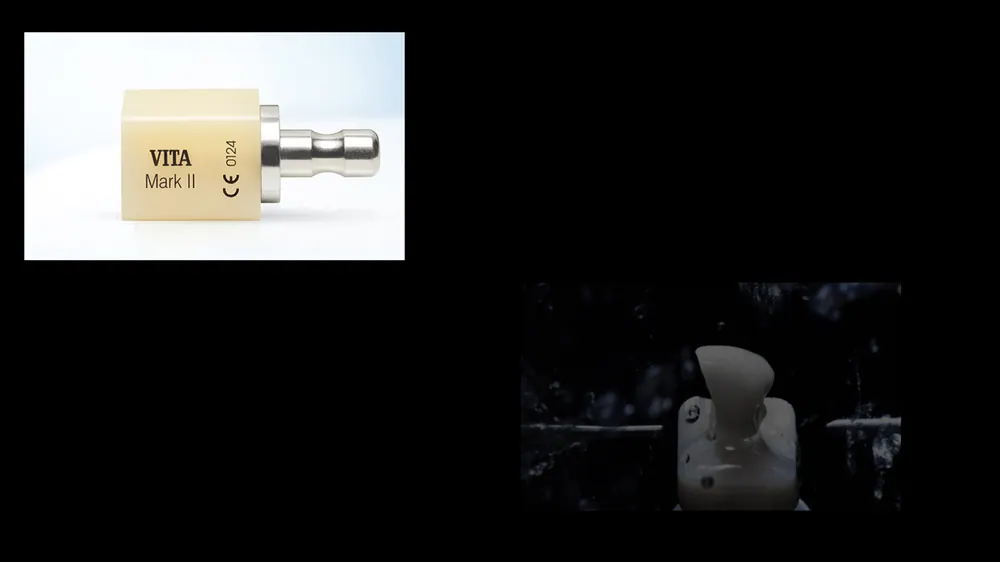
This shows the process of fabricating one-day veneers using CAD/CAM digital equipment.
It's a process of scanning the teeth with a digital scanner, designing on a computer, and then milling a ceramic block with a milling machine.
It has the advantage of being fast and efficient, but since it's mostly fabricated from a single type of ceramic block, the result can lack translucency and three-dimensionality.
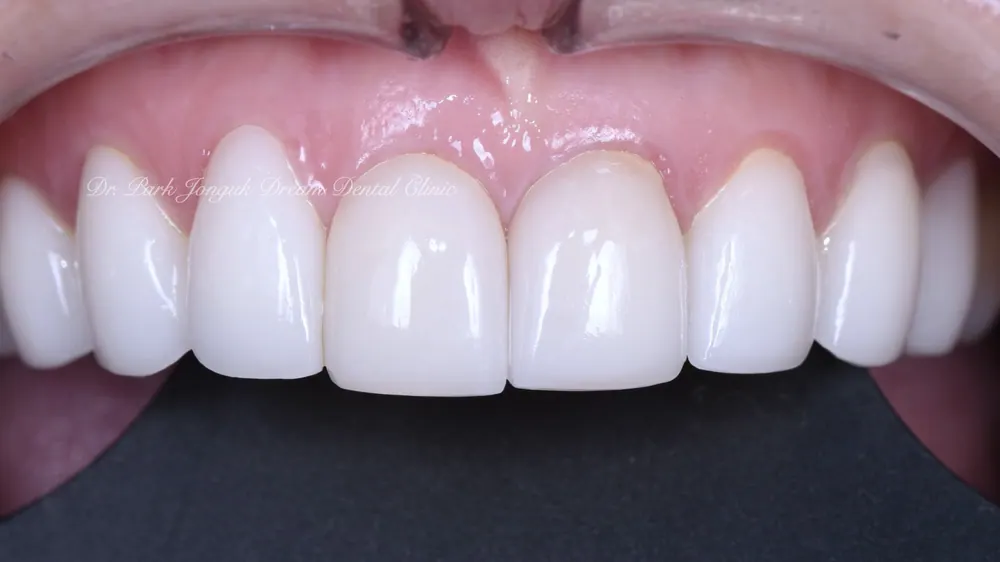
This photo shows a veneer completed using the one-day method.
You can see that the shape and color are simplistic, and the natural layered depth and translucency of a real tooth aren't reproduced.
In other words, the one-day method saves time, but its aesthetic limitations are clear.
The build-up fabrication process
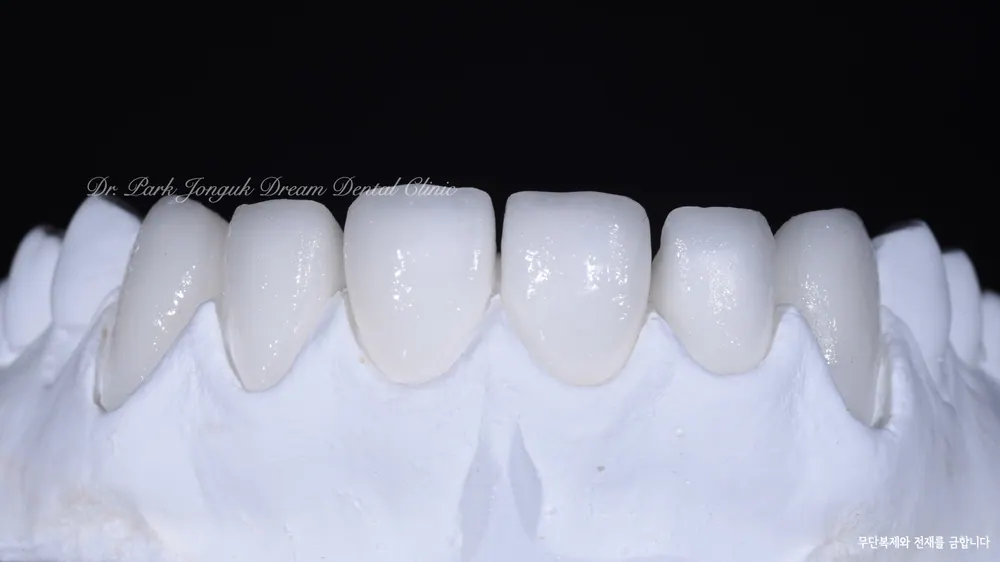
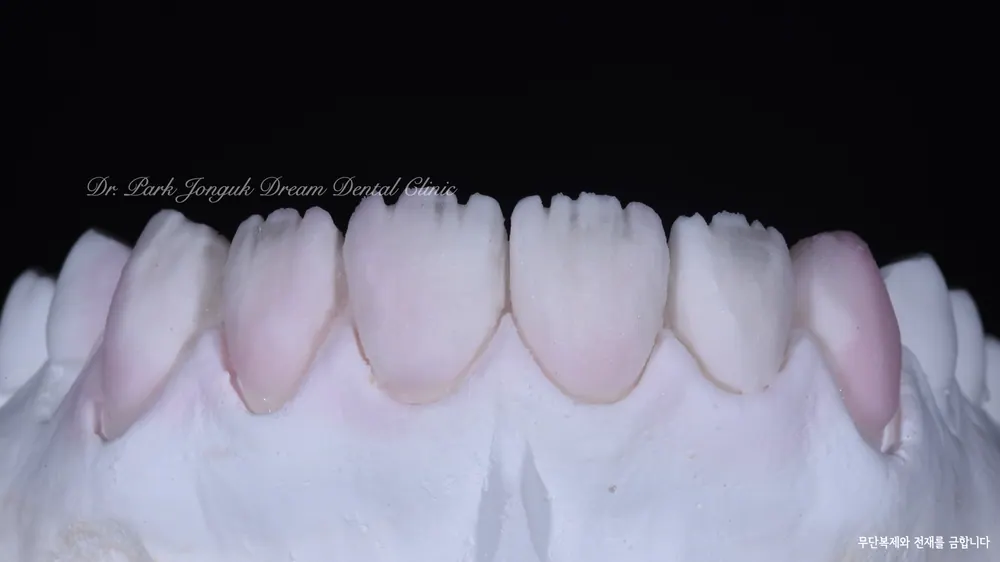
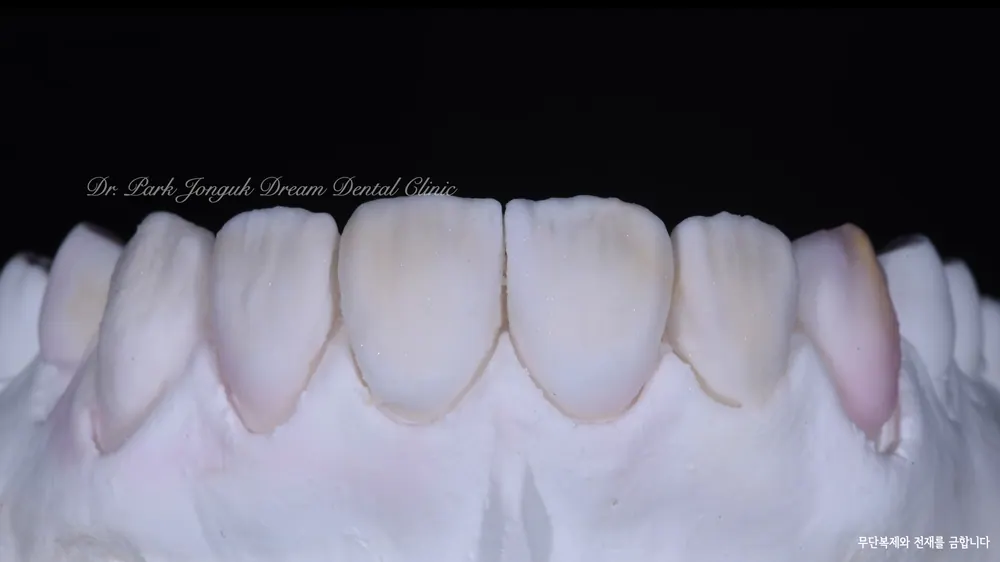
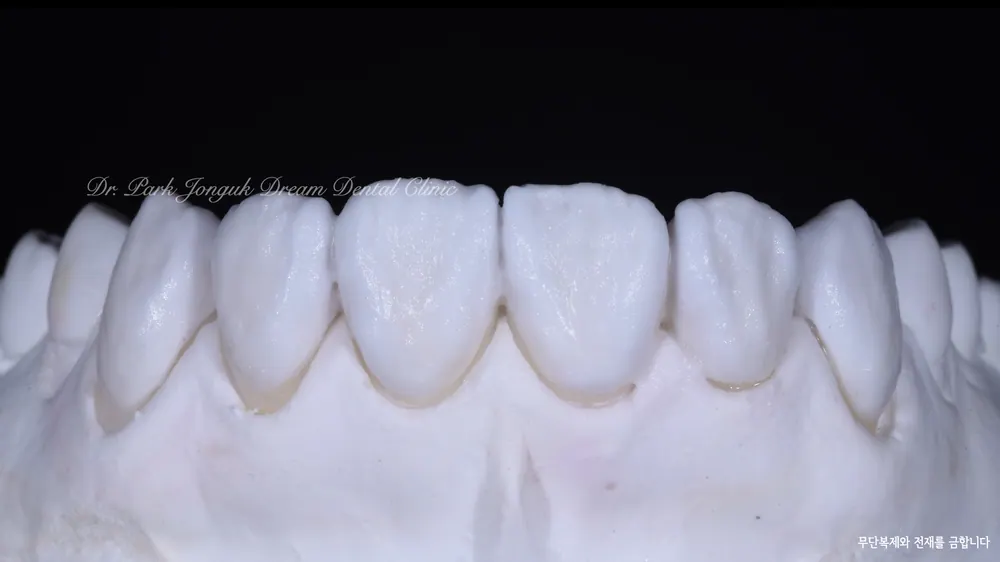
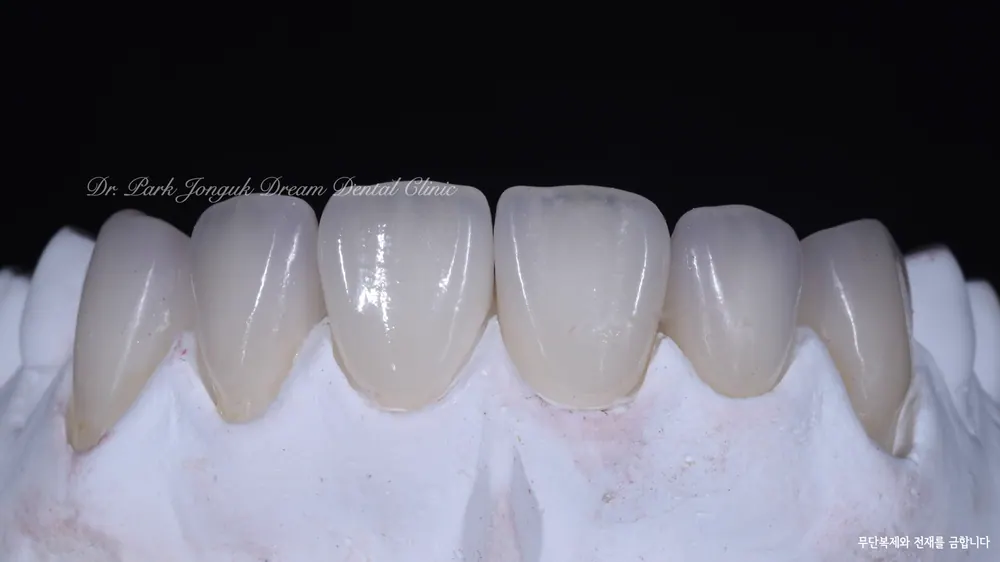
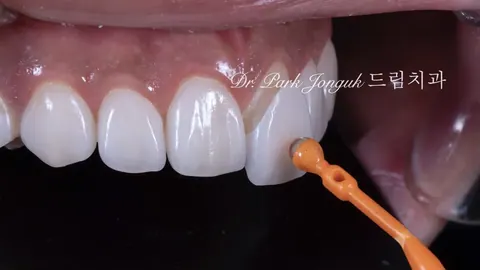
This is the build-up process, where the dental technician stacks multiple layers of ceramic by hand.
The ceramic is fired (baked) layer by layer, repeatedly, reproducing the tooth's enamel and dentin almost as if mimicking them.
This method is demanding and takes more time, but the result keeps translucency, three-dimensionality, and natural color tone alive.
The build-up method in particular has a much greater advantage for harmonizing with a patient's smile in front-tooth veneers.
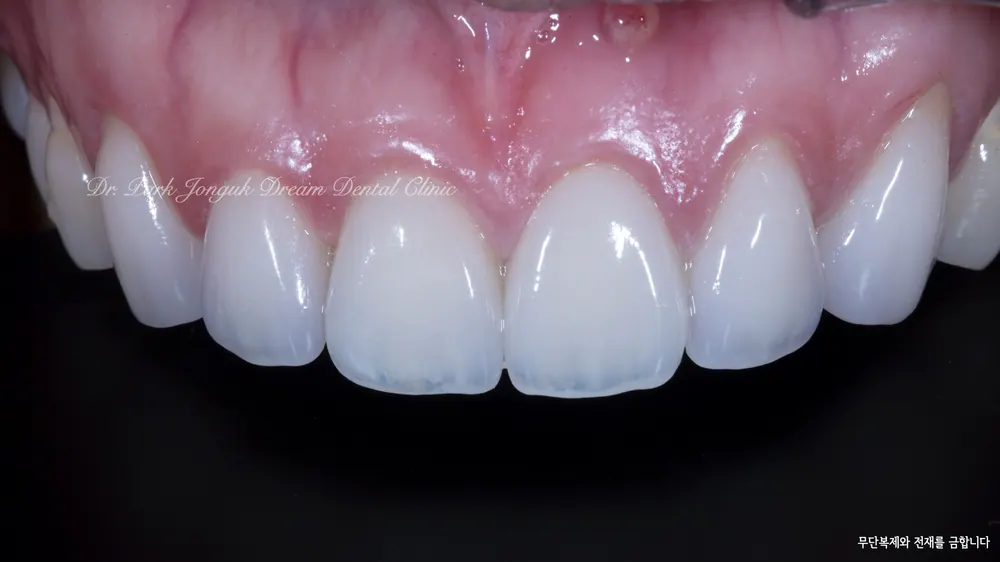
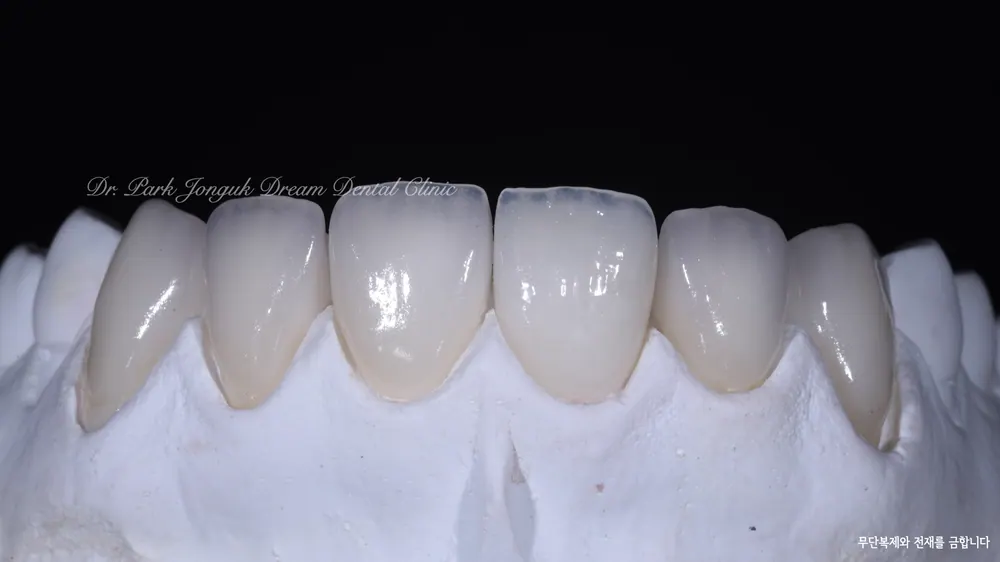
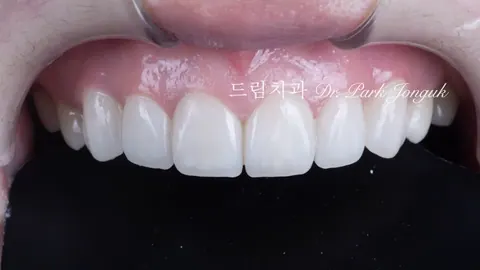
This is the final result of a build-up veneer, completed by a technician stacking multiple layers of ceramic by hand.
Compared with the one-day method made from a single ceramic block, you can see natural light transmission and reflection, with translucency and three-dimensionality alive, and a naturalness that's nearly indistinguishable from a real tooth.
Especially in an aesthetically important area like front-tooth veneers, it creates a natural impression that harmonizes with the patient's smile.
This 'naturalness' is exactly the part patients feel makes the biggest difference in their satisfaction.
The reason unnatural, artificial-looking veneers have been increasing lately,
while natural veneers have been decreasing, comes down to the following.
📌 1. The one-day method (CAD/CAM) has become common
As fast treatment and mass production became possible, one-day veneers made from a single ceramic block have increased.
This method is efficient, but it lacks the translucency and three-dimensionality that only comes through multi-layer ceramic build-up.
As a result, artificial-looking veneers that patients often describe as "white and flat teeth" have become more common.
📌 2. A culture that prioritizes saving cost and time
Making a natural veneer requires a skilled technician to stack ceramic layer by layer over a long period of time.
But since this process is costly and time-consuming, many clinics end up choosing the "fast and cheap method" instead.
As patients also prefer "short time, low cost," artificial-looking results inevitably increase over natural ones.
📌 3. A shrinking, more fragmented dental technician workforce
The number of dental labs with skilled build-up technicians is decreasing.
Instead, many results are now supplied by large labs using a standardized, single fabrication method.
This has made it harder to achieve individually tailored, delicately natural aesthetics.
📌 4. A treatment approach centered on advertising and marketing
Some clinics advertise veneers using nothing but the image of "white, sparkling teeth."
As patients increasingly expect the same smile they see on celebrities on TV and social media, more of them ask only for "whiter," rather than a "natural result."
Both doctors and patients get drawn to marketing keywords over the substance of aesthetics, so artificial results end up replacing natural ones.
📌 5. A lack of precision diagnosis
Making a natural veneer requires every stage to be thorough, from wax-up precision diagnosis, through temporary-tooth consultation, to final fabrication.
But many clinics shorten or skip this process.
As a result, the amount of tooth reduction ends up excessive, or the shape and proportion don't fit, producing an unnatural result.
The reason natural veneers are increasingly disappearing comes down to fast fabrication, low cost, mass production, and a marketing-first approach.
In the end, what makes the difference is how much of the tooth is preserved, how precisely the ceramic layers are built up, and how thorough the diagnostic process is.
One-day veneer to natural veneer retreatment
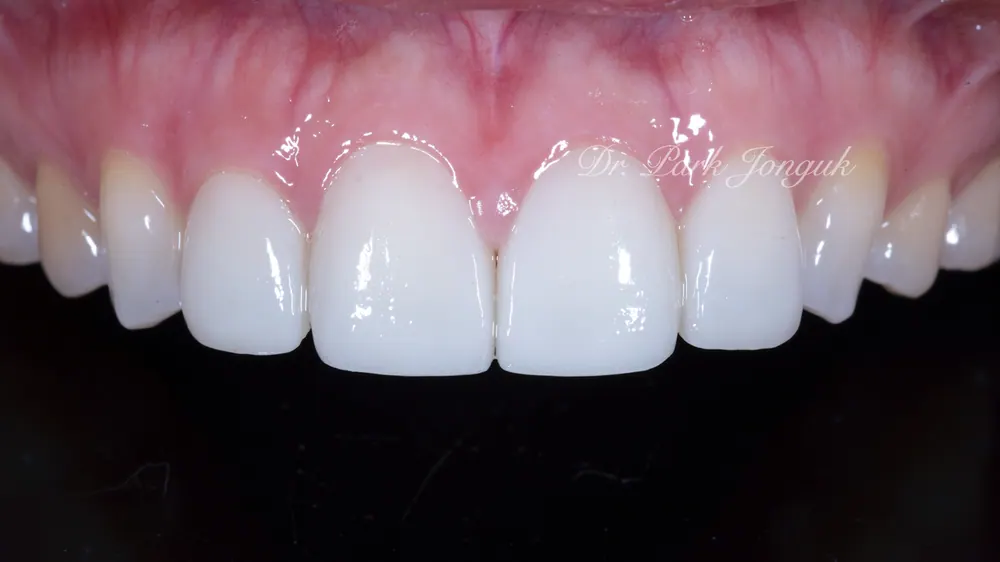
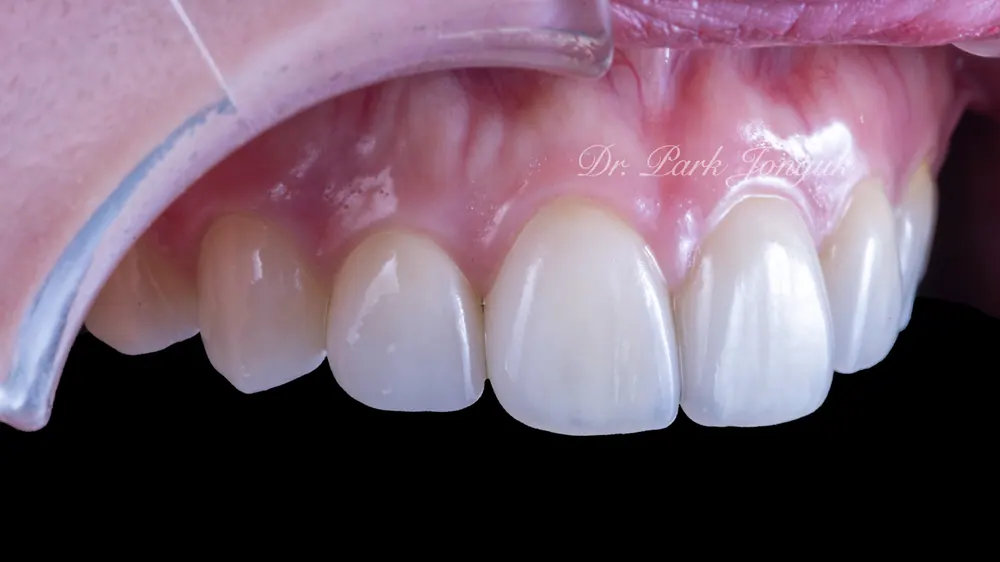
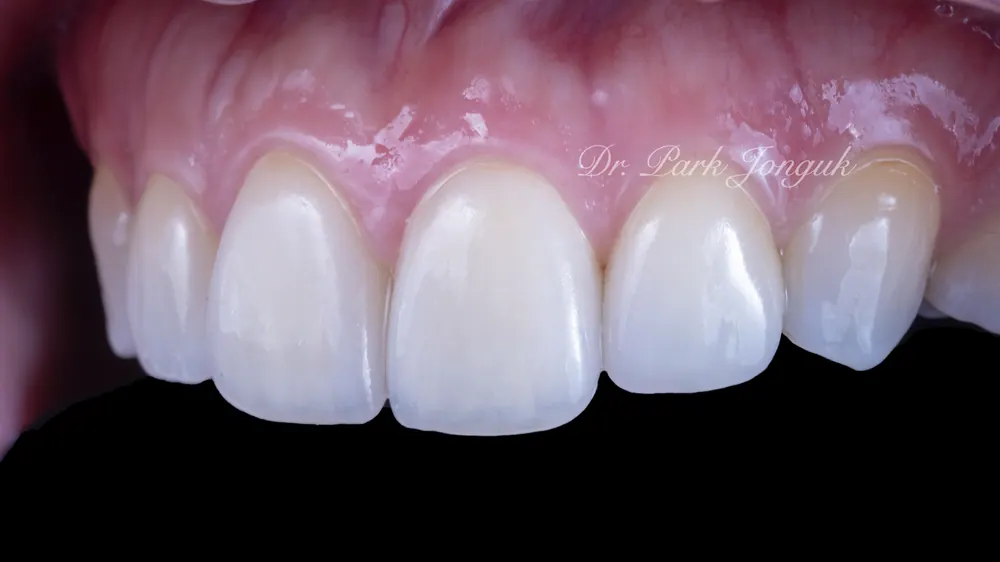
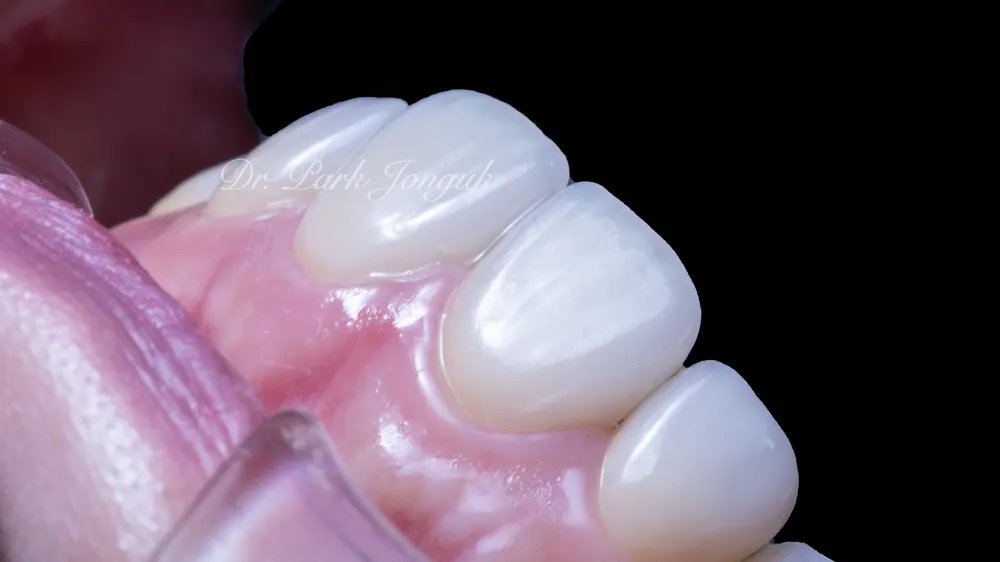
The first case is a patient who had one-day veneers done at a different clinic.
A single-ceramic veneer fabricated with CAD/CAM equipment has the advantage of being completed quickly,
but it had a problem: the teeth looked excessively white and flat due to a lack of translucency and three-dimensionality.
Within less than a month after treatment, the patient reported significant discomfort over the awkward result and ultimately came to our clinic.
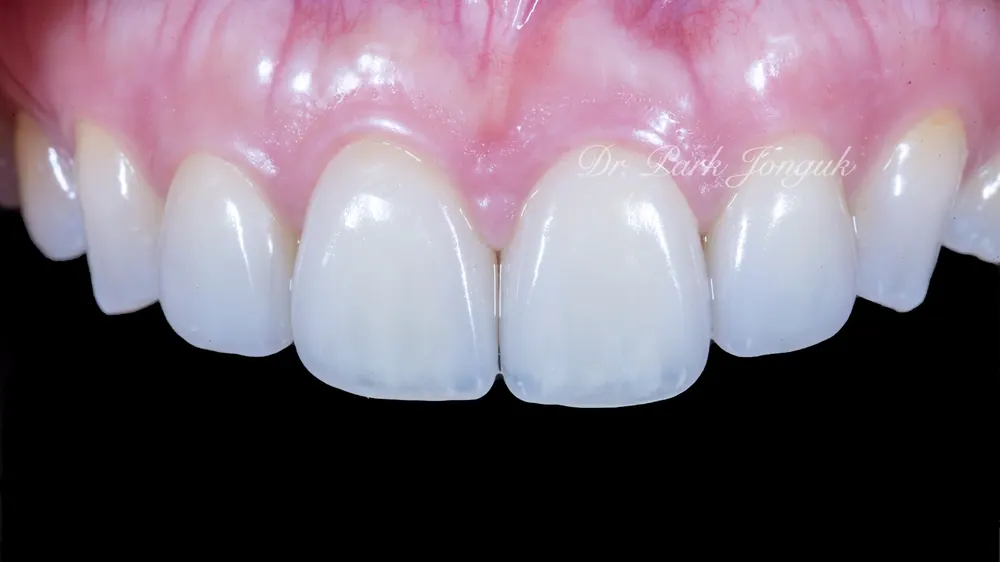
After going through precision diagnosis and the wax-up process, we retreated the case and were able to complete a veneer with translucency and depth revived to a degree nearly indistinguishable from a natural tooth. The patient was very satisfied, saying, "This time it really looks natural."
Conclusion
A veneer is not simply a treatment that makes teeth white.
Front-tooth veneers in particular determine the impression of the entire smile, so naturalness and harmony matter above all else.
Fast fabrication methods like the one-day approach can be convenient,
but because they lack translucency and three-dimensionality, many patients come to feel the awkwardness as time passes.
As in this case, when a veneer is replaced early through retreatment with one that has translucency and depth,
that's exactly why patient satisfaction rises so significantly.
A veneer isn't decided by its "name" or "special material,"
but by precision diagnosis, the principle of minimal reduction, and differences in the fabrication method.
A veneer fabricated through the right process can do more than just change the teeth, it can raise a patient's quality of life and confidence.
So if you're considering treatment, the wisest choice is to check first for experience and know-how that can deliver a natural veneer, rather than being swayed by promotional wording.
Q&A
Q1. How long do veneers last?
A. On average, they can be used for about 10 to 20 years, though it varies greatly with the patient's care habits. Regular checkups, proper brushing, and caution with hard foods alone can keep them lasting a long time.
Q2. If an existing veneer looks awkward, can it be retreated right away?
A. Yes. In particular, using a laser makes it possible to safely separate the bonding agent and remove the veneer while minimizing damage to the tooth.
Q3. Is no-prep veneer treatment possible for everyone?
A. No. Whether it's possible depends on the size, alignment, and bite condition of the teeth. Rather than insisting on no-prep at all costs, what matters most is minimizing the amount of reduction through precision diagnosis.
Q4. Why do some veneers look artificial?
A. It's because they're made from a single type of ceramic, or because the diagnosis and fabrication process was insufficient. You need to build up multiple layers of ceramic to achieve translucency and a natural sense of three-dimensionality.
Q5. Would a veneer on just two front teeth still look natural?
A. Yes, it's possible. But it requires highly demanding work to precisely match the color, shape, and proportion of the surrounding teeth.
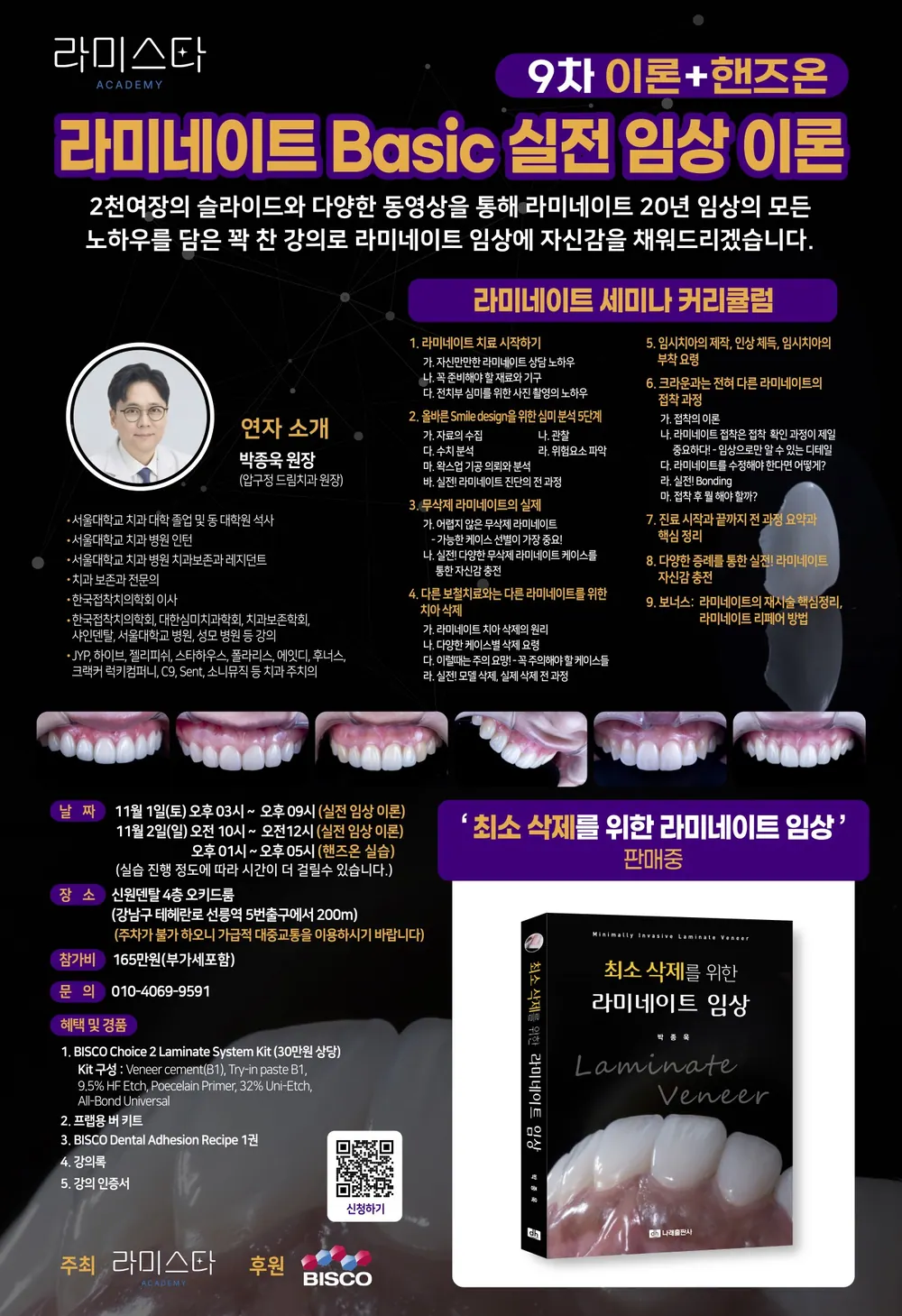
This is the Lamista Academy hands-on veneer clinical theory lecture taking place in November.
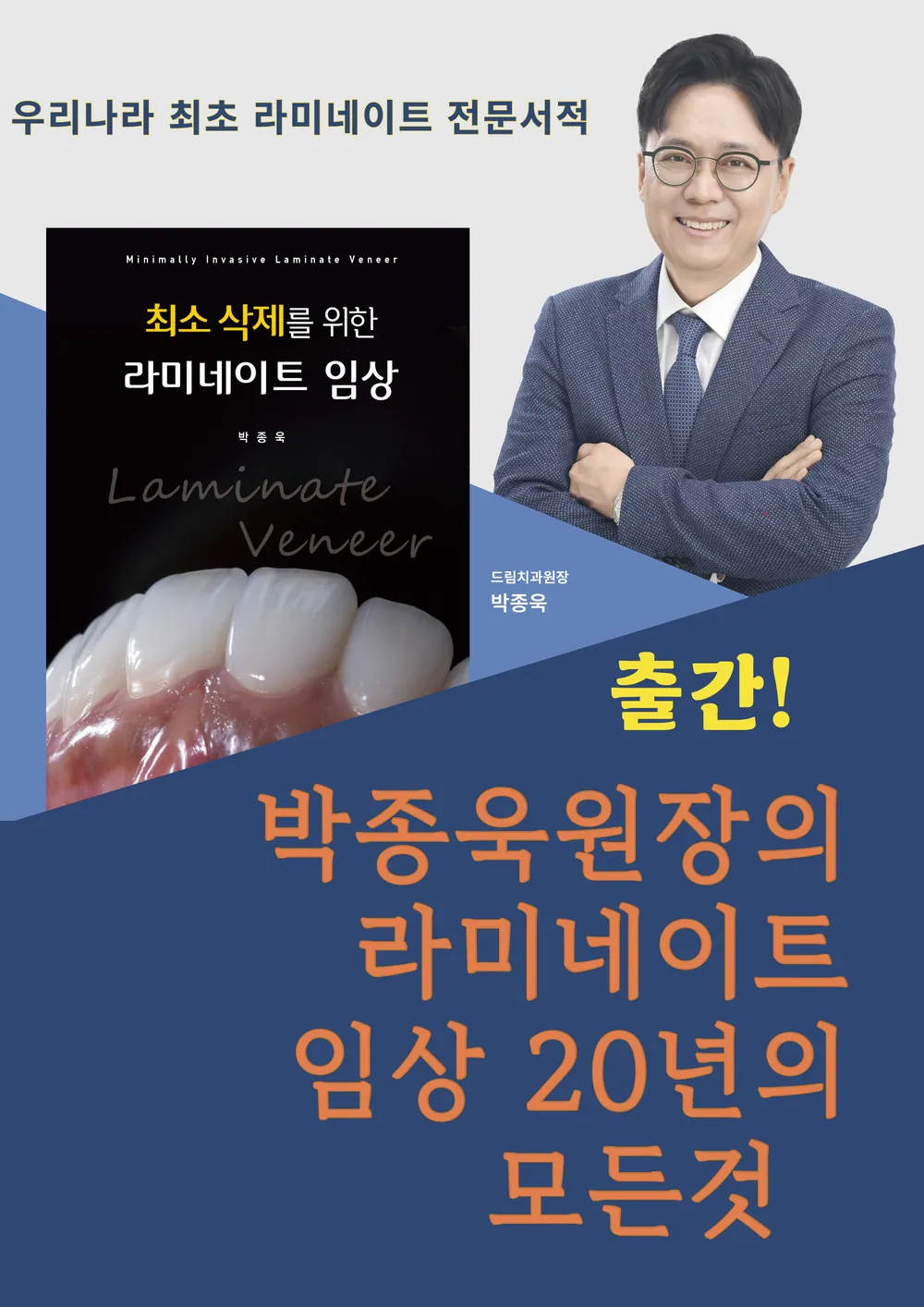
This article is a clinical note written by Dr. Park Jonguk of Dream Dental Clinic, Gangnam; the original was published on his blog. The photographs shown are real cases he treated. Results vary with each patient’s condition, and every procedure carries the possibility of individual variation and side effects.

Quick Consult
Request a Callback
Leave your number and we will call you back during clinic hours.
Request Received
We will contact you during clinic hours. For urgent matters, please call +82-2-3448-0028.