
Veneer Redo: If Your One-Day Veneers Look Too Artificial, It's Worth Reconsidering
Many people, after getting one-day veneers, find them looking too artificial and obvious, and consider a redo.
Here we introduce the redo process for achieving natural veneers, along with a real case.
Introduction
A large share of patients who come in for a veneer redo
aren't coming because a tooth hurts, but because "it just looks too awkward."
This patient was no different.
She had recently received one-day veneer treatment,
and came to see me barely a few days later.
Her first words to me were these.
"I don't mind paying again. I simply cannot smile in front of people looking like this."
The teeth were excessively white,
the texture was flat, like plastic,
and especially looking at just the front teeth, it strongly gave off the feeling of "treated teeth" to anyone looking.
What the patient wanted was clear.
Not white teeth — teeth that look like natural teeth.
Teeth where you can't tell whether they're veneers or not.
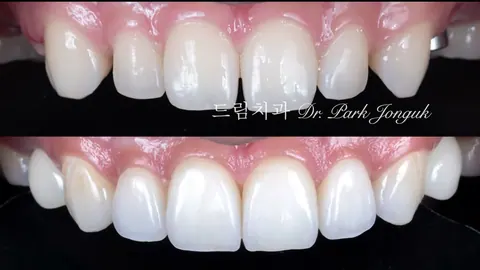
Photo 1. Initial visit — one-day veneers that look far too artificial
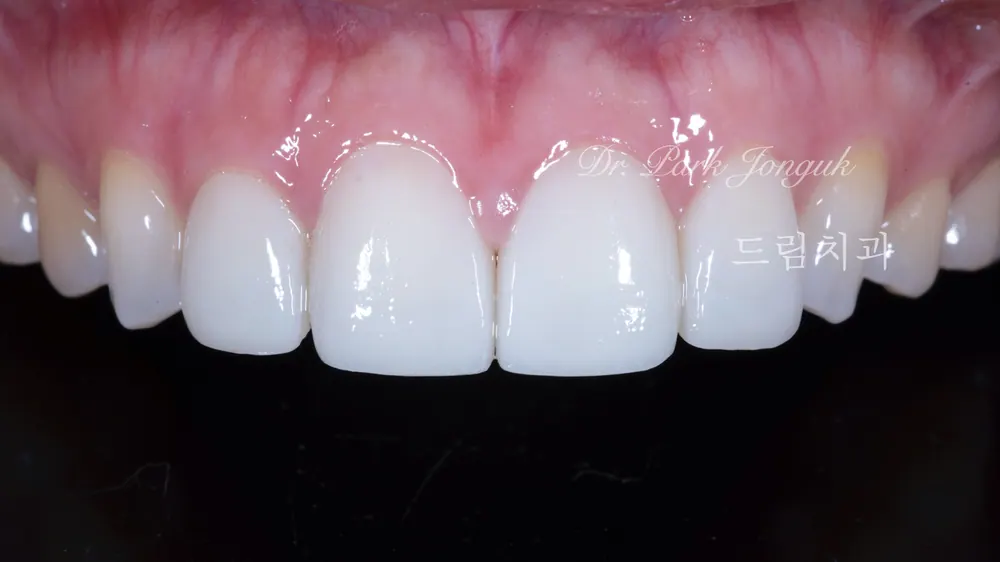
Looking at the initial photo, the problem is clear.
The tooth color doesn't match the surrounding teeth at all
It's opaque, with no sense of depth
The tooth surface texture is far too simple
The front teeth stand out on their own when smiling
In cases like this, patients often describe it
as "I think my veneers failed,"
or "they look too artificial."
Technically speaking,
the veneer hasn't actually come off or chipped.
But the "naturalness" that matters most in esthetic treatment has completely disappeared.
Photo 2. After removing the veneer — the cause of the problem is revealed
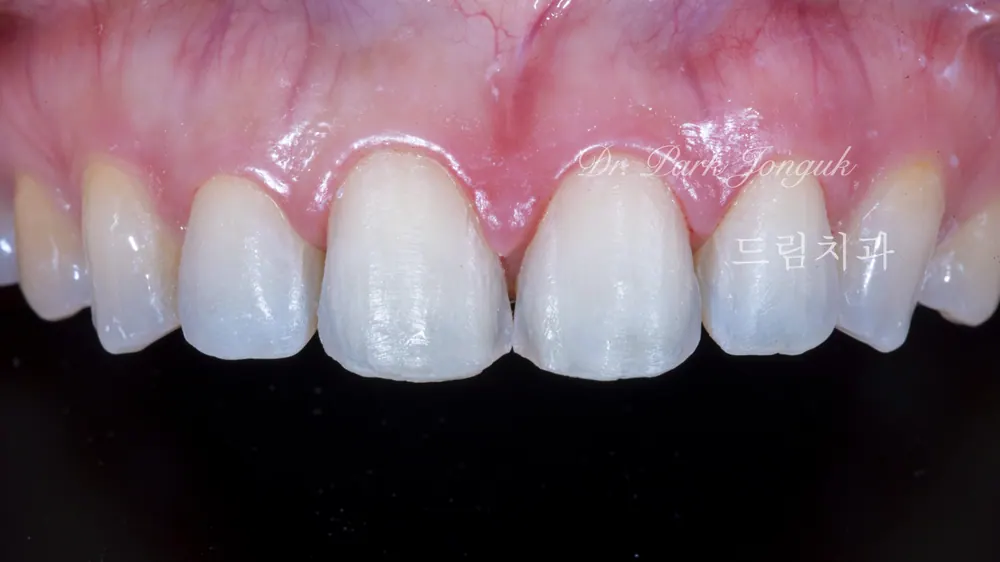
Once the veneer is removed,
you can see why the result turned out this way.
A structure fabricated all at once from a single block of ceramic
No individualized design for the shape of the tooth
A choice of opaque material focused only on covering the underlying color
This doesn't mean one-day veneers are always bad.
But when naturalness is the goal, they clearly have their limits.
The goal of a veneer redo is one thing
The goal of a redo is clear.
Teeth that simply look white — no
Teeth that look like natural teeth — yes
The color should appear continuous with the neighboring teeth
The translucency at the tooth edge should be alive
When smiling, it shouldn't give off any sense of "this was treated"
To achieve this goal,
what's needed isn't a fast fabrication method, but one built with real care and attention.
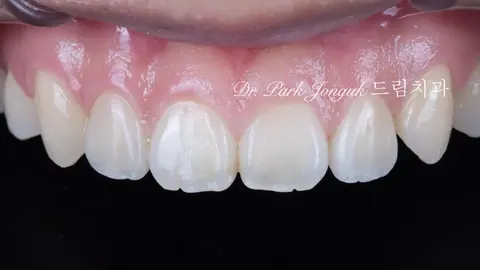
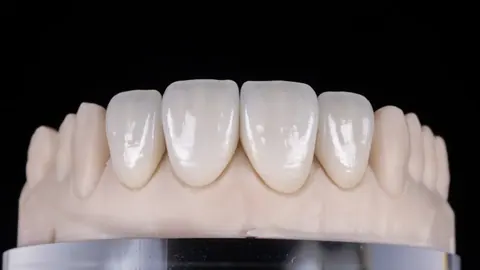
Photos 3-6. After the veneer redo — the difference in naturalness
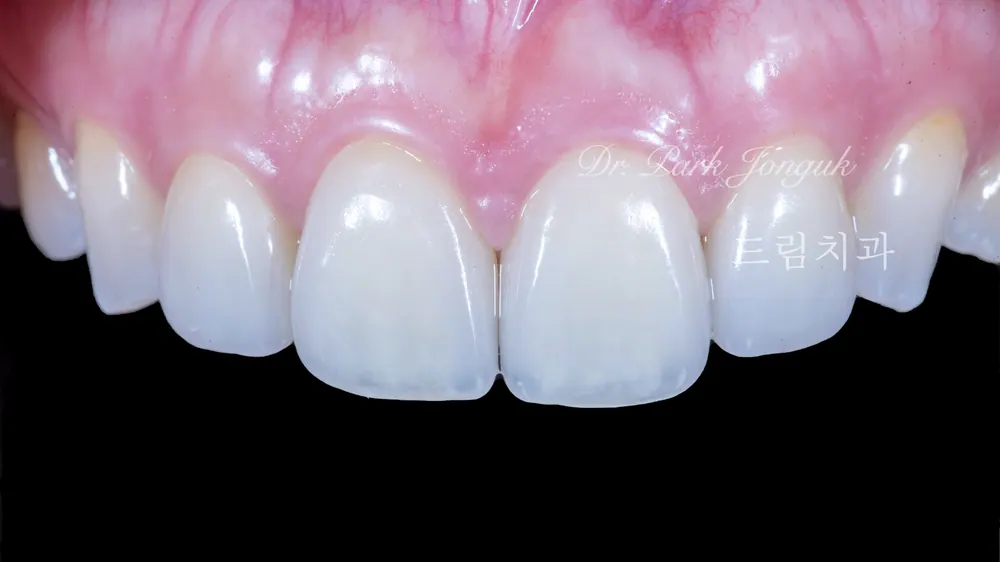
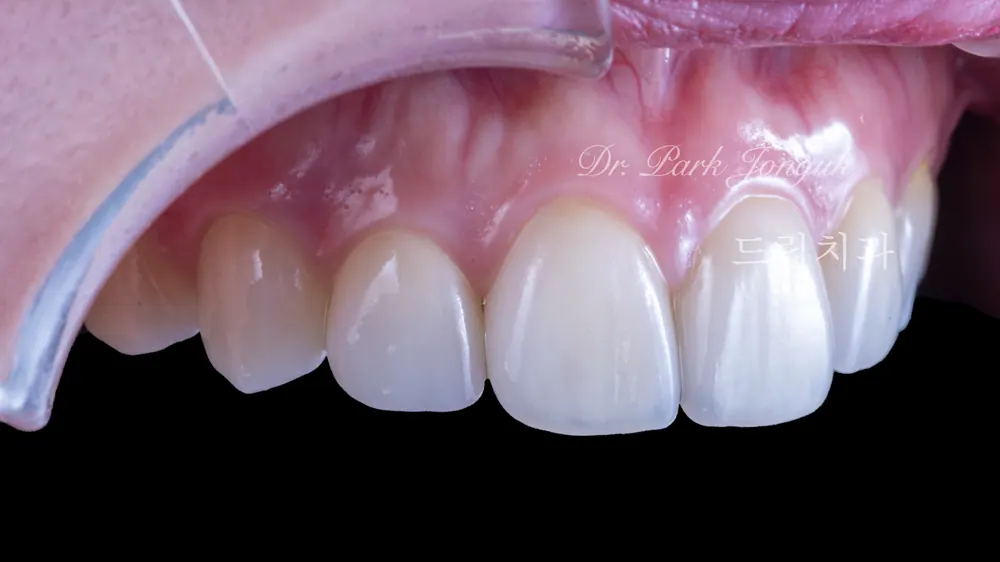
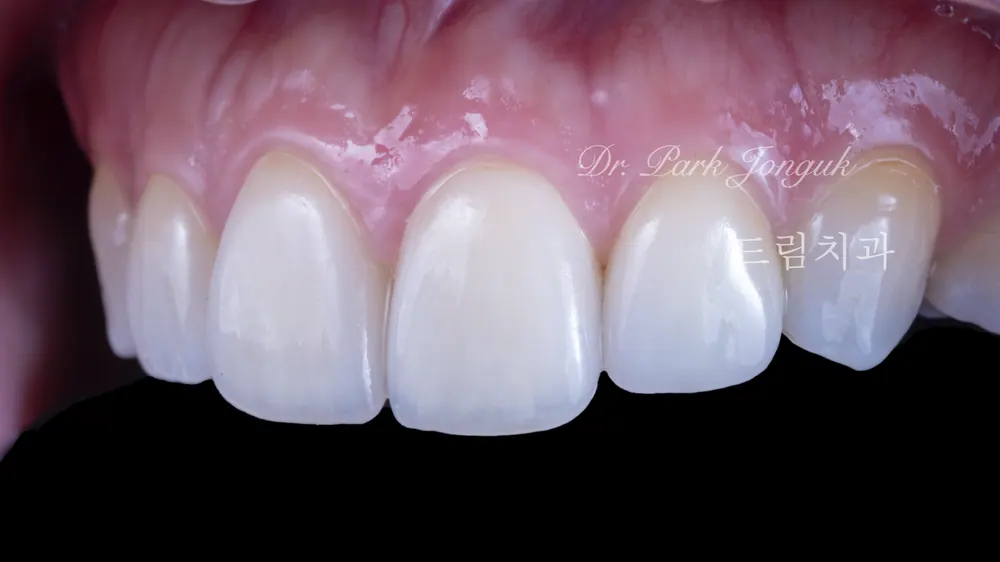
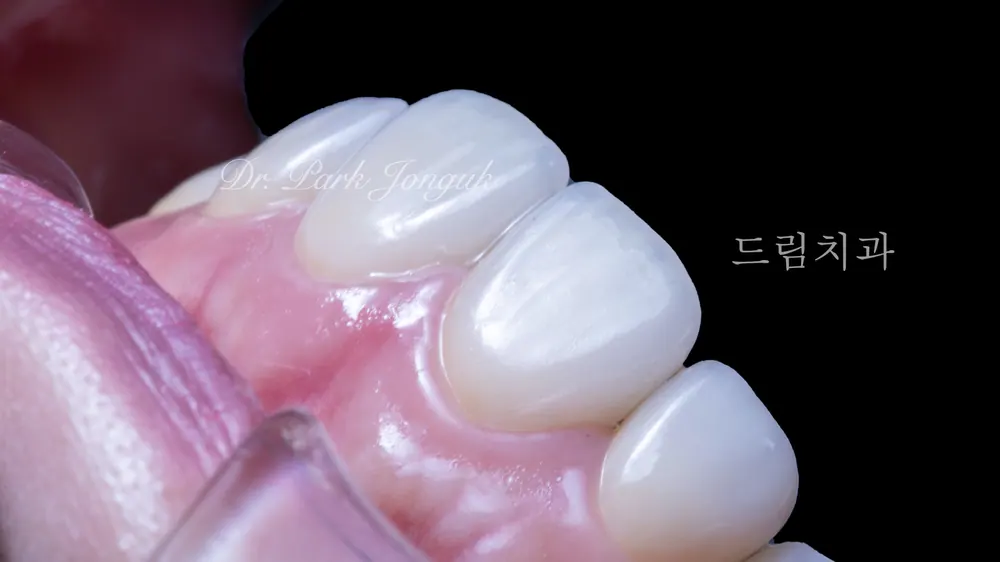
For the redo,
the veneer was fabricated using a hand-built, layered method.
By layering several kinds of ceramic,
the natural tooth's color variation and translucency were reproduced.
A different design was applied to each individual tooth.
As a result,
the translucency at the tooth edge came back to life,
the color shifted naturally under light,
and the result blended completely with the surrounding teeth.
At this stage, many patients
say, "Now these finally feel like my own teeth."
Photo 7. A smiling photo — you can't tell they're veneers
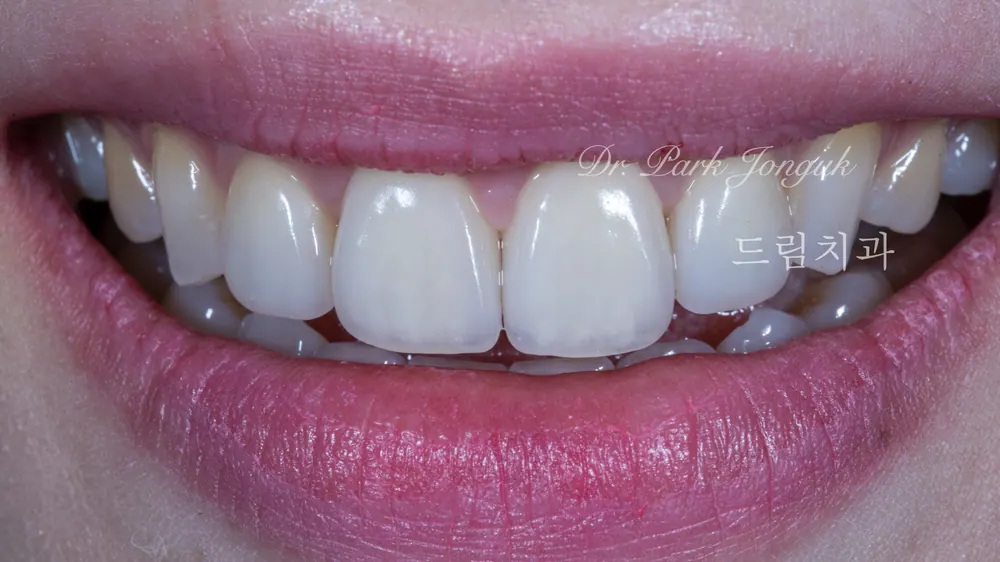
In this final smiling photo,
it's hard to tell which teeth are veneers.
This
is the standard for a natural veneer redo.
The patient said this to me:
"If it had been done this way from the start, I don't think I would have gone through all this stress."
Conclusion
Most patients who come in for a veneer redo
have already regretted one previous choice.
That's why, in a redo,
accuracy over speed,
the result over the price,
and quality of finish over trends
become far more important.
A veneer isn't a treatment where something is simply glued on —
it's a treatment that has to be designed and crafted.
A natural veneer
is proven by the result, in proportion to the time and care put into it.
Q&A
Q1. Do many people need a redo after one-day veneers?
A. More than you'd think. In particular, many people consider a redo because their veneers look "too white and artificial."
Q2. Does a veneer redo require reducing the tooth even more?
A. No. It depends on the tooth's condition after the existing veneer is removed, and unnecessary additional reduction is avoided.
Q3. Why does a natural veneer make such a difference?
A. It comes down to the difference in the build-up fabrication and design process, using multiple kinds of ceramic rather than a single block.
This article is a clinical note written by Dr. Park Jonguk of Dream Dental Clinic, Gangnam; the original was published on his blog. The photographs shown are real cases he treated. Results vary with each patient’s condition, and every procedure carries the possibility of individual variation and side effects.
Quick Consult
Request a Callback
Leave your number and we will call you back during clinic hours.
Request Received
We will contact you during clinic hours. For urgent matters, please call +82-2-3448-0028.