
No-Prep Veneers | The Conditions That Make Them Possible, With Real Natural Cases
No-prep veneers are a treatment that can achieve esthetic improvement without cutting the teeth.
But they don't apply to every case — certain conditions have to be met.
Today, through a real case, I'll show you a natural, translucent no-prep veneer result.
Veneers are the most commonly chosen method for esthetic treatment of the front teeth.
There's one question patients ask most often during consultations.
"Can I really get no-prep veneers without cutting a single bit of my teeth?"
Everyone has some fear of tooth reduction.
So it's only natural to want to preserve as much of the tooth as possible
while still achieving a natural, beautiful result.
No-prep veneers, as the name suggests,
involve bonding a ceramic veneer with either no tooth reduction at all
or an extremely minimized amount.
Since the tooth isn't cut, there's less risk of sensitivity or nerve damage.
And there's the major advantage of preserving the tooth's lifespan for longer.
But there's an important fact to keep in mind.
No-prep veneers aren't possible in every case.
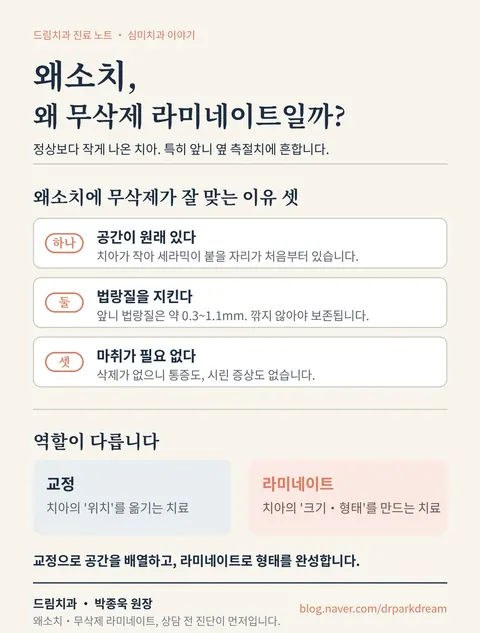
There are three conditions under which no-prep veneers are possible.
First, when the teeth are naturally small or narrow.
Second, when the alignment is even, or the alignment is good after orthodontics.
Third, when the teeth are positioned inward (retroclined),
so there's enough room for a veneer to be bonded on.
If these conditions aren't met and no-prep veneers are forced anyway,
the teeth can end up looking thick and awkward, or the margin with the gum can look unnatural.
In actual clinical practice, among patients who come in having seen only advertising,
there are quite a few cases where no-prep simply isn't possible.
So what matters isn't really "no-prep versus minimal-prep."
What matters is preserving as much of the tooth as possible through precision diagnosis,
while achieving a translucent, natural result — that's the key.
Over the past 20 years, I've done a great many veneer cases.
And I wrote Korea's first textbook to systematize veneer diagnosis.
In this post, through an actual no-prep veneer case,
I'll show you how translucency and dimension can be preserved
to achieve a natural result.
Photo 1. Before treatment
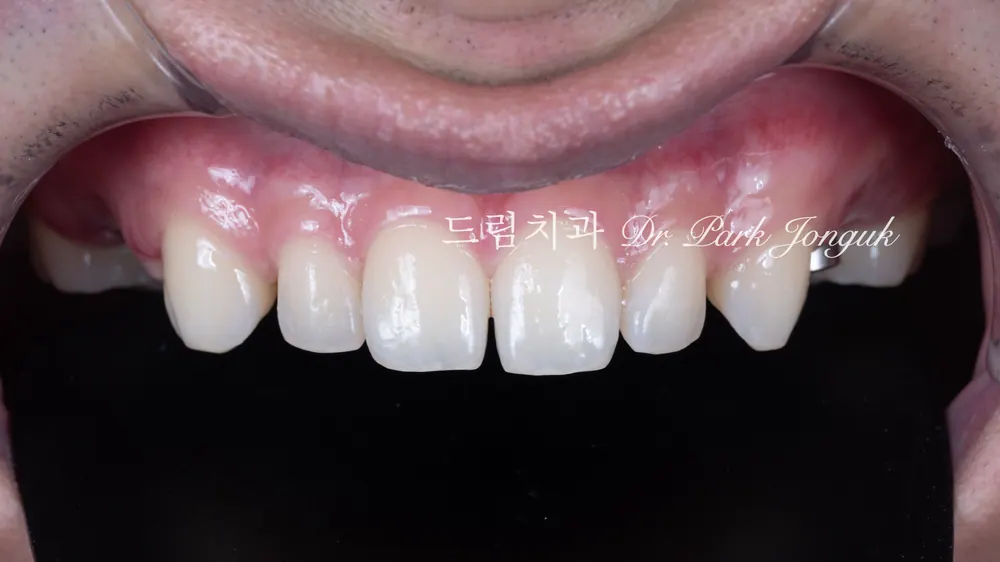
There was spacing between the front teeth.
That's what led us to plan veneer treatment.
But the conditions weren't perfect.
The tooth beside the front tooth (the lateral incisor) was small,
but the front teeth and canine weren't small.
In other words, one of the three conditions for no-prep veneers wasn't fully met.
That didn't mean it was impossible, though.
With careful distribution of tooth size, it was entirely achievable.
This part relied heavily on experience,
and we chose to work through it using our clinic's long clinical know-how.
Photos 2, 3. The precision wax-up diagnosis process
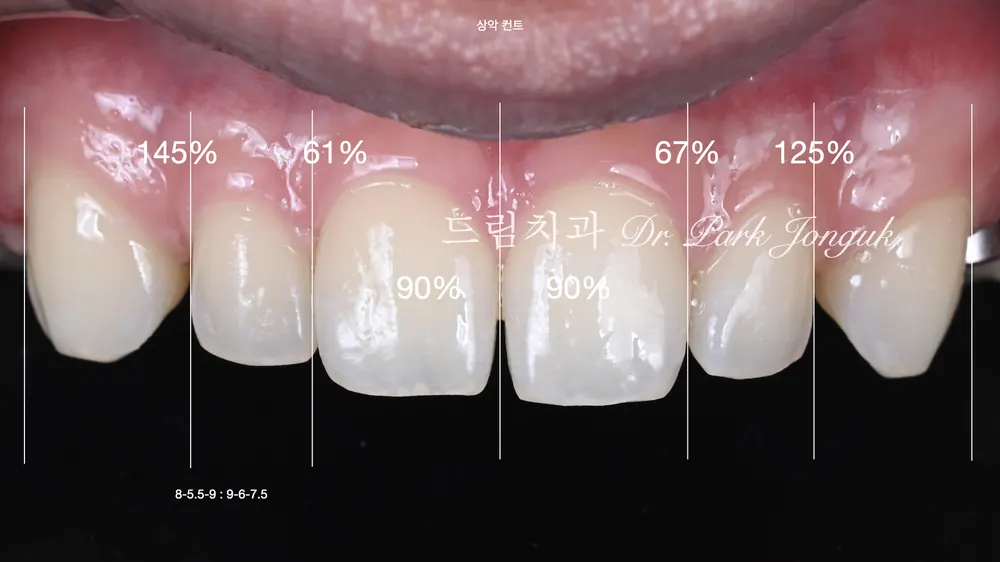
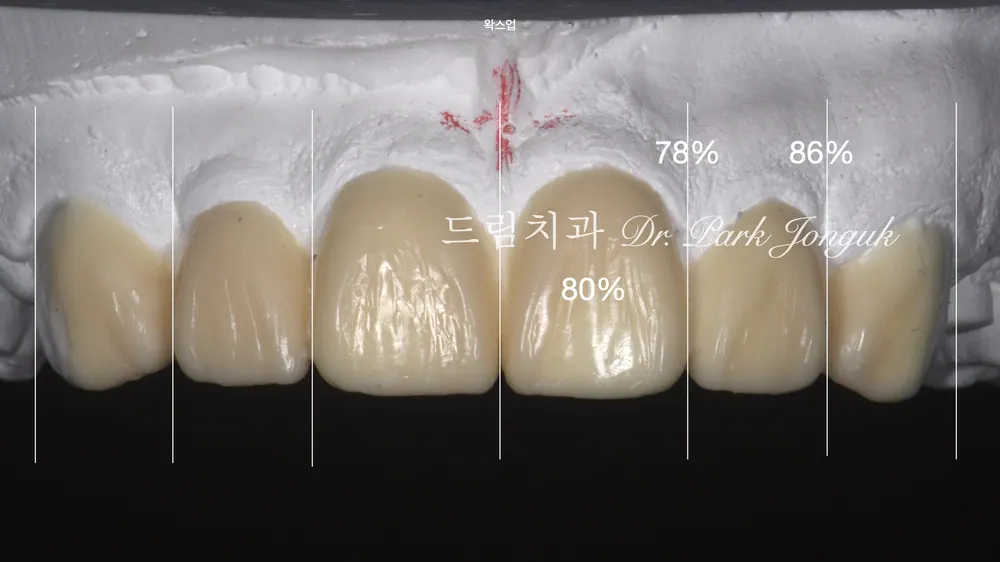
Even for no-prep veneers, a precision diagnosis is absolutely necessary.
Through the wax-up, we adjusted the width and length of the teeth,
and the proportion between the front teeth, lateral incisors, and canines.
This let us predict what the final result would look like,
and it was a process of thorough discussion with the patient.
Photo 4. Consultation with temporary teeth
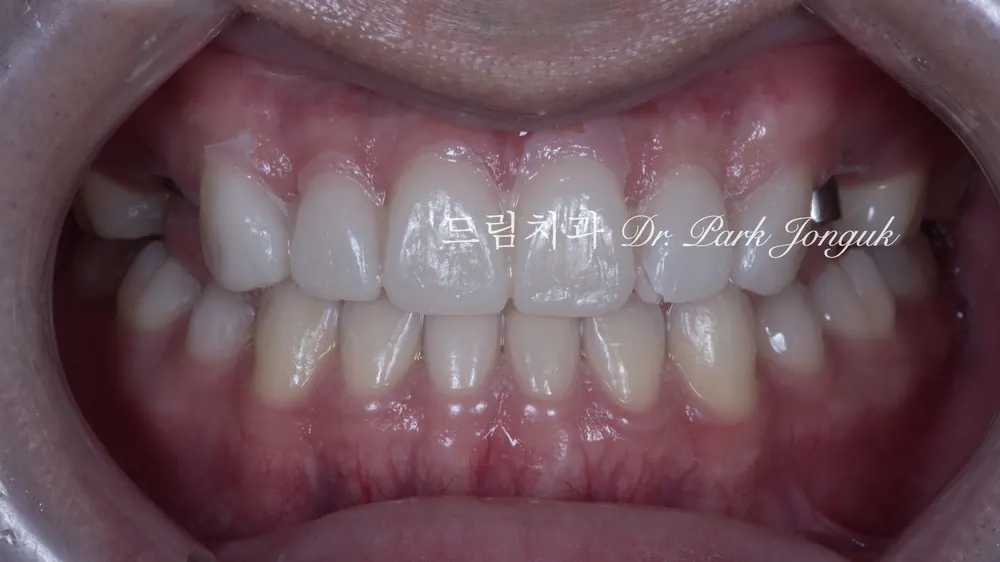
We made temporary teeth based on the wax-up.
In this state, while consulting with the patient,
we incorporated her feedback on the shape, size, and proportions.
This is an important step where the patient gets to experience it firsthand before the final treatment.
Photo 5. Try-in of the fabricated veneers
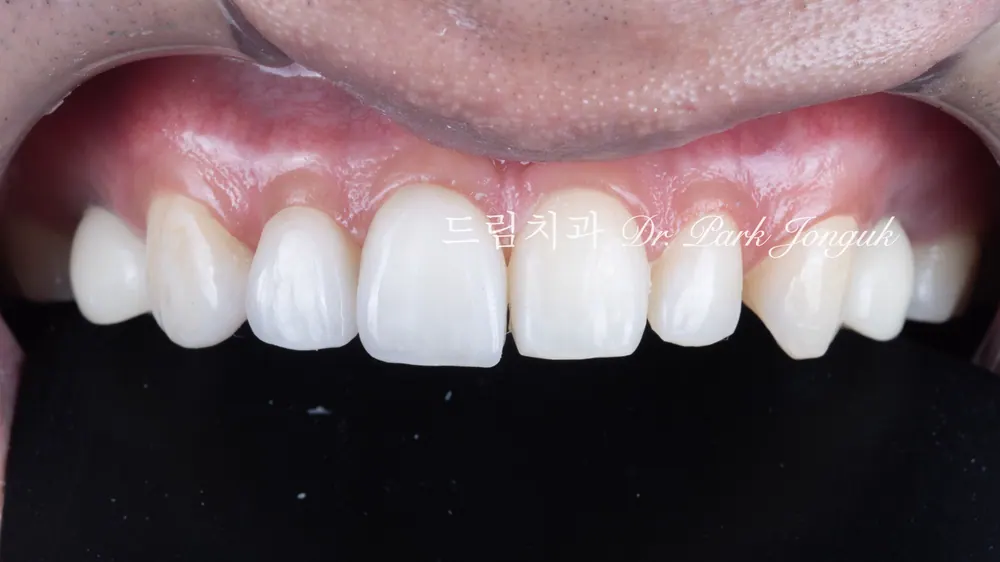
This shows the finished veneer placed on just one side.
The canine was made with a partial veneer.
To keep the front teeth from becoming any larger,
we worked to maintain as natural a proportion as possible.
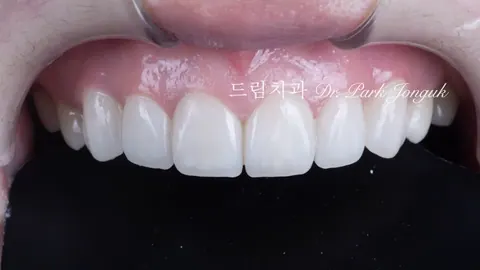
Photos 6, 7, 8. After final seating
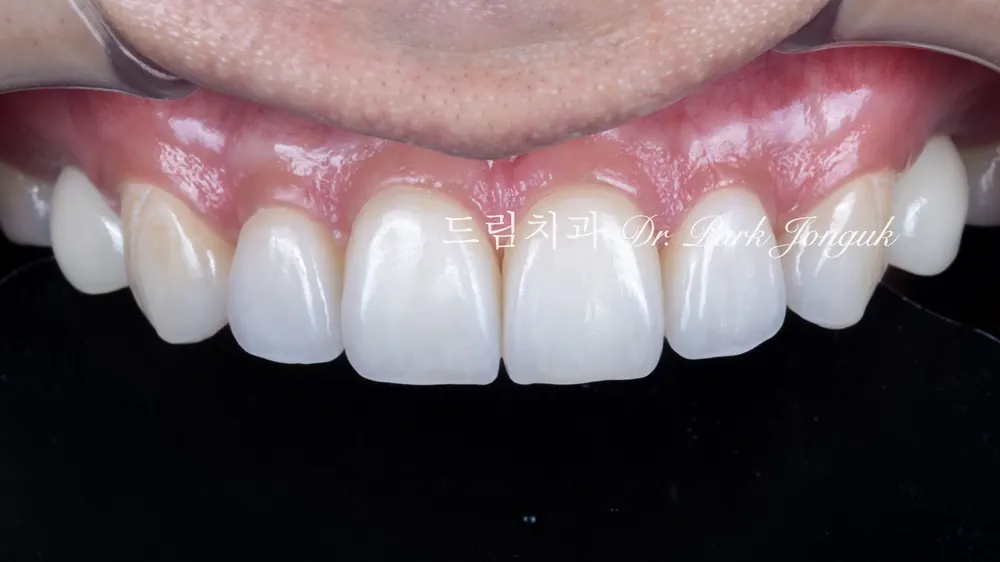
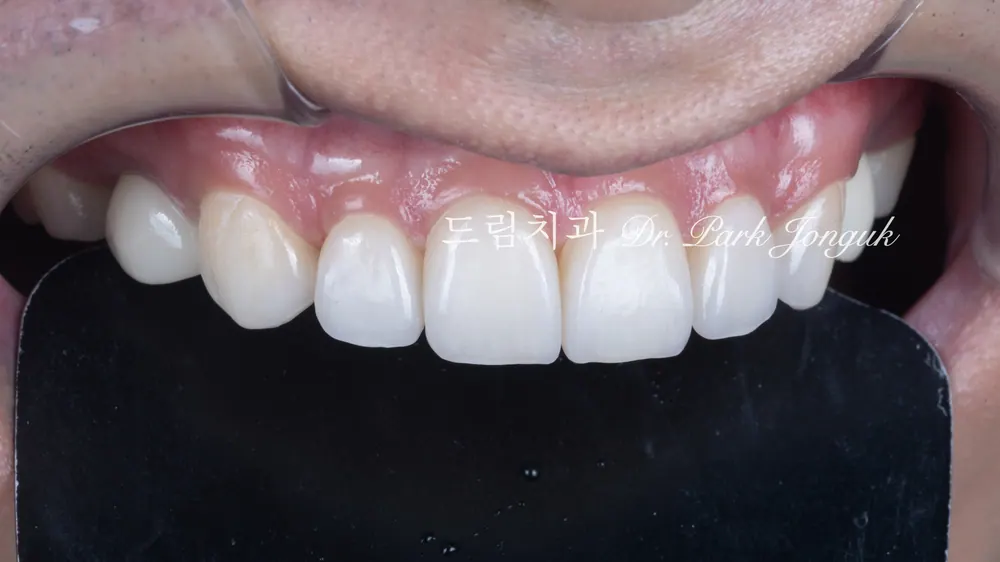
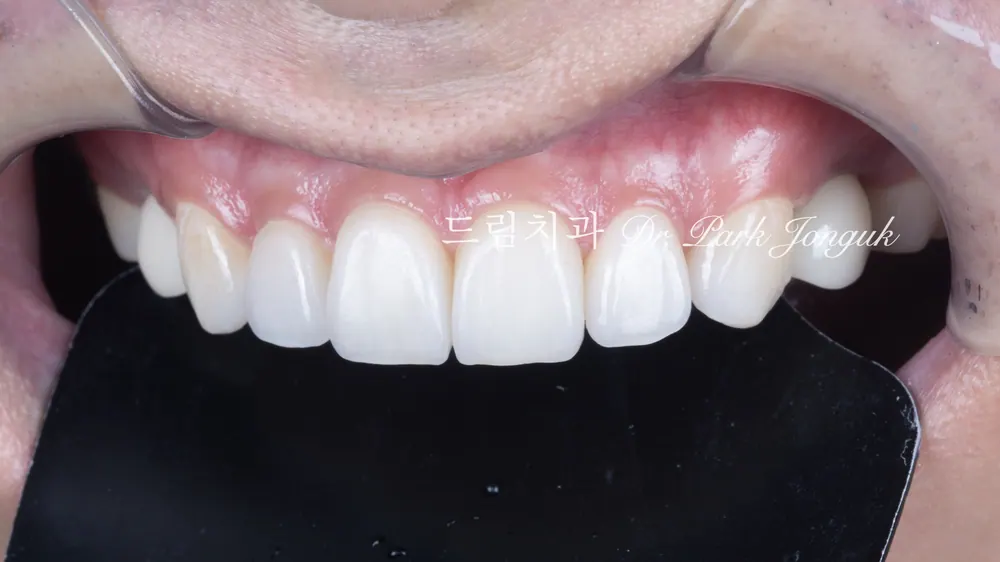
This shows all the veneers after seating.
The front teeth didn't become excessively larger,
and the dimension and translucency came through clearly.
The harmony between the teeth and gums looked natural as well.
👉 In the end, even in a case where the conditions weren't perfect,
we were able to achieve a fully natural result with no-prep veneers.
No-prep veneers are one of the treatments patients prefer most.
That's because a natural, translucent result is possible without cutting the teeth.
But it isn't possible in every case.
Misjudging the conditions can easily lead to a result that looks thick and awkward instead.
So what matters isn't simply the label "no-prep,"
but the process of accurately diagnosing the patient's condition and designing accordingly.
As in this case, even when the conditions aren't perfect,
it's entirely achievable with careful adjustment of tooth size and proportion.
Over the past 20 years, I've handled a great many no-prep veneer cases.
And I wrote Korea's first textbook to systematize veneer diagnosis.
One thing I've always emphasized through that experience
is that "the core of veneer treatment is diagnosis and experience."
If you're considering no-prep veneers,
I'd recommend choosing a clinic based not on speed of treatment or advertising copy,
but on how naturally and how long the result actually lasts.
Q&A
Q1. Can anyone get no-prep veneers?
No.
It's mainly possible when the teeth are small, the alignment is even,
or the teeth are positioned inward.
If the conditions aren't met, a minimal-prep veneer approach is needed instead.
Q2. Do no-prep veneers really cause absolutely no damage to the tooth?
Almost, yes.
Since almost no reduction is done, damage to the tooth is minimized.
But complete no-prep may not be possible in every case.
Q3. Do no-prep veneers look natural too?
Yes, they can.
Using a fabrication method that preserves translucency and dimension,
the result comes out looking natural enough to be hard to distinguish from a real tooth.
Q4. How long do no-prep veneers last?
On average, they can be used for around 10 to 20 years.
Regular checkups and proper care determine how long they last.
Q5. Can no-prep veneers be redone as well?
Yes.
Using methods like laser removal to minimize damage to the tooth,
the existing veneer can be safely replaced.
This article is a clinical note written by Dr. Park Jonguk of Dream Dental Clinic, Gangnam; the original was published on his blog. The photographs shown are real cases he treated. Results vary with each patient’s condition, and every procedure carries the possibility of individual variation and side effects.
Quick Consult
Request a Callback
Leave your number and we will call you back during clinic hours.
Request Received
We will contact you during clinic hours. For urgent matters, please call +82-2-3448-0028.