
[Veneer Redo] A Treatment Failure From 10 Years Ago? ❌ A Premium Retreatment Solution That Overcame Gum Tilt and Excessive Reduction
Hello, I'm Park Jonguk, head director of Dream Dental Clinic in Apgujeong and a board-certified specialist in conservative dentistry.
As someone who has written a veneer textbook and educates dentists,
my heart grows heavy every time I see an unfortunate redo case.
Because tooth reduction can never be undone, an accurate diagnosis and minimal invasion from the very start are absolutely essential.
Today, through the case of a patient who came to me after suffering serious problems from a procedure done about 10 years earlier,
and the veneer redo (laminate retreatment) process,
I'll show you why the outcome of a veneer depends entirely on 'who' makes it.
1. Ten Years of Trouble: Misaligned Teeth and Unnatural Color
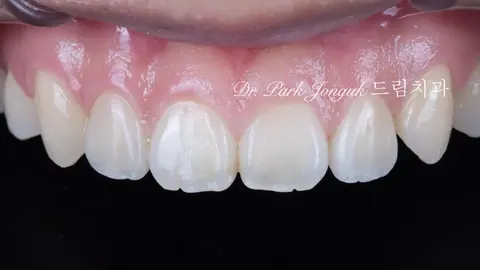
[Photos 1, 2] Pre-Treatment Appearance and Problems
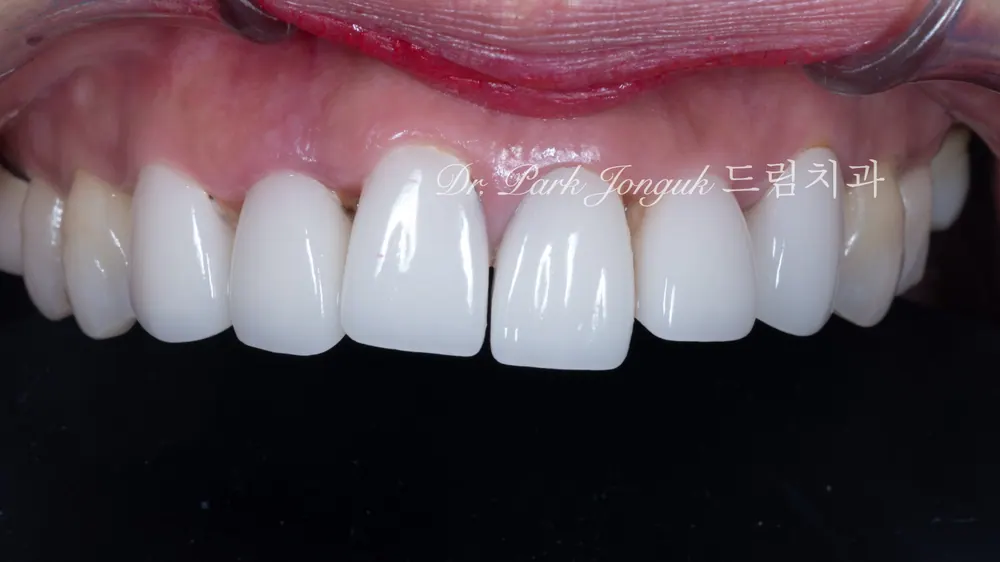
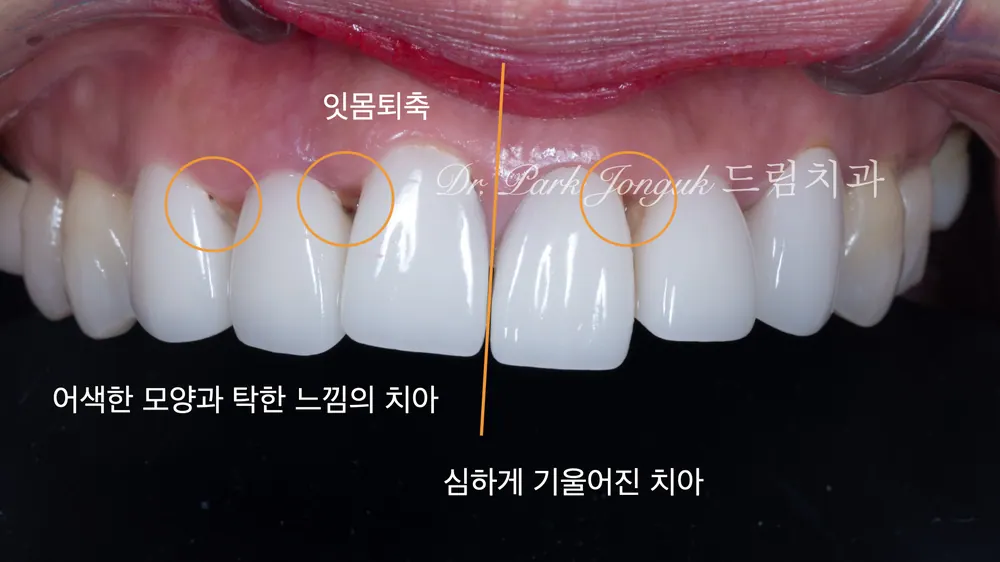
The patient had front-tooth veneers placed about 10 years earlier.
Over time, maintenance became inconsistent,
and as her overall gum condition worsened, her tooth alignment became severely misaligned.
Notable problems:
Tooth tilt (Tilted Teeth): All the teeth were severely tilted to one side, completely undermining the esthetics.
Uneven gum height: As the teeth tilted, the gum heights became mismatched as well.
Poor color and shape: The color was excessively white and opaque, and the ratio of tooth width to length was completely off.
2. Precision Diagnosis: Finding the Root of the Problem
[Photo 3] In-Depth Diagnostic Process
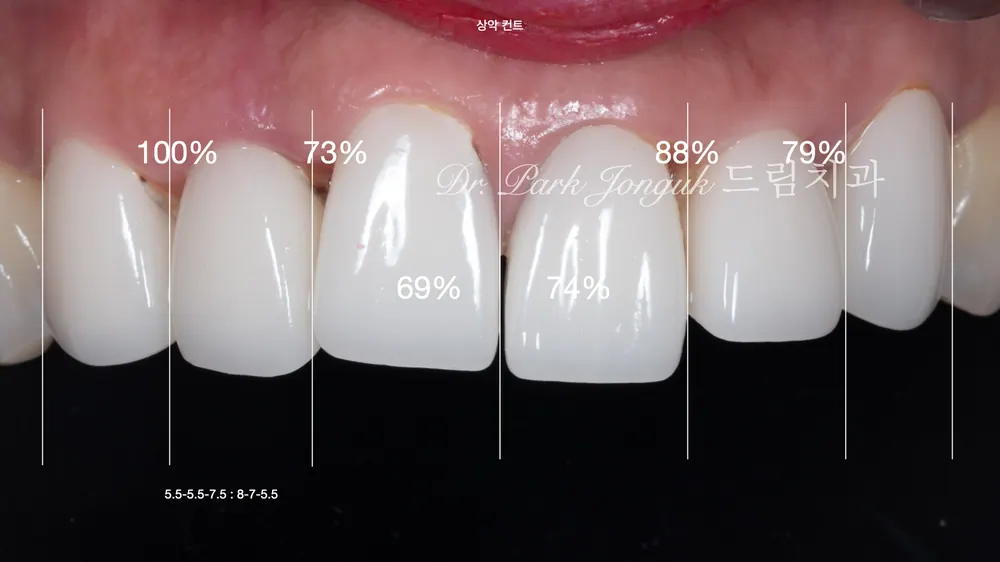
A redo begins with accurately diagnosing the existing problems.
As the director, I personally conduct a thorough analysis of the patient's facial proportions, gumline, and tooth symmetry.
Diagnostic findings:
The difference in gingival level was far too large.
The width of the central incisors was excessively narrow, creating a serious proportional error that made the adjacent lateral incisors look larger.
The goal of this redo was to resolve these problems without any further tooth reduction.
[Photos 4, 5] Frontal and Lateral Analysis
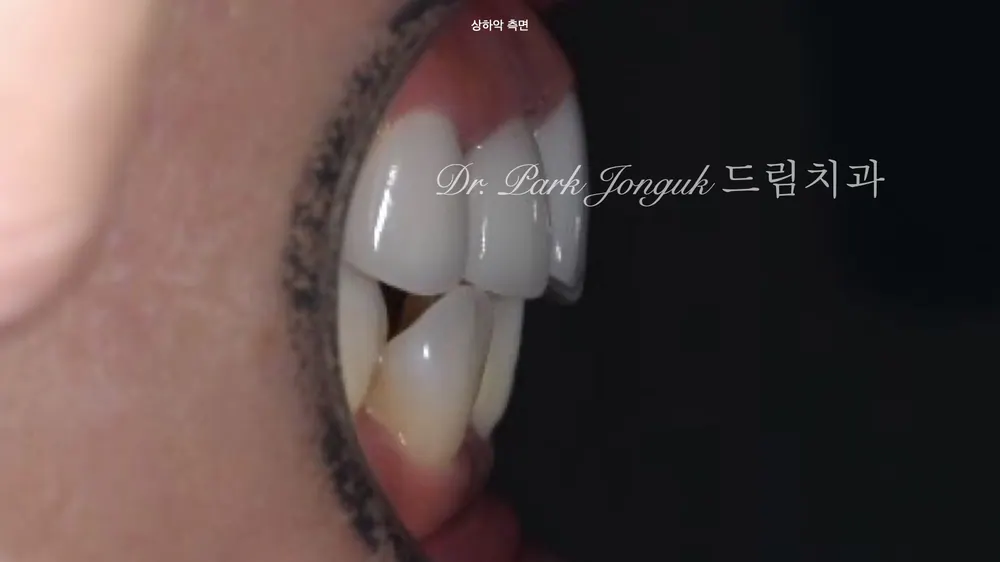
![[Veneer Redo] A Treatment Failure From 10 Years Ago? ❌ A Premium Retreatment Solution That Overcame Gum Tilt and Excessive Reduction — photo 5](/column-media/224093900518/05.webp)
The patient's teeth didn't protrude severely,
but the existing veneer restorations had already completely destroyed the shape and symmetry of the teeth as a whole.
3. Predicting the Result: Precision Wax-Up Diagnosis
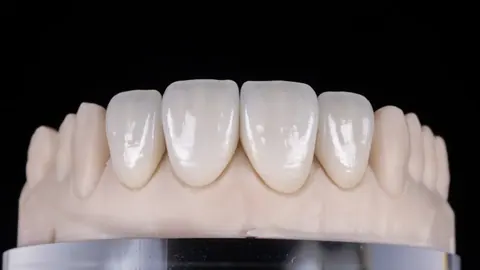
[Photo 6] Predicting the Finished Look Through the Precision Wax-Up Diagnosis
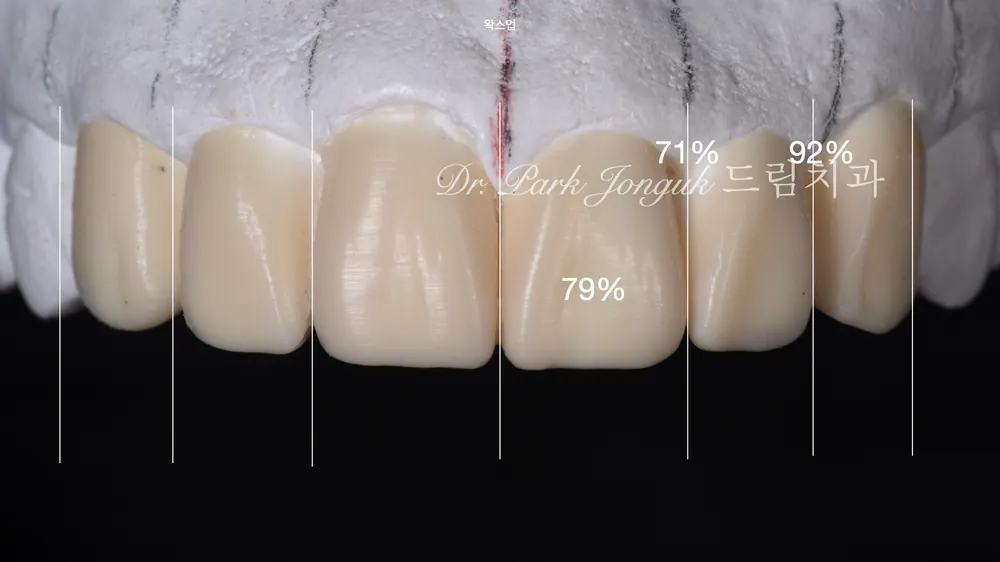
Before treatment, I always use a precision wax-up diagnosis to show the patient
the final result and finalize the design I'll be working from.
This process is what I emphasize most in the textbook I wrote,
and it's the core design process that restores tooth size proportions, symmetry between teeth, and a design that accounts for gum level, back to normal proportions.
4. Warning: The Shocking Scene of Excessive Reduction
[Photo 7] Tooth Condition After Removing the Veneer/Crown
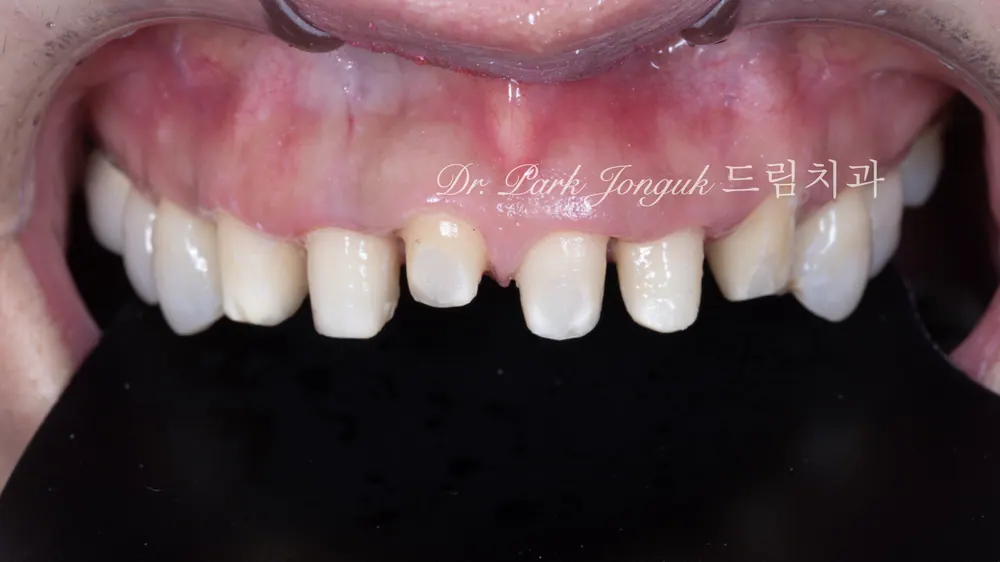
This is what the teeth looked like after removing the existing veneers and a crown (likely on a lateral incisor).
A treatment like this should genuinely never be done to a patient.
The patient's teeth had been so severely reduced that the dentin was exposed — a serious condition.
It was an irresponsible treatment that had ground down the entire tooth under the name of a "veneer."
We had to proceed with the redo while protecting what little tooth structure remained as much as possible.
5. Overcoming It: The Magic of Meticulous Handmade Design
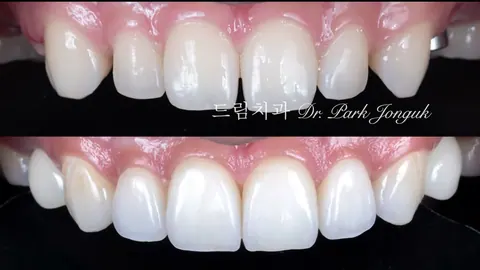
[Photos 8, 9, 10] Final Appearance After Treatment
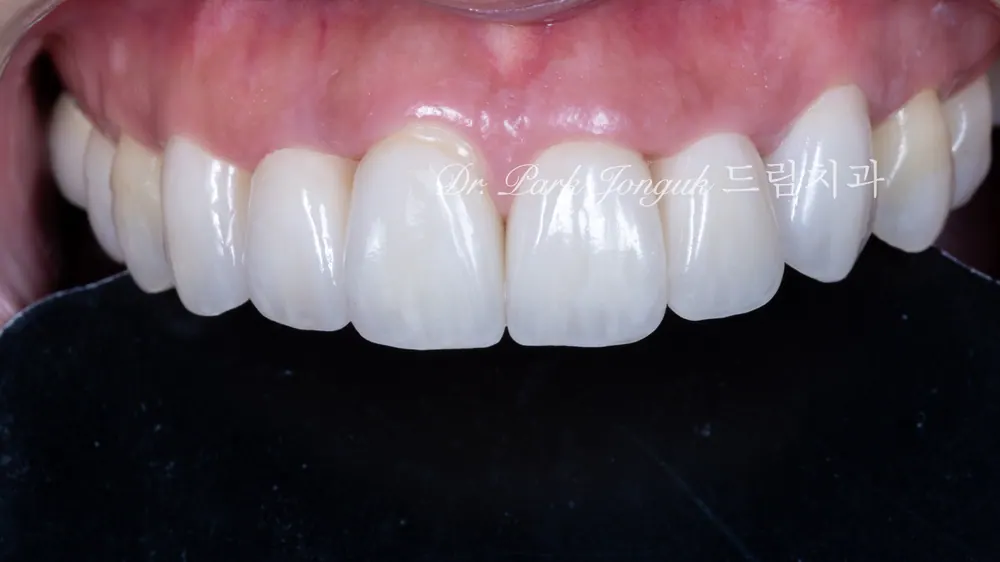
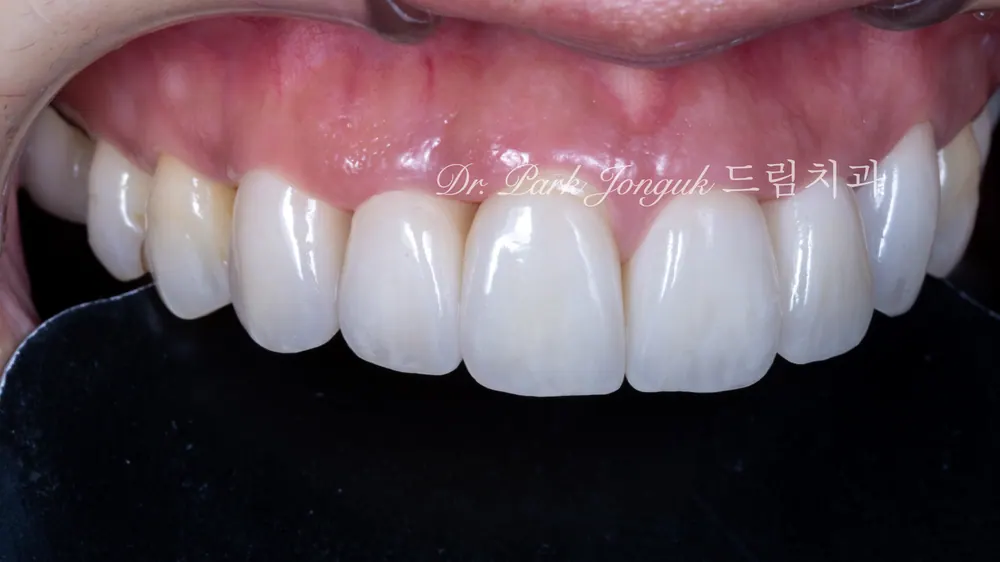
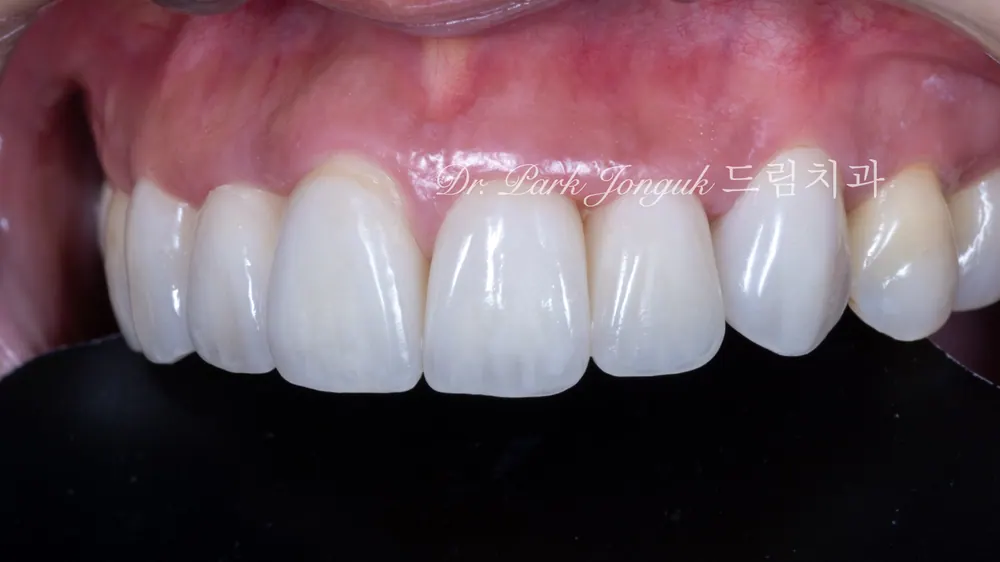
The result was a major esthetic success.
The color, three-dimensionality, and translucency of the teeth were so natural that both the patient and our team were highly satisfied with this case.
The core technique in this case (the fundamentals of the design):
Correcting the tilted alignment: Rather than physically straightening the teeth themselves, we perfectly corrected the tilt visually through the shape and arrangement design of the veneers.
Overcoming the difference in gum height (Root Mimicry): We overcame the severely uneven gum recession through the design of the teeth themselves. By applying a meticulous design that recreates the shape of the tooth root on the surface of the veneer, we made the tooth in the receded gum area appear naturally longer.
Only this kind of meticulous handmade design and layering
can overcome a failure from 10 years ago and excessive reduction to achieve 'true' naturalness.
Conclusion
A veneer redo isn't simply a process of adding material on top — it's a highly demanding restorative treatment that corrects flawed design and excessive reduction from around 10 years ago.
To avoid putting a patient's precious teeth at risk,
the most important thing is to choose a board-certified specialist in conservative dentistry who has precise diagnostic skill and refined technique from the very start.
💡 Top 5 Veneer Redo Q&A
Q1. My gums got worse after getting veneers — can I still get a redo?
A. The cause of worsening gums could be a poorly placed veneer margin,
or, as in this case, it could be due to overall neglect in maintenance.
After an accurate diagnosis, while restoring gum health,
the veneer margin can be precisely redesigned so it doesn't irritate the gums, and the procedure can proceed.
Q2. Do I need to have my teeth reduced again for a redo?
A. Removing the existing veneer is an essential step.
But any additional reduction is kept to the absolute minimum necessary, with protecting the tooth as the top priority.
If the tooth has already been over-reduced, we do everything possible to avoid further reduction.
Q3. Can differences in gum height also be corrected with veneers?
A. Yes, it's possible. Gum contouring can be done alongside it as well,
but as in this case, by precisely designing the shape and proportions of the teeth — in particular, reflecting the shape of the tooth root in the design —
we can visually reduce the apparent difference in gum height.
Q4. Won't the redo end up looking unnaturally white?
A. Dream Dental Clinic doesn't use machine-milled, single-color veneers.
Instead, we fabricate them using the build-up method, layering countless shades of ceramic.
Because this produces a translucency and depth of color just like natural teeth, there's no need to worry about ending up with unnatural "Lego teeth."
Q5. What's the most common cause of veneer failure?
A. The biggest causes are 'excessive tooth reduction' and 'inaccurate diagnosis.'
Reckless procedures that don't take the patient's face and tooth condition into account lead to long-term failure.
![[Veneer Redo] A Treatment Failure From 10 Years Ago? ❌ A Premium Retreatment Solution That Overcame Gum Tilt and Excessive Reduction — photo 11](/column-media/224093900518/11.webp)
This article is a clinical note written by Dr. Park Jonguk of Dream Dental Clinic, Gangnam; the original was published on his blog. The photographs shown are real cases he treated. Results vary with each patient’s condition, and every procedure carries the possibility of individual variation and side effects.
Quick Consult
Request a Callback
Leave your number and we will call you back during clinic hours.
Request Received
We will contact you during clinic hours. For urgent matters, please call +82-2-3448-0028.