
Redoing Veneers After Inflammation Caused by Excessive Tooth Reduction
These days, quite a lot of patients come in for veneer retreatment.
The reasons for retreatment are...
1. Veneer detachment
2. Veneer fracture
3. Esthetic dissatisfaction
4. Persistent inflammation
these are roughly the causes.
It would be wonderful if veneers could last a lifetime, but...
of course, they do have a lifespan.
In general, the average lifespan of a "prosthesis" is considered to be about 5 years.
For veneers, there's quite a bit of variation between men and women, but most patients use them for about 7 to 10 years.
But this is the trap of averages — if someone who used it for 1 year and someone who used it for 13 years average out to 7 years,
you can see just how enormous the individual variation actually is.
It varies greatly from person to person, depending on eating habits, chewing patterns, bite, and more.
That said...
inflammation that develops after veneer treatment is a somewhat separate issue.
Patients who keep developing inflammation after treatment can be divided into two groups.
1. Poor maintenance
2. Faulty treatment
Inflammation caused by poor maintenance usually improves with scaling and proper brushing,
but if the treatment itself was done incorrectly, the inflammation will only clear up once the veneer is redone.
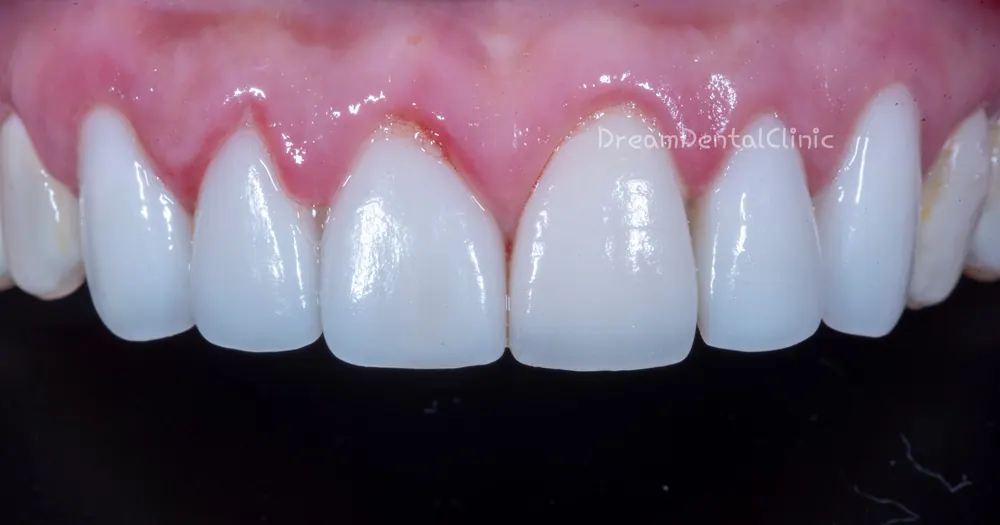
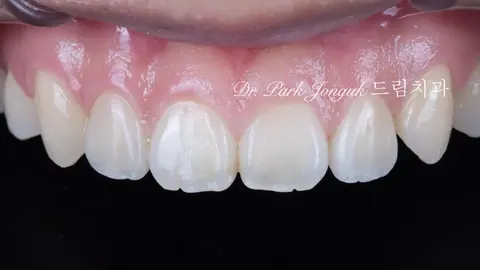
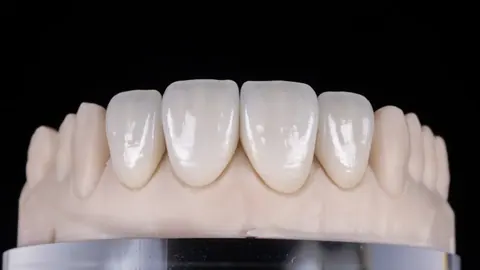
This is a case where the patient came in with persistent inflammation about six months after getting veneers.
In cases like this, no matter how well the patient brushes or maintains the teeth, the inflammation won't go away.
The causes are:
1. Excessive tooth reduction
2. Improper veneer design
3. Ceramic irritating the gums
these can be identified as the main causes.
In a case where inflammation has already developed like this, retreatment is not easy.
Rather than assuming the inflammation will simply resolve, treatment has to be carried out while continuously monitoring whether the inflammation actually resolves, and finished accordingly.
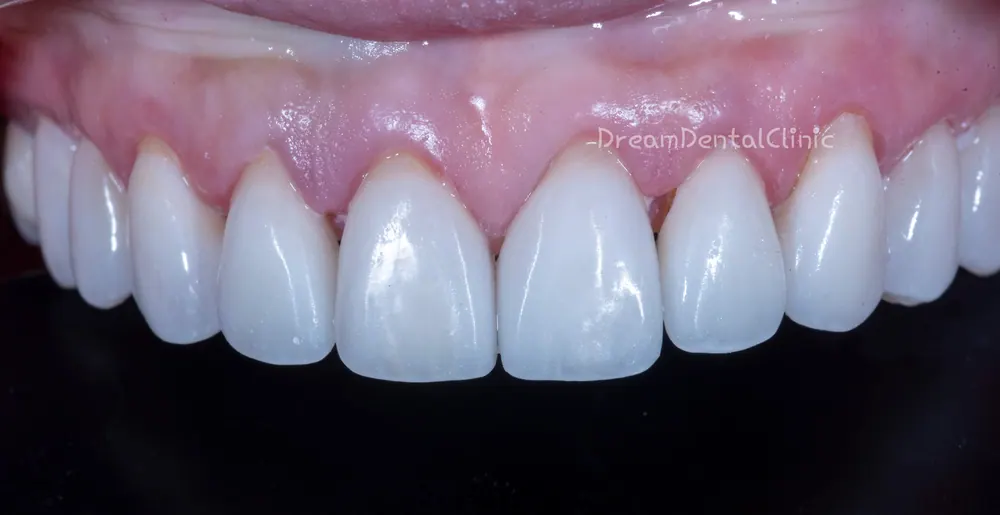
First, we proceeded with veneer treatment in order to watch and see whether the inflammation would resolve.
It would be great if finishing it this way made the inflammation disappear and the gums recover, but...
not everything goes as expected.
The more severe the inflammation, the longer the healing period takes,
and in many cases the gums don't recover to their original shape.
We waited three months in this state.
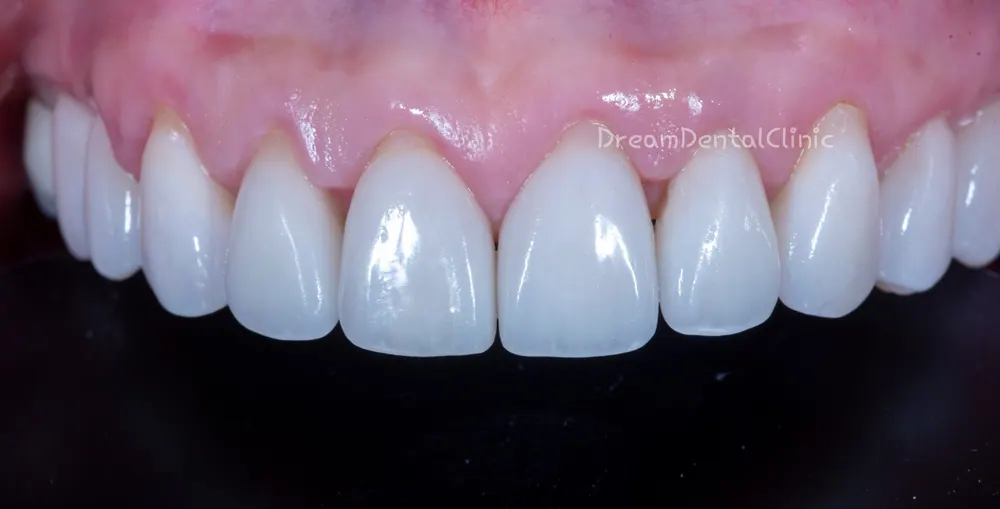
The inflammation cleared up completely, but...
unfortunately, the gum tissue didn't fully fill back in.
When inflammation between teeth becomes severe, the gum in that area recedes,
and once the gum between teeth has receded, it rarely fills back in well.
After waiting for the inflammation to disappear completely like this,
we proceeded with retreatment once again.
If this were a crown, we could simply bond it temporarily and then adjust it to match the gum shape,
but since veneers can't be bonded temporarily,
when the gum doesn't fill back in, there's no choice but to redo the treatment.
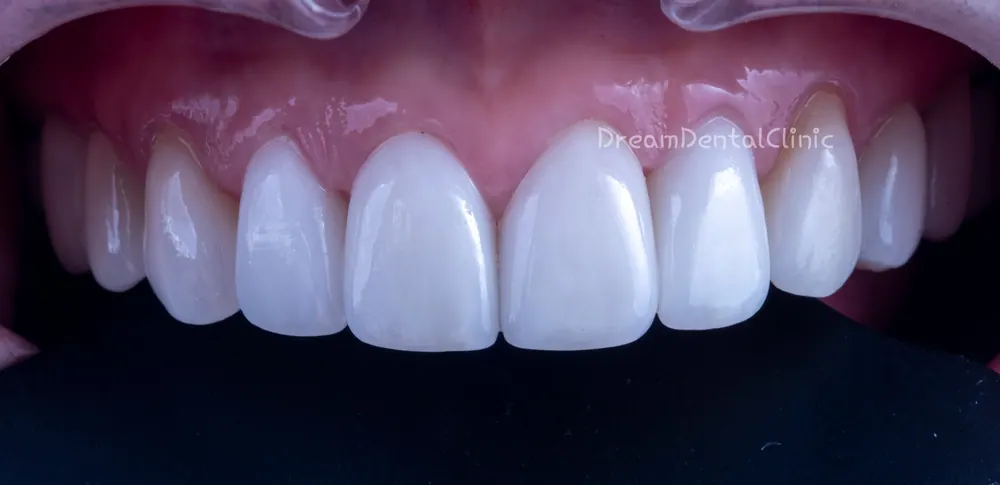
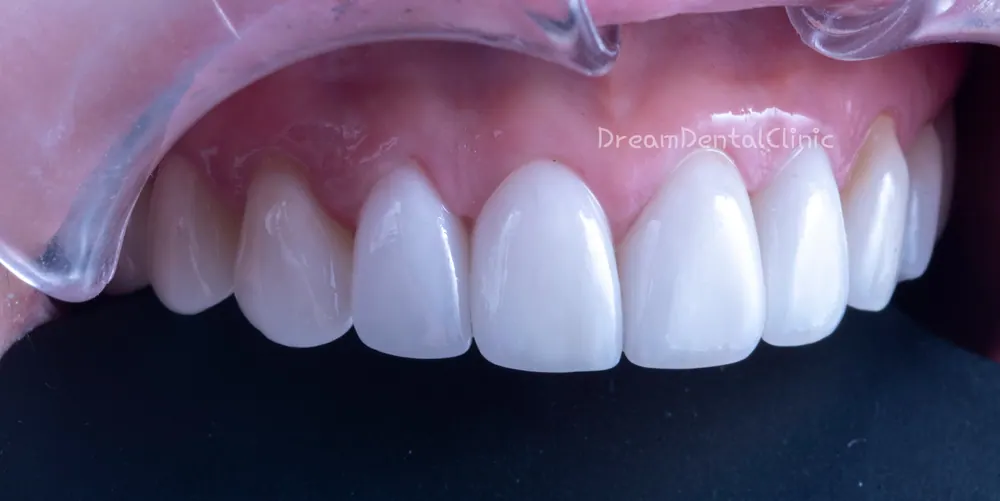
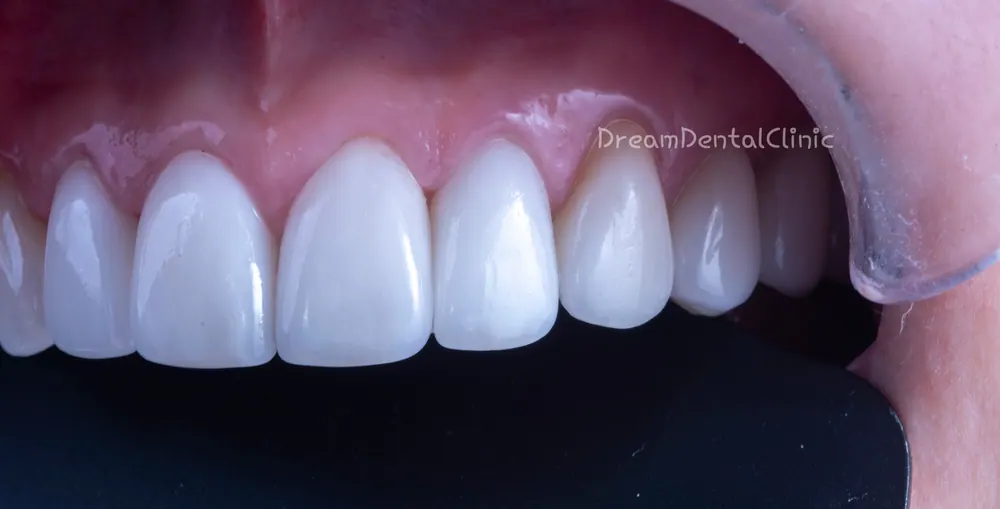
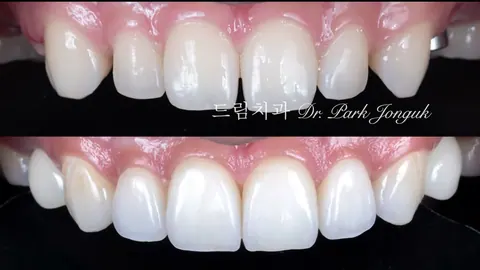
In this way, the treatment was completed with healthy gums.
For both crowns and veneers where inflammation developed due to excessive tooth reduction,
the gum inflammation must resolve and the gums must go through a readaptation process, which takes a considerable amount of time.
During this process, the ceramic must be designed correctly so that the inflammation doesn't return.
That's why the importance of getting the first treatment right can never be emphasized enough.
Veneer treatment and design that also take gum health into account are extremely important.
This article is a clinical note written by Dr. Park Jonguk of Dream Dental Clinic, Gangnam; the original was published on his blog. The photographs shown are real cases he treated. Results vary with each patient’s condition, and every procedure carries the possibility of individual variation and side effects.
Quick Consult
Request a Callback
Leave your number and we will call you back during clinic hours.
Request Received
We will contact you during clinic hours. For urgent matters, please call +82-2-3448-0028.