
Veneer Lifespan: What Separates People Whose Veneers Last 10 Years From People Who Redo Them After 5
5 Real Deciding Factors From 20 Years of Clinical Practice
One of the questions I get asked most often by patients coming in for a veneer consultation
is, "How long do veneers last?"
And the second question is almost always, "Won't they break?"
After 20 years of clinical practice,
I've found that "chipping or falling off" — what patients actually worry about — ranks only about fifth among the factors that determine veneer lifespan.
What really determines the lifespan of a veneer lies elsewhere.
Today I'll go through those 5 factors in order.
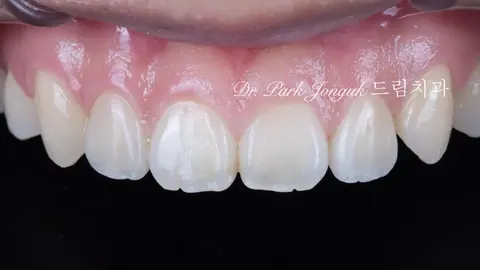
![[Photo 1: Finished result after veneer treatment]](/column-media/224266357123/01.webp)
1. A Common Misconception — "What if it chips or falls off?"
The biggest reason patients hesitate about veneers is usually "What if it breaks?" or "What if it falls off?"
Of course, this does happen sometimes. But in clinical practice, it's almost always one of the following.
Severe teeth grinding. A habit of chewing only on one side. A habit of biting on nails, pencils, or similar objects. A habit of cutting hard food with the front teeth.
For typical patients without these specific factors,
the veneers usually last 10 years or more without major issues.
In other words, chipping or detachment isn't really about the lifespan of the veneer itself — it's closer to a "preventable accident."
For patients who grind their teeth, simply wearing a nightguard resolves this issue in most cases.
So what actually determines the lifespan of a veneer?
2. The 5 Real Factors That Determine Veneer Lifespan
① Periodontal disease — the most important factor
A veneer is a procedure attached to the surface of a tooth,
but what actually supports the tooth is the gum and the underlying bone.
As periodontal disease progresses, the gums recede and the supporting bone resorbs.
As a result, the tooth itself can become loose or shift position.
When this happens, no matter how precisely the veneer was made, it will eventually need to be redone.
![[Photo 2: A case with healthy periodontal tissue vs. a case with advanced periodontal disease]](/column-media/224266357123/02.webp)
If you want to extend the lifespan of your veneers, the very first thing to take care of is gum health.
How to care for it: Scaling once every 6 months to a year, daily flossing, and regular checkups.
② Changes in tooth alignment — natural teeth keep moving throughout life
This is something most people don't realize: natural teeth shift very slightly throughout your entire life.
This is especially true for patients who haven't had their wisdom teeth removed, or who haven't kept up with their retainer after orthodontic treatment.
Over time, the front teeth can crowd inward, or the alignment can shift.
When natural teeth move, the line between them and the firmly bonded veneer next to them starts to look off.
This is why a smile line that looked perfect at first can look subtly crooked 5 or 10 years later.
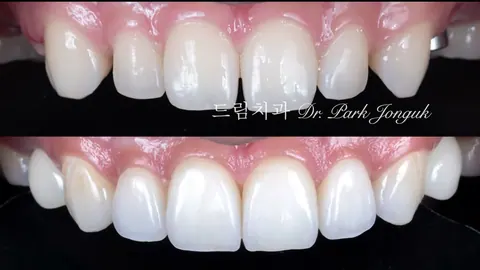
![[Photo 3: A case redone due to a change in tooth alignment]](/column-media/224266357123/03.webp)
How to care for it: Have your wisdom teeth evaluated, consistently wear your retainer after orthodontic treatment, and keep regular photo records to compare over time.
③ Age-related changes in gum height
As we age, the gums naturally and gradually recede.
Medically, this is called "gingival recession."
A veneer is finished close to the gumline,
so when the gums recede, the border (margin) between the veneer and the natural tooth becomes exposed.
At that point, since the natural tooth is yellowish while the veneer is white, the color difference gradually becomes visible.
This isn't a flaw in the veneer — it's simply a result of the gums changing.
![[Photo 4: A case where the root of a crowned front tooth has begun to show near the gumline]](/column-media/224266357123/04.webp)
How to care for it: Avoid brushing with excessive pressure, use a soft-bristled brush, and catch it early through regular checkups.
④ Staining at the margin — cigarettes, coffee, wine
The veneer surface itself barely stains at all.
But the border (margin) where the veneer meets the natural tooth can develop faint staining over time.
This becomes especially noticeable in patients who frequently consume strongly pigmented items like cigarettes, coffee, wine, or curry.
![[Photo 5: A case of margin staining]](/column-media/224266357123/05.webp)
Even if the margin line darkens by only about 1mm, the border between the veneer and the natural tooth can stand out noticeably up close.
How to care for it: Quit smoking, brush or rinse with water soon after coffee or wine, and get a professional cleaning once every 6 months to a year.
⑤ Esthetic reasons — when your own standards change
This is a surprisingly common case.
Patients were satisfied with the initial treatment, but over time,
trends changed,
or their own esthetic standards changed,
or after having treatment elsewhere in the mouth, they wanted to match the color or length,
and quite a few patients consider a redo for reasons like these.
In this case, it's not that the veneer's "functional lifespan" has ended — it's that its "esthetic lifespan" has.
![[Photo 6: A patient who came back for a redo because the veneers no longer looked appealing to her]](/column-media/224266357123/06.webp)
How to care for it: When getting the initial treatment, avoid chasing trends too closely, and choose a natural design suited to your own face shape and smile line.
3. Summary: 5 Ways to Extend the Lifespan of Your Veneers
The answer emerges when you work backward through the 5 factors above.
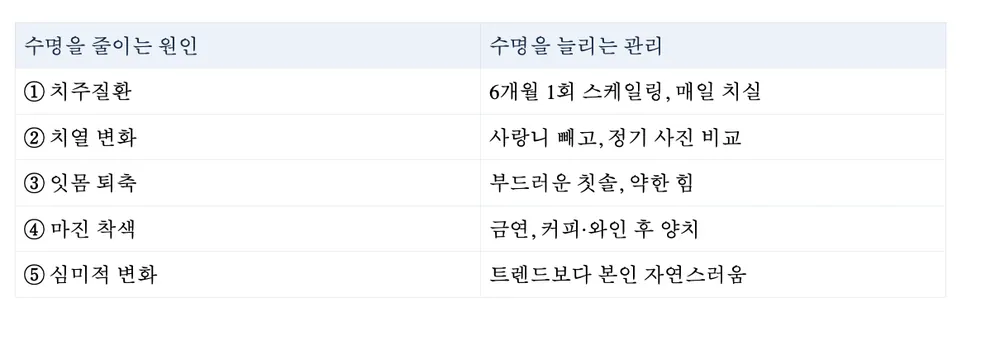
A veneer isn't a "do it once and you're done" procedure — it's one that lasts exactly as long as you take care of it.
4. Frequently Asked Questions (FAQ)
Q1. What's the average lifespan of a veneer?
Generally, it's known to be 10 years or more, and depending on care, many patients use them for 15 to 20 years. That said, individual variation is significant based on the 5 factors described above.
Q2. I grind my teeth — can I still get veneers?
Yes, but I recommend using a nightguard. Getting veneers without a nightguard significantly shortens their lifespan. Be sure to mention whether you grind your teeth during your consultation.
Q3. Can I smoke or drink coffee after the procedure?
The veneer surface itself is barely affected, but staining at the margin becomes more noticeable over time. It's best to cut back where possible, and to brush or rinse with water right after drinking.
Q4. If my gums recede, will I need new veneers?
It depends on the degree of gum recession. If it's mild, it can simply be left alone; if it's severe, margin repair or refabrication is considered. Getting regular checkups lets us make adjustments before it becomes a major problem.
Q5. How often do veneers need to be refabricated?
It varies from case to case. Many patients who manage the 5 factors above well never need refabrication at all, while in environments where care is difficult, some patients need adjustments once every 5 to 7 years.
5. In Closing — Veneer Lifespan Comes Down to "Care"
The most common question about veneer lifespan is, "Will it break? Will it fall off?"
But from 20 years of clinical experience, what actually determines lifespan is
gum health, changes in natural teeth, gum recession, everyday staining, and your own esthetic standards —
these five things.
With veneers, the outcome is decided less by the procedure itself and more by "how you take care of them afterward."
If you make a careful decision from the start and go in with the mindset of caring for them for a lifetime, you can absolutely make them last a long time.
Related Reading
🌿 For more clinical cases and consultation guides,
visit the Dream Dental Clinic website
This article is a clinical note written by Dr. Park Jonguk of Dream Dental Clinic, Gangnam; the original was published on his blog. The photographs shown are real cases he treated. Results vary with each patient’s condition, and every procedure carries the possibility of individual variation and side effects.
Quick Consult
Request a Callback
Leave your number and we will call you back during clinic hours.
Request Received
We will contact you during clinic hours. For urgent matters, please call +82-2-3448-0028.