
Wedding Veneer Timing Guide | A Month-by-Month Checklist from a Doctor with 20 Years of Experience, From 6 Months to 2 Weeks Before Your Wedding
Hello, I'm Park Jonguk, director of Dream Dental Clinic in Apgujeong.
Over 20 years of countless wedding veneer cases, I've heard the same question again and again.
"My wedding is only a month away, can I still get it done?"
"Shouldn't my teeth be finished in time for the dress fitting?"
"Will the color have settled before the wedding photo shoot?"
"Should the groom get veneers too?"
The timing for veneers for a bride- or groom-to-be is completely different from a standard veneer consultation.
Because this is a once-in-a-lifetime moment being captured for the record,
it isn't simply a matter of "when can I have it done" —
it has to be planned by working backward from the entire schedule of
"studio photos, dress fitting, the ceremony, and the honeymoon."
Today, from six months before the wedding to two weeks before the ceremony,
I'll walk you through the wedding veneer preparation timeline and the checkpoints for each stage, counted back from the big day.
If you read to the end, the ideal treatment timing for your own wedding schedule,
and exactly what to discuss with your dentist, will become clear.
Why Wedding Veneers Are Different from Everyday Veneers
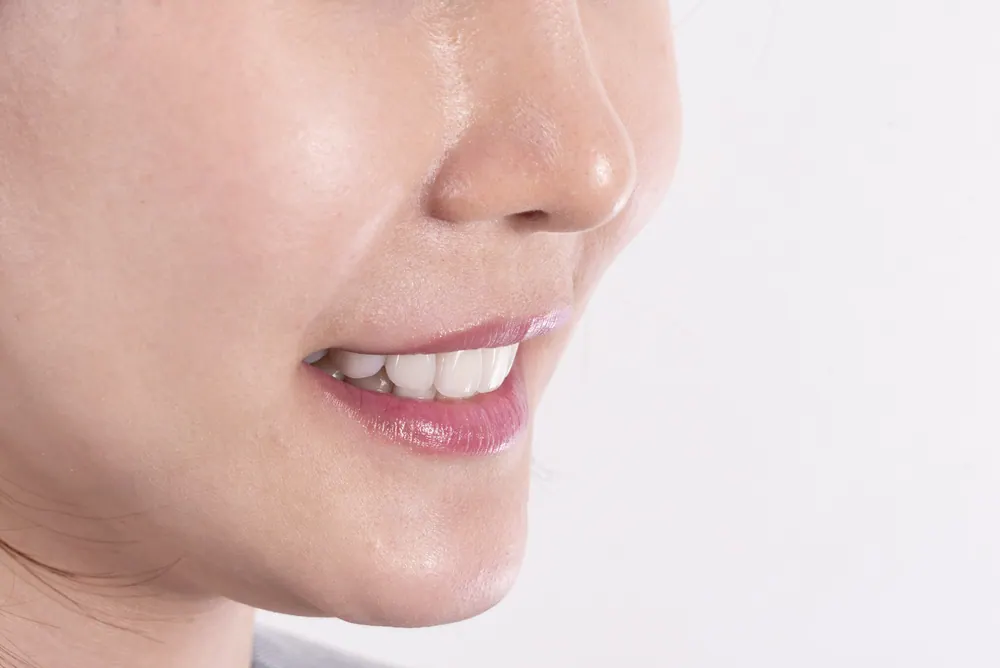
Everyday veneers are designed around "how I usually smile."
Wedding veneers, however, need to account for three additional special conditions.
Reflection and translucency under strong studio and venue lighting
Harmony with bridal makeup and dress colors that are typically bolder than usual
Tooth proportions as they appear in photo-zone shots taken from high and low angles
Venue lighting in particular is far brighter and more directional than ordinary indoor lighting,
so veneers that look "natural" in everyday settings can appear glaring or awkward at the venue.
That's why wedding veneers have to satisfy two goals at once: "teeth you'll use for a lifetime" and "your best moment on the wedding day."
After 20 years of designing wedding veneers for countless brides- and grooms-to-be, the principle I've settled on is simple.
The goal isn't exaggerated teeth built for a single day of the wedding —
it's teeth that look beautiful in the wedding photos and still look natural in a family photo ten years later.
1. Six Months Before the Wedding — Time to Diagnose and Decide
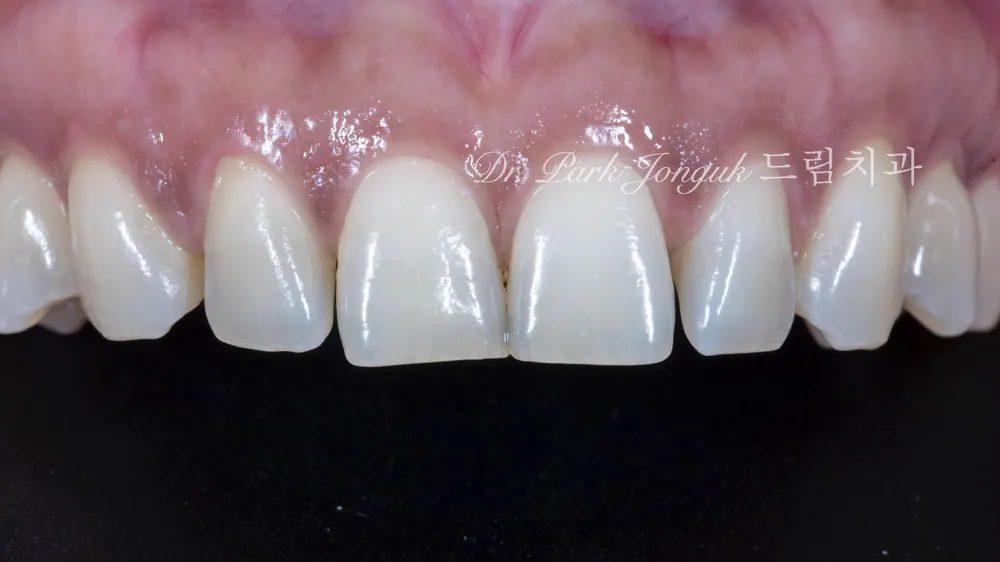
Six months before the wedding is the period with the most breathing room and the widest range of options.
In practice, it's also the consultation timing with the highest success rate.
Treatments Possible at This Stage
Cases requiring partial orthodontics can be comfortably accommodated (4-5 months of orthodontics plus veneers)
If discoloration is severe, whitening followed by veneer design
If the gumline needs adjustment, gum contouring followed by a 2-3 month healing period
Securing the full schedule for combined orthodontic-and-veneer treatment
Time to consult at two or three clinics and decide carefully
What to Confirm at This Stage
Whether orthodontic treatment needs to come first given your current tooth condition
Whether gum, periodontal, or whitening treatment needs to precede the veneers
A full schedule worked out backward from your planned studio shoot date
Getting the quote and treatment plan in writing
Brides-to-be who consult six months out consistently report the same thing —
"At first it felt too early, but in the end I was glad I had the breathing room to go through it properly."
This is especially true when partial orthodontics is needed —
if you miss the six-month mark, you may not be able to finish orthodontics before the ceremony, so please don't let this window pass.
2. Three Months Before the Wedding — The Ideal Time for the Procedure
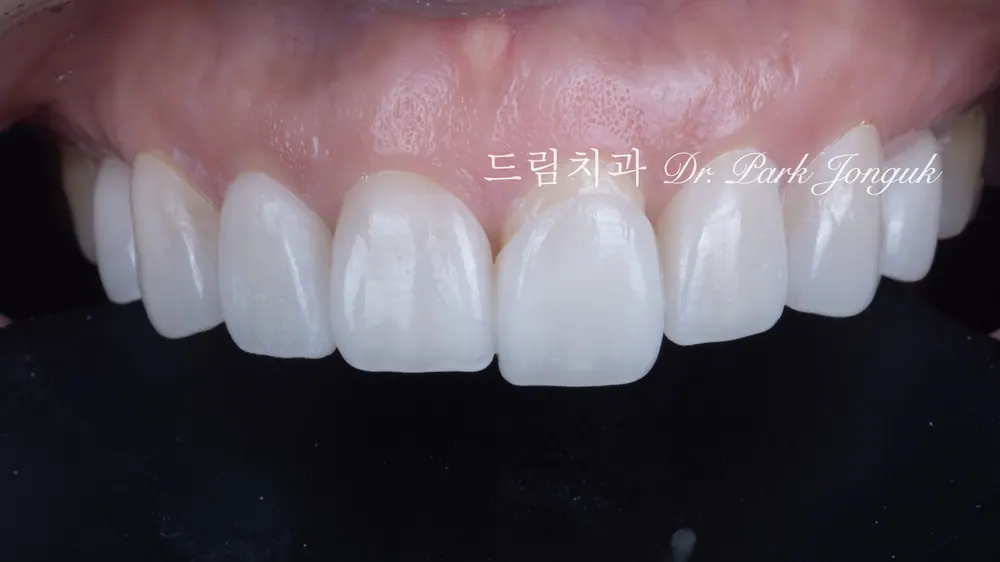
Three months before the wedding is the most ideal timing for the wedding veneer procedure.
Even accounting for fabrication time, adaptation time, and the color-settling period, your teeth can still be complete before the ceremony and the studio shoot.
Three-Month Timeline
Week 1 of treatment: diagnosis, design, prep, temporary veneers
Weeks 2-3 of treatment: lab fabrication and shade matching
Week 4 of treatment: final bonding and bite adjustment
Weeks 5-8: mouth adaptation and color-settling period
Weeks 9-12: ready for the studio shoot and dress fitting
At this stage, anywhere from 2 to 10 veneers can be done reliably.
Even if minor adjustments are needed after bonding, there's still enough time before the ceremony to finish with a high level of completeness.
Brides-to-be who had the procedure three months out consistently tell us they could smile naturally, as if the teeth were their own, at the studio shoot.
There may be a slight sense of a foreign object right after bonding, but it fully settles after 4-6 weeks.
3. One Month Before the Wedding — The Last Line for Urgent Cases
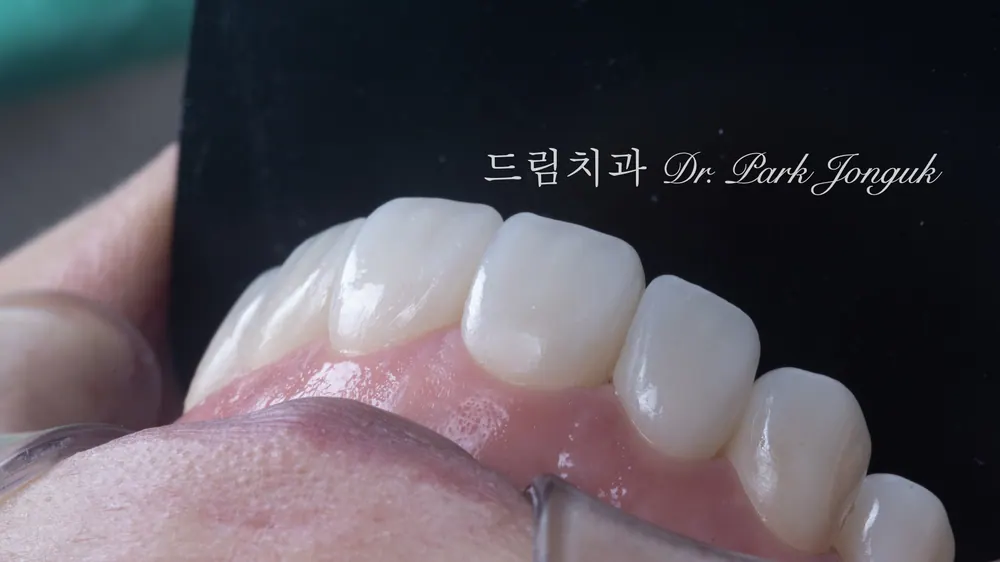
Even with only a month left before the wedding, veneers aren't impossible — but a few conditions apply.
What's Possible Within One Month
A small number of veneers, roughly 2-8 front teeth
No-prep or minimal-prep cases
Cases where the color or shape change isn't dramatic
Healthy teeth with no gum or periodontal issues
Cases That Are Difficult Within One Month
Cases where orthodontics needs to come first
Cases that require gum contouring
Large-scale re-treatment (removing existing veneers and redoing them)
If the studio shoot is already done and you simply want "finished teeth at least for the ceremony," that request is entirely doable even a month out.
In practice, many patients have had a small number of front-tooth veneers done four weeks before the ceremony and finished with excellent results.
That said, the schedule is very tight, so please don't put off choosing a clinic and booking a consultation.
4. Two Weeks Before the Wedding — Time for Emergency Response
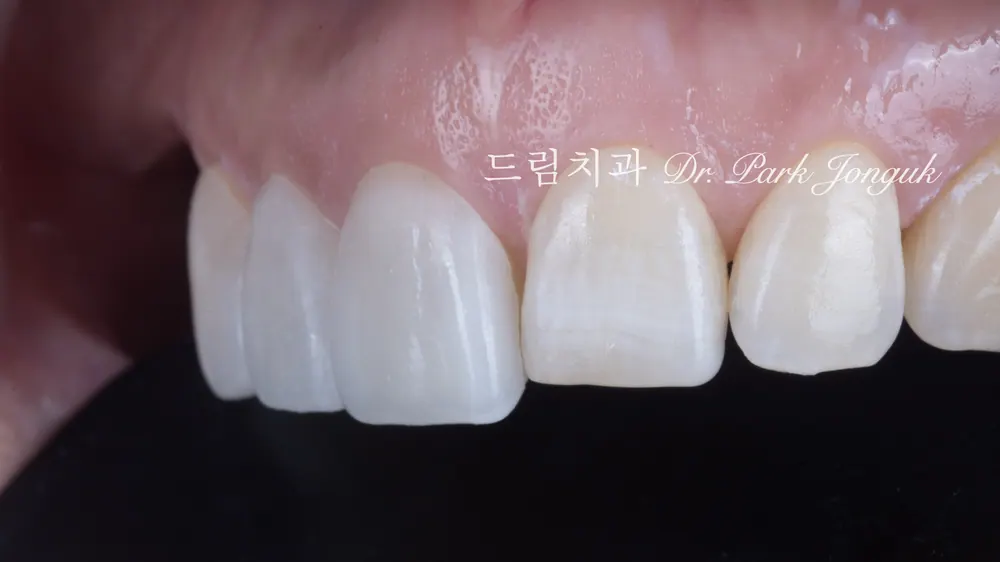
From two weeks before the ceremony, we no longer recommend starting new veneer treatment.
There simply isn't enough time left for fabrication and adaptation.
At this stage, the focus shifts to finishing already-completed teeth in their best possible state.
What's Possible Two Weeks Out
Checking and polishing existing veneers
Removing stains from natural teeth with scaling
Buffing out minor color imperfections
Anti-inflammatory gum treatment
Situations That Need an Emergency Response
"My veneer came off and the ceremony is tomorrow" → same-day re-bonding is possible
"I think I chipped a tooth on a teacup" → partial restoration is possible
"My gums are swollen" → anti-inflammatory treatment and care
These emergencies are rare, but in practice they do happen fairly often.
At Dream Dental Clinic, we treat emergency cases for patients about to get married as the top priority,
so please don't panic — just contact us right away.
5. A Wedding Veneer Color Guide by Skin Tone
(Photo 6) A veneer color shade guide
One of the most common mistakes with wedding veneers is going "white no matter what."
If the color doesn't actually suit your skin tone, your teeth can look like they're floating on their own, standing out from your face in an unnatural way in photos.
Cool-Toned Skin (blue or pink undertones)
Finish overall with a brighter shade while keeping good translucency at the tooth edges
Pairs especially well with dresses in blue undertones
Gives a "cool yet clear" impression
Warm-Toned Skin (yellow or gold undertones)
Use a bright shade overall, with a touch of yellow placed closer to the gumline
Avoid an overly bright blue-white shade
Gives a "warm and soft" impression
Neutral-Toned Skin
A standard shade tends to work reliably
Fine-tune based on your dress and makeup tones
Color isn't simply decided by picking "shade number such-and-such" —
it has to be designed by considering enamel translucency, the inner dentin color, and light refraction together, as a whole.
Be sure to ask at your consultation, "What color would suit my skin tone?"
6. Five Choices Brides- and Grooms-to-Be Should Avoid
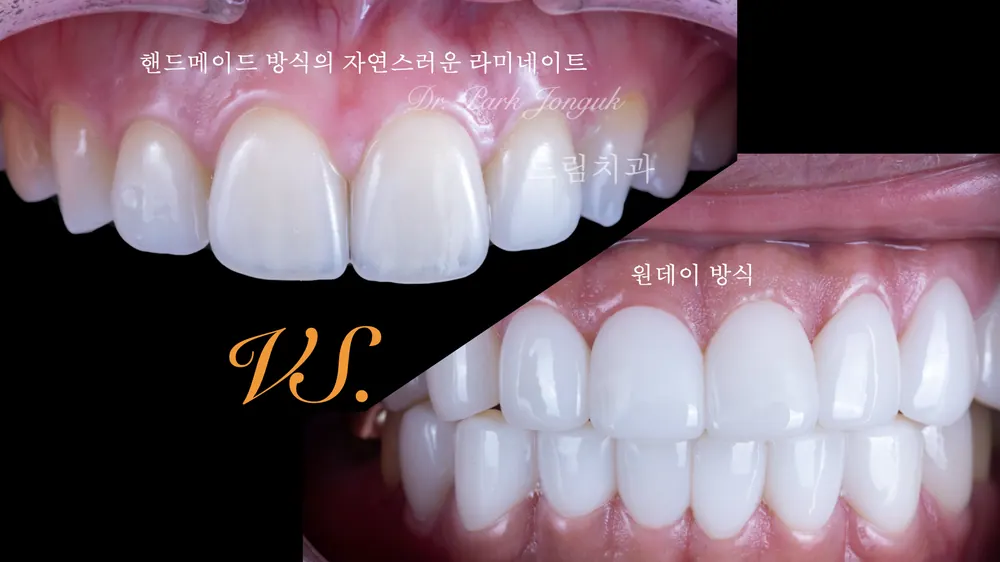
Over 20 years, the cases I've regretted most have almost always come from "exaggerated designs made with only the wedding day in mind."
Please never forget this standard: the wedding is one day, but your teeth are for life.
Rushing to decide on a full set of veneers just one month before the wedding
→ Pressed for time, the design, fabrication, and adaptation all end up half-baked. You won't be able to shake the awkward feeling on the day of the ceremony.
Choosing an overly white shade that clashes with your dress and makeup
→ In photos, your teeth stand out on their own, and your skin can end up looking dull by comparison.
Designing without considering your everyday, makeup-free face
→ The day after the wedding, you may look in the mirror and think, "Is this really my face?"
Exaggerated length or shape chosen with only wedding photos in mind
→ This can make it hard to fully close your mouth in daily life or can affect your speech.
Chasing only the cheapest option and ending up unable to get a re-treatment later
→ If the materials and the lab aren't consistent when you need a replacement or re-treatment 10-20 years down the road, everything has to be redone from scratch.
7. Dream Dental Clinic's Wedding Veneer Design Principles
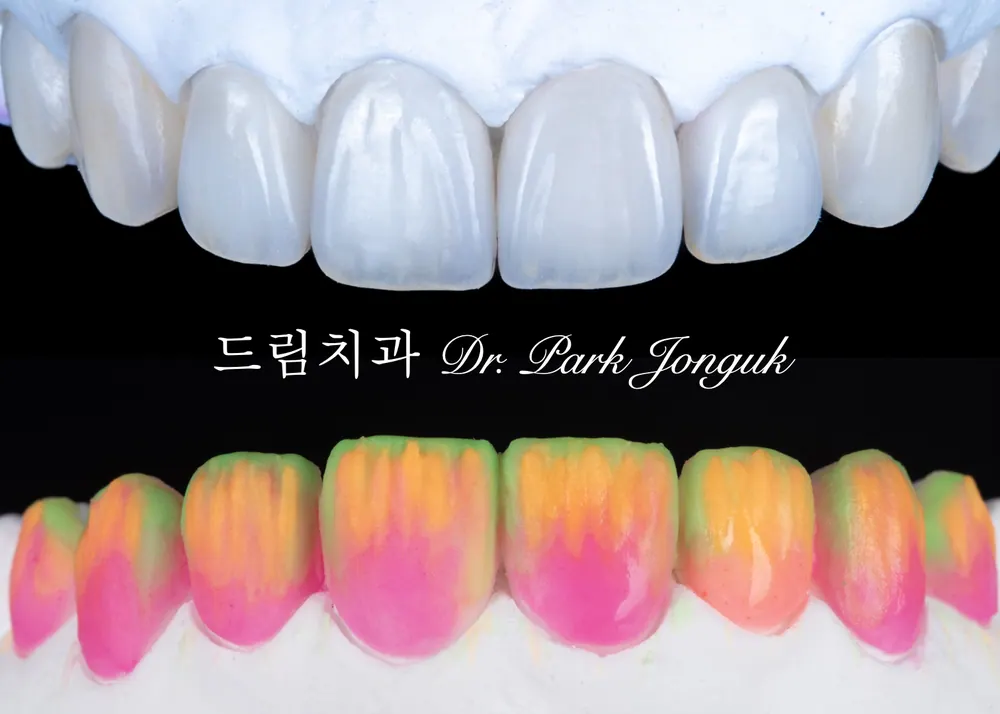
At Dream Dental Clinic, we follow these principles when designing wedding veneers.
A color in harmony with your skin tone — a shade that blends with your dress and makeup
A tooth line suited to your face shape and proportions — natural, without exaggeration
Proportions that look natural both when smiling and when speaking — verified in both a static and a dynamic smile
Translucency that doesn't look out of place even under strong ceremony lighting — reproducing the inner color layers
A design that will still look natural in a family photo ten years from now — a standard set with a lifetime in mind
In particular, build-up veneers, where the technician layers porcelain one layer at a time,
can reproduce the inner color layers, so they respond to strong lighting exactly the way natural teeth do.
Under venue lighting, they shine naturally without ever looking like they're standing out.
8. A Checklist for Brides-to-Be (Save This)
Here are the items to prepare before, during, and after your consultation. Taking a screenshot may help.
Before the Consultation
Organize a schedule of the ceremony, studio shoot, and dress fitting
Prepare 2-3 reference photos of the smile you want
Prepare a few photos of your own everyday smile
Note down any medications you're currently taking
During the Consultation
"What's the ideal treatment timing given my schedule?"
"What color suits my skin tone?"
"What determines how much tooth is reduced?"
"What's included in the total cost?"
"What's the re-treatment policy 10 years from now?"
After the Consultation
Get the quote and treatment plan in writing
Go home and take at least 24 hours to think it over
Consult at a minimum of two clinics for comparison
Share the final decision with family or your partner before committing
Frequently Asked Questions (FAQ)
Q1. Is it okay to get the procedure right before the wedding?
It isn't recommended. A minimum of 2-3 weeks of adaptation time is needed. Right after the procedure, you may experience sensitivity and need time to adjust to your bite, and the color can also feel slightly off at first. It's best to schedule things so treatment is finished at least a month before the wedding. After a month, the color settles and your mouth fully adapts, so the veneers feel like your own teeth.
Q2. Won't the tooth color look different between the wedding photos and the ceremony itself?
Build-up veneers have high color stability, so there's almost no discoloration over time. It's rare for the color to change between the photo shoot and the ceremony, which is usually 2-3 months apart. That said, if you frequently consume coffee, wine, or other strongly pigmented foods after the shoot, your natural teeth may pick up a slight stain. Getting scaling and polishing right before the ceremony keeps the overall tone of your teeth even.
Q3. Do a lot of grooms get veneers too?
Consultations from grooms-to-be have increased noticeably in recent years. That said, for grooms it's usually better to prioritize a natural look over an overly white shade. The most common approach is a targeted procedure that only fixes a chip or color mismatch on one or two front teeth. It's also an important point to design things in advance so the bride's and groom's tooth tones look harmonious together in the wedding photos.
Q4. Do veneers thin out your teeth and shorten their lifespan?
This is a common misconception. Veneers work by trimming only a very thin layer of enamel from the front surface of the tooth before bonding, so there's almost no effect on the tooth's structural strength. In fact, build-up veneers use porcelain that's harder than enamel as a coating, which can actually help protect the natural tooth from decay and wear. Of course, outside factors like teeth grinding or biting habits still need to be managed separately.
Q5. How much do wedding veneers usually cost?
This varies significantly depending on the number of veneers, materials, and fabrication method. Medical law prohibits stating specific prices in public blog posts, so an accurate quote is provided individually during the consultation. That said, rather than looking only at the "price per tooth," it's wiser to compare the total cost, including diagnostic fees, temporary veneers, aftercare, and re-treatment warranty terms.
Q6. How should I take care of my veneers during the honeymoon?
You can go about your honeymoon much as you normally would. That said, it's best not to overdo carbonated drinks, wine, or coffee, and to be careful with hard foods like ice or nut shells. Bringing along a water flosser or interdental brush makes care much easier. Getting scaling and a check-up before you travel offers extra peace of mind.
In Closing — Design Teeth Built to Last a Lifetime
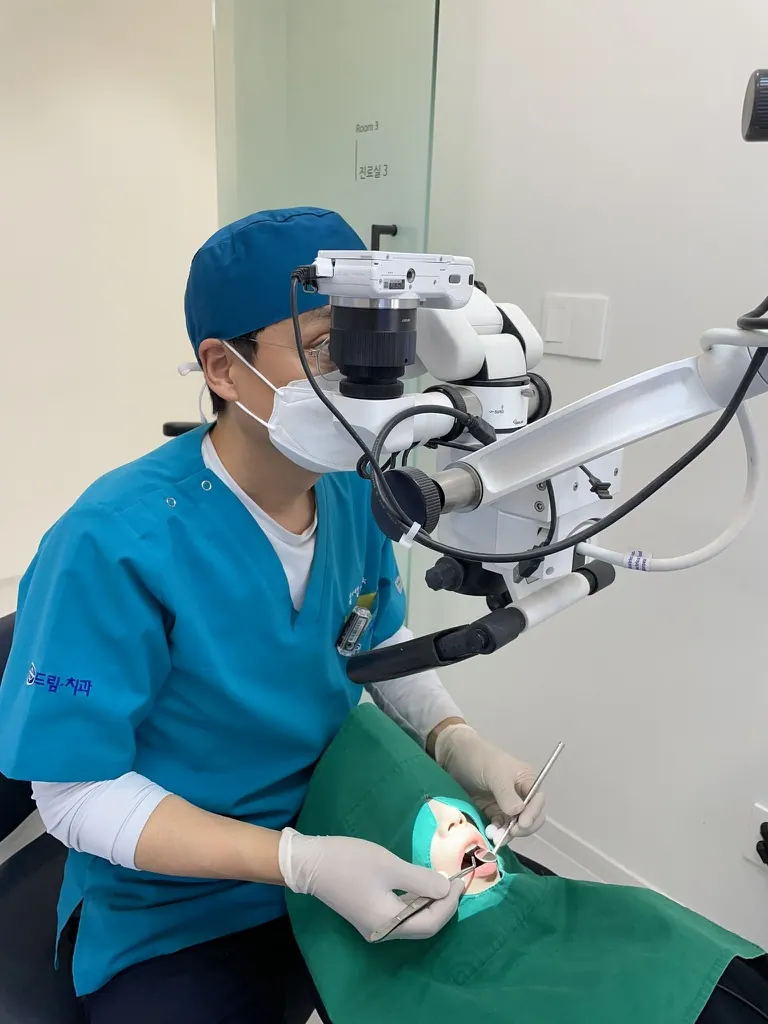
A wedding is a once-in-a-lifetime moment, but your teeth stay with you for decades afterward. If you rush a decision with only the wedding day in mind, you may end up feeling awkward in your honeymoon photos and full of regret when you look at family photos ten years later.
The most important thing is "not rushing." A good clinical team knows how to say, at your consultation, "Don't decide today." Please go home, take time to review what you discussed, talk it over with your family, and give yourself at least a day or two to think it through.
This is a busy time with so much to manage for the wedding, and I hope this article has been of some help, even a little. If you have any further questions or need to discuss a specific schedule, feel free to reach out in the comments or by DM.
Park Jonguk, Director, Dream Dental Clinic, Apgujeong
Graduate of Seoul National University School of Dentistry / Master's in Dentistry
Board-certified specialist in conservative dentistry
Director of Education, Korean Academy of Adhesive Dentistry
Author of 『최소 삭제를 위한 라미네이트 임상』 (Laminate Clinical Practice for Minimal Reduction)
Director, Lamista Academy
✔ Related Articles Worth Reading
This article is a clinical note written by Dr. Park Jonguk of Dream Dental Clinic, Gangnam; the original was published on his blog. The photographs shown are real cases he treated. Results vary with each patient’s condition, and every procedure carries the possibility of individual variation and side effects.
Quick Consult
Request a Callback
Leave your number and we will call you back during clinic hours.
Request Received
We will contact you during clinic hours. For urgent matters, please call +82-2-3448-0028.