
Veneer and All-Ceramic Crown Retreatment for Unnatural Shade and Tooth Discoloration
Dental contouring is a treatment that changes the shape of the front teeth using veneers or all-ceramic crowns.
It's called dental contouring because, like eyelid surgery or rhinoplasty, it's a process of changing the shape of the teeth — and there are two methods for it: veneers and all-ceramic crowns.
In many cases, people confuse the terms veneers and dental contouring.
I think this is largely the fault of dentists.
As a result, about half of the patients who come back for retreatment after having had veneer treatment done long ago
turn out to need retreatment of all-ceramic crowns, not veneers.
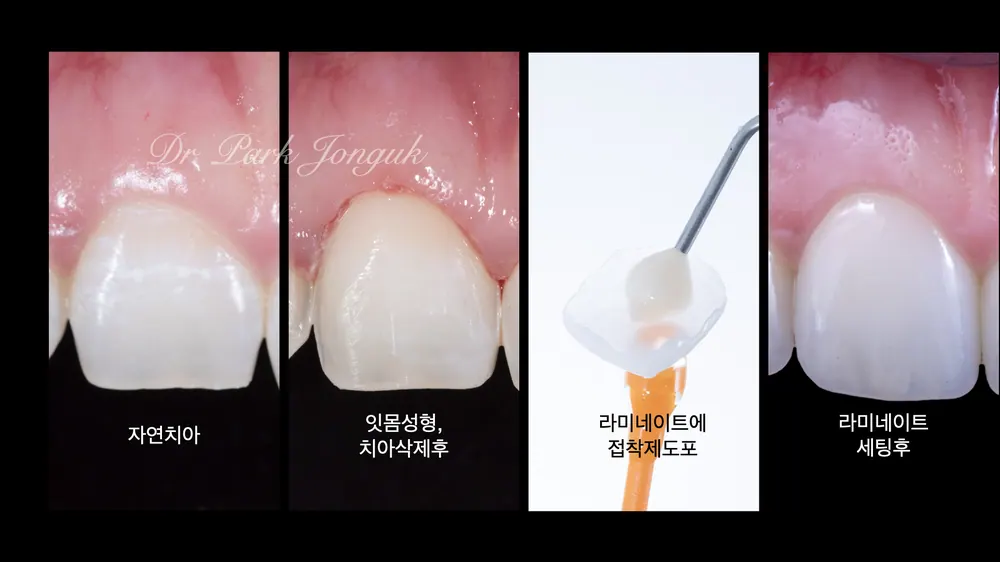
As shown in the photo above, a veneer is a treatment where only a very small amount of tooth is reduced, and a very thin ceramic sheet (the veneer) is bonded on.
Because damage to the tooth is minimal, side effects are correspondingly minimal too.
Most veneer side effects come from tooth reduction,
so naturally, less reduction means fewer side effects.
Patients usually worry a great deal about veneer side effects.
That worry is made even bigger because of this confusion between veneers and dental contouring.
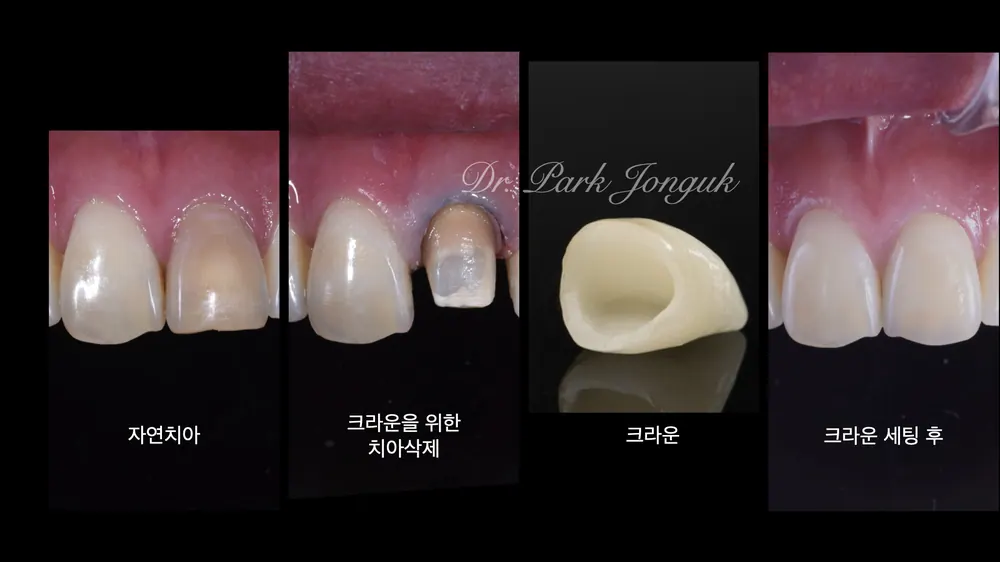
The photo above shows the all-ceramic crown treatment process.
In cases with severe discoloration, teeth that have had root canal treatment, or severe tooth fracture,
crown retreatment is chosen when a veneer would be expected to lead to further tooth fracture.
It's a treatment in which the entire tooth is reduced and then capped with ceramic, like putting on a hat.
Occasionally, even when the situation doesn't actually call for a crown,
a clinic will treat severely crooked or protruding teeth by excessively reducing them,
and severe side effects can result.
But since some clinics perform this kind of treatment while calling it a 'veneer' rather than an all-ceramic crown,
veneers end up being perceived as a treatment with many side effects.
To put it simply,
a veneer is a method of contouring the tooth while minimizing tooth reduction,
and an all-ceramic crown is a method used to contour the tooth when a veneer isn't possible for some specific reason.
When veneers are applied to the right indications, side effects are quite minimal.
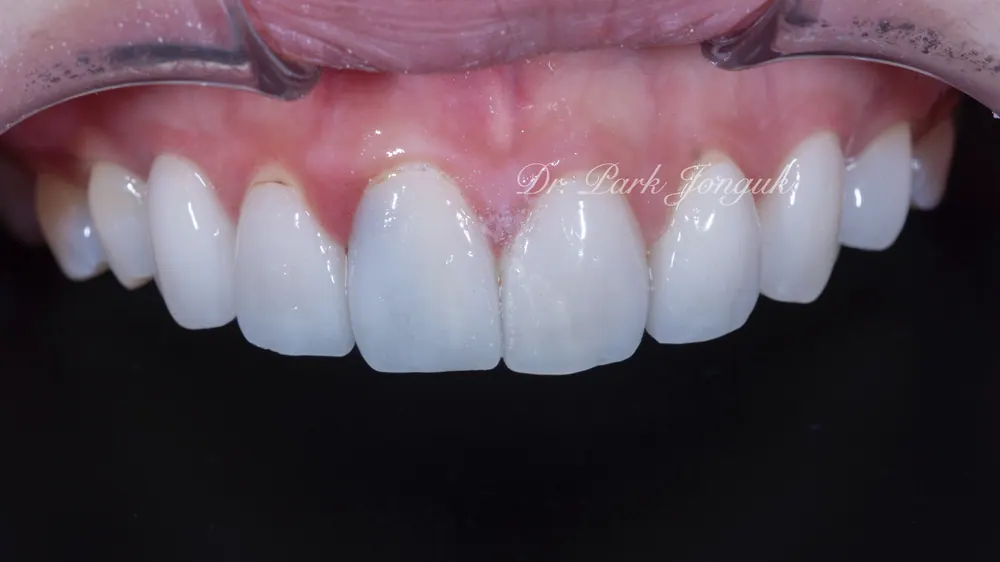
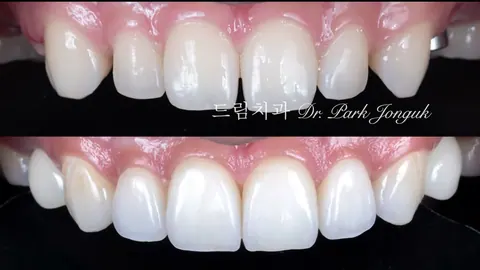
This patient had veneer treatment done a long time ago.
She had a number of problems, from asymmetry between the teeth to unnatural color and translucency, and even tooth discoloration.
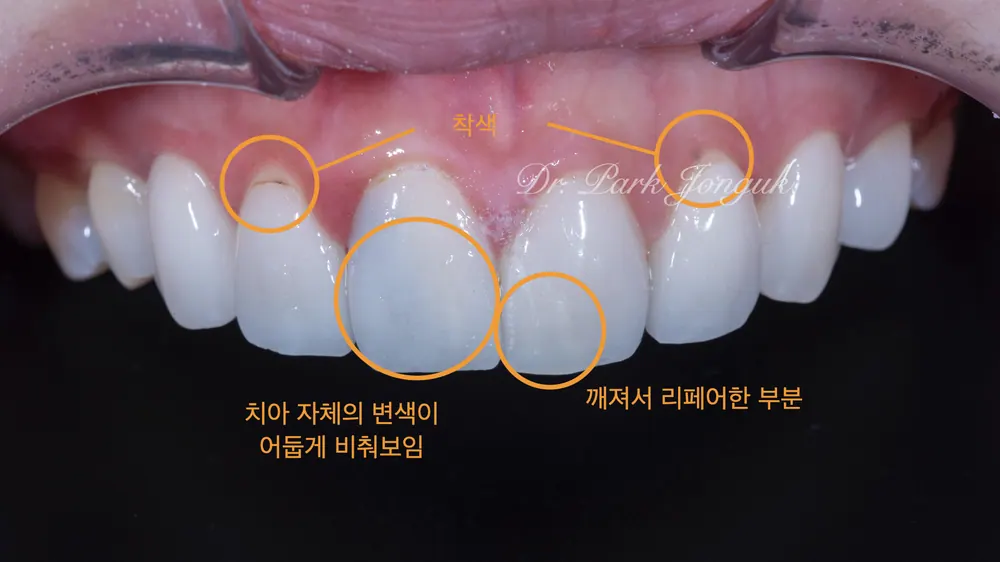
The reason the tooth appeared dark was that it had had root canal treatment, and as the discoloration that develops over time
showed through the ceramic.
If it had been a veneer, there would have been no reason for root canal treatment.
That tooth had actually been treated with a crown.
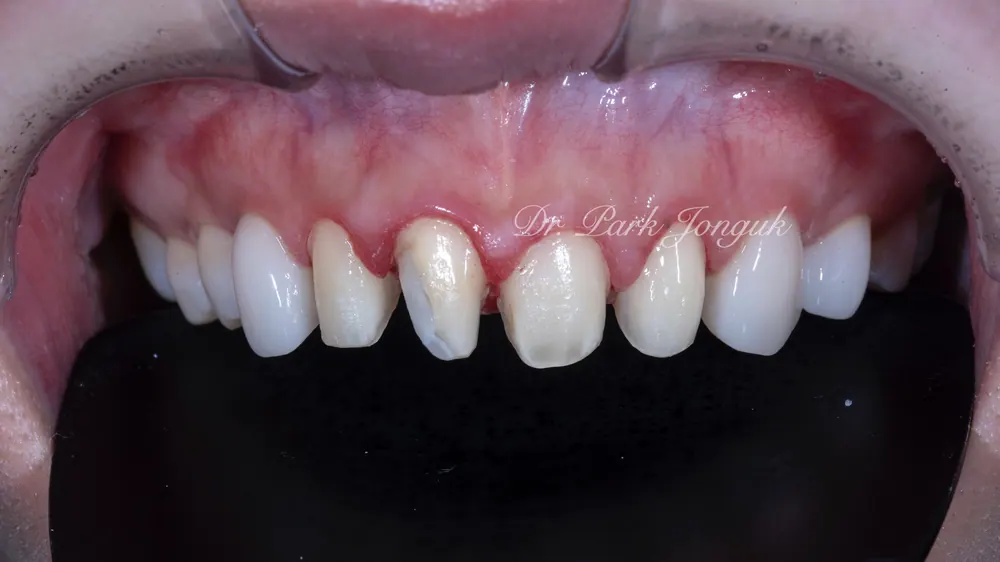
This is a photo after the ceramic was removed.
A significant amount of tooth had been reduced.
Only one tooth had a crown, but the others had also been reduced so much that it was embarrassing to even call them veneers.
A tooth consists of enamel on the outside and dentin underneath.
Ceramic bonds quite strongly to enamel.
These days, bonding to dentin has also improved a great deal, so bonding veneers to dentin is possible too,
but since even a slightly stronger bond is always preferable, it's best to preserve as much enamel as possible.
In a case like the one above, so little enamel remained that it was genuinely a question of whether crown retreatment was necessary.
But crown retreatment would require reducing the tooth even more than it already had been,
so we decided to proceed with veneer retreatment while making the dentin bond as strong as possible.
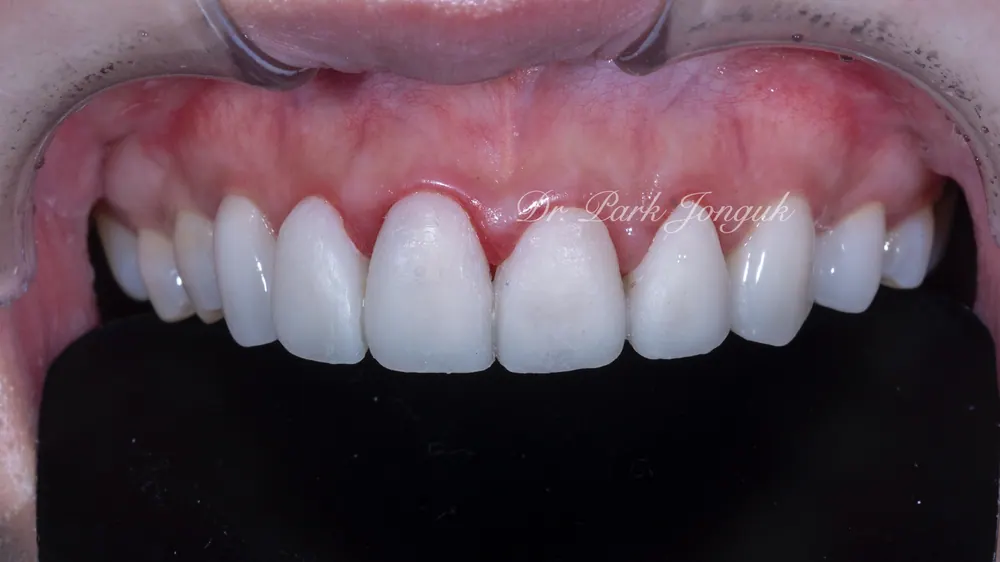
We made temporary teeth and discussed the size and proportions with the patient.
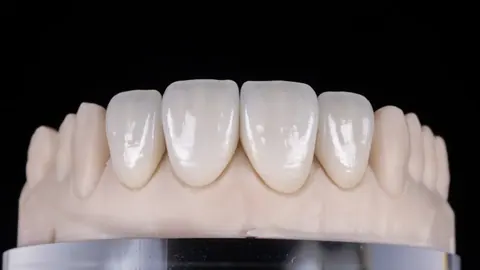
Temporary teeth protect the tooth while the ceramic is being fabricated,
but their more important role is showing, in advance, what the finished ceramic will actually look like.
You need to firmly confirm the tooth size, proportions, and volume with the temporary teeth before moving on to fabrication.
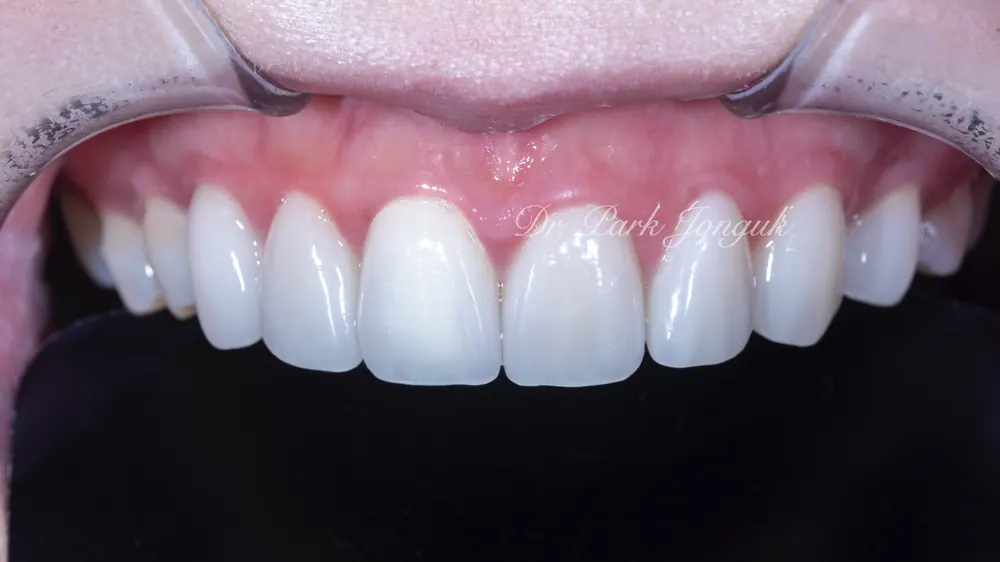
In this way, the teeth were completed again with natural, well-matched proportions.
The most important thing in this treatment was minimizing damage to the tooth when removing the existing veneer,
and making sure the new veneer was bonded as strongly as possible.
That's the most important part of veneer retreatment.
All of this requires long experience and know-how.
Since 2006, Dream Dental Clinic
This article is a clinical note written by Dr. Park Jonguk of Dream Dental Clinic, Gangnam; the original was published on his blog. The photographs shown are real cases he treated. Results vary with each patient’s condition, and every procedure carries the possibility of individual variation and side effects.
Quick Consult
Request a Callback
Leave your number and we will call you back during clinic hours.
Request Received
We will contact you during clinic hours. For urgent matters, please call +82-2-3448-0028.