
All-Ceramic Crown and Veneer Retreatment: A Case of Improved Esthetics
Treatment that makes front teeth prettier is called cosmetic dentistry.
Just as one might have eye or nose surgery,
teeth can also be reshaped.
All-ceramic crowns and veneers are two of the methods used in this kind of cosmetic dentistry.
With the goal of reducing as little tooth structure as possible,
veneers are the approach that minimizes side effects.
You can learn more about the veneer treatment process in the link above.
All-ceramic crowns are used when a tooth is severely discolored, badly decayed, or has had root canal treatment.
Since the amount of tooth reduction is so large, veneers would be preferable whenever possible,
but in cases where a crown is unavoidable,
a crown can protect the tooth better in the long run.
Whichever method is used, the important thing above all is to use the approach that best preserves the tooth's health.
These days, quite a lot of patients come in for retreatment.
They had treatment done in the past, but the shape doesn't satisfy them, or it's chipped or come off, so they need retreatment.
In most cases, it's been about 5-10 years since the original treatment.
Recently, more and more patients want retreatment even though only 1-2 years have passed.
A common problem among patients who want retreatment within such a short period is
that the original treatment was finished in a state that's hard to be esthetically satisfied with.
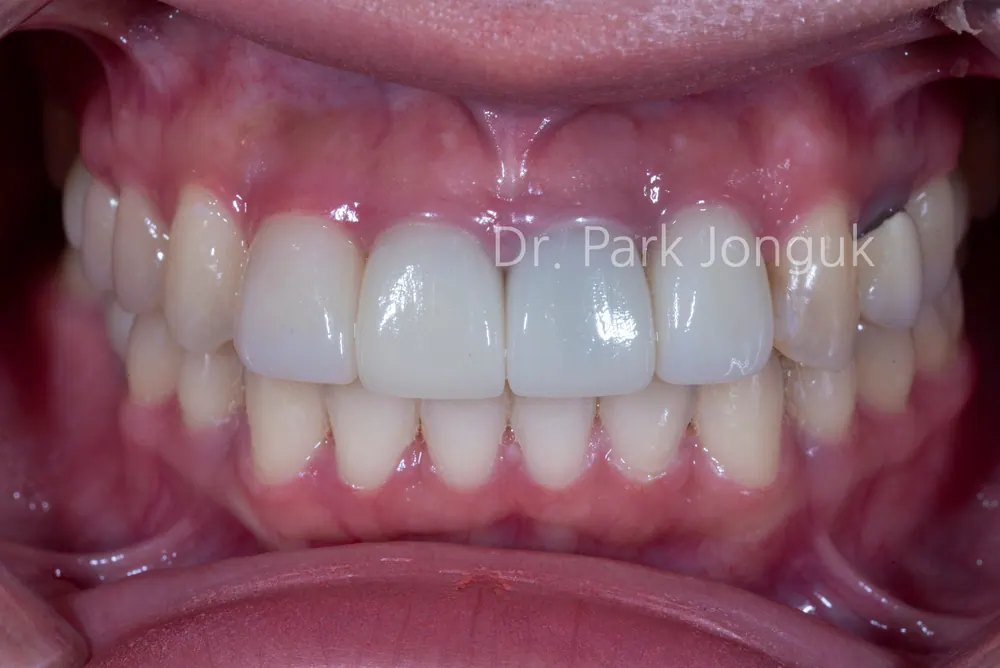
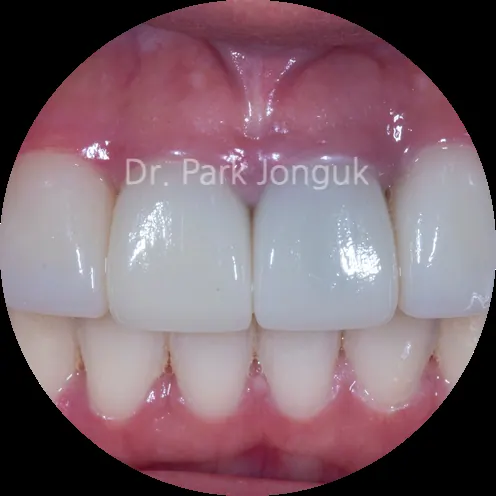
This patient came in with crowns on all four front teeth.
She said the treatment had been done after orthodontics, but she was so dissatisfied esthetically that she wanted it redone.
First, there was the problem that the color differed from tooth to tooth.
The teeth themselves had darkened, and this showed through the ceramic, making the teeth look black.
Beyond the color, the shape of the teeth had come out far too square, leaving the esthetics quite poor.
Dentists learn about the shape of natural teeth in great detail during dental school.
Regardless of whether a given tooth is considered pretty or not, there's an average shape.
If you think about tooth shape more carefully, most dentists probably wouldn't consider the shape above to be a typical tooth.
On top of that, it simply doesn't look pretty at a glance.
There's clearly some difference between male and female tooth shapes, and it seems even that basic point wasn't considered here.
The proportion between teeth also matters a great deal.
In this case, the proportion between the front tooth and the neighboring tooth itself had a fairly serious problem.
The gum shape had also become far too straight, making it hard to reshape.
On top of that, the gums had developed inflammation.
When a tooth's shape deviates too far from a natural tooth, the gum can fail to adapt and develop an inflammatory reaction.
We had to think carefully about how to resolve all of this.
Before treatment, we first make a model of what shape to change to.
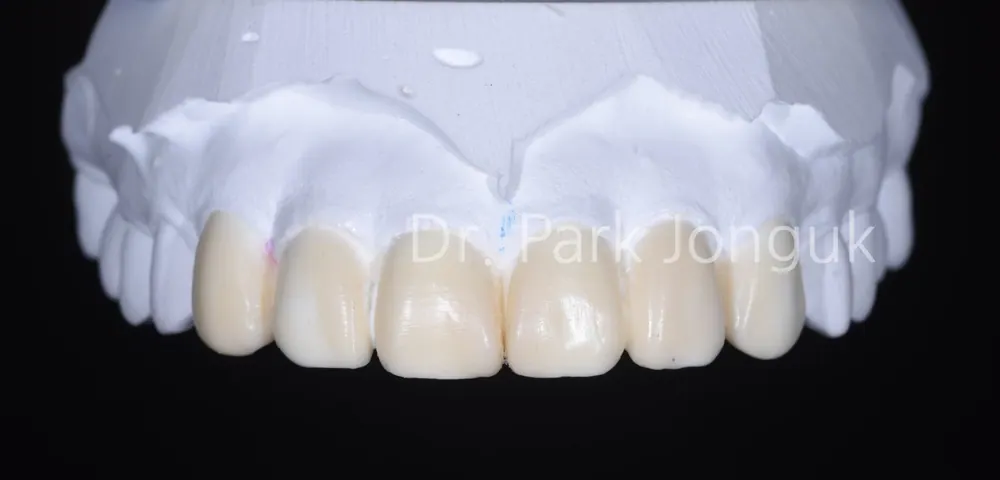
We made various preparations to move away from the square shape and round out the gum line more.
In a case like this, since the gum shape has to be formed using temporary teeth, you shouldn't try to finish the treatment too quickly,
and instead have to proceed slowly, one step at a time.
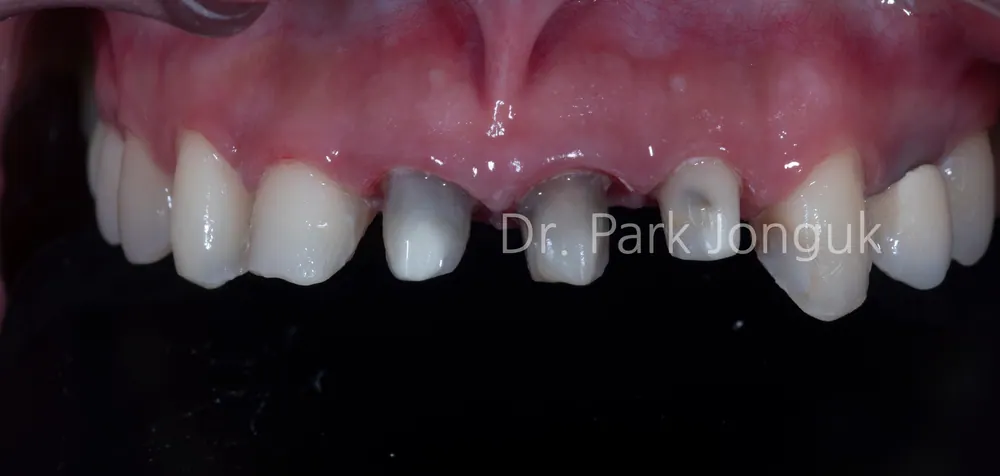
Once we removed the crowns, we found they had already been reduced far too much — a rather regrettable case.
It's important to remove the ceramic while minimizing damage to the tooth.
When there's tooth discoloration, you have to think carefully about how to address it.
Discoloration is most often caused by root canal treatment.
Teeth that have had root canal treatment can discolor over time,
and in cases treated long ago, the materials used at the time can also cause discoloration.
Depending on the cause, or on the tooth's current condition, whitening can sometimes brighten it further,
but if the discoloration is long-standing, whitening doesn't help much.
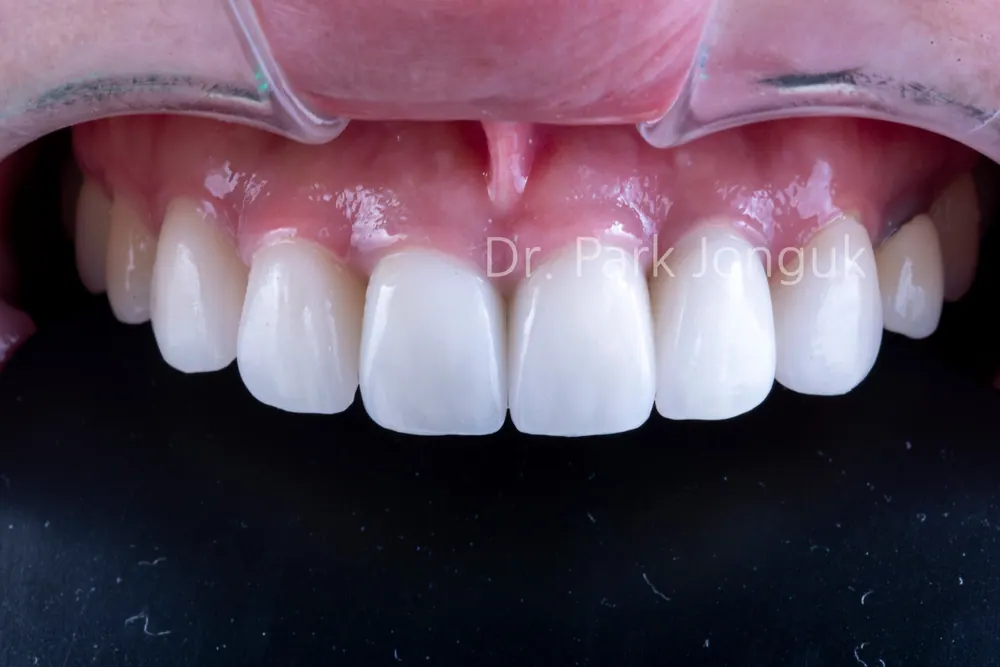
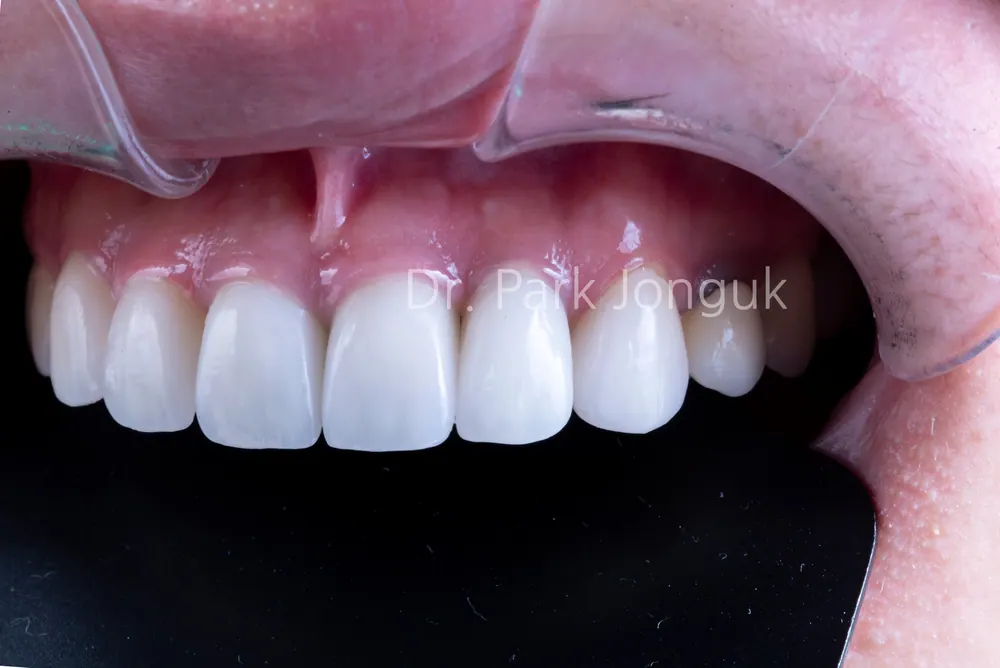
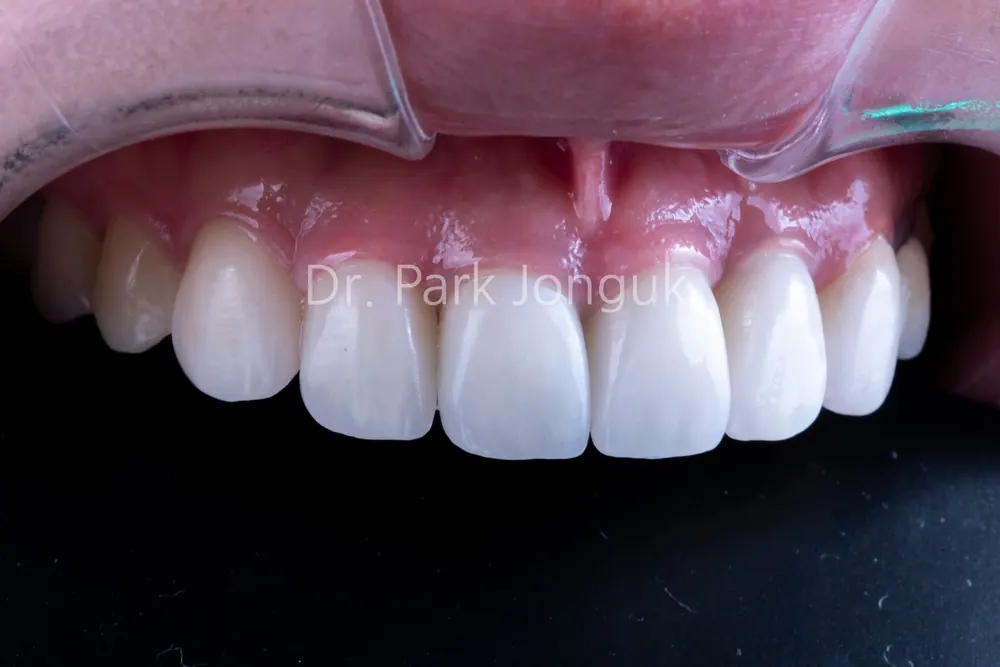
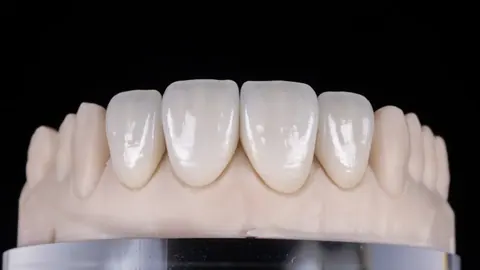
An important element of tooth shape is the line angle.
This is the line that gives a tooth its sense of depth, and it can't be reproduced by the same-day method that's become popular recently.
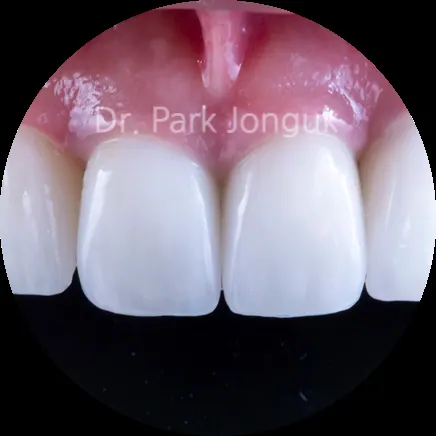
The role of this line in bringing out a sense of depth matters a great deal.
It's a point that's heavily emphasized in dental morphology.
How this line is handled can completely change the feel of a tooth.
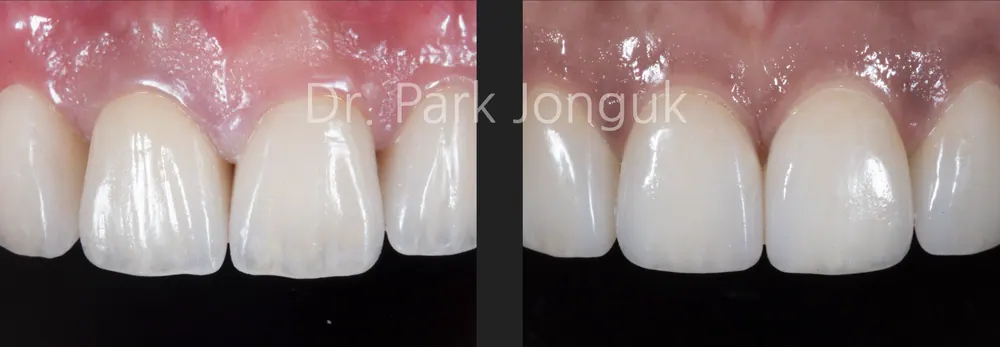
To give an example, differences in how a tooth's three-dimensional form is expressed
can give a strong, masculine feel,
or a softer feel.
This has to be decided considering the patient's sex, age, and face shape, all together.
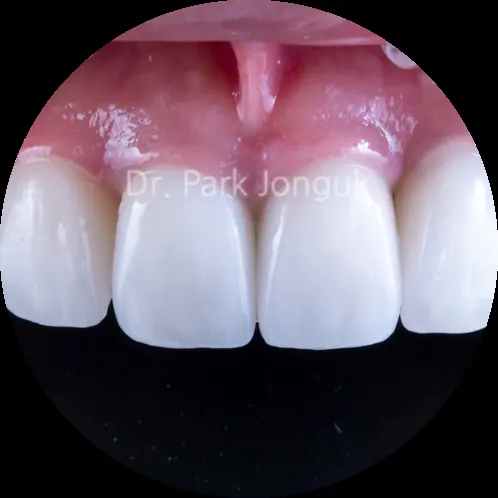
These fine details make a big difference in the final result.
Even using the same ceramic, how it's used makes a huge difference.
Every step of front-tooth cosmetic dentistry — all-ceramic crowns and veneers — requires an expert's hand.
This article is a clinical note written by Dr. Park Jonguk of Dream Dental Clinic, Gangnam; the original was published on his blog. The photographs shown are real cases he treated. Results vary with each patient’s condition, and every procedure carries the possibility of individual variation and side effects.
Quick Consult
Request a Callback
Leave your number and we will call you back during clinic hours.
Request Received
We will contact you during clinic hours. For urgent matters, please call +82-2-3448-0028.