
Common Questions From Veneer Consultations, Part 2
Hello, I'm Park Jonguk, director of Dream Dental Clinic.
Continuing from the last post,
I'll talk about the questions that patients considering veneer treatment
frequently ask me when they visit the clinic —
the ones that come up most often.
4. What kind of ceramic is used for veneers?
Honestly, not that many patients ask this question so directly.
Some do come in having researched a lot online beforehand,
but it's rare for someone to ask about specific product names or ingredients.
That said, some patients see ads from certain clinics claiming to use a special material found only there,
and ask whether that material is good, or whether we use it here as well.
What I can say with certainty is that
there is no such thing as a material used exclusively by a single specific clinic.
Dental materials aren't something just anyone can develop and use.
Once a material is developed, it needs to be verified as suitable for dental use and go through approval.
Since this is far too complex and expensive for a single clinic to develop and use on its own,
in the case of ceramics, it's the ceramic manufacturer that goes through this process.
Once approval is granted, the company needs to sell as much as possible to turn a profit,
so there's no way they'd supply it to just one clinic.
Recently, some ceramic companies even offer a service that prints a clinic's logo onto the ceramic material,
but having a clinic's name printed on it doesn't make it a special material.
That was a long introduction.
Veneer ceramics are broadly divided into two types.
One is called Feldspar, and the other is called Lithium disilicate.
These are simply material names, and each company sells them under its own brand name.
Depending on whether these materials are fabricated by computer or made by hand,
the processing method differs as well.
It also differs depending on whether the two materials are used together or only one material is used.
This creates quite a large number of possible combinations.
No matter which material is used,
it's extremely important to use each material appropriately based on the condition of the tooth.
Even a good material can't produce a good result if it's used incorrectly.
Among all these various combinations, the one that both dentists and dental technicians recognize as
the most technically demanding, while still allowing minimal tooth reduction,
and producing the result that looks the most like a natural tooth,
is handmade Feldspar.
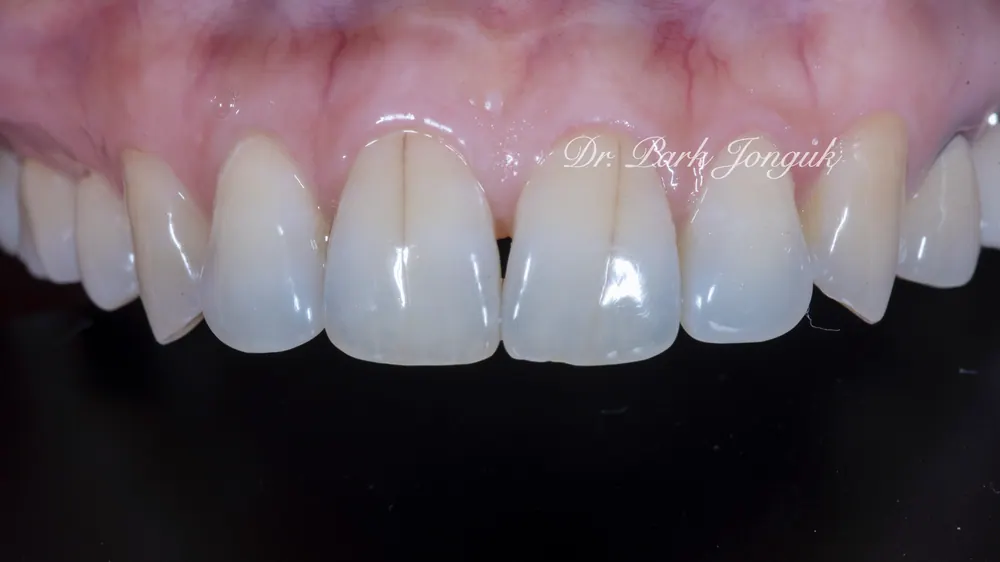
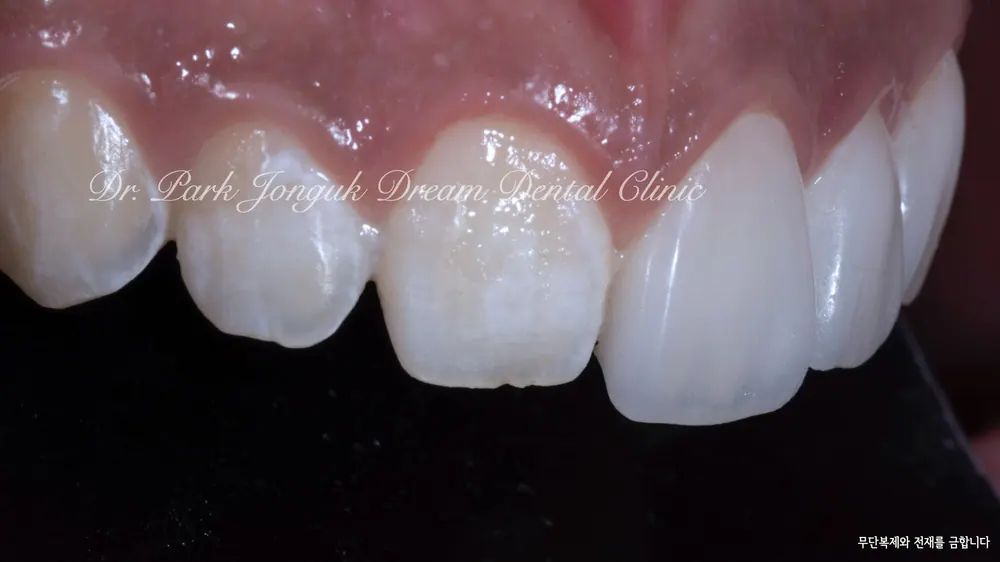
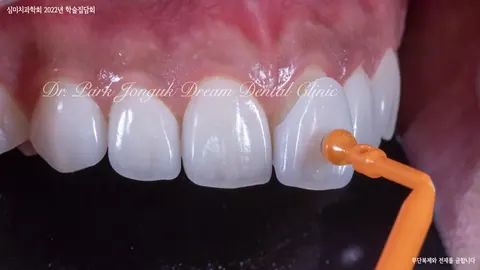
This is a case where veneers were placed on only two teeth,
and they had to be made indistinguishable from the surrounding natural teeth.
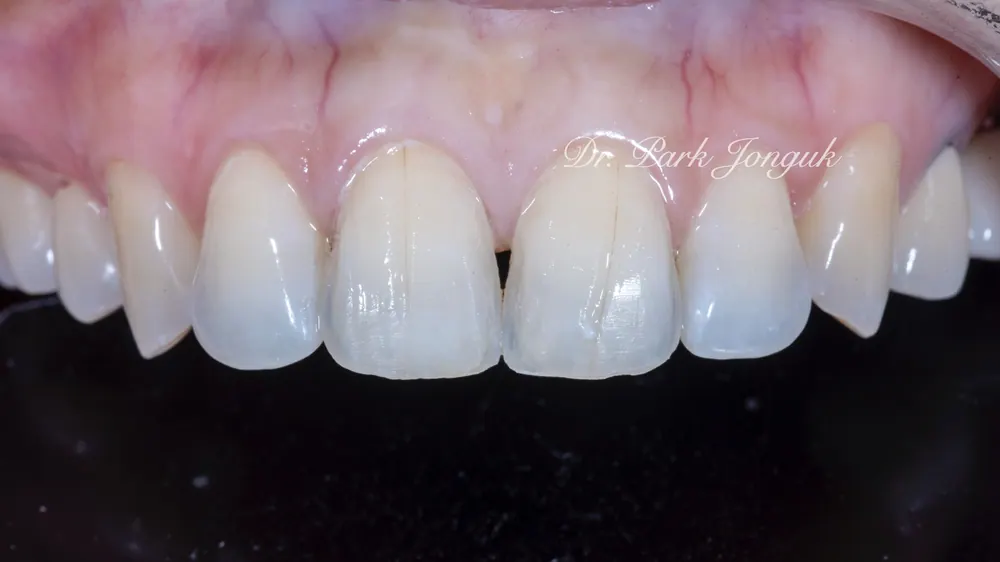
Only minimal reduction was performed on the two front teeth.
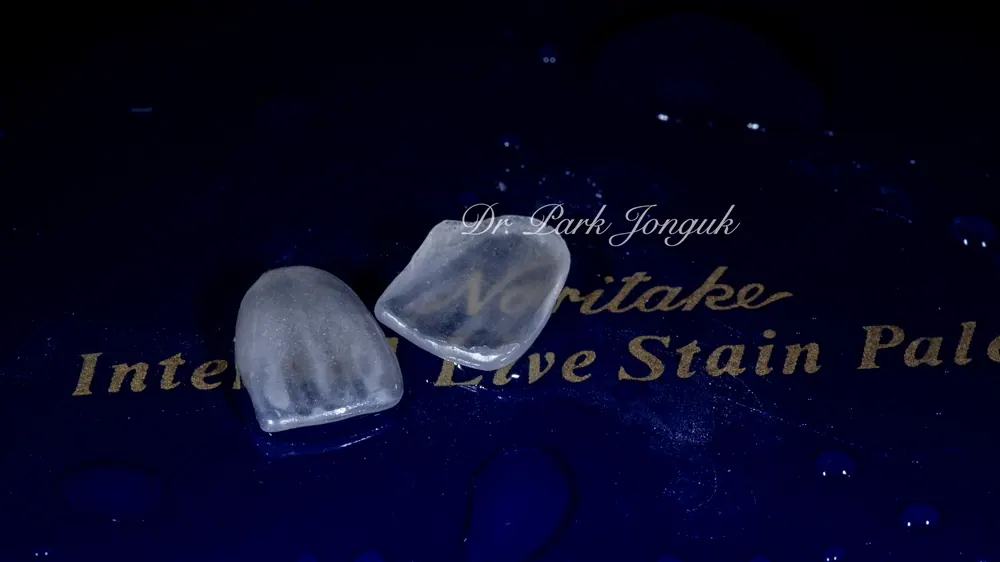
The Feldspar veneers that were fabricated are extremely thin.
But within that thinness, they capture every characteristic of a natural tooth.
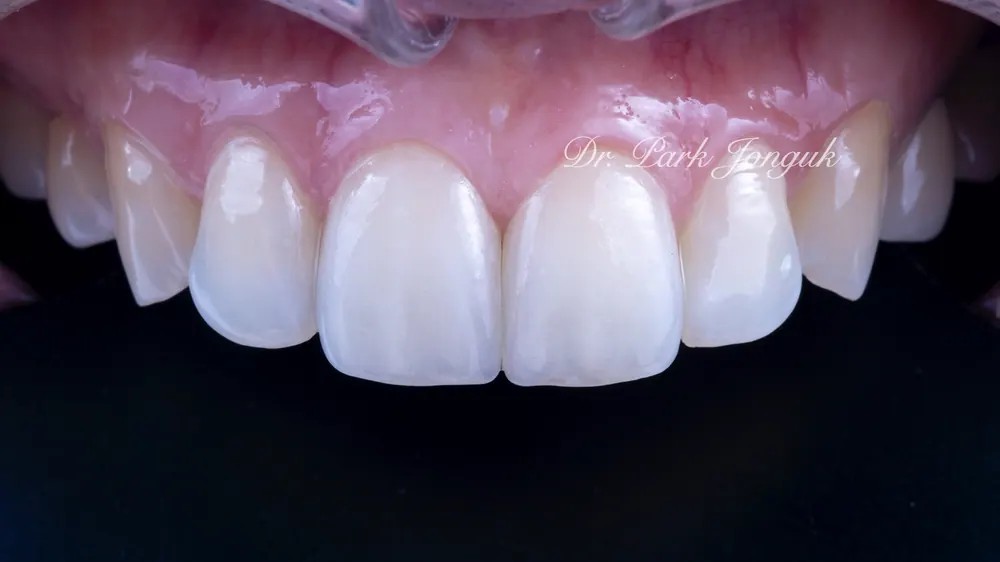
The treatment result achieves a beauty that even surpasses that of natural teeth.
This method doesn't apply to every case.
As I mentioned earlier,
it needs to be used appropriately depending on the situation.
Please refer to the link below for the difference between the handmade method and the computer-made method.
5. I've had a cavity treated with resin on my front tooth — can I still get a veneer?
To give you the answer up front, yes, it's possible.
Unless the resin filling is old enough to have discolored or is at risk of coming loose,
a veneer can be bonded directly over the resin.
That said, whenever possible, it's better to redo the resin filling at the same time as placing the veneer.
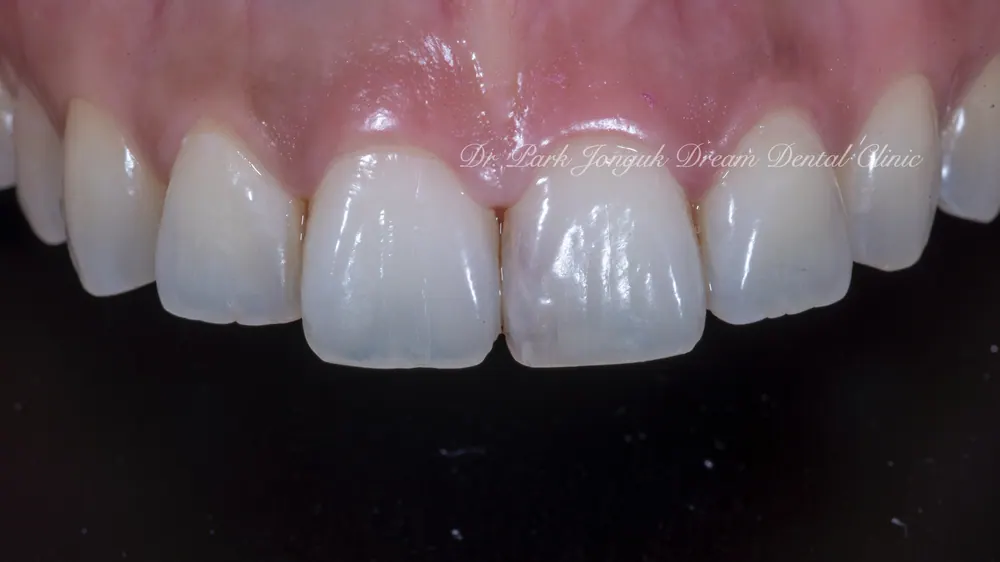
This is a case where a tooth with a cavity and resin filling between the teeth received veneer treatment.
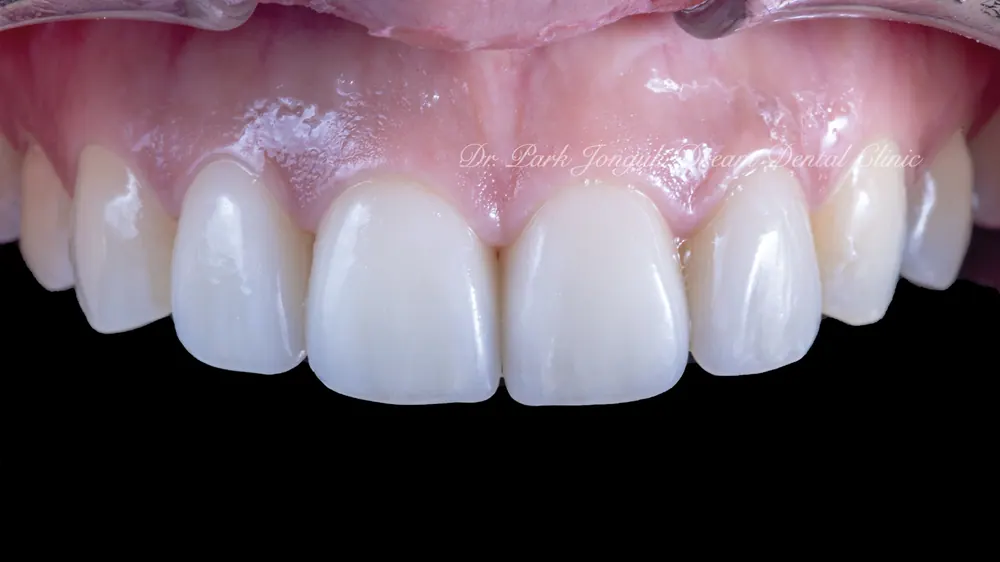
As mentioned, treating the decay and redoing the resin filling before proceeding
is more advantageous in the long run.
6. Are no-prep veneers possible for me?
If every case could be treated with no-prep veneers,
I would be very happy indeed.
No-prep veneers
require the following three conditions to be met.
The teeth must be small.
The alignment must be good.
The teeth must not be protruding.
There aren't that many cases that meet these conditions exactly.
I myself put in a great deal of effort
to keep tooth reduction to a minimum whenever possible,
but you should understand that true no-prep veneer cases are actually quite rare.
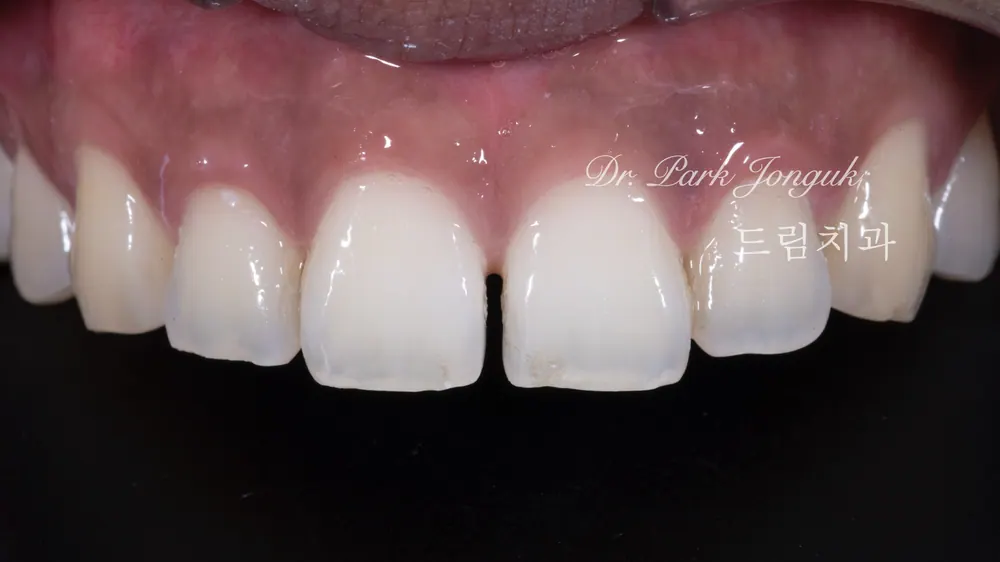
In a case like this, where there's spacing between the teeth,
we can use the Feldspar material described above
to make an extremely thin veneer
and bond it on without any tooth reduction.
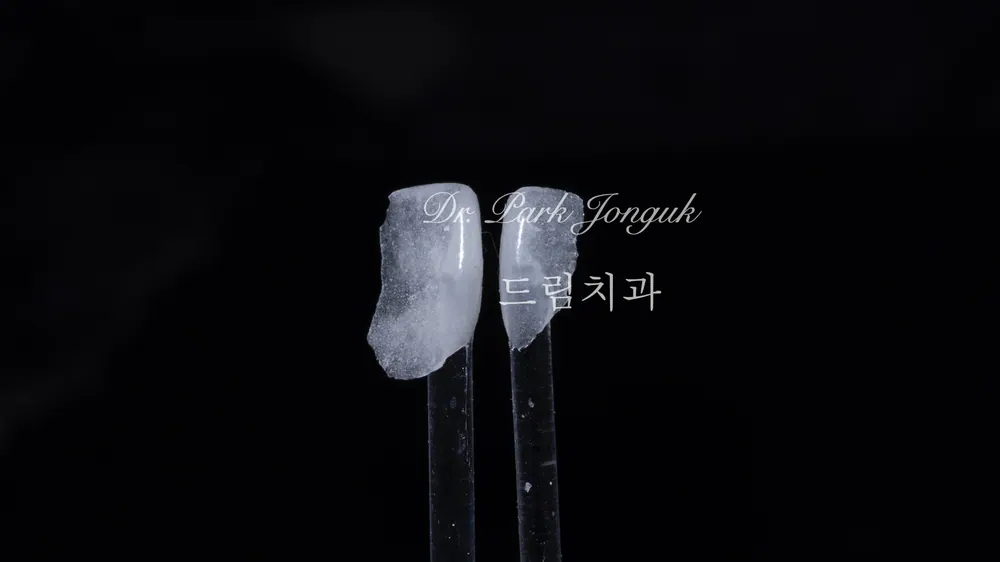
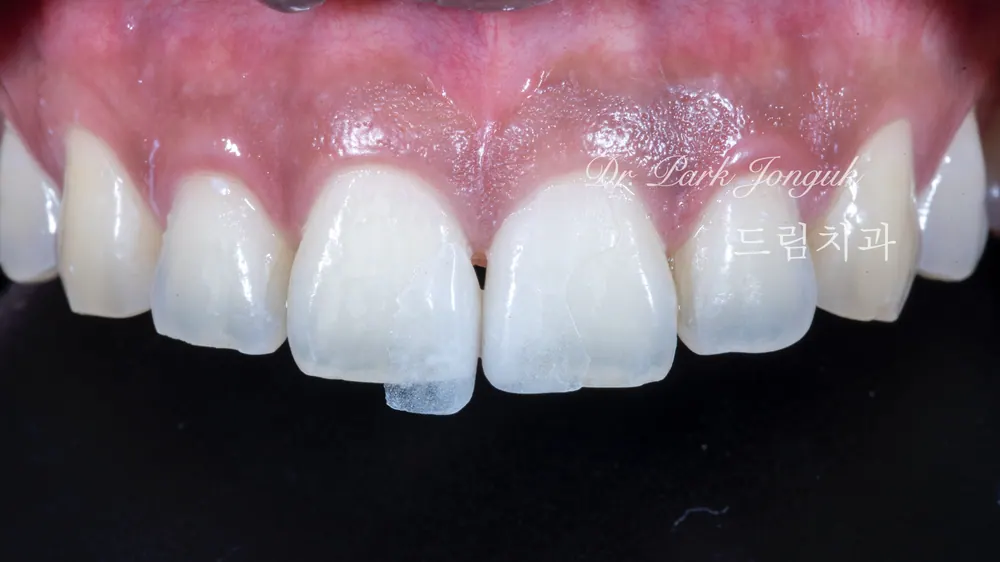
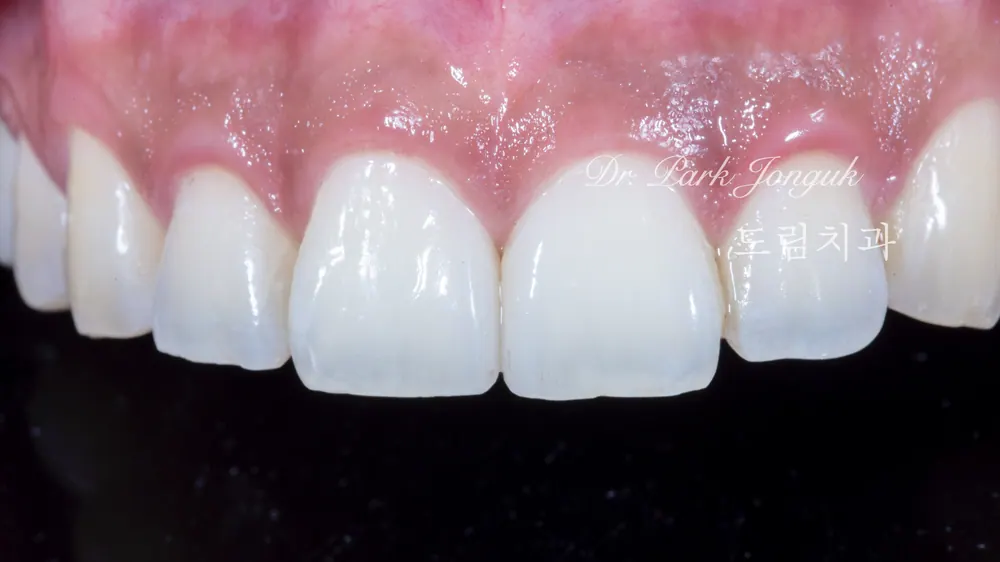
This makes a natural-looking result possible.
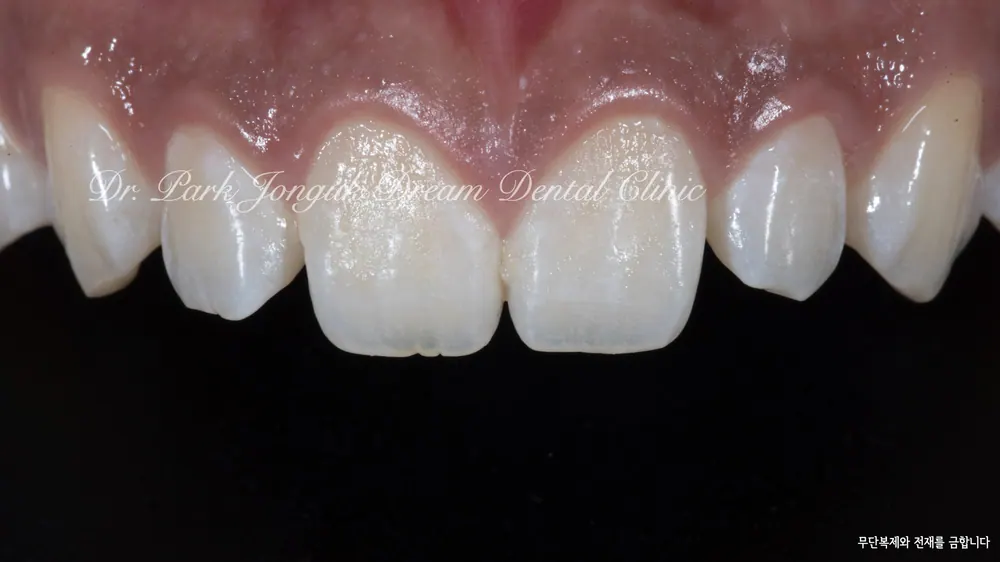
Or, in a case where the teeth are small like this, it's possible too,
not by covering just part of the tooth,
but by wrapping the entire tooth in extremely thin ceramic.
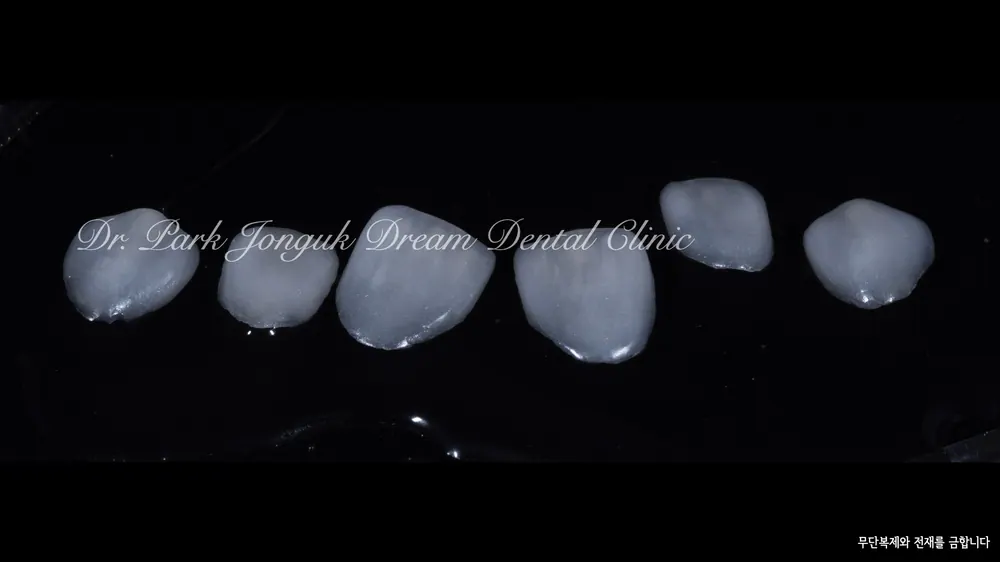
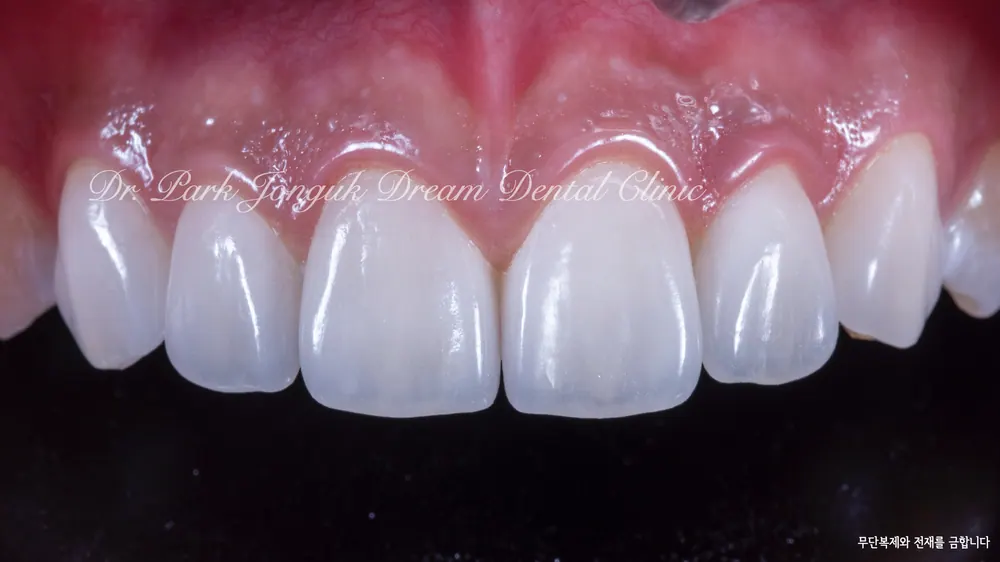
Even though it's a no-prep veneer,
the full beauty of a natural tooth is still expressed.
Natural Beauty
Since 2006, Dream Dental Clinic
This article is a clinical note written by Dr. Park Jonguk of Dream Dental Clinic, Gangnam; the original was published on his blog. The photographs shown are real cases he treated. Results vary with each patient’s condition, and every procedure carries the possibility of individual variation and side effects.
Quick Consult
Request a Callback
Leave your number and we will call you back during clinic hours.
Request Received
We will contact you during clinic hours. For urgent matters, please call +82-2-3448-0028.