
5 Things People Who Regret Their Veneers Have in Common
Hello.
I am Park Jonguk, director of Dream Dental Clinic, Apgujeong.
A veneer is an aesthetic treatment that bonds a thin ceramic shell onto the tooth surface to improve color, shape, and alignment.
A properly made veneer holds up like a natural tooth for more than 10 years.
But not every veneer produces that kind of result.
"I got veneers, and I regret it."
"I want to have them redone. Is that possible?"
"Where should I have gone in the first place?"
Over 20 years of practicing mostly veneer treatment, I've met a great many patients who came in for retreatment.
When you listen to the reasons behind their regret, there are striking similarities.
Today I'll share those 5 common threads honestly.
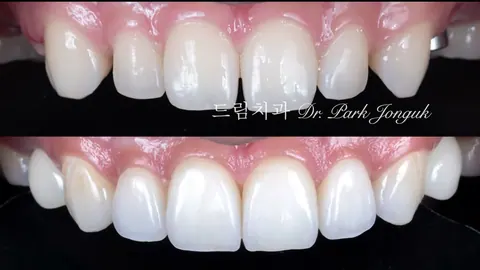
![[Photo 1] Before-and-after comparison photo of veneer retreatment](/column-media/224254610677/01.webp)
1. Regretting veneers: choosing based on price alone
Veneer prices vary a great deal from clinic to clinic.
So a lot of people start by comparing prices.
Of course, cost is an important factor to consider.
But with veneers, the result changes completely depending on the material, the fabrication method, and the technician's skill.
Cheaper veneers are mostly made using a machine-milled, off-the-shelf block method.
The color expression is flat and there's no translucency.
Most of the feeling that "something looks artificial" comes from this.
The hand-made build-up method, where a skilled technician layers it up by hand one layer at a time, takes more time and costs more,
but it produces a result indistinguishable from a natural tooth.
A difference in price is, in effect, a difference in result.
If you're curious about the difference based on fabrication method, please see my earlier article.
→ [Ceramic Block vs. Hand-Made Build-Up: What Decides a Veneer's Fate]
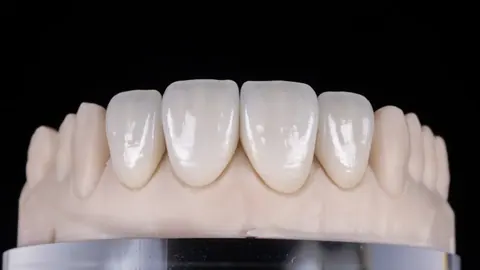
![[Photo 2] A hand-made veneer, thin but with a natural expression built in](/column-media/224254610677/02.webp)
2. Veneer failure: going straight to treatment without a diagnosis
"I wanted to look pretty quickly, so I just started right away."
There are surprisingly many patients like this.
But a veneer done without a diagnosis has a high chance of failing.
There are things that absolutely need to be checked before getting veneers.
Whether the bite is stable.
Whether the gums are healthy.
Whether the amount of tooth reduction can be minimized.
How many teeth need to be treated to achieve natural harmony.
Skipping this diagnostic process inevitably leads to an unnatural-looking result.
Beautiful teeth start with a diagnosis.
I have another article that goes into more detail on why diagnosis matters.
→ [Did You Get Veneers Without a Diagnosis? That's Risky] (internal link)
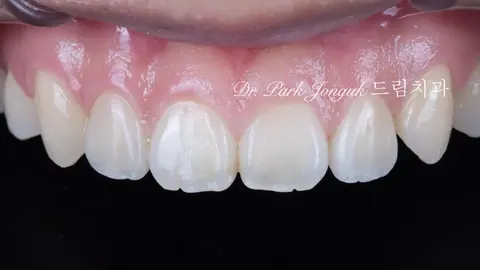
![[Photo 3] A photo of the diagnostic process before veneer treatment](/column-media/224254610677/03.webp)
3. Veneer side effects: a color that doesn't suit your own teeth
"Please make them white."
This one line is often where the regret begins.
White teeth aren't automatically beautiful teeth.
They only look natural when they match your skin tone, gum color, and the rest of your teeth.
Cases where six veneers were done but the color looks disconnected from the remaining teeth.
Cases where teeth are so white that they end up looking artificial instead.
Results like these come from not communicating enough during the color selection process.
A good veneer is one where "you can't tell whether it was even done."
Hearing "your teeth are pretty" but never hearing "you got veneers, didn't you,"
that's the real goal of aesthetic treatment.
![[Photo 4] A veneer case with well-matched, natural color, can you tell which teeth are the veneers? Only the two lateral incisors next to the central incisors are veneers.](/column-media/224254610677/04.webp)
4. Veneer retreatment: a shape that doesn't suit the face
Shape matters just as much as color.
The length, width, roundness, and the line of the incisal edge of the teeth.
All of these need to harmonize with the face shape, the lip line, and the smile line.
Applying the exact same veneer shape to everyone looks unnatural.
A softer tooth shape suits a round face, while a more angular, straighter shape suits an angular face.
The standard for "pretty teeth" is different for everyone.
That's why a veneer should be custom-made, not off-the-shelf.
If you're curious why some veneers look obvious and others look natural, please see my earlier article.
→ [Front-Tooth Veneers: Why Some Look Obvious and Others Look Natural]
![[Photo 5] A veneer case designed to match the patient's face shape](/column-media/224254610677/05.webp)
5. Veneers coming loose: no aftercare following treatment
Some patients think that once the veneers are on, that's the end of it.
But veneers need care too.
Regular checkups are needed to confirm the bond is holding.
If you have a grinding habit, wearing a night guard is necessary.
You should avoid habits like biting directly into hard food with your front teeth.
Neglecting aftercare can cause the bond to fail or fine cracks to develop in the ceramic.
The lifespan of a veneer is 50% the procedure and 50% aftercare.
Regular checkups are essential to keep a well-made veneer lasting a long time.
![[Photo 6] A veneer case that has held up well over a long period](/column-media/224254610677/06.webp)
A checklist so you don't end up regretting your veneers
Be sure to check these 5 things before treatment.
✅ Is there a thorough diagnostic process? (analysis of the bite, gums, and tooth condition)
✅ Is the fabrication method hand-made build-up?
✅ Is there enough communication during color selection?
✅ Is the design customized to your face shape and smile line?
✅ Is there a regular aftercare program following treatment?
If a clinic satisfies all five of these, the odds of regretting it are very low.
Frequently asked questions
Q. I'm not happy with veneers I got at another clinic. Can I get them redone?
A. Yes, it's possible. Safely removing an existing veneer and fabricating a new one is one of the most common procedures we perform at Dream Dental Clinic. That said, minimizing damage to the tooth while removing the existing veneer is very important. After a safe removal using a laser, we precisely evaluate the condition of the remaining tooth before designing the new veneer.
Q. My veneer came loose. Can it just be reattached?
A. If there's nothing wrong with the veneer itself and only the bonded surface came apart, reattaching it is possible. But if it keeps coming loose repeatedly, there may be an underlying cause, such as a bite problem or an issue with the bonding method. Rather than simply reattaching it, it's important to first identify why it came loose.
Q. My veneer color is too white and looks unnatural. Can just the color be changed?
A. Changing only the color of a veneer that's already bonded on isn't possible. To change the color, the existing veneer has to be removed and a new one fabricated. That's why choosing the color carefully at the first treatment matters so much. For a retreatment, we thoroughly analyze your skin tone, gum color, and how it harmonizes with the neighboring teeth to find the most natural color.
Dream Dental Clinic has focused mainly on veneer treatment for 20 years.
Both first-time treatment and retreatment start with an accurate diagnosis.
If you're considering veneers, or thinking about retreatment, feel free to reach out for a consultation anytime.
Thank you.
Park Jonguk, Chief Director, Dream Dental Clinic, Apgujeong
Board-certified specialist in conservative dentistry
This article is a clinical note written by Dr. Park Jonguk of Dream Dental Clinic, Gangnam; the original was published on his blog. The photographs shown are real cases he treated. Results vary with each patient’s condition, and every procedure carries the possibility of individual variation and side effects.
Quick Consult
Request a Callback
Leave your number and we will call you back during clinic hours.
Request Received
We will contact you during clinic hours. For urgent matters, please call +82-2-3448-0028.