
5 Things Veneer Patients Regret Most — Know Them Ahead of Time and You Can Avoid Them
Hello. I'm Park Jonguk, head of Dream Dental Clinic in Apgujeong.
Over nearly 20 years of treating veneer patients,
I often meet people who come to our clinic regretting a procedure done elsewhere.
There's one thing they all tend to say.
"If I'd known this beforehand, I would have made a different choice."
Veneers are a permanent treatment that's hard to reverse once done.
That's why the weight of regret is much heavier here than with other procedures.
When I listen to the stories of patients who come in for retreatment,
the causes of their regret are mostly similar.
Today, I've laid out the five points of regret I hear from them most often.
If you're considering veneers, please read through to the end — you can avoid making the same mistakes.
1. Regret over deciding based on price alone
"I went with the cheapest place, and I ended up having to redo it two, three times."
There are many cases where a patient chose a cheap clinic, only for the veneer to chip or come off within 1-2 years, requiring retreatment.
Retreatment costs more than the original procedure. It also causes more damage to the tooth.
That's because the process of removing the existing veneer often ends up cutting away additional natural tooth structure.
After going through two or three rounds of retreatment, some patients even end up needing root canal treatment.
Getting it done right the first time, with an accurate diagnosis and proper fabrication, ends up being the most cost-effective choice.
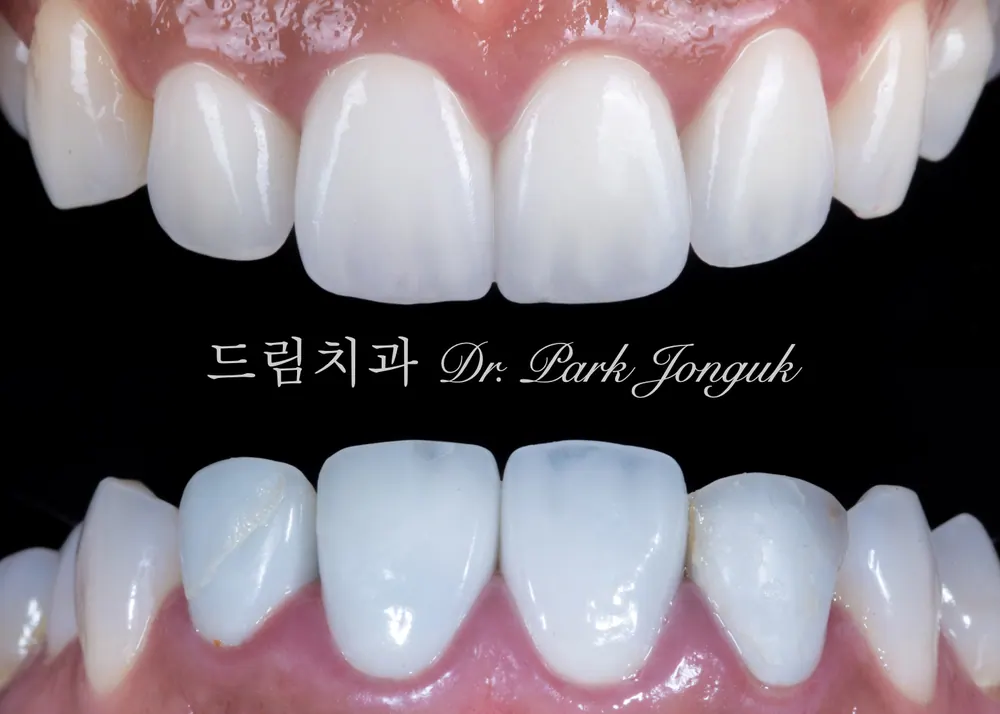
2. Regret over doing as many teeth as recommended
The patients who regret it the most are those who simply followed a recommendation like "you need 6 to look natural" or "8 looks better."
With an accurate diagnosis, 2 or 4 teeth are often enough.
There are plenty of cases where lightly treating just the two front teeth completely transforms the smile line.
Doing more veneers than necessary translates directly into a loss of natural tooth structure.
Treating more teeth doesn't mean better work. A good diagnosis is one that achieves the maximum effect with the minimum number of teeth.
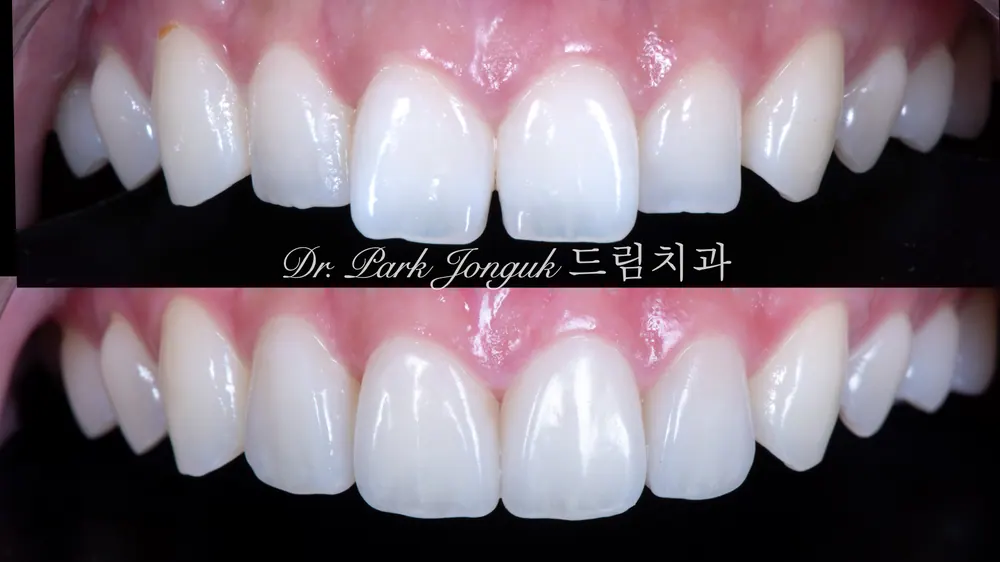
3. Regret over choosing a color that was too white
At first, wanting white teeth, patients pick the brightest shade available.
But once it's actually placed, it looks like artificial teeth. Every time a photo is taken, they hear that it looks unnatural.
In particular, if the color contrasts too much with the adjacent teeth, the veneered section stands out on its own.
The key is harmony with the face tone, skin color, lip color, and the adjacent teeth.
Checking and adjusting the color in advance during the temporary-teeth stage is an absolutely necessary step.
Naturalness matters more than brightness.
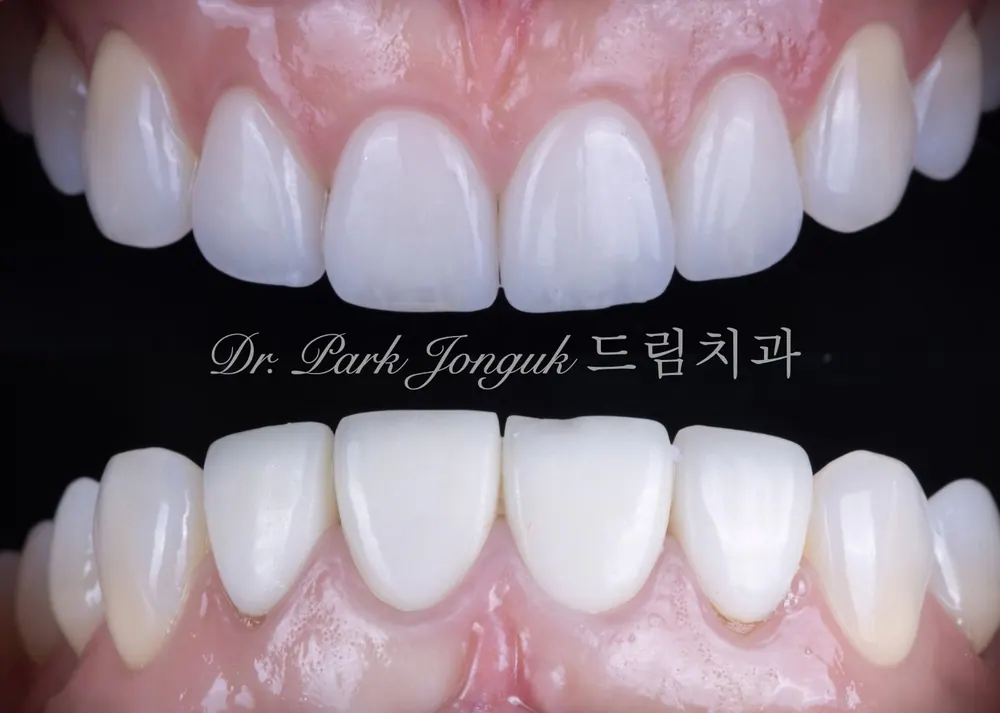
4. Regret over reducing teeth that could have been treated no-prep
This is a case that was originally suited for no-prep veneers, but the teeth were uniformly reduced anyway, without a proper diagnosis.
A tooth that's been reduced can never be brought back.
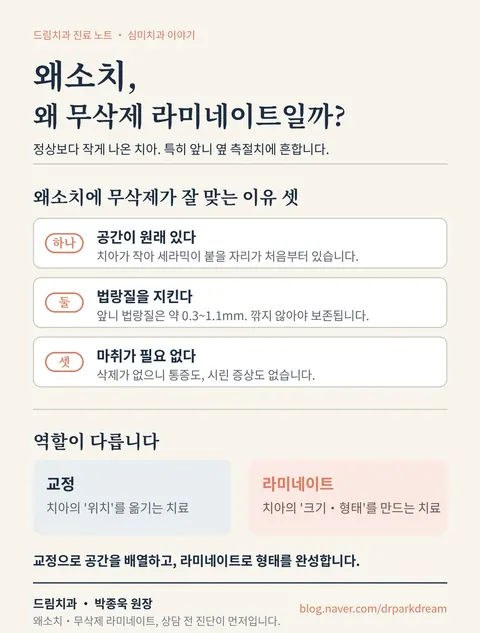
For cases like peg-shaped teeth, gaps between teeth, or mild discoloration, no-prep is often more than enough to resolve the issue.
Whether no-prep is possible must always be checked before treatment.
The less that's reduced, the better. If no-prep is possible, no-prep is the right answer.
5. Regret over neglecting aftercare
With proper care, veneers can last 10 years or more.
But if brushing and flossing are neglected, they may not even last 5 years.
It's especially important to thoroughly brush around the gum line with a soft toothbrush.
For patients who grind their teeth, wearing a nightguard alongside the veneers is recommended.
Regular checkups and daily care after treatment are what determine how long the veneers last.
Frequently asked questions
Q1. I had veneers done elsewhere and I regret it. Can I have it redone?
Yes, retreatment is possible. However, the process of safely removing the existing veneer is important.
At our clinic, we remove it using a laser without damaging the tooth.
Depending on the tooth's condition after removal, no-prep retreatment may also be possible. An accurate diagnosis before retreatment matters more than anything.
Q2. What's the best way to decide on a veneer color?
You need to consider the face tone, skin color, lip color, and harmony with the adjacent teeth all together.
It's not automatically the brightest shade — a natural color is the most beautiful.
You can preview it with a simulation during diagnosis, and it's verified once more during the temporary-teeth stage.
Q3. How is the number of veneers decided?
The smile line and the extent of tooth exposure differ from person to person.
The principle is to analyze the teeth visible when smiling, the degree of asymmetry, and the extent of discoloration, and achieve the maximum effect with the minimum number of teeth.
In some cases 2 teeth are enough, and in others 6 are needed.
There's no fixed answer — it requires a diagnosis tailored to each patient.
Closing
Veneers are a permanent treatment that's hard to reverse once done.
To make a choice you won't regret, more than price or a recommendation,
an accurate diagnosis and an experienced medical team matter most.
All five points of regret covered today can be fully prevented with thorough consultation and diagnosis before treatment.
Please don't rush — it's best to research thoroughly and then decide.
Dream Dental Clinic in Apgujeong has continued treating esthetic prosthodontics and veneers for nearly 20 years.
Dr. Park Jonguk is a board-certified specialist in conservative dentistry, and is active teaching at Lamista Academy and writing veneer textbooks.
Written by: Park Jonguk (D.D.S., M.S. / Board-certified specialist in conservative dentistry, Director of Dream Dental Clinic)
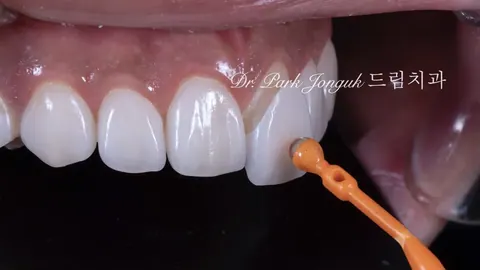
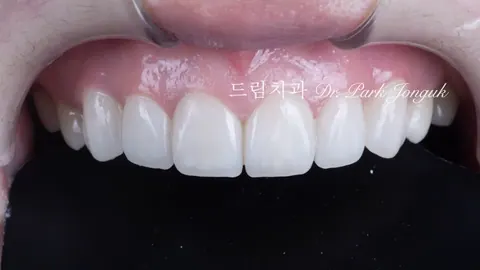
This article is a clinical note written by Dr. Park Jonguk of Dream Dental Clinic, Gangnam; the original was published on his blog. The photographs shown are real cases he treated. Results vary with each patient’s condition, and every procedure carries the possibility of individual variation and side effects.
Quick Consult
Request a Callback
Leave your number and we will call you back during clinic hours.
Request Received
We will contact you during clinic hours. For urgent matters, please call +82-2-3448-0028.