
Tooth Reshaping Using No-Prep Veneers
Hello. I'm Park Jonguk, head of Dream Dental Clinic.
Veneers can be classified by several different criteria.
First, by fabrication method,
they're divided into handmade veneers and one-day veneers —
that's one way to split them.
For this part, please refer to a post I wrote previously.
And by the material they're made from, they're divided into a few more categories.
Feldspathic veneers
e.max veneers
Mk II veneers
e.max + buildup veneers
That's roughly the range you can think of.
Among these, the one that's most esthetically outstanding
is the feldspathic veneer.
Since it also allows tooth reduction to be minimized,
it's widely used for no-prep veneers and micro-reduction veneers.
The problem is that it's so difficult to fabricate that almost no clinics do it these days...
The simplest one to make is the Mk II material used in the one-day method.
Since it isn't hand-fabricated by a person,
it takes less time, costs less, and is convenient overall,
but it's often not handled properly,
and since it's forced to be finished in a single day, the result often falls short of expectations.
e.max veneers are also widely used in the one-day method,
but they leave something to be desired esthetically.
The e.max + buildup method has the advantage of being both strong and esthetically outstanding,
but it, too, is quite difficult to fabricate.
To sum it up,
for the result to look beautiful, the fabrication has to be difficult.
A veneer that's simply made in a single day
is unlikely to be esthetically satisfying.
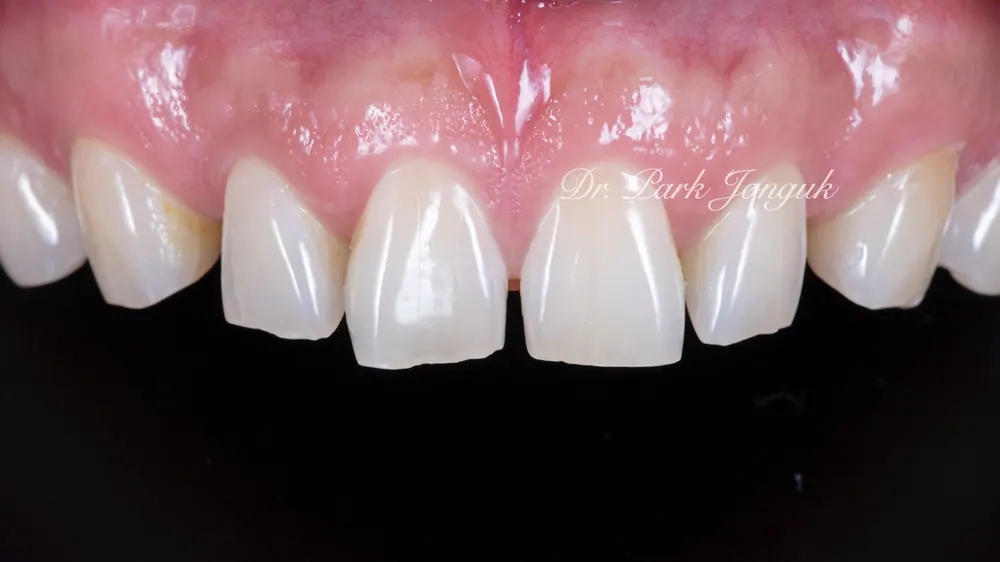
There were gaps between the teeth,
the teeth had significant wear,
and their size was smaller than usual.
We decided to go with micro-reduction or no-prep veneers and proceeded with the diagnosis.
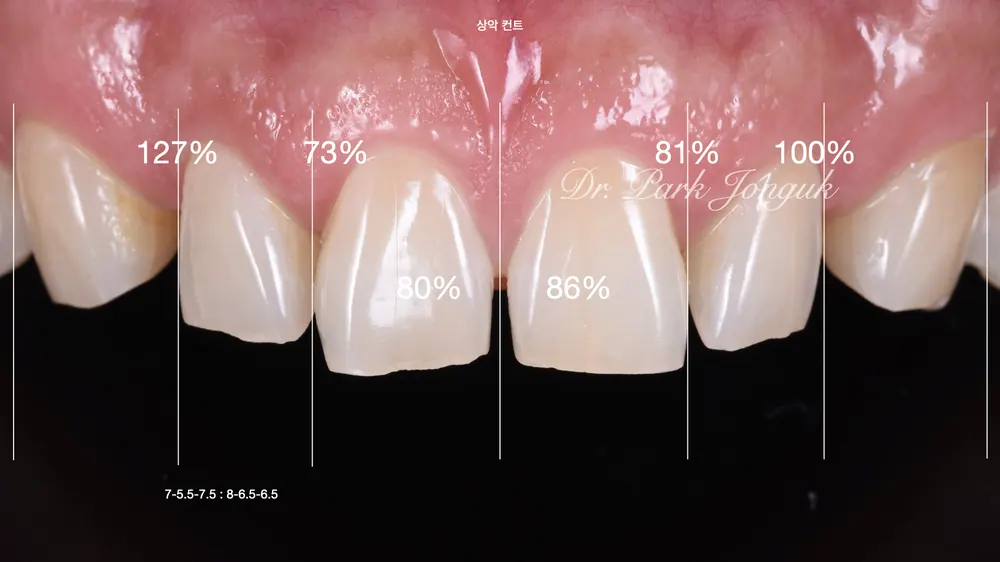
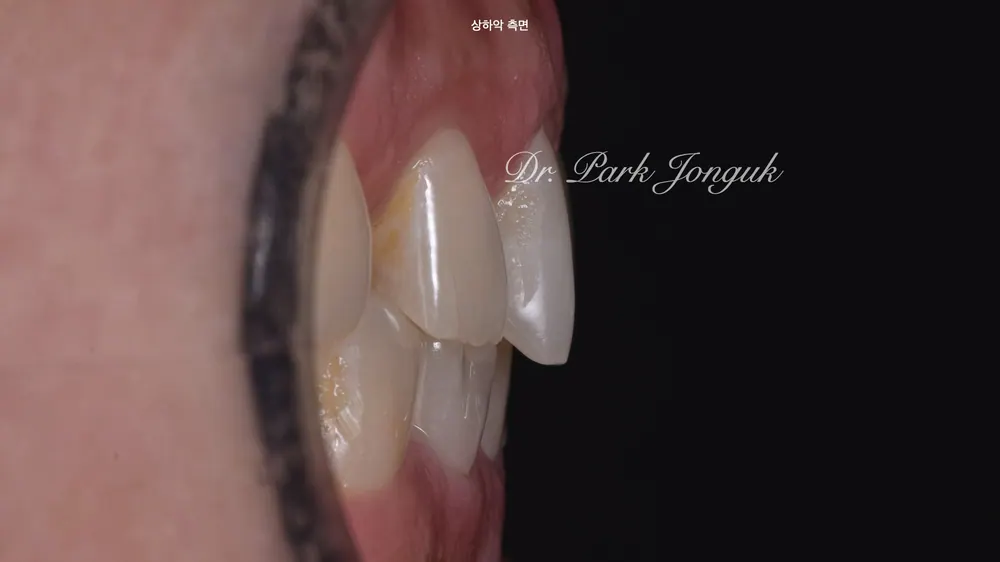
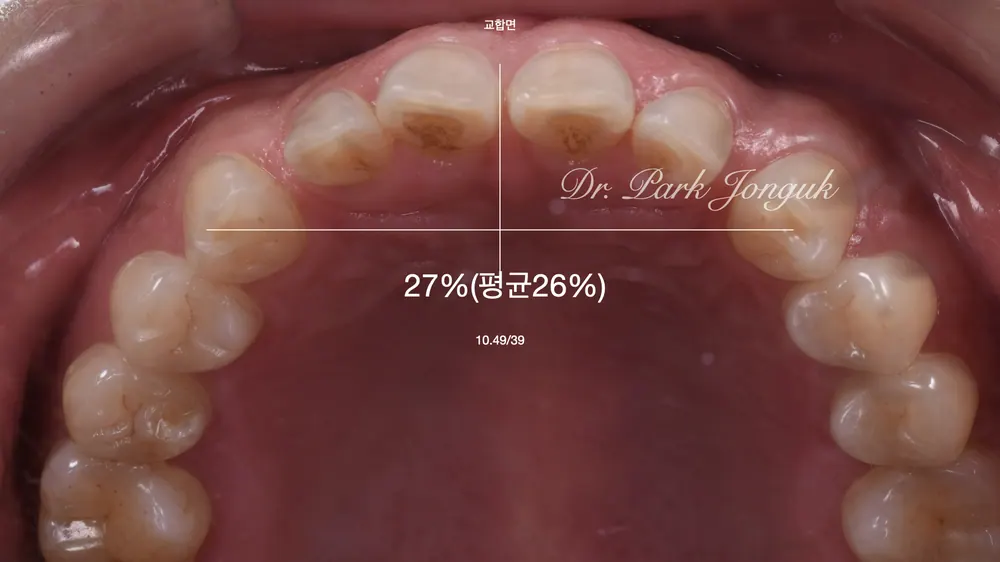
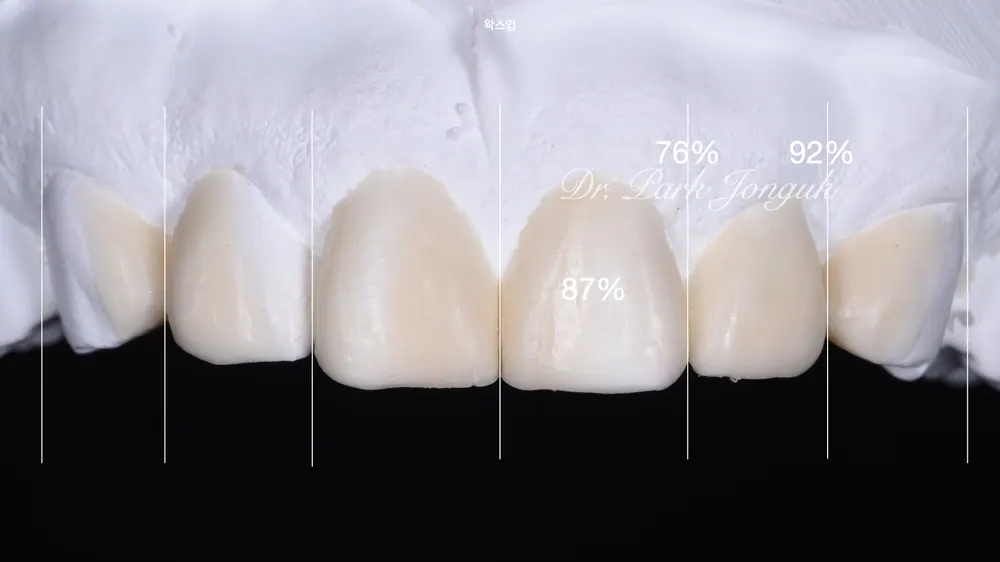
Measuring the proportions of the teeth,
and checking how much they protrude when viewed from the side.
The alignment of the teeth and the shape of the dental arch are checked too,
and it's decided which teeth will be treated with no-prep and which with micro-reduction.
This case could be treated entirely with no-prep veneers,
but without causing any significant damage and without anesthesia, only the protruding areas
were lightly smoothed as the treatment proceeded.
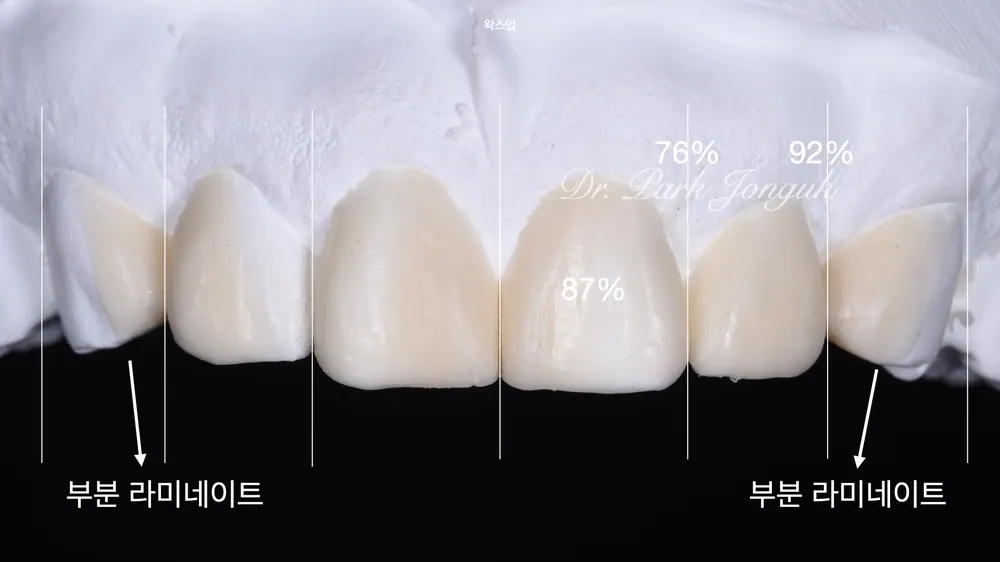
For the canines, a veneer bonded only partially was used,
while for the other teeth, we decided to go with a veneer bonded over the full surface.
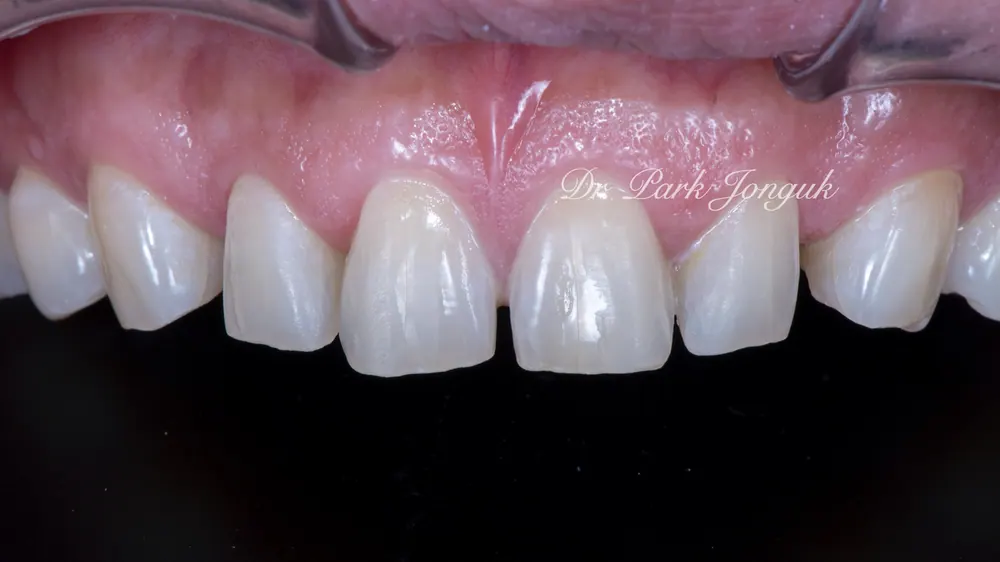
With only the protruding areas of the two front teeth lightly smoothed,
the veneer treatment proceeds.
No anesthesia is needed, and even without temporary teeth,
the teeth have no sensitivity at all.
In fact, in a case like this, most patients aren't even sure whether their teeth were reduced at all.
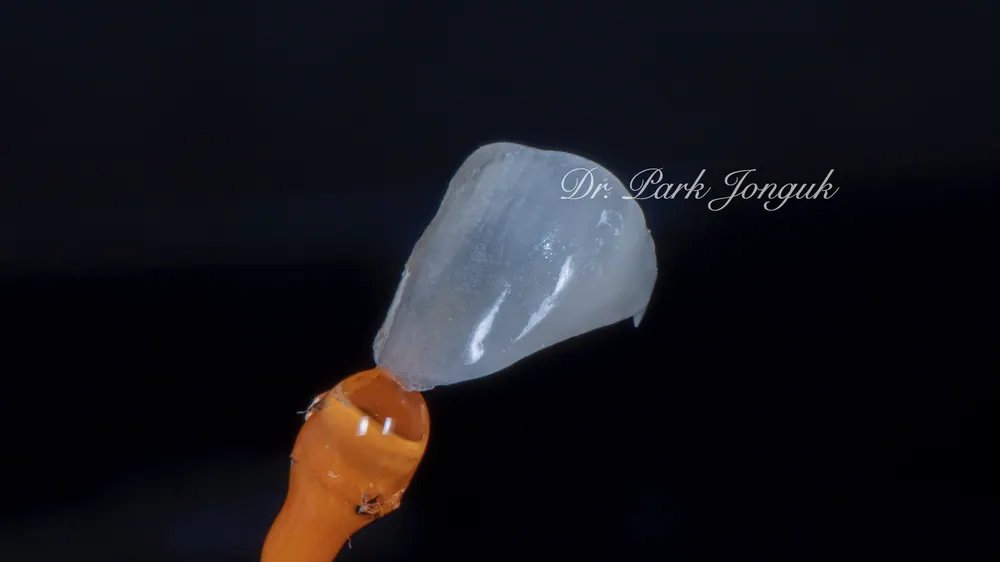
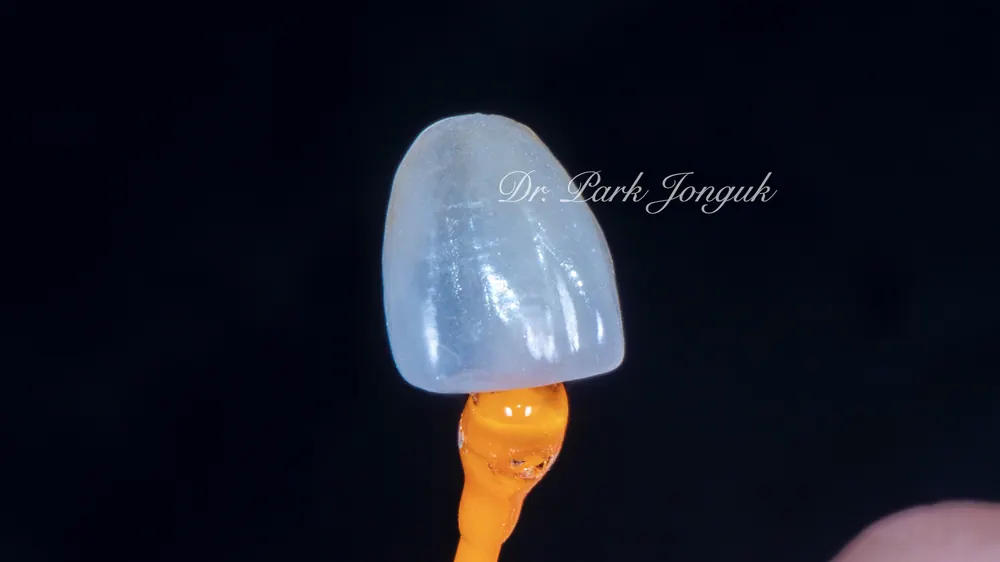
With ceramic this extremely thin,
the veneers are fabricated.
Feldspathic veneers can be made as thin as 0.1mm,
which is why they're used for no-prep veneers
and partial veneers.
Please refer to the link below for the fabrication process of feldspathic veneers.
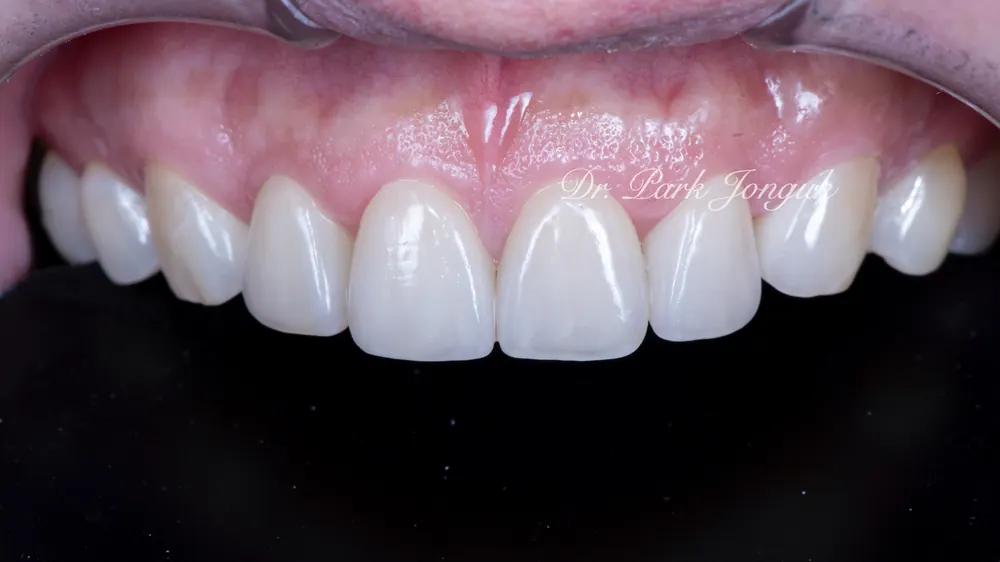
With almost no tooth reduction like this,
the treatment is finished using both partial and full veneers.
The feel of a natural tooth definitely comes through.
Because it's extremely thin,
the natural tooth's color shows through as it is,
and making good use of that color coming through
to make the result look even more like a natural tooth is the key point.
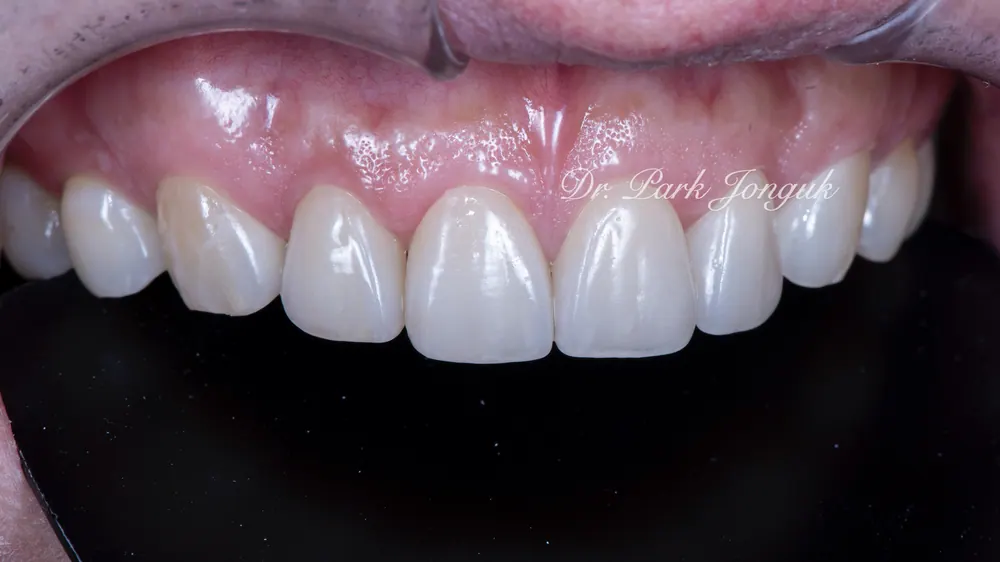
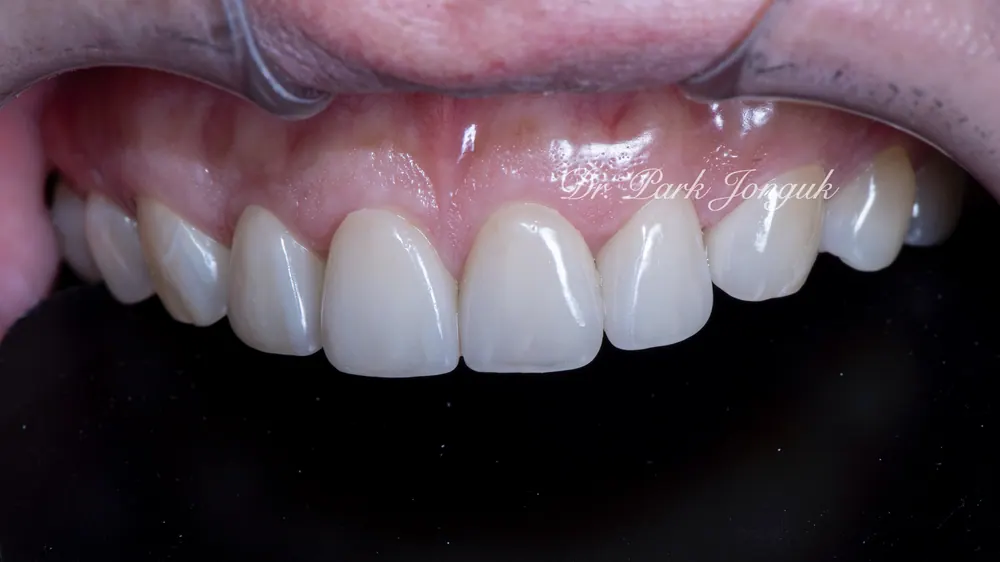
Both canines received only a partial veneer.
It's finished so that it blends well with the natural tooth structure.
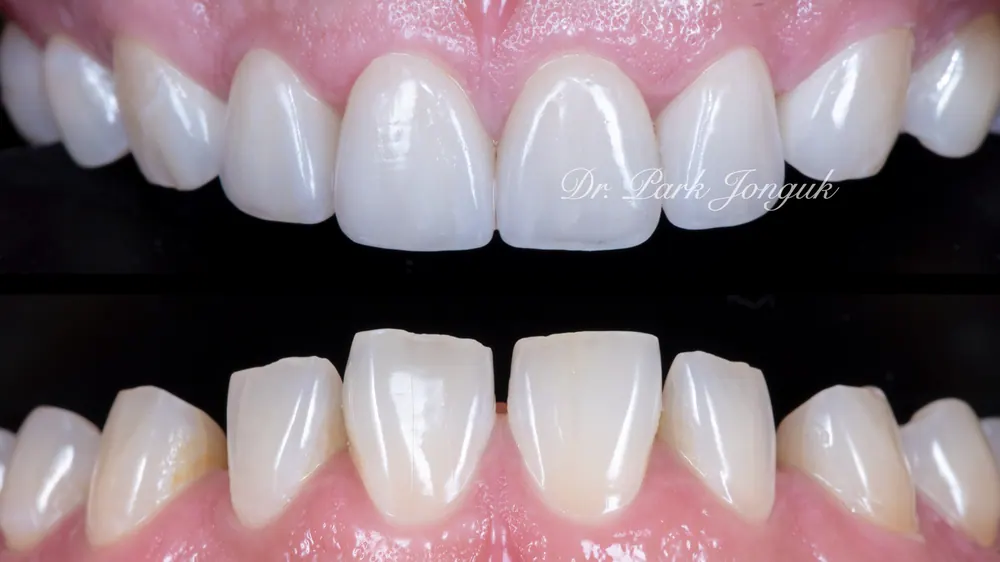
With almost no tooth reduction,
being able to achieve results this natural
with veneers,
the driving force behind it is the ceramic fabrication technique.
You can think of this as a level the one-day method could never come close to matching.
Since 2006, Dream Dental Clinic
This article is a clinical note written by Dr. Park Jonguk of Dream Dental Clinic, Gangnam; the original was published on his blog. The photographs shown are real cases he treated. Results vary with each patient’s condition, and every procedure carries the possibility of individual variation and side effects.
Quick Consult
Request a Callback
Leave your number and we will call you back during clinic hours.
Request Received
We will contact you during clinic hours. For urgent matters, please call +82-2-3448-0028.