
A Look at No-Prep Veneer Treatment Cases
Hello. I'm Park Jonguk, director of Dream Dental Clinic.
A tooth is tissue that, once damaged, cannot regenerate.
When skin is wounded, a scar may remain,
but it heals as new tissue regenerates,
whereas a damaged tooth has to be filled in with a material that can replace what was lost.
When a cavity forms, the decayed part is removed
and filled with gold or ceramic — that's the reasoning behind that treatment.
The same holds true for veneers.
Veneer treatment removes the front surface of the tooth and bonds ceramic onto that area.
Once a tooth is reduced, that part never regenerates,
so once a veneer is placed after reduction,
if the veneer comes off or breaks, treatment has to be repeated over and over.
That's exactly why minimizing tooth reduction matters so much.
With a completely no-prep veneer, where no reduction is done at all,
there's the added advantage that the veneer can later be removed entirely and the tooth can return to its original state.
But since not every case is eligible,
it can only be done when the case allows for it.
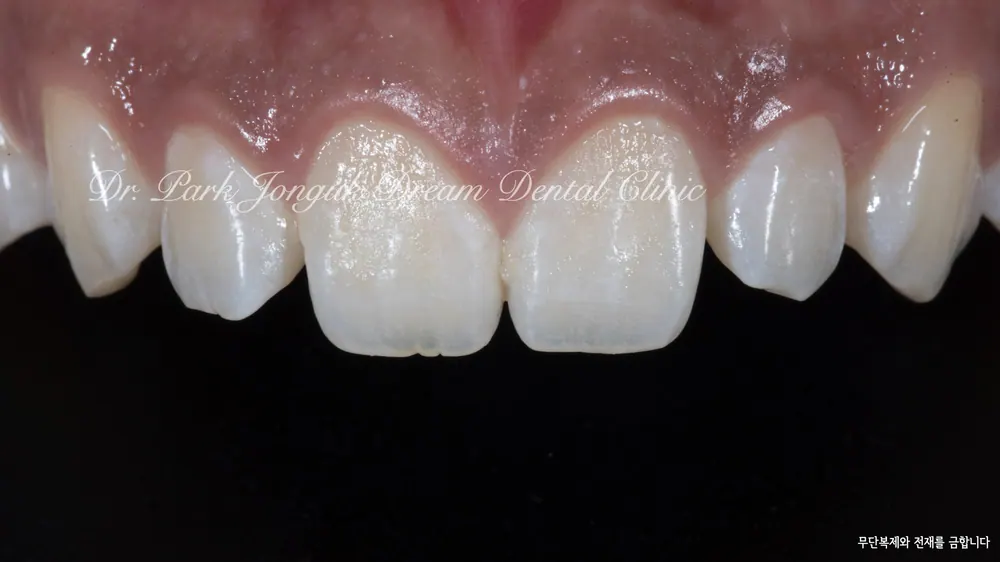
For no-prep veneer treatment,
three conditions are required.
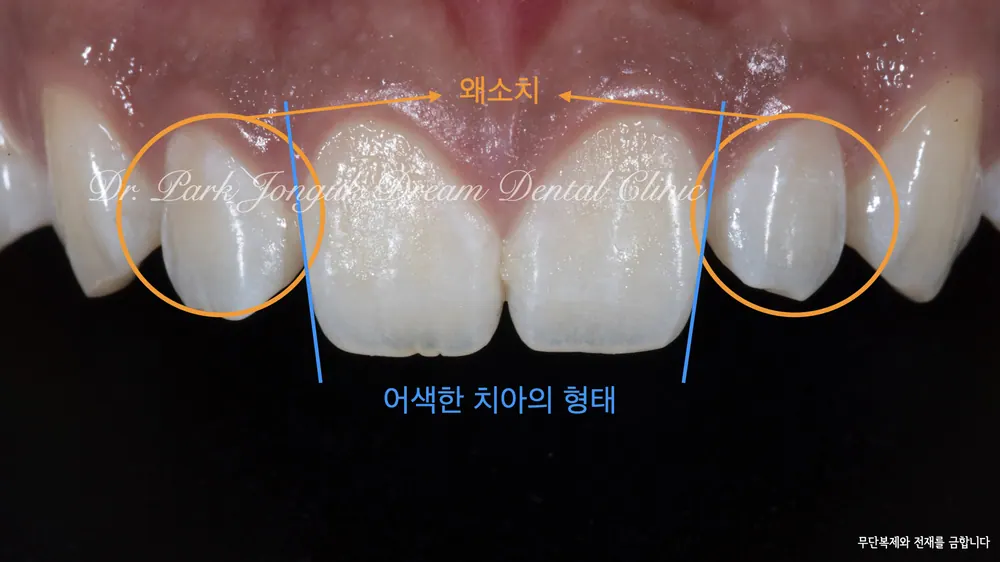
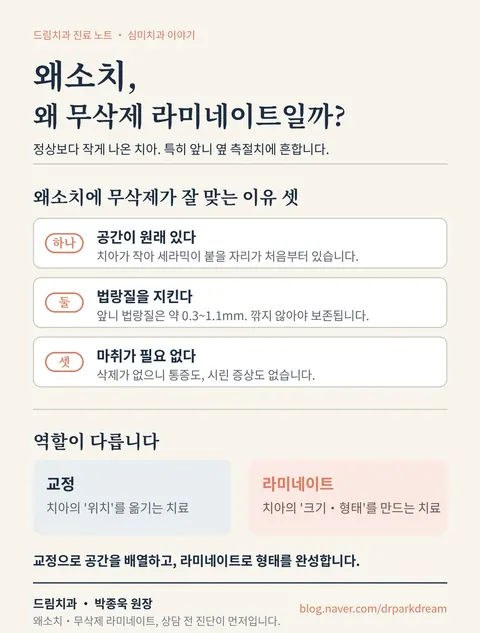
Small teeth
Even alignment
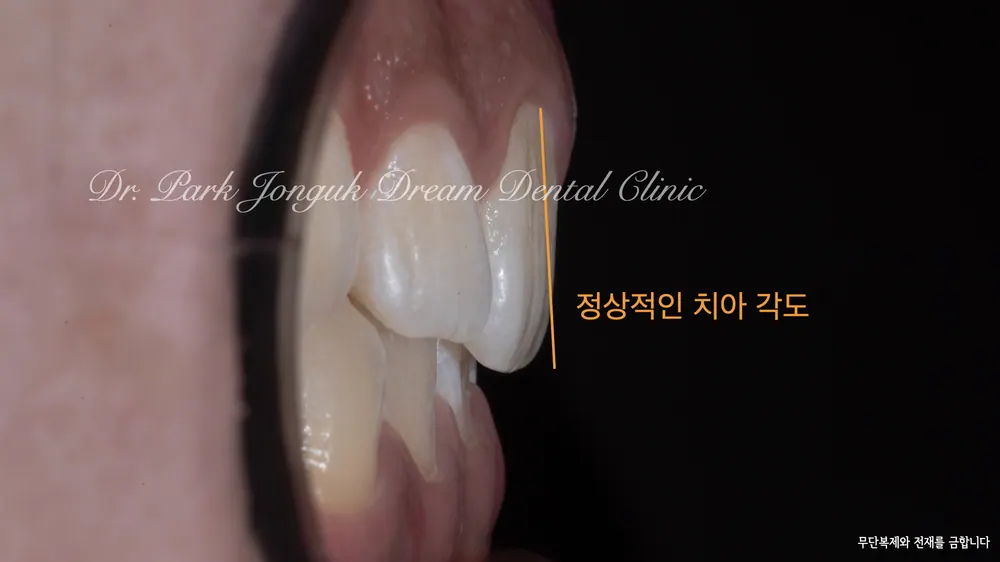
No protrusion
If a case meets these three conditions, the chances of being able to do no-prep veneer treatment go up considerably.
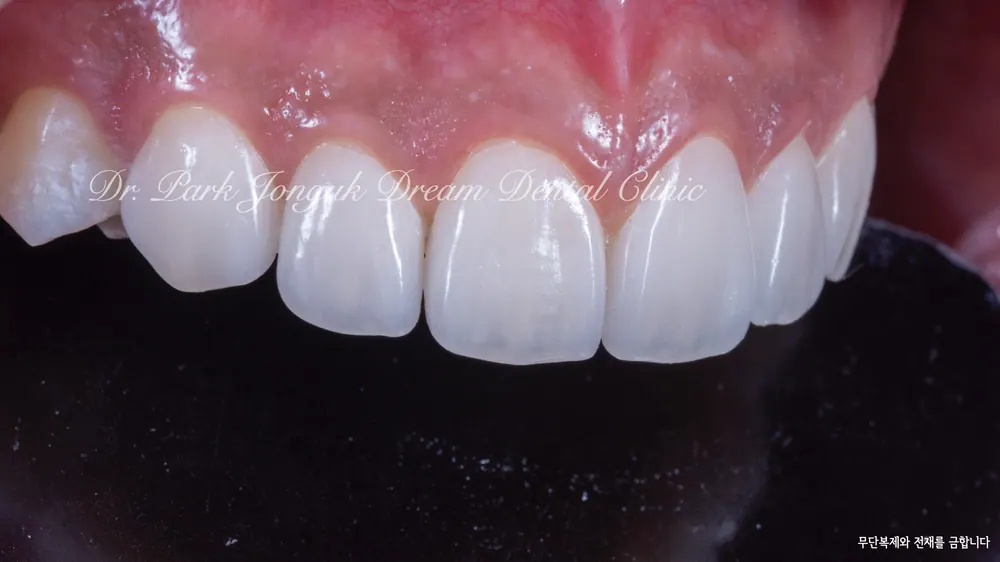
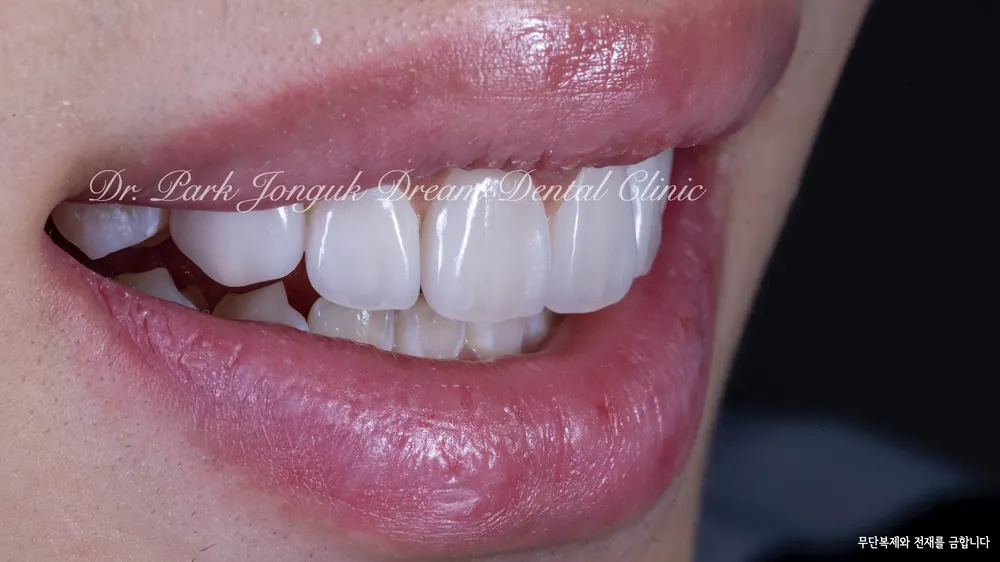
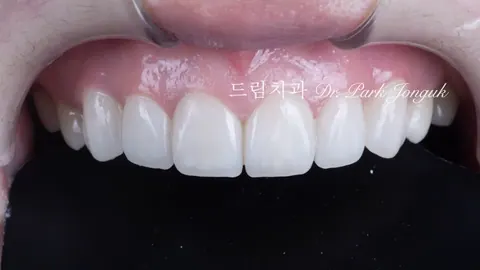
The case above fits these three conditions exactly.
The most important step in no-prep veneer treatment is the precision wax-up diagnosis.
It's a process of using wax to preview how treatment will turn out before actually doing it.
This involves analyzing the current teeth
and previewing what shape the result will take,
then building that exact shape onto the teeth using resin.
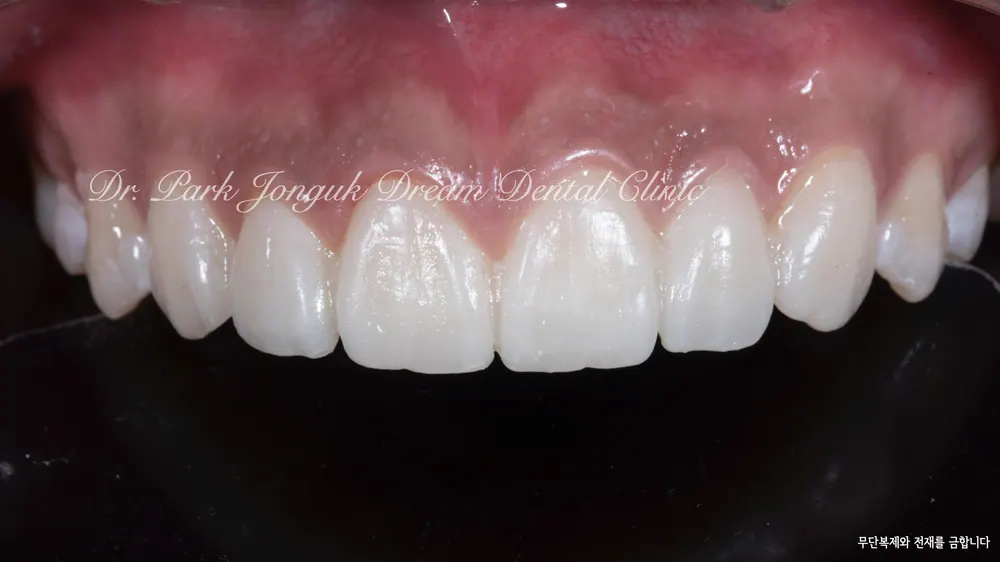
By building the shape in resin,
we check whether the shape, size, and proportions turn out well,
and the patient also gets to see what her teeth will look like after the veneers.
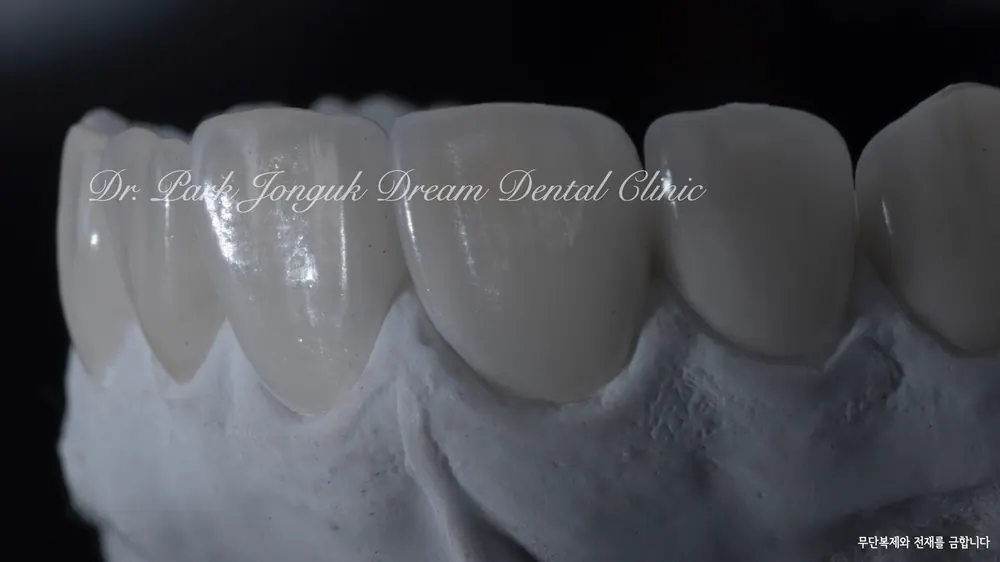
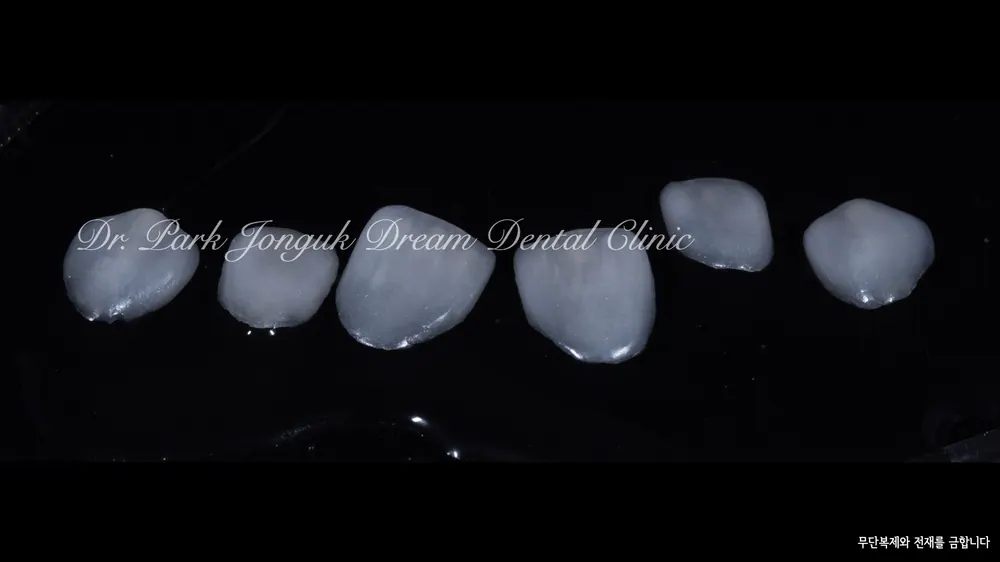
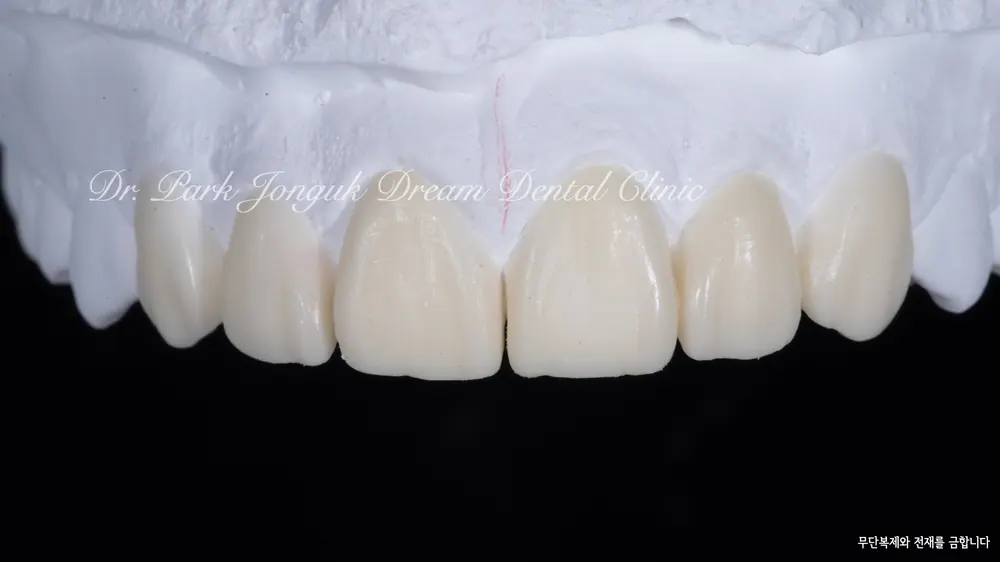
The veneers are then fabricated in ceramic.
Even though the ceramic is extremely thin,
the full range of natural tooth expression is captured inside it.
This is a level the one-day, computer-made method simply cannot match.
These days, at most clinics that focus mainly on veneers,
the easy-to-produce one-day method is what's used,
and as development keeps moving only in the direction of cutting cost and time,
more and more awkward, unnatural veneers are being made,
which is genuinely disappointing to see, from my own perspective.
When you try to take the easy path, the result doesn't turn out well.
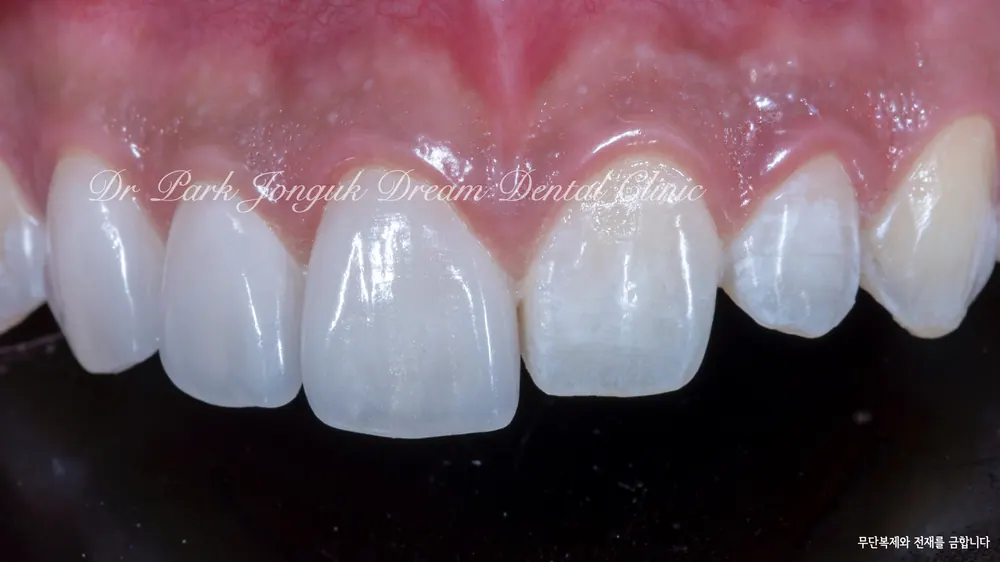
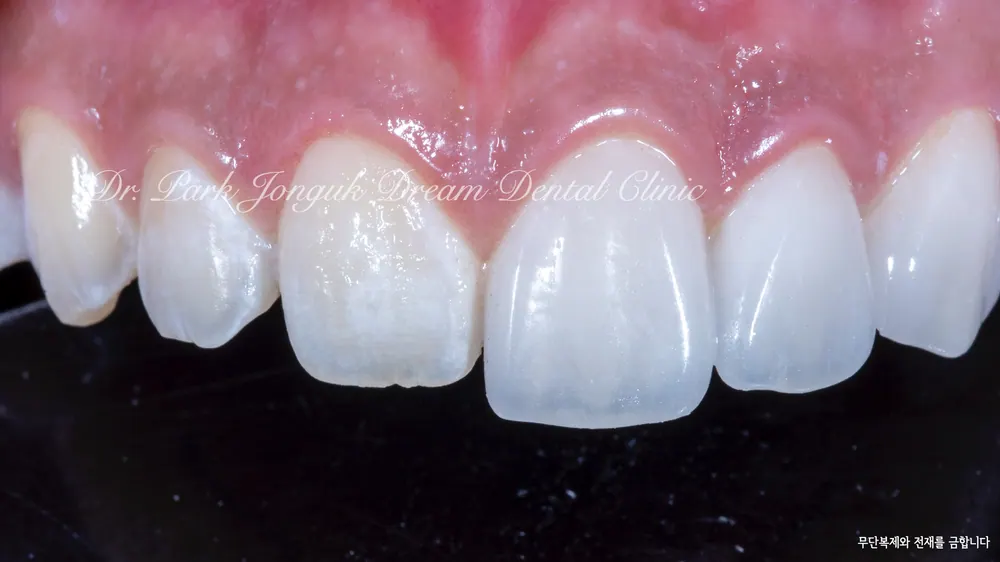
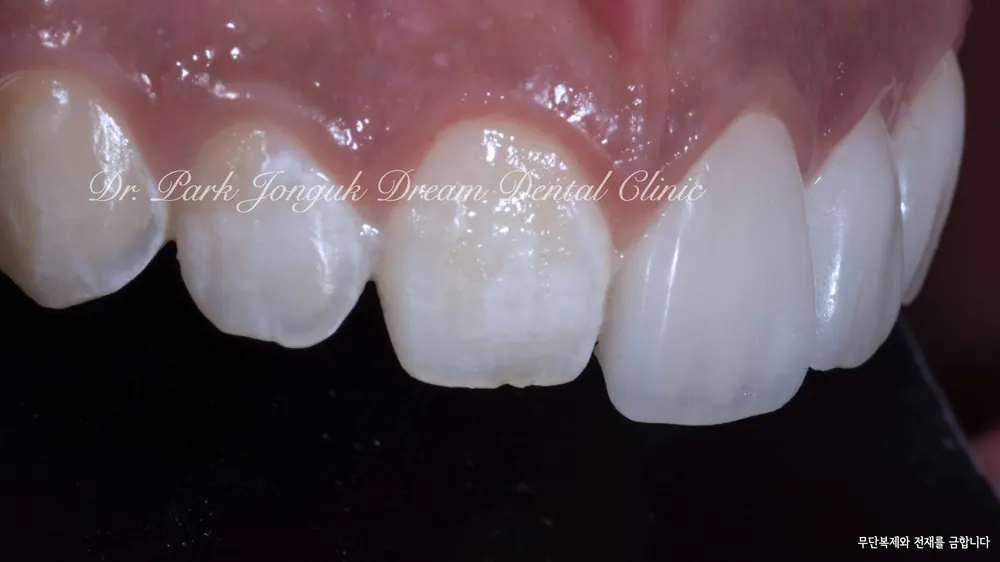
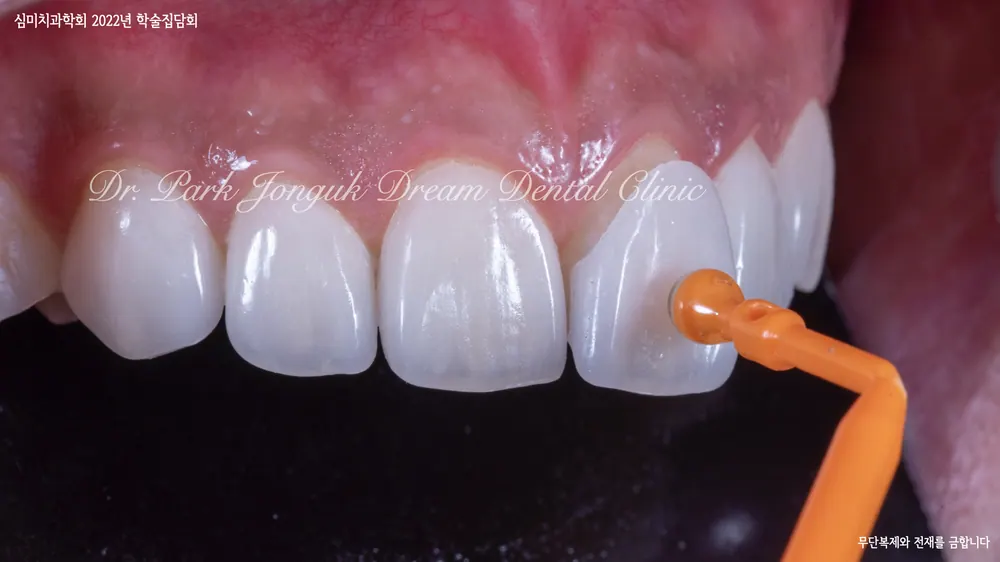
You can see how the shape of the tooth changes.
It's very important that the veneer's ceramic wraps around the tooth as a whole.
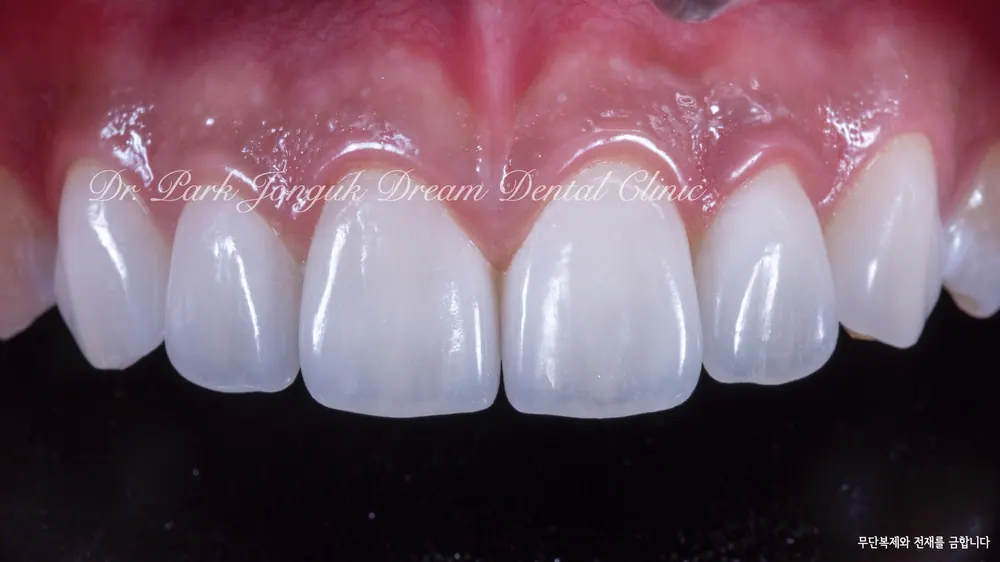
Just like a natural tooth,
you can see the translucency of the tooth clearly coming through.
It was made with natural dimensionality firmly built in.
Since this kind of beautiful transformation is possible without damaging the tooth,
no-prep veneer treatment really is a great treatment — the issue is just that it isn't possible in every case.
Since 2006, Dream Dental Clinic
This article is a clinical note written by Dr. Park Jonguk of Dream Dental Clinic, Gangnam; the original was published on his blog. The photographs shown are real cases he treated. Results vary with each patient’s condition, and every procedure carries the possibility of individual variation and side effects.
Quick Consult
Request a Callback
Leave your number and we will call you back during clinic hours.
Request Received
We will contact you during clinic hours. For urgent matters, please call +82-2-3448-0028.