
Treating Black Triangles with Veneers Using Only Minimal Tooth Reduction
Hello, I'm Dr. Park Jonguk, director of Dream Dental Clinic.
A dark triangular gap that appears between teeth after orthodontic treatment
is called a black triangle.
It isn't limited to orthodontics—
it can also form when the gums deteriorate and recede,
or even appear purely from tooth shape, in patients with healthy gums who never had orthodontic treatment.
Whatever the cause, once a black triangle appears,
it needs to be treated with either resin or veneers.
Treating it with resin
is appealing because it costs less and requires no tooth reduction at all,
but resin, by its nature as a material, tends to discolor over time.
Veneers can sometimes treat a black triangle without any tooth reduction,
but only in limited cases.
It doesn't work for every case—
in fact, most cases don't qualify, and only occasionally does it work.
It would be ideal if every case were like the one in the link above,
but most aren't.
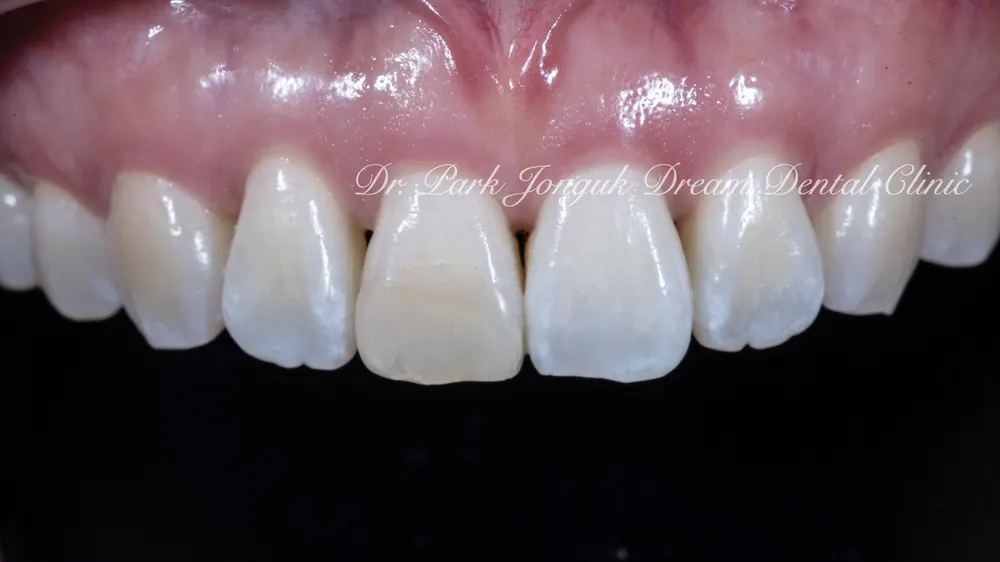
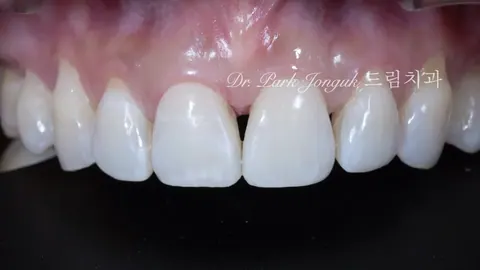
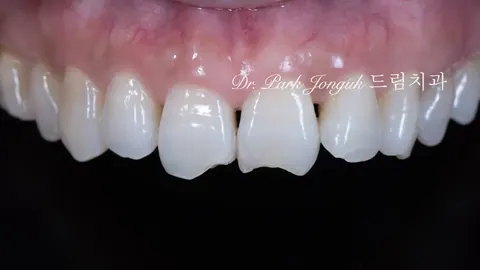
The patient came to us with a black triangle that appeared after orthodontic treatment.
Besides the black triangle, the areas previously treated with resin looked quite unnatural,
and the teeth had many white spots that made them look less than clean.
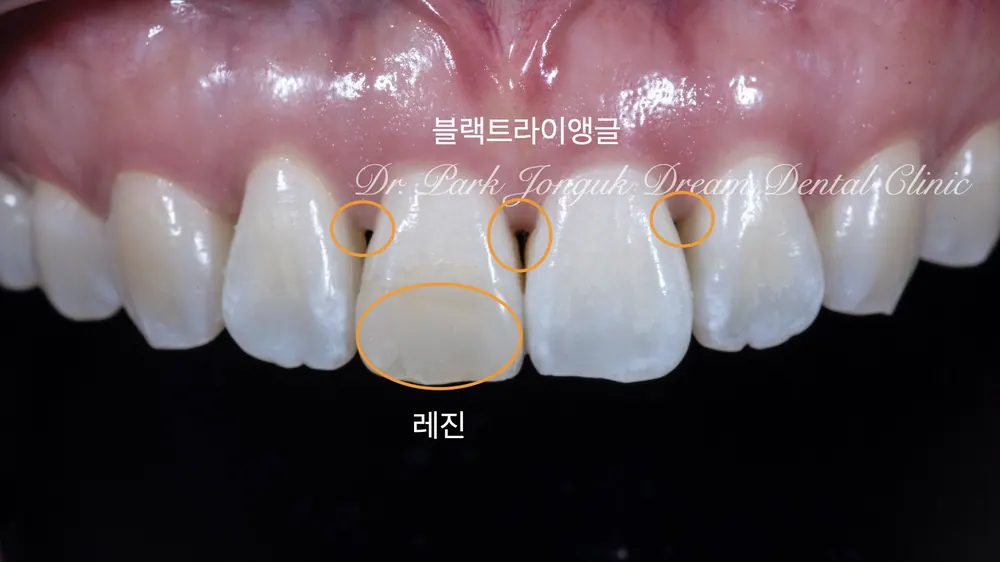
We decided to treat all of these issues together with veneers.
Normally, treating a black triangle
requires a substantial amount of tooth reduction.
The interproximal areas usually all need to be reduced
for the treatment to be possible at all.
In our case, because we can fabricate ceramic extremely thin,
we avoided reducing the interproximal surfaces
and instead placed extremely thin ceramic between the teeth,
dramatically reducing the amount of tooth structure removed.
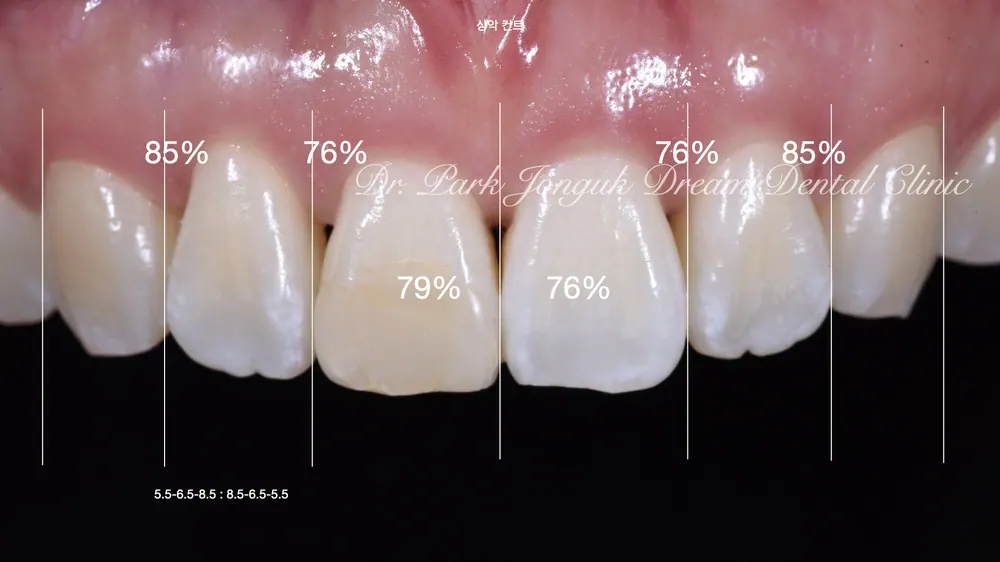
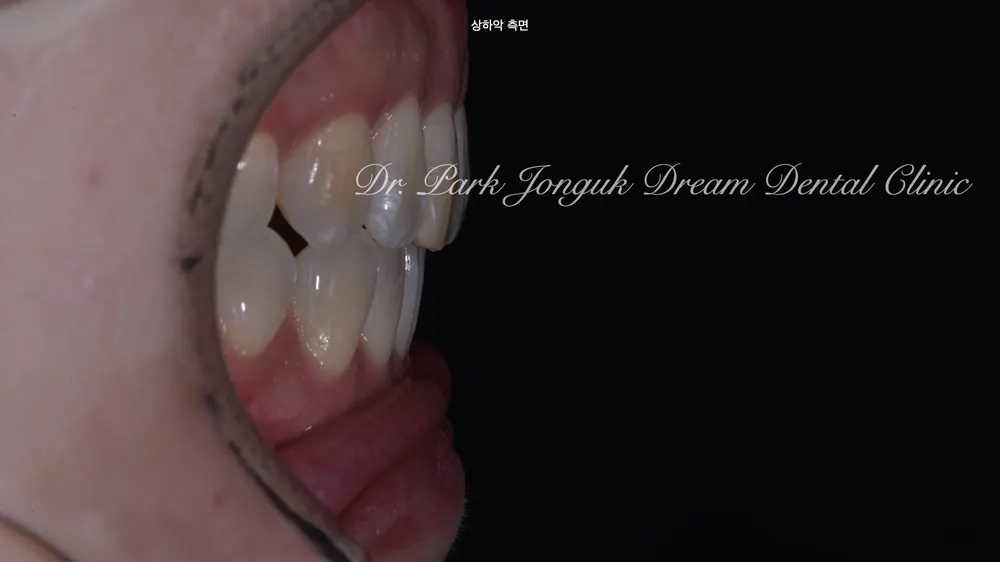
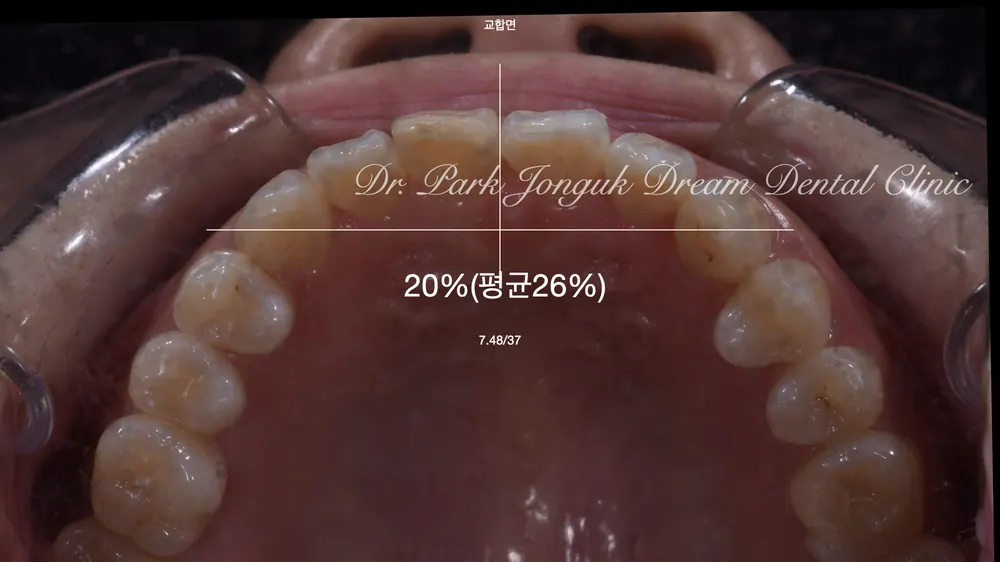
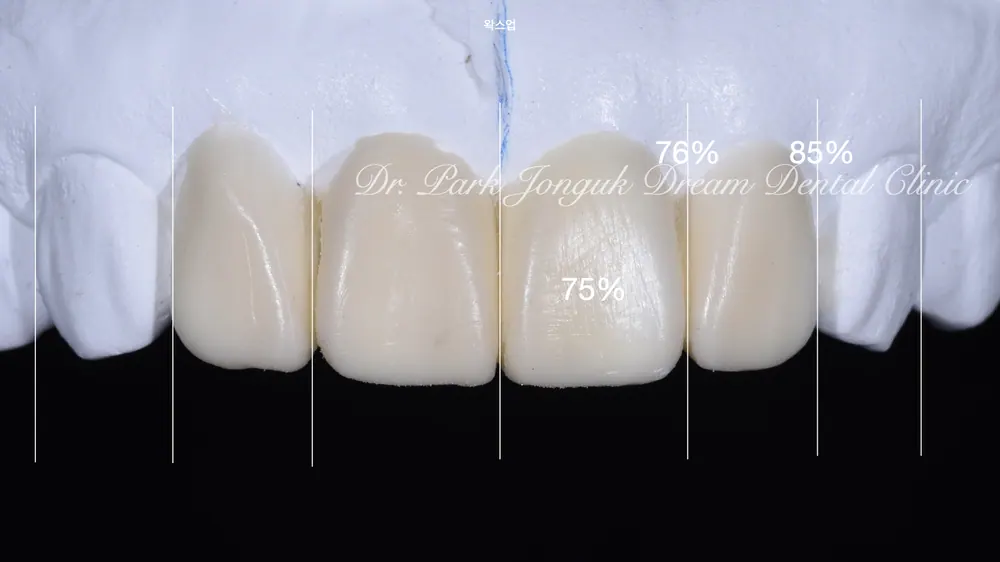
We measured the current proportions of the teeth
and planned in advance how they would be changed.
In this process, how much tooth structure to remove
is planned ahead of time, and the treatment is then carried out under a microscope,
with a high degree of precision, following that plan.
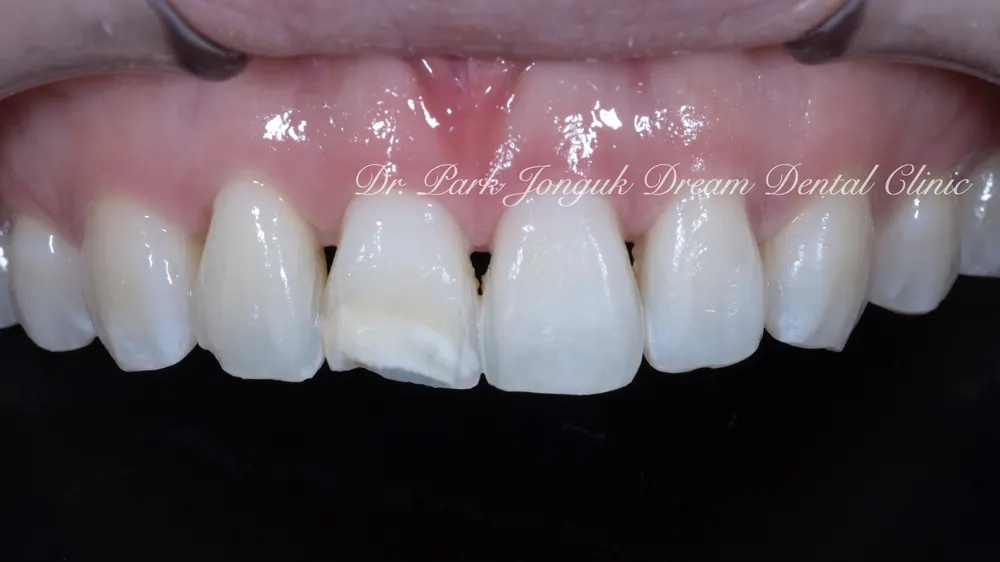
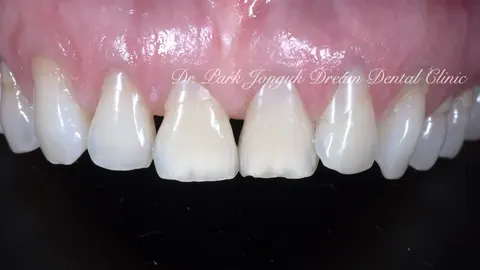
After removing the resin from the front teeth
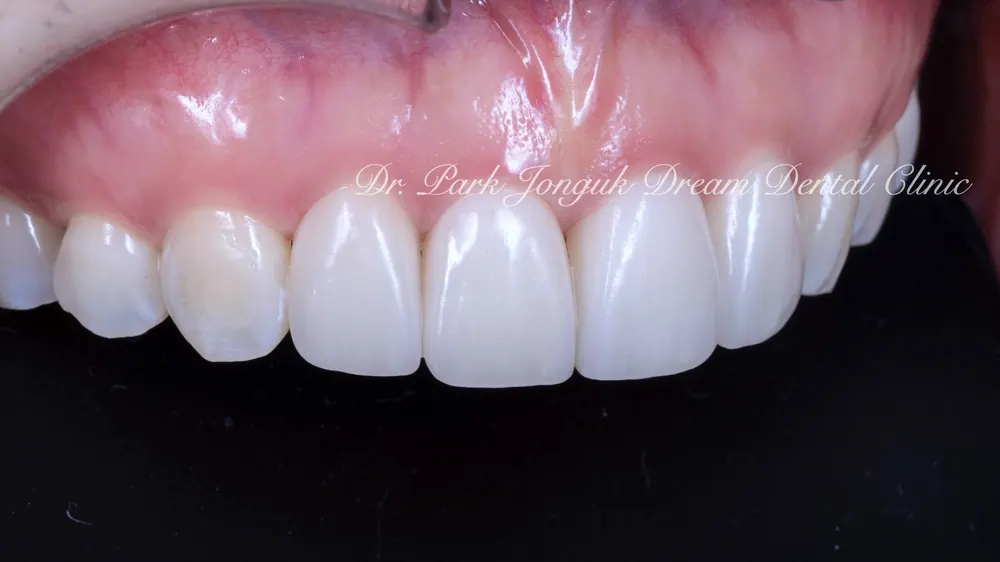
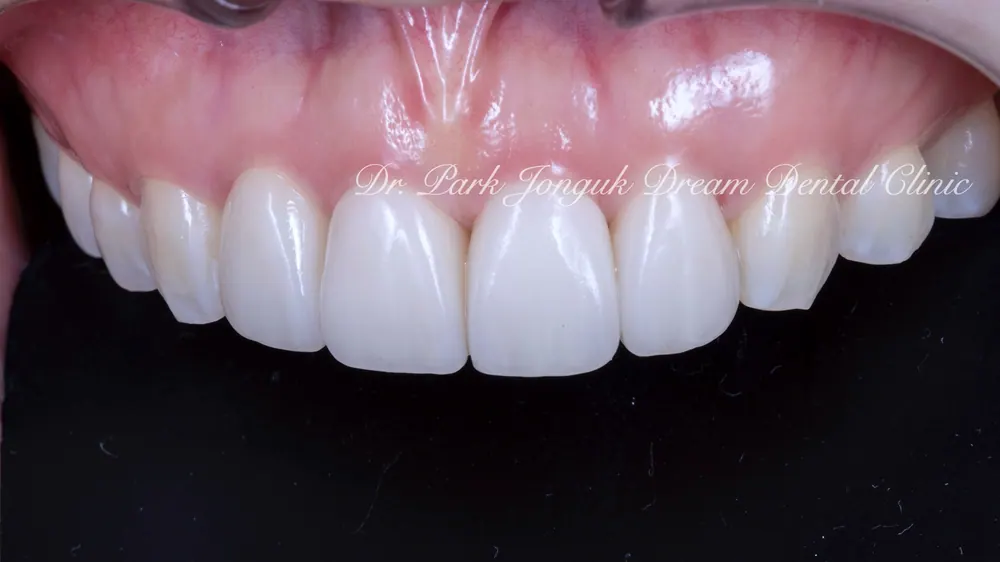
and reducing the teeth only minimally, this is the resulting state.
Aside from removing the resin,
it's hard to even tell where any reduction was done.
It's close enough to call it no-prep—
the reduction was that minimal.
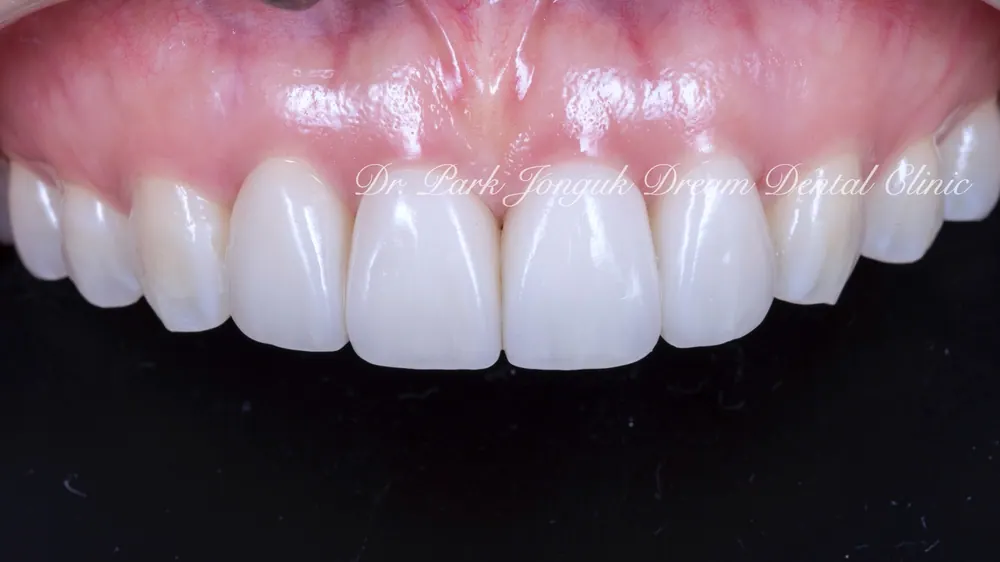
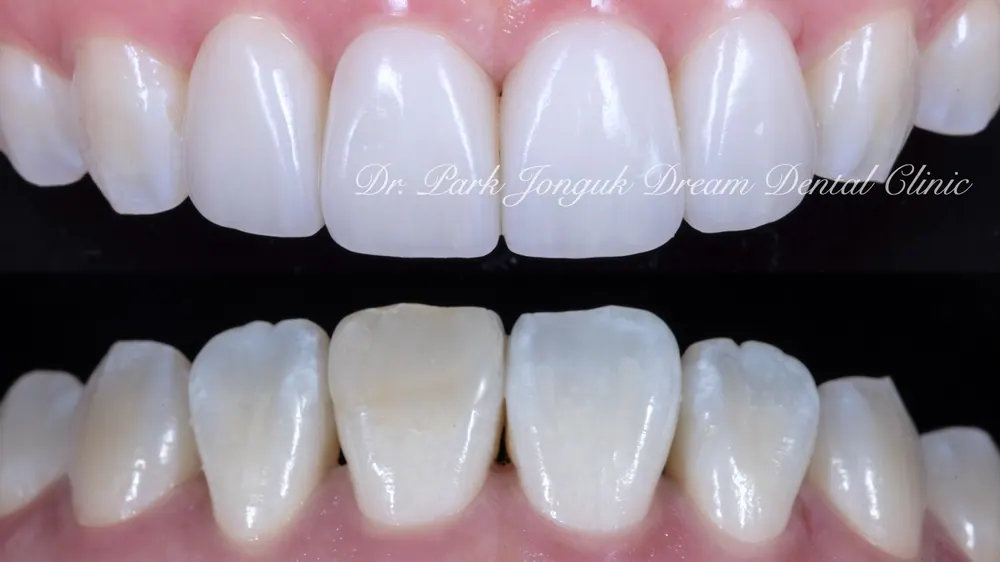
With only minimal reduction,
we effectively closed the black triangle,
and the teeth became more even and beautiful as well.
At the same time, we were able to preserve the shape and translucency of the natural teeth.
Being able to build all of this into such extremely thin ceramic
is something a same-day, computer-milled method simply cannot match—
it's a hallmark of handmade work alone.
Since 2006, Dream Dental Clinic
This article is a clinical note written by Dr. Park Jonguk of Dream Dental Clinic, Gangnam; the original was published on his blog. The photographs shown are real cases he treated. Results vary with each patient’s condition, and every procedure carries the possibility of individual variation and side effects.
Quick Consult
Request a Callback
Leave your number and we will call you back during clinic hours.
Request Received
We will contact you during clinic hours. For urgent matters, please call +82-2-3448-0028.