
How Do You Retreat All-Ceramic Crowns and Bridges When the Gums Are Also Damaged?
Hello. I'm Park Jonguk, director of Dream Dental Clinic.
Most treatments received at a dental clinic have a lifespan.
In particular, tooth-replacing materials
such as resin and ceramic
are used inside the mouth for repeated chewing, speaking, and more,
constantly without rest,
and this accumulated fatigue
can lead to fracture or debonding.
Beyond retreatment caused by fracture of these materials,
there are also plenty of cases of retreatment
due to various aesthetic problems or changes in gum shape.
In particular, with all-ceramic crowns
or with bridge treatment, which connects teeth to replace a missing one,
changes in gum shape can occur even more often.
When the gum shape changes,
the root of the tooth becomes exposed,
which causes an aesthetic problem.
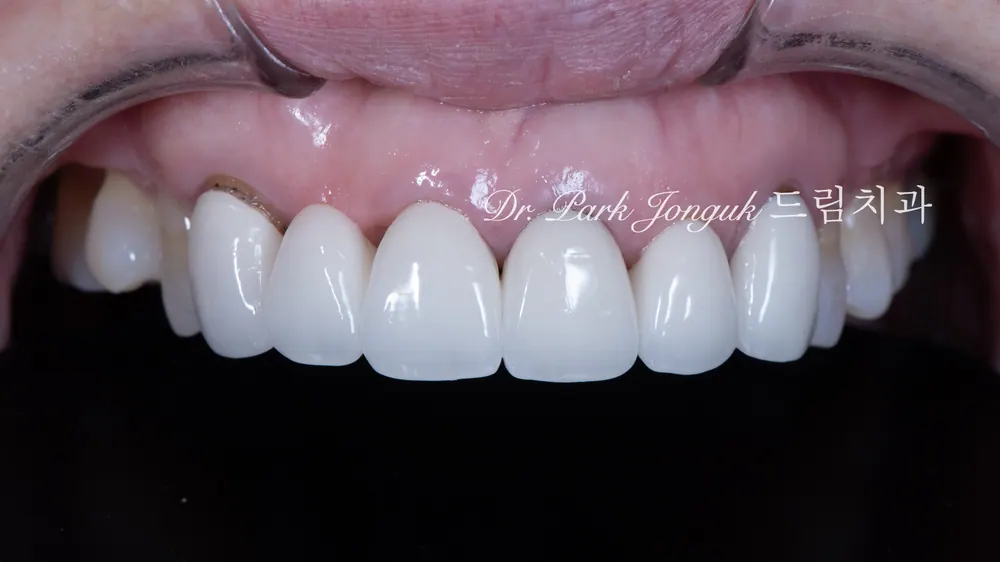
This is an old bridge and all-ceramic crown.
The ceramic itself hadn't fractured or come off,
but due to changes in gum shape,
there were areas where the tooth root had become exposed,
and the shape and color of the teeth weren't good either.
To resolve these various aesthetic issues
and achieve a more natural color,
we decided to proceed with retreatment.
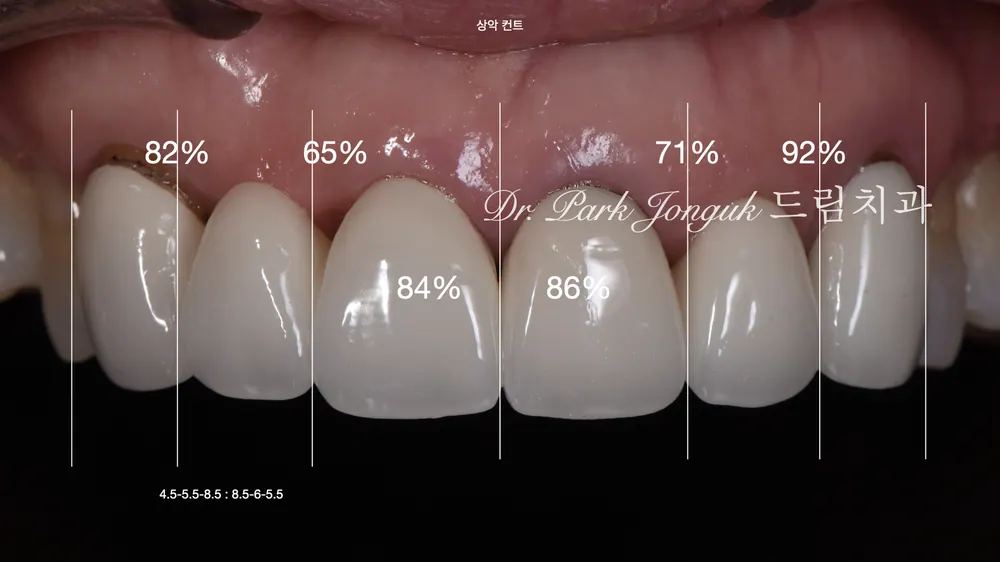
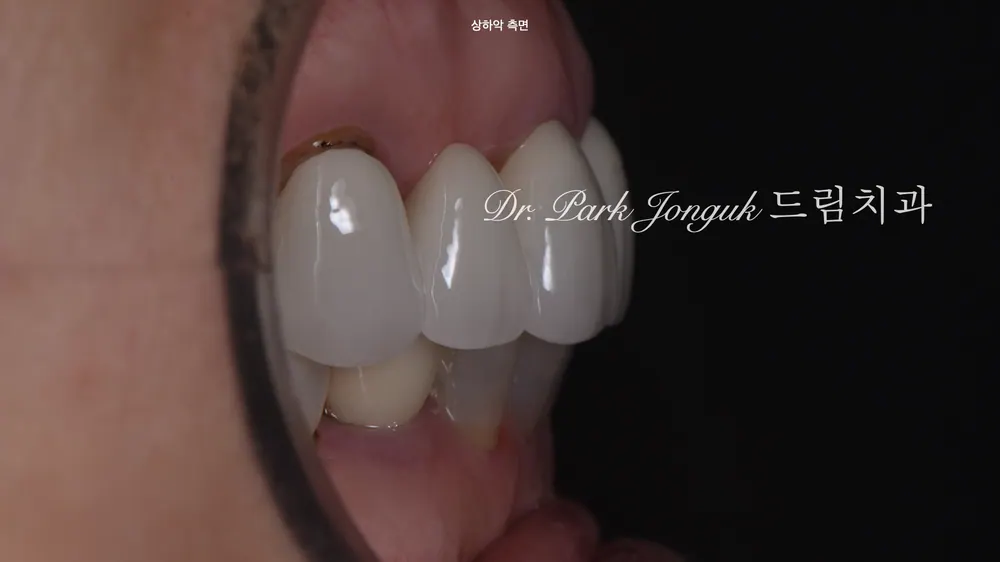
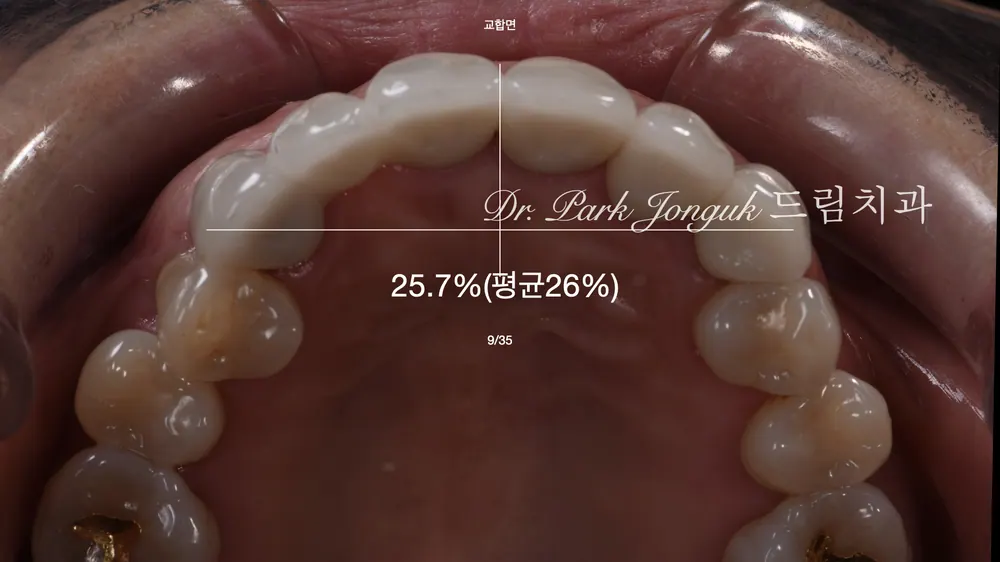
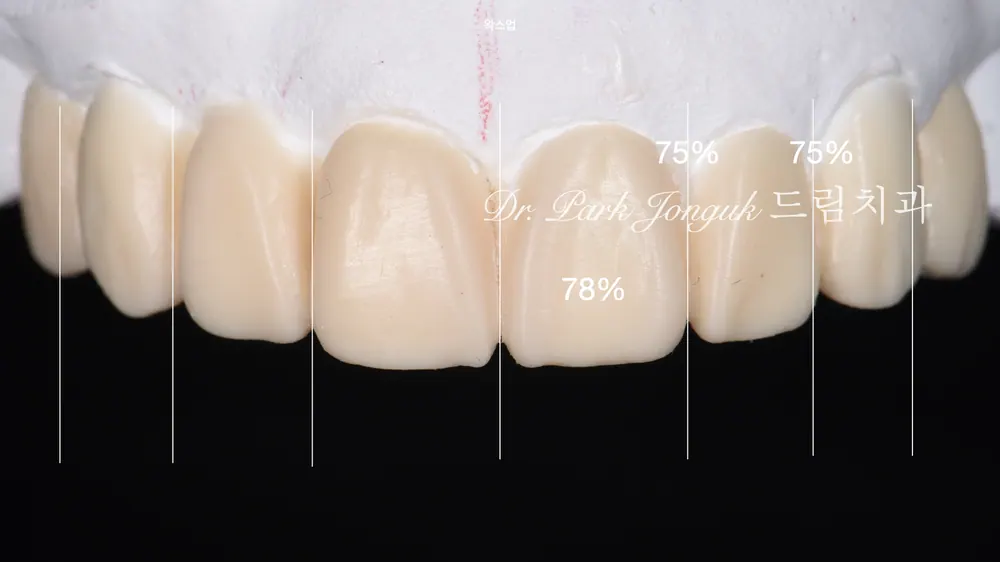
Before retreatment,
we need to analyze the current condition of the teeth
and plan how to proceed with treatment from this state.
This process is called a precision wax-up diagnosis.
For more on this process, along with details about veneer treatment at Dream Dental Clinic, please refer to the link below.
Treatment proceeds according to the plan.
We remove the old ceramic, make a temporary tooth,
take an impression of the teeth,
and proceed with retreatment.
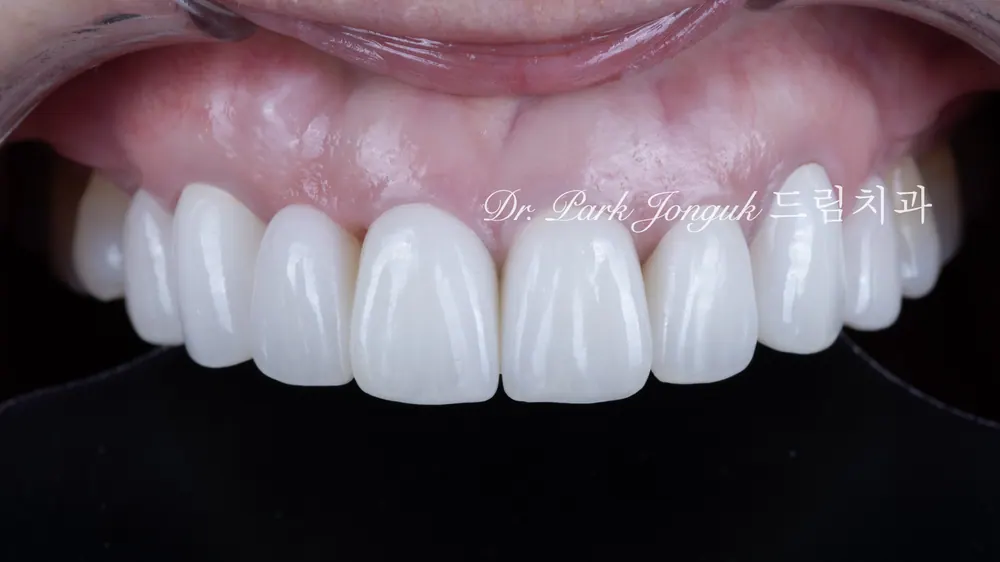
The treatment has been completed.
When retreatment is done because of a problem near the gum,
the teeth usually end up larger.
Of course, if the teeth had been small to begin with,
the teeth becoming larger isn't much of a problem,
but depending on the situation, there are many cases where the teeth shouldn't get larger.
It's very important that the teeth get larger without looking large.
In cases like this, giving the teeth clear dimensionality
makes them look smaller.
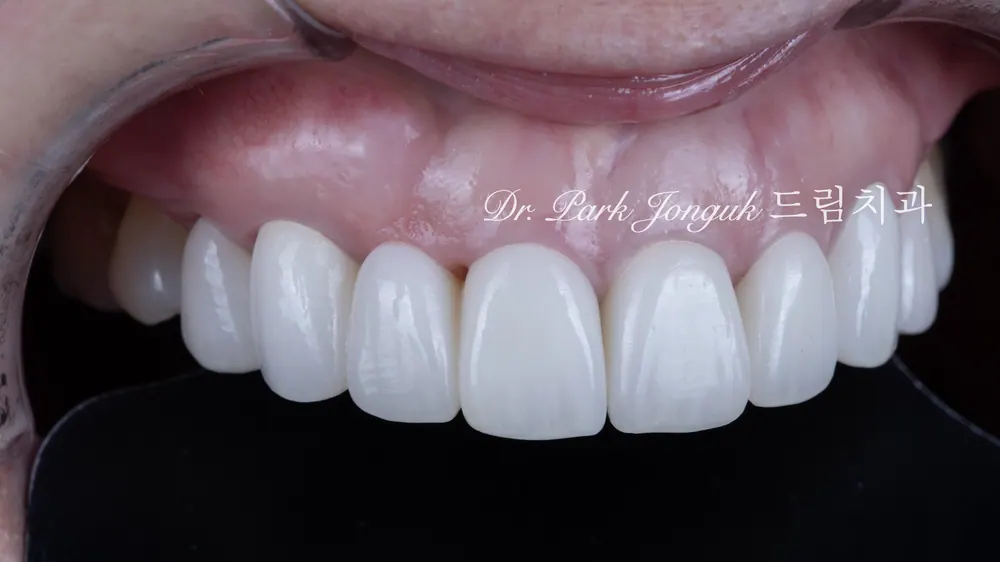
You can see that the gum around the bridge area has improved a great deal.
By adding a variety of expression to the tooth surface,
we made it look even more like a natural tooth.
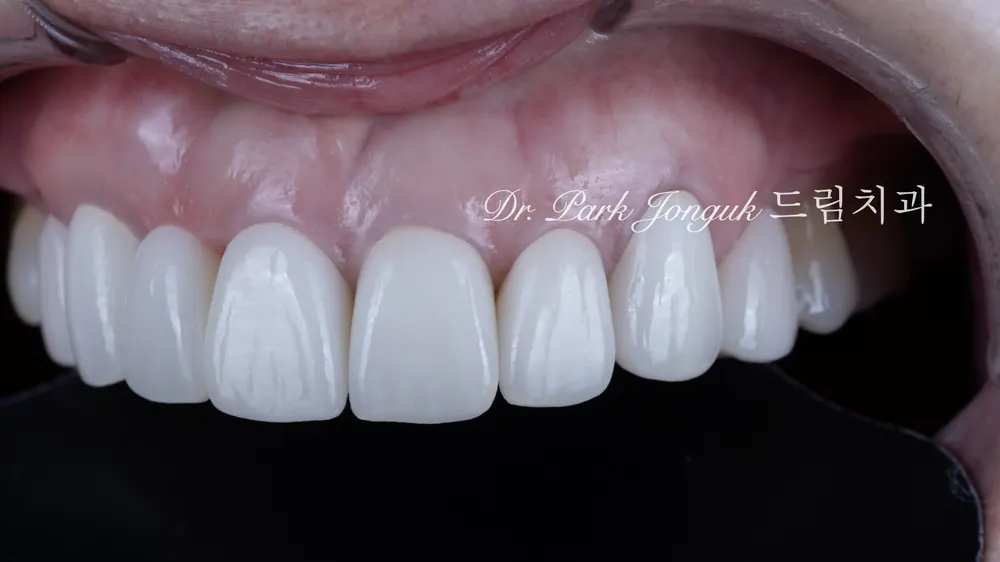
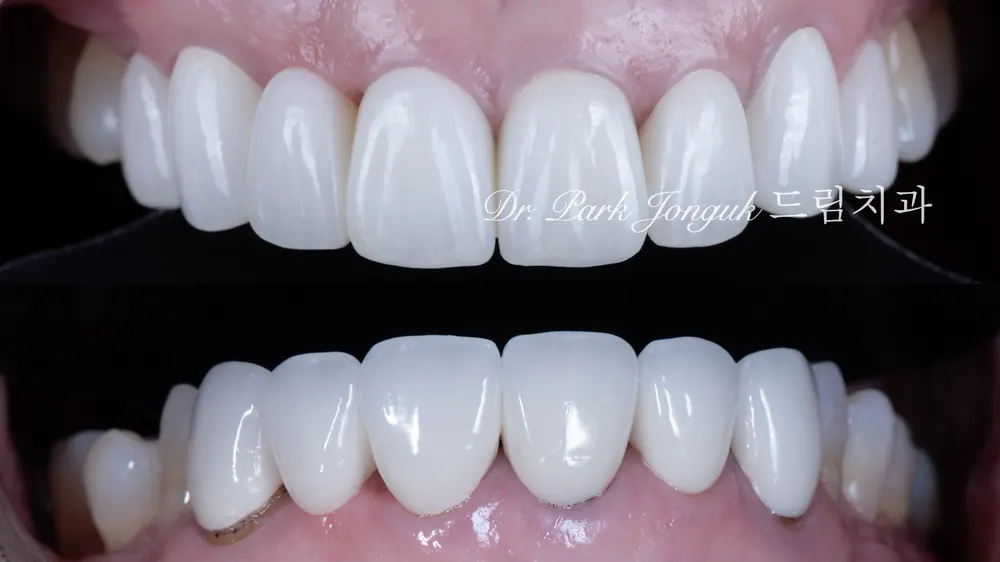
With the gums healthy,
a natural-looking retreatment has been completed.
Natural beauty
Since 2006, Dream Dental Clinic
This article is a clinical note written by Dr. Park Jonguk of Dream Dental Clinic, Gangnam; the original was published on his blog. The photographs shown are real cases he treated. Results vary with each patient’s condition, and every procedure carries the possibility of individual variation and side effects.
Quick Consult
Request a Callback
Leave your number and we will call you back during clinic hours.
Request Received
We will contact you during clinic hours. For urgent matters, please call +82-2-3448-0028.